He made for the bush and began an 18-month spell as an outlaw, self-consciously constructing the persona of the gentleman outlaw — polite to his victims, never violent towards women, that sort of thing.
Among Brady’s best-known exploits: after the colonial governor George Arthur posted a reward for his capture, Brady posted a public counter-offer:
It has caused Matthew Brady much concern that such a person known as Sir George Arthur is at large.
Twenty gallons of rum will be given to any person that can deliver his person to me.
The authorities hunted him doggedly, and he was at last captured by settler John Batman, later famous for his founding role in the history of Melbourne.
The love letters and gifts that filled his cell attested his place in the folklore, but his fate was never in question. Ever the gentleman, Brady’s main protest was sharing his scaffold with (among several other bushrangers) the murderous cannibal Mark Jefferies.
The truck was a 1941 International Harvester K–3 two-ton cornbinder, from the manufacturer known at the time for its production of heavy-duty farm equipment. Painted red, it was mounted with a large, gray sheet-metal trailer, unmarked and nondescript. In fact, the only thing odd about this truck was the additional muffler and exhaust pipe that extended from the roof of the van. It would not have turned heads, at least not until it pulled up to park behind a Louisiana parish jail. Then, as photographs show, people would stop dead in their tracks and stare, as if some ancient beast of classical mythology was lurking behind the thick, metal doors. And when Captain Ephie Foster, the Angola prison guard who, on May 3, 1946 had arrived to execute Willie Francis emerged from the truck, they stared at him, too — their somber eyes carefully registering the face of a killer.
May 3rd was supposed to be Willie’s last day on earth. His head had been shaved and his pant leg had been torn so that current could cleanly surge through the body of the 17-year-old Louisiana youth as he sat strapped into the electric chair known as “Gruesome Gertie.” But things did not proceed as planned in the small town of St. Martinville. Foster and his assistant had been drinking and did not wire the chair properly on that hot morning, and when the switch was thrown, Willie convulsed and screamed for more than a minute, until it became obvious to everyone in the death room that something was wrong. “I am not dying,” Willie shouted, until finally, the sheriff ordered the electricity shut off.
Deputies put Willie back in his cell and Louisiana Governor Jimmie Davis was called as town officials were unsure what to do with the boy who walked away from the electric chair. About an hour later, Davis had made up his mind. Foster was to load the chair back into the truck and drive it home to Angola where it would be fixed. Then they’d send it back to St. Martinville a week later where Willie Francis was to be re-executed.
Gruesome Gertie had haunted the dreams of many a condemned man in Louisiana. Willie was the twenty-third person to take the deadly current, but the first to survive an electrocution. By the 1940s, executions were private affairs. They took place behind the walls of prison complexes, and the most anyone might see of them would be a hearse driving out with a coffin loaded in the back.
But Louisiana had a traveling electric chair that turned an execution into a bizarre, macabre road show.
A crowd would often gather to watch prison officials unload Gruesome Gertie and bring her into a parish jail. The chair would then be attached to two long, black, snake-like cables that would lead back to the truck, plugged into a powerful gasoline engine in the back that gave Gertie her juice. The engine was loud, and people were drawn to the noise from blocks away. On May 3rd, one of the people in the crowd in St. Martinville, Louisiana was Frederick Francis, Willie’s father. He’d arrived with a coffin and was seen pacing back and forth beneath a live oak tree, waiting to claim the body of his youngest son.
I’d been working on my book, The Execution of Willie Francis for nearly two years, but had never seen a picture of the truck that had delivered death to so many condemned men (and one woman, Tony Jo Henry) in Louisiana. I’d read about it in countless newspaper stories, as well as in Ernest Gaines’ book, A Lesson Before Dying, which was loosely based on Willie’s story. But it wasn’t until I had the opportunity to go through the legal files of Bertrand DeBlanc, the lawyer who took Willie’s case after the botched execution, that I ever got a glimpse of the truck. DeBlanc lived across the street from the St. Martinville jail, and when the truck parked in front of his house, he was just another curious onlooker who went outside with his Brownie camera to take pictures.
The photographs DeBlanc took on that fateful day not only provide a record of one of the most famous execution attempts in this country’s history, but they also serve to illustrate the inequity of the death penalty in the south at the time. Lynchings were becoming less common, but the implied bargain of swift justice pacified the vigilante cry for death. This innocuous looking truck rolled through small Louisiana towns to execute mostly black men at the hands of white law enforcement officials. But when townspeople gathered around, and the doors swung open and Gertie was taken up the back steps and fired up, the spectacle of this traveling show of death sent as strong a message to blacks as any public mob lynching.
[Alarum. Fight at sea. Ordnance goes off. Enter a Captain, a Master, a Master’s Mate, WALTER WHITMORE, and others; with them SUFFOLK, and others, prisoners.]
SUFFOLK.
Obscure and lowly swain, King Henry‘s blood,
The honourable blood of Lancaster,1
Must not be shed by such a jaded groom.
Hast thou not kiss’d thy hand and held my stirrup?
Bare-headed plodded by my foot-cloth mule
And thought thee happy when I shook my head?
How often hast thou waited at my cup,
Fed from my trencher, kneel’d down at the board,
When I have feasted with Queen Margaret?2
Remember it and let it make thee crest-fallen,
Ay, and allay thus thy abortive pride,
How in our voiding lobby hast thou stood
And duly waited for my coming forth.
This hand of mine hath writ in thy behalf,
And therefore shall it charm thy riotous tongue.
WHITMORE.
Speak, captain, shall I stab the forlorn swain?
CAPTAIN.
First let my words stab him, as he hath me.
SUFFOLK.
Base slave, thy words are blunt and so art thou.
CAPTAIN.
Convey him hence, and on our long-boat’s side
Strike off his head.
SUFFOLK.
Thou dar’st not, for thy own.
CAPTAIN.
Yes, Pole!
SUFFOLK.
Pole!
CAPTAIN.
Pool! Sir Pool! lord!
Ay, kennel, puddle, sink, whose filth and dirt
Troubles the silver spring where England drinks.
Now will I dam up this thy yawning mouth
For swallowing the treasure of the realm;3
Thy lips that kiss’d the queen shall sweep the ground;
And thou that smil’dst at good Duke Humphrey‘s death4
Against the senseless winds shalt grin in vain,
Who in contempt shall hiss at thee again.
And wedded be thou to the hags of hell,
For daring to affy a mighty lord
Unto the daughter of a worthless king,
Having neither subject, wealth, nor diadem.
By devilish policy art thou grown great
And, like ambitious Sylla, overgorg’d
With gobbets of thy mother’s bleeding heart.
By thee Anjou and Maine were sold to France,
The false revolting Normans thorough thee
Disdain to call us lord, and Picardy
Hath slain their governors, surpris’d our forts,
And sent the ragged soldiers wounded home.5
The princely Warwick, and the Nevils all,
Whose dreadful swords were never drawn in vain,
As hating thee are rising up in arms;
And now the house of York, thrust from the crown
By shameful murther of a guiltless king6
And lofty proud encroaching tyranny,
Burns with revenging fire, whose hopeful colours
Advance our half-fac’d sun, striving to shine,
Under the which is writ ‘Invitis nubibus.’
The commons here in Kent are up in arms;7
And, to conclude, reproach and beggary
Is crept into the palace of our king,
And all by thee.–Away! convey him hence.
SUFFOLK.
O that I were a god, to shoot forth thunder
Upon these paltry, servile, abject drudges!
Small things make base men proud; this villain here,
Being captain of a pinnace, threatens more
Than Bargulus the strong Illyrian pirate.8—
Drones suck not eagles’ blood but rob bee-hives.
It is impossible that I should die
By such a lowly vassal as thyself.
Thy words move rage and not remorse in me.
I go of message from the queen to France;
I charge thee waft me safely cross the Channel.9
CAPTAIN.
Walter,–
WHITMORE.
Come, Suffolk, I must waft thee to thy death.
SUFFOLK.
Gelidus timor occupat artus; it is thee I fear.
WHITMORE.
Thou shalt have cause to fear before I leave thee.
What, are ye daunted now? now will ye stoop?
1 GENTLEMAN.
My gracious lord, entreat him, speak him fair.
SUFFOLK.
Suffolk’s imperial tongue is stern and rough,
Us’d to command, untaught to plead for favour.
Far be it we should honour such as these
With humble suit; no, rather let my head
Stoop to the block than these knees bow to any
Save to the God of heaven and to my king,
And sooner dance upon a bloody pole
Than stand uncover’d to the vulgar groom.
True nobility is exempt from fear;
More can I bear than you dare execute.
CAPTAIN.
Hale him away, and let him talk no more.
SUFFOLK.
Come, soldiers, show what cruelty ye can,
That this my death may never be forgot!
Great men oft die by vile bezonians:
A Roman sworder and banditto slave
Murther’d sweet Tully; Brutus’ bastard hand
Stabb’d Julius Caesar; savage islanders
Pompey the Great; and Suffolk dies by pirates.10
1 Shakespeare brackets Suffolk clearly into the political faction that would become the winning contestant in the War of the Roses and give rise to the Tudor dynasty that ruled England at the time of the play’s writing. Suffolk’s key ally, Somerset, was slain in 1455 at the first battle of the generation-long conflict.
2 Margaret of Anjou was wed to the feebleminded King Henry VI by William de la Pole’s offices. Shakespeare portrays Suffolk and Margaret as maybe a little too close. When Suffolk’s head is posthumously retrieved for her, she laments,
… who can cease to weep and look on this?
Here may his head lie on my throbbing breast;
But where’s the body that I should embrace?
3 William de la Pole had a serious popularity problem, on several scores (as we shall see). Endemic corruption that had dissipated the wealth of the crown during Henry VI’s reign was among the most explosive, and laid at his door because of his proximity to power (and because Suffolk had not failed to exploit the revenue opportunities afforded by his position).
4 Another grievance: Humphrey, Duke of Gloucester, the popular uncle to the king and onetime Lord Protector, had been arrested for treason at the Suffolk-Beaufort faction’s instigation in 1447. He died shortly thereafter, which naturally gave rise to suspicions of assassination.
5 Perhaps most damaging of all for Suffolk, England’s foothold in northern France from which it had maintained itself during the Hundred Years’ War preceding, had suddenly collapsed in the 1440s. Maine was handed directly over to Charles VII — the price, critics charged, of the king’s marriage to Anjou. Then an ill-advised offensive had invited a French counterattack that rousted the English from Normandy and brought furious domestic recriminations for the debacle.
Incidentally, as a younger man, this day’s victim had been one of the commanders besieging Orleans when Joan of Arc famously relieved the city. He was captured by the Maid shortly thereafter, and eventually ransomed.
6 Again, a clear identification of the the factions taking shape for the Wars of the Roses. Richard, Duke of York, the standard-bearer of (obviously) the Yorkist cause in the coming conflict, had been Suffolk’s main rival at court, and is a key suspect in engineering Suffolk’s death. The guiltless king referred to is Richard II, overthrown a half-century before by Henry Bolingbroke which gave rise to the competing claims of legitimacy that would color the York-Lancaster contest.
7 Weeks after Suffolk’s death, Jack Cade’s rebellion erupted in Kent, an infamous affair whose dubious connection to York was great fodder for Tudor propaganda like, well, Henry VI, Part 2. Be that as it may, the Bard placed one of his immortal lines in the mouth of one of Cade’s peasants:
The first thing we do, let’s kill all the lawyers.
8 This reference may be an anachronism. Pirates operating from Illyria — the uskoci (or uskoks) — plagued the Adriatic Sea in Shakespeare’s time.
9 As a royal minister, Suffolk was essentially immune from Parliament as long as the king backed him … unless he could be hit with a treason charge. Given his unpopularity, a great many mostly outlandish charges of treason were duly conjured early in 1450, and Suffolk had not the political support to repel them. Henry VI, still Suffolk’s supporter, exiled the noble to protect him from possible execution. He was intercepted as he left England for France, however, and what the House of Commons had wanted done by a bill of attainder was simply handled extrajudicially upon the seas instead.
10 The duke was beheaded (“within half a dozen strokes” of “a rusty sword”) upon one of the pirate vessel’s small boats.
On this date in 1820 — which was not yet a red-letter day on the leftist calendar — five radicals were hanged at Newgate Prison for a plot to overthrow the government.
This day’s conspirators plotted to overturn the authoritarian rule of Lord Liverpool by murdering his ministers at a dinner party. Next steps:
????
Revolution!
This excellent plot was hatched by none other than a government informant, who planted the idea among the circle and arranged their arrest when they took the bait. Already-notorious subversive Arthur Thistlewood was the jewel in the crown’s crown, particularly after having slain an arresting officer in the fray when the trap was sprung.
Ten were condemned to death, five of those sentences commuted to transportation — leaving Thistlewood to hang* along with John Brunt, James Ings, Richard Tidd and the Afro-Caribbean tradesman William Davidson. The crowd was reportedly vocally supportive of the condemned.
The Cato Street Conspirators hanged. As represented at the bottom of the scaffold: the dead men were cut down after their execution and posthumously beheaded.
It was in the aftermath of this shocking affair that Byron completed his work on a long-ago Venetian putsch, Marino Faliero, with such stirring reflections upon the blood sacrifice of liberty as
They never fail who die
In a great cause: the block may soak their gore:
Their heads may sodden in the sun; their limbs
Be strung to city gates and castle walls —
But still their Spirit walks abroad. Though years
Elapse, and others share as dark a doom,
They but augment the deep and sweeping thoughts
Which overpower all others, and conduct
The world at last to Freedom.
Still, even from the safety of Italy, the rakish rebel had a gentleman’s disdain for these lowborn butchers overpowering anything at all.
What a set of desperate fools these Utican conspirators seem to have been. As if in London, after the disarming acts, or indeed at any time, a secret could have been kept among thirty or forty. And if they had killed poor Harrowby — in whose house I have been five hundred times, at dinners and parties; his wife is one of ‘the Exquisites’ — and t’other fellows, what end would it have answered? ‘They understand these things better in France’, as Yorick says, but really, if these sort of awkward butchers are to get the upper hand, I for one will declare off. I have always been (before you were, as you well know) a well-wisher to, and voter for reform in parliament; but ‘such fellows as these, who will never go to the gallows with any credit’ … and make one doubt of the virtue of any principle or politics which can be embraced by similar ragamuffins. I know that revolutions are not to be made with rose water, but though some blood may, and must be shed on such occasions, there is no reason it should be clotted; in short, the Radicals seem to be no better than Jack Cade or Wat Tyler, and to be dealt with accordingly.
They were. Archive.org has the free text of An authentic history of the Cato-Street conspiracy; with the trials at large of the conspirators, for high treason and murder; a description of their weapons and combustible machines, and every particular connected with the rise, progress, discovery, and termination of the horrid plot. With portraits of the conspirators, taken during their trials, by permission, and other engravings.
* “The men died like heroes. Ings, perhaps, was too obstreperous in singing ‘Death or Liberty’, and Thistlewood said, ‘Be quiet, Ings; we can die without all this noise.'”
On this date in 1611, the pathetic figure of a former priest — his body shaved to expose Devil’s marks, a noose about his neck — was conveyed to the secular powers to be tortured one last time, then hauled through the streets of Aix-en-Provence and burned to ashes.
Witchsmellers were thick on the ground in pre-Thirty Years’ War France, aselsewhere.
In our scene in the south of France, we find a characteristic entry in this horrible catalogue.
Parish priest and lothario Louis Gaufridi, having seduced a local teenager, found himself in hot water when she contracted the trendy disorder of demonic possession and started raving about the times she went with the cleric to see Black Sabbath.
Not this Black Sabbath.
Other inmates at the convent to which Gaufridi’s paramour had been conveyed were soon in on the act, indicting him for cannibalism, exotic sexual perversions, and — of course — devil-worship.
Gaufridi’s denials were overcome in the usual way, with the support of doctors who filed a report scientifically vouching that the infernal powers had laid their mark upon the subject. The priest soon saw the wisdom in copping to the charges, and not only his torture-adduced confessions (which he vainly attempted to repudiate in court) but the veritable original contract specifying the terms of his demoniacal servitude was produced for magisterial consideration.
I, Louis, a priest, renounce each and every one of the spiritual and corporal gifts which may accrue to me from God, from the Virgin, and from all the saints, and especially from my patron John the Baptist, and the apostles Peter and Paul and St. Francis. And to you, Lucifer, now before me, I give myself and all the good I may accomplish, except the returns from the sacrament in the cases where I may administer it; all of which I sign and attest.
I, Lucifer, bind myself to give you, Louis Gaufridi, priest, the faculty and power of bewitching by blowing with the mouth, all and any of the women and girls you may desire; in proof of which I sign myself Lucifer.
That’s right. He did it all for the nookie.
(That, and to “be esteemed and honored above all the priests of this country.” Thomas Wright, in his omnivorous and freely available chronicle of European witch trials, remarks that these two attributed motives suggest “the reason why Gaufridi was persecuted by the rest of the clergy.” And oh, but the ladykiller — or rather, the reverse — still starred in the fantasies of the possessed years after his death. (French link))
Gaufridi’s execution immediately freed his erstwhile lover from her satanic affliction. Madeleine de la Palud, however, having officially established herself as susceptible to the penetrations of the Evil One, would remain suspect in the eyes of the inquisition for the 60 years remaining of her life. She twice faced witchcraft charges herself.
On this date in 1676, two sisters were beheaded in Stockholm in one of Sweden’s most famous witch trials.
The great Swedish witch hunt of 1668-1676 was at its crescendo, having spread from the provinces to the capital. Here was repeated pattern by now familiar — children accusing adult women of taking them to witches’ sabbaths, and various and sundry infernally-inspired offenses against the civic order.
Brita Zippel (or Britta Sippel) was a natural magnet for accusations. Born well-off but fallen into poverty, and hot-tempered (as we shall see) besides, she had already survived two previous witch trials.
Her sister Anna remained a member of the town’s elite, but her status proved no use to her when suspicion fell on the family. Rumors and accusations snowballed over a period of months — that the sisters kidnapped children; that they committed arson; that both Anna’s wealth and Brita’s poverty proved their diabolical affiliations. That Anna Zippel and her business partner Anna Mansdotter made money selling medicines to the rich and powerful hardly decreased suspicion. The children who drove all this really made the most of the limelight — fainting spells, supernatural tales, the whole nine yards.
While the well-heeled Annas maintained a dignified stoicism during their trial — which only served to condemn them — Brita gave rein to all her furious indignation — which only served to condemn her. Anna Zippel defended herself calmly. Brita threatened witnesses, attacked her sister, and poured invective on her persecutors. Same result.
Their contrast in demeanor continued to the scaffold itself.
Shaking her chains, threatening her confessor with her posthumous vengeance, and cursing her onlookers, Brita required the offices of five men to wrestle her to the block for her beheading. (She went first because of the scene she was making.) Anna Zippel followed quietly, and then (quieter still) Anna Mansdotter, who had managed to commit suicide in prison but whose corpse still suffered the same fate of decapitation and burning.
These first witch-hunt victims in Stockholm were not the last, but they would presage the collapse of an enterprise that had consumed some 200 lives over the preceding eight years. According to Witch Hunts in Europe and America,
[i]n the spring of 1676, the court of appeals in Stockholm began investigating cases directly, rather than simply examining the records local officials forwarded. This resulted in the appointment of yet more royal commissions, but these were completely dominated by skeptical Stockholm officials. Turning the pressure on the accusers, the commissions gained several confessions from child accusers stating that they had made the whole thing up. The witch-hunt quickly collapsed, and four accusers, including a boy of 13, were executed.
Of no direct relevance, our dalliance with Scandinavian witchery offers a pretext to excerpt Benjamin Christiensen‘s freaky (and censored) 1922 silent classic Haxan: Witchcraft Through the Ages.
The 1700s were a time of radical reform, and as the Enlightenment reached the shores of Denmark, it suddenly became possible to be a professed atheist and not lose your head. That is, of course, as long as you didn’t also try to usurp the crown, undermine the aristocracy, and agitate the commoners while you were at it.
Such was the course that ended the rise of Johann Friedrich Struensee on this date in 1772. His friend and sometime cohort Enevold Brandt (Danish Wikipedia entry) was put on the block on the same day.
Struensee was born in 1738 in present day Germany and educated in Prussia, a doctor by trade and a budding Enlightenment political writer by practice. He seemed an unlikely character to involve himself in the court of King Christian VII of both Denmark and Norway, but Struensee was a vain and social man who managed to befriend the right people at the right time.
The first was Brandt. The second was Count Schack Karl Rantzau. A lawyer and Supreme Court justice, Brandt was a court favorite* and planted Struensee’s name as a capable doctor: young, kind, and competent, he would make a perfect personal physician for a king known for being a bit off: Christian was likely schizophrenic. Rantzau, meanwhile, was Count of the Holy Roman Empire, exiled from Copenhagen some 15 years before he met young Struensee, and eager to get back into politics.
In June 1768, Struensee took a post as the king’s traveling physician in England, and he immediately attached to Christian’s loneliness. The regent was interested in literature, philosophy, and music, and Struensee obliged him with patient regard for his charge, for which he was duly rewarded with access to a social life much more fulfilling than in Prussia. As a traveling physician, though, Struensee’s post had a finite span, and he lobbied hard to become a member of the Danish court.
With some help from others in the king’s court, Struensee managed to retain a permanent post, and his clamber up the nearest cliff to power began.
The young doctor, it seems, had a talent for playing two sides for personal gain. It started with the king, who had immense trust in Struensee and began to confide almost everything. Struensee was tactful with this information, adhering to an early form of patient-doctor privilege that endeared him to Christian. The other side was Queen Mathilde, Princess of Wales, by all accounts a beautiful woman who was not happy in Denmark and even less happy to be married to a mad and deteriorating king.
Mathilde initially disliked Struensee — or, at the very least, was indifferent to his actions. But near the end of 1769, the queen finally admitted Struensee into her chambers, and their relationship took off. He ably gamed Mathilde by convincing her that she was the kingdom’s future; Christian, meanwhile, remained ill, and Struensee remained a steady presence in his life. Come spring, Crown Prince Frederick VI also came under Struensee’s care, and as smallpox ravaged Copenhagen, the doctor pressed for inoculation. The king and queen assented, Frederick survived the epidemic, and Struensee garnered himself an official advisorship. It’s also suspected that, while Struensee and Mathilde watched over Frederick as he recovered from the inoculation,** their love affair began.
With a taste of power, Struensee pressed King Christian VII for cabinet changes — which he got — and was named Privy Councilor before 1770 was out. Now the principal advisor to the king, Struensee was able to advance his Enlightenment agenda, notably freedom of the press, the abolition of torture, limiting the death penalty, changing the rules of appointments, numbering the houses in Copenhagen, lighting the streets, and, perhaps in anticipation, removing penalties against those who produced illegitimate children. He was a bold visionary, but he also intoxicated by his growing power … and his programme obviously gored many an ox.
Struensee ascended still further early in 1771 when the king became practically unfit to rule. He was mentally faltering, and Struensee was all but running the show, and more.
In early July, the queen gave birth to a daughter who was widely assumed to be Struensee’s child. Days later, and just three years after being introduced to King Christian VII, Johann Friedrich Struensee effectively appointed himself Privy Cabinet Minister with dictatorial authority through one of King Christian’s edicts. Struensee’s orders would now have the force of law, and, as Christian’s proclamation noted, “They shall be immediately obeyed.”
Enevold Brandt (top), not to be confused with Brandt, the Big Lebowski lackey (bottom).
Struensee spent the next six months turning the European aristocracy inside-out and foisting an aggressive set of cabinet orders on the Danish people — over 1,000, by some counts. Having ridden on the coattails of a queen and king, he now pushed them aside. He moved the court to Schleswig-Holstein, in Prussia, and pleasingly enjoyed both the prerogatives of aristocracy and a middle class contempt for them.
Struensee was, to say the least, not a favorite abroad;† that he and his friends dominated the king and queen did not sit well with Danish commoners. Even Brandt was becoming disaffected, writing in a letter asking for either a larger salary or a resignation from the court:
No despot ever arrogated such power as yourself, or exercised it in such a way. The King’s pages and domestics tremble at the slightest occurrence: all are seized with terror. They talk, they eat, they drink, but they tremble as they do so. Fear has seized on all who surround the minister, even on the Queen…
But Brandt stayed on, and as 1771 drew to a close, Copenhagen became hostile territory for the royal family and their favorite doctor.
After the season’s first masquarade ball, on 16 January 1772, the Queen Dowager — Christian’s step-mother — Juliana Marie exposed Struensee’s affair and had Struensee, Brandt, the queen,‡ and many other Struensee accomplices arrested, ostensibly by order of the king.
Struensee was charged with lèse-majesté, a crime against the crown, for his affair with the queen; though he initially denied the charges — and though Mathilde did her best to shield him from harm — he was found guilty. Brandt was charged with the same crime for allegedly assaulting the king after being himself threatened with a flogging for impertinence (he even had a nip at Christian’s finger). Brandt’s punishment was the same. Each had his right hand chopped off, then was beheaded, drawn, and quatertered.
The queen, meanwhile, went into exile in France. Juliana Marie effectively ruled the kingdom through her son for over a decade, rolling back many of Struensee’s reforms and reverting power back to the aristocracy. This also turned out to be unpopular (the Danes and Norwegians are fickle people), and Mathilde’s son Frederick VI was able to regain power for his father in 1784, eventually moving to liberal reforms more in line with his erstwhile physician’s ideals.
Struensee’s epic rise and fall have spawned a variety of writings since his death. A memoir appeared just months after his execution which detailed his final months. He was also the subject of the Per Olov Enquist novel The Royal Physician’s Visit, which examines his life from multiple perspectives. Queen Mathilde’s life was put to ballet by Peter Maxwell Davies. And for a more contemporary cultural artifact, there’s the 2012 film A Royal Affair.
* Brandt was a court favorite, but after attempting to destroy the position of another minister, he was briefly expelled from Copenhagen, shortly after Struensee accepted his post.
** These inoculations predated “safe” inoculations by non-fatal, related disease strains such as cowpox. Frederick would have been made ill through the small pox strain Variola Minor, which had a mortality rate of about 1%. By contrast, Variola Major was fatal in about 30% of cases.
† While Struensee seems to have been book smart, his feel for international politics was limited, and his standing abroad would have unraveled had it ever raveled in the first place. He repeatedly upset the Russians, and Mathilde’s relatives were not pleased with him. Had he not been downed by public sentiment, it seems likely he would have fallen victim to one of his many royal detractors abroad.
‡ In a curious twist, Rantzau was the queen’s arrestor, and one of the principal conspirators in the dowager’s plot was a cabinet minister Struensee was responsible for ejecting very early in his career.
On this date in 1995, Nie Shubin was shot in the back of the head in Hebei Province for the rape and murder of a woman in Zhang Ying village.
According to a 1994 newspaper report (.pdf) supplied by the authorities,
After a week of skillful interrogation, including psychological warfare and gathering evidence, police officers made a breakthrough. On September 29, this vicious criminal finally confessed to having raped and murdered the victim. On August 5, while loitering around Zhang Ying village, he stole a shirt and then walked to the vicinity of the Xinhua Road police station, where he saw Ms. Kang ride her bicycle into a corn-field path. He went after her, knocked her off her bike, dragged her into the field, beat her unconscious and raped her. He then used the shirt to strangle her to death.
In 2005, another man admitted to the murder, reportedly supplying persuasive crime scene details to boot.
Nie Shubin’s parents — who had complied with China’s one-child policy — have unsurprisingly been devastated by the loss of their only son, which they learned about the day after his execution when the boy’s father attempted to deliver a care package to the prison.
It’s not clear today how old she was — nineteen, maybe, or twenty-six, or twenty-seven — the reports all differ. It’s not even clear what her true name was: Paula Angel by most accounts, but she was also called Pablita Martin. But the most pressing questions, still unanswered nearly 150 years after her execution, are why she was hanged in the first place and how the sheriff managed to bungle the job so badly.
Paula Angel was the first and last woman ever executed in New Mexico (while it was yet a territory). Her crime: she stabbed her married lover, Juan Miguel Martin, to death when he tried to end their affair. Her execution was on April 26, 1861, in San Miguel, now Las Vegas.
Anyone familiar with historical crimes and trials, particularly those involving women, will marvel at such an outcome. A capital conviction for stabbing a lover, a crime passionel? That’s certainly not the outcome one would expect for that era (or this era, for that matter; today we’d label it second-degree murder at worst).
One explanation for Miss Angel’s hanging is that the newspapermen never got the story. Decades later, the wire services circulated very brief accounts of her trial and execution under headlines such as “The Story The Newspapers Missed.” So she may well have lacked the greatest champion anyone facing a murder charge can have: public opinion — the verdict of the greater jury. Throughout the nineteenth century, there was a universal revulsion for the execution of women, no matter what their crime, and judges and juries were anxious to find a reason to acquit a woman.
But the authorities in New Mexico Territory were eager to see her hanged. The accounts that survive today report that the jailer taunted her every day leading up to her execution — “I’m going to hang you until you’re dead, dead, dead,”* is the quote attributed to the sheriff.
What was her social status? Was she a prostitute? Was she a violent menace to the community? Had she committed other terrible acts? Was she unrepentant? Did she sullenly testify at her trial and put in a poor appearance on her own behalf? Most importantly, was she ugly? The accounts available today don’t say.
When it came time to launch Angel into eternity, the sheriff did not build a gallows. He selected a sturdy cottonwood tree outside of town. Paula Angel was driven there on a wagon, forced to ride on her own coffin to the site of her execution, which was witnessed by ranchers and townsmen. The sheriff fixed the rope to the tree, garlanded her with hemp, and then resumed his seat on the wagon and hawed the horses. But he’d made an error. He forgot to tie her hands behind her.
Paula Angel managed to get her fingers underneath the rope in a last pitiful effort to save her own neck, and she struggled on the end of the rope. It must have been an awful sight to see. The crowds surely voiced loud complaints. The sheriff was forced to put the wagon beneath her a second time, to cut her down, retie the rope amid the jeers and catcalls, properly secure her hands and feet, and to repeat the process. She did not survive her second hanging.
And there hasn’t been one woman executed in New Mexico since. Rarely has any woman from that state even faced the possibility, though a few years ago Linda Henning nearly became the second woman executed there — and she certainly deserved it. Fans of Court TV will recognize the name, since Court TV has rebroadcasted Henning’s bizarre trial more than once. She was tried for the cooly planned and bloody murder of Girly Chew Hossencofft, the estranged wife of her boyfriend, in one of the weirdest trials of the century. But the jury rejected the death penalty. The reason Henning agreed to involve herself in the murder of a woman she had not even met: Henning was convinced that Girly Chew was a reptilian alien queen from another galaxy.
You read that right: an alien queen from another galaxy. You can’t make this stuff up.
***
Recommended reading: Death on the Gallows : The Story of Legal Hangings in New Mexico, 1847-1923 by West Gilbreath (High Lonesome Books, 2002).
For the stories of the men executed in New Mexico see the excellent compilation by Mark Allan of the Angelo State University Library. [Note: link updated from Laura’s original post. -ed.]
For more on the Hossencofft case see the website of author Mark Horner.
* [Shades of Billy the Kid. Maybe it was something lawmen said to lend it that Wild West atmosphere. -ed.]
[Former New Mexico state historian Robert Torrez unpacks the Paula Angel story and reprints a corrido (folk ballad), “La Homicida Pablita” written by her cousin in Myth of the Hanging Tree. -ed.]
But the silly hats in Parliament wanted much of the potentially dangerous army to demobilize, and do so without settling the small matter of its back pay. Poyer refused to hand over his command and Pembroke Castle to a Parliamentary agent, and sought a better deal from monarchists.**
Only with a painstaking siege was the imposing medieval fortress of Pembroke reduced. Poyer, his superior Rowland Laugharne, and Rice Powell were hauled to London and condemned to death.†
In an interesting twist, it was decided that one example would prove the point as well as three, and to allot the clemencies by chance. When the three refused to draw their own lots, a child was given the job instead, and distributed three slips of paper. Laugharne and Powell read “Life given by God.” Poyer’s was deathly blank.
Mark Twain latched onto the singular role of a child in this deadly lottery, and wrung it for every drop of pathos in a short story, “The Death Disk”.
Unlike the proposed victim of that story, Poyer did not benefit from any last-second Cromwellian pity. His death is related in the zippily titled “The Declaration and Speech of Colonell John Poyer Immediately Before his Execution in Covent-Garden neer Westminster, on Wednesday, being the 25 of this instant April, 1649. With the manner of his deportment, and his Proposals to the people of England.”‡
Having ended his speech, he went to prayers, and immediately rising up again, called the men designed for his execution to him, which were six in number, and giving them the sign when they should give fire, which was by holding up both his hands, they observed his motion, who after some few expressions to his friends about him, prepared an embracement for death, and casting his eyes to Heaven, with both hands lifted up, the Executioners (with their fire locks) did their Office, who at one voley bereav’d him of his life, his corps being taken up, was carryed away in a Coach, and the Souldiery remanded back again to White-Hall.
* A few sources say April 21, but the overwhelming majority concur on the 25th — as do the primary citations available in 17th-century comments on his death (e.g., “he was upon the 25 of this instant Aprill being Wednesday, guarded from White-Hall in a Coach, to the place of execution” in “The Declaration and speech of Colonell John Poyer before his execution…”)
** D.E. Kennedy observes that the divide between Parliament and Royalist was not so bright as might be imagined — and that Cromwell himself was at this time negotiating with the future Charles II as an expedient to get around Charles I.
† The rank and file of Welsh insubordination basically skated, a display of clemency from the Lord Protector that Ireland would not enjoy.
‡ The title promises much more scaffold drama than two and a half forgettable pages deliver — basically, that Poyer died (a) penitent; (b) Anglican; and (c) wishing for peace.

 Shipped from England on penal transportation, Matthew Brady was repeatedly flogged for escape attempts before he successfully busted out of Macquarie Harbour prison in 1824.


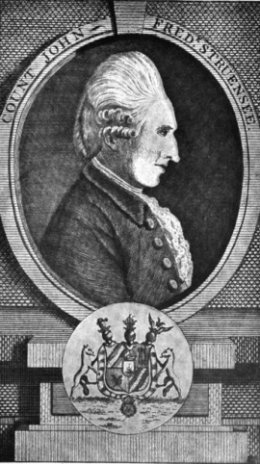 Such was the course that ended the rise of


 After a week of skillful interrogation, including psychological warfare and gathering evidence, police officers made a breakthrough. On September 29, this vicious criminal finally confessed to having raped and murdered the victim. On August 5, while loitering around Zhang Ying village, he stole a shirt and then walked to the vicinity of the Xinhua Road police station, where he saw Ms. Kang ride her bicycle into a corn-field path. He went after her, knocked her off her bike, dragged her into the field, beat her unconscious and raped her. He then used the shirt to strangle her to death.