1997: Pedro Medina, en flambe

The electric chair has gotten a bad rap in recent years, and nowhere is this more evident than in the 1997 Florida execution of Cuban refugee Pedro Medina.

The improper application of an electricity-conducting sponge caused a “crown of foot-high flames” to shoot from Medina’s head, in a botched execution that caused Florida to reexamine its use of the electric chair and accelerated the trend towards lethal injection as the preferred method of execution — modern, sanitary and humane. But electrocution was once preferred for just those very reasons — well, that, and politics.

The thought of designing an apparatus to stimulate death by electrocution first came to dentist Dr. Albert Southwick in 1881, who watched an drunk man touch the terminal of an electricity generator in Buffalo, New York. Impressed at how quickly and painlessly the man died, he mentioned the incident to his friend, a state senator, who promptly brought the matter to the attention of the governor. The state legislature was then asked to consider how modern day electricity might emerge as an alternative to the often grisly process of hanging, in which incompetent executioners often inadvertently subjected prisoners to slow deaths by strangulation or decapitation.

Several years later, an inventor by the name of Harold Brown, an employee of the famous Thomas Edison, designed the first electric chair, deliberately adopting the Alternating Current (AC) form of electricity because Edison did not want his Direct Current (DC) form associated with the gruesome business of death — a sordid chapter in the history of public relations. The first execution was carried out in New York State in 1890, but the novel method was far from foolproof: it took two attempts, and the inmate was reported to have gone down in the same sort of smoke, flames, and smell of Medina’s over a hundred years later.

Still, the method caught on, and over the course of the 20th century, the electric chair became an indelible symbol of the death penalty in the nation’s consciousness.

“The chair” didn’t begin to decline until the mid-1980s, when newspaper accounts about botched executions, together with the emerging technology of lethal injection, again prompted some states to reexamine their death penalty statues.

It was around this time that Pedro Medina first came to the US from Cuba, part of the Mariel boat lift of 1980, in which Fidel Castro “permitted” some 125,000 Cuban prisoners and mentally ill to depart from the Mariel harbor for the fertile shores of America. (Medina himself had been released from a psychiatric hospital in Cuba and diagnosed with illnesses including paranoid schizophrenia and major depressive disorder with psychosis.) The boatlift polarized public sentiment in the United States.

These factors combined to lend Medina, a black man, a low status indeed in the eyes of prosecutors and jurors when, two years after his arrival on American shores, he was convicted of murdering his neighbor, Dorothy James.

Medina was executed in Albert Southwick’s brainchild 15 years later, despite pleas from James’ daughter, Lindi James, who said that she did not believe Medina had killed her mother and that her mother would not have wanted him executed regardless, and from Pope John Paul II, who also made a public call for mercy on Medina’s behalf. Medina’s lawyers also filed a petition claiming he was insane and thus incompetent to be executed, but the Florida Supreme Court ruled that, while he had mental problems, he could still be executed.

Early in the morning on March 25, 1997, Medina went out in flames.

A crown of foot-high flames shot from the headpiece during the execution, filling the execution chamber with a stench of thick smoke and gagging the two dozen official witnesses. An official then threw a switch to manually cut off the power and prematurely end the two-minute cycle of 2,000 volts. Medina’s chest continued to heave until the flames stopped and death came. (From the Death Penalty Information Center’s botched executions page.)

The source of the malfunction was not immediately apparent; prison officials claimed the fire had been caused by a corroded copper screen in the electric chair’s headpiece, but later investigation revealed that it was due to improper application of an electricity-conducting sponge to Medina’s head. Attorney General Bob Butterworth hailed the deterrent value of malfunctions: “People who wish to commit murder, they better not do it in the state of Florida, because we may have a problem with our electric chair.”

Others, including the warden conducting the execution, were not as sanguine.

The debacle of Medina’s execution caused a media sensation and led to a case by another Florida death row inmate, Thomas Provenzano, claiming that lethal injection constituted cruel and unusual punishment prohibited under the Eighth Amendment.

Provenzano lost his case, but with the release of bloody photographs of the 1999 execution of Allen Lee Davis, more states began moving against the use of the electric chair. Of the six states that today retain it (Virginia, South Carolina, Kentucky, Tennessee, Alabama and, yes, Florida), none currently use it as their only method of execution.

Rather, lethal injection has become the norm.

But for how long? There may be no AC/DC marketing gambit in the new, modern business of death, and no crown of flames. But maybe all we’ve really done by moving to the needle is render invisible ongoing Medina-like botches.

On this day..

1945: Max Schlichting, for realism

On this date in 1945, a Hamburg coal worker was executed for an excessively realistic take on the war effort.

Although — or because — Germany’s administrative infrastructure was falling apart under the Allied onslaught late in World War II, its judiciary had no compunction about doling out death sentences.

While the overall number of cases dealt with by most special courts was much lower than in previous years, due to the gradual collapse of the court system, in these last months of the war some judges passed proportionally more death sentences than ever before. Legal officials continued to justify their brutal sentencing by claiming that this would prevent another ‘stab in the back’.

In other words: Clap louder!

Poor Max Schlichting, a coal worker with an unfortunate communist past, was sentenced to death for Wehrkraftzersetzung — “subversion” or “undermining the war effort,” the same thing they got Remarque’s sister on.

Specifically: he remarked to a soldier, in the aftermath of the American landing at Normandy, that Germany was going to lose the war. An undercover Gestapo spy overheard him.

Although hard evidence of Germany’s situation (German link) would have been difficult for a Hamburger to overlook, Schlichting received no clemency and was executed — six weeks before Hamburg surrendered to the Allies.

His sentence and (banal) last letter are recounted here, in German.

On this day..

1877: John D. Lee, for the Mountain Meadows Massacre

On this date in 1877, Mormon leader John D. Lee was shot at the site of (and for the crime of instigating) the Mountain Meadows Massacre 20 years before.

As the only person ever prosecuted for this dreadful affair, which saw 120 California-bound settlers slaughtered by a Mormon militia, Lee “was allowed … to carry to his grave Mormondom’s guilt for this horrible and barbaric act.” (Jan Shipps)

On this anniversary of Lee’s death, Executed Today interviews author Judith Freeman, whose historical novel Red Water tells Lee’s story through the eyes of three of his 19 wives.

You grew up Mormon — what brought you to this story? I gather that it wasn’t exactly daily discourse in your youth.

I found a copy of Juanita Brooks‘ book The Mountain Meadows Massacre in a used bookstore in Port Townsend, Washington, read it and was captivated by this story.

Growing up in northern Utah, I’d only heard vague, shadowy references to the massacre. It was the dirty little secret buried in the Mormon past — except for those people in Southern Utah who lived with that story as part of every generation’s experience and shame. I felt I had to write a novel about it, in part to try and understand this question: How do you get basically good people, like those Mormon settlers, to commit such evil?

You paint a picture of John Lee through the eyes of three of his wives. What kind of man was he — and how representative of the Mormon hierarchy would that be?

I think Lee was first and foremost a brilliant pioneer and survivalist and also a big blowhard, the kind of guy who would talk your head off — affable and a bit boring when it came to promoting his own virtues and experiences. He was self-aggrandizing, he’d do anything to make a buck, he had problems with the truth. He was a suck-up to Brigham Young who became his substitute father and then betrayed him.

He wasn’t entirely trustworthy because he put his own interests before all else. He could also be incredibly generous and kind, helpful to others. He wanted people to like him though they often didn’t, and he had an ingratiating quality. He was an orphan, with an orphan’s life-long neediness. In many ways I think he was good to his wives and cared deeply about his family — all sixty something kids and 19 wives. He was an amazingly talented man, skilled at many trades and businesses.

Was he representative of the Mormon Hierarchy? I don’t know. In some ways yes but I sense he was more sycophantic than some, and had a more amusing character than others, but what they all had in common was an absolute deference to church authority. I think I might have enjoyed meeting John D. Lee, he might have been more lively and fun than Brigham Young who strikes me as a misogynist and a brittle, cold man.

What about the women — three very different characters. What’s the sense you got of life for these women as pioneers, living in a polygamous family? How did they relate to one another, and how did the massacre and the execution of John Lee change their situation?

The women were also amazingly inventive as pioneers, strong, tough, formidable women though how can you generalize about 19 different personalities? Some liked each other and some couldn’t stand each other and the good thing was that Lee was a small industry and many of his wives had their own farms so they weren’t required to live on top of each other. He understood the “kitchen thing” when it comes to women, and said he wanted every one of his wives to have her own stove. The Lee family/families were devastated by his execution. His families were left penniless and destroyed, treated very cruelly, the women dispersed and shunned, the children shamed, and this shame was carried for generations.

To what extent is polygamy in the back story of the Mountain Meadows Massacre? What, for that matter, was the massacre really “about” in your judgment?

Polygamy had a small role to play in the massacre. The practice of polygamy, outlawed by the United States, was a part of what disturbed Washington and caused the federal government to send troops to Utah, which scared the Mormon populace into committing violent acts. One must remember that they had been the victims of violence and massacre, and fear turned in their minds.

What the massacre was really about, in my judgment, was the struggle for power in Utah. Would Brigham Young and the Mormon hierarchy control the territory and be masters of their own destiny, or would the federal government impose control of the “fiefdom”? The massacre came out of the idea the Indians could be made to carry out an attack and then the government would be forced to realize that if the Mormons were not allowed to control the territory and “their” natives, terrible things could happen. But the whole thing got out of control and took on a terrible life of its own.

A large party of Mormons, painted and tricked out as Indians, overtook the train of emigrant wagons some three hundred miles south of Salt Lake City, and made an attack. But the emigrants threw up earthworks, made fortresses of their wagons and defended themselves gallantly and successfully for five days! Your Missouri or Arkansas gentleman is not much afraid of the sort of scurvy apologies for “Indians” which the southern part of Utah affords. He would stand up and fight five hundred of them.

At the end of the five days the Mormons tried military strategy. They retired to the upper end of the “Meadows,” resumed civilized apparel, washed off their paint, and then, heavily armed, drove down in wagons to the beleaguered emigrants, bearing a flag of truce! When the emigrants saw white men coming they threw down their guns and welcomed them with cheer after cheer! And, all unconscious of the poetry of it, no doubt, they lifted a little child aloft, dressed in white, in answer to the flag of truce!

The leaders of the timely white “deliverers” were President Haight and Bishop John D. Lee, of the Mormon Church. Mr. Cradlebaugh, who served a term as a Federal Judge in Utah and afterward was sent to Congress from Nevada, tells in a speech delivered in Congress how these leaders next proceeded:

They professed to be on good terms with the Indians, and represented them as being very mad. They also proposed to intercede and settle the matter with the Indians. After several hours parley they, having (apparently) visited the Indians, gave the ultimatum of the savages; which was, that the emigrants should march out of their camp, leaving everything behind them, even their guns. It was promised by the Mormon bishops that they would bring a force and guard the emigrants back to the settlements. The terms were agreed to, the emigrants being desirous of saving the lives of their families. The Mormons retired, and subsequently appeared with thirty or forty armed men. The emigrants were marched out, the women and children in front and the men behind, the Mormon guard being in the rear. When they had marched in this way about a mile, at a given signal the slaughter commenced. The men were almost all shot down at the first fire from the guard. Two only escaped, who fled to the desert, and were followed one hundred and fifty miles before they were overtaken and slaughtered. The women and children ran on, two or three hundred yards further, when they were overtaken and with the aid of the Indians they were slaughtered. Seventeen individuals only, of all the emigrant party, were spared, and they were little children, the eldest of them being only seven years old. Thus, on the 10th day of September, 1857, was consummated one of the most cruel, cowardly and bloody murders known in our history.

Mark Twain, Roughing It

John Lee: murderer, scapegoat, or both? How did he come to be prosecuted at all, and how to be the only one prosecuted?

John D. Lee was both murderer and scapegoat. He was bold and careless enough to hang around the area after the massacre, and to prosper from his various businesses and appear almost indifferent to what had happened — perhaps he thought he had the protection of the church authorities who continued to insist the Indians had committed this atrocity. A lot of others who’d participated in the massacre left the area, driven out by fear and shame. But Lee hung on.

John D. Lee, seated beside his coffin just before his execution.

How he was thrown to the wolves by the church authorities is a long story, as is the story of his two trials. He was the easiest person to scapegoat. He took the bullet for his church, and I think the authorities felt that they could put the affair behind them once he was dead, and they did for a very long time, until brave little Juanita Brooks wrote her book in the 1950s and was the first to tell the truth: the Mormons did it.

Does the Mormon church have some unfinished reckoning here? If so — why, after all these years?

Who cares what I think? But in my opinion, of course they do. They need to stop saying it was a “local” affair, carried out by some “local” renegade fanatics in southern Utah. The whole situation that led to the massacre was put into motion by people high up in the church, but I doubt very much they’ll ever go there and admit that. Too many lawyers, too much money, too impossible to admit culpability of prophets, seers, revelators.

Finally, I just want to say that after writing Red Water and thinking about this massacre for the five years it took to research and write the book, this is what I came to believe about how you get good people to do bad things.

You need to get three things going: First, you have to make people afraid and use that fear to manipulate them (think of 9/11). Second, you need get people to obey some greater force or consciousness other than their own — the Mormons had a principle of Perfect Obedience where you were required to subject yourself to the authority of the priesthood and church elders, but this idea could as well be inculcated in the concept of patriotism, or military duty. The point is, you subdue your own conscience in favor of deferment to an outside force. Third, you make people think their system is better than the other guy’s, that you’re doing God’s will, that your sense of right is greater than theirs. If you can make people think they are doing God’s will, you can get them to do anything. Get these three things going, and you can get good people to commit great evil.

On this day..

1699: William Chaloner, Isaac Newton’s prey

(Thanks to Thomas Levenson of the Inverse Square Blog. Prof. Levenson is head of the Graduate Program in Science Writing at MIT, and author of the forthcoming Newton and the Counterfeiter.)

Early in the morning of March 22, 1699, William Chaloner raged.

Chaloner, a convicted coiner, refused the Newgate Jail Chaplain’s plea to show proper penitence, shouting with “more Passion than Piety,” of his wronged state and unmerited destination (according to his anonymous biographer in the one surviving account of his life). In time, he calmed sufficiently to accept the sacrament, and so proceeded to the execution convoy to be borne from Newgate to the hanging tree at Tyburn (now Marble Arch, just to the west of the old City of London).

There Chaloner’s fury mounted again, and he shouted to the crowd, drawn as always to the spectacle of public hanging days, that “he was murder’d … under pretence of Law.” He mounted the ladder to the top of Tyburn’s gibbet. He prayed, and then pulled the hood over his eyes without aid. When the moment came, the executioner’s men pulled the ladder out of the way and Chaloner dangled, twitching and jumping (the “hangman’s dance”) as long as it took –- minutes, at least — for life to choke out of him. Richer men often paid the hangman to pull on their legs to speed death. Not the destitute Chaloner. He had to choke till he drooped, to the greater amusement of the crowd.

The investigator who had sent Chaloner to the noose was not present; or at least nowhere in his copious notes and letters did he admit to curiosity about the fate of a man whose pursuit occupied him for almost three years. The Warden of His Majesty’s Mint had more pressing duties to perform, and so Isaac Newton allowed the date of Chaloner’s death to pass unmarked.

Isaac Newton? That Newton?
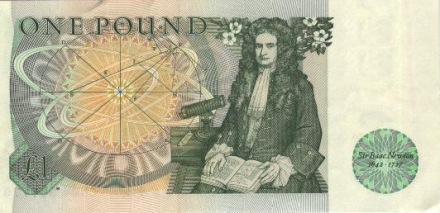

Appropriately, Newton himself wound up on the currency.

The accidents of place and time that brought the man who was recognized in his own day as the greatest mind of the age into conflict with Chaloner, an uncommonly gifted common criminal have fascinated me since I first learned of them through reading Chaloner’s last, piteous letter to the implacable Newton, written days before the hanging. In it Chaloner begged, writing “O dear S[i]r nobody can save me but you O God my God I shall be murderd unless you save me.”

What I wanted to answer was the obvious question: how and why did Isaac Newton come to pass judgment on the life of any other man? I had always thought of him as the nearly cloistered scholar of Trinity College, Cambridge, his home for more than thirty years. It was there he performed the experiments and the calculations that led him, in 1687, to write his masterwork, Philosophiae naturalis principia mathematica the Mathematical Principles of Natural Philosophy — better known simply as the Principia -– as well as pursuing his decades-long program of alchemical research.

So how, I wondered, did he end up in London, wallowing in the muck with the capital’s criminal underground?

Not to put too fine a point on it, finding out has turned into a book Newton and the Counterfeiter, published by Houghton Mifflin Harcourt and scheduled for release on June 4. But, to anticipate that longer story, here is the gist: Newton, after Principia found himself an international celebrity, and, as one of Cambridge University’s representatives to the Convention Parliament of 1689 that legitimized William of Orange‘s seizure of the English throne from the deposed Stuart King James II, he had nearly a year to enjoy the acclaim of London and Europe’s thinking and political elites before returning to the quiet of Cambridge, then a small town of about 5,000 inhabitants. It was an intellectual backwater too, especially compared to the big city in which he encountered figures like Robert Boyle, John Locke, Robert Hooke (whom he despised), Samuel Pepys (whom he did not) and so on. So he started, with Locke’s help, to seek a patronage appointment that would allow him to live comfortably in London. It took six years to find the right one, but ultimately he was offered the Warden’s post at the Mint. That job was supposed to be a sinecure, a nearly no-show position that would pay him a very comfortable wage.

And so it would have turned out were it not for the terribly debased state of England’s silver coinage, which had deteriorated to about half its legal weight for a whole host of reasons. So Newton arrived at a time when (a) the Mint was attempting to recall and recoin the entire stock of silver money for the entire country –- all the smaller units of money essential to everyday transactions –- and (b) coining, counterfeiting, was flourishing as enterprising men and women set out to get rich by filling in the gaps in the money supply with coins that never felt the stamp of an official Mint die. As Warden, it became Newton’s duty to see that legal money was produced fast and fairly, and to pursue all those who set up on their own.

Of those who did none were more technically skilled or ambitious than William Chaloner. His is a fascinating story, told at much greater length in my book, in which you see the currents of rapid economic change, class and ambition all converge within this one, barely remembered life. He was born desperate poor, a weaver’s son in Lincolnshire. He ran from his first apprenticeship to London, where he started out at the very bottom of the criminal ladder, hawking porn on street corners. He rose rapidly, first with his clearly impressive gift of gab, and then, after falling in with someone who knew how to gild surfaces, as the central figure in a series of ever grander schemes to counterfeit gold and silver money. He had sidelines as an informer, betraying conspiracies that he would himself set up, but his central gift and fascination was in the creation of fakes. Ultimately, he was one of the first to recognize the power of paper, and he started to counterfeit a variety of the early experiments with paper money and bank instruments.

In this sense Chaloner’s career –- and Newton’s urgent pursuit of him –- offer a window into the birth of the modern idea of money, of finance. And one of the things that fascinated me about this case is the degree to which this old story tracks some of our immediate problems. England’s and Europe’s economies were in rapid revolution in the late seventeenth century. The old idea of money as a chunk of metal with a pretty picture on it could no longer come close to accommodating the kind of enterprises governments and individuals wanted to undertake, from war to the funding of global webs of trade. And so people came up with all kinds of different ways of trying to represent value and exchange and even the idea of the changing worth of an investment over time. And the people making these experiments did not fully understand the implications of each expedient they tried. The last piece of paper Chaloner counterfeited was called a Malt Lottery Ticket, and it was at once simply paper money, a bond, and a gamble. Traders attempted to value these kinds of things in embryonic financial markets -– which would in a couple of decades blow up in a financial collapse that possess some striking similarities to our current predicament. Newton himself would lose a considerable fortune in that collapse, a sum worth a couple of million pounds, maybe more, in 21st century money.

It was that sense of precariousness that made the pursuit of counterfeiters so urgent in the midst of the late 17th century; England’s money supply was genuinely at risk, and no one had a good grasp of what it would take to make both the daily experience of small transactions and the high finance of war and trade go smoothly. So anyone threatening either or both levels of money was public enemy number one.

Of those who tried their hand at currency crime, Chaloner was the most accomplished, and notorious. By his own admission he counterfeited on the order of 30,000 pounds worth of currency over a seven- or eight-year career, an enormous fortune for the day. His big mistake, though, was to challenge Newton directly, accusing him in public of incompetence or fraud in his management of the recoinage of silver money between 1696 and 1698. He laid that charge both in testimony to Parliament and in a pamphlet he had printed for public distribution, and the scandal could genuinely have wounded Newton, were it not for the influence of his friends in power in Parliament at the moment.

It was enough, certainly, to propel Newton into an extraordinary investigation, an exercise of what may be seen as true non-fiction scientific detection. He set up a net of agents and informers throughout the worst neighborhoods and pubs in London, tracking any instance of coining he could find, interrogating suspects at the Tower or in jail, trying to build a web of connections around Chaloner. That story is contained within a collection of several hundred depositions and summaries of interrogations, all signed by Newton, that have survived, largely unexamined until now. Those records show that it took Newton almost two years in all, but aided in the end by listeners whose lives he held at his disposal inside Chaloner’s cell at Newgate, he managed to collect a sufficient weight of testimony to ensure that he could convict a prisoner clever enough to have escaped several previous attempts at prosecution.

The trial itself was something of a sham. Chaloner had feared being charged on the Malt Lottery Ticket forgery, (as we know from the accounts in Newton’s files of informers in the cells) but Newton actually presented evidence of a coining spree that almost certainly did not take place as described. Among other confounding facts, Chaloner was supposed to have made six different denominations of both silver and gold coins in a single day, which would have involved an enormous confusion of tools and materials that ran counter to basic counterfeiting practice.

No matter: the sheer volume of precise detail that Newton’s witnesses were able (or convinced) to provide produced a conviction within a very short time –- the whole trial took no more than an hour or so on March 3, 1699. There was a truncated appeal process -– really just a request for clemency from the crown, which was denied, and Chaloner’s sentence came down.

Formally, he had been found guilty of high treason, an assault upon the crown in the form of the king’s likeness and authority represented on the face of England’s coins. The punishment for high treason was essentially that suffered by William Wallace of Braveheart fame: to be strangled to the point of death, to be disemboweled whilst still living, to be beheaded and then quartered. By the date of Chaloner’s execution, the punishment had eased this far: convicted coiners were drawn to the place of execution on a rough sledge, subject to all the filth and abuse London’s open-sewered streets possessed; then hung until dead, and then, on rare occasions, to suffer post-mortem dismemberment. Chaloner himself was not, so far as any records revealed, actually cut into pieces. (As a gesture to public decency, women convicted of coining or other capital crimes were not supposed to be hung, lest their twitching at rope’s-end seem lewd. So they were burnt instead – though by the eighteenth century it was common to strangle them to death before lighting the pyre. Mercy, after the fashion of the times.)

Levenson lectures on his book at the MIT Writer’s Series.

One last note in a post gone much too long: Newton was involved in a number of counterfeiting investigations, and by some reckonings at least two dozen people went to their deaths as a result. Some historians, notably Frank Manuel, have speculated that Newton pursued this work with implausible eagerness, out of a kind of frustrated blood lust born of his abandoned and unhappy childhood.

This seems to me to be nonsense. The specific historical context matters here: Newton did not author the bloody code, nor did he send everyone he could to the gallows. Rather, the record of his depositions shows him to be simply a relentless practical man doing his job. He used little fish to catch big fish, and at least some of those low on the ladder received their escape from the gibbet. What you can see here, surprisingly, is the birth of a modern idea of a civil service. The Warden -– even Isaac Newton — was simply a man in a job doing the functions of that job, which included organizing the investigation and prosecution of counterfeiters.

What’s striking, of course, is that this civil servant, this bureaucrat, happened to possess the greatest scientific mind in history. And that’s the real sting in this tale. There is a connection between Newton’s pursuit of counterfeiters and his attempts to understand nature. He did employ the same resources of concentration and logical organization in his criminal investigations that he did when he tackled any problem. But more than the commonality of work habits, there is, I think this link: Newton can be seen as many people: the mathematician, the theoretical physicist, the empirical experimentalist, the alchemical mystic, the heretically devout religious thinker –- and the government functionary too.

And yet he was, of course, a single man, one with many interests, but ultimately with a consistent ambition, to reduce to order the complexity of any problem which was posed to him. Newton did not expect as Warden to have to chase crooks; when he found out that was part of the job he wrote a rather whiny letter to the Treasury to see if he could wriggle out of the duty. When he found he could not, he responded as he always had to the job at hand.

As one consequence, on this day three hundred and ten years ago, William Chaloner died.

On this day..

1804: Louis-Antoine-Henri de Bourbon-Condé, duc d’Enghien

It was worse than a crime, it was a blunder on this date in 1804.

Napoleon shocked, just shocked, his admirers and more especially his foes by having a royal relative ventilated at Vincennes for the trifling offense of plotting against his life.

The particular allegations against him may have been formulated with greater haste than precision, but the duc d’Enghien actually had been taking English coin to overthrow Republican France for the past decade, and nonchalantly avowed as much at his drumhead tribunal.


The Duke awaiting execution in the predawn gloom in the moat of the Chateau de Vincennes. The pathos of the accompanying dog is mandatory for this scene, as in this Harold Piffard illustration. This spot is now marked with a monument.

After surviving one too many assassination attempts, Napoleon was in the market for someone to make an example of, and the Bourbon scion, hanging about the French frontiers conniving with the English, certainly qualified.

The dispatch of his military commission, which rammed through a conviction the night of the 20th and arranged the fusillade immediately thereafter, raised self-righteous hackles among rival monarchs who had little enough compunction of their own about politically expeditious regicide.

Conventional disdain for the shooting (as with this (pdf) from the Fourth Estate), reached far and wide, and appears in Tolstoy’s War and Peace as a subject for (spurious) gossip in the Russian salons.

The group about Mortemart immediately began discussing the murder of the Duc d’Enghien. The vicomte said that the Duc d’Enghien had perished by his own magnanimity, and that there were particular reasons for Bonaparte’s hatred of him.

The vicomte told his tale very neatly. It was an anecdote, then current, to the effect that the Duc d’Enghien had gone secretly to Paris to visit Mademoiselle George; that at her house he came upon Bonaparte, who also enjoyed the famous actress’ favors, and that in his presence Napoleon happened to fall into one of the fainting fits to which he was subject, and was thus at the duc’s mercy. The latter spared him, and this magnanimity Bonaparte subsequently repaid by death.

Pierre Bezukhov, the novel’s spirit-questing Russian noble then in the thrall of the Little Corporal, has the rashness to defend d’Enghien’s execution.

“The execution of the Duc d’Enghien,” declared Monsieur Pierre, “was a political necessity, and it seems to me that Napoleon showed greatness of soul by not fearing to take on himself the whole responsibility of that deed.”

Though that defense went over like a lead balloon with the partygoers (and with Tolstoy), others have ventured to stand in the breach for the Corsican, who assuredly attracts far more opprobrium as a commoner shooting a royal traitor than he would have had their bloodlines been reversed. Bonaparte enthusiasts, like those of the Napoleon podcast, are particularly susceptible to such impolitic sentiment.

[audio:http://napoleon.thepodcastnetwork.com/audio/tpn_napoleon_20060920_011.mp3]

But Louis-Antoine-Henri normally gets better sympathy than that, as he did with the like of Chateaubriand, who resigned his Napoleonic commission in outrage.

And his death — far more notable than anything he did in life — is supposed to have occasioned the quip, “C’est pire qu’un crime, c’est une faute”: “it is worse than a crime, it is a blunder.” (Or, “it is worse than a crime, it is a mistake.”) Often attributed to Talleyrand, it was more likely uttered by his machiavellian mirror image, Joseph Fouche.

(See here for more on the phrase’s lineage. Talleyrand was so strongly in support of d’Enghien’s death that he is sometimes accused of steamrolling Napoleon on the subject. The wily minister destroyed some evidence and effected a timely volte-face when Bonaparte fell.)

The First Consul — he would crown himself Emperor later in 1804 — never had use for any such soft-pedaling, and unapologetically avowed the Duke’s execution literally to the end of his life.

Dying in exile on St. Helena years later, it is said, Napoleon read a calumny upon the d’Enghien shooting in the English press and promptly hauled out his already-completed will to insert in his own hand his lasting justification for the affair.

I caused the Duc d’Enghien to be arrested and tried, because that step was essential to the safety, interest, and honour of the French people, when the Count d’Artois* was maintaining, by his own confession, sixty assassins at Paris. Under similar circumstances, I should act in the same way.

* The Comte d’Artois was, at the time of Napoleon’s writing, the heir presumptive to the restored Bourbon monarchy — and he did indeed succeed in 1824 as Charles X. In 1804, the future king was in exile in Britain funding hits on Bonaparte and kindred counterrevolutionary stuff. For adherents of the much-disputed theory that Napoleon was poisoned in his island captivity, d’Artois figures as a possible instigator of the murder.

On this day..

1809: Mary Bateman, the Yorkshire Witch

It’s the bicentennial today of the unnatural passing of the Yorkshire witch.

Mary Bateman ran her fraudulent fortune-telling business under the name “Mrs. Moore”, and had some years’ success separating fools from their money without running afoul of the law.

In fact, she outlived her fatal crime — plying with poisoned puddings a bilked couple, lest they realize their medium was defrauding them — by months, even continuing to leach money off the surviving husband after her ministrations had killed the wife.

Let’s just say she knew how to pick her clientele.

When the sucker finally got wise to the scam,* the jig was up for Mary in a sensational trial. (It’s recounted at length here — and capped by what must have a grimly comic spectacle when Mary attempted to plead her belly and the women in the courtroom bolted for the exits to avoid impaneling on a jury of matrons to adjudge the claim. The judge ordered the doors shut up before his jury pool could escape.)

Three days after conviction, she was hanged at York Castle before a crowd of thousands, who subsequently paid (.pdf) to see her corpse (and to get cured cuts of her skin as charms: even unto death, Mary had ’em swallowing her snake oil).

After execution, Mary Bateman’s body was given over for dissection in Leeds — remaining a curio worthy of public preservation to this day at that city’s Thackray Medical Museum. (Update: The museum reports that Ms. Bateman’s remains were only on loan from Leeds University, and have since been returned.)

* Source of enlightenment? Not the death of his wife, but the fact that magical financial windfalls promised by the Yorkshire witch had failed to materialize after two-plus years of paying her.

On this day..

1938: A pig, experimentally

EXECUTION TEST MADE WITH PIG

San Quentin’s Lethal Chamber Tried Out

SAN QUENTIN, March 19 [1938]. (AP) A runt pig* died today in a slow-motion test of San Quentin’s lethal gas chamber.

The test required thirty-five minutes before the pig was formally pronounced dead, but prison officials said “nowhere near that time” would be necessary for execution of a condemned convict in the gas chamber.

The trial execution was conducted in slow motion to enable prison officials and guards to learn details of the operation. The test was conducted by representatives of the manufacturers of the chamber.

* According to the Los Angeles Times (whose March 24, 1938 edition captions a photograph of Warden Court Smith peering inquisitively through the gas chamber’s window), it was “a little thirty-pound brown pig.” According to the backgrounder in When You Read This, They Will Have Killed Me — which concerns an altogether more famous gas chamber subject — the swine was “a 155-pound pig named Oscar, raised on the prison farm.”

On this day..

1789: Catherine Murphy, Britain’s last burning at the stake

On this date in 1789, Catherine Murphy was led past the hanging bodies of her husband and their other male codefendants at Newgate Prison, secured to a stake, and put to the last burning at the stake in English history.

The convicted coiners — counterfeiting rated as high treason at the time — were the last heirs to gender-specific execution methods before the Treason Act of 1790 gave coin-shaving ladies equal access to the halter.

Though Murphy thereby earned an unenviable historical footnote, the de facto practice on the scaffold had long since been changed to spare lawmen the spectacle of a woman roasting to death. Murphy, in fact, was killed by hanging — and the “burning” part of the sentence only imposed upon her corpse. (This, however, was still more than enough: NIMBYing prison neighbors appalled by the stench of burning flesh had lent their support to the Treason Act’s reforms.)

On this day..

2006: Yuan Baojing, gangster capitalist

On this date in 2006, one of Beijing’s wealthiest plutocrats (along with two of his relatives) caught a lethal injection for the shady side of his business.

Yuan Baojing, “stock market whizzkid”, had risen from the nameless masses of China’s countryside to prosper in “Red” China’s authoritarian capitalism.

Though worth billions (or at least hundreds of millions), Yuan went down over the trivial sum of $9 million — the amount he reckoned a business associate had taken by fraud.

But then, it’s always impolite to count the corpses stuffed into the pillars of capital. The surprise here is that Yuan got caught: he’d hired a dirty cop to kill that business partner, but after the plot failed the cop started blackmailing the tycoon. Yuan responded by hiring his brother and cousin to pop the cop.

Yuan survived a scheduled execution the preceding October by transferring billions in assets to the Chinese government — understandably triggering some complaints about fair play.

Those billions bought him five months.*

On this date, he and his hirelings were given a public trial in Liaoyang, followed by an immediate lethal injection in one of China’s mobile execution vans.

* The mogul’s wife, Tibetan dancer Zhou Ma, was herself swindled during this period as she spread around cash trying to save her husband’s life.

On this day..

2005: Mohammed Bijeh, the desert vampire

On this date in 2005, Iran “desert vampire” was flogged to the point of collapse and hanged before a bloodthirsty throng in Pakdasht.


Mohammed Bijeh collapses during his flogging (top); then, as he is hoisted by a crane — with what one would take to be the stab wound from a victim’s brother visible on his back. More frightful photos of this execution here.

Bijeh confessed to raping and murdering 16 boys age 8 to 15 over a yearlong spree.

His modus operandi? Lure them into the desert on the pretext of hunting animals.

Unsurprisingly a figure of intense public hatred, Bijeh stolidly endured his own death before a jeering mob.

Riot police held back the angry crowd, but at one point a brother of one of the victims managed to break through and stab Bijeh in the back.

After 100 lashes, the desert vampire was noosed to a crane arm by one of the victims’ mothers, and hoisted 10 meters into the air for public strangulation, to the cheers of onlookers who had to be restrained from savaging the body when it was finally brought down.

An accomplice, Ali Baghi, somehow avoided execution and got off with whipping and a prison term.

On this day..