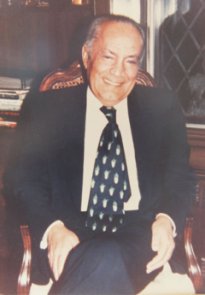
1858: William and Daniel Cormack, for murdering John Ellis

“Land agents” — the rent-squeezing fist of distant landlords — were not popular people in Ireland. These bill collectors literally ran people out of house and home: one late 19th century land agent in Ireland recalled in his memoirs having received over a hundred threatening letters and, in November 1884, having his house in Kerry dynamited.

So the 1857 murder of Tipperary land agent John Ellis drew little surprise (his life had been attempted at least twice before, when he evicted people to prospective starvation during the Great Famine), and drew scarcely any mourning.

“He had been earning this for many a year, if any man however bad could be said to earn such an end, by turning people out in the road,” an observer noted. That observer was the Archbishop … talk about a tough crowd.

Since £90 had been left undisturbed in the murdered man’s pockets, authorities were pretty sure it was no passing robber that got the best of John Ellis but someone who targeted the hated land agent. However, the only witness — and the word applies only in the loosest sense — was the teenage cart-driver who had been ferrying Ellis home near midnight when his passenger had been shot by ambush from the bushes. Young Thomas Burke hadn’t seen anything useful.

Still, within only days, police had zeroed in on their suspects — with classic tunnel vision.

In fine, the working official hypothesis was that Ellis had been shot over a personal grudge, and not because of his distasteful profession. William and Daniel Cormack had a sister who had just given birth out of wedlock in the poorhouse; they had another sister who was known to be carrying on with John Ellis, who was a notorious cad during his downtime between evictions. The idea was that the brothers shot Ellis to preserve their one sister from the other sister’s fate.

With no actual evidence to buttress this just-so story, John Law got to twisting arms. An 11-year-old girl was parked in solitary confinement for two months to try to get her to incriminate the Cormacks.

The child, to her glory, stubbornly refused to do so. But Thomas Burke, the cart-driver, could not equal her steel. After initially deposing that he had seen nothing — it was very dark, after all — he managed to “remember” that he actually had seen the Cormacks on the scene after all. Another man also “verified” this testimony.

On the strength of these eminently impeachable eyewitnesses the Cormacks were doomed to die. Burke would later admit that he lied, and 2,000-plus people signed a petition pleading for a pardon.

None was forthcoming.

Mounting a public scaffold at Nenagh for a crowd welling with pity, Daniel Cormack made a dying declaration that everyone believed: “Lord have mercy on me, for you know, Jesus, that I neither had hand, act, nor part in that for which I am about to die. Good people, pray for me.”

This rank injustice only rankled more* as years passed.

Fifty-two years later the hanged boys were exhumed from their graves in Nenagh Gaol and given a long honorary procession to their native town of Loughmore, where they were laid to rest in a prominent white mausoleum that can still be visited today.

The plaque at that structure records the closest thing to the verdict of history upon the case:

By the Irish Race in memory of the brothers DANIEL and WILLIAM CORMACK who for the murder of a land agent named ELLIS were hanged at NENAGH after solemn protestation by each on the scaffold of absolute and entire innocence of that crime, the 11th day of May 1858. The tragedy of the brothers occurred through false testimony procured through GOLD and terror, the action in their trial of JUDGE KEOGH, a man who considered personally, politically, religiously and officially was one of the monsters of mankind, and the verdict of a prejudiced, partisan packed perjured jury. Clear proof of the innocence of the brothers afforded by ARCHBISHOP LEAHY to the VICEROY of the day but he nevertheless gratified the appetite of a bigoted, exterminating and ascendancy caste by a judicial murder of the kind which lives bitterly and perpetually in a nation’s remembrance.

The excellent Irish History Podcast site is all over this story, with a detailed post and a heart-wrenching podcast episode.

* A later ballad (just one of several) ramps up the nationalist-confrontation factor for the age of Fenianism … and fabricates the detail of an exculpatory thunderstorm.

In the year of fifty eight, my boys, that was the troublesome time
When cruel landlords and their agents were rulers of our isle.
It was then that Ellis was shot down by an unknown hand.
When the news spread round Killara that Trent’s agent he was shot,
The police were then informed and assembled on the spot.
They searched every field and garden, every lane and every shed,
Until they came to McCormack’s house where two boys were in bed.

They accused these boys of murder from information they had got
From the coachman who was driving at the time that Ellis was shot.
They said that they were innocent, but ’twas all of no avail.
They were handcuffed and made prisoners and conveyed to County Gaol.
At the Spring Assizes these two young men stood their trial in Nenagh town.
By a packed jury of Orangemen, they were guilty found.
The judge addressed the prisoners. He asked what they had to say
Before he signed their execution for eleventh day of May.

“In Mill Killara we were reared, between Thurles and Templemore,
Well known by all inhabitants around the parish of Loughmore.
We’re as innocent of shooting Ellis as the child in the cradle do lie,
And can’t see the reason, for another man’s crime, we are condemned to die.”
The execution it took place, by their holy priest reconciled, their maker for to face.
Such thunder, rain and lightning has ne’er been witnessed since
As the Lord sent down on that day, as a token of their innocence,
That their sould may rest in heaven above as their remains rest in Loughmore.

On this day..

1794: Elisabeth of France, sister of the king

The 25-strong batch dispatched to the guillotine on the Place de la Revolution during the Terror on this date in 1794 included Princess Elisabeth, the sister of the late guillotined King Louis XVI.

Princess Elisabeth (English Wikipedia entry | French) was the staunch conservative* of her family’s generation and not afraid to advertise it.

Required by the revolutionary tribunal to identify herself, she retorted (since her brother’s death passed the succession to the imprisoned child Louis XVII), “I am called Elizabeth Marie de France, sister of Louis XVI, aunt of Louis XVII, your King.” The papers just reported that she said “Elizabeth Marie.”

This fate cannot have surprised her: her correspondence anticipates a bloody reckoning with the revolutionary “monsters from hell” from years earlier, and reflects the figure in the royal household pushing the king and queen on immoderate courses like their famous attempted escape. (Elisabeth posed as a maid with the fugitive party.) “The Assembly is still the same; the monsters are the masters,” she wrote in February 1790. “The king, and others, from the integrity of their own natures, cannot bring themselves to see the evil such as it is.”

Elisabeth was nevertheless quite attached to her brother and her sister-in-law, and swore an oath to keep with Louis XVI and Marie Antoinette during the royal couple’s harrowing attempt to ride out the revolution. She courageously quaffed the every terror that family endured all the way to the dregs; when the mob stormed the Tuileries on June 20, 1792, she was momentarily mistaken for the queen and thereby put in peril of her life. “Do not undeceive them!” she warned an associate who was about to save her by correcting the misapprehension.

Elisabeth’s correspondence shows her not “merely” self-sacrificing but a keen observer of events who pushed her brother to rein in the revolution by force … and pushed her exiled brother the Comte d’Artois** to do likewise. For Elisabeth, bloodshed would be necessary, and desirable sooner than later — in contrast to the national-reconciliation stuff the doomed king was still hoping for.

By the end Paris of the Terror probably didn’t really need any better reason to cut off Elisabeth’s head than the fact of her bloodlines — “sister of the tyrant.” There are enough little hagiographies out there concerning Elisabeth’s piety and loyalty, however, that some think she should eventually be proposed as a candidate for Catholic canonization.

* She might as well be: royals couldn’t save themselves even by going full Republican.

** The future King Charles X.

On this day..

1979: Rahim Ali Khorram and Habib Elghanian, millionaire businessmen

Iranian Revolution firing squads claimed seven lives on this date in 1979, including two multimillionaire businessmen.

One of the businessmen was Rahim Ali Khorram, “an immensely rich contractor who built roads and airports for the government, and sometimes used his 2,000-man work force as a political shock force in support of the Shah.” That quote is from a New York Times profile of Khorram’s son, Hossain, who says that he himself was led out for a mock-execution not long after. (Hossain also says that his father was dead or dying of a heart attack as he was dragged out for execution.)

The charges against Khorram pere consisted of “operating gambling dens, cabarets and a prostitution ring* and feeding a man to a lion in his amusement park.” No lie. He was supposed to have an entire secret necropolis in that park stuffed with the bodies of his enemies. (New York Times, May 10, 1979.)

Habib Elghanian

The other businessman was the Jewish-Iranian plastics mogul Habib Elghanian.

Elghanian was the first Jewish person executed during the Iranian Revolution. His death on charges of spying for Israel, fundraising for Israel, and “friendship with the enemies of God” for having met with Israeli politicians, greatly alarmed Iran’s Jewish community: many fled the country, something Elghanian had pointedly refused to contemplate.

Though Elghanian allegedly claimed not to be a Zionist, he had investments and contacts in Israel — and a radio denunciation made clear to what extent such an association would be anathematized going forward.

He was a disgrace to the Jews in this country. He was an individual who wished to equate Jewry with Zionism … the mass of information he kept sending to Israel, his actions to achieve Israel’s designs, the colossal sum of foreign exchange and funds he kept transferring to Israel; these are only samples of his antinational actions; these were the acts used to crush our Palestinian brethren. (Source)

Weirdly, this execution has made news more recently: the Stuxnet computer worm, which is widely thought to have been engineered in Israel to attack Iran, contains the string 19790509. It’s been hypothesized that this apparent reference to May 9, 1979 might allude to Elghanian’s execution.

* Alleged clientele: the already-executed Gen. Nematollah Nassiri.

On this day..

1979: Twenty-one by revolutionary courts of the Iranian Revolution

At 5 a.m. today, 21 people were shot in Tehran by sentence of the previous day’s revolutionary court — the largest mass-execution since the Iranian Revolution three months prior. “Revolutionary courts consolidate the gains of the revolution,” exulted an official newspaper.

While the bulk of this morning’s condemned were lower-ranking Savak personnel or former policemen, several distinct VIPs were also shot along with them.

The names of all 21 people executed this date can be perused by date-searching the Iran Human Rights Memorial database.

On this day..

1946: Anton Mussert, Dutch collaborator

On this date in 1946, the Dutch fascist leader Anton Mussert was shot

Mussert was a young engineer who came to the fore in the interwar period as a strident right-wing populist. He co-founded in 1931 the Netherlands’ homegrown Nazi knockoff, the Nationaal-Socialistische Beweging; by 1935, it was polling 300,000 votes.

Mussert of course welcomed the German incursion into the Netherlands on the way to someplace else. That put the Dutch under wartime Nazi administration, but Mussert didn’t score a Quislingesque head-of-state plum out of the arrangement.

Instead, Mussert found himself brusquely shut out of any real power; the Austrian Arthur Seyss-Inquart ran the country instead, and would eventually hang via the Numremberg trial for his occupation atrocities, such as the wholesale deportation of the Dutch Jewish population that swept up diarist Anne Frank. Plum or no, however, what Mussert had done was more than enough to elevate him to the most conspicuous Nazi collaborator in the postwar Netherlands.

Mussert was captured after the war and shot at the open-air location near The Hague where over 250 people had been put to death during the war years.

On this day..

1958: Vivian Teed, a first and a last

The last person hanged in Wales was Vivian Teed on this date in 1958; he was also the first hanged (in Wales or anywhere) under the new Homicide Act of 1957.

Teed went to rob a Fforestfach post office and was surprised to find 73-year-old postmaster William Williams not only present but in a mood to resist him. The thief had brought along a hammer in case he needed to force a door or something, so he grabbed it and hammered Mr. Williams … over and over and over. Twenty-seven times. Then he rifled the station as planned while the mortally wounded old man moaned and twisted, unable to come to his feet because the floor was so slick with his own blood.

“The defence is not that this man did not kill the unfortunate postmaster,” his attorney told the jury. “That tragic fact is true. The defence is that when the accused did it he was suffering from abnormality of the mind which impaired substantially his mental responsibility for what he did when he killed the postmaster.”

After many decades when hanging was the mandatory sentence for the crime of murder (even though in practice not every murder resulted in an execution), public consternation at certain sensitive cases like those of Ruth Ellis and Derek Bentley had driven a legal reform whose intended upshot was confining the death sentence to the proverbial worst of the worst.

The Homicide Act created a new subcategory “capital murder” — especially heinous murders, such as killing a policeman or committing murder in the course of a theft. Vivian Teed went to the gallows under the latter statute.

But the Homicide Act also removed certain types of homicide from the murder category altogether — notably for Teed’s purposes, a new defense of “diminished responsibility” was explicitly authorized and defined. This defense would have saved the mentally impaired Bentley. Now Teed tried to claim that an “abnormality of the mind which impaired his mental responsibility” was what really hammered William Williams’s skull.

Only one holdout member of the jury bought this, but after a number of hours and a couple of separate attempts by the panel to declare itself deadlocked, she or he finally came around and voted to convict. Teed hanged at Swansea Prison seven weeks later.

On this day..

1937: Camillo Berneri, anarchist intellectual

On this date in 1937, the Italian anarchist Camillo Berneri was kidnapped from his home by in Barcelona by armed paramilitaries. Berneri was shot that night.

Berneri (English Wikipedia entry | Spanish | timeline) had once been a University of Florence professor, but was forced into exile for opposing the fascist conquest of power in Italy.

When a coup threatened a similar right-wing conquest of power in Spain, Berneri organized the first column of Italian volunteers to oppose it.

International brigades poured into Spain to fight for the Republican government, but not everybody in the “popular front” was on the same side — a fact which became horrifyingly clear during Barcelona’s “May Days”, a week of internecine bloodletting in Republican Catalonia.

Anarcho-syndicalists of the CNT party and anti-Stalinist communists of POUM were the ones whose blood was mostly let; indeed, it might better be called a purge. The Moscow-backed Communist Party opposed the power of its putative comrades as much as or more than that of Franco. During the May Days, the Communists’ Catalan ally, a party called the PSUC, essentially took over Barcelona with the help of thousands of Assault Guards and killed, arrested, or dispersed the anarchists and Trotskyites.

Berneri clearly saw it coming, quoting Pravda in an April 1937 letter to the anarchist Health Minister criticizing his participation in the Popular Front government: “As for Catalonia, the purging of Trotskyist and anarcho-syndicalist elements has begun; this work will be carried out with the same energy with which it was done in the USSR.”

The British writer George Orwell served in a POUM unit, and the last third or so of his Spanish Civil War memoir Homage to Catalonia attempts to make sense of the chaotic scene.

Smitten when he arrived in Barcelona the previous December — “the first time that I had ever been in a town where the working class was in the saddle”* — the writer scoffed at the Communists’ official justification that anarchists and friends were a “counter-revolutionary” element, or even in actual league with their nationalist enemies.

It seemed queer, in the barber’s shop, to see the Anarchist notice still on the wall, explaining that tips were prohibited. ‘The Revolution has struck off our chains,’ the notice said. I felt like telling the barbers that their chains would soon be back again if they didn’t look out.

I wandered back to the centre of the town. Over the P.O.U.M. buildings the red flags had been torn down, Republican flags were floating in their place, and knots of armed Civil Guards were lounging in the doorways. At the Red Aid centre on the corner of the Plaza de Cataluña the police had amused themselves by smashing most of the windows. The P.O.U.M. book-stalls had been emptied of books and the notice-board farther down the Ramblas had been plastered with an anti-P.O.U.M. cartoon — the one representing the mask and the Fascist face beneath.

Down at the bottom of the Ramblas, near the quay, I came upon a queer sight; a row of militiamen, still ragged and muddy from the front, sprawling exhaustedly on the chairs placed there for the bootblacks. I knew who they were — indeed, I recognized one of them. They were P.O.U.M. militiamen who had come down the line on the previous day to find that the P.O.U.M. had been suppressed, and had had to spend the night in the streets because their homes had been raided. Any P.O.U.M. militiaman who returned to Barcelona at this time had the choice of going straight into hiding or into jail — not a pleasant reception after three or four months in the line.

Also a fighter of the liquidated POUM, Orwell too was proscribed: he had a job to make it out of Barcelona without winding up in someone’s dungeon or firing range. His disgust with what revolutionary Barcelona had come to would help to inform his subsequent anti-Soviet literary efforts.

Berneri, too, was an outspoken anti-Communist. Long a major intellectual in the anarchist camp, he was clearly targeted by name, and hauled from his house along with his brother-in-law Francesco Barbieri by a death squad. Their bodies turned up riddled with bullet holes the next morning.

There’s a collection of Berneri’s writings in English translation here, including one piece dated to the very day of his disappearance; also see this pdf of Berneri’s work. He was survived by his daughter, Marie-Louise Berneri, who herself became a noted anarchist activist of the 1940s.

* Orwell on Barcelona circa December 1936: “Practically every building of any size had been seized by the workers and was draped with red flags or with the red and black flag of the Anarchists; every wall was scrawled with the hammer and sickle and with the initials of the revolutionary parties; almost every church had been gutted and its images burnt … Waiters and shop-walkers looked you in the face and treated you as an equal. Servile and even ceremonial forms of speech had temporarily disappeared. Nobody said ‘Señor’ or ‘Don’ or even ‘Usted’ … Tipping was forbidden by law … revolutionary posters were everywhere, flaming from the walls in clean reds and blues that made the few remaining advertisements look like daubs of mud. Down the Ramblas, the wide central artery of the town where crowds of people streamed constantly to and fro, the loudspeakers were bellowing revolutionary songs all day and far into the night. And it was the aspect of the crowds that was the queerest thing of all. In outward appearance it was a town in which the wealthy classes had practically ceased to exist. Except for a small number of women and foreigners there were no ‘well-dressed’ people at all. Practically everyone wore rough working-class clothes, or blue overalls, or some variant of the militia uniform. All this was queer and moving. There was much in it that I did not understand, in some ways I did not even like it, but I recognized it immediately as a state of affairs worth fighting for.”

On this day..

1996: Ravji Rao aka Ramchandra, on questionable jurisprudence

India’s recent re-entry into the death penalty club makes this an apt occasion to recall a past generation when that country was a somewhat more willing hangman than it has been in recent years.

Ravji was among India’s last hangings prior to the near-moratorium in India in the first years of the 21st century.

And considering India’s recent reputation for extreme deliberation, with death sentences routinely stuck in decades-long holding patterns, Ravji’s case was not at all typical. He hanged just two days shy of the third anniversary of his murder — the horrifying slaughter of his three children, his pregnant wife, and his neighbor, all for no discernible reason.

Death sentences in India have to be handed down only for the “rarest of the rare” crimes, but when a two-judge Supreme Court panel (India has a large high court which decides most cases without sitting en banc) heard the appeal in 1995, it had no trouble ruling this filicide easily qualified as rarest-rare. I mean, you’d think, right?

Funny thing.

The judgment in Ravji simply said that “it is the nature and gravity of the crime, but not the criminal, which are germane for consideration of appropriate punishment in a criminal trial.” If the crime is among the most awful murders known and creates “society’s cry for justice against against the criminal,” then it’s among the rarest of the rare: it doesn’t matter if the intent or mental state of the person who carried it out might have been in any way mitigated from full responsibility.

In 2009, the Supreme Court walked that interpretation back, acknowledging that Ravji aka Ramchandra v. State of Rajasthan flatly contravened pre-existing death penalty jurisprudence dating back to 1980* specifying that the characteristics of the criminal counted, too. “We are not oblivious that the Ravji case has been followed in at least six decisions of this Court in which death punishment has been awarded in [the] last nine years,” the judgment noted with some embarrassment. “But, in our opinion, it was rendered per incuriam (ignored the statute of law).”

Subsequent judgments have confirmed that re-reading, and a letter of retired justices even flatly called Ravji’s hanging (along with that of Surja Ram in 1997, under the same since-abandoned jurisprudence) “possibly the gravest known miscarriage of justice in the history of crime and punishment in independent India.”

* A case called Bachan Singh v. State of Punjab was the precedent Ravji erroneously ignored. Bachan Singh delineated several factors that should all be considered in weighing prospective “rarest of the rare” situations:

  1. the manner of the commission of the murder;
  2. the motive;
  3. the antisocial or socially abhorrent nature of the crime;
  4. the magnitude of the crime;
  5. the personality of the victim of murder

On this day..

1664: Elsje Christiaens, Rembrandt model

On or about this date in 1664, a Danish teenager named Elsje Christiaens was strangled at Amsterdam for murder.

The date is a little shaky; I don’t know if it’s directly documented (the verdict, we know, came down on May 1). Whenever the execution took place was, it culminated an extremely short stay in Amsterdam for the young woman.

This was boom time for the Dutch Republic, the last apex years before it all went to hell. Naturally, wealthy Amsterdam drew immigrants: for a penniless Jutland 18-year-old like Elsje Christiaens (English Wikipedia entry | Dutch), here was opportunity.

In mid-April 1664, she took a room to lay her head while she looked for domestic employment.

Two weeks later, she still hadn’t found a job but her landlady expected rent. When she came to demand it and Christiaens tried to stall her, the confrontation turned tragic: the landlady started thwacking her shiftless boarder with a broomstick, and Christiaens defensively grabbed a nearby hand-axe and knocked the poor woman down a flight of steps — to her death.

The sentence called for her killer to be strangled while being beaten with the very same axe. Then her body was to be hung up publicly with the same weapon, and left “until the winds and birds devour her.”

Of course that happened long ago. But at this time, veteran corpsepainter and Dutch Golden Age master Rembrandt van Rijn was hanging out in Amsterdam, living in reduced circumstances after creditors dunned him into the poorhouse.

This was the first woman executed in 21 years, and Rembrandt did not mean to miss his opportunity to sketch it. On May 3, presumably the same day as Elsje Christiaen’s execution, he hired a boat to row him out to the Volewijck moor where the body had been hung up. That day the master sketched the immigrant girl’s freshly-executed corpse, and its shameful axe.

The novelist Margriet de Moor has dramatized the sketchy backstory of Elsje Christiaens and her chance intersection with one of the art world’s greatest names in De schilder en het meisje. Unfortunately for most, this book appears to be available only in Dutch, which is also the language of these reviews: 1, 2, 3.

Rembrandt wasn’t the only Dutch painter haunting Amsterdam’s execution-grounds in 1664.

In this landscape — serene despite its landmarks — Elsje Christiaens is visible on the right. The little copse of gibbets she’s a part of comprises prisoners executed since 1660, according to Michiel Plomp.*


Anthonie van Borssom‘s 1664 ink-and-watercolor painting of the Volewijck execution site.

The gallows stood at the Volewijck until 1795. Today, that once-hard-to-reach peninsula is a residential district in Amsterdam-Noord.

* “Rembrandt and His Circle: Drawings and Prints,” The Metropolitan Museum of Art Bulletin, Summer 2006.

On this day..

1883: Heinrich “Henry” Furhmann, oldest hanged in Montana

(Thanks to Meaghan Good of the Charley Project for the guest post. -ed.)

On this date in 1883, Heinrich “Henry” Furhmann was hanged in Helena in the then-territory of Montana. He was the first person hanged in that city, and at seventy years old, the oldest person ever executed in Montana.

A non-English-speaking German national who walked with a cane, Furhmann was tiny. There was even speculation that at less than 100 pounds, he didn’t weigh enough to stretch the rope.*

Furhmann was executed for the murder of his son-in-law, Jacob Kenck, whom he’d shot three days before Christmas the previous year. While Kenck was standing in the doorway of his saloon on upper Main Street, talking to another man, Furhmann walked up to him from behind and shot him in the head.

The victim collapsed immediately, but didn’t seem to realize what had happened: as a crowd gathered around him, he said, “Boys, what is the matter? Is somebody hurt?” He passed out and was carried home, where a doctor was summoned to tend to his wound.

Furhmann was arrested immediately and, when told Kenck might survive, said he was sorry and would kill him again if he could.

But Furhmann’s disappointment didn’t last long: Kenck died within hours.

The old man had moved to Montana from his native country a decade before, after his daughter, who had emigrated before him, raised the money for his passage. She sickened and died several years after his arrival and Furhmann blamed her husband, Kenck, and nursed a bitter grudge against Kenck the way Kenck hadn’t nursed his late wife back to health.

After the emigre’s arrest he admitted he’d been plotting the murder for a year and had been carrying a gun everywhere he went, waiting for his chance.

News of the murder rocked the community, and that night a crowd gathered in front of the jail. Tom Donovan, in his book Hanging Around The Big Sky: The Unofficial Guide to Lynching, Strangling and Legal Hangings of Montana says they were a mixed lot: “interested citizens trying to maintain law and order as well as angry members of the community who wanted to take care of business, with a sprinkling of curious folks wanting to see how it would all turn out.”

There was quite a lot of shouting, but no actual attempt to storm the jail, and eventually the mob dispersed. The curious, perhaps, went home disappointed.

Given the fact that Furhmann shot the victim at literal high noon on literal Main Street in front of witnesses, it’s surprising that the jury deliberated a full 24 hours before convicting. When jurors returned with the condemnation — after it was translated for the defendant — he responded indifferently, “It is what I expected.”

He didn’t hope for clemency, just for the more-honorable death of a firing squad. Nein!

Furhmann died with a smirk on his face. His last words, referring to Jacob Kenck’s brother, were, “Now Chris Kenck will laugh.”

After his death, doctors removed and examined his brain, which turned out to be of average size and perfectly ordinary in appearance.

* Not that it was being used in Big Sky Country, but the classic drop tables/formula would potentially imply a fall of more than three meters to develop the necessary force to break such a slight man’s neck.

On this day..