1917: Jesse Robart Short, Etaples mutineer

On this date in 1917, Jesse Robart Short was shot in Etaples, France, for mutiny.


Jesse Robart Short’s sentence, as confirmed by General Haig, from the UK National Archives. (Transcribed more legibly.)

The fraught relationship between the enlisted and the officers had boiled over in the Etaples Mutiny just a few weeks before, which saw military police fire into a crowd of troops protesting the heavy-handed arrest of a fellow for slipping into the town of Etaples for a little (unauthorized, but widely practiced) R&R.

The shooting left a man dead and the camp in an uproar for several days, with some enraged rank-and-file men trying to break into army facilities hunting for MPs.

The excellent, but now defunct, site Shot At Dawn had a thorough recounting of the Etaples mutiny, still archived at the Wayback Machine.

Short, whose disciplinary record was otherwise clean, was picked out seemingly more or less arbitrarily to be the demonstration execution for this affair. He was doomed for an (unsuccessful) incident of incitement to mutiny, described by the officer thus:

“The picket was armed as regards 150 & the remainder were unarmed. At about 9.10 pm a lot of men, about 70 or 80 with notice boards torn away from the camps and waving flags which were handkerchiefs of all colours including red attached to sticks approached me. These men pushed through, the picket practically standing on one side … officers who stood out were also pushed aside. The picquet was absolutely unreliable at that moment so I called the officers together & made them fall their men in by Regts. I then addressed the picket & whilst doing so … [Short] came back from the crowd of men who had just broken through & told the men they were not to listen to men. ‘What you want to do to the Bugger is to put a stone round his neck & throw him into the river’… he told the men to fall out & join the mob who had just broken through.”

On this day..

1283: Dafydd ap Gruffydd, Prince of Wales

(Thanks to Jonathan Shipley of A Writer’s Desk for the guest post. -ed.)

Do not cross King Edward I.

If you cross “Longshanks,” as the regal man was called, you’re in for some serious pain. And then, eventually, you’ll die, like Dafydd ap Gruffydd did this day in 1283.

It is Dafydd, a Prince of Wales, who became the first prominent person in recorded history to have been hanged, drawn and quartered.

Yes, Dafydd’s death was particularly gruesome. Having fought alongside King Edward against Dafydd’s own brother and then returning to his brother’s side attacking King Edward’s Englishmen at Hawarden Castle, made the king rather peeved.

The English conquest of Wales: end of an era.

When Longshanks got the better of him, Dafydd was dragged through the streets of Shrewsbury attached to a horse’s tail. He was then hanged, but not enough to kill him, just enough to make it awfully uncomfortable.

More uncomfortable was the emasculation.

Perhaps more uncomfortable than being emasculated was when Dafydd was disemboweled and his entrails burned before his eyes.

Then they cut off his head, which must have been a relief.

Then they cut off his limbs.

Then they parboiled his head for later viewing.

(William Wallace met the same fate from the same king a couple of decades later.)

It wasn’t always so gruesome for Dafydd ap Gruffydd, the well-to-do Welshman. Things were going quite well there for a time -– as good as a bloody power struggle with your brother can be. Prince of Gwynedd, son of Gruffudd ap Llywelyn, grandson of the mightly Llweyln the Great, Dafydd ap Gruffydd was born in 1238 under the English King Henry III. In his teens, that wily rebel, Dafydd joined one brother (Owain Goch ap Gruffydd) to challenge another brother (Llywelyn ap Gruffydd) for power. Llwelyn won at the Battle of Bryn Derwin. In 1263 Dafydd tried again, joining King Henry against his brother. In 1274 he tried once again. This time with the new king, “Longshanks.”

Things were great. Dafydd was favored by the king. He married Lady Elizabeth Ferrers, daughter of the 5th Earl of Derby. He enjoyed a manor in Norfolk, before exchanging it for another in Northampton. Indeed, it was high society living for the Welshman.

But Wales wanted independence from England. In the spring of 1282 Dafydd, with his brother (the one he tried to defeat many times before, Llywelyn) attacked an English castle. Foolish. Compelled to help his brother yet not being prepared for all-out war, Dafydd crossed the king and the king, angered, pursued him with a vengeance. Troops marched out. Fortifications (Caernarfon Castle, Conwy Castle, Harlech Castle, etc.) were thrown up to squash any thoughts of any further Welsh rebellion, and seed the future Welsh tourist industry.

Come December of 1282, Llywelyn, Dafydd’s dear brother, was lured into a trap and killed. Dafydd became prince, for a brief and stressful span, what the pursuit of the Enligh army, and a king behind it all still fuming over being backstabbed by a Welshman.

Whenever the English caught up with him, he escaped. In April he went north to Dolbadarn Castle. In May he moved to Garth Celyn. Then to a bog. It was by Bera Mountain, in said bog, that Dafydd and his younger brother Owain were captured on June 22, 1284. Dafydd’s wife was taken prisoner, as were their seven daughters, and one niece. About a week later Edward proclaimed the last of the ‘treacherous lineage’ were now his. Dafydd’s fate was then discussed by parliament.

He was condemned to death, the first person known to have been tried and executed for what, from that time onwards, would be described as high treason against the King. And treasonous blokes don’t get off very easily when it comes to a peaceful execution. No, his entrails were burned before him for “his sacrilege in committing his crimes in the week of Christ’s passion.” His body was chopped up “for plotting the king’s death.” A gentlemen by the name of Geoffrey carried out the execution of the last native Prince of Wales. His payment? 20 shillings.

On this day..

1941: Karel Treybal, Grand Master

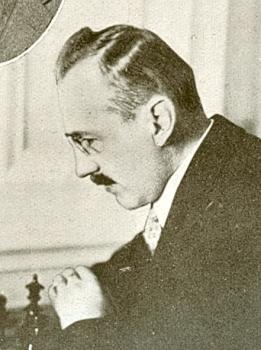
On this date in 1941, chess grand master Karel Treybal was shot in occupied Czechoslovakia as a suspected subversive for illegally stockpiling weapons.

The Bohemia-born Treybal was one of the great Czech players from the turn of the century.

Competing as an amateur — his day job was as a barrister — his attacking play made him one of the world’s best for most of his adult life. (Chess aficionados can browse his big matches here and here, or take in some Treybal chess puzzles. It says here that Treybal once played countryman Franz Kafka.)

Like everyone else standing between the great imperial powers come wartime, grand masters were just so many pawns.

The particulars of Treybal’s death seem murky: whether or not he received a nominal Nazi trial before his execution; whether there was anything to the weapons charges against him. Word, nonetheless, got right around.

According to a UP report datelined this very day that ran in the New York Times on Oct. 3,

German occupation forces have executed nearly 1,000 persons in Europe, in some cases shooting them by the carloads, in reprisal for a mounting tide of violence in the occupied countries, a compilation showed tonight.

German dispatches said eighteen persons were executed in Bohemia-Moravia today [Thursday, Oct. 2 -ed.], and thirty-nine yesterday. Six were executed Sunday, twenty Monday and fifty-eight Tuesday, according to earlier German announcements, making the total so far this week 141.

Those executed today were said to include Josef Benes, manager of the Farmers’ Association at Raudnitz; Anton Kvarda, manager of the trades school at Rakonitz; Karel Treybal, salesman; Josef Smrkovsky, business man, and Manzel Svoboda, former Czech Army lieutenant.

From Norway to Greece the executions have been Germany’s answer to all forms of opposition — sabotage, espionage, armed resistance, murder, treason, arson, aiding the enemy, listening to the foreign radio, operating illegal markets, dynamiting and the ill-inclusive “Communist” activity.

A postwar tournament was played in tribute of Treybal and the great Czech women’s champion Vera Menchik.

On this day..

1788: William “Deacon” Brodie, Dr. Jekyll and Mr. Hyde inspiration

On this date in 1788, the real-life Dr. Jekyll and Mr. Hyde was hanged at Edinburgh.


The Execution of Deacon Brodie, by Alexander Hay Ritchie.

William Brodie, respectable burgher by day, Deacon of the Guild of Wrights, wasn’t the type for the gallows. Actually, the upright citizen is said to have proposed an improvement in the old Tolbooth gallows, replacing the old-school ladders with a forward-thinking drop mechanism.

“Brodie,” says Traditions of Edinburgh, “was the first who proved the excellence of [the] improvement … He inspected the thing with a professional air, and seemed to view the result of his ingenuity with a smile of satisfaction.”*

Insouciance in the face of mortality … but Brodie had plenty of practice in compartmentalization.

With a gambling habit, a couple of mistresses, and five kids, Brodie the oleaginous society man had a double life, or treble, or more. By and by, the well-known tendency of such profligate pastimes to lead a man to venture his neck in order to keep up appearances worked its will upon Brodie, who began using his contracts with Edinburgh’s upper crust to case their houses and copy their keys … returning at night to burgle his employers.

It was taking on partners that did in the budding master thief; inevitably, someone flipped to dodge the gallows himself. Brodie’s cover was blown, and he hanged with his confederate George Smith, keeping up appearances to the very end.

A century later, native Edinburgher Robert Louis Stevenson would tap this extraordinary local history (and maybe some similar predecessors) as inspiration for that classic novelistic exploration of the soul’s duality, The Strange Case of Dr. Jekyll and Mr. Hyde.

In fact, prior to that work’s 1886 publication, Stevenson (who grew up with Brodie furniture in the house) co-wrote a play called Deacon Brodie, or The Double Life.

That earlier composition hasn’t been entrusted to celluloid, to my knowledge (though there is a Deacon Brodie film of recent vintage). But Jekyll and Hyde has been.

Brodie’s striking case does not live on only through his literary doppleganger(s); you can enjoy the company of the hanged criminal to this day on Edinburgh’s Royal Mile at Deacon Brodie’s Tavern.

Brodie himself is supposed to have made his own bid to live on by surviving the hanging. William Roughead in Classic Crimes describes these machinations whose generally attested failure is now and again disputed anew.

Of the plans, various and futile, formed for the resuscitation of the Deacon there are two contemporary and competing versions. One is that the hangman was bribed to tamper with the rope, so as to give a short fall and avoid dislocation of the vertebrae. But by an excess of caution that officer first made it too short and then too long. The body, when cut down, was placed in a cart and driven furiously round the back of the Castle to the Deacon’s woodyard at the foot of Brodie’s Close, so that animation might be restored as in the historic case of “half-hangit Maggie Dickson,” a lady whose departed spirit was recalled by similar Jehu methods. In his own workshop his veins were opened by a French surgeon, whose services had been retained to that end; but all the resources of science could not bring the Deacon back to life. According to another account, he had, before leaving his cell for the last time, been supplied with a small silver tube for insertion in his throat at the final ceremony in order to prevent suffocation, and wires were carried down both his sides from head to foot to counteract the jerk of the fall. In spite of these precautions and of subsequent bleeding by a surgeon, his friends had reluctantly to admit that “Brodie was fairly gone.”

* This “tradition” of Edinburgh is kin to a folkloric subgenre and should not at all be presumed dependable. Roughead:

Of the many picturesque legends of old Edinburgh which, in defiance of truth, cling like ivy about her vanished past, one of the most persistent is that Deacon Brodie was the first to suffer upon the new drop which he himself designed. This myth, upon research, I found myself reluctantly compelled to disprove. He may have planned the “moveable platform for the execution of criminals,” which the Town Council caused to be erected in 1786 at the west end of the Tolbooth; but it was certainly not of his construction, nor was he the first to benefit by its ingenuity. The place of execution was the roof of a low building which projected from the west gable of the prison — roughly where the Buccleuch statue now stands. A beam was drawn out from an aperture in the wall above the platform and from this depended the fatal rope.

On this day..