
On this date in 1415, on the eve of the Battle of Agincourt, the young English King Henry V approved the execution of his onetime boon companion Bardolph in William Shakespeare’s Henry V.

The fictional Bardolph had been the ruddy-nosed friend of Henry’s in the Henry IV plays (Part 1, Part 2), where the hard-drinking, rabble-rousing young prince is a disappointment to the father who fears his heir will never merit the throne.
By Henry V, the boy has become the ruler, and launched an audacious incursion into France during the Hundred Years’ War.
Hal’s willingness to own the rough decisions of statecraft — in this case having his friend put to death further to his win-French-hearts-and-minds policy — is part of his coming of age as Henry V.
Whether that means Hal’s maturation into regal dignity or the corruption of his humanity by power is up to the reader.
KING
How now Fluellen, cam’st thou from the Bridge?
FLUELLEN
I, so please your Maiestie: The Duke of Exeter
ha’s very gallantly maintain’d the Pridge; the French is
gone off, looke you, and there is gallant and most praue
passages: marry, th’ athuersarie was haue possession of
the Pridge, but he is enforced to retyre, and the Duke of
Exeter is Master of the Pridge: I can tell your Maiestie,
the Duke is a praue manKING
What men haue you lost, Fluellen?
FLUELLEN
The perdition of th’ athuersarie hath beene very
great, reasonnable great: marry for my part, I thinke the
Duke hath lost neuer a man, but one that is like to be executed
for robbing a Church, one Bardolph, if your Maiestie
know the man: his face is all bubukles and whelkes,
and knobs, and flames a fire, and his lippes blowes at his
nose, and it is like a coale of fire, sometimes plew, and
sometimes red, but his nose is executed, and his fire’s
outKING
Wee would haue all such offendors so cut off:
and we giue expresse charge, that in our Marches through
the Countrey, there be nothing compell’d from the Villages;
nothing taken, but pay’d for: none of the French
vpbrayded or abused in disdainefull Language; for when
Leuitie and Crueltie play for a Kingdome, the gentler
Gamester is the soonest winner.
This is Laurence Olivier’s 1944 version of the scene, with the commoner Bardolph well off-camera:
… and Kenneth Branagh’s more pathos-laden 1989 interpretation, with the king wavering a moment as he locks eyes with his doomed subject, and flashing back to bygone scenes of conviviality before delivering his troop the stern lesson of his friend’s strangling:
Although Bardolph himself and his prior relationship with his sovereign are fiction, the action of the scene actually proceeds from reality. Shakespeare has (as is his wont) cribbed Holinshed, who relates that Henry’s army was under strict orders not to pillage the countryside, and observed that discipline to a man —
except one, which was, that a souldiour tooke a pix out of a church, for which he was apprehended, and the king not once remooved [i.e., he halted] till the box was restored, and the offendor strangled. The people of the countries thereabout, hearing of such zeale in him, to the maintenance of justice, ministered to his armie victuals, and other necessaries, although by open proclamation so to doo they were prohibited.*
* As quoted in the very apt 1992 “Shakespeare’s Henry the Fifth and the Law of War” by Theodor Meron, American Journal of International Law, vol. 86, no. 1.
Part of the Daily Double: Agincourt.
On this day..
- 1949: Luka Javorina, trainwrecker
- 2006: Jeffrey Lundgren, cult killer
- 1944: Werner Seelenbinder, communist grappler
- 1946: Kurt Daluege, Nazi cop
- 1492: 27 Jews of Sternberg, for desecrating the Eucharist
- 1849: Zsigmond Perenyi, by the Hangman of Arad
- 1801: Periya and Chinna Marudhu
- 1690: An infanticide, a coiner, and a highwayman
- 1865: Paul Bogle
- 1922: Emil Schutte
- 1943: Leonard Siffleet, beach beheading
- Daily Double: Agincourt
- 1945: Vidkun Quisling, who made his name as a traitor
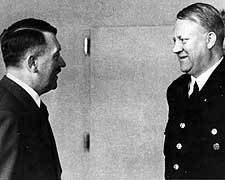 By the time of his death, the Nazi collaborator (
