1935: Pat Griffin and Elmer Brewer

On this date in 1935, the first double hanging* in the state of Iowa took place at Fort Madison.

Waterloo, Iowa, police heading out to query Elmer Brewer “in connection with alleged misconduct of Brewer with juvenile girls” alarmed Brewer and his friend Patrick Griffin, who assumed they were coming to arrest them for a robbery.

The two killed Deputy Sheriff William Fay Dilworth in a shootout.

Long forgotten, Griffin’s rodeo avocation, his friendship with the classmate who was to be his Catholic confessor, his offer to give all his earnings to the victim’s family were his sentence commuted to hard labor.

Just a lost file from the police blotter, moldering in a musty corner of a local archives. Although the glacial progress of the legal proceedings will look more familiar to modern eyes.

Thus closes a case which has been more or less in the courts since December 16, 1932. Attorney James Fay of Emmetsburg and Attorney John McCartney of Waterloo made valiant efforts to save the lives of the two men, but to no avail. Following their conviction of the murder in the district court in Waterloo on January 5, 1933, they were sentenced to be hanged on January 26, 1934. In May, 1933, an appeal was filed with the state supreme court, thus automatically staying the execution. The supreme court denied the appeal. On June 24, 1934, Attorneys Fay and McCartney petitioned the supreme court for a rehearing. This was denied January 10, 1935. A plea for commutation of the sentences to life imprisonment was denied by Governor Clyde Herring on February 1 and the chief executive set April 5, 1935, as the execution date. Continuing farther with their efforts the attorneys sought a writ of habeas corpus from District Judge John Craig of Fort Madison, but their request was denied. The refusal opened another loophole for the attorneys to ask a review of Judge Craig’s action. Again refused, the lawyers announced that they would go to the United States supreme court where they would ask the court for a writ of habeas corpus. In order to allow time for this step Governor Herring granted the convicted slayers a 60-day stay of execution but at the same time he announced that it was the last reprieve that could be expected from him. Illness of defense attorneys, it was said, prevented them from prosecuting their appeal to the supreme court. Monday Mr. Fay appealed to Federal District Court Judge Charles A. Dewey for a stay order and a writ of habeas corpus, but Judge Dewey refused to interfere. In Des Moines Tuesday a last minute effort to save the men was made in an appeal to Governor Herring, but the appeal for a commutation of sentence was denied.

A family member has compiled old clippings about this case — from which, both the excerpt above and the illustration — here.

* According to Iowans Against the Death Penalty. There had been a previous double execution when Iowa was a territory, and a triple execution in 1918.

On this day..

1814: Four of five deserters, in Buffalo

On this date* in 1814, an American army in Buffalo, N.Y., shaken by desertions lined up five absconding soldiers for execution.

The memoirs of one Jarvis Hanks, a drummer, recalled the singular scene that ensued.

In this alternative history of the war of 1812, the sergeant commanding the firing party and the soldier not executed make their way down the continent as an odd couple and fight in the Battle of New Orleans.

During the time we remained at Buffalo, five men were sentenced to be publicly shot for the offence of desertion. They were dressed in white robes with white caps upon their heads, and a red target fastened over the heart. The army was drawn up into a hollow square to witness the example that was about to be made of their comrades who had proved recreant to the regulations of the service. Five graves were dug in a row, five coffins placed near them, also in a line, with distance between coffins and graves to enable the criminals to kneel between them. About twelve men were assigned to the execution of each offender. Their guns were loaded by officers, and they were not permitted to examine them afterwards until they had fired.

All things being in readiness, the chaplain made a prayer, the caps were pulled down over the eyes of the poor culprits, and the word of command given: “Ready! Aim! Fire!” They all fell! Some into their graves, some over their coffins. One struggled faintly and the commanding officer ordered a sergeant to approach and end his misery. He obeyed by putting the muzzle of his piece within a yard of his head, and discharging it. This quieted him perfectly!

At this time one of the condemned slowly arose from his recumbent position to his knees and was assisted to his feet. His first remark was, “By God, I thought I was dead”. In consequence of his youth and the peculiar circumstances of his case, he had been reprieved, but the fact was not communicated to him until this moment. He had anticipated execution with his comrades, and when the report of the guns took place, he fell with them, though not a ball touched him. The platoon assigned to him had guns given to them which were not charged, or at least had nothing but powder in them.

Even Dostoyevsky didn’t get to the point where the mock executioners actually “fired”.

These executions took place during the Niagara campaign in the latter stages of the war — the Americans’ last push in their unsuccessful bid to conquer Canada.

* This execution, which obviously has a folklorish quality, has somewhat slippery particulars. The not-necessarily-dependable dating of the Espy file (pdf) places it on this date, as does The Rivers of War, which squares with the quoted soldier’s account of timing and the known troop movements. Hanks’ writings (and that of two other War of 1812 soldiers) is published in Soldiers of 1814: American Enlisted Men’s Memoirs of the Niagara Campaign. (Review.)

Espy names the executed soldiers as John Black, Mahlon Christie, George Orcote, and Isaac Kent.

On this day..

1880: Edwin Hoyt, in Bridgeport

From the New York Times.

THE DEATH OF A PARRICIDE.

HANGING OF EDWIN HOYT AT BRIDGEPORT — PERSISTING TO THE LAST THAT HE WAS INSANE.

BRIDGEPORT, Conn., May 13. — The first administration of capital punishment in Fairfield County since 1809 occurred in this city to-day. Edwin Hoyt was hanged for the murder of his father, in the Town of Sherman, June 23, 1878. Hoyt was then 37 years of age, and had shown during his life a very ugly disposition. His wife, the mother of his five children, had experienced his temper in a manner which placed her life in danger, he having discharged a shot-gun at her and severely wounded her. On the Sunday of the murder he had nothing to exasperate him except the refusal of his brother-in-law to accompany him on a fishing trip. Having been refused, he went home, and, taking a butcher-knife from his house, told his wife that he was going to kill his father. He then returned to the house of his brother-in-law, where his father was at the dinner-table with the family. He appearad [sic] despondent, and said it would be better for him to die, but that there were two or three people he wanted to kill first. He then went to the porch and sat down with his father. A few minutes afterward he sprang up and stabbed his father several times, making a fatal wound in the neck. Hoyt was tried twice, the first time in October, 1878, and the second time in April, 1879. The State claimed that the motive for the killing was animosity toward his father, who had always exercised great severity toward him, and who, he believed, had decided to wholly disinherit him. The defense in both cases was that of insanity.

Hoyt had never believed that he was to be hanged until Wednesday evening, when the final attempt to save his life by means of a writ of error proved ineffectual. After this he was not despondent, but talked pleasantly with the Rev. Dr. E.W. Maxey, who baptized him according to the rites of the Protestant Episcopal Church about 7 o’clock in the evening. After the clergyman went away he ate a hearty supper, smoked a cigar, and wrote a letter to his brother George. The letter was finished by the time Judge Blydeuburgh, of New-Haven, and Mr. Taylor, of Danbury, Hoyt’s counsel, arrived. They were with him about an hour, during which time he delivered his will to them, saying that he wished to have it kept private. They suggested to him that he might desire to make a final statement. He had nothing to say, he answered, in addition to what he had said, for he was not responsible for the killing, having known nothing of it. After his lawyers had left him, the Rev. Dr. Maxey came to remain with him until the time of the hanging.

The hanging occurred in a yard on the west side of the jail, and was witnessed by about 500 people. The yard was nearly filled, and from the woman’s ward of the jail many spectators looked down on the gallows. The prisoners in the male ward were permitted to witness the hanging from their windows. At just 11:30 o’clock the procession to the gallows started. First came Sheriff Sanford; next came Deputies Bartram and Dann, and behind them walked Hoyt, the Rev. Dr. Maxey having his hand on his right arm. Deputies Wakeley and Hughes were in the rear of the prisoner, and behind them walked Drs. George R. Porter, Robert Lauder, and E.D. Noony, of Bridgeport, and Dr. Marshall, of Greenwich. Hoyt, on the scaffold, raised his face to the sky, but showed no emotion beyond that which was expressed in his pale face. He was dressed in the old clothing which he has worn in jail, having refused to change to a black suit sent to him by a friend. The streaks of gray in his otherwise black hair and mustache gave him the appearance of being at least 10 years older than he was. When he was placed on the trap Sheriff Sanford asked him if he had anything to say. He answered in a faint voice, “No, Sir.” Dr. Maxey then read prayers, after which the noose was arranged and the black cap adjusted. Sheriff Sanford shook hands with Hoyt, saying, “Good-bye, poor fellow,” and stepped to the spring near which one of his deputies was standing. The trap fell. There was no noise except that made as the body fell a distance of five and a half feet. Dr. Porter, who had been in charge of the bodies of Mrs. Surratt and the other conspirators executed at Washington, had his hand on the wrist of the condemned man as the rope straightened. The fall of the trap occurred at 11:35 1/2, and at 12:14 the body was taken down. Death was instantaneous, resulting from a dislocation of the neck. There was some muscular tremor, but it lasted only a second. After the body had been taken to the jail, the physicians applied electric batteries and produced muscular contortions of the face and limbs an hour and a quarter after death occurred. The body was given up to Hoyt’s sisters, and taken to Sherman for burial.

On this day..

1993: Leonel Herrera, perilously close to simple murder?

On this date in 1993, Leonel Herrera was executed by lethal injection in Huntsville, Texas, for shooting two policemen. Herrera’s last statement averred,

Herrera’s sister Norma self-published this book about the case — keeping a promise to her executed brother.

I am innocent, innocent, innocent. Make no mistake about this; I owe society nothing. Continue the struggle for human rights, helping those who are innocent, especially Mr. Graham. I am an innocent man, and something very wrong is taking place tonight. May God bless you all. I am ready.

Well, Herrera wasn’t the first to go to his death maintaining his innocence. The circumstances (and circumstantial evidence) of the crime rate on the forgettable side.

But Leonel Torres Herrera was a bit different from his cousins in hopeless protestation: while he died this evening, his name lived on … in a landmark Supreme Court decision

Herrera v. Collins

Years after Herrera was convicted and death-sentenced, multiple affidavits were produced to the effect that his late brother, Raul, was the real killer.

This evidence was naturally pursued with gusto by the condemned man.

Unfortunately, a claim like Herrera’s of “actual innocence” faces a very high bar when raised in appellate courts, once a prisoner has already been convicted and their presumption of innocence become a presumption of guilt.

That this arbitrary rule of the game has a defensible rationale — could any criminal justice system operate if prisoners could continually relitigate their cases while memories fade and evidence ages into obsolescence? — does not make it the less Kafkaesque for individual prisoners, some of whom are in fact innocent.

Herrera presented this problem in unusually stark terms. Lacking any procedural violation upon which to hang his hat as an appeals issue, his claim pitted substance against form in the Supreme Court. (Oral arguments at Oyez.org)

You already know how it ended.

Chief Justice William Rehnquist’s opinion patiently explained a jurisprudential truism loftily uncolored by any experience in life liable to introduce a sense of kinship with a Hispanic man charged with a Texas cop-killing who uncovers too late the evidence that could save him.

“[A]ctual innocence” is not itself a constitutional claim.*

Instead, the Court recommended — tongue no doubt planted firmly in cheek — that Herrera apply for executive clemency, a dead letter procedure in Texas used exclusively in a good cop/bad cop routine opposite the black robes.

“Judicial restraint forbids relieving you,” says the court. “Go ask the governor.”

“The courts have thoroughly reviewed the case,” intones the governor. “May God have mercy on your soul.”

Herrera himself may or may not have been innocent. At the end of the day, he went down because the game was rigged against him: his exculpatory evidence was not available at trial, when it might have introduced “reasonable doubt” — as Rehnquist’s opinion put it, “in state criminal proceedings the trial is the paramount event for determining the guilt or innocence of the defendant.” Once that evidence became available deep in the appeals process, it was procedurally barred, and far from such a slam-dunk exoneration that any institutional actor would stick his, her or its neck out to lift Leonel Torres Herrera from the gurney.

Justice Harry Blackmun’s dissent retorted,

Just as an execution without adequate safeguards is unacceptable, so too is an execution when the condemned prisoner can prove that he is innocent. The execution of a person who can show that he is innocent comes perilously close to simple murder.

Whether “simple murder” happened in Huntsville this night in 1993, perhaps no one can really say with certainty.

But as DNA evidence and other forensic advances in the intervening years have increasingly eroded confidence in the reliability of the justice system that metes out death, Herrera v. Collins stands as a key precedent in a case now before the Supreme Court — in which states (joined by the Obama administration) are asking the justices to agree that convicted prisoners have no right to cheap, simple, and frequently dispositive DNA testing that may not have been available when they were tried.

Given the composition of the court (including three holdovers from the Herrera majority), that decision figures to have Leonel Herrera rolling over in his grave.

* Rehnquist conceded a theoretical possibility that extraordinarily persuasive evidence could generate relief on due process grounds. Antonin Scalia and Clarence Thomas went much further, claiming that prisoners had no right to anything but their trial and their (procedural) appeals.

On this day..

1994: John Wayne Gacy, scary clown

This date in 1994 was the last on earth for Pogo the Clown — better known as John Wayne Gacy.


Hello, children.

The local small businessman and closeted pederast filled his crawlspace with the remains teenage boys he’d either kidnap off the street, or hire in his capacity as an independent contractor.

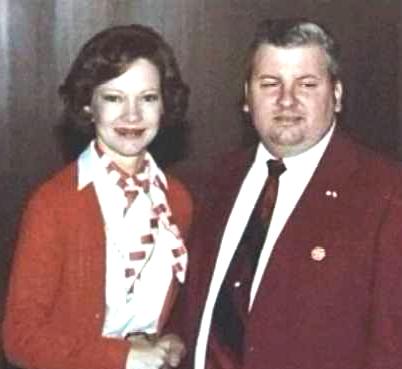
When he wasn’t raping and murdering, he kept up appearances as a Democratic machine operative (once photographed with First Lady Rosalynn Carter) and amateur block party harlequin.

Gacy was a notable “serial killer artist” in the years he spent awaiting lethal injection.* In that capacity, the clown motif continued to inspire him.


* The lethal injection was botched with a clogged IV tube. It took 18 minutes.

On this day..

1947: Willie Francis, this time successfully

(Thanks to Gilbert King, author of The Execution of Willie Francis (book site), for the guest post, the second of two. Read the first here.)

On May 9, 1947, Willie Francis was executed in the same electric chair that he had walked away from a year and a week earlier, when a drunken prison guard and trustee bungled the wiring. Willie’s story had made front-page headlines around the country as the United States Supreme Court grappled with questions about what the State of Louisiana was permitted to do with regard to double jeopardy and cruel and unusual punishments.

One of the things that drew me to this story as I was working on my book, The Execution of Willie Francis, was the shroud of secrecy that surrounded the Willie Francis case.

Willie was accused and convicted of killing 53-year-old Andrew Thomas, a Cajun pharmacist who was something of a mystery to the people in the small town of St. Martinville, Louisiana. Thomas’ brother Claude was the town’s chief of police, and Willie was convicted by twelve Cajun jurors and sentenced to death by a Cajun judge. His court-appointed attorneys neither called nor cross examined any witnesses, and did not even make a case in defense of their 16-year-old client.

The prosecution based its entire case on a confession obtained while Willie was in police custody without the aid of a lawyer. In this confession, Willie wrote, “it was a secret about me and him,” which was never explained. It was obvious to me that there was more to Willie’s story than the version presented in trial and to the public.

In my research, I came across a photograph taken on the evening Willie had survived his own execution. He’d been brought back to his cell, and the sheriff allowed reporters and a photographer to visit with Willie, where he told them that death tasted “like peanut butter” and looked a lot “like shines in a rooster’s tail.” The photographer asked for a few pictures, and Willie, holding his dog-eared Bible, stood in front of a dull pink wall. The flash fired.

This picture was never used by any of the newspapers. There was a lot of glare on the wall, and the photographer had gotten a much better one of Willie smiling — the picture that ended up on the front page of many newspapers the next day. But there was some writing on the wall image that was barely legible. I scanned it onto my computer and ran it through Photoshop, adding contrast and burning and dodging until the words could be read. The handwriting matched Willie’s.


Detail of the enhanced photograph. Click for the full image.

Not surprisingly, the sheriff had testified under oath that Willie had confessed to killing Andrew Thomas in writing on the wall of his cell a month before he was scheduled to die in the chair. But the Sheriff had also taken Willie’s words out of context, reading only select portions of the writing, and mischaracterizing others. In fact, Willie Francis, just as he had when he wrote in his confession that “it was a secret about me and him,” alluded to something different than the robbery-turned killing prosecutors accused him of. Willie wrote, “Practically I killed Andrew by accident. It will happen once in a life time”

Only two people know the truth about that fateful confrontation at the house of the Cajun bachelor and the black teenager who once worked for him. Both are dead, and the official story does not ring true. Willie Francis never denied killing Andrew Thomas. But he disputed the prosecution’s accusation that he was trying to rob the pharmacist. “I wasn’t after money,” Willie insisted to a reporter before he went to the chair a second time. Yet he would never elaborate, and took whatever “secret” there was between him and Thomas to his grave.

On this day..

1946: Not Willie Francis, who survived the electric chair

(Thanks to Gilbert King, author of The Execution of Willie Francis (book site), for the guest post, the first of two. Read the second here.)

Death, Delivered

The truck was a 1941 International Harvester K–3 two-ton cornbinder, from the manufacturer known at the time for its production of heavy-duty farm equipment. Painted red, it was mounted with a large, gray sheet-metal trailer, unmarked and nondescript. In fact, the only thing odd about this truck was the additional muffler and exhaust pipe that extended from the roof of the van. It would not have turned heads, at least not until it pulled up to park behind a Louisiana parish jail. Then, as photographs show, people would stop dead in their tracks and stare, as if some ancient beast of classical mythology was lurking behind the thick, metal doors. And when Captain Ephie Foster, the Angola prison guard who, on May 3, 1946 had arrived to execute Willie Francis emerged from the truck, they stared at him, too — their somber eyes carefully registering the face of a killer.

May 3rd was supposed to be Willie’s last day on earth. His head had been shaved and his pant leg had been torn so that current could cleanly surge through the body of the 17-year-old Louisiana youth as he sat strapped into the electric chair known as “Gruesome Gertie.” But things did not proceed as planned in the small town of St. Martinville. Foster and his assistant had been drinking and did not wire the chair properly on that hot morning, and when the switch was thrown, Willie convulsed and screamed for more than a minute, until it became obvious to everyone in the death room that something was wrong. “I am not dying,” Willie shouted, until finally, the sheriff ordered the electricity shut off.

Deputies put Willie back in his cell and Louisiana Governor Jimmie Davis was called as town officials were unsure what to do with the boy who walked away from the electric chair. About an hour later, Davis had made up his mind. Foster was to load the chair back into the truck and drive it home to Angola where it would be fixed. Then they’d send it back to St. Martinville a week later where Willie Francis was to be re-executed.

Gruesome Gertie had haunted the dreams of many a condemned man in Louisiana. Willie was the twenty-third person to take the deadly current, but the first to survive an electrocution. By the 1940s, executions were private affairs. They took place behind the walls of prison complexes, and the most anyone might see of them would be a hearse driving out with a coffin loaded in the back.

But Louisiana had a traveling electric chair that turned an execution into a bizarre, macabre road show.

A crowd would often gather to watch prison officials unload Gruesome Gertie and bring her into a parish jail. The chair would then be attached to two long, black, snake-like cables that would lead back to the truck, plugged into a powerful gasoline engine in the back that gave Gertie her juice. The engine was loud, and people were drawn to the noise from blocks away. On May 3rd, one of the people in the crowd in St. Martinville, Louisiana was Frederick Francis, Willie’s father. He’d arrived with a coffin and was seen pacing back and forth beneath a live oak tree, waiting to claim the body of his youngest son.

I’d been working on my book, The Execution of Willie Francis for nearly two years, but had never seen a picture of the truck that had delivered death to so many condemned men (and one woman, Tony Jo Henry) in Louisiana. I’d read about it in countless newspaper stories, as well as in Ernest Gaines’ book, A Lesson Before Dying, which was loosely based on Willie’s story. But it wasn’t until I had the opportunity to go through the legal files of Bertrand DeBlanc, the lawyer who took Willie’s case after the botched execution, that I ever got a glimpse of the truck. DeBlanc lived across the street from the St. Martinville jail, and when the truck parked in front of his house, he was just another curious onlooker who went outside with his Brownie camera to take pictures.

The photographs DeBlanc took on that fateful day not only provide a record of one of the most famous execution attempts in this country’s history, but they also serve to illustrate the inequity of the death penalty in the south at the time. Lynchings were becoming less common, but the implied bargain of swift justice pacified the vigilante cry for death. This innocuous looking truck rolled through small Louisiana towns to execute mostly black men at the hands of white law enforcement officials. But when townspeople gathered around, and the doors swung open and Gertie was taken up the back steps and fired up, the spectacle of this traveling show of death sent as strong a message to blacks as any public mob lynching.

On this day..

1861: Paula Angel … but why?

Thanks to Laura James for the guest post, which originally appeared on her outstanding blog CLEWS Nov. 9, 2005. Laura’s first book, The Love Pirate and the Bandit’s Son, hits the shelves on May 5.

It’s not clear today how old she was — nineteen, maybe, or twenty-six, or twenty-seven — the reports all differ. It’s not even clear what her true name was: Paula Angel by most accounts, but she was also called Pablita Martin. But the most pressing questions, still unanswered nearly 150 years after her execution, are why she was hanged in the first place and how the sheriff managed to bungle the job so badly.

Paula Angel was the first and last woman ever executed in New Mexico (while it was yet a territory). Her crime: she stabbed her married lover, Juan Miguel Martin, to death when he tried to end their affair. Her execution was on April 26, 1861, in San Miguel, now Las Vegas.

Anyone familiar with historical crimes and trials, particularly those involving women, will marvel at such an outcome. A capital conviction for stabbing a lover, a crime passionel? That’s certainly not the outcome one would expect for that era (or this era, for that matter; today we’d label it second-degree murder at worst).

One explanation for Miss Angel’s hanging is that the newspapermen never got the story. Decades later, the wire services circulated very brief accounts of her trial and execution under headlines such as “The Story The Newspapers Missed.” So she may well have lacked the greatest champion anyone facing a murder charge can have: public opinion — the verdict of the greater jury. Throughout the nineteenth century, there was a universal revulsion for the execution of women, no matter what their crime, and judges and juries were anxious to find a reason to acquit a woman.

But the authorities in New Mexico Territory were eager to see her hanged. The accounts that survive today report that the jailer taunted her every day leading up to her execution — “I’m going to hang you until you’re dead, dead, dead,”* is the quote attributed to the sheriff.

What was her social status? Was she a prostitute? Was she a violent menace to the community? Had she committed other terrible acts? Was she unrepentant? Did she sullenly testify at her trial and put in a poor appearance on her own behalf? Most importantly, was she ugly? The accounts available today don’t say.

When it came time to launch Angel into eternity, the sheriff did not build a gallows. He selected a sturdy cottonwood tree outside of town. Paula Angel was driven there on a wagon, forced to ride on her own coffin to the site of her execution, which was witnessed by ranchers and townsmen. The sheriff fixed the rope to the tree, garlanded her with hemp, and then resumed his seat on the wagon and hawed the horses. But he’d made an error. He forgot to tie her hands behind her.

Paula Angel managed to get her fingers underneath the rope in a last pitiful effort to save her own neck, and she struggled on the end of the rope. It must have been an awful sight to see. The crowds surely voiced loud complaints. The sheriff was forced to put the wagon beneath her a second time, to cut her down, retie the rope amid the jeers and catcalls, properly secure her hands and feet, and to repeat the process. She did not survive her second hanging.

And there hasn’t been one woman executed in New Mexico since. Rarely has any woman from that state even faced the possibility, though a few years ago Linda Henning nearly became the second woman executed there — and she certainly deserved it. Fans of Court TV will recognize the name, since Court TV has rebroadcasted Henning’s bizarre trial more than once. She was tried for the cooly planned and bloody murder of Girly Chew Hossencofft, the estranged wife of her boyfriend, in one of the weirdest trials of the century. But the jury rejected the death penalty. The reason Henning agreed to involve herself in the murder of a woman she had not even met: Henning was convinced that Girly Chew was a reptilian alien queen from another galaxy.

You read that right: an alien queen from another galaxy. You can’t make this stuff up.

***

Recommended reading: Death on the Gallows : The Story of Legal Hangings in New Mexico, 1847-1923 by West Gilbreath (High Lonesome Books, 2002).

For the stories of the men executed in New Mexico see the excellent compilation by Mark Allan of the Angelo State University Library. [Note: link updated from Laura’s original post. -ed.]

For more on the Hossencofft case see the website of author Mark Horner.

* [Shades of Billy the Kid. Maybe it was something lawmen said to lend it that Wild West atmosphere. -ed.]

[Former New Mexico state historian Robert Torrez unpacks the Paula Angel story and reprints a corrido (folk ballad), “La Homicida Pablita” written by her cousin in Myth of the Hanging Tree. -ed.]

On this day..

1992: Billy Wayne White, after 47 minutes

On this date in 1992, longtime heroin user Billy Wayne White waited 47 minutes while his executioners probed for a vein suitable to inject the lethal cocktail he incurred for a 1976 robbery-murder in Houston.

On this day..

1865: Not George S.E. Vaughn

On this date in 1865, Abraham Lincoln had a date for Ford’s Theater — and with John Wilkes Booth’s single-shot Derringer pistol.

Abraham Lincoln was famous for his clemencies.

But Honest Abe had one last order of business to attend to before his carriage called him away to destiny: the pardon of a convicted Confederate spy due to be shot in St. Louis two days hence. Lincoln’s handwritten clemency for George Vaughn was the last official act of his presidency.

Lincoln in Story (“The Life of the Martyr-President told in Authenticated Anecdotes,” a light 1901 volume for popular consumption) relates:

Before the war Vaughn, with his wife and children, lived in Canton, Mo. He was a friend of Martin E. Green, a brother of United States Senator James S. Green, both strong pro-slavery men. At the opening of the war Martin E. Green recruited a regiment and received a colonel’s commission from the Confederate Government. George Vaughn enlisted under Green’s command and fought through the war.

After a period of fighting, Green and Vaughn crossed into Mississippi from Tennessee, camping at Tupelo, Miss. Not having heard from his family, Green was anxious to hear from his old home, so he delegated Vaughn to go on the mission of delivering letters to his wife.

Vaughn had almost completed his trip, having reached La Grange, six miles south of Canton, when he was captured by a squad of Federal troops.

They searched his person, and, finding letters and papers concealed about him, he was tried as a spy and sentenced to be shot. John B. Henderson, Senator from Missouri, finally succeeded in getting an order from the President for a retrial, but the verdict remained as hitherto. Again Henderson appealed to Lincoln, who granted a third trial, with the same result.

Henderson was not disconcerted, and again went to Lincoln. It was on the afternoon of April 14, 1865 — a melancholy date — that the Senator called at the White House. He called the attention of Lincoln to the fact that the war was practically closed, and said: “Mr. Lincoln, this pardon should be granted in the interest of peace and conciliation.”

This story gravitates naturally to the clemency of “the Great Heart” (as, for instance, D.W. Griffith called Lincoln). Far be it from us to say otherwise, but this is also self-evidently a story of the unusual prerogatives of the well-connected: not just any accused spy could get two trial do-overs and then a pardon free and clear ordered straight from the White House.

Mr. Lincoln replied: “Senator, I agree with you. Go to Stanton and tell him this man must be released.”

Henderson went to the office of the Secretary of War. Stanton* became violently angry, and swore that he would permit no such procedure.

Vaughn had but two days to live, and Henderson hastened to make one more stand. After supper he went to the White House. The President was in his office, dressed to go to Ford’s Theatre, when the Senator entered and told of the meeting he had had with Stanton.

Lincoln turned to his desk and wrote a few lines on an official sheet of paper. As he handed it to Senator Henderson he remarked: “I think that will have precedence over Stanton.”

It was an order for an unconditional release and pardon — the last official paper ever signed by Abraham Lincoln.

Lincoln was dead within hours. Vaughn passed away in 1899 in Maryville, Mo.

* Stanton is supposed to have delivered the remark as Lincoln’s deathbed, “now he belongs to the ages” … an alleged epitaph whose actual content is subject, like all biography, to textual uncertainty and ideological redefinition.


Update: The excellent tale of a different soldier pardoned on this same date has recently been debunked by the National Archives in an academic scandal: in January 2011, researcher Thomas Lowry confessed to altering the pardon order for one Patrick Murphy from the true (and much less dramatic) date of April 14, 1864 to April 14, 1865.

Vaughn was actually pardoned just before Lincoln went to Ford’s Theater; Murphy (totally unconnected to Vaughn) was pardoned 365 days prior.

On this day..