1875: Six in Fort Smith under Hanging Judge Isaac Parker

I have ever had the single aim of justice in view … ‘Do equal and exact justice,’ is my motto, and I have often said to the grand jury, ‘Permit no innocent man to be punished, but let no guilty man escape.’

Judge Isaac Parker

On this date in 1875, the most famous — or infamous, depending on your perspective — “hanging judge” of the American West dropped the trap on his noosing career with his first six hangings at Fort Smith, Arkansas.

Isaac Parker, around the time he arrived at Fort Smith

Isaac Parker had parlayed a legal career in Missouri into a congressional seat, when the fall of the Arkansas Republican party’s fortunes late in Reconstruction swept him out of office in 1874.

No problem: his co-partisan president, Ulysses S. Grant, appointed Parker to a federal judgeship in neighboring Arkansas. It’s upon that renowned tenure that the man’s reputation, uh, hangs.

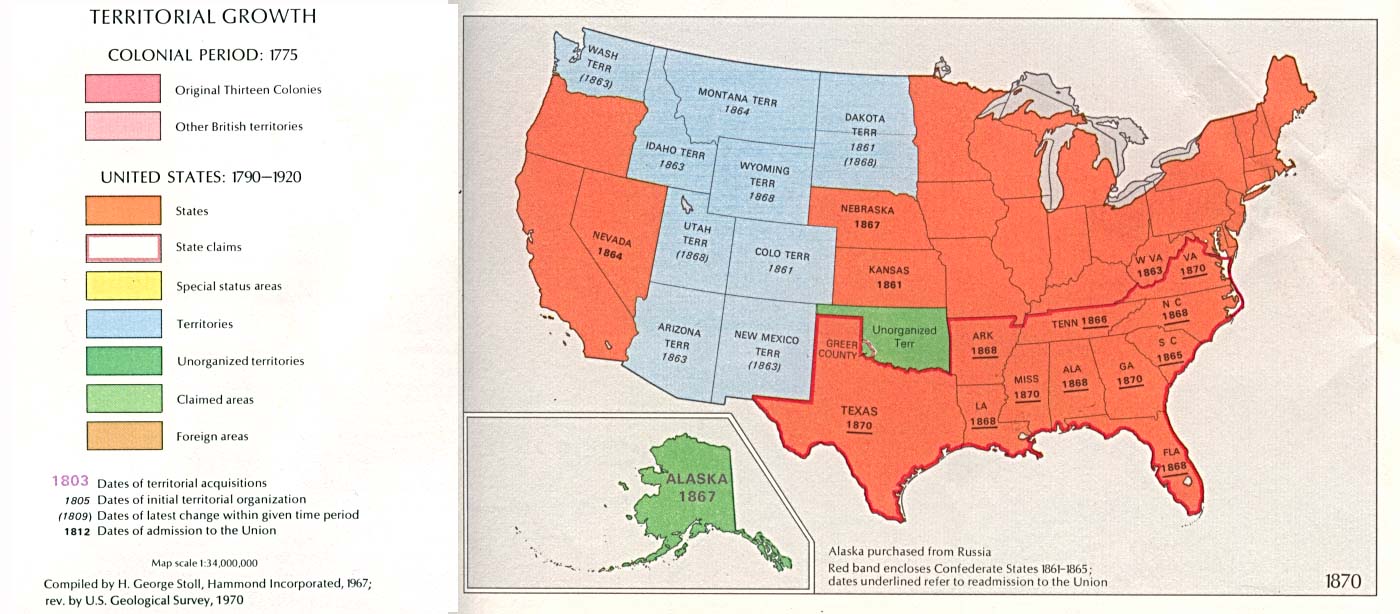
Parker arrived at Fort Smith on May 4, 1875, the youngest federal judge in the west and a man whose jurisdiction included the lawless Indian Territory (present-day Oklahoma).

This expanse of land, the final destination of the Trail of Tears, had once been preserved for tribes forcibly “removed” from eastern North America.

But by the post-Civil War years, the frontier was sweeping past on iron wheels … and as long as Indian Territory remained (mostly) protected from white settlement, it remained a sparsely-populated refuge for outlaws.

Pandemonium in the Territory was only exacerbated by the Fort Smith court’s reputation for corruption and inefficiency; the office was open for Parker’s appointment because his predecessor had resigned to avoid impeachment.

Judge Isaac Parker came to clean up the place.

Fort Smith was an unusual portfolio for a federal judge. While most of Parker’s colleagues were confined to the tedium of interstate civil litigation, Parker was the court of first call for many regular criminal cases in the Indian Territory which in other jurisdictions would have been a state matter. He estimated in 1885 Congressional testimony that seven-eighths of his caseload came from Indian Territory.*

And in those cases he quickly established himself a reputation for severity.

“I never hanged a man,” Parker said of himself later in life. “The law hanged him. I was only its instrument.”

But make yourself the law’s instrument to the tune of 79 hangings, and folks are bound to sit up and take notice.


“they nearly hung me for stealin’ a horse
in Fort Smith Arkansas.

Judge Parker said guilty and the gavel came down
just like a cannon shot …”

At his court’s very first sitting in May 1875, Parker death-sentenced a murderer — Daniel Evans, who came straight from frontier central casting and had murdered a man for his boots.

As that year unfolded, he added enough condemned men to the bowels of the miserable jail nicknamed “Hell on the Border” — for an eight-strong hanging date to christen September.

One of the eight had his sentence commuted due to youth.

One was shot trying to escape.

And the other six were the debut crop for the mass-occupancy gallows that Parker ordered constructed at Fort Smith. (Its capacity was a full dozen.)


Modern replica at Fort Smith — today a national historic site — of Judge Parker’s gallows. (cc) image from photoguyinmo.

The clientele was six unconnected murderers, committing various atrocities for various motives and aptly embodying the region’s ethnic diversity.

  • Evans, white
  • James Moore, white
  • Samuel Fooy, quarter Cherokee
  • Smoker Mankiller, Cherokee
  • Edmond Campbell, black
  • John Whittington, white

And the audience? Five thousand or so reportedly on hand in Fort Smith this date, plus a national media audience … and posterity deep into the second century since this sturdy magistrate donned his first black cap and set about putting chaos into order with a rope in his hand.


New York Tmes, September 4, 1875.

Whatever one might have to say about his methods, Parker presents a magnetic personality, a figure so truly of his own time and place that he obligingly died just weeks after his court was finally relieved of its Oklahoman jurisdiction in 1896. He’d never hang around to jolt our anachronism meter by weighing in on trench warfare or cubism.

Parker is undoubtedly a more layered figure than his “hanging judge” reputation would suggest, and even his life’s project to bring his unruly jurisdiction to heel was more complicated than just being a hardass. (He had a significant administrative challenge to manage his chronically underfunded court, and he needed to foster the sense of communal reciprocity and legal integrity that would encourage fellow-citizens to turn up for jury duty and witness testimony that make the law’s everyday business possible.) The judge was famous for the long hours he kept, and capital cases were never more than a tiny fraction of his work.

Parker was notorious (slash-beloved, again depending on perspective) for his prosecution-friendly courtrooms, but even the tough sentences he handed down came in his mind from a place of tough love. He wrote late in life that

not one of [those he suffered to long prison terms for violent crimes], no matter how depraved, had entirely lost that better part of human nature …

The object of punishment is to revive, that in some cases, almost extinct spark, to lift the man up, to stamp out his bad nature and wicked disposition, that his better and God given traits may assert themselves.*

Still, whether you prefer him as the stern avatar of law on an outlaw plain or bloodthirsty yahoo, Parker’s ready amenability to latter-day Hollywood tropes will surely maintain his popularity in the cultural rookery of wild west cutouts.

Among numerous other reference points, the novel True Grit, and the 1969 and 2010 films based on it, use Judge Parker’s Fort Smith as the heroine’s embarkation point — with her dangerous journey carrying her into the untamed Indian Territory on his doorstep.

Pat Hingle’s “Judge Fenton” (from “Fort Grant”) in the Clint Eastwood western Hang ‘Em High also shows an unmistakable debt to the Judge Parker persona.

A few books about Judge Parker


Spare a thought, too, for the man operating the ropes and levers this date.

George Maledon, named Fort Smith’s official hangman just a couple of years before Isaac Parker’s appointment, would enforce the Hanging Judge’s hanging sentences into the 1890s: 60-plus executions in all, plus five other escaping prisoners he gunned down, all in a day’s work for an Arkansas lawman.

Maledon has a sad coda to this story, which wasn’t so upbeat to begin with.

The year after the veteran hangman hung up his hood and opened a grocery store, Maledon’s daughter was murdered. The bereaved father’s friend Judge Parker, still on the bench at that time, condemned the killer to die in a case we’ll suggest might have warranted a recusal by present-day standards. Nevertheless, a successful appeal balked Maledon’s successor of the malefactor, and the disgusted ex-executioner got his species of payback by taking the accoutrement of his late profession on the road as a traveling act.

There, under the billing of “the Prince of Hangmen,” Maledon lectured and exhibited old hanging ropes and pictures of the outlaws they had choked.

People of all classes flocked to the show grounds, crowded about the lecturer and filled the tent, viewing the gruesome relics and listening to the old hangman’s recital of soul-stirring events as he pointed out the…instruments of his vocation. (Source)

* See Mary Stolerg, “Politician, Populist, Reformer: A Reesamination of ‘Hanging Judge’ Isaac C. Parker”, The Arkansas Historical Quarterly, Spring 1988

Part of the Themed Set: Americana.

On this day..

1904: Mart Vowell, aged Civil War veteran

On this date in 1904, a 61-year-old veteran of the U.S. Civil War was hanged for murder at Paragould, Ark.

“Hanging Day 1904”: this is apparently a photo either from Vowell’s execution, or the July 9, 1904 hanging at Paragould of Nathan H. Brewer

Mart Vowell, the hanged man, was anomalously the former city marshall of Rector, Arkansas — and his victim the town troublemaker, whom Vowell had previously arrested.

(Vowell fought in the Confederate army under Nathan Bedford Forrest. If it’s the same Mart Vowell described in this Reconstruction-era report, he apparently stuck around in Tennessee after the fighting stop and followed Forrest into the Ku Klux Klan.)

Even the grand jury summoned to indict the killer had to be dismissed after repeatedly returning only second-degree charges.

This case cries out for primary research beyond the scope of this blog’s daily deadlines further to the motivations of the characters involved, but the bottom line is that Vowell hanged before a highly sympathetic crowd — calling “Good-bye, Mart!” as he “died game” — in Paragould, Ark.

Arkansas Governor Jeff(erson) Davis — named after, but not related to, the Confederate president* — was himself hanged in effigy the next day for his refusal to spare Vowell in the face of thousands of petitioners. Davis being an open advocate of lynching (“without apology to any tribunal on the face of the earth”) we suppose the populist governor could hardly have been sore about a little mannequin, however “carefully prepared.”

* Given the famous characters evoked by name, we need to note that our day’s principal, Mart, was actually named Martin Van Buren Powell, which would presumably make him a namesake of abolitionist former U.S. President Martin Van Buren.

On this day..

1885: James Arcene, the youngest juvenile offender hanged in the US?

(Thanks to Caitlin at Vast Public Indifference for the guest post -ed.)

On June 26, 1885, two Cherokee men — James Arcene and William Parchmeal — were hanged at Fort Smith, Arkansas. Moments before their deaths, both men made statements, though it is unlikely that their last words were intelligible to many witnesses at the military outpost, owing to the heavy rain and the fact that Parchmeal spoke little English.* Under the eye of Federal Judge Isaac Parker, the notorious “Hanging Judge” of the old Southwest, Arcene and Parchmeal had their limbs bound and their faces covered before being “launched into eternity.”**

In February, Arcene and Parchmeal had been convicted of a murder committed 13 years previously. On November 25, 1872, someone had killed a Swedish immigrant named Henry Feigel on the road near Fort Gibson in Indian Territory (now Oklahoma). The case remained unsolved for over a decade.

In 1884, 12 years after Feigel’s death, a U.S. Deputy Marshall named Andrews arrested Arcene and Parchmeal in connection with the murder. Though documents describing the evidence used to obtain the arrest warrant are not readily available, Andrews was able to convince a judge (probably the same Judge Parker who presided over the trial) that the trail had not gone cold after so many years. Arcene “denied having knowledge of the killing,” but Parchmeal made a statement through an interpreter “admitting being present, but said that he was there under duress and that Arcine did the killing.”†

After both men were convicted, Arcene made a confession stating that he had “shot [Feigel] six times, then both took rocks and mashed the man’s head” before dragging him off the road and robbing him of his boots and 25 cents. Judge Parker sentenced both men to hang.

At first glance, there is little to distinguish this case from the 77 other executions presided over by Judge Parker during his tenure at Fort Smith.‡ Parker had been appointed to the bench in the hope that he would make Indian Territory feel the full might of the federal government, and he did not disappoint. According to one chronicler of the Fort Smith court under Judge Parker,

“Tried, found guilty as charged, sentenced,” was the tale repeated until the mere fact of arrest meant almost certain conviction. The sentence “To die on the gallows” was passed upon more men here than anywhere in history. So numerous were the executions [Parker] ordered and so commonplace the thunderous crash of the gallows trap that street urchins playing outside the old walls would gleefully shout: “There goes another man to hell with his boots on!”

Glenn Shirley, Law West of Fort Smith: A History of Frontier Justice In The Indian Territory, 1834-1896 (1957), 79.

But this execution was peculiar in one significant detail: James Arcene claimed to have been “only a boy [about] 10 or 12 years old” at the time of the murder.† If true, he was one of the youngest criminals in American history to have his crime punished by a federally-sanctioned execution.

It is difficult to verify James Arcene’s age with any degree of certainty. Census records for Indian Territory in the 1870s and 1880s are spotty at best, and few other vital records survive. It is possible that Arcene may have hoped to obtain a pardon by falsely pleading youth, but he did not revise his statement, even when it became apparent that it would do him no good. We may never know how old James Arcene really was — all we can know is that he claimed to have been a child in 1872 and that Judge Parker ignored this information and sentenced the adult who stood before him.§

If James Arcene was a juvenile offender, he looked very much like the other children and adolescents executed in the United States since the era of the American Revolution. Those offenders executed for crimes committed before the age of 18 have disproportionately been African American, Native American, or Hispanic teenagers who have committed crimes against white victims. This is true of the 20th century as well as the 19th: of the 22 juvenile offenders executed for murder in the US between 1976 and 2004, 77% had killed a white victim, though only 50% of homicides perpetrated by juvenile offenders involved a white victim. As of 2004, 9 of the last 10 juvenile offenders executed in Texas, the state responsible for 59% of all juvenile executions, were black or Hispanic. (Figures from the Death Penalty Information Center.)

In March of 2005, the Supreme Court handed down a 5-4 ruling in Roper v. Simmons declaring that states could no longer execute criminals who had committed their crimes while under the age of 18.

* See “Murder for Money,” Daily Arkansas Gazette, 27 June 1885 on rain, and “Hanged on the Gallows,” New York Times, 27 June 1885 on Parchmeal’s need for an interpreter.

** “Murder for Money,” Daily Arkansas Gazette, 27 June 1885.

† “Hanged on the Gallows,” New York Times, 27 June 1885.

‡ Judge Parker sentenced 156 men and 4 women to death. Of these, 79 were actually executed, the rest having died in prison, had their sentences commuted, or were pardoned.

§ It should be noted that many books make the erroneous claim that Arcene was 10 at the time of his execution. This is not the case — all available primary documents agree that he was an adult in 1885. I made this same mistake in my earlier guest post on the case of Hannah Ocuish, having relied on Dean J. Champion’s The American Dictionary of Criminal Justice: Key Terms and Major Court Cases (2005).

On this day..

1845: Lavinia Burnett and Crawford Burnett

On this date in 1845, husband-and-wife murderers Crawford and Lavinia Burnett (nee Sharp) danced a gallows jig built for two in Fayetteville, Arkansas.

The duo contrived with their son, John, to rob and murder a nearby recluse, Jonathan Selby, for the money he was thought to be hoarding.

The family the slays together, pays together.

Alas for mom, dad, and big brother, 15-year-old daughter Minerva shopped them.

John-boy was still on the lam at this time — he’d be caught soon, and hanged December 26 — but Lavinia and Crawford hanged together before a large crowd in the vicinity of the present-day Fayetteville National Cemetery.

It was the first recorded execution of a woman in Arkansas history, and would be the only such until the year 2000.

Among the ranks of the Burnetts’ illustrious if unsuccessful defense team was Isaac Murphy, who would go on to become a notable pro-Union pol during the Civil War (with a murky part in an infamous massacre of Confederate sympathizers), and subsequently became governor of the state during Reconstruction.

On this day..

1864: Two Dodds, as two spies, in two states, and twice botched

On January 8, 1864, young David Owen Dodd was hanged in Little Rock for spying on federal troops … and cavalryman Ephraim Dodd (no known relation) suffered the same fate for the same crime in Knoxville.

Just one of those strange coincidences.

Ephraim Dodd

Ephraim Shelby Dodd is the subject of an outstanding HistoryNet profile whose contents this blog can not so much improve upon as summarize.

A member of Terry’s Texas Rangers (“men who ride like Arabs and fight like devils”) Dodd was captured in December 1863 and convicted by his diary — a particularly harsh reading of his diary in which a reference to having passed himself off as a Yankee was interpreted as evidence of espionage. (The diary is available online and as part of a book on Terry’s Rangers.)

Knoxville worthies rallied to save him and Ephraim Dodd insisted upon his innocence, but not so vociferously that he displayed any terror of his fate.

Do not grieve for me, my dear parents, for I am leaving a world full of crime and sin for one of perfect bliss.

The hanging itself wasn’t bliss, exactly, despite a well-planned soundtrack.

From the “Death March” the music gradually slid into “Mary’s Dream,” and then we were carried back by the magic of the plaintive notes to juvenile days; to visions of “Sandy far at Sea,” and to the sad cadence of that fading refrain,

“When, soft and low, a voice she heard
Saying, Mary, weep no more for me.”

The solemn march, the wailing notes of the fife, and perhaps above all the calm, unmoved, manly bearing of the prisoner — so we thought — produced a mournful impression upon the spectators.

Points earned on artistic merit, however, were deducted for technique.

At a signal the bolt was now withdrawn, the culprit fell, but the cotton rope broke by the sudden tension, and the man lay stretched and stunned upon the frozen ground below. A mummer of horror, mingled with expressions of pity, ran through the assembled crowd. Recovering for an instant from the shock — for his neck was not broken — he said — perhaps incoherently: “Release me quick, if you please.” For some ten minutes the unfortunate man lay thus upon his back, without moving a muscle. Meantime the officers and men, whose painful duty it was to see to the execution of the law, adjusted this time two parts of the same rope instead of one, and the half-conscious man was borne up the fatal steps a second time, being partly supported upon the drop until the double noose had been adjusted. Not a word or sign of suffering all this time escaped his lips. In another moment the drop fell, and prisoner’s form now hung by the neck — the knot behind the head. Death finally ensued by strangulation. In ten minutes, Dr. Cogswell, the officiating surgeon, pronounced life extinct, and the body was taken down and buried.

David Owen Dodd

A few hours later and 500 miles down the way, the entirely unrelated hanging of David Owen Dodd proceeded in Little Rock, Ark.

David Dodd’s final resting place at Mount Holly cemetery. Image courtesy of Richard Theilig.

Only 17 at his hanging and not physically robust enough to get his brains blown out at Gettysburg, Dodd was sent by his father on a business trip across Union lines — everything legit, and carrying a pass — but got busted with morse code notations of Union troop strength in the city.

Unlike Ephraim, who was basically a normal soldier thrust into incriminating-looking circumstances by the chance of war, young David Dodd was rightly accused.

He didn’t bother protesting his innocence, but he also kept mum about his contacts. (Suggestively, a teenage girl and her father were whisked out of town and kept under guard in Vermont for the rest of the war.) That proud silence has won him quite a reputation in Arkansas as the Boy Hero of the Confederacy.

But similarities between the condemned men extended beyond their names. David’s parting filial reassurance could pass for a paraphrase of Ephraim’s.

[D]o not weep for me for I will be better off in heaven. I will soon be out of this world of sorrow and trouble.

And the hanging itself, conducted in a tense atmosphere, was likewise a botched job. In this case, the slight young man didn’t fall hard enough to break his neck, but did fall far enough to get his tiptoes on the ground, initiating an agonizingly protracted strangulation which the soldiers on detail expedited by (accounts differ) pulling on David Dodd’s legs and/or pulling up on the rope.

On this day..

1995: Richard Snell – did he go out with a bang?

At 9 p.m. this evening on this date, white supremacist Richard Snell was executed for murder in Arkansas.

He went out full of venom and smugness, his last words menacing the state’s governor:

Governor Tucker, look over your shoulder; justice is coming. I wouldn’t trade places with you or any of your cronies. Hell has victories. I am at peace.

(Source — but possibly erroneous; note the comments to this post)

It had been as satisfying* for Snell as last days on earth come: the very morning of his execution, militia fellow-traveler Timothy McVeigh blew up Oklahoma City’s Murrah Federal Building.

It is not for this venue to attempt any definitive judgment on the connections and cul-de-sacs of the much-scribbled-about white supremacist labyrinth. It is enough for our purposes to note several items which may be coincidence and have sometimes been reckoned rather more.

  • April 19 had already become the militia movement’s holy day: April 19, 1775, had sparked the American Revolution; more to the point, it had been the date in 1993 of the slaughterous Waco siege. Snell’s execution was slated for that date intentionally, much to the outrage of his sympathizers: so was McVeigh’s plot.
  • Twelve years before his death, Snell himself had schemed to blow up the very same building.
  • Snell has been reported to have predicted that there would be a bombing on his execution date.

After his execution, Snell was returned to Oklahoma Christian Identity mecca (and possible McVeigh haunt) Elohim City, where he lay three days in an open casket before being interred in the community’s cemetery under a headstone marked “Rev Richard Wayne Snell. Patriot.”

* Snell was “smiling and chuckling and nodding” on his last day as he watched coverage of the bombing.

On this day..