1982: Suriname’s “December murders”

This was the date in 1982 of the “December murders” (“Decembermoorden”), when 15 opponents of Suriname’s military dictatorship were shot at Fort Zeelandia.

(The 15 people shot each have an entry on the Dutch Wikipedia, accessible through its Decembermoorden entry.)

Though the killings weren’t secret at the time, their circumstances have always been murky, beyond the plain fact of being murders of political dissidents — “counterrevolutionaries,” in the parlance of the “Socialist Republic”.

President Desi Bouterse had seized power in a coup in early 1980, and some of the casualties this day might have been suspected of plotting to pull the same trick on him: at least, several were made to read statements to that effect. Others were regime opponents of a less existential menace: dissident university professors; critical journalists; a prominent former footballer. (When in Paramaribo, take in a match at Andre Kamperveen Stadion, which is named for him.)

Bouterse took political responsibility for the slaughter while claiming not to have ordered it. But it’s long been said that Bouterse was actually present for the shootings, personally interviewing/interrogating/”judging” the prisoners. (That’s what the massacre’s lone survivor, the since-deceased Fred Derby, said. (Dutch link))

Decades later, Bouterse — now an ex-dictator — is finally facing trial for the December murders, including fresh evidence of his involvement in the day’s notorious affair.

On this day..

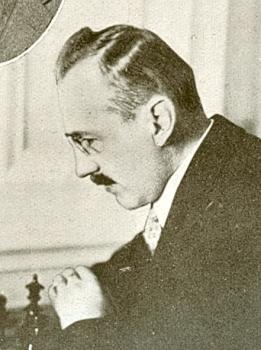
1941: Karel Treybal, Grand Master

On this date in 1941, chess grand master Karel Treybal was shot in occupied Czechoslovakia as a suspected subversive for illegally stockpiling weapons.

The Bohemia-born Treybal was one of the great Czech players from the turn of the century.

Competing as an amateur — his day job was as a barrister — his attacking play made him one of the world’s best for most of his adult life. (Chess aficionados can browse his big matches here and here, or take in some Treybal chess puzzles. It says here that Treybal once played countryman Franz Kafka.)

Like everyone else standing between the great imperial powers come wartime, grand masters were just so many pawns.

The particulars of Treybal’s death seem murky: whether or not he received a nominal Nazi trial before his execution; whether there was anything to the weapons charges against him. Word, nonetheless, got right around.

According to a UP report datelined this very day that ran in the New York Times on Oct. 3,

German occupation forces have executed nearly 1,000 persons in Europe, in some cases shooting them by the carloads, in reprisal for a mounting tide of violence in the occupied countries, a compilation showed tonight.

German dispatches said eighteen persons were executed in Bohemia-Moravia today [Thursday, Oct. 2 -ed.], and thirty-nine yesterday. Six were executed Sunday, twenty Monday and fifty-eight Tuesday, according to earlier German announcements, making the total so far this week 141.

Those executed today were said to include Josef Benes, manager of the Farmers’ Association at Raudnitz; Anton Kvarda, manager of the trades school at Rakonitz; Karel Treybal, salesman; Josef Smrkovsky, business man, and Manzel Svoboda, former Czech Army lieutenant.

From Norway to Greece the executions have been Germany’s answer to all forms of opposition — sabotage, espionage, armed resistance, murder, treason, arson, aiding the enemy, listening to the foreign radio, operating illegal markets, dynamiting and the ill-inclusive “Communist” activity.

A postwar tournament was played in tribute of Treybal and the great Czech women’s champion Vera Menchik.

On this day..

1979: Two former dictators of Ghana with four of their aides

On this date in 1979, the putschist government of Ghana shot former military rulers Frederick William Kwasi Akuffo and Akwasi Amankwaa Afrifa along with four others at the Teshie Military Range for corruption.

Twenty-two years before, Ghana had become the first black sub-Saharan former colony to gain independence, but after a 1966 coup it had staggered through political and economic chaos. Six different men had been head of state in that span, three of them deposed by coups. By 1979, General Fred Akuffo‘s government was the target of explosive anger.

Enter Flight Lieutenant Jerry Rawlings, who had actually failed in a coup attempt in May and was in line for execution himself before his mates toppled the government on June 4.

Seeking to stabilize the situation — and, Rawlings himself has said, riding the tiger of popular fury — the new government served up a few high-profile morsels on charges of pilfering the treasury in order to forestall a general slaughter of senior officers by the armed forces’ lower ranks.

There was no alternative. We had to contain it within the military so it didn’t spill into the civil front — if it had it would have been terrible.

We had no choice but to sacrifice the most senior ones — the commanders.

Another former head of state, Gen. Ignatius Kutu Acheamphong, had been shot earlier in the month; on this date, Akuffo and Gen. Akwasi Afrifa, one of the original 1966 plotters who had ruled Ghana in 1969-70, followed him. Afrifa, ironically, had written to Acheamphong worrying that political upheaval and military discipline could find them … well, where it eventually found them:

I feel greatly disturbed about the future after the government … In order to discourage the military from staging coups in the future, how about if they line all of us up and shot us one by one? I do not certainly want to be arrested, given some sort of trial and shot.

All these shootings had an unseemly character of haste and summary justice; charges against the four senior ministers* shot along with the former rulers have struck an especially sour note. Rawlings has claimed that he only wanted the two former heads of state shot and tried unsuccessfully to stop the other four executions.

I attempted to prevent it and sent an officer but the firing squad shot the officers before their commander could give the order … you must understand our country was in a state of rage then, not different from what Russia was when it had its revolution.

I was a partial hostage to that situation. I had no force. The authority that I enjoyed was my moral authority with the people. Their action (the execution of the senior officers by the boys) was to curtail the anger of the nation.

Rawlings would hand power over to a civilian government, which he then overthrew again in 1981 — looking like this:

He would run Ghana for the next two decades, the last eight years after winning elections. Rawlings’ legacy is much up for debate, but to many he cuts the figure of a benevolent dictator (how many former strongmen have fan pages?) whose human rights abuses were mild in the scheme of things and helped usher in a relatively prosperous and democratic Ghana that stands a very far cry from the country he took over in 1979.

Rawlings himself has graduated to a sort of global elder statesman — for instance, he recently called for fair elections in Zimbabwe. And he has not been hesitant to justify his political actions, as in this interesting BBC interview from 2005 — in which, pressed on the executions of the former state ministers, he concedes:

There were some of them who probably deserved it. Pardon me for putting it that way. There were some of them who did not — very brilliant, beautiful officers. But we had no choice but to make that sacrifice.

The bodies of all the officers executed in June of 1979 were exhumed for “fitting burial” under Rawlings’ successor in 2001.

* One of the aides held the Ghanaian high jump record at the time of his death, a mark not surpassed until 1996.

On this day..

1955: Leslie George Hylton, a better bowler than liar

On this date in 1955, Test cricketer Leslie George Hylton was hanged in Spanish Town, Jamaica, for murdering his wife.

Hylton represented the West Indies in six grueling Test cricket matches in the 1930’s. (Career statistics.)

And apparently he had a thing about adultery, because when he found out his wife was having an affair, he shot her dead. Trying to shoot himself, he told John Law, but his alibi was even worse than his aim: she’d been shot seven times, meaning the fast bowler had reloaded.

Hylton is the only Test cricketer known to have suffered the death penalty. Fans took his death in stride:

Australia were touring the West Indies, and when the Jamaican opener JK Holt followed a run of low scores by dropping two catches in the Test at Bridgetown, a play card urged “Save Hylton, hang Holt.”

Cricket officialdom, though, kept such a stiff upper lip that Hylton’s obituary in its leading publication managed not to mention that his passing had involved a noose.

On this day..

2005: Nguyen Van Van

On this date in 2005, Nguyen Van Van, the onetime coach of Vietnam’s national taekwondo team, was shot for murder in Ho Chi Minh City.

The wire story does not appear to be available in a current archive but was secondhandedly cited here and here. Here’s how it ran:

Martial arts master executed

From correspondents in Hanoi
January 14, 2005

A FORMER coach of the Vietnamese national tae kwon do team was executed by firing squad in Vietnam for murder, a court official said today. Nguyen Van Van was put to death today at Long Binh execution ground in the southern Ho Chi Minh City, an official from the city People’s Court said.

A municipal appeal court handed down in June 2004 the death sentence to Van, who was only sentenced to life imprisonment at his first trial in March of the same year, for murdering a man in an ambush on December 19, 1996.

The incident took place at a cafe after one of Van’s sons got involved in a brawl with a customer. Accompanied by family members, Van stormed into the cafe where he injured the cafe owner and stabbed to death his brother-in-law, Le Hong Quan.

On this day..

1874: John Murphy

On this date in 1874, John Murphy was publicly hanged at the foot of Carson City’s Lone Mountain for murder.

The New York Times (.pdf) story, reprinted here in its entirety, suggests the tenor of the affair in the young western state:

John Murphy, who was executed at Carson, Nevada, yesterday, for the murder of J.R. McCallum, was a native of Scotland, and at one time traveled with John C. Heenan, giving sparring exhibitions. On the scaffold he made some remarks professing his belief in spiritualism, and at the same time uttering horrible blasphemy.

He had been temporarily reprieved December 18 to determine his sanity.

This appears to be the only historically identifiable execution in Carson City from the Nevada Territory’s creation in 1861 until the legislature in 1903 removed all Nevada executions to that city’s state prison — where they still take place to this day.

On this day..