1950: Chen Yi, 228 Massacre author

On this date in 1950, Taiwan’s former nationalist governor Chen Yi was shot for a dalliance with the Reds.
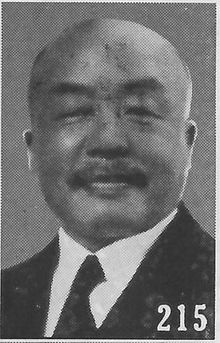
A Kuomintang officer since China’s 1920s Warlord Era, Chen Yi was from 1934 Chiang Kai-shek’s governor of Fujian province — the mainland territory directly across from the island of Taiwan. Chen had the honor at the end of World War II of accepting Japan’s surrender of Taiwan — the occasion commemorated by Taiwan’s unofficial October 25 holiday, Retrocession Day. Postwar, he became governor of that island, back before it was synonymous with nationalist China itself.

His life ended in 1950, when Chiang suspected him of negotiating with the Red Chinese who had overrun the mainland. By that point, however, Chen’s political career was already history, courtesy of the most lasting of his legacies, the 228 Massacre (or more diplomatically … “Incident”).

Taiwan’s new managers — the place had been in Japanese hands since 1895 — made an immediate mess after 1945. Taiwan’s productive economy was essentially siphoned for the civil war the KMT had underway against the Communists, as well as for the venal enrichment of various well-connected mainlanders who hopped over to Formosa for plum assignments that displaced Taiwan’s own local elites.

Billowing inflation fed ethnic resentments, and the whole situation boiled over, as the name implies, on 2/28 of 1947.

On that date, frustrations boiled over* in island-wide protests that turned to riots and even took over administration of Taipei and many other cities. Chen, on whose watch the many grievances had accumulated, suppressed those with enormous violence. Chen regained control of the situation only with considerable violence: well over 10,000 are thought to have been killed in suppression during early March, many of them executed in cold blood by mainland military reinforcements.

An American who had just arrived in China from Taihoku said that troops from the mainland arrived there March 7 and indulged in three days of indiscriminate killing and looting. For a time everyone seen on the streets was shot at, homes were broken into and occupants killed. In the poorer sections the streets were said to have been littered with dead.

There were instances of beheadings and mutilation of bodies, and women were raped, the American said.

Two foreign women, who were near at Pingtung near Takao, called the actions of the Chinese soldiers there a “massacre.” … people were machine gunned. Groups were rounded up and executed.

The man who had served as the town [of Pingtung]’s spokesman was killed. His body was left for a day in a park and no one was permitted to remove it.

While effective in reasserting political power, this didn’t exactly bury the animosities between Taiwanese and mainlanders. It did put an end to Chen Yi’s governorship, however, since it was on his watch that things came to this pass in the first place. Given he then doubled as the author of the bloodbath, he assured himself a place of opprobrium in Taiwanese history.

In 1949, the Kuomintang nationalist government fled rout on the mainland and holed up on Taiwan, implementing an authoritarian state under martial law with a running “White Terror” against dissidence, often broadly conflated with communism. Until political liberalization in the late 1980s, public discussion of 228 was strictly taboo.

Today, there’s enough distance that the event is openly commemorated; indeed, Lee Teng-hui, the politician who embraced Taiwan’s democratic transition around the end of the Cold War, was himself a participant in the 228 protests. There are a variety of memorials and parks remembering 228 in present-day Taiwan … but you’d have to look very hard to find one for Chen Yi.

* The specific boiling point for the protests was a violent confrontation on February 27 when state agents had seized the unlicensed cigarettes of a local peddler. The way things were going, however, there was always going to be something like this to catalyze Taiwanese anger.

On this day..

1972: Sanong Phobang, Thanoochai Montriwat, and Jumnian Jantra

On this date in 1972, three hardened criminals were shot at Bangkok for a savage stabbing murder.

We turn for the particulars here to The Last Executioner, the memoirs of Thailand’s last prison executioner, Chavoret Jaruboon. We’ve posted about him before.

Our setting in 1972 finds Thailand under martial law, an especially nasty interlude during the “three tyrants” era when the dictatorial government had been overthrown from within and was ruling by decree.

One of those decrees came down for Sanong Phobang, Thanoochai Montriwat, and Jumnian Jantra just days after they were arrested for a shocking crime: in the course of trying to pick a woman’s pocket at a bus stop, they’d turned on a bystander who noticed the crime and shouted at the woman to look sharp. The infuriated trio boarded the departing bus, trapped the good Samaritan, and stabbed him to death.

Upon determining that the guys were violent career criminals, the authorities just sent an order to have them summarily shot. Snap executions on executive authority were common in this year.

The criminals heard the execution order read only immediately before the sentence was carried out, although by that time they had inferred their fate from the fact that they had been driven to the death house. (And been given a few moments to write their families. We’re not dealing with monsters here!)

We join our executioner’s narrative, noting that at this early stage in his career he was not yet the man who shot the prisoners, but an “escort” on the execution team who readied the prisoners for the executioner.

Suddenly it hit the three of them that this was it. Thanoochai fell out of his chair and screamed for mercy.

“Please don’t kill me sir. Let me see my mother first, she knows people, let her help me, please let me see her!”

The prisoners hugged each other and cried like children.

… at 5.25pm the other escort and myself led Jumnian out of the tower and over to the execution room. Nobody spoke. I think I half expected him to faint but he didn’t. He had resigned himself to his fate and was like ‘a dead man walking’. We had blindfolded him at the gazebo and when we reached the room we firmly secured him to the cross … Mui [the executioner] readied himself over the Bergmann [MP 34/1] and waited for the flag to drop. He fired one shot, which sent eight bullets into Jumnian’s back. He died instantly.

I headed back with the other escort to collect Thanoochai. He blanched when he saw us but didn’t try to resist as we brought him out of the tower. However, all hell broke out at the execution room. He shocked me by suddenly tearing off the blindfold and shouting out for his mother. He kept insisting that his mother be allowed to see him as she could save him because of who she knows, and implored us not to kill him. All the time he was shouting his pleas his eyes roved around wildly searching for his mother but of course she wasn’t there. She was probably in her kitchen praying for him. The staff just stood there staring at him in horror. He really seemed to think his mother was going to appear and save him.

Then he remembered his friend who had gone before him and began to call out for Jumnian.

“Nian! Are you in there? Answer me man. Do you hear me? Answer me you asshole. Are you dead? Why don’t you answer me?”

The silence was almost cruel, as if he was being taunted in his madness on top of everything else … Thanoochai realised that Jumnian would never reply to his shouts, followed by the realisation that it was also too late for him. He crumpled to the floor in front of the execution room, surrounded by staff, and began to cry quietly. … All his fight had gone now, but he still had not lost hope. As we half dragged, half carried him into the room, he still called out for his mother;

“Please help me Mom, please help me.”

… It took four of us to get him standing in front of the cross … I pushed my knee into his back to force him against the cross so that we could bind him to it. One guy tied his hands up around the cross; another guy tied his weight while the other escort and I tried to stop his squirming. Only when he was completely secure did he finally shut up.

At 5.40pm Mui fired 12 bullets into Thanoochai.

… [after the third, more routine, execution] the room stank of blood, sweat and gun powder. There was a lot of blood from each of the men all over the floor and the sand bags. Unfortunately the floor is never cleaned immediately after a shooting. Sand is just thrown down to blot up the puddles and left there overnight for the inmates, who are in charge of the room, to tidy up the following morning.

At this point, Chavoret Jaruboon muses on the spookiness of the execution cell and the belief among some members of the team that the spirits of the shot haunt the place.

The next morning, he tells of being visited by the mother of the panicked Thanoochai Montriwat, who related a dream:

I dreamt about my son last night. He was crying and when I asked him why he didn’t answer. He just stood there and then blood started to ooze out of every part of his body … He told me he lost his shoes and asked me to get them back. He just kept repeating that. I don’t really understand but I’m afraid he won’t be able to rest in peace, which is why I need your help.

Sure enough, one of the prisoners tasked with tidying up the bodies for delivery to the Buddhist temple had taken Thanoochai’s shoes for himself. Thailand’s future last executioner had them retrieved and delivered to the grieving mother.

She was a good woman and kept begging her son’s victims to see into their hearts if they could forgive her son. She was going to cremate the body and wanted Thanoochai to feel in the consuming flames, the goodness and forgiveness emanating from everyone he had hurt which would fill him with regret and sorrow for his criminal ways. A parent’s love can be the purest love there is; no matter what a child does he is forgiven and still fiercely loved.

On this day..

1948: Kiralyfalvi Miklos, Hungarian Catholic

London Times, June 9, 1948:

SCHOOLS DISPUTE IN HUNGARY
CARDINAL’S REPLY TO MINISTER
CATHOLICS’ CONCERN

BUDAPEST, June 8
The village priest and other persons held responsible for the murder of a policeman and the wounding of two others in a village in north-east Hungary last Sunday will be tried in Budapest on Thursday.

The letter of protest from the Minister of Education to the Primate, Cardinal Mindszenthy, says that the villagers had clearly been aroused to violence by the priest’s sermon, in which he spoke against the projected nationalization of the schools. They went straight from church to the mayor’s house and the municipal buildings, where the council had voted by a majority in favour of the nationalization, and the policeman was killed while trying to protect the mayor. The Minister asked the Cardinal to put an end “by central decree” to this pulpit agitation, adding: “If not, the responsibility will be shifted where it belongs, and the law will be evoked upon all who continue it or direct it.”

The Cardinal, in his reply, says that he knows no more of the incident than is contained in the Minister’s letter, and therefore can take no stand upon it. He adds that the idea of nationalization is still causing great excitement among Catholics all over the country, an that the only way to end the excitement is to abandon nationalization. He denies that the agitation is directed centrally (that is, by himself), and puts the responsibility on those who “insist on putting forward such provocative measures.”

Church’s Divine Right

The Primate has already refused to follow the example of the Protestant churches, which have agreed with the State that nationalization shall go through, but that their ancient seminaries shall be excluded and the teaching of religion in the schools continued, and that the State shall grant them a large annual payment, gradually decreasing, for 25 years. On the contrary, in his third pastoral letter, which was read in all Catholic churches on Sunday, the Cardinal said that nationalization violated natural law and the Church’s divine right.

People were saying, the pastoral letter continued, that it was now time for the State to take over; but certain principles, among them the ten Commandments, were timeless. It called upon the faithful “to pray for strength to resist with all their might this violation of the immortal soul.” Never had the shameful misleading of the people been so great in Hungary as now. The faithful must refuse to allow their families to read the newspapers of those who opposed their faith, and must offer a Novena to God that the “Satan prowling among us like a roving lion may be driven away.”

It is in this guise that the Cardinal sees the Communists. They see him as an inflexible survivor of the Middle Ages.

It was in the village of Pocspetri that all the trouble went down: a march to the local municipal building to protest school nationalization. For years after, Pocspetri would be shorthand (Hungarian link, as is the next) in the official press for any clerical backlash — something right out of the Middle Ages.

Kiralyfalvi, at his trial

At the end of this march, a policeman was dead. It’s alleged now — in anti-communist post-Cold War Hungary — that what really happened was that one of the policemen deployed for crowd control accidentally triggered his own gun and killed himself with it.

Whatever occurred in the march, it was a productive incident for Hungarian communists then executing their political takeover of Hungary. The resulting show trial (more Hungarian) is sometimes seen as one of the signal events in a concomitant crackdown on organized religion — a potential pole of opposition to the Soviet-backed state. The victim, of course, enjoyed the fallen cop’s prerogative, a fast-track beatification by the propaganda ministry. (No need for Hungarian to get the point of the pictures in this pdf.) Miklos Kiralyfalvi got the death sentence, but the prerogatives the church was focused on — those were the real prize.

London Times, June 12, 1948:

MURDERED HUNGARIAN POLICEMAN
PRIEST SENTENCED TO DEATH

BUDAPEST,June 11
Janos Astezlos, the priest whose trial on a charge of inciting his villagers to the murder of a policeman began here yesterday, was sentenced to death this afternoon. The villager who actually killed the policeman was also condemned to death, and of the other four who took part one received life imprisonment and the other three 12 years.

Such, five days after it happened, is the end of this affair, though not of the dispute that lies behind it. In this week’s edition of the Catholic weekly Hazank Mr. Barankovics, head of the Catholic Party in Parliament, which has at least 16 per cent of the country’s votes, writes that a true Christian is bound to defend the right of the Catholic Church to keep the schools, because once they were lost the Church would have nothing left to do but celebrate Mass, and its whole cultural influence would be gone. “Whoever is our leader,” he says, referring to rumours that he disagrees with the Cardinal, “we are bound to act in the same way.” Of the murder the newspaper writes that the Church never counselled violence and regrets deeply what happened.


BUDAPEST, June 11. — The villager accused of killing the policeman was hanged here tonight. -Reuter.

(The priest’s sentence was commuted to a prison term. Only Kiralyfalvi was executed for the Pocspetri murder.)

On St. Stephen‘s Day 1948, Cardinal Mindszenty himself was arrested for treason. This was old hat for the cardinal; he’d been arrested for opposing Bela Kun‘s interwar people’s republic, and arrested again by the Nazi collaborationist government in 1944.

This time, he copped a life sentence.

Briefly released during the 1956 Hungarian Revolution, Mindszenty fled to the American embassy as Soviet tanks subdued the country. He would live on the embassy grounds for the next 15 years, a potent symbol of living martyrdom against communism until he was finally released to Vienna.

If your Magyar is up to snuff, this documentary on the Pocspetri incident might be enjoyable.

On this day..

1902: Hirsh Lekert, Jewish assassin

On this date in 1902, the Jewish socialist Hirsh Lekert was hanged in Vilna (Vilnius) for his attempt on that city’s governor.

The 22-year-old shoemaker, active in the Bund since childhood, was aggrieved along with many others by repressive measures taken against that leftist council by Vilna governor Victor von Wahl — culminating with the calculated humiliation he inflicted by personally overseeing the flogging of 20 Jews and 6 Poles arrested at a May Day demonstration.
As was the style at the time, Lekert took some retaliatory potshots at the municipal dictator on May 18, 1902. He scored a couple of flesh wounds before the police on hand beat him all to hell.

And that was pretty well that. Lekert got sent to face a military tribunal with a foreordained result. But he made his bones with posterity by refusing to apologize and instead fearlessly vindicating his action as a defense of the Jewish worker’s dignity.

This carried his legend in the early 20th century Jewish community much further than one might assume.

For Jewish Workers Bund, “the first great attempt at the organization of the Jewish masses for secular and independent political activity,”* Lekert’s uncompromising embrace of revolutionary violence created an internal controversy: radical workers saw a martyred hero; elites, and the Bund officially, were much more wary of terrorism provoking official backlash in an empire where Jewish communities were still liable to be targeted by pogroms at any time. All this during a renaissance of cultural and political thought among Eastern European Jewry.

Even decades later, the esteem remaining Lekert from his sacrifice gave his name power. Another generation of Jewish terrorists — in Mandate Palestine — was incensed at the British for flogging some Irgun members, leading Menachem Begin to invoke Lekert as his justification for kidnapping several British soldiers and flogging them. (Source) The British had no stomach for this, and desisted with floggings.

Artistic tributes followed as well — folk songs; plays by Arn Kushnirov and H. Leyvik; the bust that illustrates this post; a monument in Soviet Minsk; even this appearance in a 1927 silent film called His Excellency:

And from the hellish Vilna Ghetto under Nazi occupation, the great poet of the Holocaust Abraham Sutzkever depicted his “Teacher Mira” trying to keep her students’ heads up by reminding them of the Vilna cobbler who fought back.

Her skin, a windowpane in stains of dusk,
Mira must not reveal the darkness thus.
She bites her lip, of courage she will tell:
About Hirsh Lekert, how he fought and fell.

* Koppel Pinson, “Arkady Kremer, Vladimir Medem, and the Ideology of the Jewish ‘Bund'”, Jewish Social Studies July 1945.

On this day..

1989: Stefan Svitek, the last in Czechoslovakia

The last execution in the history of the former state of Czechoslovakia occurred on this date in 1989.

Staggering home extremely drunk late one autumn night, Å tefan Svitek (English Wikipedia entry | Czech) found the door locked and the pregnant Roma wife he regularly battered disinclined to open it.

So Svitek opened it himself by grabbing an obliging ax and splintering it to pieces.

Then he turned the ax on poor Marie and the family’s two daughters.*

Even the most aggressive executioners — and Czechoslovakia was not that — don’t hang every homicide. Svitek might have doomed himself in the final analysis with his disturbing sexual proclivities, especially since they surfaced during his rampage. He reportedly carved up the bodies, sliced off his late wife’s breasts and even cut the still-stirring embryo of his next child out of her womb, and pleasured himself over all the fresh gore. He would later describe it as the most intense sexual experience of his life.

It emerged at trial that Svitek’s youth in an alcoholic home had warped his animal urges so severely that he turned his lust upon animals, taking special gratification in castrating them.

This last operation Svitek also perpetrated on his own self as he fled in panic from his domestic charnel house. He also attempted to commit suicide by hanging.**

Svitek broke that rope. On the 8th of June in 1989, he did the same (metaphorically) to Czechoslovakia’s.

Svitek’s hanging June 8, 1989, was not only the last ever in the soon-to-be-defunct Czechoslovakia, but the last associated with either of Czechoslovakia’s successor states, neither of which have the death penalty on the books. (Svitek was hanged in Bratislava, the Slovakian capital; the last execution in the Czech half was that of Vladimir Lulek earlier in 1989.)

Update: Documentary, in Slovak (via the Twitter machine).

* One was Svitek’s own child, the other was his wife’s by her previous marriage. They were four and six years old.

** Another possible kink?

On this day..

1962: Henry Adolph Busch, Psycho

(Thanks to Meaghan Good of the Charley Project for the guest post. -ed.)

On this day in 1962, 30-year-old Henry Adolph Busch went to the gas chamber at San Quentin State Prison in California.

Condemned for the murder of his aunt, he had in fact slaughtered three Hollywood women and nearly killed a fourth.

Busch’s childhood was about what you would expect for a multiple murderer. Born Charles C. Hutchinson, he spent the first six years of his life being passed around to various foster homes before he was adopted by his much older half-sister, Mae E. Busch, and her husband Henry.

He emerged from those first six years emotionally scarred, and physically too: emaciated and with a deformed jaw. (En route to his adult “rat-like” face, enormous ears, and scrawny physique “like a string bean.”)

Years six through adulthood were no treat, either. Schoolmates teased young Henry about his appearance, and he had serious problems with his adoptive mother: one evaluation noted that Mae was a cold parent and “usual maternal feeling between mother and son seemed totally lacking.”

The youth also had difficulty maintaining concentration and suffered from terrible headaches, so it’s no wonder he did badly at school. He joined the Army but was dishonorably discharged; after that he became an optical technician and was viewed as “an excellent lens polisher” and a good employee.

Busch blurs the line between “spree killer” and “serial killer” (the former being itself a poorly defined medium between serial killer and mass murderer). He knew all of his victims, which isn’t typical for a serial murderer. Four months passed between his first and his second murders, but he went on to kill two women and attack a third within the space of three days.

That first victim was 72-year-old woman named Elmira Myrtle Miller, whom Henry had known since he was a child. On May 2, 1960, he dropped by her house and they watched The Ed Sullivan Show together. According to Busch, during the TV program he began to have irresistible thoughts of killing the old woman.

So he did. When Miller turned around to cover up her birdcages for the night, Busch seized her and strangled her to death. He pulled her housecoat up over her waist and tore her underclothes in an attempt to make the murder look like a sex crime, but made no attempt to molest her body.

Elmira’s murder baffled the police; months passed, without any solid leads.

On September 4, the 29-year-old Busch was in his adopted mother’s apartment building when he encountered 65-year-old Shirley Payne, who also lived there. He asked her out on a date to see the hot new film Psycho.

They watched the movie, went to his apartment and had sex. As Payne was getting ready to leave, Busch, again, jumped her from behind and strangled her. He wrapped the body in a sheet and stowed it under the sink temporarily. Fluid was oozing from Shirley’s eyes and nose, so the next day he bought a waterproof sleeping bag and put the body inside it.

Now getting the hang of this murder thing, Busch drank the draught deeply. The very next evening, he went to visit his favorite aunt, Margaret Briggs … and brought along a knife and a pair of handcuffs. They watched television until the early morning hours. He wanted to tell Margaret about Shirley’s murder and ask for advice, but when he started to confide in her she told him that, whatever his problem was, she was too tired to talk about it tonight.

So he strangled her too. After her death, he cut the clothing off her body. The police would subsequently discover numerous bruises and some cigarette burns on the corpse, something Busch never explained.

Henry went to sleep in Aunt Margaret’s bed. The next day he drove her car to work, where he asked a co-worker, 49-year-old Magdalena A. Parra, if she’d like to grab a coffee with him before their shift started. She agreed and got in his car, and immediately he tried to throttle her.

Magdalena was able to fight him off, however, and her screams caught the attention of two truck drivers. Busch bolted from the car; the truckers gave chase. He only went around the corner before he gave up and allowed them to catch him. The police initially thought Busch had just been trying to steal Mrs. Parra’s purse, but, he immediately confessed to the attempted homicide as well as the murders he’d committed during the previous 48 hours. He would eventually cop to Elmira’s slaying too.

In the aftermath of his arrest, predictably, the newspapers suggested Psycho might have given Busch the idea to attack Mrs. Payne. But it’s hard to reconcile the blame-the-movie idea with the inconvenient fact that he had killed before the movie was even released. When asked for comment, Psycho‘s director Alfred Hitchcock said violence was ubiquitous in cinema and his movie wasn’t any more likely to cause someone to commit murder than any other film.

When a doctor, William J. Bryan, examined him prior to his trial, Henry Busch said he’d been wanting to kill someone for years, but had always kept the urges in check, except for one time in the Army when he killed a POW. He said he probably would have kept killing people if he hadn’t been caught in the act with Mrs. Parra, and that he’d had his eye on his landlady for his next victim.

Dr. Bryan (who, it should be noted, was an expert hypnotist but not a psychiatrist) diagnosed the defendant with a schizoid personality and said he didn’t think Busch was capable of forming the intent to commit murder. Bryan suggested Busch’s murders, all of women significantly older than he, were inspired by Henry’s mommy issues: “The killings themselves seem to represent an attempt to possess the desired maternal object, at the same time destroying the power of the object to hurt.”

The state argued that Busch knew exactly what he was doing and was motivated not by mental illness but by pure and simple sadism. The prosecution suggested Shirley Payne had been raped before her death, a contention unsupported by the medical evidence.

In the end he was convicted of attempted murder of Mrs. Parra, second-degree murder in the Miller and Payne cases, and first-degree murder in the case of his aunt. The sentence was death.

Dispute about Henry Busch’s mental state continued as he waited to die. His mother, who testified that he had never been normal, appealed on his behalf. Even his fellow denizens of death row sent a petition to Governor Edmund “Pat” Brown, saying they thought Henry’s life should be spared because it was obvious to them he was mentally ill. But the governor decided to let the law take its course.

Henry Busch is buried at Forest Lawn in Glendale.

On this day..

1919: Eugen Levine, Bavarian Soviet leader

On this date in 1919, Bavarian communist Eugen Levine (or Levien) was shot by the Freikorps for his role in the Munich Soviet.

Levine (English Wikipedia entry | German) was a St. Petersburg Jewish bourgeois whose early idealism led him to a Socialist Revolutionary (SR) terror cell. He did time in Siberia after Russia’s 1905 revolution was smashed.

Having moved to Germany to study, Levine became involved in World War I’s antiwar struggle, which in turn positioned him to be a key player in the communist movement in postwar Germany.

With the end of the Great War, Germany’s destiny was settled with bare knuckles. The now-communist Russian government, whose safety was imperiled from every direction, looked hopefully to a revolutionary proletariat in the more advanced neighboring economy of Germany to consolidate its own position as well as to meet the Marxist mandate for transnational revolution.

The Bolshevik Karl Radek urged an audience of Luxemburg and Liebknecht’s KPD that “without the socialist revolution in Germany the Russian workers’ revolution, dependent on itself, would not have sufficient strength to build a new house on the ruins left behind by capitalism.” (Source)

Others saw these revolutionaries in a less flattering light.

Nonetheless, Munich mounted a revolt breaking away an independent Bavarian state that would eventually usher in a Bavarian Soviet Republic. This state Eugen Levine seized control of on April 12, 1919, with a communist putsch against the expressionist playwright who had served as its first head of state.* Levine would be the second, and last, in that office.

In the end, the KPD in Munich — and not only there, but throughout Germany — simply lacked the organizational strength or the mass mobilization to sustain the attempted revolution(s) against its inevitable foes. By May of 1919, its threadbare forces had been overwhelmed by right-wing soldiers and paramilitaries.** Defenders of the city and actual or perceived revolutionaries were shot out of hand by the hundreds.


This obviously staged photo purports to depict a Freikorps execution of a (theatrically unfazed) Bolshevik in Munich in 1919. (Source)

Levine’s treatment was, if equally certain, at least marginally more ceremonial.

Captured in hiding a few days after the incursion, Levine was saved for a show trial† at the start of June.

He met it in impressively good cheer, despite a good idea what was coming.

We Communists are all dead men on leave. Of this I am fully aware. I do not know if you will extend my leave or whether I shall have to join [the late] Karl Liebknecht and Rosa Luxemburg. In any case I await your verdict with composure and inner serenity. For I know that, whatever your verdict, events cannot be stopped … Pronounce your verdict if you deem it proper. I have only striven to foil your attempt to stain my political activity, the name of the Soviet Republic with which I feel myself so closely bound up, and the good name of the workers of Munich. They — and I together with them — we have all of us tried to the best of our knowledge and conscience to do our duty towards the International, the Communist World Revolution.

Left and center parties raised a pan-Germanic outcry to stay the executioner’s hand, but Levine was shot two days after condemnation.‡

Munich transmuted, with this conquest, from an outpost of the revolutionary vanguard into a veritable far-right hothouse: just weeks after Levine’s execution, Adolf Hitler would make his fateful acquaintance with the NSDAP in Munich. Within a few years he and his germinated their own Bavarian revolution. Munich and its beer hall (which the Freikorps had used for summary executions in May 1919) were long hallowed of the Third Reich.§

* The deposed president, Ernst Toller, “hanged himself” in 1939. Auden paid him tribute in moving verse.

Dear Ernst, lie shadowless at last among
The other war-horses who existed till they’d done
Something that was an example to the young.

We are lived by powers we pretend to understand:
They arrange our loves; it is they who direct at the end
The enemy bullet, the sickness, or even our hand.

It is their tomorrow hangs over the earth of the living
And all that we wish for our friends; but existing is believing
We know for whom we mourn and who is grieving.

** The aide-de-camp of the Freikorps Epp that marched into Munich that first week of May was the future SA chief Ernst Rƶhm. Also participating in this sortie: early Nazi leaders (and eventual Hitler rivals) Gregor and Otto Strasser, and future Wannsee Conference participant Wilhelm Stuckart.

† The young lawyer Max Hirschberg drew first dibs on defending the doomed Levine before his drumhead court, but faint-heartedly passed the assignment off. Hirschberg would remember the moment with shame: “I was too insecure and too cowardly to confront the scornful sneer of the reactionaries,” he wrote.

Maybe Hirschberg’s harsh self-judgment steeled his soul, for soon the “orgy of brutality, bloodthirstiness, and injustice aroused in me a decisive transformation.” He began to aggressively seek out hated revolutionaries to represent in the teeth of the political winds. Hirschberg had a notable mano-a-mano courtroom confrontation with Adolf Hitler in 1930; he had to flee Nazi Germany in 1934, but built a career in New York where he blazed trails with his work on wrongful convictions. There’s a summation of his career in this pdf; or, see the 2005 biography Justice Imperiled.

‡ Primary newspaper coverage (e.g., London Times, June 9, 1919) confirms the date; the “July 5” widely cited in online articles is mistaken.

§ The Nazis erected a memorial to the Freikorps who crushed the Bavarian Soviet; its remains can still be seen today.

On this day..

1942: Vladislav Vancura, “Marketa Lazarova” author

On this date in 1942, leftist Czech novelist Vladislav Vancura was executed at Prague’s Kobylisy shooting range.

An “unsung giant” of European letters, the Bohemian doctor burst onto the literary scene in the 1920s with Pekar Jan Marhoul (Baker Jan Marhoul) and Pole ornĆ” a vĆ”lecnĆ” (Fields to Plough, Fields of War). But he was notable for a remarkable perspicacity in style, genre, and artistic perspective throughout his career. He’s often referred to as a poet in prose, and maybe for this reason was equally keen on writing for and directing cinema.

Milan Kundera credited Vancura with “probably the richest vocabulary that any Czech writer has ever had; a vocabulary in which the language of every era is preserved, in which words from the Bible of Kralice [the first complete translation of the Bible into Czech] stand humbly side by side with modern argot.”

His greatest commercial success and possibly his crowning achievement was Marketa Lazarova, a short novel (120 pages in the original Czech) set amid a feud of nobles in he Middle Ages. Only tranlated into English in 2013, it “does for Czech literature something akin to what James Joyce did for English-language literature with Ulysses: breaking with the realism that previously dominated to open up a new frontier in the realm of style.”

Here’s an excerpt (via):

Folly scatters without rhyme or reason. Lend an ear to this tale of a place in the county of MladĆ” Boleslav, in the time of the disturbances, when the king strove for the safety of the highways, having cruel troubles with the nobles, who conducted themselves downright thievishly, and what is worse, who shed blood practically laughing out loud. You have become truly too sensitive from musing upon our nation’s nobility and fair manners, and when you drink, you waste the cook’s water, spilling it ‘cross the table, but the men of whom I speak were an unruly and devilish lot. A rabble which I cannot compare to anything else than stallions. Precious little cared they of that which you account as important. Comb and soap! Why, they did not heed even the Lord’s commandments.

‘Tis said that there were countless such ruffians, but this story concerns itself with none save the family whose name most surely calls to mind VĆ”clav unjustly. Shifty nobles they were! The eldest amidst this bloody time was baptized with a graceful name, but forgot it and called himself KozlĆ­k till the time of his beastly death.

Vancura’s death was plenty beastly too, albeit not particularly surprising: Communist avant-garde artists in German-occupied Slavic countries didn’t usually fare the best during the war years, and Vancura compounded his risk by taking active part in the resistance. He was among hundreds of Czechs arrested, tortured, and executed in the bloody German crackdown that followed the May 27, 1942 assassination of Reinhard Heydrich.

On this day..

2000: Robert Earl Carter, exonerating Anthony Graves

On this date in 2000, Robert Earl Carter was executed in Texas for slaughtering six people at the home of his Somerville ex, after the latter filed a child support suit against him.

The ex herself, Lisa Davis, wasn’t home at the time. But Carter’s stabbing-and-shooting rampage slew Davis’s mother Bobbie, Bobbie’s 16-year-old daughter Nicole, Robert and Lisa’s son Jason (the subject of the support suit), and three other small children that shared the residence. After murdering them, Carter set the house on fire: the burns he suffered to his own face and arms in the process helped connect him to the crime.

Pressed by interrogators, Carter at first admitted only that he was present with someone else who carried out the murders. Over time, he broke down and admitted to the slayings himself.

But Carter’s supposed other party also became a character fixed in the story that investigators were looking to tell — and that party’s identity became fixed on a casual acquaintance whom Carter eventually accused: Anthony Graves.

No forensic evidence implicated Graves, but Carter provided damning testimony at Graves’s 1994 trial. On that occasion, Carter claimed to have shot the teenage daughter Nicole, while Graves committed the rest of the murders, testimony that sent Anthony Graves to death row as well. (Graves’s brother Arthur Curry testified that Graves had been at home sleeping.)

But Carter changed his story again after both men were convicted.

As he prepared for his execution, Carter was keen to clear Anthony Graves before he left this mortal coil. Weeks earlier, he provided a sworn 85-page statement insisting that “Anthony Graves did not have any part in the murders and was not present before, during or after I committed the multiple murders at the Davis home.”

Even in his last statement on this date, Carter went out of his way to exonerate his supposed accomplice. “I’m sorry for all the pain I’ve caused your family,” Carter said from the gurney in his last moments, addressing the execution witnesses from his victims’ family. “It was me and me alone. Anthony Graves had nothing to do with it. I lied on him in court.”

Anthony Graves had been on death row for six years at this point. With Carter’s retraction it had become discomfitingly apparent that there was practically nothing to associate him with that horrific night in Somerville … butit would still be another decade more before he was officially exonerated and released.

After an appeals court ordered a new trial, a different prosecutor’s investigation of the case turned up just how scanty the case against him was.

“After months of investigation and talking to every witness who’s ever been involved in this case, and people who’ve never been talked to before, after looking under every rock we could find, we found not one piece of credible evidence that links Anthony Graves to the commission of this capital murder,” announced former Harris County prosecutor Kelly Siegler in a statement officially exonerating Graves. “This is not a case where the evidence went south with time or witnesses passed away or we just couldn’t make the case any more. He is an innocent man.” Siegler had been hired as a special prosecutor, and would have been the one to re-try Anthony Graves.

That happened in 2010, by which point Graves at age 45 had spent 18 years in prison, 12 of them on death row.

Today, Anthony Graves — you can find him on twitter at @AnthonyCGraves — is an activist and motivational speaker. He’s been outspoken especially on the torture inflicted by long-term solitary confinement, which he also endured during his years in prison.

Graves’s original prosecutor Charles Sebesta — against whom Graves has sought disciplinary action — maintains a site of his own with a page casting doubt on Anthony Graves’s innocence. (It’s also a minor monument to the “Blog” of “Unnecessary” Quotation Marks.)

On this day..

1994: Charles Rodman Campbell, hanged in Washington

(Thanks to Meaghan Good of the Charley Project for the guest post. -ed.)

On this date in 1994, an uncooperative Charles Rodman Campbell was lashed to a board to keep him upright, and hanged by the neck until dead at the Washington State Penitentiary in Walla Walla.

According to this Seattle Times timeline of his life and crimes, Campbell had been getting in trouble since he was a child, to the extent that by the time he was seventeen his mother had given up on him and never wanted him back home again. His crimes began with burglary and drug use but quickly escalated into violence.

True crime author Ann Rule wrote a chapter about Campbell in her book A Rose For Her Grave and Other True Cases:

Charles Rodman Campbell is a killer straight out of a nightmare. There should have been some way to keep him locked up forever. But he slipped through the loopholes of our justice system and he was allowed freedom to stalk his unknowing victims. If ever there was a case that pitted innocence against pure evil, it is this one. He was out of his cage, and he was aware of every facet of her life, and yet his potential prey felt only a chill premonition of danger. He was a man consumed with rage and the need for revenge. Because of a neglectful bureaucracy, Campbell was allowed to take not one life — but three.

The sordid story that lead to his execution began on December 11, 1974, when Campbell broke into the rural Clearview, Washington home of Renae Louise Wicklund. He held a knife to the throat of her baby daughter, Shannah, forced Renae to perform oral sex on him, then fled the scene.

It took over a year to arrest him, but Renae identified him as her attacker and in 1976 he was convicted of burglary, sodomy and first-degree assault and sentenced to thirty years in prison.

In an appalling oversight, Campbell was put on work-release for good behavior in 1981. His behavior in the Monroe Reformatory hadn’t been good at all: he’d racked up multiple infractions for drug trafficking and sexual and physical violence against his fellow inmates. A prison psychologist described him as “uncaring of others, conscienceless, malevolently intolerant of the social order which imprisons him, and imminently harmful to all who directly or indirectly capture his attention or interest.”

It wasn’t until much, much too late that the parole board discovered the Monroe Reformatory was not supplying them with full records of prisoners’ infractions. Hundreds of inmates, it turned out, had been released without a complete evaluation of their behavior in custody.

No surprise, Campbell’s behavior on work-release wasn’t good either. He displayed “poor attitude and behavior,” he was caught drinking alcohol, and his ex-wife claimed he slipped away from his job twice to rape her.

But somehow, the authorities neglected to return him to prison.

Renae Wicklund still lived in the Clearview home where she had been attacked in 1974, and she wasn’t notified when Campbell was let out of prison. In January 1982, he was transferred to a work-release residence less than ten miles from Clearview and he began staking out her house, planning his next move.

On April 14, Campbell went to her home and found her there with Shannah (now eight years old) and a neighbor, Barbara Hendrickson, who along with Renae had testified against him at the rape trial.

Campbell killed them all by slashing their throats. Renae got special treatment: she was also beaten, strangled, stripped naked and her genitals mutilated.

He’d finally committed an offense grave enough to revoke his work-release status.

Campbell was arrested almost immediately and, at his trial, had little to say for himself. It can’t have been hard for the jury to choose the death sentence. As a result of the triple homicide, Washington state passed a law requiring that victims of violent crime be informed when their attackers are released from prison.

The state of Washington allowed (and still allows — it’s the only state with an active gallows) a condemned inmate a choice in the manner of death: hanging, or lethal injection.

During his twelve years of appeals, Campbell refused to make the choice and argued that being made to choose meant the state was effectively forcing him to commit suicide. The default method at the time for a prisoner who refused to choose was hanging,* and Campbell further claimed that was cruel and unusual punishment.

His case actually made it up to the U.S. Supreme Court, but it declined to hear his appeal.

When his time came, the prison staff had to use pepper spray to persuade him to come out of his cell, strap him to a board and drag him to the scaffold, and even then he made things difficult by turning his head this way and that while they tried to secure the hood and noose. But he couldn’t delay the end for long. The prison guards would later find makeshift weapons in his cell, including a four-inch piece of metal in his cell that had been sharpened into a blade.

As of this writing, Campbell was the last man to be judicially hanged in Washington state (though not the last in the U.S.).

* In 1996, the default method of execution in Washington changed to lethal injection.

On this day..