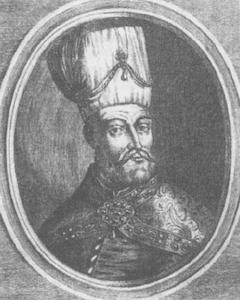
1913: Captain Manuel Sanchez Lopez

On this date in 1913, Spanish Captain Manuel Sanchez Lopez was shot for a scandalous affair of incest and murder.

You’ll need Spanish for most sources on this tawdry tale. Our principal was a vicious lowlife of long repute, having driven his wife away by dint of his ungovernable affection for cheap brothels, gambling dens, and drunken brawls.

His oldest daughter, MarĂ­a Luisa Sanchez Noguerol, would be his semi-willing accomplice in the crime that ended Captain Sanchez’s life, but she had for many years before that been his victim: not only of the blows the father meted out to all his children, but also to his sexual attentions.

Captain Sanchez forced this daughter into prostitution to support his own degeneracy but he had a larger score in mind when he encouraged her to accept an assignation with a wealthy widower, Rodrigo Garcia Jalon. At this rendezvous, the father — who probably would have been better advised to content himself with the rents of blackmail or robbery — sprang from concealment and fatally bludgeoned the gentleman with a hammer.

Father and daughter desperately dismembered the body in hopes of concealing the crime but another of Manuel Sanchez’s oft-thrashed children denounced them to the police, to the very great delight of scandal-mongering newspapers throughout Europe. Everything was rumored: that the father had once or twice impregnated his own progeny, that they had pulled the seduction/murder trick several times before.


The discovery of the victim’s remains.

The father had the privilege of shooting instead of a garrote, thanks to his military rank. The daughter received a long prison sentence.

On this day..

1949: Nicolae Dabija, anti-communist partisan

On this date in 1949, the Romanian anti-communist partisan Nicolae Dabija (English Wikipedia entry | Romanian) was shot at Sibiu, along with six other members* of that resistance.

Although cousin to Romania’s pre-Ceausescu Communist ruler Gheorghe Gheorghiu-Dej, Dabija — not to be confused with the 19th century general of that name nor with the latter-day Moldova M.P. of the same name — charted a distinctly separate ideological course.

He was decorated for his service on the Axis’s Eastern Front during World War II, but this same credential got him expelled from the army in the postwar Red takeover.

Nothing daunted, Dabija and some like-minded comrades** formed an armed anti-communist militia a few dozen strong in Transylvania’s Apuseni Mountains named the National Defense Front, Haiducian Corps — a nod to the Balkans’ historical outlaws/rebels. The Securitate reduced them over the course of 1948-1949 months, culminating in a March 3-4, 1949 forest battle that brought Dabija et al into custody.

* Ioan Scridon, Traian Mihaltan, Titus Onea, Augustin Ratiu, Gheorghe Oprita, Silvestru Bolfea. (Source)

** Brothers with the apt surname Macavei.

On this day..

1826: Seventy-two Janissaries

We credit the London Times of November 27, 1826 for this tidbit on the Ottoman Empire’s mop-up of the Janissaries, the truculent infantry elites who had been shattered earlier that same year during the “Auspicious Incident”.

The news from Constantinople extends to the 25th ult. It is stated that on the 18th a plot was discovered which had for its object to kill MEHEMED PACHA, who commands in Asia, the SERASKIER-PACHA, and the TOPCHI-BACHI [chief of the cannoneers -ed.]. The ex-Janissaries who are incorporated with the new troops were the authors of this project. They had agreed to come to a review, which was to take place on the 19th, provided with ball-cartridges, and on the order to fire, had resolved to discharge their muskets on these Pachas and their Staff-officers. The conspiracy was revealed to MEHEMED PACHA by a Captain and four Topchis, whom the conspirators had endeavoured to gain over to their cause. The information was immediately conveyed to the SULTAN and the Government, who took prompt and decisive measures to punish the guilty and intimidate the disaffected. They despatched 1,500 of the most suspected towards Nicomedia, under the pretext of suppressing a revolt, but with the real design of getting rid of obnoxious and dangerous defenders. It is supposed that when this detachment arrives at the Dardanelles it will be sent to Chios. On the 20th ult. the GRAND VIZIER ordered the execution of eight Mussulmans, and the SERASKIER commanded six to be strangled, on a charge of corresponding with the disaffected. On the 21st, the latter officer is said to have executed in secret, and without trial, 72 more, among whom were four captains. The Government banishes all the unmarried Janissaries, even though they exercise trades and are entirely unconnected with the soldiers of that suppressed corps. The Mussulman population, it is said, are to be disarmed, as well as those whom they call “Christian dogs.”

On this day..

1822: General Berton

On this date in 1822,* General Jean Baptiste Berton (sometimes Breton) was guillotined in Poitiers.

A young junior officer during the French Revolutionary Wars, Breton/Berton scaled the Napoleonic ranks in the early 19th century and was elevated by the Corsican’s own hand to Brigadier General.

Upon Napoleon’s 1815 return from exile Breton rallied to the ex-emperor’s cause but he did not suffer the worst of it after Waterloo, instead scribbling his memoirs in enforced half-pay retirement.

This situation permitted the ex-marechal-de-camp both the time and the liberty to dabble in that era’s rife conspiracies intending the overthrow of the Bourbons — a fact which was exposed by mischance when one of the young cavalrymen he had recruited was killed in an accident with incriminating documents in his pockets. Agents provocateur baited him thereafter into a treasonable and doomed rebellion.

* Some sources give October 6, which was a Sunday. Primary documentation prefers October 5.

On this day..

1973: Jose Gregorio Liendo, “Comandante Pepe”

Comandante Pepe was shot on this date in 1973.

Jose Gregorio Liendo (English Wikipedia entry | Spanish), a onetime agronomy student, had quit his studies years before to join a Marxist guerrilla organization.

From the gorgeous inaccessibility of Chile’s mountainous border with Argentina, the Revolutionary Left Movement (MIR) launched pinprick-level attacks on the state in the late 1960s and took land reform by the barrel of the gun by seizing farms around Panguipulli for the use of workers.

The quixotic former student turned campesino revolutionary, Liendo became one of MIR’s most visible public faces under the nom de guerre of “Comandante Pepe”, even settling down in the mountains and marrying a local.

In the early 1970s this movement enjoyed the simpatico of the socialist Salvador Allende government. (One of MIR’s co-founders was President Allende’s nephew.)

That moment ended abruptly with the September 11, 1973 coup replacing a socialist administration with a far-right military dictatorship — and the latter immediately began slaughtering leftists.

The MIRistas themselves managed a few small attacks on the Pinochet regime in the weeks following the coup but were speedily overwhelmed. Captured after an attack on a carabineros station, “Pepe” with eleven comrades — a mixture of students and lumber workers — were condemned to immediate execution by a drumhead military tribunal in Valdivia.

“A week later, on October 9, the army executed seventeen more persons in the area,” according to Mark Ensalaco. “They were loggers, farmers, and peasant activists. The following day Helicopter Squadron 3 arrested sixteen employees of the same lumber and forestry complex where Comandante Pepe had worked and agitated. The prisoners were taken to a bridge over the Tolen River and executed.”

There’s a recent historical novel about this legendary character, Lo Llamaban Comandante Pepe (They Called Him Comandante Pepe).

On this day..

1499: Paolo Vitelli, duplicitous commander

On this date in 1499, Florence decapitated its chief general for dereliction of command.

Paolo Vitelli, a noted condottiero whose family had taken over Citta di Castello, was hired by the post-Savonarola Florentine Republic during the Italian Wars to campaign against Florence’s traditional rival, Pisa.

“If this man had taken Pisa, nobody can deny that it would have been proper for the Florentines to keep in with him,” mused Machiavelli years later in The Prince. “For if he became the soldier of their enemies they had no means of resisting, and if they held to him they must obey him.”

The prospective kingpin made fantastic progress against the Pisans, and when news reached his Florentine patrons that Vitelli had taken a key gate in Pisa’s walls, the city smugly began drawing up wishlists of humiliations to heap upon the vanquished. But at the critical moment, “just when the whole army, and especially the youthful Florentines who had joined the camp as volunteers, were carrying all before them by their indomitable ardour, they were suddenly ordered to retreat. And Paolo Vitelli, seeing the unwillingness of the soldiers to obey, rushed among them with his brother Vitellozzo* and drove them back with blows.”

As jaws hit tables all around Florence, Pisa’s defenders were hurriedly patching the breach and retrenching. The attackers had ransacked their treasury to finance the expedition; there was nothing for a do-over. Had Vitelli quailed, or was he playing some double game? Either way, Machiavelli lamented — contemporaneously this time, in his capacity as an emissary of state — “We should have preferred defeat to inaction at so decisive a moment.”

With mingled urgency and circumspection, Florence’s leaders arranged to invite Vitteli to a war council at which he was arrested. Interrogated on September 30th, he was beheaded the very next day.

* Three years later, Paolo’s brother Vitellozzo would also achieve the pages of Executed Today … and once again did so under the sharp eyes of Machiavelli.

On this day..

1972: Helenira Rezende, Brazil guerrilla

Brazilian Communist guerrilla Helenira Rezende was summarily executed in the field on this date in 1972.

“Preta” to her comrades, she was a silver-tongued student activist at the University of Sao Paulo who had been clapped in prison by the dictatorship.

Rezende was amnestied in December 1968 and went underground, eventually joining the guerrilla movement in the Araguaia River basin.

The 80 or so guerrillas operating in the eastern Amazon aspired to run that Che Guevara rural-insurgency playbook, as it announced in a May 1972 manifesto. It didn’t work: the Brazilian military successfully suppressed the revolution in a series of campaigns over the next two-plus years. Only about 20 of the guerrillas survived.

One of those lucky ones, Angelo Arroyo,* gave an account of her death:

On September 29, there was an ambush that resulted in the death of Helenira Resende. She, along with another companion, was on guard at a high point in the woods. On that occasion, troops came along the road. As they found the passage dangerous, they sent scouts to explore the side of the road, precisely where Helenira and the other companion were. The latter, when he saw the soldiers, fired the machine gun, which did not work. He ran and Helenira did not realize what was happening. When she saw the soldiers were already in front of her. Helenira fired a 16-round shotgun. The other soldier gave a blast of machine-gun fire that struck her. Injured, she pulled out the revolver and shot the soldier, who must have been hit. She was arrested and tortured to death.

Her bayoneted body was secretly buried by sympathetic campesinos and has never been recovered; officially, she’s still considered a fugitive. Her unit adopted the tributary name Destacamento Helenira Rezende; more recently, the University of Sao Paulo’s postgraduate association has been named in her honor.

* He wasn’t lucky for long: Arroyo was assassinated with a fellow Communist leader by military officials in Sao Paulo in 1976.

On this day..

1821: Corporal Chaguinha, Brazil’s saint of freedom

On this date in 1821, Brazil’s saint of freedom was martyred by the Portuguese.

Francisco José das Chagas, fondly remembered as Corporal Chaguinha, led a mutiny in Santos of enlistees aggrieved by wages five years overdue, and the unequal treatment of Brazilian as compared to Portuguese soldiers.

It was a fraught and contradictory political moment; the Portuguese royal family had spent the past decade-plus in the quasi-exile of their New World colony after fleeing Napoleon. In the process they had (even formally) elevated Brazil from a mere dependency to a coequal in the empire, and attempts to reverse this promotion once the royals returned to Portugal in early 1821 found little welcome in Brazil.

Chaguinha was born to symbolize in his death his countrymen’s frustration.

To great popular indignation a customary pardon was not extended to the man, who was instead publicly hanged in a notorious botch. After the rope broke repeatedly — and again a public clamor for clemency was refused — they strangled him slowly with a leather strap. A Catholic priest named Diogo AntĂ´nio FeijĂ³, who in time would rise to become the regent of independent Brazil, would describe seeing “with my own eyes” seeing the still-surviving Chaguinha being murdered lying under the gallows after his last noose failed to support him.

Brazil declared independence from Portugal one year later almost to the date (September 7, 1822), and won the war to clinch it. The martyred corporal was thereafter improved by veneration as a popular saint credited with miraculous intercessions for suitably patriotic Brazilians.

On this day..

1442: Nguyen Trai

On this date* in 1442, Vietnamese writer, commander, and politician Nguyen Trai died for regicide.

The Confucian scholar (English Wikipedia entry | the far more detailed Vietnamese) was already a patriotic hero for taking to the hills in the successful rebellion that had expelled the occupation of the Chinese Ming dynasty some years before.

This philosopher of irregular war was famed for the very contemporary-sounding aphorism “better to conquer hearts than citadels”;** five centuries on, the great general of another era’s Vietnamese liberation struggle would credit Nguyen Trai’s “attacks on the minds, i.e. propaganda work among the enemy, persuading the enemy to surrender in many cities.”

A literal warrior-poet, Trai bequeathed the ages a corpus of beautiful musings to go with his martial axioms.

To A Friend

My fate naturally has many twists and sharp turns,
So in everything I trust in the wisdom of God.
I still have my tongue — believe me, I am able to talk,
Even though I’m still poor and, as we know, pathetic.
Never to return, the past flies too quickly and the time is short,
But, wandering in this cold room, the night is far too long.
I’ve been reading books for ten years, but I’m poor from clothes to bone
From eating only vegetables and sitting without a cushion.

But the very sharpest turn in his fate was the last one, when the Vietnamese sovereign, healthy and young and passing through the area, paid a courtesy call on the 60-something statesman — and shockingly turned up dead in the morning, thrusting the kingdom into turmoil since his heir was an infant. We have seen in these pages that inhabiting the mere vicinity of an unexpected royal death can be an extremely dangerous situation; so it was for Trai, no matter his former heroism or his poignant verse.

Perhaps his situation as the favored royal advisor had cultivated the envy of rival courtiers who suddenly found themselves in a position to vent their pique; or, maybe it was nothing but tunnel vision where the situation of being the most proximate initial suspect would transmute into an irresistibly self-reinforcing certainty. Or could this celestial household really have been involved in regicide? It’s one of the most famous mysteries in Vietnam’s history.

The man’s contemporaries came to their conclusion almost instantly. Barely six weeks after the emperor’s unexpected death, Nguyen Trai was put to death — and not only he but his wife, Nguyen Thi Lo and all their kin. It’s one of history’s most notorious incidents of the execution of nine relations — the most severe collective punishment to be found in China and Vietnam, wherein anyone closely related to an arch-traitor could be destroyed in a family extermination.

Twenty years later, Emperor Le Thanh Tong formally exonerated the man of the charge, a verdict that has been endorsed by a posterity that honors Nguyen Trai as a national hero.

* We’re translating the date from the Vietnamese lunisolar calendar, a perilous venture. I’m well outside my expertise here but sources I can find are unanimous on this date and Vietnamese calendar converters such as this one appear to agree.

** Another great Nguyen Trai-ism for guerrilla war: “Like the ocean which supports a ship but can also overturn it, so the people can support the throne or sink it.”

On this day..

1682: Ivan Khovansky

On this date in 1682, the boyar Ivan Andreyevich Khovansky went from being the power behind the throne to one of the skulls under it.

A veteran military commander, Khovansky (English Wikipedia entry | Russian) became a key figure in the months after the death of Tsar Feodor III of Russia. This perilous political moment left the throne in the hands of two underage half-brothers overseen by a female regent.

With benefit of hindsight we know that 10-year-old (in 1682) Peter will emerge from this troika to become the mighty Tsar Peter the Great. In 1682, it was anybody’s guess whether any of these dubious prospective autocrats might survive at all.

Peter in particular had cause to fear for his life in May 1682 when the Streltsy, a hereditary guard of Moscow musketeers, bloodily rebelled in favor of his co-heir’s privileges and against his own, rampaging through the Kremlin murdering princes in Peter’s circle. And at the head of these furies stood Khovansky.

Many years later, Peter would revenge himself upon the Streltsy for this horror but in the moment it carried the day, incidentally also carrying Khovansky to a preeminent position in the state.

But he was pitted almost immediately against his erstwhile patron and ally, the regent Sophia Alekseyevna.

Even though the Streltsy rebellion had been conducted on Sophia’s behalf, she could see as well as the next tsar the perils of embracing these latter-day praetorians‘ authority to remake the government by force … and the Streltsy made sure to remind her of it almost immediately when the “Old Believer” movement that predominated among its ranks started raising complaints about Sophia’s religious accommodations.*

Fearing an overmighty nobleman at the head of a treasonable host — and Khovansky has been suspected by both his contemporaries and posterity of coveting the regency for himself — Sophia and the young co-tsars briefly fled Moscow “because we could not tolerate the many offences, unlawful and gross actions and violations committed by criminals and traitors.” Meanwhile she maneuvered adroitly to isolate him politically and had the boyar Duma vote his attainder.

His fate was sealed by the discovery of an anonymous (probably fabricated) letter of denunciation. On 17 September, her own name day, Sophia succeeded in luring Ivan Khovansky and his son Ivan to the royal summer residence at Vozdvizhenskoe outside Moscow. The charges against them centred on their ‘evil designs upon the health and authority of the great sovereigns’ which involved no less than plotting to use the strel’tsy to kill the tsars, Tsaritsa Natalia, Sophia and the patriarch, then to raise rebellion all over Moscow and snatch the throne. The lesser charges included association with ‘accursed schismatics’, embezzlement, dereliction of military duty, and insulting the boyars. The charges were full of inconsistencies and illogicalities, but their sheer weight sealed the Khovanskys’ fate and Prince Ivan and his son were beheaded on the spot … The strel’tsy were forced to swear an oath of loyalty based on a set of conditions, the final clause of which threatened death to anyone who ‘speaks approvingly of the deeds of late, or boasts of committing murder or makes up phrases inciting rebellion as before, or stirs up people to commit criminal acts.’ (Source)

He’s the subject of the Mussorgsky opera Khovanshchina.

* Old Believers wanted a rollback of religious reforms decreed in recent years; Sophia said no dice. Once Peter the Great took over, Sophia and Old Believers alike would end up in the same boat.

On this day..