On this date in 1888, Jochin Henry Timmerman was hanged across from the cemetery in Goldendale, Washington for the murder of a freight driver.
The account of this bit of local color in a territory still a year away from statehood comes from Washington’s HistoryLink website.
The page includes a lengthy account of the crime and capture of the only man ever hanged in Klickitat County. We excerpt here the affair’s climax.
Because Timmerman steadfastly maintained his innocence, the execution was scheduled to take place after the arrival of the April 6 daily overland mail stage. This was in case Territorial Governor Eugene Semple (1840-1908) sent a stay of execution. Early Klickitat Valley Days states “Friends of Timmerman had a skilled long distance rider with a swift saddled horse waiting at a railroad telegraph station (in) Grant, Oregon, 15 miles from Goldendale, across the Columbia River. A steam ferry tug waited on the Oregon shore, so the rider would not be delayed, if a coveted life saving yellow envelope was placed in his hands” (p. 78). Governor Semple sent no telegram, and the mail stage arrived without a letter of reprieve.
Timmerman, meanwhile, was given a quart of whiskey upon awakening and allowed to consume it all in preparation for his ordeal. The execution took place in Goldendale under Sheriff VanVector’s [sic] direction on a gibbet erected directly across from the town cemetery. The event drew a large crowd. Cora E. Van Hoy Ballou, who watched the execution as a young child, later remembered her mother calling to her and her sister on the morning of April 6, “Wake up children, pappy has gone to the barn to get the team. We’re going to town to see the hanging” (Early Klickitat Valley Days, p. 78). The Van Hoy family was not alone: The Washington Standard reported that more than 3,000 people witnessed Timmerman’s execution.
Timmerman rode to his execution in a wagon sitting up in his own coffin, reportedly smoking the cigar. He mounted the scaffold unassisted and tossed the cigar butt into the crowd, who fell upon it and fought for bits as souvenirs. Local tradition later told that just before his hanging Timmerman prophesied that Goldendale would soon be destroyed by fire, and indeed, on May 13, 1888, a little more than a month after Timmerman’s execution, seven blocks of Goldendale’s business district did burn down.
Timmerman went to his death maintaining his innocence. His last words are reported to have been this advice: “All I can say is that if you ever get caught in a scrape like this, don’t let them take you alive”
On this date in 1936, a German immigrant went to New Jersey’s electric chair for kidnapping and murdering the infant son of famed aviator Charles Lindbergh.
Snatched
The kidnapping of the Lindbergh boy in 1932 had touched off an outpouring of public compassion matched only by the clumsiness of the investigation. The circus that formed around a father desperate to retrieve his boy — and prone to rash decision-making thereto — pulled in underworld figures, military intelligence officers (including the founder of the CIA’s forerunner and the father of Gulf War General Norman Schwartzkopf), a meddlesome schoolteacher, and queer characters like “Cemetery John,” who somehow managed two meetings with Lindbergh’s intermediaries, making off with a box full of ransom cash without anyone so much as tailing him, much less having to fork over the hostage.
The boy, in fact, was dead, and would be discovered weeks later, a few miles from the Lindbergh house, in such a state of decomposition as to suggest that, by accident or intention, he had suffered a fatal head injury almost at the moment of his abduction.
Two years’ fruitless investigation ensued, with leads that frustratingly faded away and at least two suspects who committed suicide. The police job had been a hash from the start, between amateurish cock-ups like failing to measure footprints found on the scene and security breaches in the chaotic weeks following the kidnapping. Most damagingly, a newspaper laid hands on an early ransom note and printed it, making it impossible subsequently to positively discern the kidnapper’s real notes from hoaxes.
But John Law had done one thing right: paid the ransom in soon-to-be-obsolete gold certificate. As they’d hoped, someone was finally caught spending this distinctive currency: Bruno Hauptmann.
Hauptmann actually went by “Richard”, but with its unerring sense of the Zeitgeist, the press played up his menacing alien moniker. After two and a half years, the public was ready to hate someone, and an illegal immigrant with a criminal record* from the late war’s great enemy was pretty much made to order.
Trial of the Century
The one thing Hauptmann didn’t do was confess — and that necessitated the “Trial of the Century,” or in Mencken’s coinage, “the greatest story since the Resurrection.”
It was O.J. before 24-hour cable. Journalists packed the small-town courtroom of Flemington, N.J.; for six weeks early in 1935, an aggressive prosecutor vied with a flamboyant (but cripplingly dissolute) defense attorney hired for the penurious defendant by the Hearst newspaper empire in exchange for inside information.
This newsreel footage of the trial consists mostly of Hauptmann’s own testimony, and even at seventy-plus years’ distance it crackles with drama — and with the persecutorial atmosphere that sealed Hauptmann’s fate, guilty or not. (The defendant often sounds uncertain and evasive in these clips — it cannot have helped his standing with the jury, but it is worth recalling that English was not his native language.)
History’s Verdict
The case was circumstantial, the most powerful circumstance, of course, being Hauptmann’s possession of ransom money — thousands of dollars worth, as it turned out, stashed in his garage. Hauptmann said a friend had left it when returning to Germany; the alibi didn’t convince many, but Hauptmann stuck to it to the end, even refusing to accept a commutation in exchange for a confession. This audio of a convicted Hauptmann still maintaining his innocence comes from the New Jersey Star-Ledger blog.
[audio:Bruno_Hauptmann.mp3]
Much other evidence against him — shaky eyewitness testimony, doubtful courtroom forensics — seems less damning, especially from the perspective of time. Unexplored problems — why would a professional carpenter build such a shoddy ladder? How could he have known the (rare) night the Lindberghs would actually be home? — gesture emptily towards other suspects never pursued, though they are very far from authoritatively exonerating Hauptmann. Ultimately, it’s a case with many unclear data points, whose importance and configuration invite dispute. (Here‘s a site dedicated to Hauptmann’s innocence, including this article (.pdf) outlining the main arguments his partisans make.)
Even the verdict’s defenders, and there are many, concede that portions at trial were exaggerated or outright perjured in an atmosphere hardly conducive to dispassionate review. Whether that makes Hauptmann “guilty but framed” or plausibly innocent (of the kidnapping, if not of opportunistic extortion) has been the subject of far more rumination than this blog can hope to assay.
On January 7, 1965, 23-year-old Robert Lee Massie shot and killed Mildred Weiss during a botched robbery near her home. He pleaded guilty and, sentenced to die by the state of California, came within 16 hours of execution in 1967, when then-Governor Ronald Reagan temporarily halted his execution so that he could testify at the trial of his alleged co-conspirator. By this time, Massie had begun complaining to anybody who would listen about the conditions on death row, and greeting the prospect of an execution date as a welcome deliverance, was dubbed “the prisoner who wants to die” by the press.
However, Reagan’s reprieve bought him just enough time to live to see a California Supreme Court decision temporarily halting executions, which was followed by the US Supreme Court Furman v. Georgia decision of 1972 banning the death penalty as then being enforced as unconstitutionally arbitrary and capricious.
With Furman, death rows across the country were summarily cleared, and Massie, a model prisoner, was paroled for good behavior in 1978. By this time, the US Supreme Court had handed down the Gregg v. Georgia decision holding that states had revised their death penalty statutes sufficiently to allow executions to resume.
Only months after his release, Massie killed Boris Naumoff in his liquor store and wounded a clerk in another botched robbery. Again pleading guilty, this time over the objections of his court-appointed lawyer, Massie was again sentenced to die.
As before, Massie welcomed his sentence and, acting on a own novel interpretation of the Sixth Amendment guarantee of self-representation, argued that he had a constitutional right to bypass the appeals process usually automatic in capital cases and that there “is no meaningful difference between forcing an automatic appeal upon a defendant and forcing unwanted counsel upon him.” The appeals court disagreed, ruling that “while a litigant may waive the advantage of a law intended solely for his benefit, he may not waive a law established for a public reason.”
Appeals in capital cases were never intended to allow the prisoner to “choose his own sentence,” the Court wrote, and were in fact in place for just such a reason of ensuring full investigation into the “real issue [of] the propriety of allowing the state to conduct an illegal execution of a citizen.” The state was obliged to proceed with Massie’s appeals against his stated wishes, a charge unique to capital cases, because of the singular obligations imposed by the death sentence on the legal machinery of the state — and in fact imposed by the Furman and Gregg decisions that years earlier had ushered Massie unwillingly off death row.
His appeals continuing against his wishes, Massie’s conviction was ultimately overturned in a 1985 California Supreme Court decision holding that the sentence was invalid because his lawyer had not consented to the guilty plea.
Convicted again in a retrial in 1989, Massie was, once again, sentenced to death. Though he was briefly heartened enough to pursue appeals in earnest, those, too, foundered; increasingly convinced that corrupt judges were violating their oath to uphold the Constitution and greasing the machinery of death, he determined once again to pursue his own death.
As his appeals ran out, lawyers and advocates of all stripes stepped in to try to prevent Massie’s execution. A lifetime of abuse in foster care and juvenile detention centers and evidence of clinical depression and mental disorder were all presented at the last minute in a last-ditch attempt to save a man who didn’t want saving.
All were denied, and Robert Lee Massie was executed at the age of 59 on March 27, 2001. He was just the ninth prisoner executed in California in the post-Furman era and the 703rd nationwide.
Massie is one of a growing trend of death row volunteers, prisoners who voluntarily seek to run through their appeals and bring their lives on death row to an end. His frequent visitor in his last years in prison and “next friend,” Michael Kroll,* writes:
My friend, Bob Massie, maneuvered the state of California into assisting in his suicide. He had his own lawyer doing the dance of death with the attorney general and managed to avoid being declared incompetent.
And in the words of a relative of one of Massie’s victims:
I know he wants to die. It makes me think, if he wants out of the suffering, well, maybe we shouldn’t be killing him. Maybe he should just be left there to suffer.
Tossed hither and yon with the shifting legal tides of death penalty law spanning eight presidential administrations, Massie had to aid his executioners to the very last breath: when finally strapped to a gurney 36 years since that young man had murdered Mildred Weiss, he obligingly flexed his arm to help the technician find a suitable vein.
* Kroll tried to prevent Massie’s execution on the grounds that he was mentally ill, incurring his friend’s wrath.
On this date in 1998, the story of a boy named Paul ended in Florida’s electric chair.
Paul was born in 1951, in Schenectady, New York. He was the fifth child born to his mother, and would be the third she put up for adoption. At thirteen months old, Paul was malnourished and neglected both physically and emotionally to the point that county officials found him unfit to be adopted. But out of the slightest bit of luck, the small child caught the attention of Eugene and Norma Stano, who fought for six months to adopt the severely delayed child. And it was out of that luck that Paul became Gerald Eugene Stano.
Gerald Eugene Stano’s problems didn’t end with his new life with his adoptive parents; instead, he continued to develop a series of problems that would follow him, shaping his outlook on the world forever, and likely providing him with the excuses he needed to justify his actions later in life.
Gerald still wet the bed at ten, was the target for bullies and regularly laughed at by girls. Late in his life he would claim that women used to pull his hair, and even threw beer bottles at him, all without any provocation. He lagged behind in school, failing to graduate high school until he was 21 years old, and except for music class never achieved a grade higher than a C or D.
Yes, Gerald had a sad and difficult life, one that most people would find it easy to sympathize with. Despite his claims of being an outcast, Gerald flaunted his high opinion of himself, often going as far as to refer to himself as a “real Italian stallion”.
It seems that few really paid attention to Stano — not until March 25, 1980, when a woman by the name of Donna Hensley stumbled away from him, and walked into a police station.
Hensley would tell police that she was a prostitute, and had been approached by a man requesting her services. Once at her motel room, the two began to argue and the man ended up slicing her with a knife before insulting her and fleeing. Hensley was adamant that the man be found and charged.
An officer investigating the incident went looking for the prospective suspect, but ended the search with only a license plate for a car that matched the description. Following up with the plate number, the officer found the vehicle was registered to Gerald Eugene Stano, a 28-year-old man with a long arrest record but no convictions. Hensley gave a positive identification from Stano’s mug shot, and thus began investigation into a series of grisly murders.
On February 17, 1980 two college students had stumbled onto the decomposing remains of a young woman, and police had begun investigating the gruesome murder. The victim, 20-year-old Mary Carol Maher, was found in a remote area lying on her back, her arms at her side. Police believed she had been there for weeks, and upon moving the body discovered that she’d been repeatedly stabbed in the back, legs and chest.
During questioning for the assault on the prostitute, Stano, who fit the profile of the person sought for Maher’s slaying, was asked about the murder victim. Despite having confessed to the assault, Stano would only provide enough information to confirm that he’d previously seen Maher. But with more questioning, Stano broke and began replaying the scene out with the detective, even accompany the detective to the murder scene, and confirming the position of the body.
After returning to the police station, another detective suggested questioning Stano on a missing persons case, that of Toni Van Haddocks, a 26-year-old prostitute who had not been seen for some time. Stano denied any involvement in that case.
On April 15, 1980 a human skull was found in a garden by a Daytona resident, and a search of the area lead to clothing and more bones. Police would determine that these were the remains of Haddocks. Stano was again questioned and despite his first denials, later confessed to the murder, and would soon begin confessing to many more.
In the end, Stano admitted the gruesome murders of over 40 women, and was sentenced to death. After many failed appeals, his execution took place on March 23, 1998.
The death penalty has always been a very touchy subject. Many of its opponents believe that nothing justifies the taking of another person’s life, even if done by the state as a means of punishment. I agree that every life has value, but am personally compelled to ask whose life had more value — the victims that Stano murdered, or Stano himself?
My answer would favor the victims, and therefore I am resolved to believe that giving him any punishment less than what he received — death — would be an injustice to those who were killed by his hands.
On this date in 1933, Giuseppe Zangara went to Florida’s electric chair for the murder of Chicago mayor Anton Cermak — the man he had accidentally shot while attempting to assassinate President-elect Franklin Delano Roosevelt.
Zangara had to stand on a chair to take the shot: he was only five feet tall. This image is from Miami Police of Yesterday, a site by a descendant of one of the officers who arrested Zangara.
On February 15, 1933, at a Roosevelt speech in Miami’s Bayfront Park, Zangara perched himself on a metal folding chair within ten meters of the man who was then President-elect, but somehow managed to miss him. A bystander, Lillian Cross, grabbed his arm, and others in the crowd wrestled him down.
Certainly Zangara would be better remembered if he had shot Roosevelt (and Roosevelt would be very much less remembered), but his head-scratching persona accounts for at least some of his obscurity.
He’s sometimes called an anarchist — the early 20th-century equivalent of calling him a terrorist — and he talked the talk. Here, his last words:
You give me electric chair. I no afraid of that chair! You one of capitalists. You is crook man too. Put me in electric chair. I no care! Get to hell out of here, you son of a bitch [said to the chaplain] … I go sit down all by myself… Viva Italia! Goodbye to all poor peoples everywhere!… Lousy capitalists! No picture! Capitalists! No one here to take my picture. All capitalists lousy bunch of crooks. Go ahead. Pusha da button!
Zangara was a working-class immigrant. But his specific motivation for murdering Roosevelt seems murky at best — there’s no clear subversive organization or cause with which Zangara seemed a dedicated fellow-traveler. The wikipedia page about him describes his lifelong stomach pains as the cause of his act, which seems a queer thing to make a fellow shoot a president.
The major conspiracy proposal, that the anti-mob mayor Cermak was the real target all along of a mafia-engineered hit (here (.doc) is a version) is highly speculative, to put it generously. (Update: More on this here, via Chicagoland) Certainly Zangara might have been, as he claimed and most believe, a lone nut — many have done worse for less cause.
The world didn’t have long to unravel this man’s mysteries; justice moved with a rapidity terrifying even by the standards of the time — as reflected in the title of one of the books about him, The Five Weeks of Giuseppe Zangara.
Zangara had already been sentenced to a long prison term for the several bystanders his errant shots had struck when Anton Cermak finally succumbed — after 19 painful days — to a gut shot. Two weeks after that, his killer was dead, too.
During his first trial, the judge pressed him on his motivation, as reported in a press clipping that became part of Zangara’s FBI file:
Q. Have you ever been in jail before? Ever been in any trouble?
A. No, this is the first time.
Q. Did you ever hurt anyone before?
A. No, me no hurt anyone.
…
Q. Did you plan this shooting?
A. No.
Q. When did you decide to do it?
A. I got it in my mind capitalist hurt people. They are to blame for my stomach hurting. My stomach was hurting bad. It was like I was on fire. It burns my mind, I act like a drunken man. It came in my mind when I was suffering.
At this trial — the one before Cermak died — he pled unsuccessfully for execution: “I am sorry only because I did not kill. I am sorry about nothing. Put me in the electric chair.” It reads like “suicide by cop”.
Zangara might not be a name of Oswaldesque dimensions among the assassinariat, but he comes in for a scene in Stephen Sondheim’s strange musical theater, Assassins.
Officially, Zangara was punished for the man he killed, not the soon-to-be-President he was (presumably) aiming at. But such a close scrape for such a transformative American leader, a man sometimes credited with saving capitalism from itself in an age of crisis, has made Zangara’s one famous act fodder for alternative history that asks the question “what might have been?”
(Thanks to German political scientist Matthias Lehmphul for the guest post -ed.)
The last man — so far — to die in the gas chamber, Walter LaGrand, was executed by the state of Arizona on March 3rd, 1999. He was one of just 11 prisoners gassed among the 1,099 executions to date since the U.S. death penalty was reinstated in 1976.
The United States introduced the gas chamber as an execution method in the beginning of the last century. The first death row inmate ever executed with poisoned air was Chinese migrant Gee Jon, who died at the Nevada State Prison in 1924. Relative to the other methods in use at the time — the electric chair, hanging, and the firing squad — gas was believed the most humane way of taking a person’s life.
It took 70 years for a court to finally recognize it as cruel and unusual punishment. In 1994 a federal judge ruled that the gas chamber violated the eighth amendment of the U.S. Constitution. Shortly before Walter LaGrand’s scheduled execution, the Ninth Circuit Court of Appeals issued a stay whose logic would have banned lethal gas forever. This was overruled by the U.S. Supreme Court, leaving it as it remains today -– a backup or secondary option for putting a delinquent to death in five states: Arizona, California, Maryland, Missouri and Wyoming.
Death penalty for a murder in a bank
Walter LaGrand (top) and his brother Karl.
Walter LaGrand was following his brother Karl LaGrand, who Arizona had executed by lethal injection a week earlier. The brothers were sentenced to death on December 14th, 1984 for stabbing to death an employee of a bank in Marana, Arizona.
On January 7, 1982, 19-year-old Walter and 18-year-old Karl drove from Tucson to Marana to rob the Valley National Bank. Brandishing a toy gun, they ordered the bank manager, Ken Hartstock, to open the vault. Mr. Hartstock, however, did not have the complete combination. The brothers bound Mr. Hartstock’s hand together with electrical tape. When he attempted to shout at Karl, he was stabbed to death with a letter opener.
Another bank employee, Ms. Lopez, was in the room at the time of the murder. Her hands had also been bound, and she too suffered several stab wounds. She later became the state’s key witness.
When they were arrested, Karl LaGrand confessed to the killing and tried to shield his older brother from a capital murder charge by stating that Walter was not in the room when the stabbing occurred.
Ms. Lopez, however, testified that both brothers were surrounding Mr. Hartstock at the time of his death.
Between different worlds: A childhood without a home
At the time Walter and Karl LaGrand were born, their mother, Emma Maria Gebel, lived in Augsburg in what was then West Germany. The boys were cared for either by Emma’s mother or a babysitter. When Emma’s mom became ill and could no longer handle the children, the two kids were put into an orphanage.
During the two years they remained at this place they suffered an egregious lack of care. Deprivation of food and blankets were common punishments at this institution. When Emma took the boys back they already suffered insomnia and post-trauma disturbances. In 1966 Emma married Masie LaGrand, an American soldier stationed in Augsburg. He adopted the two boys and their older sister Patricia. Together they moved to the USA in 1967.
Soon their new dad was send to Vietnam. After returning from this war he never was the same; Emma and Masie divorced in 1973. The boys’ delinquent record can be tracked back to 1978 — when they first ran away from home and shoplifted.
Though Karl and Walter were adopted, they never were naturalized by the national immigration service. They remained German citizens — and that set the stage for another legal controversy in the days before their execution.
Power Politics: How the United States overrules international law
In a personal meeting with President Bill Clinton, German Chancellor Gerhard Schröder expressed his concerns about the fate of both brothers. However, the main argument was not the execution method but the lack of consular assistance by the time of arrest.
The Vienna Convention on Consular Relations (VCCR) is one of the bedrock documents of international law. Under Article 36 of the VCCR any arresting authority is obliged to promptly notify a detained foreign national of his or her right to contact and seek assistance from their consulate.
This article does not exempt foreign citizens from prosecution, nor does it give special rights under the law. It only insures that foreign nationals -– including Americans abroad –- have the means to defend themselves in a uniquely vulnerable situation. The United States and Germany are among the VCCR’s 169 signatories.
On January 22nd, 1998 the Special Rapporteur to the UN High Commissioner of Human Rights Bacre W. Ndiaye criticized the United States for its arbitrary disregard for treaty obligations like consular notification:
There seems to be a serious gap in the relations between federal and state governments, particularly when it comes to international obligations undertaken by the United States Government. The fact that the rights proclaimed in international treaties are already said to be a part of domestic legislation does not exempt the Federal Government from disseminating their provisions. Domestic laws appear de facto to prevail over international law, even if they could contradict the international obligations of the United States. (Extrajudicial summary on arbitrary executions, E/CN.4/1998/68/Add.3:C.108 — full document (.pdf))
Much too late, Germany opened a legal case against the United States on Walter LaGrand’s behalf at the International Court of Justice (ICJ) in The Hague, Netherlands.
Karl LaGrand has been already executed when Berlin filed suit against Washington. Justice Christopher Weeramantry urged the United States to spare the life of Walter LaGrand. The White House argued it was a matter of the State of Arizona, outside the purview of federal authority. Under extreme international pressure, the Arizona Board of Pardons and Paroles took an unprecedented step: for the first time ever, it recommended an 60-day reprieve to await the decision of Germany’s suit against the United States at the ICJ.
Walter and Karl LaGrand always had a close relationship and that did not change during their trial or time on death row. Until the end of 1998 they were celled beside one another and enjoyed the ability to talk freely. They held mirrors through the bars of their cells, so that they could see the other while talking. The chance to go out together on a work crew (when they were allowed to work) always excited them due to the fact that they were then able to see each other. In fact, they were emotionally so close that, if they have to die, they had expressed a preference to be executed on the same day.
Given a choice in their method of execution, both brothers tactically opted for the gas chamber to give the legal challenges to lethal gas a chance to save them. With those challenges foundering, both were offered a late switch to lethal injection in exchange for dropping suit.
Karl took the deal. Walter, as the New York Times put it, “opted for the gas, with its resonance of the Holocaust for Germans.”
Before the executioner switched the lever to initiate a chemical reaction between cyanide pellets (KCN) and sulfuric acid (H2SO4) the inmate was given his last words. Walter LaGrand said:
To all my loved ones, I hope they find peace. To all of you here today, I forgive you and hope I can be forgiven in my next life.
This date’s gassing with hydrogen cyanide (HCN) took 18 minutes until the heart of Walter LaGrand stopped beating. While the execution took place witnesses left the room nauseated.
Will history repeat? There are some 125 foreign nationals on death row in the United States today. Another pair of German brothers, Michael and Rudi Apelt, are as of this writing waiting to be put to death in Arizona — perhaps, if they choose it, in the same gas chamber where Walter LaGrand perished.
Legal and diplomatic fallout
Still smarting from the LaGrands’ execution, German foreign minister Joschka Fischer said at the 55th Session of the Commission on Human Rights in Geneva on March 23rd, 1999:
States whose justice system kill are not meeting their responsibility to set an example to society. Europeans believe that the death penalty cannot be justified either ethically or legally and has not proved to be an effective means of combating crime.
The ICJ ruled in favor of Germany‘s LaGrand suit on June 26th, 2001, more than two years after the brothers had been put to death. It was the first time that a country won a case against the United States on this matter.
In 2005, facing multiplying challenges from death-sentenced foreign nationals similarly denied their rights under the VCCR, the Bush administration formally withdrew the United States from the ICJ’s oversight for such cases.
McCall‘s grievance against Wild Bill remains unclear, which seems no less than properly atmospheric. One version has him losing at cards to Hickok the night before the murder, then humiliated to accept Hickok’s charity for his evening meal. Since Deadwood sprang up on Lakota Sioux land in defiance of treaty obligations and thus was an outlaw settlement without legal oversight, McCall might also have been engaged by another party to eliminate the town’s de facto source of law further to some private profit.
That speculation gains some circumstantial support from the surprising proceedings the following day. An impromptu “miner’s court” acquitted McCall — the defendant claimed to have been avenging the murder of a brother who does not seem to have ever existed at all — of a murder they plainly knew he committed. This obliging verdict prompted a newspaper to remark,
Should it ever be our misfortune to kill a man … we would simply ask that our trial may take place in some of the mining camps of these hills.
McCall made for Wyoming, but couldn’t resist boasting of his famous crime, which was known to have graduated into a fair gunfight in his retelling. The times and the lands were unsettled enough that with an ounce of discretion he might have vanished. Instead, his loose lips got him nabbed by a federal marshal and extradited back to South Dakota — where he learned that the miner’s court verdict of an illicit settlement didn’t count as a legal acquittal for purposes of double jeopardy.
Like the reason for his one memorable act, McCall was an obscure character; his background was uncertain even when he lived. It was only through his victim that he left an imprint: he certainly elevated the legend of Hickok, whose cinematic demise also bequeathed to the arcane poker argot the term “dead man’s hand” — a pair of aces and a pair of eights (or more specifically, the black aces and black eights; the fifth card is uncertain) — after the last hand of cards Wild Bill ever held.
Six years ago today the state of Texas executed an FBI agent, a state district judge, the president of Kenya and a war hero who commanded a nuclear-powered submarine during the Civil War. More aptly put, Texas executed a seriously mental ill inmate named Monty Allen Delk who, at varying times, believed he was all of these things.
Delk was convicted and sentenced to death for the murder of Gene “Bubba” Allen of Anderson County in East Texas. Although the state of Texas maintained that Delk was “malingering,” i.e., pretending to be mentally ill to stave off execution, the prison system’s former chief mental health officer stated that Delk suffered from a severe mental illness, one that had become progressive in nature since it was first noticed in 1989 –- years after Delk was tried and convicted.
A close examination of the Delk case reveals yet another significant flaw in the capital punishment system:
The U.S. Supreme Court has ruled that executing severely mentally ill inmates violates the U.S. Constitution.
The court also has held that a death row inmate must be mentally competent in order to drop his appeals.
But the court has not directly addressed the issue of whether a death row inmate must be mentally competent in order to pursue his state and federal habeas appeals. In fact, the Texas Court of Criminal Appeals, and the 5th Circuit Court of Appeals, which has jurisdiction over death penalty cases in Texas, have ruled that prisoner competence during state and federal habeas proceedings is not constitutionally required.
The question is fundamental to due process. Habeas is the first, last and often only avenue of appeal for death row inmates whose sentences have been upheld on direct appeal by the Texas Court of Criminal Appeals. But because Delk was unable to assist his attorney through his habeas appeals, he could not answer simple questions that were key to his case -– questions such as, did he commit the crime? Did he think his trial was fair? Did he think his trial lawyers adequately represented him? Were there circumstances about the crime or about his personal history that mitigated against a death sentence?
The fact that Delk’s execution was allowed to proceed represented a three-pronged failure on the part of Texas’ death penalty system. The first failure must be attributed to the courts, which failed to order a psychiatric evaluation of Delk, despite repeated requests by Delk’s very able attorney, John Wright of Huntsville.
The second failure lies with Texas’ executive clemency system. Because of his mental illness, Delk’s sentence should have been commuted to life in prison. Yet the Board of Pardons and Paroles as well as Texas Gov. Rick Perry did nothing. (It is important to note that four days before Delk’s execution, the Georgia Parole Board, acting in a similar case, commuted death row inmate Alexander Williams sentence to life in prison after pleas from human rights activists. Williams is a chronic paranoid schizophrenic who thinks Sigourney Weaver is God and that little green frogs are in his prison cell, staring at him.)
The third failure rested with the Texas media. While Williams’ case attracted comprehensive media coverage in Georgia and beyond, newspapers in Texas largely failed to investigate Delk’s case. Government -– including the criminal justice system –- works best under the glare of public scrutiny. Absent such scrutiny, abuses occur. In this case, no one outside Texas’ fervent anti-death penalty community took much notice of Delk’s execution.
The good news is Texas’ newspapers are beginning to sit up and take notice. If I am not mistaken, every major Texas newspaper has called either for abolition of the death penalty or for a moratorium on executions. The issue of capital punishment has advanced from the margins to the mainstream. In today’s climate, one wonders whether Texas officials could get away with executing a person as severely mentally ill as Delk.
Ultimately, the Supreme Court will have to directly confront the issue of whether a death-sentenced prisoner need be mentally competent during his habeas appeals. Until that happens, we simply will have to ask ourselves a key question:
Is executing someone who is so severely mentally ill he does not know who he is not the very definition of an insane act?
On this date in 1942, mobsters Frank Abbandando and Harry Maione were electrocuted in New York’s Sing Sing prison for murder.
The two had risen together from an Ocean Hill, Brooklyn, gang to help weld together Murder, Inc. in the 1930’s — which, as its press-conferred moniker suggested, executed hits for the mob.
Dozens of corpses were left in their trail, and it was long odds that the spectacularly mangled body of a minor loan shark and suspected police informant killed in 1937 would be the one to haunt them. But when the government brought the heat against Murder, Inc., a collaborator in that hit turned state’s evidence and testified against Abbandando and Maione.
Pep has an ice pick. Happer has meat cleaver. It is the kind you chop with, you know, butcher cleaver. Abby grabs Rudnick by the feet and drags him over to the car. Pep and Happy grab it by the head. They put it in the car. Somebody says “It don’t fit.” Just as they push the body in it gives a little cough or something. With that, Pep starts with the ice pick and starts punching away at Whitey. Maione says “Let me hit the bastard one for luck.” And he hits him with the cleaver some place on the head.
Convicting mobsters was no mean feat — after all, they tended to whack informants — and the arrogant Abbandando in particular was shocked that his powerful connections didn’t manage to rig the trial.
But he and Maione were not altogether bereft of underworld consolation in their hour of need.
Three months before they were electrocuted, the stool pigeon in their trial “fell” to his death from a New York hotel room. It was just hours before he was to testify against Cosa Nostra boss Albert Anastasia, who would escape his fortuitously weakened prosecutors and eventually take over Murder, Inc., in its mid-1940’s twilight.
Polling data reveals interesting things about U.S. public opinion and the death penalty. If you ask an open-ended question about the death penalty –- for example, “Do you feel the death penalty is appropriate for certain egregious crimes?” –- then you usually see somewhere around a 65 to 35 percent split in favor. On the other hand, if you ask which is preferred – the death penalty or life in prison without parole, the results tend to be closer to 50-50.
Upon occasion, another question is asked: Do you feel an innocent person has been put to death in the U.S.? The results are pretty emphatic: Americans don’t trust their government to get it right, and they do believe innocent people have been executed, by a ratio of about three to one.
So the question fairly arises: Have innocent people been executed in the U.S. in what we sometimes refer to as the “modern era,” i.e., since executions were allowed to resume in 1976?
Enter Cameron Todd Willingham.
On Feb. 17, 2004, Cameron Todd Willingham was strapped to a gurney in a Texas death chamber as he declared his innocence for the last time. Minutes later, he was executed by lethal injection. In December of the same year, the Chicago Tribune uncovered secrets behind the Willingham case, addressing questions left unanswered and raising doubts left unacknowledged.
The Fatal Fire
Cameron Todd Willingham with one of his purported victims — his daughter, Amber.
On Dec. 23, 1991, Willingham was at home with his three daughters. His wife, Stacy, left their home in the morning to pay the bills and shop for Christmas gifts at a Salvation Army store. The family had been struggling that year; Todd, as everyone called him, had recently been laid off, and Stacy was supporting the family with her wages from a bar. The Willinghams were two months behind on rent, and they had even stopped paying some bills in order to save money for Christmas.
Willingham recalled waking up briefly as his wife was leaving the home around 9 a.m. When he heard their one-year-old twins, Karmon and Kameron, crying, he woke up to feed them and went back to sleep. About an hour later, his two-year-old daughter Amber woke him with her cries, and the house was already full of smoke. Willingham remembers not being able to see “anything but black” toward the front of the house.
The circuits were popping throughout the home as Willingham frantically went to his daughters’ bedroom. At this point, his hair caught on fire, and he was able to see little more than the glowing of the ceiling. Willingham called out for his children and felt along the floor and bed for them, but he could not find them. This is when debris began falling from the ceiling, causing him to burn his shoulder. He fled the home through the front door.
After fleeing his house, he asked his neighbors to call the fire department and screamed to them, “My babies is in there and I can’t get them out.” A neighbor, Mary Barbee, then asked other neighbors to place the call because her own telephone was disconnected. Willingham reported that, while this was happening, he tried to re-enter his home, but it was too hot. Then, he knocked out two bedroom windows with a pool cue, but could not get into the bedroom.
Buvin Smith arrived on the scene after hearing the neighbor’s call over a radio scanner. Smith remembered restraining Willingham from going onto the porch, and heard him yelling that his “babies were in the house” and noticed that he was “acting real hysterical.”
A Circumstantial Case
Almost immediately, Willingham became a suspect. According to the Chicago Tribune, prosecutors often are able to rely on circumstantial evidence in cases when a child dies and the parent survives. In this case, the prosecution convinced the jury that Willingham killed his children because they interfered with his beer-drinking, dart-throwing lifestyle. The jury believed it.
Neighbors told investigators that they did not believe Willingham tried hard enough to save his children. In fact, Barbee said that she saw Willingham standing by the fence as heavy smoke came out of the windows. Also, she told investigators that Willingham seemed more concerned with moving his car away from the burning house as the windows blew out than with saving his children.
Willingham’s wounds were treated shortly after the fire. Firefighters did not think that his burns were severe enough had he indeed searched for his daughters in the manner he described. His shoulder, back, and hair were burned, but his bare feet were not burned at the bottom.
Police stated that, the day after the fire, Willingham complained about not being able to find a dartboard in the wreckage of his home. Others mentioned hearing loud music and laughter in the following days as the couple attempted to salvage their belongings.
A police chaplain grew suspicious that Willingham’s hysterics during the fire were not genuine. The chaplain, George Monaghan, noted that Willingham seemed “too distraught.”
In addition to these evaluations of Willingham’s behavior, fire investigators reported over 20 indicators of arson. These include the “crazed glass,” or the web-like cracks in the glass. Until more recent research was completed, arson specialists believed this to be a clear indication that an accelerant had been used in the fire. The fire experts also noted that the fire had reached a stage known as flashover, when a fire reaches such a high temperature that an explosion results. This further supported their reasoning that an accelerant had been used.
Willingham was charged with murder on Jan. 8, 1992, just two weeks after the fire. In August of the same year, his trial began, after Willingham turned down a deal from the prosecution and insisted that he was innocent. During the trial prosecutors presented inmate Johnny E. Webb as a witness. He testified that Willingham confessed at the county jail to killing his children in order to cover up the fact that his wife, Stacy, had been physically abusing them. Webb, a recovering drug addict, was taking psychiatric medication to relieve post-traumatic stress syndrome. The prosecution also presented as witnesses the neighbors who claimed that Willingham should have done more. Fire investigators Doug Fogg and Manuel Vasquez also testified at Willingham’s trial. Both of these investigators testified in court that the fire was caused by arson.
Both of these investigators testified to assumptions about fire that have been scientifically proven to be wrong.
Forensic Evidence Reconsidered
When the Chicago Tribune investigated the case, several experts reviewed documents, trial testimony, and video documentation of the fire scene and concluded that the original investigation was terribly flawed. Gerald Hurst, a Cambridge University-educated chemist, and John Lentini, John DeHaan, both private consultants specializing in fire investigation, along with Louisiana fire chief Kendall Ryland, examined the materials. They suggest that this fire may have been simply accidental.
After the Chicago Tribune investigation, Lentini worked with the Innocence Project to assemble an independent, peer-review panel of arson experts. The five-member panel –- with a combined 138 years in high-level fire investigation experience –- issued a 44-page report (.pdf) on the case.
They determined that “each and every one” of the forensic interpretations made by the state’s experts at Willingham’s trial was not scientifically valid. For example, the original investigators determined that an accelerant was used because wood cannot burn hot enough to melt aluminum. In fact, according to these leading experts, it can.
The 1991 investigators also claimed that the brown rings on the Willingham’s front porch indicated accelerant usage. Experts called this “baseless speculation,” explaining that fire-hose water often leaves brown rings on surfaces after evaporation.
Was it Known Before the Execution?
This information didn’t only come to light recently. Shortly before Willingham was executed, Hurst reviewed the case and issued a report that dismissed every single indicator of arson Fogg and Vasquez had originally cited. What was done with this report? Texas judges and Gov. Rick Perry turned it aside, confident of Willingham’s guilt.
Jury members are less confident now. One jury member asked, “Did anybody know about this prior to his execution? Now I will have to live with this for the rest of my life. Maybe this man was innocent.”
There has not been “a single case—not one—in which it is clear that a person was executed for a crime he did not commit. If such an event had occurred in recent years, we would not have to hunt for it; the innocent’s name would be shouted from the rooftops.”

 The account of this bit of local color in a territory still a year away from statehood comes from Washington’s HistoryLink website.
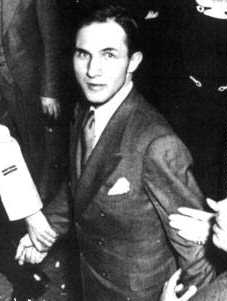 But John Law had done one thing right: paid the ransom in soon-to-be-obsolete gold certificate. As they’d hoped, someone was finally caught spending this distinctive currency:
  However, Reagan’s reprieve bought him just enough time to live to see a California Supreme Court decision temporarily halting executions, which was followed by the US Supreme Court
  Gerald Eugene Stano’s problems didn’t end with his new life with his adoptive parents; instead, he continued to develop a series of problems that would follow him, shaping his outlook on the world forever, and likely providing him with the excuses he needed to justify his actions later in life.


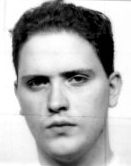 Delk was convicted and sentenced to death for the murder of Gene “Bubba” Allen of Anderson County in East Texas. Although the state of Texas maintained that Delk was “malingering,” i.e., pretending to be mentally ill to stave off execution, the prison system’s former chief mental health officer stated that Delk suffered from a severe mental illness, one that had become progressive in nature since it was first noticed in 1989 –- years after Delk was tried and convicted.


