1813: Ezra Hutchinson, teen rapist

On this date in 1813, 19-year-old Ezra Hutchinson was hanged in the western Massachusetts village of Lenox for raping a 14-year-old named Lucy Bates.

Hutchinson passed the girl by (mis)chance on the road on his way home, and arriving there reflected what an inviting target she made — so he turned and followed her path into the wilderness until he overtook her.

Reproduced here is the pamphlet issued over his signature on the day of his execution with the informative title, “The solemn address and dying advice of Ezra Hutchinson: who was executed at Lenox, Mass. November 18, 1813, for a rape on the body of Miss Lucy Bates.” In it, we find a mostly penitent Hutchinson, who owns and laments his adolescent lewdness, still bold enough to “forgive” his victim her testimony against him. A footnote by the pamphlet’s editor explains:

for several weeks previous to his execution, he was uniform in declaring, that he supposed the girl had really consented to what was done. The girl in her testimony had said that having resisted to the utmost of her power, until her strength failed, she finally, through weariness and fright, sank almost lifeless to the ground. Here is an apparent contradiction; but it is easily reconciled in the eye of charity, by supposing, that when she fainted, and ceased any longer to resist, he honestly thought that she yielded her consent, though in truth she did not.

On this day..

1698: Sarah, for her whoredoms

(As this blog has often enough bestowed its disdain on Puritan holy roller Cotton Mather, one of the never-apologetic architects of the Salem witch trials, we thought it only fair to permit the man to vindicate himself in his own words. What follows his Mather’s own accounting of the sermon he thundered in Boston at an unreceptive infanticide known only as Sarah. The text — presented with only some slight tidying and added line breaks — derives from Mather’s own histories, here and here. -ed.)

On November 17, 1698. There was executed in Boston, a miserable Young Woman, whose Extraordinary circumstances rung throughout all New England.

On this Day of her Execution, was Preached the Sermon: Because the last passage of that Sermon, gave a summary Narrative, of what it is fit the publick should know concerning that Criminal, I have Transferr’d them, into this place. The Sermon Concluded in these words.

Be astonished, O Congregation of God; Stand astonished, at the Horrible Spectacle, that is now before You: This House, and perhaps this Land, never had in it a more Astonishing Spectacle.

Behold, a Young Woman, but an Old Sinner, going this Day to Dy before her time, for being Wicked over much! Behold, One just Nineteen Years Old, and yet found Ripe for the Vengeance of a Capital Execution. Ah, Miserable Soul, With what a swift progress of Sin and Folly, hast thou made Hast unto the Congregation of the Dead!

Behold a Person, whose Unchast Conversation appear’d by one Base Born Child many months ago! God then gave her a Space to Repent, and she repented not: She repeated her Whoredomes, and by an Infatuation from God upon her, She so managed the matter of her next Base Born, that she is found Guilty of its Murder: Thus the God, whose Eyes are like a Flame of Fire, is now casting her Page into a Bed of Burning Tribulation: And, ah, Lord, Where wilt thou cast those that have committed Adultery with her, Except they Repent! Since her Imprisonment, She hath Declared, That she believes, God hath left her unto this Undoing Wickedness, partly for her staying so profanely at Home sometimes on Lords-Dayes, when she should have been Hearing the Word of Chirst, and much more for her not minding that Word, when she heard it.

And she has Confessed, That she was much given to Rash Wishes, in her Mad Passions, particularly using often that ill Form of speaking, “He be Hang’d,” if a thing be not thus or so, and, “I’ll be Hanged,” if I do not this or that; which Evil now, to see it, coming upon her, it amazes her! But the chief Sin, of which this Chief of Sinners, now cries out, is, Her Undutiful Carriage towards her Parents. Her Language and her Carriage towards her Parents, was indeed such that they hardly Durst speak to her; but when they Durst, they often told her, It would come to This. They indeed, with Bleeding Hearts, have now Forgiven thy Rebellions; Ah, Sarah, mayst thou Cry unto the God of Heaven to Forgive Thee! But under all the doleful circumstances of her Imprisonment, and her Impiety, she has been given over, to be a prodigy of still more Impenitent Impiety.

A Little before her Condemnation, she Renewed the Crimes of her Unchastity: she gave her self up to the Filthy Debauches, of a Villain, that was her Fellow-Prisoner; and after her Condemnation, her Falshoods, and her Furies have been such, as to proclaim, That under Condemnation she has not Feared God. Was there ever seen such an Heighth of Wickedness? God seems to have Hanged her up in Chains, for all the Young People in the Countrey, to see, what prodigies of Sin and Wrath it may render them, if once they Sell themselves thereunto. Behold, O Young People, what it is to Vex the Holy Spirit of God, by Rebelling against Him. This, This ’tis to be Given over of God! And yet after all this Hard-hearted Wickedness, is it not possible, for the Grace of Heaven to be Triumphantly Victorious, in Converting and Pardoning so Unparallel’d a Criminal? Be astonished, Miserable Sarah, and Let it now break that Stony heart of thine, to Hear it; It is possible! It is possible! But, O thou Almighty Spirit of Grace, do thou graciously Touch, and Melt this Obstinate Soul, and once at last, mould her Heart into the Form of thy Glorious Gospel. The Glorious Gospel of God, now utters unto thee, Undone Sarah, that Invitation, Tho’ thou hast horribly gone a Whoring, yet Return unto me, saith the Lord, and I will not cause my Anger to fall upon thee. The Lessons of this Gospel have been both privately and publickly set before thee, with a vast variety of Inculcation. If all the Extraordinary pains that have been taken for the softening of thy Stony Heart, be Lost, God will dispense the more terrible Rebukes unto thee, when He anon breaks thee between the Milstones of His Wrath.

Oh, Give now a great Attention, to some of the Last Words, that can be spoken to thee, before thy passing into an astonishing Eternity.

The Blessed Lord JESUS CHRIST hath been made a Curse for Us; there has been a most Acceptable Offering and Sacrifice, presented by the Lord Jesus Christ unto God, for all His Chosen: there is a Fountain set open for Sin and for Uncleanness: and thou, O Bloody Sinner, art Invited unto that Open Fountain. Such is the Infinite Grace of God, that thou mayst come as freely to the Blood of the Lord Jesus Christ, for the Forgiveness of thy Sins, as they that have never Sinn’d with a Thousandth part of so much Aggravation; Come, and Welcome, says the Lord, who Receiveth Sinners. If God Enable thee Now, to Lay Hold on the Righteousness of the Lord Jesus Christ, tho’ thy Faults are Infinite, thou wilt yet before Sun-set Stand without Fault before the Throne of God. Thy Soul is just sinking down, into the Fiery Ocean of the Wrath of God, but the Righteousness of the Lord Jesus Christ, is cast forth unto thee, once more, for thee, to Lay Hold upon.

Oh! Lay Hold upon it, and Live! If God help thee, to do so, Then, as it was said, “The Mary whose Sins are many, has them Forgiven her,” So it shall be said, “The Sarah, whose Sins are many, has them Forgiven her!” Then, as it was said, Rahab the Harlot perished not, so it shall be said, Sarah the Harlot, perished not! Tho’ the Blood of thy murdered Infant, with all thy other Bloody Crimes, horribly Cry to God against thee, yet a louder and better Cry from the Blood of thy Saviour, shall drown that formidable Cry. Yea, then, There will be Joy in Heaven this Afternoon among the Angels of God; the Angels of Heaven will stand amazed, and say, “O the Infinite Grace, that can bring such a Sinner unto Glory!”

But if ever the Blood of the Lord Jesus Christ, be applied unto thy Heart, it will immediately Dissolve that Heart of thine; it will cause thee to Mourn for every Sin, to Turn from every Sin, to give thy self entirely unto God. It will be impossible for thee, to Go on in any Known Sin, or to Dy with a Ly in thy mouth: No, thou wilt rather Dy than commit any Known Sin in the World. If this Disposition, be not produced in thee, before Three or Four short Hours more are Expired, thy Immortal Spirit, will anon pass into Eternal Torment: thou wilt before To morrow morning be a Companion of the Devils and the Damned; the Everlasting Chains of Darkness will hold thee, for the Worm that never dies, and the Fire that never shall be Quenched: thou shalt fall into the Hands of the Living God, and become as a glowing Iron, possessed by his Burning Vengeance, throughout Eternal Ages; the God that made thee, will not have mercy on thee, and He that formed thee will show thee no Favour. But for his Mercy, and Favour, while there is yet hope, we will yet Cry unto Him.

On this day..

1996: Ellis Wayne Felker

On this date in 1996, Ellis Wayne Felker was elecrocuted for a rape-murder that — despite his classic middle name — he always maintained he did not commit.

Felker was fresh off his release from prison for aggravated sodomy in 1981 when he opened a leather shop at which a Macon Junior College student named Evelyn Joy Ludlam solicited work. Felker had none to give her — the business was failing — but he still invited her to interview.

Sometime after Ludlam interviewed at Felker’s shop on Novemer 24, 1981, her car ended up parked in the lot of the Trust Company Bank with Joy nowhere to be found. She remained missing until December 8, when a passerby found her body in Scuffle Creek outside of Macon. She had been raped, sodomized, and throttled.

Evidence incriminating Felker was circumstantial but suggestive: Felker was the last person who could be shown to have seen Joy Ludlam alive, and that under duplicitous circumstances; he had shifted his account of his contact with Ludlam during the crucial hours as evidence came in; he had gone out for an unexplained drive late the night of her disappearance; some bruises on the victim’s body suggested bondage sex and Wayne, a BDSM aficionado, had suspiciously disposed of some leather restraints shortly after Joy vanished. Plus, of course, there was that previous sexual assault conviction.

On the other hand, the initial autopsy and some expert testimony concerning the body’s condition suggested that Joy had died just a few days before she was pulled out of the creek — a timeline which would have ruled Felker out as a suspect since he was under police surveillance from the evening of November 25. (The revision of the autopsy’s initial, Felker-exonerating timeline, and the subsequent expert dispute over the expected state of a body submerged in water after X number of days forms a sizable part of the record. We at Executed Today have no ranks in this coroner’s science, but would note that she was found wearing the clothes she donned for her November 24 visit to Felker’s leather shop.) And years after the trial, boxes of evidence that the state had illegally failed to disclose to Felker’s defense team were discovered. They contained interviews with other witnesses, a highly dubious signed confession by a mentally disabled man, and human tissue.

The last really sticks in craw: courts in 1996, when DNA was still only emerging as a forensic force, refused to allow the sample to be tested on the Kafkaesque procedural grounds that the request had not been made earlier in the process — you know, before the defense knew there was such a sample to test, and/or before DNA testing was a thing. Partial credit for the frustration of Felker’s appeal routes goes to that relic of 1990s death penalty mania, the Antiterrorism and Effective Death Penalty Act. This law, which limited (and still limits) capital defendants’ access to federal habeas corpus relief was actually upheld by the U.S. Supreme Court in June 1996 via Felker’s own case: the key ruling is Felker v. Turpin.

He wasn’t through making history after he died, either.

In what was thought to be a first in 2000, a consortium of media organizations footed the bill for posthumous DNA testing of those recovered hair and fingernail samples, with the potential to deliver an embarrassing four-years-too-late exoneration.

The result: inconclusive.

On this day..

1996: Larry Lonchar, bad gambler

Minutes after midnight on this date in 1996, Georgia electrocuted Larry Lonchar

Ten grand in the red on gambling debts, Lonchar in 1986 raided the home of the bookie he owed and gunned down that bookie, his female partner, and his two sons. (One of the sons survived by playing dead.)

A DeKalb county 911 call recorded the horrifying last moments of Margaret Sweat:

911: DeKalb Emergency 911.

Caller: Police.

911: What address?

Caller: [redacted]

911: What’s the problem?

Caller: Everybody’s been shot.

911: Who’s been shot?

Caller: Me — and —

911: With a gun?

Caller: Yes.

911: Who did it?

Caller: I don’t know.

911: Is that a house or an apartment?

Caller: It’s a condominium. . . .

911: Okay. Now you say everybody’s been shot, I already got you help on the way, but when you say everybody’s been shot, how many?

Caller: Uh, me.

911: Where are you shot at?

Caller: In the living room — I’ve crawled to the phone.

911: I mean what part of your body, Ma’am.

Caller: I think my stomach — they’re coming back in — please-(inaudible)

911: Who did it? Give me a description of them!

Caller: Why are you doing this. Please — (inaudible). Please, please, I don’t even know your name. Please — please Larry. I don’t even know your n –.

Lonchar had little stomach to fight a death sentence he acknowledged deserving — an execution date in 1993 had been averted only at the last moment when his brother’s suicide threat induced Lonchar to reluctantly pick up his appeals — and by the end he was holding out strangely for only a late delay. It seems that he wanted to donate his kidneys, but the wrack of the electrical chair promised to damage the tissue past using. That situation had even led Georgia lawmaker Doug Teper to introduce legislation to conduct executions by guillotine: say what you will about the iconic French razor, it’s easy on the organs.

The spectacle of legal beheadings was spared America, then and since — though who knows what may someday come of the ongoing breakdown of the lethal injection process.

Lonchar’s execution was witnessed by British human rights attorney Clive Stafford Smith, who had come to represent him: Smith wrote about the experience for the Guardian here.

On this day..

1945: Charles Ford Silliman, suicide pact?

(Thanks to Meaghan Good of the Charley Project for the guest post. -ed.)

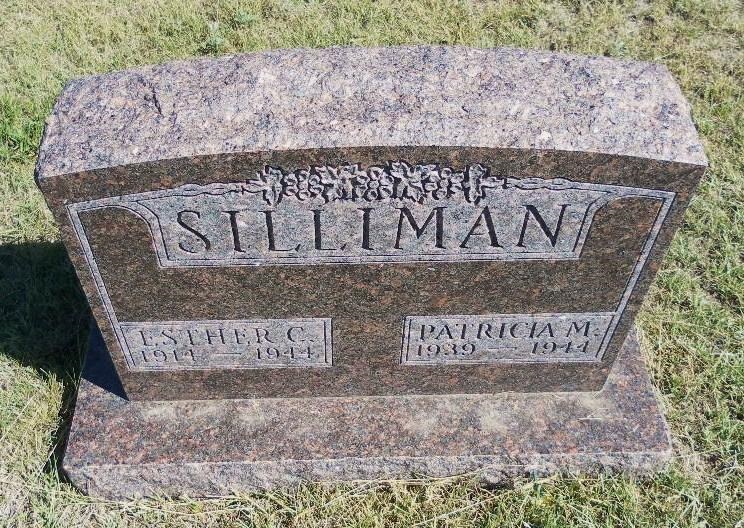
On this date in 1945, stripped down to his socks and underwear, 35-year-old truck driver and double murderer Charles Silliman was gassed in Colorado’s death chamber. He died for the murder of his wife, Esther Corrine Silliman, and their four-year-old daughter.

Charles and Esther had been married for nine years and didn’t have any relationship problems that anybody knew about. After dinner on January 22, 1944, he poured her nightly glass of brandy. He also gave a small amount to little Patricia Mae. Both mother and child became violently ill and quickly expired.

Charles said he had no idea what had caused their deaths, and suggested food poisoning as a possible answer. When the cops arrived on the scene, they found the grieving husband and father studying his wife and daughter’s life insurance policies.

The police were suspicious, especially after Charles began weeping and pulled out a handkerchief marked with lipstick. He said the lipstick was his wife’s, but … she never wore makeup.

Chemical analysis showed the brandy had been laced with strychnine, and a bottle of the poison turned up hidden in the tire kit in Silliman’s car. The police theorized he had committed the murders to collect on the insurance and be with “a woman whom he met in a beer tavern in Denver and later … while his wife was absent, he rather frequently visited.”

Charged with murder, Silliman admitted to the poisonings and said he and his wife, plagued by poor health and debt, had jointly decided to commit suicide and take both their children with them — but that he chickened out and was unable to go through with it. (Son Charles Jr. was not harmed, as he was living with his grandparents at the time of the murders.)

Silliman was tried for his wife’s murder only, and he told the jury about the unfinished suicide pact. The prosecution pointed out that, even if his story was true, the deaths of Esther and Patricia still constituted first-degree murder.

His insanity plea didn’t go anywhere either. “We are convinced from the record,” ruled the appellate court, “as the jury must have been from the evidence, that defendant’s insanity was an afterthought and conceived by him as a means of escaping the penalty which, under the evidence, he merited.”

Silliman did, however, gain an extra two hours of life: executions at the Colorado prison normally took place at 8:00 p.m., but at that time there was a Chamber of Commerce banquet going on and 550 guests were chowing down on turkey. The warden delayed the execution until 10:00 p.m., after dinner was over and everyone had left the prison.

His last words were, “I do not fear. I am going to a better world.”

(An aside: elsewhere in the United States on that same November 9, 1945, Jesse Craiton and Noah Collins were electrocuted in Georgia for robbery-homicide, and Cliff Norman died for rape in Oklahoma’s electric chair.)

On this day..

1944: Joseph Watson and Willie Wimberly Jr.

(Thanks to Meaghan Good of the Charley Project for the guest post. -ed.)

On this date in 1944, Private Joseph Watson and Technician Fifth Grade Willie Wimberly Jr. of the U.S. Army were executed for a brutal attack on two French civilians.

They broke into a farmhouse only a few hundred yards from their company bivouac area, shot the elderly farmer and his unmarried daughter, and raped the woman. Their crimes and deaths are described in French L. MacLean’s book The Fifth Field: The Story of the 96 American Soldiers Sentenced to Death and Executed in Europe and North Africa in World War II.

At 8:00 p.m. on the evening of August 8, 1944, Watson and Wimberly, both of them already drunk, arrived at the farmhouse and bartered for a liter of apple cider. They spoke no French but were able to get their point across. The farmer and his daughter were wary of the inebriated pair and, after they left, barricaded the door.

Five minutes later, the two soldiers returned and battered it down.

Wimberly hit the man on the head with his Tommy gun and Watson forced the woman into a chair. Then, just like that, they left again. The two victims went upstairs, barricaded themselves into another room and double-locked it.

A few hours later the two soldiers returned and fired at least twenty .45 submachine gun rounds through the upstairs door, wounding both of the French civilians.

The farmer staggered downstairs and went to get help, but his daughter’s tibia was fractured and she was unable to flee. She was raped in turn by each of the men while the other held her at gunpoint.

At trial she couldn’t identify either of her attackers. The farmer identified Wimberly out of a lineup of six black soldiers, but wasn’t sure about Watson.

Their identification wasn’t really needed, however. Watson was found passed out at the crime scene in the morning, still wearing his bloodstained pants, with the fly unzipped. Wimberly had left, but he left his helmet liner (marked with a unique serial number) on the steps of the farmhouse.

When questioned, Wimberly blamed the entire thing on Watson. Watson made several contradictory statements about the night of the crime before pulling the old amnesia gag. He admitted he’d gone to the farmhouse with Wimberly and added, “I must have gotten drunk because the next thing I knew I was in the yard with a Colonel, two Lieutenants and two MPs.”

Given the circumstances, there wasn’t much either man could say to show why he should not be convicted and executed.

Justice was quick: they were hanged less than three months after their crime. Wimberly went first and was pronounced dead at 10:29 p.m. Watson followed and was dead by 10:48. Eight days later, General George S. Patton had a letter sent to the rape victim, apologizing for what she’d been through and for the soldiers’ part in it.

On this day..

1915: Louis Bundy, “I would like to have shown the world what I could do”

Headline from the Nov. 5, 1915 San Jose Evening News: Two Young Men Are Hanged Today For Murder

One century ago today, California hanged two men at San Quentin: Earl Loomis, who murdered a Sacramento candy store proprietress in the course of a robbery, and Louis Bundy, who slew a Los Angeles messenger boy to steal a few dollars he could use to splurge on his girl.

Loomis, a hardened criminal, attracted the lesser notice; it was Bundy, who was an 18-year-old high schooler when he became a murderer, who drew a torrent of futile clemency appeals because of his youth and naivete. His crime dated to December of 1914, when he rang up the pharmacist and place a bogus order, along with a request to bring change for a $20 coin. The idea was to steal the change and buy his sweetheart a Christmas gift.

When the lackey turned up, it turned out to be a chum of Bundy’s, 15-year-old Harold Ziesche: Bundy bludgeoned him with a rock and an ax handle (sans ax) “because he knew me and would have squealed on me.”

As the San Jose Evening News reported in its hanging-day submission,* those appellants included former lieutenant governor A.J. Wallace among other political figures, numerous name-brand ministers (and even the strange Mormon boy-prophet Archie Inger), plus hundreds of Los Angeles schoolchildren.

All were bound for disappointment.

The Golden State was not averse per se to grants of mercy; a week prior to this date’s hanging, California’s pardons board spared three other condemned men, all murderers — and surely even in spurning Bundy in the same batch, the board’s action gave the young man’s supporters a thrill of hope for the intervention of Progressive Party governor (and death penalty skeptic) Hiram Johnson. Johnson had already reprieved Bundy in June, and then a second time in August.

He did not do it in November.

“I have done a great wrong and am sorry,” Bundy said on the scaffold. “I had hoped the law would see a way to let me have a chance, because I would like to have shown the world what I could do.” (Duluth (Minn.) News Tribune, Nov. 7, 1915.)

* Also the source of the headline image that surmounts this post.

On this day..

1949: Arthur Bruce Perkins, “I knew I could never face her again”

Minutes after midnight on this date in 1949, Washington state hanged Arthur Bruce Perkins for stabbing and bludgeoning to death an Olympia couple during the course of a robbery two years prior.

An alcoholic delinquent from his teen years, Perkins moved to Olympia after being paroled from a stretch in the state reformatory on November 11, 1947. One of the victims living there, Geneva Jessup, “had practically been a foster mother to” Perkins, according to court records. “‘I called Mrs. Jessup Aunt Neenie.'”

Perkins and a friend were peacably repairing a broken-down vehicle near the Jessup home when Perkins got a phone call at that house. Precisely how events escalated so dramatically from this everyday neighborly scene into a bloodbath is not very well-developed, and Perkins did not seem inclined to elaborate on the point beyond what was necessary to expedite his conviction. (He had no last words on the gallows. “Some time perhaps, the truth of this whole affair will be known,” he had mused enigmatically in the hours before.) The best one can present by way of conflict is that Mrs. Jessup attempted to dissuade her “nephew” from an ill-considered marriage. The confession that he gave police suggests that a moment of heartbreak that became a mad and horrible crime.

[Mrs. Jessup] kept talking about [the woman Perkins intended to marry] and I slapped her first. I then realized what I had done and knew I could never face her again. The rock I used was in a flower pot or was used as a door jam. I remember the old man coming into the room and I knew right then I would have to kill him as he saw the whole thing. I think the knife was on the kitchen table or drain board. I don’t know how many times I stabbed them. I think I choked Mr. Jessup until he was unconcious and I think I hit him once or twice with my fist and then I remember stabbing him. She was standing up when I hit her and when it was all over I picked her up and put her on the davenport.

He fled towards Centralia, and was picked up within days. By then, he preferred to throw away his own life rather than confront in court the enormity of his deed. While driving Perkins to jail, the sheriff said,

he was in the back seat and he spoke up rather loud and asked me what my suggestion or what my advice would be to getting this thing over with as quick as possible, get it straightened around and he didn’t want to spend any long time in jail; said he wanted to be executed … I told him the best thing for him to do to simplify it would be to sign a confession, a short statement of the facts and then hire the poorest lawyer he could find.

On this day..

1854: William Lipsey and James Logan, in gold rush Coloma

The gold rush boom town of Coloma, California hosted its first (legal) hanging on this date in 1854.

Coloma was the very site of Sutter’s Mill, where the accidental discovery of gold flakes launched California’s gold rush.

The ensuing swell of human avarice arriving from every corner of the globe all but overwhelmed the frontier territory’s capacity; nearby San Francisco, “transformed … into a bawdy, bustling bedlam of mud-holes and shanties,” was so disordered that its laws were enforced extrajudicially by a self-appointed Vigilance Committee.

Coloma itself, the literal first mining town of the gold rush, boomed as the county seat of the new-christened El Dorado County. According to Alton Pryor, Coloma had 300 buildings and a hotel under construction by the summer of 1848, six months after the gold strike. (Today, Coloma is a near ghost town.) And like everywhere else, it had a job to manage the mad new world of desperate fortune-hunters ready to murder one another for the dust in their pockets.

Coloma has the distinction of giving birth to California’s first sheriff’s department, in 1852.

It’s almost surprising in such an environment that the original gold rush hotbed didn’t have an execution until 1854 — but Coloma made up for lost time* on November 3, 1854, by hanging two men, twice over.

The milestone perpetrators were classic frontier rascals, straight from a spaghetti Western rogues’ gallery. William Lipsey, a 25-year-old gambler, had murdered a fellow cardsharp in a drunken brawl over a game. James Logan, a 47-year-old miner “silvered o’er with age”, was condemned for killing a fellow miner in a claim dispute — though all the way to the gallows, Logan insisted to the last, before the 6,000 or so souls assembled to watch him die, that he had killed only in self-defense, remarking that

[h]e stood before them a condemned man, the victim of false testimony. It was true that he had taken the life of a fellow creature, but he had committed the deed in self-defence. He went to the claim where the tragedy took place, not as has been said to kill Fennel, but because the claim was his own, and he went to get possession of it. His own rash threats had brought him to the scaffold. In answer to propositions to settle the difficulty by law or arbitration, he had rashly replied that there was a shorter and better way — but he did not mean it. He went to the claim to get possession of it, but did not snap or present his pistol — he merely showed it. It was merely a single-barreled pistol. Fennel went and got a revolver, and came back and presented it at him, cocked. Fennel was advancing upon him with a cocked revolver when he presented his singlebarreled pistol. Any other testimony than this was false. He only snapped his pistol a moment before Fennel did his. The man who swore that he snapped his first swore a lie. They both snapped together. He had warned Fennel not to advance. He got behind Swift, and if he (Swift) had stood his ground, nobody would have been killed, But Swift flinched, and stepped aside. He then had to be killed himself, kill Fennel, or run away. He fired, and Fennel fell. He repeated that it was false that he snapped his pistol first; it was that snap that had brought him to the gallows, and the testimony about it was false.

In view of the halter (to which he pointed his finger) and in presence of that God before whom he was so shortly to appear, he was now speaking the truth. He would never have been hung if he had not had a principle of courage in his composition that prevented him from running away.

Lipsey, who was unquestionably guilty, did not have the older man’s composure and had to be half-dragged to the scaffold where he was so unmanned that he could not muster any last remark — though he was heard to murmur before dropped, “I don’t think I’m a murderer at heart.”

As the Coloma sheriff had no experience with executions, both men fell through their nooses and landed on the ground still alive. Still cool under pressure, Logan raised his hood to look around, got up, and walked back up to the gallows platform unassisted — but as the lawmen adjusted the hemp for the do-over, he recollected the letter of the death warrant and asked to see a watch.

“Ah, you have twenty minutes yet,” he exclaimed with a laugh. “If it was two o’clock I would demand my liberty under the law.”

* Coloma had another double hanging in 1855: outlaw Mickey Free hanged alongside Kentucky-born schoolmaster Jerry Crane, who murdered a student with whom he had become infatuated.

On this day..

1833: Ira West Gardner, creepy stepfather

On this date in 1833, Ira West Gardner [Gardiner] hanged in Warren, Ohio — the only person ever executed in Trumbull County.

Gardner reads like the kind of rotter to inspire a Lifetime TV obsessed-stalker thriller: in the tiny township of Gustavus, he married a widow named Anna Buel[l] with a teenage daughter. Even the trial records are delicate on what transpired between young Maria and her stepfather — “for some reason, not very satisfactorily shown in the proof, she, for a short time before her death, evinced a strong desire to leave your roof, under circumstances which induced her friends to believe she was in fear of you.” The girl “was seen running from home disordered” and took refuge with a nearby farmer named Mills, where she turned up “barefooted, and without a handkerchief to put on her neck.” This was just two or three days before her murder on August 8, 1832; if the reader is getting a distinct whiff of sexual assault, well, one neighbor “told Gardner, that Maria had said, he had had criminal intercourse with her in a manner that would send him to the penitentiary.” Gardner denied it, but his obsessive behavior tells a different tale.

For Mills, Gardner showed the reasonable neighbor, and tried to persuade his absconded stepdaughter to return — but also agreed she was of age to go her own way if she preferred.

But to others, he made less compromising and much more sinister intimations, like “Maria has got to go home and live contented or I will be the death of her — I will have my revenge.” That’s actually less a sinister intimation than a highly specific threat.

Dad was able to put off his menacing aspect as a temporary fury that had come and gone, and he eventually negotiated with Maria via another neighbor, Bidwell, to allow her to return for her clothes. As soon as she got there, with Bidwell right there in the house too, Gardner suddenly produced a butcher’s knife and stabbed the unhappy object of his obsession in her chest and stomach. Though he was instantly subdued by Bidwell, the deed was done: Maria expired in ten painful minutes while Gardner ranted demonically to the arriving neighbors.

“I told you you had outwitted me last night, but that I would match you yet,” he said to one who had tried to reason with him. “I have done it, and got my revenge.” The killer was fixated on the idea of townsfolk who had lately tried to smooth out the situation as adversaries to “outwit”; to another he taunted, “I have now outgeneraled you as I told you I would — I did the deed, and did it effectually.”

(It was later found that this Scipio had also readied a pitchfork and an axe should he have the opportunity to chase after her.)

Per the history of Trumbull County written by Republican activist and suffragist Harriet Taylor Upton, Gardner

was escorted to the place of hanging by a great procession and band … people who had children away at school brought them home to witness the execution. We now wonder how these parents reasoned, but one of the young men who was thus brought many miles remembers that his father said he might never have another chance to see another hanging, and he was right. The children of the sixties were not like those of thirties, for the former always shivered as they passed the corner of South and Chestnut streets on the way to the cemetery, and dare not look towards the tree from which Gardner is supposed to have swung. Whether the tree was still standing at that time is not certain. Possibly children are like men and horses, less afraid where many people are congregated.

Sheriff Mygatt said that he did not believe he was going to be able to discharge his duty in the case of Gardner, but that he did work himself up to the point. He took the prisoner in his own carriage, led by Warren’s first band, which played a dire. The military organization formed a hollow square around the scaffold. Elder Mack, a Methodist minister, walked with Mr. Mygatt and the prisoner to the scaffold. A hymn was sung, in which the prisoner joined, and he was then swung to a great overhanging limb where he breathed his last.

“The young, beautiful & innocent Frances Maria Buel who was butchered by her stepfather” still has a marker in the East Gustavus Cemetery. Gardner rests in an unmarked grave.

On this day..