330 B.C.E.: Philotas, Alexander the Great Companion

Around this time — October, or at any rate autumn — of 330 B.C.E., Alexander the Great authored “one of the two greatest crimes of his life”* with the execution of his comrade-in-arms Philotas.

Philotas was one of Alexander’s “companions”, the elite cavalry who joined Alexander personally in battle. He had fought by Alexander’s side in the epic Battle of Gaugamela, which brought down the Achaemenid Empire and opened Persia to the legendary conqueror.

A year later, Alexander, and therefore also those companions, were winding down campaign season all the way on the other side of the late empire they had so stunningly dismantled. It’s the region of Drangiana on the present-day Iran-Afghanistan frontier. The Macedonians would name the city Prophthasia, Anticipation, in recognition of their chief’s narrow escape; we know it today as Farah, Afghanistan.

Unlike many of the “companions” who joined the young Macedonian king, Philotas wasn’t a bosom buddy of Alexander.

He was, instead, a bit of a political appointee who owed his position to the fact that his father Parmenion, a great Macedonian general, had backed the disputed succession of Alexander. Parmenion continued as one of Alexander’s generals; his kid — not particularly popular of himself but nevertheless a loyal and competent officer — got a plum gig in Alexander’s vanguard.

In this capacity so close to the royal person, Philotas was warned by a conscientious slave of an assassination plot going against Alexander. And rather incredibly, he didn’t bother to pass it on.

When the slave realized, a couple of days on, that the conspiracy hadn’t been busted, he proceeded to tell somebody else … and Philotas had some explaining to do.

For posterity, it’s as open a question as it was then: Philotas initially convinced Alexander that he had merely considered the whole thing so insubstantial as not to merit the king’s attention — but by the next day, Alexander had better inclined himself to the more damning reading, that Philotas was perfectly amenable to seeing Alexander eliminated.** If that were the truth, it would herald a conflict that would soon come to define the Macedonian’s coruscating and paradoxical career: the army’s rising discontent with its march so far from home, and its leader’s ever more visible habit of arraying himself in the alien habits of oriental despotism.

Philotas got a “proper” if farcically rigged trial before fellow-generals who were all too happy to be rid of him, and was tortured into confessing. He was executed either by stoning (actually the traditional Macedonian execution method, even for the likes of generals) or spearing.

(The scene is dramatized in the 2004 Oliver Stone film Alexander; the relevant bit can be viewed here.)

Parmenion, a greater character than his son, would also pay the forfeit of his son’s alleged misprision.

At the time of Philotas’s execution, Parmenion was commanding a large army several days’ ride from Alexander. Fearing that the torture and execution of his last remaining son (the other two had also died on campaign) might inspire the august general to do something rash, Alexander dispatched a few trusted officers to outrace the news: they murdered an uncomprehending Parmenion as soon as they reached him. Whatever one makes of the child, the father’s loyalty both to Alexander and his predecessor Philip II had never previously been impeached in a long and brilliant career. Alexander ought to have counted himself fortunate to have avoided any wider disturbance in the army from the rough handling of this beloved general.

The whole affair was sufficiently distasteful that it remained a sensitive matter of state security hundreds of years and hundreds of miles distant: An Elizabethan play about Philotas by Samuel Daniel earned its author some uncomfortable official scrutiny for its perceived commentary on the contemporaneous execution of the Earl of Essex … the fallen courtier whose prosecution of a Jewish doctor arguably informed Shakespeare’s Merchant of Venice.

* The other — later and greater — crime was Alexander’s drunken murder of his friend and loyal commander Cleitus. (He’s the guy shown stabbing Parmenion to death in the clip from Alexander, a circumstance that plays better as drama than history.)

** It doesn’t help anyone’s fact-finding that the main alleged plotter committed suicide when they came to arrest him.

On this day..

1973: 14 during the Caravan of Death

Fourteen early-morning executions in Chile on this date in 1973 heralded the end of one of the Augusto Pinochet dictatorship’s most notorious human rights abuses: the Caravan of Death.

For this “caravan” picture not camel-borne spice traders but a helicoptering death squad. In the bloody aftermath of Pinochet’s September 11, 1973 coup against the elected socialist government, the new strongman’s buddy Gen. Sergio Arellano Stark took this evil-omened chopper on a south-to-north tour from prison to prison beginning September 30 — leaving its wares behind at each stop, in the form of spent shells and murdered men.


Arellano and Pinochet were all hugs hours before the caravan departed.

The intended consumer of this murderous spectacle, according to the human rights organization Memoria y Justicia, was as much the military itself as it was the political opposition. “One of the reasons,” said one officer at Arellano’s very first stop,

was to set a drastic precedent in order to terrorize the presumed willingness of the Chilean people to fight back. But without a doubt, it was also intended to instill fear and terror among the commanders. To prevent any military personnel, down to lowest ranking officers, from taking a false step: this could happen to you!

And indeed, several officers were also sacked along the way, a couple even imprisoned and tortured. Their lenient treatment of presumed subversives constituted “failure to fulfill military duties”: one can readily imagine the impression made upon junior officers in Pinochet’s armed forces.

Said subversives had it worst of all, of course.

These were people already in prison, many having voluntarily turned themselves in upon request after the coup; they were drug out of cells in the dark of night and machine-gunned, or worse. Close to 100 defenseless political detainees died this way over a three-week span.

The Caravan reached Antofagasta on October 18, where Gen. Arellano was received by the zone chief Gen. Joaquin Lagos.

Arellano’s unit did its dirty work overnight: the names of its 14 victims on this date’s early hours are recorded here. One was an 18-year-old student, one a 66-year-old “maritime worker”. Several were figures in local government.

Lagos was horrified the next morning when he discovered what his guests had been up to — and he immediately gave Pinochet his resignation.

I felt hurt, powerless and angry [Lagos later said] that a criminal action of this nature that had been committed in my jurisdictional zone and behind my back.

Lagos had the juice to make this sort of gesture without winding up in prison himself: indeed, he gave Pinochet his resignation (and the reason) personally.

Though Lagos has said that Pinochet seemed much more concerned about his (Lagos’s) attitude towards the atrocity than the atrocity itself, he (Lagos) also remembers Pinochet placing a call to Gen. Arellano and, not reaching him, leaving his nomadic deputy a message “not to do anything more.” The Caravan did stop on Oct. 22: maybe, Lagos’s resignation did the trick, at least to the extent one can attribute any cause to the cessation. This outcome will always rate a bullet point on the brief against the “superior orders” defense.

Relatively speaking, these unfortunates are only one puddle of blood among seas from the Pinochet years. Still, the Caravan of Death in particular was (and still is) a focus of the indictments handed down against him after the return of civilian government, thanks in no small part to Gen. Lagos’s willingness to go on the record about it — and as a result, many of the legal maneuvers around Pinochet in the last years of his life, both in Europe and Chile, concerned this horrible affair.

Pinochet finally died in December 2006 while under house arrest for two specific Caravan of Death murders. While alive, however, his legal team predictably attempted to blame local commanders for the Caravan’s atrocities; in response to this gambit, Lagos went public on television with his version (which human rights organizations also tend to credit) — along with horrifying descriptions (Spanish link) of the death squad’s activites that left him too “ashamed” to return the victims’ remains to their loved ones.

They were torn apart. They were no longer human bodies. I wanted to at least put the bodies back together again, to leave them more decent, but you couldn’t.

They cut eyes out with daggers. They broke their jaws and legs

They shot them to pieces, first the legs, then the sexual organs, then the heart, all with machine guns.


From an entire album that Dark Order devoted to the Pinochet dictatorship.

Part of the Themed Set: Illegitimate Power.

On this day..

1875: Six in Fort Smith under Hanging Judge Isaac Parker

I have ever had the single aim of justice in view … ‘Do equal and exact justice,’ is my motto, and I have often said to the grand jury, ‘Permit no innocent man to be punished, but let no guilty man escape.’

Judge Isaac Parker

On this date in 1875, the most famous — or infamous, depending on your perspective — “hanging judge” of the American West dropped the trap on his noosing career with his first six hangings at Fort Smith, Arkansas.

Isaac Parker, around the time he arrived at Fort Smith

Isaac Parker had parlayed a legal career in Missouri into a congressional seat, when the fall of the Arkansas Republican party’s fortunes late in Reconstruction swept him out of office in 1874.

No problem: his co-partisan president, Ulysses S. Grant, appointed Parker to a federal judgeship in neighboring Arkansas. It’s upon that renowned tenure that the man’s reputation, uh, hangs.

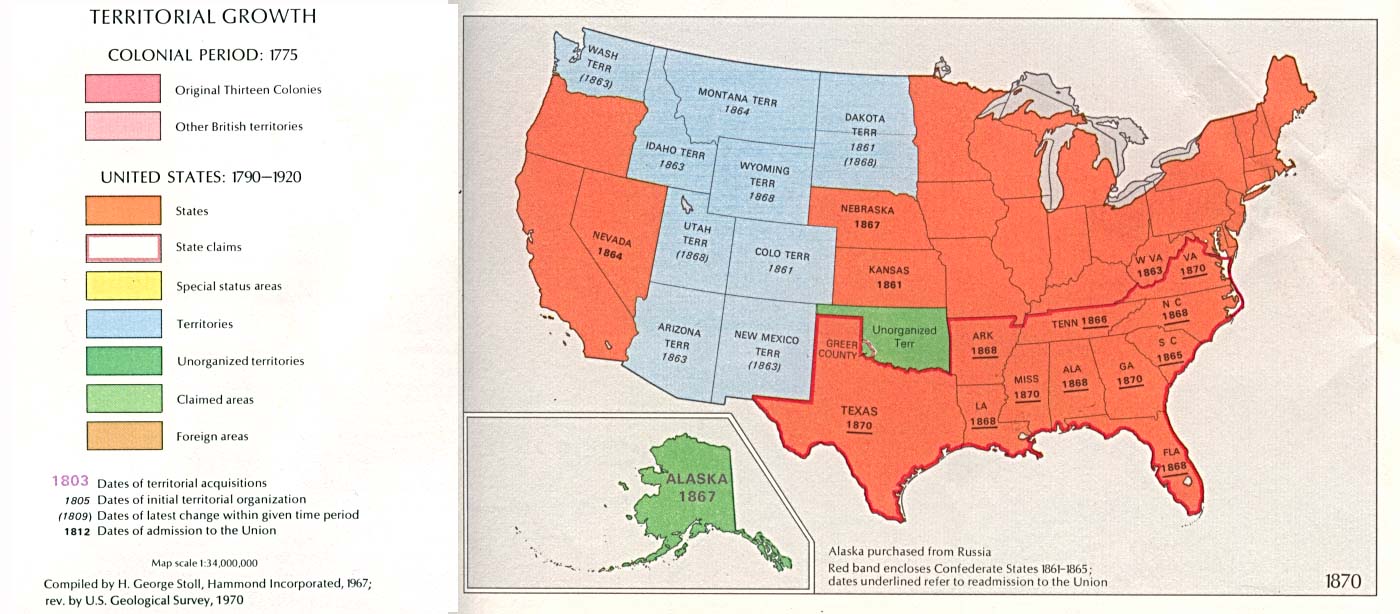
Parker arrived at Fort Smith on May 4, 1875, the youngest federal judge in the west and a man whose jurisdiction included the lawless Indian Territory (present-day Oklahoma).

This expanse of land, the final destination of the Trail of Tears, had once been preserved for tribes forcibly “removed” from eastern North America.

But by the post-Civil War years, the frontier was sweeping past on iron wheels … and as long as Indian Territory remained (mostly) protected from white settlement, it remained a sparsely-populated refuge for outlaws.

Pandemonium in the Territory was only exacerbated by the Fort Smith court’s reputation for corruption and inefficiency; the office was open for Parker’s appointment because his predecessor had resigned to avoid impeachment.

Judge Isaac Parker came to clean up the place.

Fort Smith was an unusual portfolio for a federal judge. While most of Parker’s colleagues were confined to the tedium of interstate civil litigation, Parker was the court of first call for many regular criminal cases in the Indian Territory which in other jurisdictions would have been a state matter. He estimated in 1885 Congressional testimony that seven-eighths of his caseload came from Indian Territory.*

And in those cases he quickly established himself a reputation for severity.

“I never hanged a man,” Parker said of himself later in life. “The law hanged him. I was only its instrument.”

But make yourself the law’s instrument to the tune of 79 hangings, and folks are bound to sit up and take notice.


“they nearly hung me for stealin’ a horse
in Fort Smith Arkansas.

Judge Parker said guilty and the gavel came down
just like a cannon shot …”

At his court’s very first sitting in May 1875, Parker death-sentenced a murderer — Daniel Evans, who came straight from frontier central casting and had murdered a man for his boots.

As that year unfolded, he added enough condemned men to the bowels of the miserable jail nicknamed “Hell on the Border” — for an eight-strong hanging date to christen September.

One of the eight had his sentence commuted due to youth.

One was shot trying to escape.

And the other six were the debut crop for the mass-occupancy gallows that Parker ordered constructed at Fort Smith. (Its capacity was a full dozen.)


Modern replica at Fort Smith — today a national historic site — of Judge Parker’s gallows. (cc) image from photoguyinmo.

The clientele was six unconnected murderers, committing various atrocities for various motives and aptly embodying the region’s ethnic diversity.

  • Evans, white
  • James Moore, white
  • Samuel Fooy, quarter Cherokee
  • Smoker Mankiller, Cherokee
  • Edmond Campbell, black
  • John Whittington, white

And the audience? Five thousand or so reportedly on hand in Fort Smith this date, plus a national media audience … and posterity deep into the second century since this sturdy magistrate donned his first black cap and set about putting chaos into order with a rope in his hand.


New York Tmes, September 4, 1875.

Whatever one might have to say about his methods, Parker presents a magnetic personality, a figure so truly of his own time and place that he obligingly died just weeks after his court was finally relieved of its Oklahoman jurisdiction in 1896. He’d never hang around to jolt our anachronism meter by weighing in on trench warfare or cubism.

Parker is undoubtedly a more layered figure than his “hanging judge” reputation would suggest, and even his life’s project to bring his unruly jurisdiction to heel was more complicated than just being a hardass. (He had a significant administrative challenge to manage his chronically underfunded court, and he needed to foster the sense of communal reciprocity and legal integrity that would encourage fellow-citizens to turn up for jury duty and witness testimony that make the law’s everyday business possible.) The judge was famous for the long hours he kept, and capital cases were never more than a tiny fraction of his work.

Parker was notorious (slash-beloved, again depending on perspective) for his prosecution-friendly courtrooms, but even the tough sentences he handed down came in his mind from a place of tough love. He wrote late in life that

not one of [those he suffered to long prison terms for violent crimes], no matter how depraved, had entirely lost that better part of human nature …

The object of punishment is to revive, that in some cases, almost extinct spark, to lift the man up, to stamp out his bad nature and wicked disposition, that his better and God given traits may assert themselves.*

Still, whether you prefer him as the stern avatar of law on an outlaw plain or bloodthirsty yahoo, Parker’s ready amenability to latter-day Hollywood tropes will surely maintain his popularity in the cultural rookery of wild west cutouts.

Among numerous other reference points, the novel True Grit, and the 1969 and 2010 films based on it, use Judge Parker’s Fort Smith as the heroine’s embarkation point — with her dangerous journey carrying her into the untamed Indian Territory on his doorstep.

Pat Hingle’s “Judge Fenton” (from “Fort Grant”) in the Clint Eastwood western Hang ‘Em High also shows an unmistakable debt to the Judge Parker persona.

A few books about Judge Parker


Spare a thought, too, for the man operating the ropes and levers this date.

George Maledon, named Fort Smith’s official hangman just a couple of years before Isaac Parker’s appointment, would enforce the Hanging Judge’s hanging sentences into the 1890s: 60-plus executions in all, plus five other escaping prisoners he gunned down, all in a day’s work for an Arkansas lawman.

Maledon has a sad coda to this story, which wasn’t so upbeat to begin with.

The year after the veteran hangman hung up his hood and opened a grocery store, Maledon’s daughter was murdered. The bereaved father’s friend Judge Parker, still on the bench at that time, condemned the killer to die in a case we’ll suggest might have warranted a recusal by present-day standards. Nevertheless, a successful appeal balked Maledon’s successor of the malefactor, and the disgusted ex-executioner got his species of payback by taking the accoutrement of his late profession on the road as a traveling act.

There, under the billing of “the Prince of Hangmen,” Maledon lectured and exhibited old hanging ropes and pictures of the outlaws they had choked.

People of all classes flocked to the show grounds, crowded about the lecturer and filled the tent, viewing the gruesome relics and listening to the old hangman’s recital of soul-stirring events as he pointed out the…instruments of his vocation. (Source)

* See Mary Stolerg, “Politician, Populist, Reformer: A Reesamination of ‘Hanging Judge’ Isaac C. Parker”, The Arkansas Historical Quarterly, Spring 1988

Part of the Themed Set: Americana.

On this day..

1772: Moses Paul

On this date in 1772, the town of New Haven, Connecticut hanged a Mohegan Indian named Moses Paul for a drunken homicide. He’d been kicked out of a tavern as an unruly sot, and vengefully beat to death outside it a (white) fellow-customer with whom he had quarreled.

Notable to the reported “concourse” of attendees as the first execution in those parts for more than twenty years, it comes to posterity as the occasion for an interesting milestone: the first known Native American publication in America was Samson Occom‘s “A Sermon Preached at the Execution of Moses Paul, an Indian”. (pdf)

Occom, himself a Mohegan, was a Presbyterian divine whom the condemned solicited to deliver the hanging sermon. So the multitudes assembled were also treated to the edification of seeing an Indian preach from the scaffold, which may have been yet another first.

Occom’s sermon went predictably long on the hark-ye-to-this-warning Christian boilerplate (as a convert from heathenism, Occom did not want for zeal). But the speaker was also plainly self-conscious of his racial position,and took pains to invoke the egalitarianism of the afterlife:* the same death and judgment awaiting “Negroes, Indians, English, or … what nations soever.”

Given the liquor-induced crime that was even then a stereotype of Indian susceptibilities, Occom concluded “address[ing] myself to the Indians, my bretheren and kindred according to the flesh” with a call to temperance in view of the waste he saw laid to his own communities:

My Poor Kindred,

You see the woeful consequences of sin, by seeing this our poor miserable countryman now before us, who is to die this day for his sins and great wickedness. And it was the sin of drunkenness that has brought this destruction and untimely death upon him … this abominable, this beastly and accursed sin of drunkenness, that has stript us of every desirable comfort in this life; by this we are poor miserable and wretched; by this sin we have no name nor credit in the world among polite nations, for this sin we are despised in the world … when we are intoxicated with strong drink we drown our rational powers, by which we are distinguished from the brutal creation we unman ourselves, and bring ourselves not only level with the beasts of the field, but seven degrees beneath them.

Drunkenness is so common amongst us, that even our young men, (and what is still more shocking) young women are not ashamed to get drunk.

break off from your drunkenness … O let us reform our lives, and live as becomes dying creatures, in time to come. Let us be persuaded that we are accountable creatures to God, and we must be called to an account in a few days … Fight against all sins, and especially the sin that easily besets you, and behave in time to come as becomes rational creatures.

Ava Chamberlain’s “The Execution of Moses Paul: A Story of Crime and Contact in Eighteenth-Century Connecticut”, published in The New England Quarterly (September 2004) has a detailed summary of this case, Paul’s unsuccessful efforts to appeal around the question of premeditation, and the historiographical riddle left by Occom’s voluble commentary vis-a-vis his subject’s near-total silence.

* Our colonial Calvinist anticipated Marxist aphorists with the remark, “whether we concern ourselves with death or not, it will concern itself with us.” The colonists present probably would have appreciated the occasion more had they known they were participating in an Internet meme.

Part of the Themed Set: Americana.

On this day..

1845: Not William Weaver, defended by Abraham Lincoln

This date in 1845 was the appointed hanging of William Weaver, the first convicted murderer in Champaign County, Illinois.

While drunk, Weaver shot to death one David Hiltibrau and despite the able representation of one Abraham Lincoln was speedily convicted. (pdf)

Where the rail splitter failed, fortune prevailed.

“A few days — or nights rather — before that set for his execution,” we read,

a friendly auger passed to him afforded the means of escape. Just then delays were dangerous to poor drunken Bill Weaver, for Sheriff Lewis had the rope and scaffold ready, so he did not await a farewell word from friends, but sped away to the North, as the winds go. At that time the tangled forests and the untramped prairies afforded unexcelled means for seclusion and escape, and the condemned man, once a mile from town, might well bid farewell to every fear of being caught and hanged, as he doubtless did. Years afterward Weaver was heard from in far Northern Wisconsin, a useful, law-abiding citizen. No effort was ever made to bring him back from his delicious exile.

On this day..

1790: Thomas Bird, the first federal execution under the U.S. constitution

This date in 1790 saw the first federal execution under the auspices of the recently ratified U.S. Constitution, when English mariner Thomas Bird hanged in Portland, Maine. (At the time, still part of Massachusetts.)

This book is also available here, and via the author’s Portland, Me., History Blog, or on order from any bookstore.

Today, we’re pleased to interview author Jerry Genesio, whose Portland Neck: The Hanging of Thomas Bird compellingly reconstructs this once-forgotten story — a small British slave ship making landfall in a North American city only recently torched by the British, where it is found that its violent captain has been murdered at sea in unclear circumstances.

In the aftermath of the American Revolution, the one man to pay life for John Connor’s life was the one British sailor aboard the ship.

Besides a captivating account of an 18th century American capital trial, Portland Neck features biographies of all the principal characters. Portlanders will also especially enjoy a 25-page appendix on the topography of the town at the dawn of the American Republic.

This was a British subject who killed a British victim on a British ship in international waters. Was there any question of whether a U.S. court had jurisdiction?

The people who were on the vessel when it was captured — one was British, one was Norwegian, one was American, and there was a 12- or 14-year-old African boy named Cuffey.

They came under U.S. jurisdiction because in the constitutional convention (article 3, section 2), the federal courts were given jurisdiction of admiralty and maritime cases.

The Supreme judicial court in Massachusetts — Maine was part of Massachusetts then — apparently considered bringing the case before its judges, but then the constitution overruled that when it was ratified.

And then they had to wait for the federal courts to be organized, because they didn’t exist yet. They languished in jail for almost a year while the courts were being organized.

In Chapter II, you describe Thomas Bird’s ship, the Mary, operating on the Guinea coast. It’s a small ship basically working the coast and rivers, making small sales of one or two slaves to the large slavers waiting to cross the Atlantic. There must have been whole niches of the slavery industry occupied by these sorts of small-timers.

Oh, yes. The large slave ships that carried several hundred, three, four hundred in their hold — they were too large to get too close to the coast of Africa. So they would anchor perhaps a mile offshore, and they would wait for these smaller ships, like the sloop Mary — Captain Connor was in business with people in London who sent him down there just to go up the rivers to various villages where they knew there were wars going on, and when there were wars, the captives would be sold to slavers. (They also traded ivory and gold.)

When they got slaves, crews like the Mary‘s would go to the ships who had been there the longest, because they knew they would get the best price. They were known to have been there as long as a year trying to fill their cargo, and the slaves they held were liable to die while they waited. Slave ships couldn’t even allow the slaves topside because they would jump overboard if they could and try to swim for shore.

Incidentally, the Google book project has many slave captain logs online. I was able to read about the ports that Captain Connor and Thomas Bird actually visited, and it gave me such a wealth of information, and I could practically see where they were.

Ed. note: here are a few from Genesio’s bibliography, all free at Google books:

You’ve compiled this book despite a paucity of primary trial data, and there are some spots where you’re clearly reading between the lines. How difficult was the historiography on Portland Neck?

There’s not a complete trial record. Even the examination before the court — the scribe tried, apparently, to write down all of their answers, but he did not write down the questions.

My concern is more around the scribe. Was the scribe hearing these answers properly? Was the scribe hard of hearing? One of them was replaced in the process. Was the scribe able to keep up? He was writing with a quill pen, after all.

And then, on top of all of that, they did not indicate on the court record who was the scribe, who did the questioning, and who wrote the answers down. And the prisoner never signed it!

And you felt that at some level, they targeted the Englishman out of this multinational crew.

I believe that people are so influenced by the events of their times — look at World War II and how we viewed the Japanese and the Germans, or the people involved in the war in Vietnam.

These people on the jury, the foreman on the grand jury, many of them were Portland residents whose homes had been burned by the British just 14 years earlier. The war had just ended seven years earlier.

Every one of the court officials on the prosecutors’ side were all officers in the Revolutionary War. [Notably, the U.S. marshal who actually carried out Bird’s hanging, Henry Dearborn. He took part in the decisive Battle of Yorktown and would go on to become Thomas Jefferson’s Secretary of War, as well as the namesake of the city of Dearborn, Michigan. -ed.]

All of these things influence what was going on. And the fact that they acquitted the Norwegian kid and executed the Englishman makes me feel, certainly, that there was a strong influence there that was hostile to Thomas Bird. But what actually happened and how people felt, we’re just too far away — but I suspect that played a role.

Thomas Bird claimed in his dying statement, knowing that he was to be hung in a couple of hours, that he did not kill John Connor. The lawyers desperately tried to get then-President Washington to give him a commutation, and Washington refused to do it.


Information wants to be free, y’all. The newspaper editor tried to sell a broadside with the condemned man’s final narrative, but public pressure eventually forced him to put it in the July 26, 1790 Cumberland Gazette.

How did you come by this story?

When I was working at Portland Public Library and I ran into a couple of lines referring to a Thomas Bird in books by William Willis and William Goold.

In Goold’s book, Portland in the Past, he actually interviewed a fellow named Charles Motley who was in his 90s, and this interview took place in the 1880s. Motley was the youngest child of the jailer who held Thomas Bird, and Charles Motley, and he describes being five years old and being allowed into the cell where Thomas Bird would carve them little toy boats. With a knife! Then when Thomas Bird was executed, there was a note about the jailer’s wife, Emma Motley, taking all seven children away, to the other side of the land from Portland, so that they wouldn’t know what was going on. They were probably playing with Thomas’s boats as he was being hanged. So it was obvious that the Motley family held this Thomas Bird in high regard, and I got to thinking, I want to know more about this guy.

He (Motley) was five years old at the time, and, with his older brother Edward, at the request of Bird, was often admitted by his father to the cell and spent much time there. The prisoner made them toy ships and boats … At the time of the execution, Mrs. Motley, the mother of the boys, took them over back of the Neck to be out of sight of the gallows, as the whole family had become interested in the fate of Bird.

Goold

For a couple of years, I couldn’t find much of anything. Finally, I took the time to go down to the federal archives in Waltham, Mass., I found a little manila folder that was like a bar of gold. It had 12 little sheets written in quill, and it’s as much of a record of the trial as exists.

The other question in my mind is, why has nobody written about this before? I think maybe it’s because it’s something of an embarrassment, which reinforces my belief that maybe this hanging should not have taken place.

Thomas Bird, if they really suspected he was a participant, should have been punished, but probably shouldn’t have been hung. Unfortunately in those days, captains were like gods on their little wooden worlds. Even though, based on the testimony, [the victim] John Connor was a brutal drunk who beat his men mercilessly. Connor murdered his first mate on that voyage.

It’s sad because Bird probably saw America as some sort of refuge — he probably didn’t expect that he might be hanged for this crime. He’d been at sea since age eight, and all through the [American] Revolution he had been on both American and British ships. The British navy kept impressing him and making him serve on British warships, and he kept deserting and signing up for American ships instead.

One other interesting aspect of this story is that when Thomas Bird was looking for a ship to sign on with and signed on with the Mary, he might just have signed up on the HMS Bounty, because the Bounty was tied up at Wapping before its voyage to Tahiti. Had he signed on with the Bounty, he wouldn’t have fallen into American hands, but he might not have fared any better.

How thick on the ground were slaves and slavers in New England at this time?

There were a lot of slave captains, a lot of owners. Their home ports were in Boston or in Portland. Normally, when they came back to their home port, the product they were carrying was rum and molasses. Slaves would be delivered in the South or in the West Indies, separate legs in the triangle trade.

What’s your next project?

I’m working on a family genealogy.

After that, maybe something about Captain John Lovewell. He was a bounty hunter who went hunting for Indian scalps. In 1725 he was living in Massachusetts, and he got the court to authorize 10 pounds per scalp, and he recruited a small army and took off looking for Indians and found the Pequawket here in Fryeburg, Maine. They were not warriors, they were farmers.

Lovewell and a Scaticook named Paugus ended up killing each other at a battle at a pond now called Lovewell’s Pond.

Lovewell is the namesake of the town of Lovell. A couple of people have written Lovewell’s story, but I wanted to write it from the perspective of the Indians. And not only the Indians, but the true perspective — because John Lovewell was a bounty hunter, not a hero. He was willing to kill farmers who hadn’t killed anyone for their scalps.

On this day..

1911: Laura and Lawrence Nelson lynched

A century ago today* Laura Nelson and her son Lawrence were lynched outside Okemah, Oklahoma.

“Two weeks ago,” mused the May 26, 1911 Tulsa World “Deputy Sheriff George H. Loney went to the Nelson home in search of some stolen meat. He found it and started to make an arrest when he was shot and killed. Both the Nelson woman and her son at first claimed to have fired the fatal shot, but it was later admitted that it was the son who fired it.”

So Laura found her way into the annals of lynched women by that most quintessentially maternal act: attempting to protect her child.

The bodies were posted partway down the road to a nearby all-black township — one little incendiary signpost en route to Oklahoma’s coming racial explosion.

As is typical in lynchings, the perpetrators remained permanently wink-wink “unknown”; indeed, the resulting investigation contributed some outstanding exemplars of racist patronizing — like the investigating judge’s charge to his grand jury of “the duty devolv[ing] upon us of a superior race and of greater intelligence to protect this weaker race from unjustifiable and lawless attacks.”

Thanks?

At least that compared favorably on the sympathy scale to the state’s governor, who slated the NAACP for stoking mob violence when the latter pressed for more vigorous anti-lynching action.

If your organization would interest itself to the extent of seeing that such outrages as this [i.e., the appointment of black federal officials in the state] are not perpetrated against our people, there would be fewer lynchings in the South than at this time, and you can do a great deal more to aid the Negro by seeing that other people of our section of the country are considered in these matters than you can issuing abusive statements against this country when a crime of this kind is committed.

Actually, a tweak here and there and that paragraph could go right into a present-day stump speech. The past, as they say, is not even past.


View Larger Map
The site of the lynching: present-day Route 56 where it crosses the North Canadian River west of Okemah.

One face in the crowd — his exact role in the lynching seems to be unknown — was a local real estate hustler by the name of Charley Guthrie.

This blustery conservative southern Democrat would, the next year, name his third child for the Confederate-friendly academic Woodrow Wilson, who was then making a run for the White House that would see the U.S. to the nadir of its race relations.

Young Woodrow Wilson Guthrie — you know him as Woody — grew up with some different principles from dad; the counterculture folk troubadour was sufficiently haunted by his father’s proximity to this horrific exercise of mob justice to expiate it in song.

* Many web sites give the date as May 23, but the primary sources are unequivocal; the correct date is May 25.

On this day..

Feast Day of St. George

This is the feast date, and the traditionally-ascribed execution date in 303, of St. George — legendary dragon-slayer and patron saint of half the world and darn near everything that the original apostles didn’t nail down.

Saint George is supposed to have been a well-favored officer in Diocletian‘s army who suicidally announced his Christian faith during the latter’s persecutions, and refused every sop and entreaty to renounce it. He was martyred at Nicomedia.

Pretty standard persecution fare — and there’s next to nothing that can be reliably verified about his life — but George did well by his future cult to get into the martyr’s game right before Christianity’s official triumph. Still, at the end of the day, it’s one of those unaccountable accidents of history that this particular fellow ended up as perhaps Christendom’s most widely venerated champion.

He’s most immediately recognizable for the story of having slain a dragon, a plain metaphor for paganism (and usable metaphor for anything and everything else) that’s been depicted in all its scaly corporeality by innumerable artists.

England has liked him jolly well ever since his suitability to the chivalric ethos positioned him to supplant Edmund the Martyr as that realm’s patron saint during the Middle Ages. The red cross on the English flag is a St. George’s cross.

And so there he is, too, in one of Shakespeare’s most rousing patriotic monologues:

I see you stand like greyhounds in the slips,
Straining upon the start. The game’s afoot:
Follow your spirit, and upon this charge
Cry ‘God for Harry, England, and Saint George!’

But George gets around, and England has to share him.

That St. George’s Cross also adorns the flag of Georgia (the country, that is: it’s so hard core that it’s named for the guy), and he’s claimed as a sponsor throughout Orthodox Christendom: Serbia (which celebrates a major holiday when April 23 hits on the Julian calendar); Bulgaria; Greece; Ethiopia; the city of Constantinople and its heir, the city of Moscow, and Russia generally. There were two George’s [Yuri’s] Days on Old Russia’s calendar, and the autumn one was marked as the one time in the year that serfs were permitted to change their landlords, at least until Boris Godunov canceled the privilege and left Russian with the idiom “so much for Yuri’s day!” to mark an expectation disappointed.

George is big in Spain, and even bigger in Portugal; through its Portuguese heritage, he’s also venerated in Brazil, where he’s the patron saint of the Corinthians football club. He’s the sponsor (via that dragon connection) of the snaky Hungarian military order that gave Vlad the Impaler the immortal sobriquet of Dracula.

There are other countries and any number of cities who also trust the dragon-slayer’s patronage; George accepts the further devotions of saddle-makers, lepers, animal husbandmen, shepherds, Crusader knights, butchers, the Maltese, gypsies, farmers, archers, syphilis-sufferers, cavalrymen and therefore also armored tankmen, Palestinian Christians, and the Boy Scouts of America. He’s generally got a stupendous worldwide collection of churches, art, legends, and devotional rites dedicated to his name.

On this day..

1457: The Wallachian boyars

This date was Easter Sunday in 1457, which would make it the date associated with one of the more memorable displays of theatrical brutality by Wallachian proto-vampire Vlad Tepes, aka Vlad Dracula or Vlad the Impaler.

Having only just ascended the less-than-secure throne of Wallachia, a frontier principality pinched between the Hungarian and Ottoman Empires, the 25-ish prince and onetime Ottoman hostage had a bone-chilling inauguration plan to shore up his security both internal and external.

He threw a big party in Targoviste for the nobles of the realm … and had a little surprise waiting for them. It wasn’t an Easter egg hunt.

He asked the assembled noblemen:
“How many princes have you known?”
The latter answered
Each as much as he knew best.
One believed that there had been thirty,
Another twenty.
Even the youngest thought there had been seven.
After having answered this question
As I have just sung it,
Dracula said: “Tell me,
How do you explain the fact
That you have had so many princes
In your land?
The guilt is entirely due to your shameful intrigues.”

With ample proof of the boyars’ deceit and treacherous intents, Dracula decided it was timely to inflict upon them an exemplary punishment … mass impalement …

The oldest Romanian historical chronicle records the event two centuries later. It had taken place in the spring of 1457, during the Easter celebrations that the boyars were attending at the palace … “when Eastern Day came, while all the citizens were feasting and the young ones were dancing he [Dracula] surrounded them [the boyars] … led them together with their wives and children, just as they were dressed up for Easter, to Poenari, where they were put to work until their clothes were torn and they were left naked.” In actual fact, this episode, which is also recalled by the Greek historian Chalcondyles and firmly anchored in popular folklore, involved some two hundred boyars and their wives, as well as leading citizens of Tirgoviste … They were seized by Dracula’s men as they were finishing their meal in the main banqueting hall of the palace, following the elaborate Easter ritual at the Paraclete Chapel. In Dracula’s ingenious mind, one aspect of the punishment had a utilitarian purpose: the reconstruction of the famous castle high up on the Arges … On the way out of the chapel the old boyars and their wives were apprehended by Dracula’s henchmen and impaled beyond the city walls. The young and able-bodied were manacled and chained to each other and then marched northward under the vigilant eye of Dracula’s men.

This was revenge a decade in the making for the boyar class having toppled Vlad’s father and murdered Vlad’s elder brother in 1447.

But personal score-settling aside, Vlad’s sanguinary housekeeping had a statecraft dimension as well. It enabled him to centralize power in his own person, and had the happy side effect of speeding creation of a secure mountain fastness — Poenari Castle, which is one of several structures answering to the lucrative name of Castle Dracula.

While Vlad is (in)famous for his iron fist (and well-oiled spikes), it’s perhaps harder to say with confidence how much good this slaughter did him. Wallachia’s security situation was fundamentally defined by its neighbors no matter how cruel Vlad Tepes might be.

Vlad got some more impaling under his belt defending his country from Ottoman invaders (you’ll be shocked to learn that many boyars were more than happy to help the sultan get rid of this tyrant), but he was clapped in prison by the Hungarian ruler Matthias Hunyadi in 1462, lived most of the rest of his life in exile, and then died in battle attempting a Wallachian comeback in 1476. So basically, he got a few good years in … plus that whole latter-day afterlife he enjoys as tourist magnet, alleged literary inspiration, and nationalist icon.

And that’s more than one can say for most of the 15th century rulers who weren’t impaling their boyars.

On this day..

1967: Aaron Mitchell, Ronald Reagan’s first and only execution

On this date in 1967, Aaron Mitchell was gassed in California on the authority of a governor holding his first elected office — Ronald Reagan, future U.S. president and emerging avatar of conservative white ressentiment in the turbulent 1960s.

It was only 23 days after California’s last previous execution, in January 1963, that Mitchell killed a white cop during a shootout occasioned by his abortive bar robbery. He’d been on death row fighting execution ever since, with a few dozen others who had been there even longer.
That gummed-up death penalty process, for which the Golden State is so well-known today, was most vividly symbolized at the time by the 12-year death row odyssey of Caryl Chessman.

And it had been among the many grievances catalyzing a conservative backlash against the civil rights movement, the Great Society, anti-war protesters, permissive social mores … the whole aspect of Sixties counterculture and American liberalism.

Ronald Reagan was born to wield the sword against it all. The sword, or some little cyanide pellets.

Reagan, a film actor, had cut his political teeth as a spokesman for General Electric and against commie plots like Medicare.

After famously backing the failed 1964 presidential bid of Barry Goldwater, Reagan emerged as the favored son of the New Right, and in his first foray into electoral politics, steamrolled over incumbent Democrat Edmund Brown in California’s 1966 gubernatorial election.

Reagan had an undoubted gift for packaging the sometimes unpalatable ennui of his potential constituencies into soundbites that respectable people could repeat in public, which talent proved essential to his bright political future.

“Why is it,” he demanded during the campaign, “that no street in our city is safe for women after dark?” (Los Angeles Times, September 21, 1966) Stung by Republican attacks on rising crime rates, Gov. Brown had vainly pushed a tough-on-crime platform of his own in 1966.

Too little. Too late.

“Mr. Reagan is outspokenly in favor of capital punishment and he has just been elected by a tremendous majority,” said Jesse James Gilbert, 41, who has languished on Death Row for two years.* “If the courts begin to reflect his thinking, he will be in a position to become the greatest butcher governor in history.”

Los Angeles Times, Dec. 4, 1966

What a different world it was from today’s that a major paper unabashedly used a death row prisoner’s own voice for analytical comment. Still, that same article noted (not in Gilbert’s voice, but as a plain fact on the ground) that “even a single execution could endanger Reagan’s chances for reelection or stifle voices which are beginning to urge him to seek the Republican Presidential nomination in 1968 or 1972.” A different world indeed.

Reagan had outspokenly run on capital punishment, however, and there’s such a thing as feeding your base. He surely was not going to execute nobody.

Mitchell was the man in line, and he certainly fit that not-safe-to-walk-the-streets-at-night angle, if you catch the drift. In an Ebony (June 1967) profile of his last days, Mitchell emerges at once radicalized and resigned, his four years awaiting death spent “researching and studying the race problem.”

“Every negro ever convicted of killing a police officer has died in that gas chamber,” Mitchell said on the day of his death. “So what chance did I have?”**

When the aide in charge of the clemency application is overtly pro-Scrooge future Attorney General Edwin Meese … not much chance, no.

So on this date, and in spite of an energetic protest outside San Quentin, a suicide attempt inside it, an open line to the governor’s office just in case, and a hysterical mother (who fled Mitchell’s clemency session in tears two days before, complaining that it was “a sham hearing”), Mitchell became the 501st person put to death since the state moved all executions from county auspices into state prisons.†

The 502nd would not take place until another quarter-century had elapsed.

Cold comfort to Mitchell, but Reagan himself did not vindicate Jesse Gilbert’s worst fears, and did not present the execution rubber-stamp of a later political generation; for his time and place, being visibly willing to approve some executions amply proved his credentials. (Newsweek called the governor a “man of conviction” after the Mitchell execution. (Source) Mission accomplished.)

Reagan would stay the next death date on his watch, that of Daniel Allen Roberts, over questions of mental competency; later in 1967, he would do the same for Robert Lee Massie just hours ahead of execution so that Massie could testify in another trial, inadvertently providing a bullet point in the conservative critique of death penalty squeamishness.

And in the event, the Great Communicator would be spared any great need to answer for a significant slate of individual clemency decisions. It was judicial activity far more than executive reticence that stayed the hand of California’s executioner; only one more execution after Mitchell’s took place in all of the U.S. before the country slipped into a complete death penalty moratorium from which it would not emerge for another decade.

And when the Reagan-appointed California Chief Justice Donald Wright authored a 1972 opinion striking down that state’s death penalty laws, it emptied death row outright.‡ (Sparing, among over 100 others, Charles Manson and Sirhan Sirhan.)

Capital punishment is impermissibly cruel. It degrades and dehumanizes all who participate in its processes. It is unnecessary to any legitimate goal of the state and is incompatible with the dignity of man and the judicial process. Our conclusion that the death penalty may no longer be exacted in California consistently with article I, section 6, of our Constitution is not grounded in sympathy for those who would commit crimes of violence, but in concern for the society that diminishes itself whenever it takes the life of one of its members. Lord Chancellor Gardiner reminded the House of Lords, debating abolition of capital punishment in England: “When we abolished the punishment for treason that you should be hanged, and then cut down while still alive, and then disembowelled while still alive, and then quartered, we did not abolish that punishment because we sympathised with traitors, but because we took the view that it was a punishment no longer consistent with our self respect.”

California v. Anderson

That would not stand as the final word on capital punishment in California, but by the time other condemned prisoners had come to the end of their appeals, they were the concern of different governors.

Reagan left the California governor’s mansion in 1975 during the death penalty’s long hiatus; as U.S. president from 1981 to 1989, the death penalty was only just coming back online from that period, and that at the state level. Beyond platitudinous approval of the trend, Reagan never had to put his own signature on a federal death warrant.

So as it turned out, Aaron Mitchell was the first, last, and only man so distinguished.

And Reagan’s minuscule career execution count was hardly the anomaly that it might now appear. Prior to Reagan, the last Chief Executive who had actually entered the White House having previously forwarded any fellow to the executioner was … Dwight Eisenhower.

* Gilbert is the appellant in the 1967 U.S. Supreme Court decision Gilbert v. California, reversing his conviction because of a police lineup identification unconstitutionally obtained without his lawyer’s knowledge.

** The cop-killing Mitchell wasn’t getting any love from the beleaguered Brown administration, either; Brown almost had a shot to pull a Ricky Ray Rector with Mitchell during the campaign, but the prisoner won a judicial stay just 24 hours from execution in May 1966.

The now-former governor was quoted after Mitchell’s actual 1967 execution expressing general support for Reagan’s non-clemency in spite of Brown’s own philosophical opposition to capital punishment.

† A journalist who witnessed the gassing later described it as something less than a triumph of the killing arts.

as the gas hit him, his head immediately fell to his chest. Then his head came up and he looked directly into the window. For nearly seven minutes he sat up that way, with his chest heaving, saliva bubbling between his lips. He tucked his thumbs into his fists, and finally his head fell again … I believe he was aware many minutes … He appeared to be in great anguish

‡ “A mockery of the constitutional process,” fumed (pdf) Reagan, who claimed that Wright had told him he backed capital punishment. (See Governor Reagan: His Rise to Power)

On this day..