1765: Patrick Ogilvie, but not Katharine Nairn

“So great a concourse of people has perhaps not been seen”* at Edinburgh’s Grassmarket as assembled on this date in 1765 for the execution of Lieutenant Patrick Ogilvie.

It was, naturally, scandal that brought them out of the woodwork. Lt. Ogilvie’s older brother Thomas in January of that same 1765 had married a young woman named Katharine Nairn. She had barely half of Thomas’s 40 years.

Katharine soon took a shine to the more age-appropriate sibling, just back from his dashing adventures in the East Indies. Within weeks of the marriage, the two people closest to Thomas were making a fool of him in his very own home. Their eventual indictment charged Katharine and Patrick with “yielding to your inordinate desires … in the months of January, February, March, April, May, and June … at different times, and in one or other of the rooms of the house of Eastmiln, and in the out-houses adjacent thereto,” not to mention (we’re guessing during the warmer spring weather) “in the fields.”

Thomas himself seems to have been wise to the cuckoldry rather early on, but either from weakness or inclination made only token attempts to abate it. Great was the astonishment of the neighbors that Patrick wasn’t banned from the house or Katharine disallowed his company.

At length, Thomas died of poison. The suspicions were only natural.

In fact, maybe they were a little bit too natural.

It has been suspected that the true author of Thomas’s destruction and the lovers’ too was not their own unnatural passion but the greed of yet another party in the nest of family vipers living under the eldest brother’s roof: Anne Clark.

The lover of the youngest Ogilvie brother, Alexander, Anne was known as a woman of easy virtue, but she had regardless her sexual continence a potentially compelling motive to be rid of Thomas, or rid of Patrick, or both: as both Thomas and Patrick were childless, the family scandal figured to pour all the family’s estates into the puckish hands of her own man. Patrick and Katharine tried vainly to impugn her at trial as a malicious witness

So when Anne supplied a story that the lovers had openly quarreled with Thomas and even vowed in her presence to murder him — and when Anne plied the court with lurid accounts of creeping up the stairs to listen in on Patrick and Katharine romping in his alcove bed — do we hear the voice of a master villain? That reputed prostitute gave bodice-popping evidence at very great length against her incestuous would-be family —

Mrs. Ogilvie was frequently in a room by herself with the Lieutenant … upon Sunday the nineteenth day of May last, all the family went to church, excepting the two pannels and the deponent [Clarke] … the two pannels left the deponent in the low room, and went up stairs together to the east room above stairs … [and Clarke] in order to discover what was passing, went up the stair, and as the bed in the Lieutenant’s room was an alcove ed, the back of which came to the side of the stair, and there was nothing betwixt the bed and the stair, but a piece of plaster and the timber of the bed, so that a person standing in the stair could hear distinctly what passed in the bed, she stood and listened; and from the motions that she heard, is positive that they were in bed together, and abusing their bodies together, by which she means, they were lying carnally together.

You can read the whole of Anne Clark’s testimony among 130-odd pages of details from the proceedings here.

Ogilvie would hold to his innocence through multiple royal reprieves and all the way to the gallows. When the rope slipped on the first hanging attempt, he was not so daunted by the proximity of the eternal that he feared to repeat the claim: “I adhere to my former confession [profession of innocence], and die an innocent man.”

He also died alone.

His former paramour and possible confederate Katharine had delayed her hanging by pleading her belly — truthfully so, for it seemed that her many springtime frolics had in fact quickened her womb.

She delivered early in 1766 and was bound for execution a few weeks later. But Katharine’s wit supplied what crown sentiment would not and she slipped out of prison in the wardrobe of an old family servant one evening.** She had such a considerable head start before her absence was noted the next day that she reached London, hired a boat to the Netherlands, was blown back to Old Blighty by a gale, and hired another boat for Calais before anyone could catch up to her. She alit on French soil, and vanished into the safety of historical obscurity.

“Such were the different fates of two people, who, as far as we can judge of the affair, appear to have been involved in the same crime,” remarks the Newgate Calendar in an expansive vein. “The one dies, avowing his perfect innocence; the other escapes the immediate stroke of justice, which was suspended over her by the most slender thread.

“Mysterious are the ways of Providence, and, in the language of Scripture, ‘past finding out;’ but it is for mortals humbly to submit to all its dispensations.”

* London Gazetteer and New Daily Advertiser, Nov. 19, 1765.

** Hanoverian gaols had a major security hole where cross-dressing escapees were concerned.

On this day..

1800: Thomas Chalfont, postboy

(Thanks to Meaghan Good of the Charley Project for the guest post. -ed.)

On this day in 1800,* a seventeen-year-old mail sorter named Thomas Chalfont was hanged at Newgate for theft.

Chalfont “feloniously did secrete a letter, or packet, directed to Messrs. Bedwells, St. John’s-street.” Said letter, or packet, had contained three £10 notes; it arrived to Messrs. Bedwells late and containing only two such notes. The accompanying letter had also been altered to correspond to the diminished enclosure.

The recipient complained to the post office, and Chalfont was found out.

He was the second post office employee to be executed for the same offense; almost a year earlier, John Williams had faced the hangman for taking money — it was even the same amount, £10 — out of a letter in his charge.

According to Susan Whyman, the royal mail was a frequent locus of property crime throughout the 18th century: “armed robbery, overcharging for postage, forging franks, wilful destruction of letters, and embezzlement of enclosed bills or money.” Chalfont’s variant here seems downright banal, but it was commonplace enough that one correspondent Whyman cites in 1787 defeated sticky-fingered mail sorters by tearing a £10 Bank of England note in half and mailing the two halves to his wife separately.

The Newgate Calendar sighed,

We greatly lament to find young men gratuitously placed in trust in the Post-office, frequently abusing the confidence reposed in them, disgracing their friends, who necessarily must have used much interest in obtaining such places for them, and then bringing themselves to an ignominious fate.

Four others died alongside Chalfont: Thomas Douglas, a horse-thief; John Price and John Robinson, burglars; and William Hatton, who took a shot at a watchman.

In the Derby Mercury edition (Nov. 13, 1800) reporting the quintuple execution, the very next news item underscored the post’s continuing security problems:

A singular attempt to intercept the passage of the letters into the Post Office, at Durham, was fortunately discovered on Sunday evening last, before any mischief had been effected by the stratagem. A piece of sheet iron, so modelled as to fit the entrance of the box, had been introduced, so as that it could be withdrawn with any letter that might be put into it.

* The Newgate Calendar supplies the date of November 11; this appears to be erroneous, as the period’s reporting confirms a Wednesday, Nov. 12 execution.

On this day..

1954: Karli Bandelow and Ewald Misera, in the Gehlen-Prozess

On this date in 1954, railway official Ewald Misera and civil engineer Karli Bandelow were beheaded in Dresden as West German spies.

They had been recruited to inform for the West German Gehlen Organization, an intelligence apparatus directed, as its name implied, by former Third Reich spymaster Reinhard Gehlen.

Gehlen had the honor to be dismissed by Hitler in the war’s closing days for his accurately defeatist reports on the overwhelming strength of the advancing Red Army, but for the western Allies — to whom he savvily surrendered — his expertise on and contacts in eastern Europe were very well worth having as the Cold War took shape.

His organization, the precursor to Germany’s present-day intelligence service, naturally set about penetrating East Germany — which was far simpler to do in those early years, before the East all but sealed the border.

East Germany, of course, was equally keen to undermine the Gehlen network’s moles and after the alarm of the June 17, 1953 rising it implemented a concerted effort to bring root out western spies known as Operation Arrow (Pfeil). Mass arrests beginning in October of 1953 swept up hundreds of suspected agents not only for Gehlen but for British, French, and American intelligence.

The consequent trials, or more particularly those targeting West German assets, are collectively known as the Gehlen-Prozess. We have indeed encountered some of its victims already: Elli Barczatis and Karl Laurenz, who would be executed a year after the principals in this post for their own work in Gehlen’s service.

Barczatis and Laurenz had alarmingly close access to the Prime Minister himself, and their trial was a secret one. Bandelow and Misera, by contrast, were civil servants fit for the sort of show trial that the Communist bloc was in these years raising to an art form.

In an orchestrated juridical performance piece from November 1 through 9, Communist Germany aimed “to expose the Gehlen organization as a gang of war criminals, fascists and revenge-seekers that threaten the peace of Germany and the world.”* Five other Gehlen informants besides Bandelow and Misera were convicted at the same proceedings, and sentenced to various prison terms.

Vainly playing for the mercy of the court, Bandelow offered to the spectacle that classic Stalinist flourish, the auto-denunciation of the doomed.

My Judge! I do not wish to speak a last word on my behalf … only to remark that I deeply regret my actions and I am ready for the harshest punishment. …

I call upon all those who like me have betrayed the nation and state to put an end to their criminal activity which threatens to unleash an insane war — call upon them to accept the leniency offered by the government and turn themselves in at once. I wish to cry out to them, take this generous offer so it does not go for you like has gone for me! (Source, in German)

Having done their last duty by the state, Bandelow’s frightened, penitent lips were closed by the fallbeil within 48 hours.

* The words of Anton Plenikowski.

On this day..

1944: Thirteen from the Ehrenfeld Group and the Edelweiss Pirates

On this date in 1944, the Gestapo publicly hanged 13 men without trial at an S-Bahn station near Cologne.

Heavily bombed by the Allies in World War II, the Rhineland industrial center had spawned two overlapping anti-Nazi movements both represented in this evil baker’s dozen. Their purchase on posterity’s laurels of anti-Nazi “resistance” has been debated ever since.

The first of these were the Edelweiss Pirates (English Wikipedia entry | German), a thousands-strong network of dissident young people dating back to the 1930s after Berlin made youth membership in the Sieg Heiling Hitler Youth (HJ) mandatory.

Often derogated as mere “delinquents”* — who failed to articulate “a positive view of goals”** — the heavily working-class Edelweißpiraten were expressly delinquent from the Third Reich’s project of youth indoctrination.

“Our banding together occurred primarily because the HJ was dominated by a certain compulsion to which we did not want to submit,” one “pirate” declared to Gestapo interrogators. Another said that his clique simply wanted “to spend our leisure time going on trips as free boys and to do and act as we pleased.”†

Many looked longingly back on the Bündische Jugend, romantic and far less authoritarian traditions of youth outdoorsmanship that the new regime had suppressed.‡ These pirates shirked their Hitler Youth “responsibilities” and did their rambling without odious political officers, repurposing old hiking tunes into confrontational subversive songs that they backed up with a penchant for fistfights with the HJ. A song of one band, the Navajos, ran:

Hitler’s power may lay us low,
And keep us locked in chains.
But we will smash the chains one day.
We’ll be free again.
For hard are our fists,
Yes! And knives at our wrists,
For the freedom of youth
The Navajos fight.

We march by the banks of the Ruhr and the Rhine
And smash the Hitler Youth in twain.
Our song is freedom, love, and life.
We’re Pirates of the Edelweiss.

Maybe one ought to see these as a totalitarian state’s edition of nascent 20th century youth counterculture, rejecting the stultifying ideology imposed upon them but not yet sure of their own project.

The discourse parsing the degree of “criminality” in youth defying a criminal society strikes the author as an all too precious critique from the security of the postwar world. These pirates might make for less congenial martyr figures than the likes of Sophie Scholl but in the end, they took desperate risks to maintain a sphere of freedom in circumstances of inconceivable peril. Not much adult opposition to Hitlerism with proper manifestos did better than they.

And the Pirates had a handle on larger stakes than their own jollity. Many gangs listened to outlawed foreign broadcasts, committed acts of politically charged vandalism and sabotage, and hid army deserters or Jews. Certainly the authorities viewed them politically when they were subjected to Gestapo torture.

Some current and former Edelweiss Pirates were among the young people in increasingly war-ravaged Cologne who in 1943-44 came under the sway of an escaped concentration camp prisoner named Hans Steinbrück. His “Steinbrück Group” (or “Ehrenfeld Group”, for the suburb where they had their headquarters and, eventually, gallows), the second faction represented in the November 10 hangings, had a more distinctly criminal cast — stealing food and trading it on the black market.

Steinbrück, who claimed anti-fascist motives of his own, was also ready to ratchet up the associated violence past adolescent brawling. He stockpiled illegal weapons and had his gang shoot several actual or suspected gendarmes on a “Nazi hunt” shortly before their arrest. He would ultimately be accused of plotting with Eidelweiss Pirate Barthel Schink to blow up a Gestapo headquarters. The activities of the Ehrenfeld Group in particular have been controversial for many years: were they resisters, or merely gangsters who conveniently appropriated a patina of anti-fascist activism?

Under whatever label, their activities were far too much to fly as youthful transgression; Heinrich Himmler himself ordered the Ehrenfeld gang busted up in the autumn of 1944. Sixty-three in all were arrested of whom “only” the 13 were extrajudicially executed: Hans Steinbrück, Günther Schwarz, Gustav Bermel, Johann Müller, Franz Rheinberger, Adolf Schütz, Bartholomäus Schink, Roland Lorent, Peter Hüppeler, Josef Moll, Wilhelm Kratz, Heinrich Kratina, and Johann Krausen. (Via)

* They would survive the end of the war and prove defiant of the Allied occupation authorities too, which is one reason they had to fight until 2005 for political rehabilitation. Perry Biddiscombe explores this Pirates’ situation in occupied postwar Germany in “‘The Enemy of Our Enemy’: A View of the Edelweiss Piraten from the British and American Archives,” Journal of Contemporary History, January 1995.

** Hans-Christian Brandenburg in The History of the Hitler Youth)

† Both quoted by Daniel Horn in “Youth Resistance in the Third Reich: A Social Portrait,” Journal of Social History, Autumn 1973.

‡ Hence the Edelweiss — a Wandervogel symbol.

On this day..

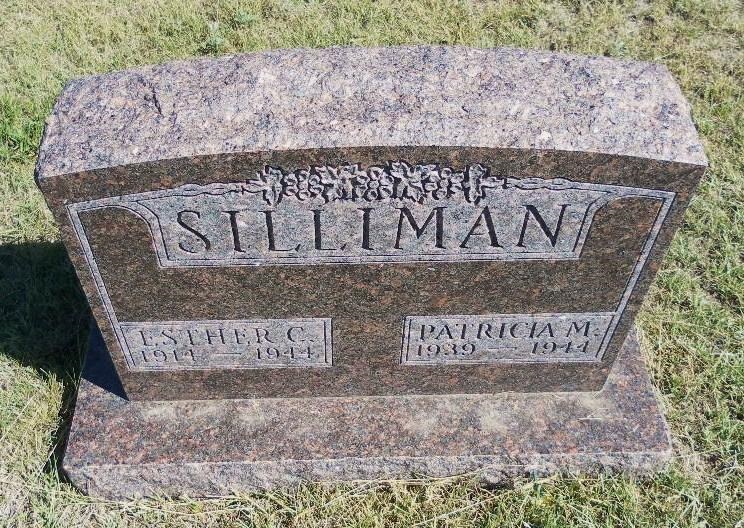
1945: Charles Ford Silliman, suicide pact?

(Thanks to Meaghan Good of the Charley Project for the guest post. -ed.)

On this date in 1945, stripped down to his socks and underwear, 35-year-old truck driver and double murderer Charles Silliman was gassed in Colorado’s death chamber. He died for the murder of his wife, Esther Corrine Silliman, and their four-year-old daughter.

Charles and Esther had been married for nine years and didn’t have any relationship problems that anybody knew about. After dinner on January 22, 1944, he poured her nightly glass of brandy. He also gave a small amount to little Patricia Mae. Both mother and child became violently ill and quickly expired.

Charles said he had no idea what had caused their deaths, and suggested food poisoning as a possible answer. When the cops arrived on the scene, they found the grieving husband and father studying his wife and daughter’s life insurance policies.

The police were suspicious, especially after Charles began weeping and pulled out a handkerchief marked with lipstick. He said the lipstick was his wife’s, but … she never wore makeup.

Chemical analysis showed the brandy had been laced with strychnine, and a bottle of the poison turned up hidden in the tire kit in Silliman’s car. The police theorized he had committed the murders to collect on the insurance and be with “a woman whom he met in a beer tavern in Denver and later … while his wife was absent, he rather frequently visited.”

Charged with murder, Silliman admitted to the poisonings and said he and his wife, plagued by poor health and debt, had jointly decided to commit suicide and take both their children with them — but that he chickened out and was unable to go through with it. (Son Charles Jr. was not harmed, as he was living with his grandparents at the time of the murders.)

Silliman was tried for his wife’s murder only, and he told the jury about the unfinished suicide pact. The prosecution pointed out that, even if his story was true, the deaths of Esther and Patricia still constituted first-degree murder.

His insanity plea didn’t go anywhere either. “We are convinced from the record,” ruled the appellate court, “as the jury must have been from the evidence, that defendant’s insanity was an afterthought and conceived by him as a means of escaping the penalty which, under the evidence, he merited.”

Silliman did, however, gain an extra two hours of life: executions at the Colorado prison normally took place at 8:00 p.m., but at that time there was a Chamber of Commerce banquet going on and 550 guests were chowing down on turkey. The warden delayed the execution until 10:00 p.m., after dinner was over and everyone had left the prison.

His last words were, “I do not fear. I am going to a better world.”

(An aside: elsewhere in the United States on that same November 9, 1945, Jesse Craiton and Noah Collins were electrocuted in Georgia for robbery-homicide, and Cliff Norman died for rape in Oklahoma’s electric chair.)

On this day..

1944: Joseph Watson and Willie Wimberly Jr.

(Thanks to Meaghan Good of the Charley Project for the guest post. -ed.)

On this date in 1944, Private Joseph Watson and Technician Fifth Grade Willie Wimberly Jr. of the U.S. Army were executed for a brutal attack on two French civilians.

They broke into a farmhouse only a few hundred yards from their company bivouac area, shot the elderly farmer and his unmarried daughter, and raped the woman. Their crimes and deaths are described in French L. MacLean’s book The Fifth Field: The Story of the 96 American Soldiers Sentenced to Death and Executed in Europe and North Africa in World War II.

At 8:00 p.m. on the evening of August 8, 1944, Watson and Wimberly, both of them already drunk, arrived at the farmhouse and bartered for a liter of apple cider. They spoke no French but were able to get their point across. The farmer and his daughter were wary of the inebriated pair and, after they left, barricaded the door.

Five minutes later, the two soldiers returned and battered it down.

Wimberly hit the man on the head with his Tommy gun and Watson forced the woman into a chair. Then, just like that, they left again. The two victims went upstairs, barricaded themselves into another room and double-locked it.

A few hours later the two soldiers returned and fired at least twenty .45 submachine gun rounds through the upstairs door, wounding both of the French civilians.

The farmer staggered downstairs and went to get help, but his daughter’s tibia was fractured and she was unable to flee. She was raped in turn by each of the men while the other held her at gunpoint.

At trial she couldn’t identify either of her attackers. The farmer identified Wimberly out of a lineup of six black soldiers, but wasn’t sure about Watson.

Their identification wasn’t really needed, however. Watson was found passed out at the crime scene in the morning, still wearing his bloodstained pants, with the fly unzipped. Wimberly had left, but he left his helmet liner (marked with a unique serial number) on the steps of the farmhouse.

When questioned, Wimberly blamed the entire thing on Watson. Watson made several contradictory statements about the night of the crime before pulling the old amnesia gag. He admitted he’d gone to the farmhouse with Wimberly and added, “I must have gotten drunk because the next thing I knew I was in the yard with a Colonel, two Lieutenants and two MPs.”

Given the circumstances, there wasn’t much either man could say to show why he should not be convicted and executed.

Justice was quick: they were hanged less than three months after their crime. Wimberly went first and was pronounced dead at 10:29 p.m. Watson followed and was dead by 10:48. Eight days later, General George S. Patton had a letter sent to the rape victim, apologizing for what she’d been through and for the soldiers’ part in it.

On this day..

1765: Alexander Provan, half-handed

A murderer named Alexander Provan was put to death on this date in 1765, the very rare* instance of a Scottish execution enhanced with mutilation.

Provan, who was uncovered as his wife’s murderer when he carelessly poured out her blood from a bottle thinking he was serving his friends an evening tipple, was doomed to have the right hand that authored the horrid deed struck off prior to hanging at Paisley.

But the unusual sentence implied an unpracticed executioner. Visibly nervous, the man missed his aim and instead of severing the evil limb at the wrist, he split Provan right through the palm.

At this the wretched prisoner began shrieking for the halter already fastened around his neck — “the tow, the tow, the tow!” The horrified executioner obliged with all speed, dragging the wailing uxoricide off his feet and past his mortal troubles.

* Unique?

On this day..

1863: James Murphy, after a reunion

On November 6, 1863, Old Geelong Gaol (op. cit.) hosted the hanging of James Murphy.

This horse thief, having been put to some light piece of penal servitude cleaning up the Warrnambool courthouse, noticed his minder kneeling over the fireplace and bashed that constable’s head with a three-point mason’s hammer.

Murphy made good his escape … for two days. He paid for those meager hours of harrowed liberty with his neck: a remarkable occasion, for it was noted that

[t]he executioner was a man sent down from Melbourne for the purpose, and a rather affecting scene took place when he was first introduced to his victim. It appeared the condemned man and he had been intimate friends in Tasmania, and as soon as he recognised him the tears began to roll down at the idea of his having to carry out the grim sentence of the law upon his old mate. He soon recovered his composure, however, and got through the remainder of his thankless office creditably.

The death mask taken from Murphy is still exhibited, and a display at the Old Gaol purports to re-create Murphy’s hanging. (His was the first of only two executions to take place within the gaol’s walls.)

On this day..

1915: Louis Bundy, “I would like to have shown the world what I could do”

Headline from the Nov. 5, 1915 San Jose Evening News: Two Young Men Are Hanged Today For Murder

One century ago today, California hanged two men at San Quentin: Earl Loomis, who murdered a Sacramento candy store proprietress in the course of a robbery, and Louis Bundy, who slew a Los Angeles messenger boy to steal a few dollars he could use to splurge on his girl.

Loomis, a hardened criminal, attracted the lesser notice; it was Bundy, who was an 18-year-old high schooler when he became a murderer, who drew a torrent of futile clemency appeals because of his youth and naivete. His crime dated to December of 1914, when he rang up the pharmacist and place a bogus order, along with a request to bring change for a $20 coin. The idea was to steal the change and buy his sweetheart a Christmas gift.

When the lackey turned up, it turned out to be a chum of Bundy’s, 15-year-old Harold Ziesche: Bundy bludgeoned him with a rock and an ax handle (sans ax) “because he knew me and would have squealed on me.”

As the San Jose Evening News reported in its hanging-day submission,* those appellants included former lieutenant governor A.J. Wallace among other political figures, numerous name-brand ministers (and even the strange Mormon boy-prophet Archie Inger), plus hundreds of Los Angeles schoolchildren.

All were bound for disappointment.

The Golden State was not averse per se to grants of mercy; a week prior to this date’s hanging, California’s pardons board spared three other condemned men, all murderers — and surely even in spurning Bundy in the same batch, the board’s action gave the young man’s supporters a thrill of hope for the intervention of Progressive Party governor (and death penalty skeptic) Hiram Johnson. Johnson had already reprieved Bundy in June, and then a second time in August.

He did not do it in November.

“I have done a great wrong and am sorry,” Bundy said on the scaffold. “I had hoped the law would see a way to let me have a chance, because I would like to have shown the world what I could do.” (Duluth (Minn.) News Tribune, Nov. 7, 1915.)

* Also the source of the headline image that surmounts this post.

On this day..

1949: Arthur Bruce Perkins, “I knew I could never face her again”

Minutes after midnight on this date in 1949, Washington state hanged Arthur Bruce Perkins for stabbing and bludgeoning to death an Olympia couple during the course of a robbery two years prior.

An alcoholic delinquent from his teen years, Perkins moved to Olympia after being paroled from a stretch in the state reformatory on November 11, 1947. One of the victims living there, Geneva Jessup, “had practically been a foster mother to” Perkins, according to court records. “‘I called Mrs. Jessup Aunt Neenie.'”

Perkins and a friend were peacably repairing a broken-down vehicle near the Jessup home when Perkins got a phone call at that house. Precisely how events escalated so dramatically from this everyday neighborly scene into a bloodbath is not very well-developed, and Perkins did not seem inclined to elaborate on the point beyond what was necessary to expedite his conviction. (He had no last words on the gallows. “Some time perhaps, the truth of this whole affair will be known,” he had mused enigmatically in the hours before.) The best one can present by way of conflict is that Mrs. Jessup attempted to dissuade her “nephew” from an ill-considered marriage. The confession that he gave police suggests that a moment of heartbreak that became a mad and horrible crime.

[Mrs. Jessup] kept talking about [the woman Perkins intended to marry] and I slapped her first. I then realized what I had done and knew I could never face her again. The rock I used was in a flower pot or was used as a door jam. I remember the old man coming into the room and I knew right then I would have to kill him as he saw the whole thing. I think the knife was on the kitchen table or drain board. I don’t know how many times I stabbed them. I think I choked Mr. Jessup until he was unconcious and I think I hit him once or twice with my fist and then I remember stabbing him. She was standing up when I hit her and when it was all over I picked her up and put her on the davenport.

He fled towards Centralia, and was picked up within days. By then, he preferred to throw away his own life rather than confront in court the enormity of his deed. While driving Perkins to jail, the sheriff said,

he was in the back seat and he spoke up rather loud and asked me what my suggestion or what my advice would be to getting this thing over with as quick as possible, get it straightened around and he didn’t want to spend any long time in jail; said he wanted to be executed … I told him the best thing for him to do to simplify it would be to sign a confession, a short statement of the facts and then hire the poorest lawyer he could find.

On this day..