1769: Two weavers, for the Spitalfield riots

On this date in 1769, two weavers hanged in East London in a bitter fight over wages and labor power.

Spitalfields, the East London district also known as the stomping-ground of legendary jailbreaker Jack Sheppard, was the capital of a thriving English silk-weaving industry. It had attained 18th century prosperity thanks in large measure to the decision of William and Mary to invite Lyons Huguenots being hard-pressed by the French crown to relocate their talents across the channel. This now-domestic industry* quickly began supplanting formerly dominant French imports.

In 1713 it was stated that silks, gold and silver stuffs and ribbon made here were as good as those from France, and that £300,000 worth of black silk for hoods and scarves was made annually. In 1721 the value of the silk manufactured in England amounted to £700,000 more than in 1688, when wrought silks were imported from France to the annual value of half a million sterling. (Source)

In this roaring and prestigious business, William Hogarth situated his 1747 Industry & Idleness plates: both the Industrious Prentice (eventually destined to become Lord Mayor of London) and the Idle Prentice (eventually executed at Tyburn) start off shoulder to shoulder at the Spitalfields looms.

But as the 18th century unfolded, even the most industrious Spitalfield weavers came under increasing competitive pressure especially from Chinese and Indian imports.

Although Parliament attempted to ban textile imports to preserve the domestic industries, Spitalfield workers were known to enforce their prerogatives directly by attacking people in the street thought to be wearing foreign prints. This simmering tension came to a rapid boil after settlement of the Seven Years’ War enabled England and France to resume trading — and a glut of French textiles to undermine weavers’ price controls.

Conflicts were no less fierce within the weavers’ community, between masters and laborers. Workers combined to maintain wages by attacking those thought to be undercutting prices.

In September 1769, one such action punished a wealthy anti-“combination” (for “combination”, read “labor union”) manufacturer named Lewis Chauvet, and cut the silk handkerchiefs right out of his looms.


From Season 3, Episode 2 of the BBC drama Garrow’s Law, which is directly based on this case. As of this writing, the entire episode can be found on YouTube.

Cutting silk from the loom was a rough method of enforcement by the labor combination. It had also been made a capital crime a few years before. And it turned out that Chauvet was ready to make his the test case.

Richly paying off a couple of independent artisan weavers for their questionable testimony, he secured the conviction of John Valloine or Valline (other alternate spellings are possible; the name clearly denotes the district’s Huguenot heritage) and John Doyle, two weavers allegedly part of the loom-smashing action. The accused denied it, Doyle reported to have fulminated at the gallows, “I am as innocent of the fact I am now to die for as the child unborn. Let my blood lie to that wicked man who has purchased it with gold, and them notorious wretches who swore it falsely away.”**

Manufacturers’ purposes were served just as well whether innocent or guilty. The point was labor discipline, not a few lost hankies.

Accordingly fixing “to strike Terror into the Rioters”, the crown ordered the execution to occur not at the Tyburn gallows, but right in the weavers’ backyard, adjacent Spitalfields at Bethnal Green.

This order actually delayed the sentence for the judiciary’s consideration of the minor point of whether this was allowed at all — since the actual boilerplate sentence read from the bench had specified “the usual place.” The wisest magistrates of the land considered the matter and in time agreed that “the time and place of execution was no part of the sentence” and therefore subject to His Majesty’s discretion. Bethnal Green it was.

They were therefore this morning taken in a cart from Newgate through the City to Whitechapel, and thence up the road to Bethnal Green, attended by the Sheriffs &c, with the gallows, made for the purpose, in another cart; it was fixed in the cross road, near the Salmon and Ball.


The Salmon and Ball pub, where the execution happened, today. (cc) image by Ewan Munro.

There was an inconceivable number of people assembled, and many bricks, tiles, stones &c thrown while the gallows was fixing, and a great apprehension of a general tumult, notwithstanding the persuasion and endeavours of several gentlemen to appease the same. The unhappy sufferers were therefore obliged to be turned off before the usual time allowed on such occasions, which was about 11 o’clock; when, after hanging about fifty minutes they were cut down and delivered to their friends. (cited here)

Vengeful weavers having their noses rubbed in their comrades’ executions smashed up Chauvet’s house in the riots on this date, and the powers that be decided that one hanging-day at Bethnal Green was plenty. A few other rioters convicted as confederates of Doyle and Valline were put to death at Tybun later in December 1769.

Years of violent labor conflict were finally quelled with the 1773 Spitalfield Weavers Act, a political compromise which protected the domestic industry from foreign competition and enabled magistrates to set wages.

Though this act stabilized a tense domestic situation, its effect over several decades was seriously problematic: a protected monopoly with wage-controlled workers maintained an increasingly obsolete system of labor-intensive manufacture that fell behind power looms coming online elsewhere.

As late as 1851 — mechanization wouldn’t fully take over until Britain’s trade liberalization of the 1860s — Charles Dickens visited Spitalfields, and saw a weaver

doing now, exactly what his grandfather did. Nothing would induce him to use a simple improvement (the ‘fly shuttle’) to prevent the contraction of the chest of which he complains. Nothing would turn him aside from his old ways. It is the old custom to work at home, in a crowded room, instead of in a factory.

Disallowed from taking lower wages even in bad times (or when cheaper cotton started displacing silk), many weavers sat completely unemployed instead — gradually sinking into a proletarianization they had fought to avoid. Spitalfield weavers eventually became one of the classic case studies in the laissez faire economics canon.

* Just to be clear, Huguenots weren’t the first silk weavers in Spitalfields; it’s just that their arrival let the industry take off.

** The hanged man’s comrades made good his gallows menace. Peter Linebaugh, whose The London Hanged is an outstanding resource on the economic pressures that brought these weavers and many others to the gallows, relates:

At noon upon a cold and snowy day, 16 April 1771, [Chauvet’s paid witness against the weavers] Daniel Clarke … went walking in Spitalfields. It had been sixteen months since the hangings of the cutters whom Clarke had sworn against, and he must have thought the people cowed or forgetful. He was recognized. ‘There goes Clarke, that blood-selling rascal,’ was the shout, and instantly a small crowd gathered to badger and pester him. He took to his heels and found temporary refuge in the house of Mary Snee. The currents of popular memory run deep; now they flooded to the surface. A hundred people beset the house hurling maledictions. ‘They would hang him, or burn him, or stone him,’ said Mary Snee. He was cornered, stripped and dragged by his feet into the street, where he was led by the neck on a parade of humiliation. The crowds grew. Widow Horsford [wife of one of the weavers hanged later in December 1769 at Tyburn] was seen to ‘jump out of the loom’ at the news Clarke was cursed and dragged to the brick-fields. Children pelted him with dirt. Bespattered with muck, he was thrown into a pond where he was ducked within a breath of drowning. He was removed to a sandheap, buried, dug up and returned to the freezing water. It was estimated that the crowd numbered 3,000. While he could speak, he taunted his tormentors, saying ‘he would take twenty of them’. Widow Horsford said, ‘Clarke, Clarke, I am left a widow, my children is fatherless on account of you.’ Clarke answered, ‘Chauvet is worse than me,’ and then he expired. A grim ending that would be remembered for generations.

On this day..

1938: Corneliu Codreanu, Romanian fascist martyr

“In place of the weak and beaten man who bends with every breeze, a man who is all too common in politics and other fields, we must create for this nation a man who does not bend, who is inflexible.”

-Corneliu Codreanu

On this date in 1938, 14 political prisoners of the Romanian Legionary movement were extrajudicially executed — including Corneliu Codreanu, one of the Romanian right’s leading spirits.

The son of a Bukovina schoolteacher in what was then Austria-Hungary, Codreanu came to political maturity in the interwar heyday of Greater Romania. It was a moment of national aspiration — the Romanian state had never before grown so large — but it was abutted by the great threats of Germany and Russia, and haunted by nationalism, economic crisis, shaken political authority, and all the other spooks conjured by the first World War.

For Codreanu as for many at that time it was the stage for a blood-and-soil death struggle against Communist agitators and sinister Jewish financiers.

But his vision was an intensely positive one as well: a valiant new Romania founded by a courageous new man, honorable and true to the virtues of the nation’s noble peasant stock. “We shall create,” Codreanu declared, “a spiritual atmosphere, a moral atmosphere, in which the heroic man may be born and on which he can thrive.”

Codreanu’s vehicle for stamping out these heroic countrymen was the Legion of the Archangel Michael* which our principal founded in 1927. Named for God’s ass-kickingest enforcer, this movement/militia was not above creating its spiritual atmosphere with political assassinations by adherents widely noted for a willingness to die for the cause.

Later known as the Iron Guard, the Legion, in the view of German historian Ernst Nolte, “plainly appears to be the most interesting and the most complex fascist movement, because like geological formations of superimposed layers it presents at once both prefascist and radically fascist characteristics.” (Qutoed here.)

As his Legion’s name suggested, Codreanu was intently religious — virtually a mystic, and a messianic Romanian Orthodox Christianity was essential to his new Romania. His movement took root in a peasant society, not an industrial state with a revolutionary working class to crush or co-opt. Rather, it organized in opposition to a mediocre king and a feckless, heavily non-Romanian oligarchy which maintained its enervating grip on the nation with “endless appeals to the Fatherland which it does not love, to God in whom it does not believe, to the Church where it never sets foot, to the Army which it sends to war with empty hands.”*

And also to the police, which clapped Codreanu and his confederates in prison after the revolutionaries declined the elite incumbents’ offer of political collaboration.

In 1938, Codreanu was hit with a long prison sentence for sedition. Uncowed, the Legion grew ever more overtly aggressive when Nazi Germany successfully dismembered Czechoslovakia; Berlin made the Legions plainly aware that it saw their movement as Romania’s future, German-allied government. Futilely maneuvering for his own scope of action, Carol attempted to decapitate the Iron Guard by having its imprisoned leadership “shot while trying to escape” on this date.

This did not turn out to help the king. Codreanu’s movement traded stripe for stripe with its foes; within two years, Carol had been forced to abdicate and the Iron Guard helped govern (albeit with tension) a fascist state.

The contemporary Romanian right aggressively reclaimed Capitanul, “the Captain”, after the fall of communism. Codreanu is now revered among not only among Romanian nationalists but in fascism’s wider populist Strasserite tradition. (Gregor Strasser, who liked the socialist part of national socialism too much for Hitler’s taste, was among those murdered on Nazi Germany’s Night of the Long Knives.)

* Eugen Weber in Varieties of Fascism, quoted by Anthony James Joes in “Fascism: The Past and the Future,” Comparative Political Studies, April 1974

On this day..

1867: The Manchester Martyrs

On this date in 1867, three Fenians hanged for the murder of a Manchester policeman.

They were the Manchester Martyrs — Michael O’Brien, William Philip Allen and Michael Larkin.

“Who were they?” an admiring James Connolly later asked, rhetorically.*

Two members of the Fenian organisation -– Kelly and Deasy –- were trapped in Manchester, and lay awaiting trial in an English prison. The Fenians in that city resolved to rescue them. [Manchester was a hotbed of Irish radicalism -ed.] This they did by stopping the prison van upon the road between Manchester and Salford, breaking open the van, shooting a policeman in the act, and carrying off their comrades under the very eyes of the English authorities.


Marker on the spot of the ambush that started all the trouble. (cc) image from Tom Jeffs.

Out of a number of men arrested for complicity in the deed, three were hanged. These three were ALLEN, LARKIN and O’BRIEN –- the three Manchester Martyrs whose memory we honour today.

There were actually five in all selected to stand trial for their lives for what the British dubbed the “Manchester Outrage”; although all five were condemned to swing, one received clemency and a second was pardoned outright since the evidence against him was soon proven to have been entirely perjured.

Indeed, all five of the men asserted their innocence in the shooting even when they acknowledged joining the crowd attempting to free their brethren.

But they, and especially their partisans, were still more energetic asserting the Fenian cause from the platform afforded by the legal antechambers to the scaffold. “God save Ireland!” they cried at several dramatic points in the trial — and these words titled a beloved patriotic tune in the martyrs’ honor.

The British, basically, freaked at the effrontery of an Irish mob hijacking a police wagon, making Fenian as dirty a word among the Anglo respectable as terrorist is today, and stampeded the case to judgment without dithering overmuch about fine points like meticulous investigation. While respectable liberals could (and did) make the clemency case on grounds of actual innocence, the right-thinking were scandalized by Irish marches in overt support of Fenianism.

“These Irish are really shocking, abominable people,” Queen Victoria wrote privately to one of the government’s Tory cabinet members. “Not like any other civilized nation.”

So it was a bloodthirsty rabble, baying and not a little drunk, that gathered outside the walls of Manchester’s New Bailey Prison to see Allen, Larkin, and O’Brien hang** for their abominableness. This lot also happened to witness the last public hanging in Manchester; England shifted to private executions the next year.

But these by no means represented everyone in Manchester.

The very week of the Fenian ambush, a philosopher had dropped in to Manchester to visit a local industrialist. These were, granted, not Englishmen but Germans. Still, Karl Marx and Friedrich Engels were keenly interested in the Fenian cause.

Marx exhorted English workers, now and over the years ahead, to make common cause with Fenianism; he apparently authored this clemency appeal for the Manchester Martyrs sent by the First International. The very day after the execution, Engels — our Manchester industrialist — compared the martyrs to John Brown and prophesied that the hangings “accomplished the final act of separation between England and Ireland.” (See Marx at the Margins: On Nationalism, Ethnicity, and Non-Western Societies)

These martyrs have stood the test of time, in part because Engels’ prediction (more or less) came to pass. But we think it’s their countryman Connolly whose epitaph rings truest — the summons three men in Manchester issued posterity to stand against monstrous edifices as “unyielding foes even to the dungeon and the scaffold.”

We honour them because of their heroic souls. Let us remember that by every test by which parties in Ireland to-day measure political wisdom, or personal prudence, the act of these men ought to be condemned. They were in a hostile city, surrounded by a hostile population; they were playing into the hands of the Government by bringing all the Fenians out in broad daylight to be spotted and remembered; they were discouraging the Irish people by giving them another failure to record; they had no hopes of foreign help even if their brothers in Ireland took the field spurred by their action; at the most their action would only be an Irish riot in an English city; and finally, they were imperilling the whole organisation for the sake of two men. These were all the sound sensible arguments of the prudent, practical politicians and theoretical revolutionists. But “how beggarly appear words before a defiant deed!”

* Connolly was observing the anniversary of the men’s death in 1915, which was the same anniversary a 13-year-old Kevin Barry began his own path to future martyrdom by attending a Manchester Martyrs memorial.

** Hanged badly. Notoriously erratic hangman William Calcraft only killed Allen on the drop; descended the gallows to help Larkin along; and was denied access by O’Brien’s confessor, who said he held that strangling man’s hand full 45 minutes until he finally succumbed.

On this day..

2009: Four Tibetans

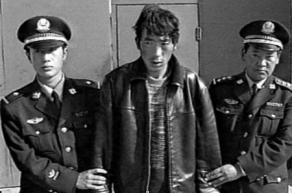
On this date in 2009, China executed four Tibetans widely considered political prisoners.

The previous year, widespread unrest over Chinese control had shaken the country, most notably riots in the capital, Lhasa that targeted Chinese persons and shops.

(There’s a BBC page preserving a good deal of the original coverage here.)

Loyak, one of those executed Oct. 20, 2009.

The two most prominent prisoners — in fact, the only two confirmed in some of the first media reports — were Lhasa residents Lobsang Gyaltsen and Loyak. A court spokesperson said both had been “given death penalties had committed extremely serious crimes and have to be executed to assuage the people’s anger.”

Specifically, both had been convicted of torching shops during the Lhasa riots, which arsons both led to deaths.

The other two executed, a woman named Penki (also for arson) and an unnamed man, received less comment, although they might have been executed despite having been condemned only to a “suspended” death sentence, which for China is generally no death sentence at all.

Executions in Tibet turn out to be relatively rare; these were the first known Tibetan executions since early 2003. Widely condemned abroad, this date’s events were barely or not at all reported internally by Chinese state media.

Part of the Themed Set: Illegitimate Power.

On this day..

1973: 14 during the Caravan of Death

Fourteen early-morning executions in Chile on this date in 1973 heralded the end of one of the Augusto Pinochet dictatorship’s most notorious human rights abuses: the Caravan of Death.

For this “caravan” picture not camel-borne spice traders but a helicoptering death squad. In the bloody aftermath of Pinochet’s September 11, 1973 coup against the elected socialist government, the new strongman’s buddy Gen. Sergio Arellano Stark took this evil-omened chopper on a south-to-north tour from prison to prison beginning September 30 — leaving its wares behind at each stop, in the form of spent shells and murdered men.


Arellano and Pinochet were all hugs hours before the caravan departed.

The intended consumer of this murderous spectacle, according to the human rights organization Memoria y Justicia, was as much the military itself as it was the political opposition. “One of the reasons,” said one officer at Arellano’s very first stop,

was to set a drastic precedent in order to terrorize the presumed willingness of the Chilean people to fight back. But without a doubt, it was also intended to instill fear and terror among the commanders. To prevent any military personnel, down to lowest ranking officers, from taking a false step: this could happen to you!

And indeed, several officers were also sacked along the way, a couple even imprisoned and tortured. Their lenient treatment of presumed subversives constituted “failure to fulfill military duties”: one can readily imagine the impression made upon junior officers in Pinochet’s armed forces.

Said subversives had it worst of all, of course.

These were people already in prison, many having voluntarily turned themselves in upon request after the coup; they were drug out of cells in the dark of night and machine-gunned, or worse. Close to 100 defenseless political detainees died this way over a three-week span.

The Caravan reached Antofagasta on October 18, where Gen. Arellano was received by the zone chief Gen. Joaquin Lagos.

Arellano’s unit did its dirty work overnight: the names of its 14 victims on this date’s early hours are recorded here. One was an 18-year-old student, one a 66-year-old “maritime worker”. Several were figures in local government.

Lagos was horrified the next morning when he discovered what his guests had been up to — and he immediately gave Pinochet his resignation.

I felt hurt, powerless and angry [Lagos later said] that a criminal action of this nature that had been committed in my jurisdictional zone and behind my back.

Lagos had the juice to make this sort of gesture without winding up in prison himself: indeed, he gave Pinochet his resignation (and the reason) personally.

Though Lagos has said that Pinochet seemed much more concerned about his (Lagos’s) attitude towards the atrocity than the atrocity itself, he (Lagos) also remembers Pinochet placing a call to Gen. Arellano and, not reaching him, leaving his nomadic deputy a message “not to do anything more.” The Caravan did stop on Oct. 22: maybe, Lagos’s resignation did the trick, at least to the extent one can attribute any cause to the cessation. This outcome will always rate a bullet point on the brief against the “superior orders” defense.

Relatively speaking, these unfortunates are only one puddle of blood among seas from the Pinochet years. Still, the Caravan of Death in particular was (and still is) a focus of the indictments handed down against him after the return of civilian government, thanks in no small part to Gen. Lagos’s willingness to go on the record about it — and as a result, many of the legal maneuvers around Pinochet in the last years of his life, both in Europe and Chile, concerned this horrible affair.

Pinochet finally died in December 2006 while under house arrest for two specific Caravan of Death murders. While alive, however, his legal team predictably attempted to blame local commanders for the Caravan’s atrocities; in response to this gambit, Lagos went public on television with his version (which human rights organizations also tend to credit) — along with horrifying descriptions (Spanish link) of the death squad’s activites that left him too “ashamed” to return the victims’ remains to their loved ones.

They were torn apart. They were no longer human bodies. I wanted to at least put the bodies back together again, to leave them more decent, but you couldn’t.

They cut eyes out with daggers. They broke their jaws and legs

They shot them to pieces, first the legs, then the sexual organs, then the heart, all with machine guns.


From an entire album that Dark Order devoted to the Pinochet dictatorship.

Part of the Themed Set: Illegitimate Power.

On this day..

1943: Willi Graf, anti-Nazi medic

On this date in 1943, anti-Nazi student activist Willi Graf was beheaded at Munich’s Stadelheim Prison.

Graf was a conscientious Catholic whose disaffinity for Naziism manifested in an early refusal to join the Hitler Youth: he did a short stint in prison in 1938 for having continued associating with a banned Catholic youth league.
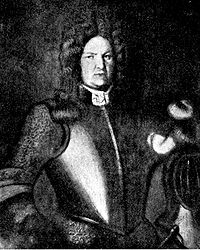
This subversive fellow might have been destined for the chop regardless in the black years to come, but for a thoroughgoing radicalization, he was drafted into the army as a medic and got a front-row seat on the Holocaust and the horrors of the eastern front.

During a 1942 study leave back in Munich, Graf met White Rose resistance figures Hans and Sophie Scholl and began participating in that circle’s distribution of illicit anti-Nazi leaflets.

He was arrested within months and condemned on April 19, 1943 to die as a traitor — though actual execution of the sentence waited several months on the Gestapo’s vain exertions to extract from their prey actionable information on other collaborators.

A number of schools around Germany are named in Graf’s honor.

On this day..

1707: Johann Patkul, schemer

On ths date (N.S.) in 1707, Livonian nobleman Johann Patkul was broken on the wheel at Kazimierz Biskupi, Poland for a decade’s treasonable scheming against the Swedish crown.

Livonia — essentially present-day Latvia, plus a chunk of Estonia — was at this time a part of the Swedish Empire in the latter’s twilight as a world power.

Financially pinched after the protracted and bloody but indecisive Scanian War, the Swedish king Charles XI imposed his great reduction — a heavy tax on the landed aristocracy allowing the crown to reclaim as its own any property that it had held formerly and granted out. There was a lot of such land mortgaged out generations before to raise capital for the Thirty Years War. War giveth, war taketh away. Hands up everyone who feels bad for the nobility.

Of course, all the 17th century nobles felt bad for the nobility.

Johann Patkul was the young — maybe too young — man deputized by Livonian bluebloods to go complain about it to Charles. When sharp but respectful eloquence predictably failed to obtain his ends, he dropped the “respectful” part — and for this lese majeste had to bug out of Sweden with an in absentia death sentence at his heels.

Having failed to obtain pardon from the offended monarch or from his heir Charles XII, Patkul just decided to change teams full stop. You could call this treachery (Charles XII did) but this is an age before nationalism. What was the Swedish royal house to a Latvian noble if he could get a better deal elsewhere?

“Elsewhere” for Johann Patkul meant Polish-Lithuanian king Augustus the Strong, and/or Russian tsar Peter the Great. Our refugee aristocrat spent the 1700s conducting vigorous behind-the-scenes shuttle diplomacy to engineer an alliance against his former masters and carve their respective pounds of flesh out of Sweden. Patkul himself, of course, would get a healthy bite from Livonia for his trouble.

In this campaign Patkul was merely an “unhappy instrument” (as a British correspondent quoted here put it): the antagonists in question had ample reason of their own for this statecraft; had they not, some itinerant conspirator pining for a lost manor could scarcely have conjured it.

But Patkul was a useful instrument: energetic, discreet, willful, and so he could surely claim some ownership of the product. Think of him as the convenient enabler — the Ahmed Chalabi of the Great Northern War that tore apart the Baltic environs for the first two decades of the 18th century.

It was rather fitting, then, that Patkul was devoured by his offspring when Sweden forced a peace upon Poland that resulted in Patkul’s being handed over to the Swedish authorities. The man’s extradition was specified by name in the treaty.

Patkul’s brutal execution inflamed some outside opinion against the Swedes (which presumably mattered not a whit to the progress of hostilities); a purported account of his execution-eve conversation with his confessor is given in this extremely sympathetic English pamphlet.

Though it’s safe to say that Patkul didn’t get what he wanted — let’s guess that the public shattering of his bones prior to a protracted death by exposure was towards the “worst case scenario” end of the calculus — the Great Northern War did indeed loose Livonia from the Swedish yoke … in favor, instead, of the Russian. Peter the Great accepted Livonia’s capitulation in 1710.

Mission accomplished.

Patkul is not to be confused with Baron Peikel/Pykul, a different fellow who was also executed for disobedience to Sweden in 1707.

On this day..

1941: Nguyen Thi Minh Khai, Indochina Communist cadre

On this date in 1941, Vietnamese Communist cadre Nguyen Thi Minh Khai was shot as an anti-France insurrectionary.*

Khai (Vietnamese Wikipedia page | English) surely fit the description: she was a leader of the Indochinese Communist Party in the 1930’s, working directly with Ho Chi Minh in his Hong Kong exile. She would return in 1936 to the city later named for that redoubtable revolutionary as its ranking agitator.

Khai, the most famous of the Indochinese Wars’ vast ranks of women fighters, would marry fellow revolutionary Le Hong Phong, the chairman of the party, who died in prison in 1942. Khai’s sister’s marriage made Khai sister-in-law to the revolution’s military lion Vo Nguyen Giap.**

But her prominent position also made her a target.

Arrested by the French late in 1940, she was tortured and condemned to death. She was shot with other cadres, shouting last words that the decades yet to come would pretty well vindicate.

Long live the Communist party of Indochina. Long live the victorious Vietnamese revolution. (Source)

Readers whose Vietnamese is stronger than mine — i.e., extant in any form whatsoever — might get something out of this video:

As a national heroine, Nguyen Thi Minh Khai is the namesake of any number of public spaces in Vietnam, like schools and roads.


Paradoxical historiography: the street address visible to the right of the photo brands a revolutionary name onto an upscale coffee shop in Ho Chi Minh City. (cc) image from Lawrence Sinclair.

* Some sources give an April 1941 execution date, particularly April 25. I believe this may actually be the date Khai was condemned. There are also some sources indicating a guillotine execution; though the guillotine was certainly available, the bulk of the sources seem to say that Khai was shot.

** Giap is still going strong after all these years; he just turned 100 a few days ago. Khai’s sister was not as lucky; she died in French custody at the prison American pilots would later refer to as the “Hanoi Hilton”.

On this day..

1942: Janusz Korczak and his orphans

(Thanks to Meaghan Good of the Charley Project for the guest post. -ed.)

On August 6, 1942, in the Warsaw Ghetto, Polish/Jewish hero Janusz Korczak marched with his orphans to the death trains and into legend.

The man, his activities in the ghetto, and above all his famed final walk to the Umschlagplatz, are mentioned in many books and memoirs about the ghetto.

The story of his final days also has been told many times in books for children such as The Champion of Children: The Story of Janusz Korczak, A Hero and the Holocaust: The Story of Janusz Korczak and his Children, and Janusz Korczak’s Children.

However, one of the former residents of his orphanage said, “I don’t want to talk about the dead Korczak, but the living one.”

The living Korczak’s story is told in Betty Lifton’s award-winning biography The King of Children: The Life and Death of Janusz Korczak.

Korczak’s real name was Henryk Goldschmidt. He took the name Janusz Korczak (pronounced “ya-nish kor-chok”) for his writing and it wound up taking over his entire life, a la Mark Twain.

Born in an observant Jewish household in Warsaw (which was then Russian Territory) in either 1878 or 1879,* he became man of the house after his father suffered a nervous breakdown in 1889 and eventually had to be hospitalized.

By thirteen, bored by school, he was writing poetry and learning foreign languages by himself. He went to medical school and served as a military doctor with the Russian Army in the Sino-Japanese War of 1905-1906. Eventually he was promoted to the rank of major.

Korczak’s true calling wasn’t in medicine, however, but in writing and in working with children. He found himself drawn to neglected and abused youngsters, and believed in treating every child with honesty and respect.

While he was in China with the military, his first book, Child of the Drawing Room, became famous in Poland. He didn’t realize he was a celebrity until he returned home.

He tried to distance himself from his writing and his fame and be an ordinary pediatrician, but people wanted to see him, to the extent that they would pretend their children were sick in order to entice him to their homes.

Korczak wrote later that one woman claimed her sons had the flu and, when he made a house call, insisted on serving him tea.

“Have you been writing anything lately?” she asked.

“Prescriptions,” he replied, and left, realizing he’d been had.

In 1910, he gave up his medical practice to start an orphanage for Jewish children age seven to fourteen. His institution was very different from most of that time and place, for Korczak had very democratic ideas: the children wrote their own newspaper and had their own parliament and court system.

If one child had a falling-out with another, the urchin could “sue” and bring a case to be decided before the orphanage court, which met once a week. (Even teachers and other staff members could be sued.) The orphanage court also held trials for children accused of violating one of the home’s rules.

Children were rewarded for good behavior, and spanked only as a last resort. Every child had a private, lockable drawer to hold their most precious belongings. Korczak carefully monitored the children’s health and also acted as a sort of informal therapist, encouraging them — most of them orphans from backgrounds of desperate poverty and abuse — to talk about their feelings. The children called him Pan (“Mister”) Doctor.

When World War I broke out, Korczak left the orphanage to serve in the Army again. He left it in good hands, however, in the care of teachers and staff he had trained himself.

“All the world is submerged in blood and fire, in tears and mourning,” he wrote sadly of his war experiences.

It was while in the trenches on the Eastern Front that he began writing a book on child development, titled For The Love of a Child. In 1918, the war finally ended, Poland became a free and independent nation, and Korczak returned to his orphans in Warsaw.

He stayed busy, setting up a second orphanage in 1919, and afterwards writing King Matt the First. The novel, a children’s story about a young boy who becomes king and puts the country’s children in charge, became a bestseller throughout the country in the wake of the calamity lately unleashed by the grown-ups. The sequel, King Matt on the Desert Island, was also a commercial success.

Korczak continued to work for his children, however; he consulted at Warsaw’s juvenile court, and in 1928 founded third orphanage, called Our Home, which had attached dormitories for teachers-in-training and was intended for Catholic children.

In 1925, Korczak wrote another book called When I Am Little Again, told from the point of view of a middle-aged teacher and meant to be read by both children and adults.

He started a children’s newspaper, the Little Review, in 1926. Saying he wanted to “defend children” in his new paper, he invited children from all over Poland to write and tell him the stories of their lives. The newspaper lasted until 1939.

He also hosted a hugely popular radio show, using the name “Old Doctor.” The program was terminated in 1937, however, after only a couple of years; Korczak’s employers with the radio station were reluctant to keep a Jew on the air. When his identity became known, the right-wing press castigated him, saying that as Jew he could never be a real Pole and shouldn’t be allowed to educate Polish children.

Like any public figure, Korczak had his critics. Anti-Semites called Our Home “a new nest of Masonry and potential Communism erected in the heart of the capital.” Communists said his institutions weren’t Communist enough; Zionists criticized him for not directing the children towards a life in Palestine; religious Jews said there wasn’t enough religion in the orphanages while assimilationist Jews said there was too much.

Yet Korczak’s methods worked.

In a follow-up study he conducted of all the former residents 21 years after the first of his institutions was opened, he found that only a few had turned to crime or prostitution as adults. The same could not be said for children who graduated from other children’s homes in Poland.

During the 1930s, many of Korczak’s friends encouraged him to move to Palestine to escape the growing problems in Poland. He actually visited a kibbutz there, but he couldn’t make up his mind whether or to go; he had trouble leaning Hebrew and wasn’t sure a man of his age could start a whole new life.

“I don’t have forty years to spend in the desert,” he wrote to a friend.

Germany’s invasion of Poland in 1939 settled the question for him; leaving the country was no longer an option. Korczak volunteered for the Army again, but was turned down due to his age.

As the Nazis tightened their strangehold around Poland and Poland’s Jews, Korczak did the best he could to shied his orphans from the chaos, suffering and bigotry around them.

He turned his pen to appeals for funds for the children. As a protest against the occupation, he walked around the city openly in his old Polish Army uniform as well as the required Star of David armband.

The uniform proved surprisingly useful: he told a friend that when he went door to door asking for money for the children, “Some people are generous, but not everyone. If they’re difficult, I just undo my coat and reveal my Polish uniform. They get so nervous about having someone in uniform in their place that they give me something just to make me leave.”

The Warsaw Ghetto opened in 1940, and the orphanage was outside its boundaries, so they had to move. (Later, the Germans reduced the size of the ghetto, and Korczak’s orphanage had to relocate again.)

The Warsaw Ghetto was a kind of hell for Jews; allotted rations of only 800 calories a day — if they could get that — people died in droves of starvation and related diseases, including typhus and tuberculosis, as well as deliberate murder by the Nazis and their collaborators.

As recorded in Betty Lifton’s biography, a gentile friend, Igor Newerly, offered to help Korczak escape this fate:

“Everyone’s worried about your going into the ghetto with the children,” Newerly told him. “Just say the word and we’ll get you false identity papers to live on our side.”

“And the children?”

“We’ll try to hide as many as we can in monasteries and private homes.”

Korczak put down his cigarette, took off his glasses in their cheap round metal frames, and began wiping them with his handkerchief as he always did when he was stalling for time.

Finally, he asked: “Do you realize how difficult it would be to hide one hundred and seventy Jewish children — that’s that’s how many we have now.”

“We’d try,” Newerlv repeated.

“But can you guarantee me that every child will be safe?”

Newerly shook his head sadly: “I’m afraid that’s impossible. We can’t guarantee anything” — he
paused — “even for ourselves.”

Korczak thanked his friend, but turned him down. He would take his chances in the ghetto. His decision was sensible for the time — the “Final Solution” had not been conceived of, and no one knew what the eventual fate of the ghetto residents would be.

Lifton records:

On the day they were scheduled to depart, November 29, the children lined up in the courtyard as rehearsed, while Korczak made a final inspection of the wagons filled with the coal and potatoes that he had so arduously procured on his daily rounds. The children waved goodbye sadly to the Polish janitor, Piotr Zalewski, who was staying behind to care for the house. His face was swollen almost beyond recognition from the beating he had received the day before when he and the laundress had applied to the Nazi police for permission to go into the ghetto with the orphans. The Germans had thrown the laundress out, but detained Zalewski for questioning. Didn’t he know that Aryans were no longer allowed to work for Jews? When the janitor replied that after twenty years of service he considered the orphanage his home, the Germans thrashed him with whips and rifle butts.

[…]

The orphans tried to sing as they marched out of the courtyard and into the street, clutching their few possessions. The green flag of King Matt, with a Jewish star on one side, flew over the little parade as it made its way through the teeming streets the short distance to 33 Chlodna Street. When they reached the place where the wall cut along Chlodna, slicing its “Aryan” half off from the ghetto, they found German and Polish police at the gate demanding identification, as if they were crossing a foreign border.

Within the ghetto, Korczak continued his activities for children’s welfare.

He tirelessly solicited aid for the orphanage to keep the children clothed and fed. He and others held benefit concerts and poetry readings, and put posters all around the ghetto saying “OUR CHILDREN MUST LIVE” and “A CHILD IS THE HOLIEST OF BEINGS.”

He took the job as director of a hopelessly underfunded shelter that housed a thousand children; in spite of his efforts, the mortality rate there was sixty percent.

Everywhere children were dying of starvation and disease on the streets or in filthy, overcrowded hovels; Korczak lobbied for the creation of a sort of hospice where they could at least breathe their last in clean, quiet surroundings.

For himself he functioned mostly on pure willpower. It was hard for him to eat when he knew the children were hungry. Five shots of pure alcohol a day, mixed with water, provided precious calories.

Yet his health was failing. His friends noticed how emaciated he had become: “ill, wasted and stooped.” He had a persistent cough and a doctor who examined him diagnosed him with pulmonary edema. Nightmares interrupted his sleep. “How hard it is to live,” he wrote, “how easy to die!”

Yet he carried on.

In the summer of 1942, it became increasingly apparent that the ghetto would be liquidated. Igor Newerly approached Korczak again and offered to help save whoever he could.

Korczak declined his offer again, but gave him his diary for safekeeping — a sign that Korczak, too, knew the end was coming. He had decided to throw his lot in with the children.

In July, the Nazis announced that there were “too many Jews” and they were sending away the children, the old, the sick and anyone else who could not work. Orphans, of course, would be at the top of the list. Resettlement meant death, and many of the ghetto residents knew it, although a substantial number clung to the hope that they would be placed in work camps and find someway of surviving a little longer.

Adam Czerniaków, the Warsaw Ghetto Chairman and Korczak’s personal friend, took his own life rather than supervise the deportations.

For the next few weeks, people were marched or dragged to the death trains, packed inside and driven off to the Treblinka Extermination Camp for gassing.

Many people tried to hide, for the most part unsuccessfully, to escape being deported. Some of the ghetto residents were so hungry that they volunteered to go, because the Nazis promised bread and marmalade to anyone who reported of their own accord.

Korczak’s orphanage’s turn came on August 6. He and the staff had made up their minds earlier: all of them would go together. And they would go quietly, in an orderly fashion, so as not to frighten the children.

Their walk to the death trains, witnessed by thousands, has passed into Holocaust legend.

Lipton records:

The Germans had taken a roll call: one hundred and ninety-two children and ten adults. Korczak was at the head of this little army, the tattered remnants of the generations of moral soldiers he had raised in his children’s republic. He held five-year-old Romcia in one arm, and perhaps Szymonek Jakubowicz…

Stefa followed a little way back with the nine- to twelve year-olds. There were Giena, with sad, dark eyes like her mother’s; Eva Mandelblatt, whose brother had been in the orphanage before her. Halinka Pinchonson, who chose to go with Korczak rather than stay behind with her mother. There were Jakub, who wrote the poem about Moses; Leon with his polished box; Mietek with his dead brother’s prayer book; and Abus, who had stayed too long on the toilet.

There were Zygmus, Sami, Hanka, and Aronek, who had signed the petition to play in the church garden; Hella, who was always restless; big Hanna, who had asthma; and little Hanna with her pale, tubercular smile; Mendelek, who had the bad dream; and the agitated boy who had not wanted to leave his dying mother. There were Abrasha, who had played Amal, with his violin; Jerzyk, the fakir. Chaimek, the doctor; Adek, the lord mayor. , and the rest of the cast of The Post Office, all following their own Pan Doctor on their way to meet the Messiah King. One of the older boys carried the green flag of King Matt, the blue Star of David set against a field of white on one side. The older children took turns carrying the flag during the course of their two-mile walk…

The young protagonist of Jerry Spinelli’s novel Milkweed described it this way:

The orphans were going by. They were marching. Their heads were high and they were singing the song I had learned. I sang along with them. Not one was dressed in rags. Everyone wore shoes. Doctor Korczak lead the way…

“The very stones of the street,” wrote Yehoshue Perle, another chronicler, “wept at the sight of the procession.”

As the group waited for the trains to leave, Korczak’s many friends were seeking out anyone with influence, desperately trying to get them out of Umschlagplatz and back to the orphanage to die another day.

It was said that a German officer, who had been a fan Korczak’s King Matt books as a child, offered him the chance to leave — without the children. Korczak refused.

His presence kept the children calm; if he left them they might panic. He knew what was coming, and he knew he could not force the children to face death alone. The fact that he was in such poor health and probably would not have survived the war in any case does not make his sacrifice any less.

Eventually the orphans and the staff boarded the train and were hauled away. There were no survivors. His name is listed on a memorial stone at the site where Treblinka once stood — the only such stone with a name on it.

Korczak’s books were translated into many different languages, including English, and some are still in print: his children’s novel King Matt the First, which was a best-seller in Poland when it first came out; Loving Every Child: Wisdom for Parents; When I Am Little Again and The Child’s Right to Respect, two books in one; and his final piece of writing, his Ghetto Diary. The editor Sandra Josephs also put together the compilation of his works called A Voice for the Child: The Inspirational Words of Janusz Korczak.

Korczak’s legacy is not just in books; his name and image have been used in a lot of memorabilia over the years, and have appeared on stamps in Poland, Israel and Germany. In 1991, Polish filmmaker Andrzej Wajda made a film about Korczak and his last march. There are four statues of him in Warsaw, and a school for street children in Thailand is named after him.


From Andrzej Wajda’s Korczak.

* His year of birth is uncertain; Korczak himself may not have known it.

On this day..

1300: Gerard Segarelli, Apostolic Brethren founder

This date in 1300 saw the execution in Parma, Italy of Gerard Segarelli, the founder of the order of the Apostolic Brethren who are perhaps better known for Segarelli’s apocalyptic successor, Fra Dolcino.

Despite the tendency of his follower to eclipse his star, Segarelli was himself a formidable religious reformer in a time flowering with expressions of popular piety that regularly confounded the prelates.

Joined as Dolcino and Segarelli are in this fascinating period, Executed Today aptly welcomes back Dr. Jerry Pierce to talk Segarelli. He’s already shed some light on Dolcino in these pages.

Dr. Pierce is completing a forthcoming book on the Apostles.

You view Segarelli as a very different sort of character from Dolcino.

One of the big issues in studying Segarelli is that he’s always tied to Dolcino. I mean, Segarelli does die a heretic, but he’s always tied to the biggest heresy. He actually founds his order in 1260 and he’s not executed until 1300, so that’s 40 years.

Doctrinally, the reason Segarelli didn’t have any issues for so long is that as far as we can tell, he never had an anti-clerical agenda. Unlike Dolcino, he doesn’t go around calling the Church the “Whore of Babylon”.

Even at the end?

No. Basically, the reason he’s executed is that he refuses to renounce his movement, it’s not that he has any doctrinal errors or anything like that.

He’s basically like a Franciscan, just 50 years later. It’s this popular, penitential movement. They have tons of support throughout central Italy, support from the lay people who provide them with shelter and food. They’re basically doing the stuff that Francis and the early Franciscans did, wandering around exhibiting the ascetic lifestyle. And it’s okay for lay people to do this at this point. Everybody does this.

Why does everybody do this? This century has an explosion of penitential religious mass movements.

Personally, I think it has to do with economics — you have the growth of cities, growth of money economy. These are urban movements. Segarelli’s in Parma, the flagellants are in Parma and other cities.

It has to do with living in this world of growing wealth, growing towns, hearing this message of poverty preached from the pulpit and then they look around and say, “wait a minute.”

Different individuals come to this conclusion — Francis, Peter Waldo, Segarelli — I don’t think they had an idea about founding a movement. They were just trying to do something to preserve their souls.

And these other groups like the Franciscans also face an internal tension between the spirit of ascetic poverty and the institutional Church.

Even before Segarelli, the guy who’s the head of the Franciscans in one letter that he wrote said, “people wandering in Italy would rather run into robbers on the road than two begging Franciscans because at least they know the robbers’ intentions.”

A lot of authors say that Segarelli is an offshoot of the poor spiritual Franciscans. But he has no connection. He tried to join the Franciscan order, but the poor order founded by St. Francis says, “yeah, you don’t have the right pedigree to be a Franciscan,” which really goes to show how institutionalized and closed the Franciscans had already become.

Most of the stuff we have about Segarelli for his first 20 years or so is from a rival Franciscan named Salimbene who’s mad that he’s making such headway. He actually says that he can’t believe that his fellow citizens are giving more to Segarelli and his Apostles than they ever did to the Franciscans. And that colors how they talk about them: in his eyes, Segarelli is a rustic from the country.

Did Segarelli preach at all?

He goes around telling people to do penance, and the Franciscan chronicler makes fun of him because he doesn’t say the Latin version, he uses the vernacular: penitenziagite instead of the Latin penitentiam agite.

Most of it was by example. You don’t have access, really, to a Bible as a lay person; this was a way for people to sort of experience the religious life without becoming a nun or a monk.

So for these first decades of his career, if he’s attracting all this criticism, why is he still tolerated?

Because he’s not really a threat. It’s a good way to channel lay piety without it becoming a threat or anything.

Bear in mind, this is after the Waldensians, after the Crusade against the Albigensians — and both of those groups talked about poverty. This gives Church figures a pretty good idea that, hey, maybe we should be accepting of these movements.

The Bishop of Parma accepted Segarelli. There was apparently a group of Apostolic sisters who did the same thing, and the Bishop of Parma sort of wrote a document saying that you get a partial indulgence for giving to them.

Given this institutional semi-support, why wasn’t Segarelli’s movement also corrupted?

There are other leaders than Segarelli, and some do have this issue. One guy is the brother of the podesta of Bologna, a pretty wealthy dude. He takes over this movement and he’s basically using people’s donations to buy horses and ride around in nice clothes. There’s a huge civil war within the Apostles. At one point Segarelli himself gets kidnapped by rival members.

It’s not until the 1280s that they start really running into problems with respect to the Catholic hierarchy, and the problem is because of the general proliferation of the lay movements. Two different popes lay out guidelines saying unestablished religious orders need to join established orders or just disband. But then you see people in the Apostolic movement ignoring that, moving into actually preaching things, which is potentially heretical, and they start attacking the Franciscans, the Friars Minor, by referring to themselves as the Friars Minimi, “the least.” The Franciscans are pretty powerful and they start going against the Apostles.

But Segarelli himself stays clear of this?

Segarelli himself doesn’t really take a leadership role even though he’s the founder. He’s sort of hands-off.

You can argue that he has some issues because he won’t follow authority when they tell him to disband. But it was after the group had been around for so long, it’d be like telling the Franciscans 40 years on, “sorry.” Early in the movement, the Apostles had actually gone to different members of the hurch hierarhy asking for a rule under which they could operate. So they’re not trying to be insurrectionaries.

How does it all break down for the Apostles, then?

It’d be too easy to say that it’s just greedy Franciscans. I think the other part is you have people who are getting into the movement, people like Dolcino, who have other agenda. And the Church is worried that they’re unregulated and without control you get improper doctrine being preached.

When it comes to it, Segarelli just refuses to disband. The Apostles had really grown beyond his personal control anyway. But at one point he escapes from the bishop’s palace where he’s sort of under house arrest and resumes his preaching, and they’re like, “all right, enough.”

What do we know about Segarelli’s relationship with Dolcino?

We think that Dolcino may have joined the order around 1290, but it’s all hearsay. Dolcino talks some about Segarelli.

What’s Segarelli’s long-term legacy?

It’s not heresy to be associated with Segarelli after he’s executed. We have Inquisitional trial records for several years after Segarelli in places like Bologna and other areas. There’s even some evidence that there were followers in France and Germany.

As time goes on, there’s a lot of people in Italy itself like Dolcino who appropriate the movement, so you have modern writers who talk about Segarelli and Dolcino as proto-Communists, or Segarelli as the real Franciscans. Some of them have an axe to grind against the institutional Church.

On this day..