On this date one year ago, a teenager who saved himself with a flute cheated Iran’s hangman by the narrowest of margins.
Sina Paymard had had the hemp about his throat the previous fall for murdering — at the tender age of 16 — a drug dealer in a pot buy gone bad.
The bipolar young musician’s last request was to play the ney (a Persian flute), and in a feat fit for legend, he played so movingly that the family of the victim reprieved him.
This power under Islamic sharia law comes with a price: the reprieve bought time for the families to negotiate alternative financial compensation known as diyeh. Come July, the lad’s family was still $90,000 short, and he was shifted to Tehran’s Evin prison to do the whole thing over again.
Sina’s new execution date received worldwide attention:
… helping them scrape together enough from donors (“notably a substantial donation from a university lecturer”) to make good his escape.
Such are the vicissitudes of the Iranian judiciary that Paymard went from all but dancing on air twice to outright liberty: he’s a free man today, or was as of a few months ago.
Though things worked out for Sina Paymard, other juvenile offenders continue to face the ultimate sanction in Iran — virtually the last outpost of the practice on the globe. Earlier this month, StopChildExecutions.com detailed 138 Iranian prisoners condemned for crimes committed as children; Iran has executed at least two such prisoners this year.
Minutes after midnight this date in 1989, Alabama’s executioners electrocuted a developmentally disabled murderer. Nine minutes later, after rewiring the chair, they finally managed to kill him.
Alabama’s fifth execution of the “modern” era initially made the headlines as the nation’s first execution of a mentally impaired prisoner after the Supreme Court’s controversial Penry v. Lynaugh decision (since overturned) green-lighted the death penalty for developmentally disabled defendants.
Horace Franklin Dunkins, Jr. and an accomplice had raped a mother of four, tied her to a tree, and stabbed her to death, an unquestionably horrific crime. A black man with a white victim deep in Dixie … well, his IQ in the high sixties wasn’t going to help him do anything but waive his right to remain silent. The jury at his trial didn’t hear about his borderline mental retardation — Penry would require that juries get that information in the future — and at least one juror later said that little tidbit would have made the difference in Dunkins’s case.
At any rate, the buzz in this morning’s papers wasn’t about the circumstances of Dunkins’s entry into the criminal justice system, but his clumsy exit from it into the great hereafter.
According to the account of a Dr. John Vanlandingham:*
I saw Dunkins in the electric chair and I heard the generator start…. After a short period of time the other doctor … and I were called into the execution chamber. I could see that Dunkins was breathing…. I checked his peripheral pulse, in his wrist, and it was normal. I listened to his heart and his heartbeat was strong with little irregularity…. I told an official that Dunkins was not dead. Dr. – and I returned to the witness room…. I again heard the generator begin.
“I believe we’ve got the jacks on wrong,” the prison guard captain called out. It was flatly not enough current to kill, although it apparently did the killer the favor of knocking him out.
From 12:08 to 12:17, Dunkins sat motionless and seemingly unconscious while the execution team went all MacGyver on Yellow Mama. Once they’d fit Tab A into Slot B into Lethal Electrode C, they were finally able to try again. The doctors pronounced death 19 minutes after the switch had first been thrown.
”I regret very very much what happened,” the Alabama Prison Commissioner, Morris Thigpen, said at a news conference after the execution. ”It was human error. I just hope that he was not conscious and did not suffer.” (The New York Times)
* Dr. Vanlandingham was participating in the execution despite an injunction by the American Medical Association, which considers it a violation of the Hippocratic Oath. Physicians’ involvement (or not) in executions is a thorny ethical issue of its own; Vanlandingham, however, is not the only doctor to break the taboo.
On this date in 1882, America’s weirdest assassin recited fourteen verses of the Gospel of Matthew and (sans requested orchestral accompaniment) a poem of his own composition entitled “I am Going to the Lordy,” and was hanged in the District of Columbia jail for shooting forgettable Gilded Age president James Garfield.
Mad as a march hare, Charles Julius Guiteau had irritated the obscure reaches of the Republic near four decades, trying his hand at free love, law, newspapering* and evangelism. A contemporary account of his religious flimflammery survives:
Charles J. Guiteau (if such really is his name), has fraud and imbecility plainly stamped upon his (face). (After) the impudent scoundrel talked only 15 minutes, he suddenly (thanked) the audience for their attention and (bid) them goodnight. Before the astounded 50 had recovered from their amazement…(he had taken their money and) fled from the building and escaped.
Having failed at each characteristic American monkeyshine more comprehensively than the last, he naturally gravitated to politics; while today Guiteau might tilt with his psychoses on some vituperative blog, in 1880 he published and delivered as a speech a widely-ignored crackpot encomium** for his eventual victim. Guiteau reckoned the GOP carried the 1880 elections on the strength of such rhetorical thunderbolts as “some people say he [Garfield] got badly soiled in that Credit Mobilier transaction but I guess he is clean-handed.”
Stunned that his contributions did not earn him a diplomatic posting to France, Guiteau stepped out of obscurity and into this blog’s pages by shooting the ungrateful (and unguarded) executive in the back at a Washington, D.C. train station (since demolished, and today occupied by the National Gallery of Art).
“To General Sherman: I have just shot the President. I shot him several times as I wished him to go as easily as possible. His death was a political necessity. I am a lawyer, theologian, and politician. I am a stalwart of the Stalwarts. I was with Gen. Grant, and the rest of our men in New York during the canvass. I am going to the Jail. Please order out your troops and take possession of the Jail at once. Very respectfully, Charles Guiteau.” (Click for the full image.) From the Georgetown Charles Guiteau collection.
Thoughtfully, he had already hired a cab to take him to jail, where he expected to be liberated by General William Sherman.
Malpractice
The bugger of Garfield’s assassination is that Guiteau was no better at killing presidents than he was at electing them. Despite his exultation “Arthur is President now!”, he actually inflicted what could have been a non-fatal flesh wound that through ten-thumbed medical intervention became an agonizing eighty-day Calvary for the miserable Garfield.
Doctors jabbed unwashed hands into the the wound, failing to dig out the bullet they were looking for but successfully turning the three-inch wound into a crater, puncturing Garfield’s liver, and passing him Streptococcus. Alexander Graham Bell invented a metal detector to find the missile, but the damn thing gave a bad reading … because Garfield was lying on a bed with metal springs. His doctors, feuding with one another and with the press, instituted a regimen of rectal feeding — “Nutritive enemas — consisting of beef bouillon, egg yolks, milk, whiskey, and several drops of opium … Garfield’s flatulence became intolerable,” according to one biographer — that “basically starved him to death.”† He lost 100 pounds before succumbing; the autopsy concluded that Garfield probably would have lived if not for the medical attention, which didn’t stop the doctors from submitting a sizable invoice to the feds for services rendered.
Horribly hilarious, this American Absurdistan. “Except for the dead-serious details of his assassinating President Garfield and being in all likelihood clinically insane, Charles Guiteau might be the funniest man in American History,” Sarah Vowell put it.
Guiteau’s circus trial — with the defendant constantly interrupting to harangue participants, object to his own attorneys or converse with the spectators, plus the macabre appearance of the late Garfield’s actual vertebrae (now at Washington D.C.’s National Museum of Health and Medicine) as an exhibit — was for all that a landmark test of evolving law around criminal insanity.
Just as Garfield probably would have survived his injury had he been treated by the next generation’s medical norms, Guiteau probably would have survived his brush with the law if treated by the next generation’s legal norms.
Against an almost-too-strict-to-achieve earlier bar for legal insanity, a more accommodating jurisprudential norm called the M’Naghten Rules or M’Naghten Test was even then being adopted from English courts: essentially, did the “criminal” realize his act was wrong? Still the basis for legal insanity claims in much of the U.S. today, the first trial of a presidential assassin would be the M’Naghten standard’s trial by fire.
While the judge gave ample leeway for the defense to use M’Naghten, the legal standards it implied were still not widely understood and the medical testimony about Guiteau’s mental condition was (embarrassingly, for the profession) wildly contradictory. Ultimately, the judge cued the jury that “the law requires a very slight degree of intelligence indeed” on Guiteau’s part to impute him with sufficient criminal culpability to hang. There were cheers in the courthouse when the jury took an hour to decide that Guiteau had that very slight degree of intelligence indeed.
In the final analysis, as Charles Rosenberg observes in The Trial of the Assassin Guiteau: Psychiatry and the Law in the Gilded Age, the jurors’ prompt conviction of the widely hated, barking-mad defendant underscored the real-life constraints of dry legal theory as applied by an outraged community to a notorious offender:
[T]he Guiteau case demonstrated anew that the circumstances of a particular case had ordinarily as much to do with its disposition as the precise injunctions of rules of law … Many observers agreed after the trial that if an individual of Guiteau’s marked eccentricity had killed an ordinary man … he would almost certainly not have been convicted; very likely he would not even have been brought to trial. Similarly, while Garfield lay on his sickbed, it was commonly assumed that his assailant would be institutionalized if the President should survive. But if not, then not.
Reckoning the gesture could cost him the 1884 Republican nomination, Chester A. Arthur declined to spare his “benefactor” (“Arthur has sealed his own doom and the doom of this nation,” was Guiteau’s reaction, picturing fire and brimstone) and left Guiteau to his strange and lonely fate. The latter was talked out of an early plan to go to the gallows in the Christlike garb of only his undergarments, but did insist upon delivering his incoherent parting ramble in a high-pitched childlike tone (“the idea is that of a child babbling to his mama and his papa”).
Wrapping up this surreal historical episode in a neat little bow, Charles Guiteau got his own bluegrass tune:‡
* One of Guiteau’s failed newspaper ventures was to exploit the telegraph to reprint original content from other outlets. That one looks a lot less harebrained in retrospect: it’s a primitive model of the wire service, and latterly of RSS-based distributors like Google News.
‡ The “Charles Guiteau” ditty is actually a rather shameless knock-off of a murder ballad for James Rodgers, an Irish immigrant hanged in New York in 1858.
On this date in 1975, a Saudi prince knelt in the public square before Riyadh’s Great Mosque, and 10,000 onlookers watched a golden-hilted sword took off his head for regicide.
It is little enough to say that, twelve weeks before, Faisal ibn Musa’id (transliterated several different ways — ibn or bin; Musa’id, Musaid, Musaed, or Musad) had approached his uncle King Faisal and shot him three times at point-blank range.
The reason(s) why a prince of the realm should do such an extraordinary thing are the real issue. They were murky then, and remain so to this day.
Certainly, when the monarch of the world’s leading oil producer is slain shortly after denying his product to the world’s leading oil consumer … well, speculation is bound to happen, even if the oil embargo was wrapped up a year before the murder. The assassin had studied (lackadaisically) in the United States a few years before, fueling hypotheses of a CIA hit, but there’s not even much of a satisfying just-so story to go with that, to say nothing of supporting evidence.
Whatever reasons there were seem to have been internal — a personal vendetta arising ultimately from the kingdom’s uneven confrontation with modernity so sensitively treated in Abdelrahman Munif’s Cities of Salt novels.*
The prince’s brother Khalid (or Khaled) had been slain by Saudi Arabia’s security forces in 1965 after demonstrating against television’s entry into the kingdom, an innovation authorized by King Faisal to the chagrin of strict Wahhabists. Khalid remains a martyr figure to Islamic fundamentalists to this day, and the conventional supposition is that Prince Faisal shot King Faisal in vengeance served 10 years cold; some accounts have him announcing as much at the moment of the murder.
(The conspiratorial palace intrigue version suspects Prince Fahd (or Faud) of using the aggrieved young man as his instrument in a coup; a defector from the Saudi diplomatic corps also inculpated Fahd along these lines. King Faisal’s death made Fahd the de facto ruler of Saudi Arabia upon the accession of a politically disinterested brother; Fahd ascended the throne officially when that brother died in 1982 — the succession was passing brother-to-brother, rather than father-to-son — and had steered the ship of state for 30 years by the time of his own death in 2005.)
The official inquiry concluded, as such things do, that Faisal killed Faisal alone, and though early reports had the shooter mentally unbalanced, authorities eventually figured him sane enough for trial and the full measure of the law’s majesty.
Faisal ibn Musa’id remains the only royal prince judicially executed by the House of Saud.
* An assassination inspired by Faisal’s shows up in the second novel of the cycle, Trench.
The case of Kelsey Patterson, who was executed in 2004, is one of the most compelling examples of what can happen when the mental health system fails to provide adequate care and in doing so, puts the public at risk. For more than two decades, Patterson struggled with paranoid schizophrenia. His severe delusions and elaborate conspiracy theories led him to commit several irrational and motiveless assaults. Yet instead of investing resources in a long-term treatment plan, the state of Texas largely left Patterson to his own devices, until one day his mental illness pushed him to the point of no return.
A Cycle of Illness, Violence, and Neglect
Kelsey Patterson spent much of the 1980s in and out of two state mental hospitals. His condition would be stabilized, but would deteriorate once he was removed from psychiatric care. According to a Houston Chronicle from 11 August 2002 (“Mentally Ill Killer’s Life on the Line”), when he stopped taking his medication, he would become belligerent. An earlier article in the same newspaper (“Is Mentally Ill Death Row Inmate Sane Enough to Die?”, Houston Chronicle, 14 November 1999) noted he was “left half-treated and unsupervised by the state for years despite a history of psychotically inspired, near-fatal assaults.”
Kelsey Patterson: Not all there.
In 1980, Patterson shot and wounded Richard Lane, a Dallas co-worker who he believed was conspiring against him and attempting to poison his food (it was Lane’s first day on the job). Lane survived and Patterson was sent to the maximum security unit at Rusk State Hospital, where he was found incompetent to stand trial and diagnosed with schizophrenia. Although restored to competency through treatment, doctors determined that he had been unable to conform his conduct to the law, a key provision of Texas’ insanity statute at the time. Prosecutors dismissed the charges, deeming him insane at the time of the crime.
In 1983, Patterson shot and wounded a co-worker in his hometown of Palestine in another motiveless, delusional assault. Again he spent months at Rusk State Hospital before being restored to competency. Once again he was found unable to conform his behavior to the law, and the attempted murder charge was dismissed.
Back in Dallas in 1986, he assaulted yet another co-worker and was sent to Terrell State Hospital. As with the previous incidents, no charges were filed because of his mental health status. He was hospitalized once more in 1988 after reportedly threatening family members and complaining that people were trying to poison him. That hospital stay lasted only 34 days.
Throughout this period, Patterson denied that he was mentally ill, would stop taking his medications, and refused to comply with treatment plans. His delusions continued to worsen, and he believed that everyone was out to get him, particularly “the authorities.” According to his brother, he sometimes would tape the edges of his windows and doors to determine if anyone had come in the room. He also heard voices talking to him through the walls and over the loudspeakers during his time in jail.
On September 25, 1992, just days after his brother once again tried to have him committed to a psychiatric facility, Patterson walked a short distance from his home to a local oil supply business in Palestine, where he shot and killed both the owner, Louis Oates, and his secretary, Dorothy Kay Harris, at whom he screamed “You ain’t going to get away with it.” After the shooting, he put down the gun, stripped to his socks, and paced, shouting incomprehensibly until the police arrived. As with his previous assaults, there seemed to be no real motive or explanation for the crime – Patterson had only a casual acquaintance with the victims. Yet in this instance, the state not only decided to pursue charges but also to seek the death penalty, arguing that Patterson met the new legal standard of sanity, which merely required the defendant to know that his conduct was wrong. The ability to conform one’s conduct to the law was no longer part of the insanity defense in Texas. By all accounts, however, Patterson’s delusional beliefs were the same as always.
Excerpt from a 13-page letter from Kelsey Patterson to the Texas Court of Criminal Appeals. (Image owned by author.)
Patterson’s Competency Hearing and Capital Trial
At his competency hearing, two physicians did not dispute his mental illness but declared Patterson to be competent to stand trial. Dr. James Grigson – who had diagnosed Patterson with schizophrenia 12 years earlier – reversed course and testified that in this latest assault, Patterson had been sane at the time of the crime. He had spoken with Patterson for less than five minutes and had not conducted a comprehensive evaluation, yet was absolutely confident in his assessment.*
Against the advice of his attorneys, Patterson took the witness stand during the hearing and rambled about the conspiracies against him. He offered this explanation for his behavior:
They have some type of implant devices that they used on me in the military, which I receive. Like the device that they put in the inner ear in which they can send subliminal message and make a person act beyond their controllability to know you have taken an action.”
The jury found him competent to stand trial, in spite of the clear evidence that he did not possess a rational or factual understanding of the proceedings against him and was unable to consult with his attorneys, whom he believed were plotting against him. Patterson was constantly removed from the courtroom during his trial because of his disruptive behavior and outbursts about the devices implanted in his body. The jury rejected his insanity defense, found him guilty of capital murder, and sentenced him to death.
A Permanent Stay of Execution
During his time on death row, Patterson consistently maintained that he was the victim of an elaborate conspiracy, and he wrote rambling, incoherent letters to court officials, his family, politicians, and others. He refused to meet with mental health professionals or his lawyers, which made it impossible to formally assess his competence. Both state and federal courts upheld his conviction and found him competent to be executed. In November 2003, the U.S. Supreme Court refused to hear his appeal and the state set his execution for the following May.
Upon learning of his execution date, Patterson’s letters referred to a “permanent stay of execution” that he said he had received on grounds of innocence. Competency for execution requires an inmate to be aware of the impending execution and the reason for it.
On May 17, 2004, the Texas Board of Pardons and Paroles issued an extremely rare recommendation of clemency for Kelsey Patterson because of his mental illness; the vote was 5-1 and was only the second such recommendation in the board’s history. Governor Rick Perry rejected the recommendation, however, “in the interests of justice and public safety.” Kelsey Patterson was executed on May 18, 2004, delusional until the very end, as evidenced by his incoherent last statement:
Statement to what? State what? I am not guilty of the charge of capital murder. Steal me and my family’s money. My truth will always be my truth. There is no kin and no friend; no fear what you do to me. No kin to you undertaker. Murderer. … Get my money. Give me my rights. Give me my rights. Give me my rights. Give me my life back.
* Dr. Grigson was known as “Dr. Death” because his testimony was instrumental in sending so many people to death row. He later was expelled from the American Psychiatric Association and Texas Society of Psychiatric Physicians because of his unethical, unscientific testimony in such cases.
Kristin Houle is a 2007 Soros Justice Fellow based in Austin, Texas.
Six years ago today the state of Texas executed an FBI agent, a state district judge, the president of Kenya and a war hero who commanded a nuclear-powered submarine during the Civil War. More aptly put, Texas executed a seriously mental ill inmate named Monty Allen Delk who, at varying times, believed he was all of these things.
Delk was convicted and sentenced to death for the murder of Gene “Bubba” Allen of Anderson County in East Texas. Although the state of Texas maintained that Delk was “malingering,” i.e., pretending to be mentally ill to stave off execution, the prison system’s former chief mental health officer stated that Delk suffered from a severe mental illness, one that had become progressive in nature since it was first noticed in 1989 –- years after Delk was tried and convicted.
A close examination of the Delk case reveals yet another significant flaw in the capital punishment system:
The U.S. Supreme Court has ruled that executing severely mentally ill inmates violates the U.S. Constitution.
The court also has held that a death row inmate must be mentally competent in order to drop his appeals.
But the court has not directly addressed the issue of whether a death row inmate must be mentally competent in order to pursue his state and federal habeas appeals. In fact, the Texas Court of Criminal Appeals, and the 5th Circuit Court of Appeals, which has jurisdiction over death penalty cases in Texas, have ruled that prisoner competence during state and federal habeas proceedings is not constitutionally required.
The question is fundamental to due process. Habeas is the first, last and often only avenue of appeal for death row inmates whose sentences have been upheld on direct appeal by the Texas Court of Criminal Appeals. But because Delk was unable to assist his attorney through his habeas appeals, he could not answer simple questions that were key to his case -– questions such as, did he commit the crime? Did he think his trial was fair? Did he think his trial lawyers adequately represented him? Were there circumstances about the crime or about his personal history that mitigated against a death sentence?
The fact that Delk’s execution was allowed to proceed represented a three-pronged failure on the part of Texas’ death penalty system. The first failure must be attributed to the courts, which failed to order a psychiatric evaluation of Delk, despite repeated requests by Delk’s very able attorney, John Wright of Huntsville.
The second failure lies with Texas’ executive clemency system. Because of his mental illness, Delk’s sentence should have been commuted to life in prison. Yet the Board of Pardons and Paroles as well as Texas Gov. Rick Perry did nothing. (It is important to note that four days before Delk’s execution, the Georgia Parole Board, acting in a similar case, commuted death row inmate Alexander Williams sentence to life in prison after pleas from human rights activists. Williams is a chronic paranoid schizophrenic who thinks Sigourney Weaver is God and that little green frogs are in his prison cell, staring at him.)
The third failure rested with the Texas media. While Williams’ case attracted comprehensive media coverage in Georgia and beyond, newspapers in Texas largely failed to investigate Delk’s case. Government -– including the criminal justice system –- works best under the glare of public scrutiny. Absent such scrutiny, abuses occur. In this case, no one outside Texas’ fervent anti-death penalty community took much notice of Delk’s execution.
The good news is Texas’ newspapers are beginning to sit up and take notice. If I am not mistaken, every major Texas newspaper has called either for abolition of the death penalty or for a moratorium on executions. The issue of capital punishment has advanced from the margins to the mainstream. In today’s climate, one wonders whether Texas officials could get away with executing a person as severely mentally ill as Delk.
Ultimately, the Supreme Court will have to directly confront the issue of whether a death-sentenced prisoner need be mentally competent during his habeas appeals. Until that happens, we simply will have to ask ourselves a key question:
Is executing someone who is so severely mentally ill he does not know who he is not the very definition of an insane act?
On this date in 1898, “the French Ripper” Joseph Vacher was guillotined for a three-year homicidal spree through the French countryside.
Less renowned to posterity than the unidentified British contemporary to whom his nickname alluded, Vacher was thoroughly infamous in his day. The New York Times‘ report of his beheading noted that “[t]he crimes of Joseph Vacher have surpassed in number and atrocity those of the Whitechapel murderer.”
After release as “completely cured” from a mental hospital to whose hapless mercies a failed murder-suicide — both murder and suicide failed — involving his unrequited love had left him, Vacher drifted through rural France from 1894 until his arrest in 1897 killing randomly, frequently, and savagely.
He left at least 11 victims, and possibly several dozen, often atrociously mutilating the bodies. The seeming sang-froid of his murders — one story has him coolly misdirecting a police officer in a frantic chase for the killer of a body he has left behind minutes before — and their horrific nature and extent threw his case into the eye of a public already fearful of “drifters”.
If it is likely that the murders themselves demanded their author’s execution regardless, Vacher’s claim that madness — “simulated insanity”, the Times called it — drove the killings and negated his culpability remained a challenging medical and judicial issue. As Susan A. Ashley writes in The Human Tradition in Modern France:
The … judicial proceedings centered on his mental competence. Could he be held responsible for his actions? He claimed that he acted on impulse, that he was driven to kill and maim by fits of uncontrollable rage. The court-appointed experts, however, concluded that he had carefully planned and carried out the killings, and the jury agreed.
…
Medical experts and legal authorities seriously disagreed over Vacher’s mental state and over the limits of his legal responsibility. They examined his past and his behavior after his arrest and drew very different conclusions about his sanity.
Forty-five years ago today, two men linked by nothing but fate stood back to back on the gallows of Toronto’s Don Jail and became the last hanged in Canada.
The doomed men were far from Canada’s greatest criminals. The 29-year-old Turpin was a small-time thief who shot a policeman while fleeing a restaurant robbery; the 54-year-old Lucas was convicted of killing an FBI informant despite lingering questions over his guilt and his mental impairment. Both were petty criminals with little previous violence to their history, seemingly almost too small for the historical role that even on the night of their hanging they seemed probable to play.
The Last to Die is the first book about Canada’s last execution, and has been met with generalacclaim. CourtTV Canada recently profiled the story:
Executed Today: Why you, why now, why this book? What brought you to it?
Robert Horshowsky: I’ve worked as a freelance writer for almost 20 years now, and in that time, some stories were assigned to me, while others were the product of my own imagination. This book, like many before it, got its start as an article.
In 2001, I was in the library at Maclean’s magazine, where I worked as a Researcher-Reporter. They have a large section on Canadian history, and I saw a book by John Robert Colombo, who is very well known for his works on history and trivia. I believe the book was 1001 Questions About Canada. Picking up Colombo’s paperback, the first page I turned to asked, “When was the last execution in Canada?” The brief paragraph mentioned Ronald Turpin, a Canadian criminal, and Arthur Lucas, a Black man from Detroit. Both men were hanged on Dec. 11, 1962. Since it was a book of trivia, there wasn’t much more information than that, which got me thinking, “I wonder if I can pitch a story on the 40th anniversary for the December 2002 issue of Maclean’s?” Although it is a weekly news magazine, Maclean’s often ran articles on subjects of historic note, and the story I submitted on Turpin and Lucas was very well-received by the editors.
The one thing I have been accused of my entire working life is over-researching a subject, and the piece entitled “The Last Night of the Condemned” was no exception. My editor at the time said, “You’re not writing a book” in regard to the amount of research I had conducted, and I took this, perhaps subconsciously, as a challenge.
I was hooked by the stories of Turpin and Lucas for a number of reasons. There had never been a book about them, a fact that still boggles my mind. The end of the death penalty in different countries is a subject that is widely covered. The last two men to hang in England, for example, were Peter Anthony Allen and Gwynne Owen Evans. They were executed in 1964, and a book was published about them a year later. Turpin and Lucas were hanged in 1962, and my book was published in 2007, 45 years after the fact. Of course, there were newspaper and articles about them, a chapter here and there, or a mention in a law textbook, but not much else, certainly not a book. Through my research I soon discovered that others had attempted plays and documentaries about the two, with little success. This made me wonder if the subject was cursed, which is certainly how I felt sometimes.
ET: What effect did writing the book have on you?
The book took a toll on me physically and mentally. Research at times was slow and painful, and obtaining documents – especially from the Canadian government – was a tedious and frustrating process. In Canada, we have something called the Freedom of Information and Access to Privacy Act, which I used over and over again to obtain jail records, court documents and the like on Turpin and Lucas. In the United States, I used the Freedom of Information Law to access documents on Arthur Lucas; since he was an American from Detroit, I figured there would be rap sheets and the like on him, which there were. All these documents were very useful, but getting hold of them was a real challenge, since you have to prove the person you’re inquiring about is dead, that no other persons will be incriminated or named in the documents, etc.
The hardest thing for me to deal with was the cancer that took my mother’s life in March of this year. Her last wish was that I finish this book, and I struggled against two deadlines: the publisher’s, and my mother’s. As soon as I finished a chapter, I gave it to mom to read, followed by the next. Completing the book was a bittersweet experience: although she read the entire thing, mom didn’t live long enough to see it published, passing away six weeks before it was printed. In hindsight, I’m shocked I didn’t fall to pieces. The most difficult section for me to write was the funeral of Frederick Nash, the policeman shot to death by Turpin. I wrote this after interviewing his widow, and three of his four daughters – the eldest was 11, and one of them, Karen, was only two months old when he died. That was tough, the mental image of these little kids holding flowers outside the church, not quite realizing that their father was never coming home again. That was one of the reasons I wanted to write an entire chapter about those people left behind, like officer Nash’s children, the Salvation Army chaplain who was with Turpin and Lucas when they died, and many others involved in the cases. Far too often, true crime books focus almost entirely on the killers, and not enough on the families of the victims.
ET: Canada was trending towards abolition, and Lucas and Turpin knew themselves that they might be the last ones hanged. Was it just happenstance, or was there some intentionality in pushing these cases in particular? What was the fallout in Canada?
RH: In the early 1960s, there was a push in many countries to eliminate capital punishment, and Canada was no exception. As early as 1914, a Canadian Member of Parliament named Robert Bickerdike introduced a private members’ bill for the abolition of the death penalty. Although it was defeated, there were other members’ bills over the years. In 1935, a woman named Thomasina Sarao was unintentionally decapitated during her hanging in Montreal, which led to more and more executions in Canada taking place behind closed doors. Sarao’s beheading didn’t directly lead to the end of capital punishment, but the idea of a woman dying in such a gruesome fashion certainly didn’t help the pro-death penalty camp!
Ronald Turpin
By the 1950s, more changes were made to Canada’s Criminal Code, limiting the reasons a person could be executed. By 1961, changes were made which divided murder into a capital and a non-capital crime. One of the reasons you would die was for the murder of a police officer, a crime committed by Roland Turpin when he shot Fred Nash in February of 1962. There was always the possibility that even though you were found guilty of murder, the jury could recommend mercy, sparing your life. This didn’t happen in either Turpin or Lucas’s case.
Prior to the executions of Turpin and Lucas, there were a number of appeals for both men. The Salvation Army chaplain who was spiritual advisor to both men, Cyril Everitt, even appealed to the Prime Minister at the Time, John Diefenbaker. Law professors tried to fight the hangings, with no effect.
There was no doubt Ronald Turpin killed the police officer. I believe he suffered from some sort of mania or persecution complex. This certainly wouldn’t absolve him of shooting and killing a cop, but there is no doubt – to me at least – that Turpin was mentally unstable.
Arthur Lucas
As for Arthur Lucas, there was a lot of evidence against him, and all of it was circumstantial. Chaplain Everitt wasn’t to save both men body and soul, and he believed with all his heart that Arthur Lucas was innocent.
There wasn’t so much fallout after the hangings as there was serious doubt. Doubt about the guilt of either man, especially Lucas, who was convicted entirely on circumstantial evidence. Doubt about the competency of their legal representation, which was conducted by a brilliant but alcoholic lawyer named Ross MacKay, who acted for both Turpin and Lucas. Imagine it: MacKay was just 29 years old and inexperienced. Turpin and Lucas were his first and last capital cases, and he had no budget, compared to the estimated $40,000 spent by the government to prosecute Lucas alone. On top of that, Mackay had less than three weeks between the trial of Arthur Lucas, and the trial of Ronald Turpin. There is evidence that MacKay showed up to court hung over on some days. And the majority of the newspapers were against Turpin – who had a lengthy criminal record for break-ins and the like – and Lucas, who was slow (his IQ was just 63, borderline retarded), and happened to look like a killer. Read More

 Sina Paymard had had the hemp about his throat the previous fall for murdering — at the tender age of 16 — a drug dealer in a pot buy gone bad.
 Mad as a march hare,


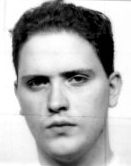 Delk was convicted and sentenced to death for the murder of Gene “Bubba” Allen of Anderson County in East Texas. Although the state of Texas maintained that Delk was “malingering,” i.e., pretending to be mentally ill to stave off execution, the prison system’s former chief mental health officer stated that Delk suffered from a severe mental illness, one that had become progressive in nature since it was first noticed in 1989 –- years after Delk was tried and convicted.
  Less renowned to posterity than the unidentified British contemporary to whom his nickname alluded,


