1997: Pedro Medina, en flambe

The electric chair has gotten a bad rap in recent years, and nowhere is this more evident than in the 1997 Florida execution of Cuban refugee Pedro Medina.

The improper application of an electricity-conducting sponge caused a “crown of foot-high flames” to shoot from Medina’s head, in a botched execution that caused Florida to reexamine its use of the electric chair and accelerated the trend towards lethal injection as the preferred method of execution — modern, sanitary and humane. But electrocution was once preferred for just those very reasons — well, that, and politics.

The thought of designing an apparatus to stimulate death by electrocution first came to dentist Dr. Albert Southwick in 1881, who watched an drunk man touch the terminal of an electricity generator in Buffalo, New York. Impressed at how quickly and painlessly the man died, he mentioned the incident to his friend, a state senator, who promptly brought the matter to the attention of the governor. The state legislature was then asked to consider how modern day electricity might emerge as an alternative to the often grisly process of hanging, in which incompetent executioners often inadvertently subjected prisoners to slow deaths by strangulation or decapitation.

Several years later, an inventor by the name of Harold Brown, an employee of the famous Thomas Edison, designed the first electric chair, deliberately adopting the Alternating Current (AC) form of electricity because Edison did not want his Direct Current (DC) form associated with the gruesome business of death — a sordid chapter in the history of public relations. The first execution was carried out in New York State in 1890, but the novel method was far from foolproof: it took two attempts, and the inmate was reported to have gone down in the same sort of smoke, flames, and smell of Medina’s over a hundred years later.

Still, the method caught on, and over the course of the 20th century, the electric chair became an indelible symbol of the death penalty in the nation’s consciousness.

“The chair” didn’t begin to decline until the mid-1980s, when newspaper accounts about botched executions, together with the emerging technology of lethal injection, again prompted some states to reexamine their death penalty statues.

It was around this time that Pedro Medina first came to the US from Cuba, part of the Mariel boat lift of 1980, in which Fidel Castro “permitted” some 125,000 Cuban prisoners and mentally ill to depart from the Mariel harbor for the fertile shores of America. (Medina himself had been released from a psychiatric hospital in Cuba and diagnosed with illnesses including paranoid schizophrenia and major depressive disorder with psychosis.) The boatlift polarized public sentiment in the United States.

These factors combined to lend Medina, a black man, a low status indeed in the eyes of prosecutors and jurors when, two years after his arrival on American shores, he was convicted of murdering his neighbor, Dorothy James.

Medina was executed in Albert Southwick’s brainchild 15 years later, despite pleas from James’ daughter, Lindi James, who said that she did not believe Medina had killed her mother and that her mother would not have wanted him executed regardless, and from Pope John Paul II, who also made a public call for mercy on Medina’s behalf. Medina’s lawyers also filed a petition claiming he was insane and thus incompetent to be executed, but the Florida Supreme Court ruled that, while he had mental problems, he could still be executed.

Early in the morning on March 25, 1997, Medina went out in flames.

A crown of foot-high flames shot from the headpiece during the execution, filling the execution chamber with a stench of thick smoke and gagging the two dozen official witnesses. An official then threw a switch to manually cut off the power and prematurely end the two-minute cycle of 2,000 volts. Medina’s chest continued to heave until the flames stopped and death came. (From the Death Penalty Information Center’s botched executions page.)

The source of the malfunction was not immediately apparent; prison officials claimed the fire had been caused by a corroded copper screen in the electric chair’s headpiece, but later investigation revealed that it was due to improper application of an electricity-conducting sponge to Medina’s head. Attorney General Bob Butterworth hailed the deterrent value of malfunctions: “People who wish to commit murder, they better not do it in the state of Florida, because we may have a problem with our electric chair.”

Others, including the warden conducting the execution, were not as sanguine.

The debacle of Medina’s execution caused a media sensation and led to a case by another Florida death row inmate, Thomas Provenzano, claiming that lethal injection constituted cruel and unusual punishment prohibited under the Eighth Amendment.

Provenzano lost his case, but with the release of bloody photographs of the 1999 execution of Allen Lee Davis, more states began moving against the use of the electric chair. Of the six states that today retain it (Virginia, South Carolina, Kentucky, Tennessee, Alabama and, yes, Florida), none currently use it as their only method of execution.

Rather, lethal injection has become the norm.

But for how long? There may be no AC/DC marketing gambit in the new, modern business of death, and no crown of flames. But maybe all we’ve really done by moving to the needle is render invisible ongoing Medina-like botches.

On this day..

1945: Private Eddie Slovik, the last American shot for desertion

On January 31, 1945, Private Edward Donald “Eddie” Slovik became a curious outlier of World War II: he was executed by firing squad by the U.S. Army for desertion. He is the only person to have been so punished for that crime since the Civil War.

Pvt Slovik was, by all accounts, quiet and helpful, by no means a coward, and more than willing to aid in the effort of World War II, traits which would have put him among a large class of that war’s veterans. Unfortunately, he was also immobilized by shelling. Equally unfortunately, he knew it, and he decided to do something about it.

Slovik and a friend, Pvt John F. Tankey, first separated from their detachment under artillery fire in late August 1944, shortly after being shipped to France. The pair hooked up with a Canadian unit and spent six weeks pitching in. Having recused themselves from the hard shelling others were experiencing on the front line, they opted to rejoin their regular U.S. unit: Slovik and Tankey sent a letter to their commanding officer explaining their absence and returned on Oct. 7.

But the front lines were not a place for Pvt Slovik.

After his assignment to the rifle unit, which would face imminent danger during shelling, Slovik asked to be placed in the rear guard, indicating he was too scared to remain in front. His request was refused. He then reportedly asked whether leaving the unit again would be considered desertion, was told it would be, and opted for the seemingly safer route of, well, deserting. One day later, Slovik was back at a U.S. camp, this time turning himself in to the camp cook. He had drafted a letter explaining his actions and indicating that he knowingly deserted, permanently recording his guilt on paper.

It’s not clear whether Pvt Slovik was acting on principles or out of an understanding of the U.S. military judicial system. He was by no means the only soldier without affinity for the conditions of war, particularly on the allied side. During the war, thousands of soldiers were tried and convicted in military courts for desertion, but up to then, all had received only time in the brig. What is clear is that Slovik was repeatedly offered opportunities to return to the line, and he equally repeatedly refused.

The case was adjudicated on Nov 11 by nine staff officers of the 28th Division, none of whom had yet been in battle. One of those judges, Benedict B. Kimmelman, wrote a stark and intriguing account of his role in the story of Pvt Slovik, capturing the scene thusly:

Five witnesses were heard. The cross-examinations were perfunctory. The defense made no closing argument. The court recessed for ten minutes, resumed, and retired almost immediately afterward. Three ballots were taken in closed court, the verdicts unanimously guilty on all counts. In open court once more, the president announced the verdict and the sentence: to be dishonorably discharged, to forfeit all pay and allowances due, and to be shot to death with musketry. The trial had begun at 10:00 A.M.; it was over at 11:40 A.M.

As with all court martial cases, Slovik’s was sent to a judge advocate for review. His criminal record, including everything from destruction of property to public intoxication to embezzlement, did not endear him to the reviewer. More importantly, though, the advocate felt Slovik could be made an example:

He has directly challenged the authority of the government, and future discipline depends upon a resolute reply to this challenge. If the death penalty is ever to be imposed for desertion, it should be imposed in this case, not as a punitive measure nor as retribution, but to maintain that discipline upon which alone an army can succeed against the enemy.

Strangely, Pvt Slovik was the only person who would be exemplified this way.

Though the military tried 21,000 desertion cases and passed down 49 death sentences for desertion during the war, it carried out only Slovik’s. And in the war’s final battles, with Germany collapsing, his execution seemed like a surreal throwback. As Kimmelman notes, hundreds if not thousands of soldiers were strictly guilty of dereliction of duty and desertion in the waning days of 1944.

They’re not shooting me for deserting the United Stated Army — thousands of guys have done that. They’re shooting me for bread I stole when I was 12 years old. (Source)

Three weeks after his conviction and three weeks before the Battle of the Bulge, Slovik’s execution order was confirmed by the 28th Division’s commander, Major General Norman “Dutch” Cota. Cota was disturbed by Slovik’s forthrightness in confessing to the desertion, and, as a front line commander who had sustained severe casualty rates in the Battle of Hurtgen Forest, had no sympathy for the crime.

After an appeal to the deaf ears of Dwight Eisenhower shortly before the sentence was to be carried out, Slovik was out of options. He was taken to the courtyard of an estate near the village of Sainte-Marie-aux-Mines and shot by 11 Army marksmen* at 10 a.m. By 10:04, as they were reloading, he was declared dead. His body was interred at a French cemetery, and after decades of lobbying the U.S. government, his remains were returned to Michigan in 1987.

Because he was dishonorably discharged, Slovik was not entitled to a pension, and his wife, Antoinette, stopped receiving payments. Curiously, though the Army managed to communicate this to her, they omitted the bit about the execution. She found out in 1953 from William Bradford Huie.

Huie was a journalist who took immediate interest in Slovik’s story, popularizing it with his book The Execution of Private Slovik, which was released in 1954. Twenty years later, the book and title were requisitioned for a well-received TV movie starring Martin Sheen.

Perhaps more interesting than this film was its never-produced predecessor, which is entitled to a place in the history of the Hollywood Blacklist. Frank Sinatra acquired rights to The Execution of Private Slovik and in 1960 announced that he would produce it as his directorial debut — with the script of this inherently political story to be written by “Hollywood Ten” blacklistee Albert Maltz. Maltz and other blackballed writers had continued working pseudonymously during the anti-Communist blacklist, but Sinatra’s openly announcing an intent to hire and credit Maltz constituted a significant crack in the wall — even though commercial and political heat eventually forced Sinatra to abandon the project. This event has treatment in a recommended episode of the magnificent cinema-history podcast You Must Remember This.

* The firing squad included 12 marksmen, but one was given a blank. Despite their skill, the 11 remaining shooters did not manage to kill him instantaneously.

On this day..

1953: Derek Bentley, controversially

On this date in 1953, Derek William Bentley was hanged by Albert Pierrepoint in London’s Wandsworth Prison for a murder committed by a friend.

The execution of the mentally impaired 19-year-old was a lightning rod when it was pronounced the previous December and remained so over a half-century struggle for his posthumous pardon.

He had been caught robbing a warehouse with an underage friend in November 1952, and in the gunfight that ensued, a police officer was shot — 15 minutes after Bentley was arrested.

In a welter of confusing evidence, the essential fact was that the two youths had engaged a criminal enterprise and thus became jointly liable for every consequence of the crime, regardless of who pulled the trigger. Nevertheless, it rankled as a manifest injustice that the young man should hang for a murder that happened after he was in custody, while the triggerman should not. There was a sense that Bentley faced a maximal punishment in the state’s frustration that the shooter was too young to hang; and, that since the two boys’ ages were barely on either side of 18 and the 17-year-old Christopher Craig arguably the dominant member of the duo, the effect was a great injustice.

The jury’s recommendation for mercy was not taken up, and Home Secretary David Maxwell Fyfe — a Nuremberg prosecutor fresh from crafting the European Convention on Human Rights — declined to extend a reprieve.

This morning’s hanging was hotly protested. Several hundred rallied outside the prison; 200 MPs presented a petition for Bentley’s clemency, and afterwards several were rebuffed attempting to debate the hanging in Parliament. The medical journal Lancet assayed the general disquietude at the situation and opined that

[W]e are obliged to ask ourselves whether in holding to the letter of justice we are letting the spirit escape … To the English, at any rate, revenge is seldom a fully satisfying experience; it carries too much guilt with it. In the case of Bentley the public sense of guilt seems to have been strong — far stronger than the desire for vengeance.*

Bentley’s 21-year-old sister Iris vowed to her brother the night before his death that she would clear his name, and she fought for the rest of her life to do so. She would win that fight in 1998 (one year after her own death) when the conviction was overturned.

In the meantime, Bentley’s fate entered the public conscience, generally but not universally in the capacity of miscarriage of justice.

Bentley is the subject of an Elvis Costello song, “Let Him Dangle”:

… and a 1991 film:

* Lancet also said that “in our view the perpetual public preoccupation with the condemned cell and the gallows is harmful to the mental health of society.” Executed Today does not endorse this position.

On this day..

2001: Larry Keith Robison

(Thanks to Kristin Houlé of the Texas Coalition to Abolish the Death Penalty for the guest post, adapted from her Mental Illness and the Death Penalty Resource Guide (pdf link). Kristin blogs at Prevention Not Punishment. -ed.)

A mentally ill man who had been refused treatment because his condition had not yet turned him violent suffered lethal injection in Texas eight years ago today for finally turning violent.

Larry Robison was diagnosed with paranoid schizophrenia at the age of 21, three years before the murders for which he was sentenced to die. He began hearing voices and acting strangely as a teenager, claiming to have secret paranormal mental powers and the ability to read people’s minds and move objects from a distance. He joined the Army but was discharged after only a year.
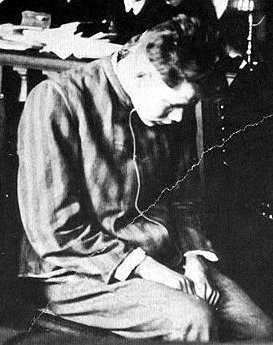
Robison’s parents sought help and warned mental health authorities of their son’s erratic and increasingly aggressive behavior, but were told that the state could offer no resources unless he turned violent. He was shuffled in and out of mental hospitals, admitted after aggressive behavior and released after a period of medicated passivity. He received no regular, ongoing treatment. Robison was not covered by his parents’ insurance, nor did he have his own.

Robison claimed that voices in his head, which came through the clocks in his room, spewed out warnings about Old Testament prophecies of the Apocalypse and told him to murder, behead, and mutilate his roommate, Bruce Gardner. Robison then went next door and murdered four of his neighbors. When authorities arrested him, he told them that he had committed the murders in order to “find God.”

The four prosecutors developing the case against Larry Robison recognized his past history of mental illness and were willing to accept an insanity plea in exchange for life in a mental institution. The Tarrant County district attorney overruled them, however, and ordered them to seek a death sentence. In the courtroom, most evidence of Robison’s mental illness was ruled inadmissible, so the jury heard little of it. None of the three doctors who had diagnosed Robison before the crime as suffering from paranoid schizophrenia were called to testify at his trial. The jury rejected his plea of not guilty by reason of insanity.

Once in prison, evidence of Robison’s mental illness continued to accumulate. The Texas Court of Criminal Appeals stayed his execution at one point, doubtful as to whether or not he was competent to be executed. When asked what the execution would be like, Robison replied that he felt like “a little kid at Christmas time waiting for Santa Claus to come.” Eventually, he demanded that his lawyers cease filing appeals based on his mental illness, but only if the state agreed to execute him on the night of a full moon. Despite protests from mental health organizations and concerned citizens throughout the world, the state complied.

Larry Robison’s case drew attention largely as a result of the tireless efforts of his own family, taking a public profile unusual for the family of the condemned. CBS News’ 48 Hours profiled the Robisons shortly before Larry’s execution. They continue to maintain a website, larryrobison.org; mother Lois Robison remains a vocal critic of executing the mentally ill, and delivered this address to a Murder Victims’ Families for Human Rights conference last fall.

On this day..

1934: Marinus van der Lubbe, for the Reichstag fire

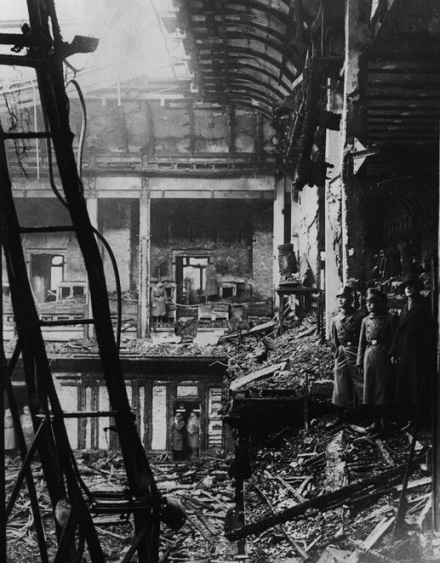
On this date in 1934, Dutch bricklayer Marinus van der Lubbe was beheaded by guillotine in Leipzig for setting the Reichstag Fire.

A watershed event* in the formation of the Nazi dictatorship, the Reichstag fire days before a parliamentary election enabled Hitler to stampede voters, suspend civil liberties, suppress left-wing parties on grounds of a suspected Communist plot, and seize “emergency” powers he would never relinquish.

Heil Hitler.

This clip from an American miniseries on Hitler with the characters chattering in unaccented English portrays the fascists’ opportunistic use of the attack on a national symbol … something not exactly unknown to later generations.

Van der Lubbe, who was arrested on the scene, suffered the predictable fate. Four other Communists charged as accomplices were acquitted, in a trial with the gratifying spectacle of Hermann Goering personally testifying, and being undressed on cross-examination by one of the reds. One is reminded here that Hitler did not yet have everything in the state apparatus at his beck and call … although he did have a great deal already, inasmuch as the arson law under which van der Lubbe died was passed after the Reichstag fire and made retroactive.

If the big-picture outcome of the Reichstag fire is pretty clear-cut, its real origin and the corresponding rightness of the judicial verdicts have remained murky ever since. The fact that the scene of the crime became Nazi ground zero for the next decade sort of obscures the evidence.

Van der Lubbe confessed, so his participation is generally taken as a given.

Whether he was really able to start the blaze acting alone, as he insisted, and the Nazis “only” exploited this fortuitous calamity; whether he was part of a larger leftist plot, as his prosecutors claimed; or whether, as Shirer and many others since have viewed him, he was a patsy in a false flag operation set up by the Nazis with an eye towards creating a politically advantageous national emergency — these possibilities remain very much up for debate.

For what it’s worth, postwar West German courts reversed and un-reversed the sentence before officially rehabilitating van der Lubbe last year on the non-specifically indisputable grounds that the legal machinery brought to bear on the Reichstag fire “enabled breaches of basic conceptions of justice.”

* From Defying Hitler: A Memoir by a writer who would soon emigrate:

I do not see that one can blame the majority of Germans who, in 1933, believed that the Reichstag fire was the work of the Communists. What one can blame them for, and what shows their terrible collective weakness of character … is that this settled the matter. With sheepish submissiveness, the German people accepted that, as a result of the fire, each one of them lost what little personal freedom and dignity was guaranteed by the constitution, as though it followed as a necessary consequence. If the Communists had burned down the Reichstag, it was perfectly in order that the government took “decisive measures”!

Next morning I discussed these matters with a few other Referendars. All of them were very interested in the question of who had committed the crime, and more than one of them hinted that they had doubts about the official version; but none of them saw anything out of the ordinary in the fact that, from now on, one’s telephone would be tapped, one’s letters opened, and one’s desk might be broken into. “I consider it a personal insult,” I said, “that I should be prevented from reading whichever newspaper I wish, because allegedly a Communist set light to the Reichstag. Don’t you?” One of them cheerfully and harmlessly said, “No. Why should I? Did you read Forwards and The Red Flag up to now?”

On this day..

1786: Hannah Ocuish, age 12

(Thanks to Caitlin at Vast Public Indifference for the guest post -ed.)

On December 20, 1786, the Sheriff of New London, Conn., led a distraught 12-year-old girl to the gallows, placed a rope around her neck, and hanged her in front of a crowd of spectators. The girl was Hannah Ocuish, a young member of the Pequot nation. She was charged with the murder of six-year-old Eunice Bolles, a white girl with whom Hannah had quarreled the previous summer.

While it is difficult to get a clear picture of Hannah’s life from the available sources, it is clear that hers was not a comfortable existence. An appendix to Rev. Henry Channing’s execution sermon notes that Hannah’s mother was “an abandoned creature, much addicted to the vice of drunkenness,” who sent Hannah to work as a servant in a white family’s home. At the age of six, Hannah was accused of beating a white child while trying to steal her necklace. The anonymous author describes Hannah’s character thus:

Her conduct, as appeared in evidence before the honorable Superior Court was marked with almost every thing bad. Theft and lying were her common vices. To these were added a maliciousness of disposition which made the children in the neighborhood much afraid of her. She had a degree of artful cunning and sagacity beyond many of her years.

This description, expressed in terms designed to emphasize the importance of training children in obedience, may or may not be accurate. Regardless, all evidence suggests that Hannah was alone in a hostile world.

On July 21, 1786, someone found Eunice Bolles’ body at the side of the road outside Norwich, Conn. The corpse displayed signs of extreme trauma: “the head and body were mangled in a shocking manner, the back and one arm broken, and a number of heavy stones placed on the body, arms and legs.” Investigators questioned Hannah, who initially denied any involvement, but mentioned that she had seen a group of boys on the road earlier. The town officials did not believe her. On July 22, “she was closely questioned, but repeatedly denied that she was guilty.” Still unconvinced, the investigators “carried [Hannah] to the house where the body lay, and being charged with the crime, burst into tears and confessed that she killed her, saying if she could be forgiven she would never do so again.”

Hannah’s confession, which was accepted as truth by the court, indicated that she had sought revenge on Eunice because the younger girl had “complained of her in strawberry time … for taking away her strawberries.” When Hannah saw Eunice walking to school alone, she beat and choked her, covering the body with rocks “to make people think that the wall fell upon her and killed her.”

Rev. Henry Channing, a talented local minister, visited Hannah in prison many times, urging her to repent so that her soul might be spared. On the day of her execution, he delivered a thundering sermon entitled, God Admonishing His People of Their Duty as Parents and Masters, which held Hannah up as an example of what could happen if parents did not raise their children to be “dutiful and obedient.”

Her crimes, he argued, were the “natural consequences of too great parental indulgence,” and warned that “appetites and passions unrestrained in childhood become furious in youth; and ensure dishonour, disease and an untimely death.” In the portion of the sermon directed at Hannah herself, Channing did his best to scare her into repentance:

HANNAH! — prisoner at the bar– agreeably to the laws of the land you have arraigned, tried and convicted of the crime of murder … The good and safety of society requires, that no one, of such a malignant character, shall be suffered to live, and the punishment of death is but the just demerit of your crime: and the sparing you on account of your age, would, as the law says, be of dangerous consequence to the publick, by holding up an idea, that children might commit such atrocious crimes with impunity … And you must consider that after death you must undergo another trial, infinitely more solemn and awful than what you have here passed through, before that God against whom you offended; at whose bar the deceased child will appear as a swift witness against you — And you will be condemned and consigned to an everlasting punishment, unless you now obtain a pardon, by confessing and sincerely repenting of your sins, and applying to his sovereign grace, through the merits of his Son, Jesus Christ, for mercy, who is able and willing to save the greatest offenders, who repent and believe in him.

At her trial in October, Hannah “appeared entirely unconcerned,” but as the date of her execution approached, she began to show fear. In early December, visitors began to ask her how long she had to live, and Hannah “would tell the Number of her Days with manifest Agitation.” On December 19th, she “appeared in great Distress . . . and continued in Tears most of the Day, and until her Execution.” Witnesses to her execution reported that Hannah “seemed greatly afraid when at the Gallows.” With her last words, she “thanked the Sheriff for his kindness, and launched into the eternal World.”

In the United States, the youngest children put to death by the government have all be children of color. James Arcene, a Cherokee boy, was only 10 or 11 years old when he was hanged for committed a robbery and murder that resulted in his 1885 hanging in Arkansas.* At 12, Hannah Ocuish was the youngest female offender executed by any state. In the 20th century, the youngest children executed were both African-American: 13-year-old Fortune Ferguson of Florida (1927) and 14-year-old George Stinney of South Carolina (1944).

In 2005, the United States Supreme Court abolished the death penalty for criminals who committed their crimes as juveniles (Roper v. Simmons). The court split 5-4, with Jutices Scalia, O’Connor, Thomas, and Chief Justice Rehnquist dissenting. In his dissent, Justice Scalia excoriated the majority for considering international consensus (along with the laws of 30 of the 50 U.S. states) on the cruelty of executing children under the age of 18 when determining the standard for “cruel and unusual.” Justice Scalia, an avowed proponent of Constitutional originalism, proclaimed, “I do not believe that the meaning of our Eighth Amendment, any more than the meaning of other provisions of our Constitution, should be determined by the subjective views of five Members of this Court and like-minded foreigners.”

* This post originally asserted that Arcene was a juvenile when hanged. In fact, he was (or claimed to have been) 10 years old or so at the time he committed the crime, but was not tried and hanged until over a decade later. (This is corrected in the Arcene post.) -ed.

On this day..

1638: The melancholy Dorothy Talby

On this date in 1638, Dorothy Talby was hanged in Boston for breaking the neck of her baby daughter (aptly named “Difficulty”) “in order to save the child from future misery.”

Though not the first execution of a woman in the territory of the future United States, it is the first that is reasonably well-documented … and for a disturbed, possibly insane, woman striking out against her troubled family life, a case that resonated for later Americans like Nathaniel Hawthorne and Oliver Wendell Holmes.

For those of us, post-Andrea Yates, for whom “post-partum depression” has become a sadly familiar term of criminology, it is likely to resonate as well.

Mrs. Talby was esteemed for godliness, etc., but after the birth of the child she became melancholy and possessed of delusions. She sometimes tried to kill herself and her husband by refusing to eat “meat” and not permitting them to eat it, saying it had been so revealed to her. (Source)

Take a break from the Headsman’s noodlings and instead enjoy the thoughtful treatment given Talby’s case by crime blogger extraordinaire Laura James.

On this day..

2007: Not Earl Wesley Berry … for the time being

Minutes before he was to die this day last year, the lethal injection of Mississippi murderer Earl Wesley Berry was stayed by the Supreme Court — the signal that it had imposed a de facto moratorium on executions while it considered the constitutionality of lethal injection.

Condemned to die for kidnapping and beating to death Mary Bounds in 1987, Berry was your basic unappealing death row case with no particular issue either substantive or technical likely to help him out in the courts.

Luckily for Berry, the fundamental issue of whether whether the lethal injection regime used in Mississippi and in most of the United States was cruel and unusual punishment had reached the high court at just time time.

Also luckily, the phone lines were open: Berry got his reprieve with about 15 or 20 minutes to spare.

Berry’s stay finally clarified a few weeks of uncertainty that prevailed after the Court took last year’s lethal injection challenge, Baze v. Rees.

Could executions still go forward while lethal injection was under review? Would the holdup be limited to Kentucky, where the appeal originated? Was there any manner of case-by-case flexibility?

Berry was the bellwether. The execution-friendly Fifth Circuit Court let Berry’s scheduled date go ahead, making the hapless killer “the last best chance for prosecutors to restart executions this year [2007].”

But Earl Wesley Berry’s luck was only about seven months long: he was executed on May 21, 2008, the second prisoner put to death after the moratorium expired upon the Court’s rejection of Baze.

On this day..

1622: Anne de Chantraine, young witch

On this date in 1622, Anne de Chantraine was burned at the stake for witchcraft in Waret-la-Chaussee, Belgium.

Our day’s heroine answers most prominently to fictional modern interpretations — about which more in a moment — but Anne de Chantraine was a flesh-and-blood person, at least for 17 years.*

In outline form, Anne is said to have faced the usual litany of sorcerous allegations and the usual ordeals to demonstrate guilt, with the usual result: confession, execution. Here in the opening years of the Thirty Years’ War coeval with the the conflicts of the Protestant Reformation, one cannot but suspect the fearful hand of endangered authority in witch-hunts. Historian Hugh Trevor-Roper argued that

this recrudescence of the witch-craze in the 1560s was directly connected with the return of religious war … It can be shown from geography: every major outbreak is in the frontier-area where religious strife is not intellectual, a dissent of opinion, but social, the dissidence of a society. … Thereafter, almost every local outbreak can be related to the aggression of one religion upon the other.

Anne de Chantraine’s environs fit the theorem.

The Walloon region of Liege at this point was governed by a Catholic Prince-Bishop of Habsburg stock, just as the Holy Roman Empire was putting down the Protestant stirrings in Bohemia that would initiate Europe’s epochal war and send armies to and fro through the Low Countries. Said Prince-Bishop, name of Ferdinand of Bavaria, would win renown as a zealous persecutor of the diabolical in his realms.

Alas for Anne.

She’s a bit better documented among Francophones (see this biography in French, for instance, full of sensual details like the gorgeous red hair, a spurned lover accusing her, and the rough play of medieval torture; there’s also a brief roundup in German here), but worldwide, she’s a literary character of some consequence — most notably, perhaps, through the work of Belgian author Francoise Mallet-Joris: her 1968 Trois âges de la nuit (translated to English as simply The Witches) presents Anne de Chantraine as the focal point of one of three vignettes reimagining real historical “witches” as persons struggling for spiritual growth.

Anne, in this version, does participate in (staged, not-really-supernatural) witches’ sabbaths, plus a lesbian affair with a fellow participant. Her seekings both godly and infernal (paralleled by lifestyles both monastic and hedonistic) fall short of satisfactory; in the end, exercising magic unto her own death is a form of self-actualization among fellow people who, unable to recognize her humanity, brutalize or ignore her.

Players of the long-running video board game Atmosfear (or Nightmare) will also recognize Anne de Chantraine as a recurring witch character. The series uses recordings (VCR tapes originally; DVDs now) played during gameplay; “the witch” is featured as the central character in Atmosfear III/Nightmare III:

(In the comment thread for this video on YouTube, the French actress Frederique Fouche drops in to confirm her part as the witch. According to this French interview, the role caused her to become an emigre in Australia.)

* Some reports say she was burned at age 17, others that she was arrested at 17, which would have made her 18 or 19 at her death.

Part of the Themed Set: Belles Epoque.

On this day..

2004: Mamoru Takuma, for the Osaka school massacre

On this date in 2004, Mamoru Takuma was hanged for one of the most notorious crimes in modern Japan — the Osaka school massacre.

On June 8, 2001 — a day the 11-time arrestee was due in court for assaulting a bellhop — Mamoru Takuma (English Wikipedia entry | Japanese) entered the Ikeda Elementary School in Osaka and knifed 20-plus people, killing eight young students.

Even when taking on 7- and 8-year-old children, that’s an astonishing body count for a guy packing only a blade. Some staff at the school finally tackled the guy.

“I want others to know the unreasonableness that high-achieving children could be killed at any time.”

Takuma had been institutionalized even more often than he had been arrested, so the shocking crime pitted public outrage against the judiciary’s capacity for handling mentally ill offenders.

Guess which won out. In the wake of the crime, in fact, the government toughened laws on crimes committed by mentally ill offenders.

Takuma was hanged barely three years after the attacks, and even though he pushed for his own execution, the lightning-fast completion of the sentence (most death penalty cases in Japan drag on for decades — here’s an extreme example) raised misgivings both domestic and international.

Though his case remains an outlier, those concerns already seem a bit passe: Takuma also turned out to presage the distinctly more aggressive pace of executions in Japan in recent years.

On this day..