2009: Four Tibetans

On this date in 2009, China executed four Tibetans widely considered political prisoners.

The previous year, widespread unrest over Chinese control had shaken the country, most notably riots in the capital, Lhasa that targeted Chinese persons and shops.

(There’s a BBC page preserving a good deal of the original coverage here.)

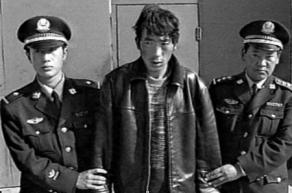
Loyak, one of those executed Oct. 20, 2009.

The two most prominent prisoners — in fact, the only two confirmed in some of the first media reports — were Lhasa residents Lobsang Gyaltsen and Loyak. A court spokesperson said both had been “given death penalties had committed extremely serious crimes and have to be executed to assuage the people’s anger.”

Specifically, both had been convicted of torching shops during the Lhasa riots, which arsons both led to deaths.

The other two executed, a woman named Penki (also for arson) and an unnamed man, received less comment, although they might have been executed despite having been condemned only to a “suspended” death sentence, which for China is generally no death sentence at all.

Executions in Tibet turn out to be relatively rare; these were the first known Tibetan executions since early 2003. Widely condemned abroad, this date’s events were barely or not at all reported internally by Chinese state media.

Part of the Themed Set: Illegitimate Power.

On this day..

1985: Benjamin Moloise, revolutionary poet

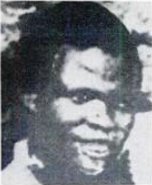
On this date in 1985, poet Benjamin Moloise was hanged in Pretoria for murdering a (black) policeman in apartheid South Africa.

Moloise’s controversial execution occurred in the context of violent resistance to apartheid in South Africa’s black townships and an ultimately fatal crisis for the apartheid state.

The black majority, long treated as second-class citizens by the white powers-that-be, turned to increasingly confrontational tactics aiming to break official power at the township level. Attacks on black officials and police officers who administered state authority at that level were part and parcel.

Moloise was convicted in a plot to kill such an officer in 1983. (The African National Congress claimed responsibility for the killing, and said that Moloise wasn’t involved.)

His hanging approached as the township rising grew into a mass movement that the hardline government of P.W. Botha answered mostly with force* — so, little surprise that Botha spurned both American and Soviet entreaties not to hang Moloise and little surprise that the execution further escalated racial violence.

Furious black protesters rioted in downtown Johannesburg itself, which (like much of white South Africa) had theretofore remained mostly immune to the violence gripping the townships. Here’s a French news report on Moloise’s execution and its aftermath.

All of which dovetailed with a dramatic fall in South Africa’s international position, vividly symbolized by the months-long collapse of the rand — which bled about three-quarters of its value in 1985. International outrage at the blood shed to enforce South Africa’s color line subjected it to a cascade of diplomatic and economic sanctions in the mid-1980s.

Apartheid went out with the Cold War at the end of the decade — vindicating Moloise’s poetic final message, subsequently a staple message at anti-apartheid rallies.

I am proud to be what I am …
The storm of oppression will be followed
By the rain of my blood

I am proud to give my life

My one solitary life.

* It had implemented a state of emergency that very summer. At the same time, Botha pursued tweaks around the edges of apartheid to preserve it: weeding out “petty apartheid” provocations like whites-only/coloreds-only facilities, and implementing a new constitution with a tricameral, race-based parliament.

Part of the Themed Set: Illegitimate Power.

On this day..

1859: Danford Balch, inadvertent PDX benefactor

On this date in 1859, five to six hundred folks braved a dreary Portland morning to witness the first execution in the state of Oregon — Oregon having graduated into statehood just that very year, as it says on the flag.

Danford Balch, who would surely merit an entry in these pages for his name alone, had staked out a 345-acre land claim near the small settlement of Portland, but all that money couldn’t buy his daughter’s love.

Anna, the eldest of nine kids at a blossoming 15, was amenable to a suit by the farmhand, one Mortimer Stump — this is a Dickensian roster of characters — and in the face of Papa Balch’s opposition, eloped with him over the Columbia River to Vancouver, Wash.

So Danford Balch stewed, and drank, and was allegedly incited by his shrewish wife Mary Jane — this one has an ironically innocent moniker — until, encountering the Stumps in town for supplies one day, Danford Balch tried to retrieve his daughter and ended up shotgunning his unwanted son-in-law, right in the face.

Ka-blamo.

Bystanders tackled Balch immediately, though it took nine more months to bring the killer to trial: in these sparsely-populated frontier precincts justice was being administered on the old “assize” model of wandering judges who dropped in for a spell to try everything at one go. It was enough time for Balch to bust out of a rain-rotted jail cell once and get recaptured (once on the lam, he returned to his own home).

When court was finally in session, conviction was a mere formality. He’d done the deed in public, after all. But the offended father seemed genuinely bewildered by the outcome: apart from the shooting being accidental (so he said), he clearly expected that a court would uphold the dominion of the family patriarch over his wayward progeny.

Heaven knows what fumes he was fuming by the time he climbed the scaffold and beheld that naughty daughter Anna turned up to witness his hanging — sitting in the front row with the [rest of the] Stump family in what you have to think was a somewhat uncomfortable party for all concerned.

Little more affectionate was the post-mortem behavior of the allegedly un-alienated part of the Balch clan.

That widow Mary Jane, whom Danford hinted gave him quite a goading over their wanton daughter, shafted the remaining rugrats out of inheriting their chunks of the family land and instead routed most of it to her next husand.

Balch Creek in Lower Macleay State Park. (cc) image from Brad Reber.

Though pretty difficult to admire by the yardstick of human decency, that behavior turned out to be Danford Balch’s redeeming legacy.

Having passed through several hands, the lion’s share of his former land was in 1897 donated to the city by its then-owner Donald Macleay, who was sick of paying taxes on the unprofitable parcel. That was the time the famously green PDX received its first land gift designated by the donor for parkland: Macleay Park. (Including a Balch Creek.)

Today, it’s all part of the larger Forest Park, and it’s a lovely hiking space for a city that grooves on its outdoor rec … complete with a gorgeously ruined Depression-era stone ranger station that’s popularly believed to be haunted, maybe by the spirit of poor old Danford Balch himself.


The haunted house … (cc) image from Adam Gaumont.

There’s a Balchipedia for chronicling Balch family notables, so you know the first guy executed in Oregon is going to rate a mention.

On this day..

1964: Nguyen Van Troi, Viet Cong urban guerrilla

On this date in 1964, South Vietnam executed a 17-year-old Communist for a plot to assassinate American Secretary of Defense Robert McNamara.

The young electrical worker and Viet Cong urban guerrilla Nguyen Van Troi was nabbed in the spring of 1963 trying to off both McNamara, famous for the megatonnage he would bestow on Southeast Asia, and U.S. ambassador Henry Cabot Lodge, Jr.

(Later, when the South Vietnamese client president whose guests these men ostensibly were was being shot in an armored personnel carrier with the Americans’ blessing, Ngo Dinh Diem might have had cause to wish this youth’s inhospitable gesture had not been undone by his men. Lodge was a particularly vocal advocate in the Kennedy administration for overthrowing Diem.)

For the months leading up to his public shooting, he became an international cause celebre; North Vietnam would later milk his martyrdom with a postage stamp, an award, and numerous public streets.

The international reach of his case was underscored when a Venezuelan revolutionary cell kidnapped an American officer shortly before Troi’s execution, and threatened to shoot him in retaliation. (They didn’t.)

Against this, South Vietnam counterposed the unedifying spectacle of a 17-year-old patriot put to death, energetically declaiming at the stake while cameras rolled,

It is the Americans who have committed aggression on our country, it is they who have been killing our people with planes and bombs…. I have never acted against the will of my people. It is against the Americans that I have taken action.

Naturally, he became a worldwide leftist martyr. There’s an Estadio Nguyen Van Troi in Cuba; American actor Troy Garity, son of Jane Fonda from her “Hanoi Jane” days, is also named for Nguyen Van Troi.

Robert McNamara, meanwhile, had many, many years yet to live, and many, many more Vietnamese deaths to burden his conscience.Troi’s widow wrote a 1965 book about him, out of print but still available on the used book market.

On this day..

1878: Bill Longley, gunslinger

On this date in 1878, “gunfighter” Bill Longley was hanged for murder in Giddings, Texas.

This flim-flam man was an anti-hero of the Wild West, a near-exact caricature of everything disreputable about his milieu. Remorselessly homicidal, virulently racist, and pathologically unfaithful to any bond of honor or friendship: “an idle boaster, a notorious liar and a man of low instinct and habits,” in the estimation of an officer of the army cavalry regiment from which Longley deserted.

And he was a relentless self-promoter pleased to exaggerate both the quantity and the valor of his sixguns’ conquests.

Longley’s end at the end of a rope — for murdering his childhood friend in solidarity with some uncle’s ill-founded grudge — makes a fittingly puerile end to a repulsive career, and not least because Longley’s family later circulated rumors* that Longley had connived with his executioners to escape the noose and been spirited away under a false name.

Recent DNA testing proved that story false, but most of the Longley mythos is regrettably forensic-proof.

The outlaw himself was his own Homer, perhaps consciously playing catch-up with the legendary bandits already afoot in the land.** It’s certainly the case that he was a wanted killer, and a renowned marksman. Upon these gifts, Longley spun preposterous tales of his exploits in 1860s-70s Texas: being shot out of a noose at an attempted lynching;† slaughtering men and women (particularly blacks: his favored prey) in bunches; riding with the Cullen Baker gang; killing people in fair fights and not for their money.

“His hot temper, his fondness for liquor, and unsettled conditions during reconstruction led him to become one of the most daring gunslingers of his day,” is how a Texas state grave marker reckons him, with a warmth the Lone Star State does not reserve for its present-day “daring gunslingers.” No doubt “unsettled conditions” have been involved in many of those crime sprees as well.

Anyway, such of Longley’s record that can be substantiated better resembles a string of ambushes and uncomplicated murders, perpetrated to start with against freedmen during Reconstruction (Longley’s first known killing was of an uppity former slave in 1867, during a highway stickup), and then almost willy-nilly for plunder, race hatred, or personal pique against defenseless targets misfortunate enough to cross his path. His most “romantic” exploit was over a love rivalry … not a Capulet-and-Montague affray, but the killer bursting in on the reverend father of the girl who frustrated his designs, and wasting him with a shotgun.‡ (His actual rival got off with a pistol-whipping.)

Longley’s last arrest in 1877 removed him from these pursuits long enough to burden the local Giddings Tribune (and anybody else who would listen) with a steady supply of letters trumpeting his ferocity … and as his fate became apparent, his eventual treacly and apparently sincere contrition. “My first step was disobedience; next whisky drinking; next, carrying pistols; next, gambling, and then murder, and I suppose the next step will be the gallows.” The classic fall and redemption story.

After an escape attempt and a foiled scheme to bribe the guards, Longley gamely took his redemption in a botched hanging that dropped him so far that his feet reached the ground. The executioners had to muscle the rope back up into the air and keep it there for 11 minutes to get him where he could choke to death.

There’s an excellent HistoryNet article describing “Bloody Bill” Longley’s times and crimes in great detail here. There’s a wee genealogy, including the interesting tidbit that Longley’s father helped bury the dead of Goliad, here.

* Apparent cause of the rumor: the mom couldn’t deal with Longley’s wicked character and dishonorable death, so the family deceived her, even forging letters from “Bill Longley”.

** Most particularly, John Wesley Hardin. Longley eagerly claimed responsibility for killings that might not even have happened, in an apparent attempt to top Hardin’s body count (27 or 28) with his own (allegedly, 32). Just prior to his execution, influenced by redemption or hope for clemency or whatever, Longley downgraded his career notch count to “only” eight.

† This most famous and fantastic of all Longley’s “exploits” seems to be sourced to nobody but Longley himself; notwithstanding that prima facie credibility deficit, it’s still retailed as fact on a number of online Longley bios.

‡ This last episode was among the crimes of Longley’s last three years’ liberty that might have been prevented had not the Lone Star State refused in 1874 to honor a reward posted on the outlaw by that carpetbaggers’ Reconstruction regime. Un-paid, Longley’s captors simply turned him loose instead. That’s federalism at its finest.

On this day..

1999: Chen Chin-hsing, Taiwan’s most notorious criminal

On this date in 1999, Taiwan put to death a man who, as the Reuters story about his case led it, “shook public confidence in law and government with the kidnap-murder of a TV celebrity’s daughter and a string of subsequent gun battles, killings, rapes and a hostage drama.”

Dramatic enough for you?

This operatic crime spree was the work of three men, Chen Chin-hsing, Lin Chun-sheng, and Kao Tien-min.

They punched their ticket to popular infamy when they snatched 16-year-old schoolgirl Pai Hsiao-yen in New Taipei City on April 14, 1997.

Her family received terrifying photos of the girl stripped naked and bound, a severed pinkie finger, and a demand for $5 million U.S. And they were in a position to get it, because Pai’s mother was celebrity singer and TV personality Pai Ping-ping. (Alternatively: Bai Bing-bing.)

However, despite multiple attempts to drop the ransom, the kidnappers kept not showing up, and the captive, who’d been brutalized and raped during her captivity, was eventually murdered and dumped in a drainage ditch.

Pai Hsiao-yen’s murder not only captivated media but crystallized public backlash against politicians and police who showed as ineffective in the midst of a massive crime wave. It helped cave in the government of Taiwan’s first democratically elected president.

The criminals themselves magnified the case by drawing out the initial public horror into a seven-month drama as they eluded police manhunts. At one point, they forced a plastic surgeon at gunpoint to alter their appearances, then murdered him after he was finished.

Chen Chin-hsing was finally captured (after the other two had judiciously committed suicide when about to be apprehended) after a televised standoff wherein Chen gave self-valorizing media interviews while holding a South African ambassador’s family hostage.

All this made Chen a dead man, and few in the Republic of China much pitied the serial rapist and spree killer’s fate of taking a magazine of automatic rifle ammunition in the chest. (Several others in this dreadful affair also got non-capital sentences for various forms of aiding and abetting.)

It also made Pai Ping-ping into a tough-on-crime social activist. Taiwan’s death penalty has been in the news recently with the government’s admission that it executed an innocent man in an unrelated case. Pai vehemently opposes the resulting abolition efforts that other case has helped along; in 2010, she helped to break a 52-month death penalty moratorium and force a resumption in executions when she threatened to commit suicide if Taiwan went through with abolition. That would be operatic indeed.

On this day..

1843: Allen Mair, irate

(Thanks to Meaghan Good of the Charley Project for the guest post. -ed.)

On this day in 1843, 84-year-old Allan Mair was hung in Stirling, Scotland.

He was condemned for the murder of his wife. Mair is notable not only for being the oldest person ever executed in Scotland, but also for his unusually long, bitter scaffold speech, as recorded in Alex Young’s book The Encyclopaedia of Scottish Executions 1750 to 1963.

The meenister o’ the paarish invented lees against me. Folks, yin an’ a, mind I’m nae murderer, and I say as a dyin’ man who is about to pass into the presence o’ his Goad. I was condemned by the lees o’ the meenister, by the injustice of the Sheriff and Fiscal, and perjury of the witnesses. I trust for their conduct that a’ thae parties shall be overta’en by the vengeance of Goad, and sent into everlasting damnation. I curse them with the curses in the Hunner an’ Ninth Psalm: “Set thou a wicked man o’er them” — an haud on thee, hangman, till I’m dune — “An’ let Satan stand at their richt haun. Let their days be few, let their children be faitherless, let their weans be continually vagabonds”; and I curse them a —

At this point, the executioner drew the bolt, but Allen wasn’t done raging against the dying of the light. The old fella got his hands free and grabbed the rope, delaying his strangulation; the slipshod executioner had to fight off his prey’s clutches to hang him.

There’s an original broadside from this execution here.

On this day..

1873: Kintpuash, aka Captain Jack

It’s fitting, we think, to wrap up our long series on Americana with an entry from that realm’s first nations.

It was on this date 1873 that the Modoc leader Kintpuash, known as Captain Jack, was hanged with three comrades by United States forces after the Modoc War.

Reading from a familiar script, the encroaching whites had squeezed Modocs off their ancestral land and onto a reservation — in fact, the reservation of another, rival tribe. Jack led his people off that uncomfortable lodgings, bidding to return home in 1865 — only to be rounded up and re-confined.

A second attempt to break out would result in his execution.

When an actual fight broke out at the inevitable surrender negotiation, outright skirmishing ensued as everyone reached for their guns.

Jack’s forces broke away, now with the U.S. Army in earnest pursuit. They fell back to the rough volcanic terrain at present-day Lava Beds National Monument in northern California — and specifically to a defensible natural fortification that now bears Captain Jack’s name.


Modoc firing position within Captain Jack’s Stronghold. (cc) image courtesy of Eric Hodel.

From Captain Jack’s Stronghold, the Modoc held off a larger army assault.

Dee Brown relates the tragedy of the fruitless monthslong aftermath, of “peace” negotiations under a gathering siege, in the classic Bury My Heart at Wounded Knee

[Indian Affairs superintendent Alfred] Meacham* replied that the Modocs could not stay in peace in the Lava Beds unless they gave up the men who committed the killings on Lost River …

“Who will try them?” Jack asked. “White men or Indians?”

“White men, of course,” Meacham admitted.

“Then will you give up the men who killed the Indian women and children on Lost River, to be tried by the Modocs?”

Meacham shook his head. “The Modoc law is dead; the white man’s law rules the country now; only one law lives at a time.”

“Will you try the men who fired on my people?” Jack continued. “By your own law?”

Meacham knew and Captain Jack knew that this could not be done. “The white man’s law rules the country,” the commissioner replied. “The Indian law is dead.”

You gotta look forward, not back.

In the Modoc camp, militants like Hooker Jim were gaining sway, and by disputing his leadership and even his manhood eventually persuaded/forced Captain Jack to ambush the U.S. general in charge during one of their interminable parleys.

Far from striking a decisive blow at the head of the enemy, this anathematized Captain Jack and triggered a massive, and this time successful, army incursion. Jack persisted on the run for a few months, but he was finally captured wih the help of Modoc turncoats — including that former radical Hooker Jim, who induced him to kill the general in the first place.

“You intend to buy your liberty and freedom by running me to earth and delivering me to the soldiers. You realize that life is sweet, but you did not think so when you forced me to promise that I would kill that man, [General] Canby … I thought we would stand side by side if we did fight, and die fighting. I see now I am the only one to forfeit … Oh, you bird-hearted men, you turned against me.”

-Jack to Hooker Jim

Captain Jack was hanged at Fort Klamath, Oregon after a perfunctory trial all in English, with no lawyer to plead the case. (The gallows was put up outside the courtroom during the trial.) The executed Modocs’ corpses were shipped back to the Smithsonian in Washington, D.C. (rumor had it that they appeared for a time as circus attractions), and only returned to the Modoc in 1984.

Update: Boyd Cothran explores the Modoc War and the skin-crawling trade in gallows trophies of the hanged Modocs in Remembering the Modoc War: Redemptive Violence and the Making of American Innocence. He discusses his work on a New Books in Native American Studies podcast here.


Image (c) Matthew T. Ravenhouk and used with permission.

* Meacham wrote a history of the Modoc War that’s available free online.

On this day..

1876: Marie Louise Houghton escapes capital murder prosecution

Thanks to Undine of the blog The World of Edgar Allan Poe for breaking her posting hiatus with this guest entry. -ed.

When reflecting upon the life and times of Edgar Allan Poe, Edward Wagenknecht once wrote that “One might also say of Poe that he lived in a Gothic novel. Hardly anybody behaves normally in this history.” Of all the names one finds in Poe’s biographies, no one better illustrates these words than Marie Louise Barney Shew Houghton. While there were many players in Poe’s life story who undoubtedly deserved to be put in the dock, (the Reverend Rufus Wilmot Griswold being merely the most famous example,) Mrs. Houghton was the only one of the lot who faced the prospect of being tried, and very possibly convicted and executed, of first-degree murder.

This was the date in the year of the nation’s centennial that Houghton slipped the noose.

Mrs. Houghton is known to history as having been the nurse of Poe’s wife Virginia during her final illness, as well as an all-around Poe family benefactor. This saintly reputation, unfortunately, comes largely from her own boasts on the matter, made many years after the poet’s death. In 1875, she began a correspondence with Poe’s early biographer John H. Ingram. Her avowed intent was to insure that she—as opposed to other ladies who were vying for the title—would be remembered as Poe’s dear friend and guardian angel. Unfortunately, at the time she contacted Ingram, she was clearly in appalling shape, mentally and emotionally. The numerous extant letters she wrote him—which date from January to June of 1875–are always rambling, usually incoherent, and occasionally quite insane. She related to Ingram many colorful stories about Poe that are completely uncorroborated, patently absurd, and often at complete variance with the known facts. Ingram privately acknowledged that Mrs. Houghton was mentally unstable, and he suspected as well that she was enhancing, or even completely inventing, many Poe anecdotes, in order to keep their correspondence alive. He wound up dismissing her with the euphemism, “imaginative.” In spite of all this, Ingram—who was desperately in need of original source material about the ever-elusive Poe—wound up relaying far too much of her dubious information in his 1880 biography, and, even more unforgivably, Poe’s modern-day historians repeat unquestioningly this same apocrypha to this day.

One wonders what Ingram’s reaction would have been if he had known anything about his pen-pal’s personal life. Marie Houghton was a predecessor to today’s “New Age” devotees. Her first marriage, to the “water-cure” practitioner Joel Shew, gave her an avenue into what were the more extreme circles of Transcendentalist faddism, which embraced alternative medicine, “free love,” “freethinking,” communal living, and disdain for established institutions. Ironically, she represented everything Poe most despised in contemporary society.

In the mid-1840s, Marie Louise separated from her husband and entered into an affair with another member of their circle, Dr. Ronald Houghton, although she continued to live with Dr. Shew. In 1849, she gave birth to a son, Henry, who was probably acknowledged as Houghton’s, although at least one historian has theorized that the father was a third man who was living with (and financially aiding) the Shews. The next year, the Shews divorced and she married Houghton. Although they had several more children, the marriage proved unhappy, and they too separated. She continued to work as a nurse, while indulging in a number of extremely complicated and very dodgy financial and property transactions on the side.

However, it was this son Henry who proved to be the catalyst that brought Mrs. Houghton serious trouble. After a varied and exciting career out west where he was charged with adultery, mule thievery, swindling, and “open and notorious lewdness,” Henry Houghton returned to the family home in New York, bringing with him his mistress, a Mary E. Stanley, who had evidently been Henry’s partner in crime as well. With them was a toddler who was understood to have been their child, even though Mary was at the time married to another man.

In 1876, the now-pregnant Mrs. Stanley was living with the Houghton family, although by this point Henry appears to have tired of her. Her common-law mother-in-law, Mrs. Houghton, acted as her sole medical attendant. Unfortunately, Mrs. Stanley died soon after giving birth. The Houghtons failed to summon a doctor until she was obviously at death’s door. Very curiously, she was quickly buried without a death certificate having been issued, apparently at the instigation of Marie Houghton. After her burial, the undertaker prevailed upon the physician who had been at her deathbed, a Dr. Bleecker, to provide him with some sort of certificate. Bleecker was reluctant to do so, as he had never actually treated the deceased, but finally issued one with the noncommittal statement that the cause of death appeared to be “congestive chills.”

“To Mary Louise”
by Edgar Allan Poe

Of all who hail thy presence as the morning–
Of all to whom thine absence is the night–
The blotting utterly from out high heaven
The sacred sun–of all who, weeping, bless thee
Hourly for hope–for life–ah, above all,
For the resurrection of deep buried faith
In truth, in virtue, in humanity–
Of all who, on despair’s unhallowed bed
Lying down to die, have suddenly arisen
At thy soft-murmured words, “Let there be light!”
At thy soft-murmured words that were fulfilled
In thy seraphic glancing of thine eyes–
Of all who owe thee most, whose gratitude
Nearest resembles worship,–oh, remember
The truest, the most fervently devoted,
And think that these weak lines are written by him–
By him who, as he pens them, thrills to think
His spirit is communing with an angel’s.

Mary Stanley’s death would have passed unremarked had it not been for a collection of letters she had written to a friend, which was soon brought to the attention of the authorities. In brief, these letters stated that Mrs. Houghton wished to perform an abortion on her. (It was alleged that Houghton supplemented her income as a professional—and, on occasion, fatally incompetent—abortionist.) When Mrs. Stanley refused, she attempted to give her patient certain “medicines” which Mrs. Stanley believed were intended to permanently rid the Houghtons of her as well. Faced with this uncooperative attitude, Mrs. Houghton “became cruel to her, and starved both herself and her child.” The question of why she remained in the household appeared to be answered by murky and never-clarified issues regarding the estate of Mrs. Houghton’s late estranged husband. It was said that she stubbornly stayed put in an effort to defend the interests of Mrs. Houghton’s other son, Frank, who was involved with a legal dispute with his mother over a certain piece of property. There was a good deal of nightmarishly complex litigation surrounding Dr. Houghton’s estate, and evidently Mrs. Stanley played some crucial role regarding the dispute over the distribution of Roland Houghton’s properties. According to these letters, Mrs. Stanley was attempting to act as some sort of a roadblock in schemes Henry and his mother were attempting in relation to the matter.

After the local coroner and District Attorney had read their fill of these missives, their first act was to have Mrs. Houghton arrested.

An inquest was soon held, and these letters, as well as testimonies of friends of the dead woman, were presented to the jury. A lurid picture was painted of Mrs. Houghton’s long career of poisoning (including two alleged attempts against her husband,) abortions both successful and fatal (Mrs. Stanley wrote of seeing “terrible things” in the Houghton’s cellar that related to this practice—other testimony agreed that she literally knew where the bodies were buried,) financial fraud, and all-purpose cruelty. Mrs. Stanley wrote that “I do not think there is another woman as bad as her living,” and if half of what was related about her at the inquest was true, this was a genteel understatement. Mrs. Stanley also declared that the Houghtons wanted her dead, not only for the fact that she “knew too much” about their depraved dealings, but because she was threatening to “swear her child” on Henry Houghton—i.e., hit him with a paternity suit. (The inquest also included testimony that Mrs. Houghton expressed great joy that Mary Stanley’s death freed her son from taking responsibility for his mistress and their child.)

When Mrs. Houghton took the stand in her defense, it was said that she gave her testimony “fairly and with much plausibility.” She simply denied everything the dead woman had written. Mrs. Stanley, she said, was a designing criminal who had robbed her son “not only of his money, but of his good name.” She had allowed the pregnant woman to live in her house out of pure Christian charity. Mrs. Stanley’s death, on September 12th 1876, was of a “congestive chill” that came on so suddenly there was no time to send for a doctor. She admitted that she had practiced medicine from 1851 until the previous year, when she was threatened with imprisonment if she did not cease her unaccredited ministrations. She also conceded that Mrs. Stanley had threatened to “crush” the Houghton family, and that “something disagreeable” had occurred several months before that had inspired Mrs. Stanley to write these accusatory letters. However, it was also revealed that at the time of Mrs. Houghton’s arrest, certain family papers were seized by the authorities which corroborated much of what the deceased had alleged.

When Dr. Bleecker testified, he could say only that an autopsy on the dead woman “could not determine the cause of death satisfactorily.”

After all this, it is quite startling to read that the jury ruled that Mary Stanley died of natural causes, “from hemorrhage and exhaustion while in labor.” The only way of explaining this conclusion (which seemed to have no evidence to back it up) is to note that from the newspaper reports, the jury was clearly on Mrs. Houghton’s side from the beginning. In fact, the jury attempted to halt the inquest very early on, claiming they had heard enough evidence to reach a verdict. The coroner and DA overruled them, insisting that they hear additional witnesses. Also, one of the jurors questioned a doctor who testified, asking if it wasn’t true that pregnant women were often prone to paranoid fancies, where they imagined dangers that did not exist. When the doctor admitted that such things were possible, this obviously sealed the deal for this panel. The reason for this obvious bias in favor of the defendant is, most unfortunately, unknown.

The case was left open for further investigation, but as far as can be ascertained by a search of contemporary newspapers, the matter was closed as far as the authorities were concerned. Marie Houghton left the court a free woman, if not exactly one without a stain on her character. She died less than a year later, at the age of fifty-five, on September 3, 1877.

One of the strangest things about this case is the fact that it has attracted so little attention, from that time to this. The only detailed contemporary accounts I have been able to uncover are a handful of articles from one newspaper, the Brooklyn Eagle, and two columns in the New York Herald which simply repeated some of the information published in the Eagle. Even though the story contained enough scandal to keep a platoon of yellow journalists in clover for years, it was otherwise ignored. Despite the fact that the central character was a figure well-known to anyone who has the slightest interest in Poe’s life, this odd little episode appears to be unknown to his biographers. It is a great pity deeper investigation in the matter appears impossible at this late date, as from what was reported, Marie Houghton was either the most viciously slandered woman of her era, or a monster Poe himself could not have created in his darkest fits of imagination.

Sources:
Brooklyn Eagle, Sept. 21, Sept. 23, Sept. 25, Sept. 30, Oct. 3 1876
New York Herald, Sept. 22 and 23, 1876
Building Poe Biography, ed. John Carl Miller

On this day..

1903: Willis, Frederick, and Burton van Wormer

I know the vicinity of our old Dutch settlements to have been very subject to marvelous events and appearances. Indeed, I have heard many stranger stories than this …

-Washington Irving, “Rip Van Winkle”

On this date in 1903, an“unusual if not unprecedented” execution occurred when three brothers died one after the other in the Sing Sing electric chair. (Correction: at Clinton Prison, not Sing Sing.)

Willis, Frederick, and Burton van Wormer — stock, as their name suggests, of vintage Dutch family whose more reputable products ca be found on various Empire State placenames — were doomed for the Christmas Eve, 1901 murder of their uncle.

The family tree’s branching over generations had put family enmities between relatives; in this case, working stiff John van Wormer’s home in Columbia County, N.Y. was mortgaged to his brother-in-law (and the eventual murder victim), richie-rich Peter Hallenbeck. After John passed away, Peter lowered the boom and foreclosed on the widow, booting John’s sons out of the house.

The boys got even with an unsubtle gangland masked home raid, riddling their Uncle Scrooge with bullets.

(Signs of the times: the murder happened mere weeks after William McKinley‘s assassination, and testimony had one of the boys bragging with reference to the fatal gut-shot wound inflicted on the late president. “I made a Czolgosz shot. I shot him in the stomach.”)

Though these three attracted national public sympathy — someone even telegrammed a bogus reprieve signed, “The President of the United States” in a vain stab at delay — their case was pretty open-and-shut.

Since they were doing death as a brother act, it was only fair that they sort out precedence within the family: the condemned themselves decided the order of their execution, with Willis first, Frederick second, and Burton third. The whole thing took 15 minutes.

But leave it to the youngest child to stick out from the crowd. Frederick, the baby of the family, actually managed to survive the electric chair, sort of. Not walk clean away from it like Willie Francis would do, but impolitely revive when he was supposed to be laid out dead like folk used to do back in the bad old hanging days.

The executions went off without a hitch and the brothers were pronounced dead. Later, after they’d been laid out in the autopsy room, a guard saw one of them out in the autopsy room, a guard saw one of them, Frederick Van Wormer, move a hand. Then an eye flickered. The prison doctor was immediately summoned. Putting a stethoscope to the “dead” man’s heart, he discovered it was still beating. Frederick’s heart (it was determined later) was bigger than that of anyone executed up to that date, so two charges of full current had failed to kill him. The convict was carried back to the chair and kept in it until he was dead beyond the shadow of a doubt. [he died without actually being re-executed -ed.]

In part because of accidents like these during the early decades of the electric chair, numbers of people weren’t convinced it was as deadly as it was supposed to be. (Source)

They’re not kidding about that brain bit, either.

A fellow by the name of Edward Anthony Spitzka autopsied the van Wormers, “direct[ing] my attention especially to the brains. The opportunity afforded by this triple execution was certainly most rare, and a similar case will not soon occur again,” and found Frederick with a robust 1.6 kg brain, compared to less than 1.4 kg for his siblings. Now that JSTOR has opened its oldest journal content, you can read all about Spitzka’s meddlings in the van Wormer grey matter here.

Additional historical artifacts: an original invitation to the proceedings.

On this day..