1733: Samuel Partridge, very stupid and unconcern’d

From the New England Weekly Journal, July 23, 1733 — a three-month-old news item (part of a roundup of dated minor dispatches) that had to cross the Atlantic from the mother country.

Ipswich, April 7.

Last Saturday Samuel Partridge was executed here, for robbing Mr. Barwell of Brockley in this City, of 31l, 10s., a Horse, and other Things, in Company with another Person not yet taken. He said he was born at Debden in Suffolk, that he was about 22 years of Age, and was brought up in Husbandry; he appeared to be very illiterate, for he could neither read nor write, and was entirely ignorant of the first Principles of Christianity. He denied the Fact for which he suffered, and said he was perswaded to own the Robbery by a Soldier that was in Halsted Bridewell with him, he telling him, that if he confessed the Fact he would come off very well; and that he advised him to say, that he had made use of a Bolt instead of a Pistol, and that he had hid it in a certain Place, where it was found according to his Direction. At the Place of Execution he seemed very stupid and unconcern’d; only, as directed, he called on God for Mercy when he was turned off.

On this day..

1844: John Gavin, the first European hanged in Western Australia

John Gavin/Gaven, a 15-year-old who had been transported from England just months before, hanged at Fremantle on this date in 1844. This was the day between Good Friday and Eastern Sunday, and Gavin was the first European executed in the new settlements of Western Australia.

Working as a farmhand, Gavin yielded to an impulse to murder the farming family that held his indenture — an impulse to whose explication Gavin was not equal during the three days between his trial and his hanging.

He slew the family’s strapping 18-year-old son, George Pollard, thinking this would leave the mother defenseless thereafter; instead, the woman was defended by Gavin’s wracked conscience which drove him to a half-hearted suicide attempt and a meek surrender.

The Perth Gazette and Western Australia Journal, April 6, 1844:

CONFESSION OF THE MURDER OF GEORGE POLLARD.

To all parties it must be most consolatory to know that, on Friday night and Saturday morning the unfortunate criminal confessed his guilt, and this in so ample and sincere a manner as to leave not a doubt on the mind of Mr. Schoales, who received that confession, that anything remained behind. The substance of the confession was that, the first thoughts of committing the crime arose in his mind within five minutes of the execution of the deed, that it was a sudden instigation, one which had been paralleled, but not frequently.

The boy sat down to dinner with his victim without a thought harboured in his mind of harm towards him. He had made up his mind to murder the mother of the family that afternoon, and as he commenced his work about the farm while the lad Pollard was sleeping, the thought flashed across the mind of the prisoner, that, if he murdered the woman first, then a lad stronger than himself remained on the premises able to take him prisoner, and that, to secure the fate of the woman, and his own safety, he must first kill the lad.

In explanation of the circumstance of his clothes being wet, the unfortunate lad stated that he went to the river, not to drink, nor to wash the blood from his clothes, but to drown himself, but that his courage failed him, such was his feeling and remorse at the act he had committed. He could state no possible reason why he compassed the death of Mrs. Pollard.

EXECUTION.

The convict was transferred to Fremantle Jail on Thursday afternoon, where he was attended with the utmost attention by the Rev. George King. On Good Friday the Rev. gentleman was in prayer with the lad before the hours of service, and again in the afternoon, and to an advanced hour of the evening. On the same evening, Mr. Schoales placed himself in communication with the boy, remaining with him during the time that the clergyman was affording the consolations of the Church. Extreme penitence, the utmost contrition, and the fullest confession, marked his behaviour. At daylight Mr. Schoales was again in attendance, and Mr. King attended at an early hour.

At eight o’clock, A.M, the preparations were complete, which were made with every attention to the proper execution of the sentence, at the same time ensuring the least possible suffering to the unfortunate lad. The prison bell then began to toll, and the melancholy procession set out from the condemned cell to the scaffold: the Sheriff and his deputies and constables, the Rev. G. King, reading appropriate passages of Scripture, the prisoner, supported by Mr. Schoales, and lastly, more constables closed the train. The boy was deeply affected, and was assisted up the steps to the platform. From this time the proceedings were rapid, and at ten minutes after eight the cart moved forward, and the criminal was launched into eternity. So light was the body, that with a humane attention, heavy weights were attached to the legs of the sufferer, a precaution the propriety of which was evinced in the fact, that apparently the pangs of the unhappy boy were very few. Having hung for an hour, the Sheriff resigned the custody of the body to Mr. Schoales, who had it cut down, placed in a decent shell, and removed for the purpose of interment.

The place of execution was about ten yards on the left of the jail, looking towards the Church. The assemblage of people was not very great, and proper precautions for decent behaviour on such a solemn occasion were taken and provided for, by the presence of the Constables and a detachment of Her Majesty’s 51st L. I., who kept the ground.

After death, an excellent mask of his face and cast of the skull were taken, for the purpose of furthering the ends of science. The head we understand is of extraordinary formation; the anterior organs being very deficiently developed, while the posterior organs are of an enormous size.

At 4 o’clock P.M. the body was committed to the earth, in the sand hills a little to the southwest of the Court-house, accompanied by Mr. Schoales alone, and carried by a fatigue party of the prisoners of the jail. There, without rite or ceremony, the remains of this miserable lad were inhumed, but though the place of his sepulchure be unknown to all yet may God grant that the awful example made on so young a lad, may ever be before the minds of all of us young or old.

Many idle reports are in circulation with the usual rapidity and volubility of public rumour. It has not been hesitated to be said, that he had confessed previous murders in England. We do, on good authority, contradict this most positively.

The whole of his previous life was fully detailed, and although it shewed a sad catalogue of guilt, yet we unhesitatingly say that this was the first and only time of shedding blood; the crime for which he has suffered is bad indeed, why then indulge in the vain, silly, and false insinuation of imaginary guilt? Why belie the memory of one who has departed from among us by the gossiping retailment of every inventtion that rises in the minds of foolish people, who seek to raise themselves to some temporary importance by asserting a more peculiar knowledge of the “facts” than is possessed by the public at large. We may say in a few words, the boy’s faults were many — let them sleep in his grave.

On this day..

1923: Bernard Pomroy

The Dundee Courier of Feb. 7, 1923, brings us the dramatic entrance into the criminal justice system’s toils of Bernard Pom(e)roy, who murdered his sweetheart Alice Cheshire after two-timing her with Alice’s own sister Mabel — getting the latter pregnant.

Girls’ Fatal Taxi Drive

Lover Who Surrendered Charged With Murder

“It Is All Right Cabby, Drive To Police Station”

“There are blood stains on my hands. The woman is in the taxi.”

With that blunt announcement a well-dressed young man dashed into Vine Street Police Office, Piccadilly, London, early yesterday morning.

To the taxi to which he had referred the police rushed, and there they found a girl with a wealth of golden hair lying unconscious on the floor with an ugly wound in her throat. Without regaining consciousness she died shortly after being admitted to Charing Cross Hospital.

Man Charged.

The victim of the tragedy is Alice Cheshire (22), whose home is at Boxmoor, near Memel Hempstead, Herts, and who was in service in North London.

The man who gave himself up, and who is said to have been her lover, was Bernard Pomeroy (25), also of Hemel Hempstead. He was charged with the murder of the woman at Vine Street Police Station last night, and will appear at Great Marlborough Street Police Station this morning.

“Cabby, It’s All Right”

The couple had evidently been travelling in the taxicab for a long time, for more than £2 was marked on the cab’s clock, representing the equivalent of a 40-miles run.

Pomeroy, it is stated, admitted to the police that he had cut the girl’s throat with a clasp-knife, and with this knife was found in the taxi covered with blood.

When the taxicab was crossing Leicester Square the river heard the woman screaming. Looking through the window, he is alleged to have seen a struggle taking place. He pulled the taxicab up, and when he got to the door the man is alleged to have said, “Cabby, it’s all right, drive me to Vine Street Police Station.” The driver did so and on arrival the man made a statement to the police and was detained.

A ‘Phone Call.

Inquiries made at Hampstead show that the dead girl had been employed at West Hampstead for only a few weeks, and very little was known about her. She was a very quiet spoken girl, and always neatly dressed, said a maid at an adjoining house.

“She said very little to me about her affairs,” a fellow-servant said, “but I had an idea that he was very friendly with a man. Whether he was her fiancee [sic] or not I cannot say, but I know they met occasionally. I thought she had been rather worried lately.”

Some light is thrown on the mystery by a telephone call to the house of the dead girl’s employers yesterday.

The telephone was answered by another servant, and the caller — evidently a man — asked for Miss Cheshire. Miss Cheshire was not available at the moment, so the man rang again ten minutes later.

Miss Cheshire then answered, and it is said she agreed to meet the man, it being her night off. She left after dinner, and was due back at 10 p.m., but nothing was heard until the news of her death.

Pomeroy’s parents are an elderly couple, who have lived in Hemel Hempstead with their son and daughter for some years. “I cannot at all understand or explain anything,” the father said when interviewed. “The news came to us just as we were sitting down to breakfast. All I know is that my son went away last night just about as usual. He has been very strange at times since he came home wounded. He was knocked out in the shoulder and has done nothing since. He has been in a number of hospitals.”

“Worshipped Each Other.”

“Alice,” said Mrs Cheshire, the mother of the dead girl, “was 22, and was the third of four daughters. She went into service at Hampstead about three weeks ago, before which she was in a temporary situation.

“As far as we know she had been acquainted with Pomeroy for about four years. We regarded them at first as very great friends, and latterly as sweethearts. They worshipped each other.

“Bernard used to come here very frequently, and even when she was not here he used to come up and spend the evening with us.

“On Monday he came here and said he was going to see the girl’s father. After an interview with him he came back and said he was going to London to see Alice.

“I begged him not to go. I said we would do everything we could for him if he would act straight to Mabel (an elder daughter). I thought I could see Alice and explain the situation to her, and get her to see the matter in the right light and break it off with Bernard.

“We have begged Alice times out of number, but she always said, ‘Mother, I cannot. It has gone too far.’

“Bernard promised me he would not go to London yesterday, but apparently he sent a wire to Alice and met her. Alice informed me that she intended to meet Bernard.

“Alice kept very much to herself, and when she went out it was always with Bernard. Until Sunday she had no idea that Bernard had formed an intimacy with Mabel. Alice was a tall, pretty girl with a wealth of golden hair.”


Further detail is supplied by the same journal’s February 9 edition, covering the resulting coroner’s inquest.

Driver’s Story of Taxi Tragedy.

Murder Verdict Against Girl’s Lover.

A verdict of wilful murder was returned against Bernard Pomeroy, the girl’s lover, at the inquest at Westminster yesterday on Alice Chester [sic], who died from the effects of a wound alleged to have been inflicted in a taxi by Pomeroy.

Pomeroy, who stands remanded on the capital charge, was present in Court, seated between two policemen. He will be tried at the Old Bailey.

Esau Cheshire, of Bourne End, Hemel Hempstead, father of the dead girl, said that she had been keeping company with Pomeroy for about three years. Witness had another daughter, Mabel, with whom Pomeroy had been on terms of intimacy, and on Sunday evening she told witness she was in a certain condition. Pomeroy owned up to it.

On Monday Pomeroy called with his father and said that he was going west. He also said that he was going to see Alice, but witness tried to persuade him to stop.

He suggested that he should wait till Tuesday, as Alice was coming home that day.

“Say Goodbye Properly.”

Gladys Carrie Payne, cook at Hampstead House, where the girl was employed, said that on Monday evening Alice Cheshire twice had conversations on the telephone. Pomeroy came to the house at 6.30, and had tea with the maids. Pomeroy and the girl left after seven, Alice stating she was probably going to the theatre. As they were going out of the door, added witness, Pomeroy said, “Why not say goodbye properly, in case she does not come back again.” I simply that he was joking, said witness, who added that she thought he seemed a bit agitated and impatien[t] to get off.

Herbert Richard Golding, taxi driver, said Pomeroy hired his taxi at 11.10 on Monday night. Witness drove the couple to Kilburn and then on to Watford. At the latter place Pomeroy said — “It is rather late now. Go straight back to town.” Witness said he took them back to Leicester Square, and then Pomeroy asked him to drive to Templewood Avenue, Hampstead. Approaching Swiss Cottage, witness said he heard a slight scream and what he took to be somebody laughing. When they got to Hampstead Pomeroy asked the time, and said the house was in darkness and they drove back to Leicester Square. It was after 1.30.

Coroner — Weren’t you getting uneasy about your fare? — Yes, sir, but I knew it was in a vicinity where I could get protection. Both appeared fairly well dressed, and in a position to pay.

At Leicester Square Pomeroy told him to drive to the nearest police station. At Vine Street witness noticed accused’s hands were red, but he thought it was red ink.

The girl was afterwards found on her back on the floor of the cab, with the knees drawn up. There was a large box of chocolates on the seat and chocolates were scattered about. The clock of the cab registered 45s 6d.

“Did She Suffer Much, Doctor?”

Dr Gordon Hussey Roberts, of Charing Cross Hospital, said that when the girl was admitted she was gasping through a wound in the neck. She died twenty minutes after admission. Death, added the doctor, was due to hemorrhage. The throat was cut deeply from side to side, completely severing the larynx.

Pomeroy — Did she suffer much, doctor? — No, not after I saw her.

Inspector Rice said Pomeroy told him he had known Alice Cheshire for four years. Asked as to the woman’s injury, he said, “Yes, I did it.” He added that he did it with a knife.

A police official gave evidence that when told he would be charged with the wilful murder of a girl, Pomeroy said, “I have nothing to tell you.” Later, when charged, the accused made no reply.

Inspector Vanner said there were some affectionate letters between the dead girl and Pomeroy. One was handed to the Coroner, who, however, did not read any extracts.

Pomeroy declined to give any evidence.


On April 6, the Courier summed up the Pomeroy would go on to plead guilty to the capital charge, making no effort to oppose his own execution which was carried out on April 5, 1923.

Pomroy Hanged.

Smiled When Sentenced to Death.

Bernard Pomroy, shop assistant, of Hemel Hempstead, was executed at Pentonville yesterday morning for the murder of Alice May Cheshire (21).

The circumstances of the crime were peculiar. Pomroy on the night of the murder took the girl, with whom he had been keeping company, to the Coliseum, and after the performance they travelled in a taxi from Holborn to Watford and back, and thence to hampstead.

Pomroy then told the driver to proceed to Leicester Square, and when the cab arrived there directed him to drive to the nearest police station, where he gave himself up. The girl was lying on the floor of the taxi with a wound in her throat. She died shortly after her admission to hospital.

When put on trial for his life Pomroy pleaded guilty, and refused to withdraw that plea in spite of the Judge’s advice. He also declined legal aid, refused to give evidence, and would not address the jury. He smiled when sentenced to death. An appeal to the Court of Criminal Appeal was dismissed.

At the inquest which followed the execution the Governor of the prison said that only nine seconds elapsed between Pomroy leaving the condemned cell and death taking place. There was no hitch of any kind.

Harold Pomroy, of Hemel Hempstead, said that the deceased was his brother. After serving in the war he was a physical wreck, but the family had the consolation and joy to know that he was innocent of the crime for which he had paid the death penalty.

The usual verdict was returned.

On this day..

2005: Six surprised Somalis

Six Somali migrant workers were publicly beheaded in Jeddah on this date in 2005 for robbing taxi drivers. The muggings, though violent, were not fatal to the drivers, so the punishment was quite harsh even by the harsh standards of KSA.

According to an Amnesty International researcher, the doomed men had not been “informed in advance that their five-year prison sentences, which they had served — and also been lashed — by May 2004, had apparently been changed later to death sentences by a secret procedure.” They were unaware until the morning of their execution that they had even been condemned to death.

Their names were Ali Sheikh Yusuf, Abdel-Fatar Ali Hassan, Abdullah Adam Abdullah, Hussein Haroon Mohamed, Abdul-Nur Mohamed Wali and Abdullah Hassan Abdu.

On this day..

1799: Francesco Antonio Lucifero, mayor of Crotone

On this date in 1799, the Jacobin mayor of the Calabrian city of Crotone was shot by counterrevolutionists with three comrades.

Francesco Antonio Lucifero hailed from a devilishly powerful family that had produced several prior mayors who weren’t left-wing radicals. Our Lucifero cleaved to the Parthenopean Republic, the Neapolitan revolutionary state that from the first days of 1799 displaced the Kingdom of Naples.

The Republic was short-lived, and so was Lucifero.

Southerly Crotone was one of the first targets of the Catholic and monarchist Sanfedismo militia led by Calabrian Cardinal Fabrizio Ruffo, which counterattacked the Republic with fury and alacrity. Ruffo overcame that city in March; Lucifero was condemned to death along with three other leading nobleman-revolutionaries Bartolo Villaroja and Giuseppe Suriano, and a Captain Giuseppe Ducarne — the leaders of the holdout republican resistance whom Ruffo besieged in Crotone’s fortress.

On this day..

1759: Mary Edmondson

A sad selection from the Newgate Calendar:

MARY EDMONDSON

Strongly protesting her Innocence, she was executed on Kennington Common, 2nd of April, 1759, for the Murder of her Aunt

This unhappy girl was the daughter of a farmer near Leeds, in Yorkshire, and was sent to reside with her aunt, Mrs Walker, of Rotherhithe, who was a widow lady. With this aunt she lived two years, comporting herself in the most decent manner, and regularly attending the duties of religion.

A lady, named Toucher, having spent the evening with Mrs Walker, Mary Edmondson lighted her across the street on her way home, and soon after her return a woman who cried oysters through the street observed that the door was open and heard the girl cry out “Help! Murder! They have killed my aunt!” Edmondson now ran to the house of Mrs Odell, wringing her hands and bewailing the misfortune, and, the neighbours being by this time alarmed, some gentlemen went from a public-house, where they had spent the evening, determined to inquire into the affair. They found Mrs Walker, with her throat cut, lying on her right side, and her head near a table, which was covered with linen. One of the gentlemen, named Holloway, said: “This is very strange; I know not what to make of it: let us examine the girl.”

Her account of the matter was that four men had entered at the back door, one of whom put his arms round her aunt’s neck, and another, who was a tall man, dressed in black, swore that he would kill her if she spoke a single word.

Mr Holloway, observing that the girl’s arm was cut, asked her how it had happened; to which she replied that one of the men, in attempting to get out, had jammed it with the door. But Holloway, judging from all appearances that no men had been in the house, said he did not believe her, but supposed she was the murderer of her aunt.

On this charge she fell into a fit and, being removed to a neighbour’s house, was bled by a surgeon, and continued there till the following day, when the coroner’s inquest sat on the body, and brought in a verdict of wilful murder; whereupon she was committed to prison, on the coroner’s warrant.

Mrs Walker’s executors, anxious to discover the truth, caused the house to be diligently searched, and found that a variety of things, which Mary Edmondson had said were stolen, were not missing; nor could they discover that anything was lost. Mrs Walker’s watch and some other articles which she said had been carried off by the murderers were found under the floor of the necessary-house.

Being committed to the New Jail, Southwark, she remained there till the next assizes for Surrey, when she was tried at Kingston, and convicted on evidence which, though acknowledged to be circumstantial, was such as, in the general opinion, admitted little doubt of her guilt.

She made a defence indeed; but there was not enough of probability in it to have any weight.

Being condemned on Saturday, to be executed on the Monday following, she was lodged in the prison at Kingston, whence she wrote to her parents, most solemnly avowing her innocence. She likewise begged that the minister of the parish would preach a sermon on the occasion of her death. She asserted her innocence on the Sunday, when she was visited by a clergyman and several other people; yet was her behaviour devout, and apparently sincere.

Being taken out of prison on the Monday morning, she got into a post-chaise with the keeper, and, arriving at the Peacock, in Kennington Lane, about nine o’clock, there drank a glass of wine; and then, being put into a cart, was conveyed to the place of execution, where she behaved devoutly, and made the following address to the surrounding multitude: —

It is now too late to trifle either with God or man. I solemnly declare that I am innocent of the crime laid to my charge. I am very easy in my mind, as I suffer with as much pleasure as if I was going to sleep. I freely forgive my prosecutors, and earnestly beg your prayers for my departing soul.

After execution her body was conveyed to St Thomas’s Hospital, Southwark, and there dissected, agreeably to the laws respecting murderers.

On this day..

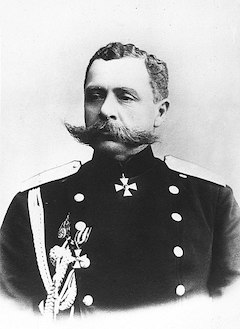
1918: Paul von Rennenkampf, tsarist general

On this date in 1918, General Paul von Rennenkampf dug his own grave by the side of the railway tracks near Taganrog, then was shot by the Bolsheviks for declining a promotion.

The Baltic German with the glorious Hungarian had spent a career in the tsarist officer corps; he took part in the multinational suppression of China’s Boxer Rebellion, and then the entirely domestic suppression of the abortive 1905 revolution.

Less well did the motherland fare against the Japanese in 1904 (where Rennenkampf’s shin and Russia’s infantry were both shattered) or against history in the Great War (which saw Rennenkampf sacked for command failures in the Battle of Lodz).

Although it seems that the latter result was the consequence of political infighting moreso than verifiable incompetence, the man was still cooling his heels in forced retirement when the revolutions of 1917 arrived. Both the February and the October revolutionaries detained him for a time and then released him, finding insufficient interest in those weighty days in a cashiered sexagenarian no matter how backwards his political priors.

But the Bolsheviks found him interesting when they took over Taganrog, where Rennenkampf was parked. This was his wife’s home town, near the southern industrial center Rostov-on-Don — a place that would be intensely contested in the unfolding civil war between communist Red and tsarist White armies. Such moments entail a choice of sides, so when the Bolsheviks offered this veteran senior commander a role in the Red Army, it was understood to be an offer he couldn’t refuse. He refused it, with bold words that were patriotic but not prophetic.

I’m old. I have not much left to live, for the salvation of my life, I will not become a traitor and will not go against my own. Give me a well-armed army, and I will go against the Germans, but you have no army; to lead this army would mean leading people to slaughter, I will not take this responsibility on myself.

On this day..

1984: Ryszard Sobok

Polish mass murderer Ryszard Sobok hanged in Wroclaw on this date in 1984.

The horror of the little village of Walim, Sobok suddenly slaughtered six intimates from February 11 to 12, 1981.

On the former date, Sobok strangled his seven-month-pregnant mistress Krystyna Nykiel along with Krystyna’s 16-year-old daughter and one-year-old son. They had a fractured relationship: Sobok drank away their little money, and he was angry that she wanted to abort her pregnancy. Still, the fury he vented on this woman seemed to well surpass the bounds of any ordinary crime of passion: Sobok hung up the bodies in his tenement’s main living room, then went calmly to sleep.

Upon waking, he called on his father and bludgeoned the man to death with a hammer, then applied the same fate to a young niece and nephew. And once again these last two he strung up, a special nightmare awaiting their mother’s discovery upon return from work that afternoon.

His chillingly calm confession gave no hint of madness and neither did the court psychiatrists. He was treated accordingly.

I killed Krystyna Nykiel because she wanted to kill my child and drive me away … her daughter Teresa because she saw me kill her mother and could tell someone … her son Marek so that he didn’t starve when orphaned … my father because he didn’t lend me money for food and because of him I didn’t have any milk or food at home … Irka and Anka because they tried to defend my father.

On this day..

1908: Chester Gillette, A Place in the Sun inspiration

Theodore Dreiser‘s classic novel An American Tragedy was inspired by an infamous 1906 murder whose author, Chester Gillette, was electrocuted at Auburn Prison on this date in 1908.

It was a crime tailor-made for the burgeoning mass media, popular and pretty 20-year-old Grace Brown gone to work at the Cortland, N.Y. Gillette Skirt Factory where the owner’s nephew seduced and impregnated her.

That, of course, is our man Chester Gillette, who further distressed his lover by tomcatting around town, especially charging the love triangle with class rivalry with his rumored interest in a socialite while he stalled for time with Ms. Brown. Dreiser’s novel — which is freely available from the public domain — spins on this axis, although the real-life heiress in question put out an arch press release averring that “I have never been engaged to Chester E. Gillette … Our acquaintance was of … a limited duration.”

That was also true of Gillette’s acquaintance with Grace Brown. At length he induced the future mother of his child to elope to the Adirondacks upon the apparent prospect of finally regularizing their situation. Instead, after making a couple of stops in upstate New York, they paused on July 11 at Big Moose Lake for a nice canoe outing. While out on the water, Gillette bashed his lover’s head with his tennis racket and forced her into the water to drown.

Letters the two had exchanged would establish that Gillette knew Brown could not swim … and the fact that he’d brought his whole suitcase with him for this supposed day trip would establish his premeditated intent. Gillette schlepped his stuff along with his guilty conscience through the woods to another lake and checked into a hotel under his real name(!). He was as careless with his coverup, alibi, and escape as he had been with his heart; Brown’s body was recovered the very next day and the trail led directly back to Gillette, who was not difficult to find and couldn’t stick to a story — alternately claiming that the drowning was an accident, a suicide, or something that happened when he wasn’t there at all.

The snake was public enemy number one by the time he came to his trial, making the case a national sensation. Dreiser improved it to literature in 1925, and it was such a hit that he was immediately called upon to adapt it for the stage. A version hit the silver screen as soon as 1931, but its best-known rendering is the 1951 classic A Place in the Sun, which earned Academy Award nominations for both Shelley Winters and Montgomery Clift, who portrayed the young lovers.

It’s had an enduring appeal for the century since; rumors of Grace Brown’s ghost haunting Big Moose Lake brought the case to the Unsolved Mysteries television program in the 1990s, and an award-winning 2003 novel A Northern Light centers around a fictional friend of Grace Brown’s. There’s even an A Place in the Sun opera.

On this day..

1987: Lawrence Anini, The Law

Nigerian bandit Lawrence Anini was executed on this date in 1987.

Strongman of a well-armed gang whose robberies and hijackings terrorized Benin Cty, Anini in 1986 fell out with his erstwhile police protectors, resulting in a bloody war of assassinations that claimed nine policemen’s lives and god knows how many gangsters. It also made Anini Nigeria’s public enemy number one.

He was wheelchair-bound throughout his high-profile trial, owing to having a leg amputated after it was badly shot up in the course of his December 1986 arrest. This fact earned the man once chillingly nicknamed “The Law” no sympathy at all, although he did also implicate a number of corrupt cops, drawing several convictions.

He was shot along with a number of his confederates on March 29, 1987.

On this day..