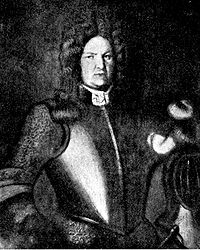
2006: Lu Dongming and Lu Kuan, Internet bombers

Who says China oppresses Internet users?

On this date in 2006, the People’s Republic avenged the bombings of two Hefei Internet bars with the execution of Lu Dongming and his nephew Lu Kuan.

Two young men were killed, and four others wounded, in the May 2006 attacks, which occurred just minutes apart.*

Extortion — which was formally on Lu Dongming’s charge sheet — of other cafe owners was the apparent motive: though the stakes in the Hefei cybercafe business might be a little lower than for the lords of industry, Chinese capitalism has a distinct gangster component.

On this day..

2009: Yang Yanming, hedge fund manager

On this date in 2009, China executed a rogue securities trader for disappearing around $10 million.

The first person executed for securities corruption in China, Yang used his position as a trader for Galaxy Securities to embezzle some 65 million yuan for personal gain.

He never disclosed the money’s whereabouts, presumably taking the secret with him to the grave. (Or to the organ donor market.)

As gangster capitalists go, Yang could hardly be considered exemplary either by scale or by ruthlessness. His peculation undoubtedly harmed many people, but there’s no known whiff of violence about him; he was caught after attempting suicide.

But by the same token, the occasional sacrifice of such middling malefactors potentially helps discharge some of the tension generated by the structural inequality accompanying China’s new oligarchy. What to do in such a world?

“Preserve your moral integrity and don’t set too much store by business results,” Yang told a newspaper prior to his execution. You said it, brother.

On this day..

1769: Two weavers, for the Spitalfield riots

On this date in 1769, two weavers hanged in East London in a bitter fight over wages and labor power.

Spitalfields, the East London district also known as the stomping-ground of legendary jailbreaker Jack Sheppard, was the capital of a thriving English silk-weaving industry. It had attained 18th century prosperity thanks in large measure to the decision of William and Mary to invite Lyons Huguenots being hard-pressed by the French crown to relocate their talents across the channel. This now-domestic industry* quickly began supplanting formerly dominant French imports.

In 1713 it was stated that silks, gold and silver stuffs and ribbon made here were as good as those from France, and that £300,000 worth of black silk for hoods and scarves was made annually. In 1721 the value of the silk manufactured in England amounted to £700,000 more than in 1688, when wrought silks were imported from France to the annual value of half a million sterling. (Source)

In this roaring and prestigious business, William Hogarth situated his 1747 Industry & Idleness plates: both the Industrious Prentice (eventually destined to become Lord Mayor of London) and the Idle Prentice (eventually executed at Tyburn) start off shoulder to shoulder at the Spitalfields looms.

But as the 18th century unfolded, even the most industrious Spitalfield weavers came under increasing competitive pressure especially from Chinese and Indian imports.

Although Parliament attempted to ban textile imports to preserve the domestic industries, Spitalfield workers were known to enforce their prerogatives directly by attacking people in the street thought to be wearing foreign prints. This simmering tension came to a rapid boil after settlement of the Seven Years’ War enabled England and France to resume trading — and a glut of French textiles to undermine weavers’ price controls.

Conflicts were no less fierce within the weavers’ community, between masters and laborers. Workers combined to maintain wages by attacking those thought to be undercutting prices.

In September 1769, one such action punished a wealthy anti-“combination” (for “combination”, read “labor union”) manufacturer named Lewis Chauvet, and cut the silk handkerchiefs right out of his looms.


From Season 3, Episode 2 of the BBC drama Garrow’s Law, which is directly based on this case. As of this writing, the entire episode can be found on YouTube.

Cutting silk from the loom was a rough method of enforcement by the labor combination. It had also been made a capital crime a few years before. And it turned out that Chauvet was ready to make his the test case.

Richly paying off a couple of independent artisan weavers for their questionable testimony, he secured the conviction of John Valloine or Valline (other alternate spellings are possible; the name clearly denotes the district’s Huguenot heritage) and John Doyle, two weavers allegedly part of the loom-smashing action. The accused denied it, Doyle reported to have fulminated at the gallows, “I am as innocent of the fact I am now to die for as the child unborn. Let my blood lie to that wicked man who has purchased it with gold, and them notorious wretches who swore it falsely away.”**

Manufacturers’ purposes were served just as well whether innocent or guilty. The point was labor discipline, not a few lost hankies.

Accordingly fixing “to strike Terror into the Rioters”, the crown ordered the execution to occur not at the Tyburn gallows, but right in the weavers’ backyard, adjacent Spitalfields at Bethnal Green.

This order actually delayed the sentence for the judiciary’s consideration of the minor point of whether this was allowed at all — since the actual boilerplate sentence read from the bench had specified “the usual place.” The wisest magistrates of the land considered the matter and in time agreed that “the time and place of execution was no part of the sentence” and therefore subject to His Majesty’s discretion. Bethnal Green it was.

They were therefore this morning taken in a cart from Newgate through the City to Whitechapel, and thence up the road to Bethnal Green, attended by the Sheriffs &c, with the gallows, made for the purpose, in another cart; it was fixed in the cross road, near the Salmon and Ball.


The Salmon and Ball pub, where the execution happened, today. (cc) image by Ewan Munro.

There was an inconceivable number of people assembled, and many bricks, tiles, stones &c thrown while the gallows was fixing, and a great apprehension of a general tumult, notwithstanding the persuasion and endeavours of several gentlemen to appease the same. The unhappy sufferers were therefore obliged to be turned off before the usual time allowed on such occasions, which was about 11 o’clock; when, after hanging about fifty minutes they were cut down and delivered to their friends. (cited here)

Vengeful weavers having their noses rubbed in their comrades’ executions smashed up Chauvet’s house in the riots on this date, and the powers that be decided that one hanging-day at Bethnal Green was plenty. A few other rioters convicted as confederates of Doyle and Valline were put to death at Tybun later in December 1769.

Years of violent labor conflict were finally quelled with the 1773 Spitalfield Weavers Act, a political compromise which protected the domestic industry from foreign competition and enabled magistrates to set wages.

Though this act stabilized a tense domestic situation, its effect over several decades was seriously problematic: a protected monopoly with wage-controlled workers maintained an increasingly obsolete system of labor-intensive manufacture that fell behind power looms coming online elsewhere.

As late as 1851 — mechanization wouldn’t fully take over until Britain’s trade liberalization of the 1860s — Charles Dickens visited Spitalfields, and saw a weaver

doing now, exactly what his grandfather did. Nothing would induce him to use a simple improvement (the ‘fly shuttle’) to prevent the contraction of the chest of which he complains. Nothing would turn him aside from his old ways. It is the old custom to work at home, in a crowded room, instead of in a factory.

Disallowed from taking lower wages even in bad times (or when cheaper cotton started displacing silk), many weavers sat completely unemployed instead — gradually sinking into a proletarianization they had fought to avoid. Spitalfield weavers eventually became one of the classic case studies in the laissez faire economics canon.

* Just to be clear, Huguenots weren’t the first silk weavers in Spitalfields; it’s just that their arrival let the industry take off.

** The hanged man’s comrades made good his gallows menace. Peter Linebaugh, whose The London Hanged is an outstanding resource on the economic pressures that brought these weavers and many others to the gallows, relates:

At noon upon a cold and snowy day, 16 April 1771, [Chauvet’s paid witness against the weavers] Daniel Clarke … went walking in Spitalfields. It had been sixteen months since the hangings of the cutters whom Clarke had sworn against, and he must have thought the people cowed or forgetful. He was recognized. ‘There goes Clarke, that blood-selling rascal,’ was the shout, and instantly a small crowd gathered to badger and pester him. He took to his heels and found temporary refuge in the house of Mary Snee. The currents of popular memory run deep; now they flooded to the surface. A hundred people beset the house hurling maledictions. ‘They would hang him, or burn him, or stone him,’ said Mary Snee. He was cornered, stripped and dragged by his feet into the street, where he was led by the neck on a parade of humiliation. The crowds grew. Widow Horsford [wife of one of the weavers hanged later in December 1769 at Tyburn] was seen to ‘jump out of the loom’ at the news Clarke was cursed and dragged to the brick-fields. Children pelted him with dirt. Bespattered with muck, he was thrown into a pond where he was ducked within a breath of drowning. He was removed to a sandheap, buried, dug up and returned to the freezing water. It was estimated that the crowd numbered 3,000. While he could speak, he taunted his tormentors, saying ‘he would take twenty of them’. Widow Horsford said, ‘Clarke, Clarke, I am left a widow, my children is fatherless on account of you.’ Clarke answered, ‘Chauvet is worse than me,’ and then he expired. A grim ending that would be remembered for generations.

On this day..

1831: John Bishop and Thomas Head, the London Burkers

On this date in 1831, two of the “London Burkers” hanged for murdering a child to sell his body to anatomy schools for dissection.

It was one of the city’s most infamous crimes, touching explosive resentments among Londoners for the vampiric trade in human cadavers ultimately demanded by medical students. Thirty thousand packed the streets around Newgate Prison to send this date’s hated offenders on to the hereafter.

As the gang’s nickname indicates, it closely followed the similar affair of Burke and Hare in Edinburgh. (“Burking” had immediately come to mean “killing someone for their marketable cadaver”, a shadowy underworld phenomenon that was in need of a catchy name.) But although William Burke made the OED, it was the London Burkers who most directly triggered the legislation to reform the anatomy business.

Historian Sarah Wise wrote the acclaimed book about this case, The Italian Boy. Executed Today is thrilled to interview her on this 180th anniversary of the London Burkers’ deaths.

The Italian Boy purchase links for Anglophones

Book CoverET: Let’s begin with the title of your book, The Italian Boy — an allusion to the victim in the case. Who was this youth, how did he come to be in London, and what did the city look like to a penniless foreign child in 1830?

SW: Well the book is less a ‘whodunnit’ and more of a ‘who-was-it-done-to’. The identity of that particular victim was never fully established. But, as still happens today in murder cases, some types of victim seem to have more appeal than others, and rumour that a little Italian beggar boy was missing from his usual pitches snowballed into a situation where even the courts, police and newspapers were accepting it as fact that it was his body that had been delivered to an anatomist. The final chapter of my book goes into why this might not have been so.

The ‘Italian Boy trade’ was a racket, whereby traffickers paid poor peasant parents, worried about what future they could offer their children, and took charge of the child, walked them north to the wealthy cities of northern Europe, and got them exhibiting small animals or plaster images around the streets, in the hope of being thrown a penny or two. Huge sums could be obtained in this way, but needless to say, the children themselves saw little of this. [There’s an 1872 New York Times article describing the trade into North America here. -ed]

I was fascinated by the warmth shown to these kids in what was otherwise a pretty mean city. This really is the London of Oliver Twist — dark, filthy, with all sorts of Fagin types (and much worse) around. Child vagrancy (as with adult vagrancy) was all too common and yet there were practically no public or civic bodies to offer any help; the idea of hordes of kids sleeping rough is just extraordinary, but that’s how London was right up until the end of the 19th-century.

But Londoners loved these attractive, exotic-looking little Italian waifs, and would also defend other types of beggars if anyone appeared to be hassling them. Ordinary city-dwellers seemed to me, in reading the primary source material, to be a lot less withdrawn and in their own little world than we city-dwellers are today, and seemed to show more class, or social, solidarity.

And how about the killers? What’s their own background, and how do they get into the business of killing people to sell the bodies?

One of the killers, John Bishop, came from a good, solid, small-business background, having been bequeathed a successful carting company. He drank away the family firm, and then turned to the related trade of bodysnatching — there was often a close connection between those involved in city transport and those who needed to move their very questionable goods around surreptitiously. Both trades had the pubs in the street called Old Bailey as their headquarters.

The other killer, Thomas Head, aka Williams, was younger and harder to find out about. He was said to have come from a very poor but honest home, and his parents were devastated when he began to go off the rails in his adolescence, firstly petty-thieving, and then moving on to the less petty-thieving of grave robbery.

I’ve touched a bit elsewhere on the site on the underlying dynamic at work: more demand for medical cadavers than was being met by the gallows. Do we have a sense at this time, after the Burke execution, what proportion of those extra cadavers were being provided by resurrectionists? And how many might have been provided by outright homicide?

Numerical estimates vary hugely for every aspect of this subject. In terms of the sheer volume of bodies medical students were getting through, the 1828 Select Committee on Anatomy canvassed many opinions, and came up with the hugely divergent total of between 500 and 1,000 in a year — the ideal being three bodies per student, with each student completing a 16-month surgical and dissection training. The Select Committee suggested that on average, the Resurrection Men were supplying around 500 to 550 corpses a year — by one means or another. But all these stats should be used with caution.

As for grave robbery: it was all highly surreptitious, as you would expect — there is no great documentary source to turn to, and so we have only scraps of rumour and hearsay. John Bishop, one of the Italian Boy murderers, is said to have ‘lifted’ between 500 and 1,000 corpses in his career, which lasted from 1818 to 1831. That is a huge differential and there is no way of checking whether the lower or higher number is the more likely. Someone shouted at Bishop, in the Old Bailey cells, ‘You’re a bloody murdering bastard, and you should have been topped [hanged] years ago!’, which suggests that the Italian Boy killing was not his first.


Image of a burking, from a broadside on the London Burkers among a book full of street literature here.

As we know, only around twelve people a year were executed for murder in England in these years — people executed for other crimes were not sent to the anatomists. My guess is that many folks who died in public hospitals or workhouses were anatomised, but that this was a highly secret matter and went on illegally. The other main sources of corpses, to make up the shortfall, will have been corrupt undertakers, church sextons and gravediggers. I suspect many coffins in London graveyards were filled with nothing more than brick or earth. As the 1820s wore on, actual exhumations are likely to have declined in favour of more simple ‘sneak-thieving’, with insiders giving the tip-off about where a recently deceased body was likely to be found.

One more ‘statistic’ for you: in a plea bargain attempt during the Italian Boy case, the police placed in front of one prolific bodysnatcher a list of all the resurrection men they had ever known or come across and asked the witness if he would mark with a cross any of the 50 whom he thought capable of murder for dissection. When he handed it back, he had marked six names.

Huge irony: when anatomised, John Bishop was found to be one of the very best specimens the Royal College of Surgeons had ever dissected — great, strong muscles, extremely fit and hearty, from his horrible career in body-handling.

How overtly implicated were aspiring or actual doctors with this sort of thing (even “mere” resurrection as against murder) as a “necessary” part of their education that they chose to turn a blind eye towards? And was there any engagement with the problem as an ethical question?

The public cared hugely about the ethics; the legislature very little. That’s why Dr. Knox, in the Burke and Hare case, was so unusual — no one protected him when the case came to trial, and he was vilified and more or less chased out of Edinburgh. But in the Italian Boy murders, no doctor got anywhere near the witness box. Society and the legislature really rallied around them, to make sure the public did not take their feelings out on them.

But popular resentment that the doctors might have encouraged, or turned a blind eye to, grave-robbery (not murder) remained very common.

By around 1800, doctors and students had wholly outsourced exhumations for dissection material — gangs of specialised labouring men did it for them, and part of the deal was that (in return for a good wage) the bodysnatchers themselves, if caught, would keep silent, do their stretch in gaol, and they and their families would be looked after financially by the surgeons who commissioned them.

One surgeon, Joshua Brookes, fell foul of the bodysnatchers (refusing to put up their wages) and in revenge, they placed half-dissected corpses close to his Soho premises. These were tripped over in the dark by pedestrians, which caused a huge rumpus and the police had to come to protect Brookes from the mobs who wanted to stone his house. Such events were the exception, rather than the rule.

There’s something just sublimely Swiftian about a disposable person being literally, bodily consumed by the city and its professional class. Was it surprising that a doctor would bust these men when they came to sell the body, and/or that it would trigger an aggressive police response? Had they probably pulled this trick with a wink and a nod many times before?

The Italian Boy case was highly unusual in that it was a surgeon, Richard Partridge, who blew the whistle — not only on the killers but essentially on the whole trade. He was the anatomy teacher at the brand-new King’s College, which was very religious-based, though funnily enough, I don’t think Partridge himself was devout. In getting the men arrested, he really blew wide open this secretive, terrifying world of the trafficking of (poor people’s) corpses.

It is the Italian Boy case — not Burke and Hare — which brought about swift legal change, which ensured the demise of surreptitious grave-robbery for anatomical teaching.

Other than hanging the perps, what was the fallout from this case at the level of policy or social evolution? Was there conflict between the privileged and the poor over how to understand this sort of crime and how to go about addressing it?

The ‘resolution’, the ‘evolution’, was the 1832 Anatomy Act, which essentially legalised what had been going on all along. It permitted anatomists to claim as legitimate teaching material the corpse of anyone who died in a workhouse or public hospital whose body went unclaimed by friends or family for private burial. In practice, it seems that even when apparently friendless beggars died, and associates did come forward, the doctors had already earmarked the body for their own purposes.

This type of thing caused decades and decades of bitter class resentment in this country, and fear of doctors and hospitals was even discernible in my late parents’ generation. These worries still occasionally resurrect themselves. The UK’s Human Tissue Act of 2004 was passed following disclosure of the mass storage of children’s organs, without any permission or consent having been sought from the parents. I think consent remains a huge issue in medical matters, in most cultures, and those who are deemed powerless in some way — by class, race, caste, gender and so on — are by far the more likely to have their bodies commandeered in the name of science.

Sarah Wise has been a Londoner since the age of 14. She has a BA in English Literature and a Masters degree in Victorian Studies, from Birkbeck College, University of London. The Italian Boy: Murder and Grave Robbery in 1830s London won the Crime Writers’ Association Gold Dagger for Non-Fiction in 2005 and was shortlisted for the 2005 Samuel Johnson Prize for Non-Fiction.

Sarah was a major contributor to Iain Sinclair’s compendium London, City of Disappearances, published by Hamish Hamilton in 2006.

Her forthcoming book, Inconvenient People, investigates the phenomenon of sane people being put into lunatic asylums in Victorian England, and will be published in the summer of 2012.

On this day..

1724: Jack Sheppard, celebrity escape artist

“Yes sir, I am The Sheppard, and all the gaolers in the town are my flocks, and I cannot stir into the country but they are at my heels baaing after me.”

Jack Sheppard

On this date in 1724, the hangman finally got Jack Sheppard.

Sheppard was a thief, a romantic hero, a highwayman of the urban proletariat, a Houdini whom no prison could hold.

It had become possible in his time to ride criminal notoriety into celebrity: Jack Sheppard, a mere 22 at his death, proved as adept with that quicksilver element during his personal annus mirabilis of 1724 as he was with a lockpick.

Sheppard’s world had him fitted to wield a hammer better than thieves’ tools — but at about age 20, a young man awash in the illicit liberty of London’s underbelly, he ditched the square carpenter to whom he was apprenticed to live free by his wits.

Peter Linebaug’s The London Hanged finds in Jack Sheppard’s career and his runaway popularity an important marker of the capital city’s “refusal of subordination: — contra Foucaultian discipline, which “makes the rulers of government and society seem all-powerful.”

An important meaning of liberation … [consisted of] the growing propensity, skill and success of London working people in escaping from the newly created institutions that were designed to discipline people by closing them in. This tendency I have dubbed ‘excarceration’ because I wish to draw attention to the activity of freedom in contrast to its ideological or theoretical expressions…

This lithe youth is most famous for his literal talent for freedom: four times in 1724 he escaped from custody in ever more dramatic fashion.

He busted out through the ceiling of St. Giles Roundhouse. He rappelled with a bedsheet rope down the 20-foot wall of Clerkenwell Prison with his lover.

This sort of thing won the enterprising rogue growing folk hero status. The vaunted Sheppard “made such a noise in the town, that it was thought the common people would have gone mad about him, there being not a porter to be had for love nor money, nor getting into an ale-house, for butchers, shoemakers and barbers, all engaged in controversies and wagers about Sheppard.”*

It also drew the unwanted attention of 1720s London’s Jabba the Hutt: “thief-taker” Jonathan Wild, who managed a vast thieving cartel enforced by Wild’s willingness to turn in non-participants in his ingenious cover role as the city’ preeminent lawman. That’s some protection racket.

Sheppard, to the fame of his memory, scorned obeisance to the crime lord as much as to any guild carpenter and worked for no man but himself. A vengeful Wild shopped him to the authorities.

This time, Sheppard was actually condemned to death for burglary but broke prison again, using yet another classic ruse: the “disguised in smuggled women’s clothes.”

Back on the lam, he posted a cocky letter to his executioner “Jack Ketch” giving his regrets at not having joined two fellow-sufferers on the scheduled hanging date. (September 4.)

I thank you for the favour you intended me this day: I am a Gentleman, and allow you to be the same, and I hope can forgive injuries; fond Nature pointed, I follow’d, Oh, propitious minute! and to show that I am in charity, I am now drinking your health, and a Bon Repo to poor Joseph and Anthony. I am gone a few days for the air, but design speedily to embark, and this night I am going upon a mansion for a supply; its a stout fortification, but what difficulties can’t I encounter, when, dear Jack, you find that bars and chains are but trifling obstacles in the way of your Friend and Servant

JOHN SHEPPARD

London’s finest were determined to put an end to this character’s preposterous run of prison breaks, so when they caught him the fourth time Sheppard found himself loaded with manacles and chained to the floor of a special strongroom in Newgate Prison. Get out of that, Jack.

Somehow, Jack got out of it.

On the night of Oct. 14, Sheppard authored the sublimest breakout in Newgate’s voluminous annals. Picking the locks of his fetters with a small nail, our acrobat scurried up a chimney, picked, prised, or otherwise passed a succession of locked doors in the dead of night, paused to rest on the condemned pew of the gaol chapel, forced a grille, reached the roof, and threw another homemade rope over the wall to scamper down to safety.

And then “he promptly went forth and robbed a pawnbroker’s shop in Drury Lane of a sword, a suit of apparel, snuff boxes, rings, &c., and suddenly made a startling appearance among his friends, rigged out as a gentleman from top to toe.”

There’s no doubt but that Jack had showmanship, but at a certain point he could have done with just the tiniest measure of discretion. But then, this was a man writing his own legend. Sure, he could have put his head down and tried to disappear into some nameless Puritan settlement in the New World. (His distraught mother kept telling him to get out of the country.) He traded those dull and toilsome years for the fame of generations: his candle burned at both ends.

When next Sheppard was detained, it was towards his apotheosis. It was the only time he would be arrested and fail to escape.

A throng of thousands mobbed London’s route to execution this date, almost universally supporting the ace escapologist. And Sheppard very nearly had for them the piece de resistance in his career of magical disappearances: it was only at the last moment before boarding the fatal tumbril that Sheppard’s executioners found the penknife their prey had secreted on his person, evidently intending to cut his cords and spring from the cart into the safety of the surging crowd. What an exploit that would have been.


Detail view (click for full image) of George Cruikshank‘s illustration of Sheppard’s death for William Ainsworth‘s Victorian novel about the legendary criminal. More of these illustrations here.

This indomitable soul has enjoyed a long afterlife as a subversive hero.

A celebrity in his own time, his execution-eve portrait was taken by the Hanover court painter himself, James Thornhill. Sheppard is a very likely candidate as an inspiration for the criminal Macheath in The Beggar’s Opera completed just a few years after his death; likewise, his abandoned apprenticeship makes him the most apparent model for Hogarth‘s “idle prentice” plates.

A century later, prolific historical novelist William Ainsworth** claimed the convict-martyr for an 1839 retelling. This popular potboiler — read it free online here — came in for a spate of 19th century social panic when it was learned that a notorious servant-on-master murder had been carried out by a young man who had recently read it. A two-decade ban on public plays based on the Jack Sheppard novel ensued.

For as much as Jack Sheppard is romanticized in his remarkable individual characteristics, his story has always had a class undertow that raises the hackles of the powerful — and is celebrated by the people who menace that power. Linebaugh, again:

Jack Sheppard, housebreaker and gaol-breaker, was once the single most well-known name from eighteenth-century England. His fame spread across oceans and the centuries. When the bandit Ned Kelly was alive, the Australian press was full of comparisons between him and Sheppard. At the same time on the other side of the globe in Missouri, Frank and Jesse James wrote letters to the Kansas City Star signed ‘Jack Sheppard’. In England his name cut deep into the landscape of popular consciousness. Henry Mayhew noted that Cambridgeshire gypsies accepted Sheppard stories as the archetype of ‘blackguard tales’. Among English sailors anyone with the surname of ‘Sheppard’ was automatically called ‘Jack’. Within the Manchester proletariat of the 1840s his name was more widely known than that of the Queen herself. One of these lads said, ‘I was employed in a warehouse at 6s. 6d. a week, and was allowed 6d. of it for myself, and with that I went regularly to the play. I saw Jack Sheppard four times in one week.’

The oral history of Sheppard has maintained his memory within human contexts where books were scarce and working-class resources for an independent historiography were non-existent. Moreover, that memory was kept in contexts of social struggle in which a continuity, if not a development, with earlier moral and political conflicts was suggested.

* cited in Andrea McKenzie, “The Real Macheath: Social Satire, Appropriation, and Eighteenth-Century Criminal Biography,” Huntington Library Quarterly, December 2006

** Ainsworth is also known for a novel about Sheppard’s near-contemporary, highwayman Dick Turpin.

On this day..

1767: William Guest, coin shaver

On this date in 1767, a larcenous bank clerk was hanged at Tyburn for robbing the till.

Sleigh ride: Detail of a studious William Guest being drawn to Tyburn (click for full print).

In this case, it wasn’t anything so gross as grabbing the money and running. No, our malefactor William Guest — the “son of a clergyman of unblemished character” whose “constant handling of gold [for the Bank of England] shook his integrity” — started milling the edges of the guineas he handled and innocuously returning them to the bank’s stock whilst piling up his own supply of gold filings.

It’s sort of the pre-digital version of the Office Space scheme: “I’m just talking about fractions of a penny here, but we do it from a much bigger tray. A couple of million times. So what’s wrong with that?” Literal profit on the margin: perfect for the FIRE sector.

Though 18th century London’s perpetual necktie party was obviously focused on the lowest classes, its busy gallows had room enough for the occasional white-collar crime.

And by England’s lights, debasing the currency was as serious a crime as there was: Guest’s conviction wasn’t for larceny or fraud, but for treason.

Because of that, he didn’t get the plain-old cart ride to the gallows, but was drawn on a sledge — the “drawn” bit of “hanged, drawn, and quartered,” although for this penny-shaver the execution itself didn’t entail the horrible quartering.

After enduring this archaic ignominy, the minister’s son “was indulged to pray on his knees” before being noosed and “his whole deportment was so pious, grave, manly and solemn, as to draw tears from the greatest part of the numerous spectators.”

On this day..

1707: Johann Patkul, schemer

On ths date (N.S.) in 1707, Livonian nobleman Johann Patkul was broken on the wheel at Kazimierz Biskupi, Poland for a decade’s treasonable scheming against the Swedish crown.

Livonia — essentially present-day Latvia, plus a chunk of Estonia — was at this time a part of the Swedish Empire in the latter’s twilight as a world power.

Financially pinched after the protracted and bloody but indecisive Scanian War, the Swedish king Charles XI imposed his great reduction — a heavy tax on the landed aristocracy allowing the crown to reclaim as its own any property that it had held formerly and granted out. There was a lot of such land mortgaged out generations before to raise capital for the Thirty Years War. War giveth, war taketh away. Hands up everyone who feels bad for the nobility.

Of course, all the 17th century nobles felt bad for the nobility.

Johann Patkul was the young — maybe too young — man deputized by Livonian bluebloods to go complain about it to Charles. When sharp but respectful eloquence predictably failed to obtain his ends, he dropped the “respectful” part — and for this lese majeste had to bug out of Sweden with an in absentia death sentence at his heels.

Having failed to obtain pardon from the offended monarch or from his heir Charles XII, Patkul just decided to change teams full stop. You could call this treachery (Charles XII did) but this is an age before nationalism. What was the Swedish royal house to a Latvian noble if he could get a better deal elsewhere?

“Elsewhere” for Johann Patkul meant Polish-Lithuanian king Augustus the Strong, and/or Russian tsar Peter the Great. Our refugee aristocrat spent the 1700s conducting vigorous behind-the-scenes shuttle diplomacy to engineer an alliance against his former masters and carve their respective pounds of flesh out of Sweden. Patkul himself, of course, would get a healthy bite from Livonia for his trouble.

In this campaign Patkul was merely an “unhappy instrument” (as a British correspondent quoted here put it): the antagonists in question had ample reason of their own for this statecraft; had they not, some itinerant conspirator pining for a lost manor could scarcely have conjured it.

But Patkul was a useful instrument: energetic, discreet, willful, and so he could surely claim some ownership of the product. Think of him as the convenient enabler — the Ahmed Chalabi of the Great Northern War that tore apart the Baltic environs for the first two decades of the 18th century.

It was rather fitting, then, that Patkul was devoured by his offspring when Sweden forced a peace upon Poland that resulted in Patkul’s being handed over to the Swedish authorities. The man’s extradition was specified by name in the treaty.

Patkul’s brutal execution inflamed some outside opinion against the Swedes (which presumably mattered not a whit to the progress of hostilities); a purported account of his execution-eve conversation with his confessor is given in this extremely sympathetic English pamphlet.

Though it’s safe to say that Patkul didn’t get what he wanted — let’s guess that the public shattering of his bones prior to a protracted death by exposure was towards the “worst case scenario” end of the calculus — the Great Northern War did indeed loose Livonia from the Swedish yoke … in favor, instead, of the Russian. Peter the Great accepted Livonia’s capitulation in 1710.

Mission accomplished.

Patkul is not to be confused with Baron Peikel/Pykul, a different fellow who was also executed for disobedience to Sweden in 1707.

On this day..

1354: Cola di Rienzi, last of the Roman Tribunes

On this date in 1354, Cola di Rienzi (or Rienzo) was slain by a miserly Roman mob — rather a lynching than an execution, but by any name the tragic end to one of history’s most amazing political careers.*

“Almost the only man,” in the estimation of his admiring biographer Edward Bulwer-Lytton,** “who ever rose from the rank of a citizen to a power equal to that of monarchs without a single act of violence or treachery.”

So magnetic was that era’s revival of classical learning that young Rienzi’s plebeian parents found a way on an innkeeper’s wages to immerse the boy in Cicero, Seneca, and the rest. As Gibbon put it, “the gift of a liberal education, which they painfully bestowed, was the cause of his glory and untimely end.” (Surely this is an object lesson for present-day families contemplating the daunting cost of university education.)

And the oratorical gifts he thereby developed found ready exercise lamenting Rome’s medieval degradation.


This View of the Campo Vaccino actually dates to 1636, but you get the idea. “Campo Vaccino”: that’s “cow pasture,” also known (to you, me, and Julius Caesar) as the Roman Forum.

Rome had bled away the grandeur of its imperial past without recovering the liberty of its populace. A haughty and dissolute aristocracy tyrannized the brackish city: a brawl between rival factions took Rienzi’s own brother’s life, with no prospect of justice.


Rienzi vows to obtain justice for his murdered brother, depicted in a pre-Raphaelite painting by the young William Holman Hunt.

Added to this civic humiliation (though only fortuitous for Rienzi’s political opportunity), the papacy itself had decamped for its captivity in Avignon.

What to do?

How about — overthrow the bastards?

Astonishingly, for Rienzi, to dare was to do: on Pentecost in 1347, he rallied a Roman mob and proclaimed the Republic re-established — taking for himself the ancient honorific of Tribune and the real power of an autocrat. The nobility routed in disarray, or else submitted to the sudden new authority.

For the balance of the year, Rienzi’s word was law in Rome, and as a messianic, popular dictator he cleared woods of bandits, imposed the death penalty for (all) murderers, and beat the aristocracy’s re-invasion with a citizen militia. He audaciously began to resume the primacy of the caput mundi: as “Tribune”, Rienzi summoned delegations from the other Italian cities, and presumed to arbitrate the disputes of neighboring kingdoms. Audacity veered into delirium as he pressed demands on the likes of the Holy Roman Emperor. He acquired a taste for fine wine and good clothes.

“Never perhaps has the energy and effect of a single mind been more remarkably felt than in the sudden, though transient, reformation of Rome by the tribune Rienzi,” Gibbon marveled. “A den of robbers was converted to the discipline of a camp or convent: patient to hear, swift to redress, inexorable to punish, his tribunal was always accessible to the poor and stranger; nor could birth, or dignity, or the immunities of the church, protect the offender or his accomplices.”

The great humanist Petrarch, Rienzi’s contemporary, was smitten by the unfolding revolution.

But almost as soon as Rienzi’s republic began, the man fell: another invasion found the Roman in the street deaf to the alarm bells, and Rienzi fled.

“He was a dreamer rather than a man of action,” is the charge of the Catholic encyclopedia; excitable, injudicious, spendthrift, and prey to the “Asiatic” emoluments of his station.

This career alone would merit a remembrance, but Rienzi had a second act.


Richard Wagner’s first hit opera — though hard to come by in the wild nowadays — was Rienzi, der Letzte der Tribunen (synopsis), from a libretto based on Bulwer-Lytton’s homage.

After a long spell in exile, he was captured by the Holy Roman Emperor and transferred to the papacy, where he remained comfortably imprisoned for a couple of years. When the pontiff’s hat changed heads to Innocent VI, the latter freed the illustrious ex-Tribune and dispatched him back to Rome under the title of Senator — intending him a catspaw to re-assert the supremacy the papacy had abandoned by moving away.

Within weeks of arrival in 1354, Rienzi again made himself master of the city.

And within months thereafter, he had fallen again — to his death.

He is charged in this last term with severity (the execution of a high-born freebooter, Fra Monreale, in particular), with avarice and abuse of power and once more with political incompetence.

Gibbon claims that Rienzi “contracted the habits of intemperance and cruelty: adversity had chilled his enthusiasm, without fortifying his reason or virtue; and that youthful hope, that lively assurance, which is the pledge of success, was now succeeded by the cold impotence of distrust and despair.” We incline to prefer Bulwer-Lytton’s more generous estimation of a man who with no resource save his own brilliance twice recovered to his low-born person the tattered remnants of the purple and dared against a thousand mighty antagonists to lift it on the standard of the Gracchi. Flaws, and they fatal, he possessed in abundance: but greatness even more.

At any rate, all the scolds upon Rienzi’s imperfections were so much froth in 1354. He certainly did not succumb to the greater virtue of the polis, but merely to its shortsighted refusal to bear a levy:

it was from a gabelle on wine and salt that he fell. To preserve Rome from the tyrants it was necessary to maintain an armed force; to pay the force a tax was necessary; the tax was imposed — and the multitude joined with the tyrants, and their cry was, “Perish the traitor who has made the gabelle!” This was their only charge — this the only crime that their passions and their fury could cite against him.

Rienzi’s eloquence, so often his decisive weapon, failed to move the shortsighted mob that besieged him, and he was hauled to a platform in the Capitol where public executions had been performed at his behest. “A whole hour, without voice or motion, he stood amidst the multitude half naked and half dead: their rage was hushed into curiosity and wonder: the last feelings of reverence and compassion yet struggled in his favour; and they might have prevailed, if a bold assassin had not plunged a dagger in his breast.” (Gibbon)

If this amazing character’s contradictions seem difficult to reconcile and his actions sometimes perplexing, Bulwer-Lytton argues in Rienzi’s defense that we must view him as a complex man ultimately fired not by political ambition but by religious zealotry. One thinks of Savonarola, the prim monk who mastered Florence and perished in flames, save for the essential detail: Rienzi’s loss “was bitterly regretted … for centuries afterwards, whenever that wretched and degenerate populace dreamed of glory or sighed for justice, they recalled the bright vision of their own victim, and deplored the fate of Cola di Rienzi.”


Statue of Rienzi in Rome. (cc) image from ZeroOne.

* And surely in keeping with the time-honored way for Roman chiefs to fall.

** We’ve encountered Bulwer-Lytton glancingly in these pages; his novel Zanoni climaxes with the beheading of its fictional title character in one of the last carts of the French Revolution’s Terror, and he wrote a novel (savaged by Thackeray) about executed intellectual Eugene Aram. The “biography” in question for this piece is actually a work of historical fiction, Rienzi, Last of the Roman Tribunes; the quoted sections are from Bulwer-Lytton’s (non-fiction) afterword.

On this day..

1906: Adolph Weber, nervy

On this date in 1906, Adolph Weber hanged in California for “one of the most revolting [crimes] in the annals of criminal history”:* the slaughter of his entire family.

On the night of Nov. 10, 1904, a fire at the Auburn mansion of Julius Weber, the onetime owner of the (still-extant) Auburn Alehouse, raised the town’s alarm. Firemen responding discovered four bodies within: Julius, his wife, and two of the couple’s three children. The coroner’s inquest soon determined that all four victims had met a violent death (three by shooting, one by beating) prior to the conflagration, and suspicion naturally fell on the one kid who survived and now stood to inherit the boodle.

(And, it transpired, had robbed a bank earlier that year.)

“Young Weber,” as the papers began to call him, soon became the object of widespread public opprobrium; the case against him was circumstantial but, with the addition of a man who claimed to have sold Weber the very make and model of a pistol found hidden some days after the crime, more than compelling enough for the judiciary. (The text of an appellate decision here outlines the case in greater detail.)

Meanwhile, the legislative branch got busy on a new 1905 Patricide Law to disinherit any homicide beer baron scions of the future. Since the previous statutes had not bothered to anticipate the present circumstance, Adolph Weber inherited all his purported victim’s money (after all, the other potential heirs were also now dead): he promptly blew through most of it on his legal expenses.

Weber’s phenomenal sangfroid from the moment of his arrest up to that of his noosing was his outstanding characteristic. Considered horrifying “vanity” and coldness while his guilt was adjudicated —

The life and character of Adolph WEBER have come under more notice than those of perhaps any other California criminal, unless DURRANT was the exception. And he is more of an enigma than DURRANT. The latter was industrious in protesting his innocence, while WEBER has never deigned to aver his, except when the direst question of his guilt or innocence was put to him at the trial, and even then his answers were in monosylables.

Sacramento Bee, June 23 1906

— it had become by the time the doomed Weber coolly ran out the clock to execution “the nerve which has characterized him as one of the most remarkable criminals of the century.”

“Never,” the Los Angeles Times wrote on the morrow of Weber’s execution, “did an assassin meet death with firmer step, or cooler nerve, than did the boy murderer of Auburn.”

* Los Angeles Times, Sep. 28, 1906

Part of the Themed Set: Americana.

On this day..

1902: Fred Hardy, the first hanged in Alaska

On this date in 1902, a hanging in Alaska capped a gold rush story fit for Jack London.


“A leetle favor … I gif my husky-dog, Diable, to de devil. De leetle favor? Firs’ you hang heem, an’ den you hang me.” Illustration from Jack London’s short story “Diable” (or “Batard”).

Actually, this tale is set not in London’s characteristic Klondike gold rush, but a subsequent one centered on remote Nome. There, in the words of the Rex Beach novel The Spoilers, “a frenzied horde of gold-seekers paused in their rush to the new El Dorado. They had come like a locust cloud, thousands strong, settling on the edge of the Smoky Sea, waiting the going of the ice that barred them from their Golden Fleece — from Nome the new, where men found fortune in a night.”

(The Spoilers is available free online in both text and audio book forms. The clip above is from a 1914 cinematic adaptation.)

The victims in this case of mercenary arctic brutality were a party of four who set up prospecting camp on Unimak Island, in the Aleutians. Their impression that they were safely alone on this large territory was refuted with the inexorable cruelty of a slasher flick.

After being caught out by the elements in a secondary camp, the party returned to its unsecured main base to discover “that their tent had been torn down in their absence and their stores taken away.”

Here the ominous overture fades in, and by the time it hits crescendo the mysterious robbers will have visited a cold-blooded massacre on our quartet of prospectors.

“Suddenly a man, who had been hid by the tall coarse grass, jumped up several hundred yards away, and took aim with a rifle at Florence. He fired and Florence fell with a scream. ‘Con’ and I ran for the boat, jumped in, and Rooney started to shove her off. The next moment a shot came from somewhere in the cliff above our heads.

“Rooney grabbed hold of his right knee, cried ‘They’ve got me too,’ and sank into the surf. Con and I saw that there was no use trying to get away in the boat, and so took it on the run for the shelter of the cliffs. We hadn’t gone twenty steps when another shot rang out; Con threw up his hands and fell headlong upon the beach, stone dead, with a shot between the shoulders. I kept on running, hearing shot after shot fired at me and striking about me with dull thumps like pieces of heavy hail.”

That’s from the riveting account of the lone survivor, one Jackson, who managed to escape into the island’s interior and after tramping about for two weeks, near to starvation and in continual terror of his stalkers, was finally found at death’s door by a friendly hunter.

Jackson’s information was able to tip off an investigation that led to the capture of two suspects. By the time Fred Hardy and George Aston were nabbed, they had “taken possession of” a fishing village and “kept [the fishers] in a terrified state.” They also happened to have the late prospectors’ booty, including personal items like an inscribed watch.

Aston wisely turned on his confederate, saving his own neck at the cost of stretching Hardy’s.

Hardy, a veteran of America’s colonial adventure in the Philippines and a nephew (so he said) of department store magnate John Wanamaker, denied guilt all the way to the scaffold but got no help from appellate courts or from President Teddy Roosevelt. (Since Alaska was still a territory, executive clemency was up to the White House.) He was put to death “in an addition built to the ice-house on the lot opposite the jail” (according to Washington state’s Morning Olympian, Oct. 3, 1902) at Nome City itself.

It wasn’t actually the first execution in Alaska, or even American-run Alaska, but Hardy’s hanging was a significant milestone. Prior to 1900, the vast territory was next door to lawless, order enforced in the interior by miner’s meetings or not at all, while a smattering of coastal military and customs outposts projected vague federal authority. Data on executions from this period is sketchy and incomplete.

In 1900, with the Alaskan population booming from that locust cloud of gold-hunters, promulgation of a civil code set Alaska on the way to something resembling normal government. Hardy’s execution was the first under legal judicial authority — the first of eight in the first half of the 20th century. Alaska abolished capital punishment shortly before attaining statehood in 1959.

Part of the Themed Set: Americana.

On this day..