1661: Oliver Cromwell, posthumously

On this anniversary date of King Charles I’s beheading, the two-years-dead corpse of the late Lord Protector Oliver Cromwell was hung in chains at Tyburn and then beheaded, along with the bodies of John Bradshaw and Henry Ireton.

The great-great-grandnephew of ruthless Tudor pol Thomas Cromwell rose higher than any English commoner, high enough to be offered the very crown he had struck off at Whitehall. Oliver Cromwell declined it in sweeping Puritan rhetoric just as if he hadn’t spent weeks agonizing over whether to take it.

“I would not seek to set up that which Providence hath destroyed and laid in the dust, and I would not build Jericho again.”

The House of Stuart never could rebuild its Jericho while the Lord Protector ran the realm* — thirteen years, writes Macaulay, “during which England was, under various names and forms, really governed by the sword. Never, before that time, or since that time, was the civil power in our country subjected to military dictation.”

“Cromwell lifting the Coffin-lid and looking at the body of Charles I”, by Hippolyte (Paul) Delaroche — a French painter with an affinity for English execution scenes. The painting is based on an apocryphal but irresistible legend, also used by Nathaniel Hawthorne in a tedious short story.

And not only England. Cromwell’s prodigious depredations in Ireland — justifiably or not — remain a source of bad blood.

The English Commonwealth foundered after Cromwell’s death, however, and restoration of the monarchy — a rock, as it turned out, on which the Puritans’ bourgeois revolution could erect its colossus — came with the price of a few examples being made.

Of course, “executing” dead guys displays about as much strength as it does sanitation, and for all Charles II‘s demonstrative vengeance, the politically circumscribed throne he resumed was very far from his father’s dream of absolutism. Between the late dictator and the new king, the future belonged to the corpse clanking around on the gibbet.

When the able Charles II followed Cromwell into the great hereafter, his brother James II promptly fumbled away the crown with his anachronistic insistence on royal authority and his impolitic adherence to Catholicism.**

In the emerging England of the century to come, the divine right would depart the Stuarts for another dynasty more amenable to the rising authority of the parliament whose sword Oliver Cromwell once wielded.

* Resources on the particulars of Cromwell’s career, the English Civil War, et al, are in plentiful supply online. This BBC documentary is a very watchable overview: part I; part II; part III; part IV.

** James II remains England’s last Catholic monarch.

On this day..

1903: Arthur Alfred Lynch condemned

On this date in 1903, Irish MP Arthur Alfred Lynch waited 26 minutes for a jury to convict him, then heard the sentence of a British court for having fought against the British Empire in the Boer War.

[T]he jury have found you guilty of the crime of high treason, a crime happily so rare that in the present day a trial for treason seems to be almost an anachronism — a thing of the past. There can be no doubt that in times gone by there was great abuse, and many persons were indicted, convicted, and punished for matters which would not now be thought worthy of serious or, perhaps, any notice. There has been a kind of national reaction by which many persons have been disposed to treat serious crimes against the State as if the name of treason, and as if the thing, no longer existed. One moment of reflection will show you how erroneous is such a conception …

Yes, even if the black cap gave away the ending, the judge was going to take his time getting to it.

The misdeeds which have been done in this case, and which have brought you to the lamentable pass in which you stand, must surely convince the most sceptical and apathetic of the gravity and reality of the crime. What was your action in the darkest hour of your country’s fortunes, when she was engaged in the deadly struggle from which she has just emerged? You joined the ranks of your country’s foes. Born in Australia, a land which has nobly shown its devotion to its parent country, you have indeed taken a different course from that which was adopted by her sons. You have fought against your country, not with it. You have sought, as far as you could, to dethrone Great Britain from her place among the nations, to make her name a byword and a reproach, a synonym for weakness and irresolution. …

Even allowing that this sentence was pronounced before either of the coming century’s world wars, calling the Boer War to conquer South Africa for the crown England’s “darkest hour” only underscores how very long Britannia had stayed in the sun. Were the early shadows of empire’s twilight visible from here … or was it just standard issue judicial showboating?

[Y]ou thought it safe, no doubt, to lift the parricidal hand against your country. You thought she would shrink from the costly struggle wearied out by her gigantic efforts, and that, at the worst, a general peace would be made which would comprehend a general amnesty and cover up such acts as yours and save you from personal peril. You misjudged your country and failed to appreciate that though slow to enter into a quarrel, however slow to take up arms, it has yet been her wont that in the quarrel she shall bear herself so that the opposer may beware of her, and that she is seldom so dangerous to her enemies as when the hour of national calamity has raised the dormant energies of her people — knit together every nerve and fibre of the body politic and has made her sons determined to do all, to bear all, to sacrifice all on behalf of the country that gave them birth.

…

The only — I will not say excuse, but palliation that I can find for conduct like yours is that it has been for some years past the fashion to treat lightly matters of this kind, so that men have been perhaps encouraged to play with sedition and to toy with treason, wrapt in a certain proud consciousness of strength begotten of the deep-seated and well-founded conviction that the loyalty of her people is supreme, and true authority in this country has slumbered or has treated with contemptuous indifference speeches and acts of sedition.

There’s some relish here, the kind you’d hear if Antonin Scalia had an opportunity to pass sentence on Cynthia McKinney.

This ponderous bombast was the culmination of a highly-anticipated, highly-publicized trial of a man who had returned to London and arrest as an elected Irish parliamentarian after upholding the Boer cause in print throughout Europe, and enrolling an Irish unit in the fight.*


Col. Lynch’s Irish Brigade, from this South African military history page.

Incidentally, this is the same judge who sentenced Oscar Wilde for the love that dare not speak its name, intoning on that occasion that “people who can do these things must be dead to all senses of shame, and one cannot hope to produce any effect upon them.” (Mr. Justice Wills’ update of his father’s classic treatise on circumstantial evidence is available from Google books, as is Wanderings Among the High Alps, which he wrote in his capacity as mountaineering hobbyist.)

But had you and those with whom you associated yourself succeeded, what fatal mischief might have been done to … that inheritance of power which it must be our work to use nobly and for good things; an inheritance of influence which will be of little effect even for good unless backed by power, and of duty which cannot be effectually performed if our power be shattered and our influence impaired. He who has attempted to do his country such irreparable wrong must be prepared to submit to the sentence which it is now my duty to pronounce upon you … that you be taken hence to the place from which you came and from thence to a place of execution there to be hanged by the neck until you are dead.

For all this sound and fury, one would hardly know that it was generally and publicly understood the sentence would be swiftly commuted — as it was, a few days later.

Arthur Lynch received a free pardon in 1907, and in 1909 was returned to parliament as an Irish nationalist delegate to resume his remarkable career as writer, physician, engineer and all-around polymath.

* Lynch’s part in the war is included in The Boer Fight for Freedom, another century-old tome in the public domain and available on Google Books.

On this day..

1759: The Tavora family

Two and a half centuries ago today, Portugal’s noble Tavora family was extirpated in Belem.

[A] scaffold eighteen feet in height was erected in the market-place of Lisbon, during the night of the 13th, round which was drawn up a cordon of military. Precisely at 7 o’clock in the morning, the old Marchioness of Tavora, as the most guilty, was brought upon the scene, her hands bound, and a rope round her neck. She was placed on a chair, and her eyes being bound, the executioner struck her head off without the previous utterance by her of any complaint. After her came the twenty-one-year-old son, Joseph Maria de Tavora. They bound him on a cross raised aloft, broke his arms and legs with iron clubs, and then strangled him with a rope. The same fate befell [Tavora son-in-law] Jeronimo de Ataide, Count of Atouguia, the young Marquis Luiz Bernard de Tavora, colonel of cavalry, his servant Blasius Joseph Romeiro, Corporal Emanuel Alvarez Fereira, valet of the Duke of Aveira, and the body-page, John Michael. Their corpses were all flattened upon wheels, which were placed on poles, and this proceeding took up so much time that fully half an hour elapsed before another execution could be proceeded with.


Other outstandingly gory images of this day’s business are here.

After the page Miguel or Michael, the executioner took the old Francis d’Assis de Tavora, bound him on a St. Andrew’s cross, gave him three blows on the chest with an iron rod that resounded to a distance, shattered his arms and legs, and then gave him his coup de grace through the heart. The executioner’s men then, amidst wild shrieks, shattered the arms, legs, and thighs of the ninth victim, the old Duke of Aveiro, while still alive, then killed him by a blow on the chest, and threw him into the blazing fire. Finally, the tenth delinquent, the valet Anton Alvarez Fereira, brother of the above-mentioned Emanuel, was conducted before the corpses of the nine who had been previously executed, each one being shown to him; he was then bound to a stake, round which was placed a heap of wood, and this being set fire to, was raked together until he was completely consumed* … When the execution was over, the scaffold, together with all the dead bodies, was set on fire and burnt to ashes, which were thrown into the Tagus.

Oh, and one last thing:

[T]he palaces of the high nobility who had been executed were pulled to pieces and levelled to the ground, and salt strewed on the places where they had stood, as a sign that they should never be built up again.

Yikes.


This stone marker was placed on the site of the razed palace of Jose Mascarenhas, the Duke of Aveiro. “On this infamous land,” it announces, “nothing may be built for all time.” Copyrighted image courtesy of Ludgero Paninho.

Seems someone got the idea that the Tavoras tried to kill (and more problematically, failed to kill) Portuguese king Joseph I.

Circumstantial, torture-adduced evidence put the scheming Marchioness Eleonora de Tavora and clan behind an apparent assassination attempt, wherein a couple of assailants had shot at the king’s unmarked carriage as it returned on a little-used road from a rendezvous with his mistress. (One of the circumstances was that the mistress was a Tavora, which put the accused in a position to know the king’s secret travel plans. Others argue the gunmen might have just been common highwaymen who had no idea they were setting upon the royal person.)

Whatever the facts of the matter, obscure behind a quarter-millennium, its attribution to the Tavoras and the spectacular revenge thereupon visited was effected by the king’s competent and ruthless minister, Sebastião José de Carvalho e Melo, the future Marquis de Pombal.


A monumental plinth surmounted by Pombal dominates the present-day Lisbon plaza named for him.

His able handling of the recent Lisbon earthquake had cemented his position as the throne’s right-hand man in a trend of centralizing absolutism not much appreciated by the old aristocracy (nor by the hidebound clerical orders, which explains why the aforesaid gory account of the execution ground comes from a German anti-Jesuit polemic).

And he would not miss the opportunity an attack on the king’s person gave him to sweep away his opponents.

The peers of the realm were summoned to witness their fellow blue-bloods so nauseatingly dispatched, and the Jesuits — “reported to have inflamed the Tavora family to their [the Jesuits’] desired pitch … in revenge for what had justly been done to them in South America”** — were forthwith suppressed.

(Functionally a progressive secular dictator — or an enlightened despot, to use a more 18th-century description — Pombal would eventually push political conflict with Rome so near the brink of outright schism that the Catholic Encyclopedia’s entry on Melo characterizes it as “a sort of disguised Anglicanism,” adding that “many of the evils from which the Church now suffers are a legacy from him.” His ascendancy is the “Pombaline Terror” in Catholic annals.)

Melo/Pombal exercised the power of the state for the rest of Joseph’s life, but the king’s daughter and successor Maria I dismissed him — though she did not take punitive action against Pombal for his persecutions, as his enemies demanded.

* Also doomed to burning alive was one Joseph Policarpo, who was able to escape the mass arrest a few weeks before and fled the kingdom. He was executed by effigy.

** This comment is from the letters of Christopher Hervey, an Englishman abroad in Portugal at the time of the execution whose 100+ pages’ worth of correspondence include live-at-the-scene reporting and English translations of the public pronouncements against the supposed culprits. As to the South American roots of Pombal’s conflict with the Jesuits, the order had resisted Pombal’s early schemes to reorganize and rationalize Portugal’s New World holdings in order to make the country a more competitive colonial power. Jesuit resistance to giving up the order’s control of education, and its humanitarian efforts to protect Indians, had been seen as contributing to an Indian rebellion that broke out in Jesuit-controlled territory — even to the point that Jesuits themselves were suspected of arming Indians in an effort to carve out church-controlled states. Hervey’s version has the Jesuits behind the plot in order to eliminate Pombal’s threat to their power. Others share this opinion … and Pombal, obviously, was keen to have his rivals inculpated for lese majeste in the public mind.

On this day..

1946: The treacherous Theodore Schurch

One day after William Joyce became the last Briton put to death for treason, 27-year-old Theodore Schurch hanged for treachery at London’s Pentonville Prison.

Like Joyce, Schurch had enrolled in the British Union of Fascists as a teenager in the 1930’s, and it was reputedly at the party’s direction that he joined the army as a driver.

During World War II, Schurch crossed and recrossed enemy lines, delivering operational intelligence to the Italians and Germans by helping to interrogate prisoners of war, or posing as a P.O.W. himself to gain the confidences of other captured Allied soldiers.

Scurch’s army buddies seemed to think he was alright, and there was probably more than a shred of truth to the defense’s contention, paraphrased by the London Times (September 18, 1945), that the lad

was a poor, uneducated fool who was caught young [by fascist ideology] when he knew no better and jockeyed into a position from which he could not recover.

But obviously, one makes this argument when one is in no position to contest factually the capital charges against oneself, and indeed has admitted much of it. Schurch was convicted on all nine counts of treachery, plus one of desertion. Not a big fish, maybe — but just the right size to become the last man hanged in Britain for a crime other than murder.

He’s actually listed as a war casualty, which in a way he was, on the Commonwealth War Graves Commission’s Brookwood Memorial outside of London.

On this day..

1946: William Joyce, Lord Haw-Haw

On this date in 1946, fascist William Joyce, famous by the nickname “Lord Haw-Haw” for his English-language Nazi propaganda broadcasts, was hanged at Wandsworth Prison for treason.

As a pugilistic young anti-Semite with the unusual credential of being a Unionist Irish Catholic, Joyce had been a moving spirit in the interwar British fascist party. (Since audio broadcasts would define Joyce’s life, it seems appropriate to refer the reader for a fuller biography to this recent Oxford biography podcast.)

But because time loves a good laugh, it had the guy haranguing his countrymen for insufficient patriotism marked out for the last treason execution in British history, and unrepentant about it by the time he got there.

The Brooklyn-born Joyce (he never lost his American citizenship) who naturalized as a German in 1940 had a rather tenuous claim on the patriotic high horse to begin with, and after the war, that meant the treason charge proceeded on legally doubtful grounds: speaking the King’s English didn’t mean he owed allegiance to the king. Prosecutors ultimately hung him with a British passport he’d obtained fraudulently, and the legal principle has never since sat well with jurists.

It was just the tool at hand. The British government really hated the guy.*

However limited the resources at his disposal — sparse intelligence, paltry staff, and of course, after 1942, a disastrously collapsing war effort — he had fashioned them into broadcast spin to twist the British lion’s tail in countless British homes throughout the war.

Here’s one episode, with Joyce savaging Winston Churchill, selected from archive.org’s library of Joyce broadcasts (1-7, 8-16, 17-23).

[audio:William_Joyce_Churchill.mp3]

Joyce’s star shone brightest and his invective cut deepest early in the war. Once everything at the front stopped coming up Teutons, he descended into irrelevance and self-parody, albeit without professing the slightest doubt in his fascist convictions.

This last broadcast, prepared just a few days before Germany capitulated, has our day’s principal ramblingly drunkenly from the besieged Nazi capital.

[audio:William_Joyce_final_broadcast.mp3]

Content-wise, not much had changed eight months later, but at least he managed to make his gallows statement coherently.

In death as in life, I defy the Jews who caused this last war, and I defy the power of darkness which they represent. I warn the British people against the crushing imperialism of the Soviet Union. May Britain be great once again and the hour of the greatest danger in the West may the standard be raised from the dust, crowned with the words — you have conquered nevertheless. I am proud to die for my ideals and I am sorry for the sons of Britain who have died without knowing why.

There’s a thorough, and lavishly illustrated, history of Joyce here.

* Authorities passed on prosecuting his wife Margaret, who’d also appeared on some Lord Haw-Haw broadcasts. Under the circumstances, Joyce’s daughter (by his first marriage) Heather Iandolo turned out pretty balanced.

On this day..

1900: En Hai, the murderer of von Ketteler

On the last day of the 19th century, a Chinese officer was beheaded on the public street where he had precipitated western* military intervention in the Boxer Rebellion by killing a German diplomat.

Foreign commercial penetration — and domination — was generating domestic turmoil in China. As liberal reforms foundered in the late 1890’s, a more radical anti-foreigner movement blending spiritualism and martial arts launched the Boxer Rebellion (or Yihetuan Qiyi, in the local coinage).

In addition to massacring hated missionaries, the Boxers besieged foreign diplomatic missions in Peking … and veteran German ambassador Klemens von Ketteler was killed in a firefight on a crowded street. (The particular circumstances of the killing seem highly confused, and were immediately colored by the various interested parties’ axe-grinding; it’s sometimes called an “assassination,” but there’s no proof von Ketteler was specifically targeted, and the ambassador himself managed to get a shot off in the fray.)

Given the financial interests at stake, it would be far too much to say that von Ketteler’s death caused the military intervention that ensued, but it certainly catalyzed the conflict. The next day, China’s Dowager Empress declared war against the Eight-Nation Alliance. Within two months, Peking (Beijing) was under foreign occupation.

The man detained as von Ketteler’s murderer — En Hai, or Enhai, or Su-Hai — was proud to claim the act himself, and intimations of the Chinese government’s official blessing for anti-foreigner activities were carefully massaged since the Eight-Nation powers would have need of the Qing dynasty to keep order locally.


On the afternoon of this day in 1900, En Hai was brought out from German custody to the street where von Ketteler had met his end and handed over to the Chinese for beheading. Notice the substantial foreign attendance in both the photograph and the drawing. A German officer’s diary entry cited in The Origins of the Boxer War: A Multinational Study recounted the scene.

Ketteler’s murderer was executed at last — for months past the unfortunate wretch has been begging for his execution. It took place in one of the busiest thoroughfares but there were only a few curious onlookers. Scarcely fifty yards away the usual business was being quietly transacted in the streets, people who were eating did not suffer themselves to be interrupted, and a teller of fairy-tales who was recounting his absurd stories had interested his numerous audience much more than the execution.

And to see that the lesson would not be lost on future generations of Chinese, the humiliating peace imposed upon China that December (and formally signed the following year) required China to expiate its guilt by

erect[ing] on the spot of the assassination of his Excellency the late Baron von Ketteler, commemorative monument worthy of the rank of the deceased, and bearing an inscription in the Latin, German, and Chinese languages which shall express the regrets of His Majesty the Emperor of China for the murder committed

Having been made an offer it couldn’t refuse, China honored the intersection (German link) where both the victim and his killer had died in their turns with a massive pailou archway, inscribed

This monument has been erected by order of His Majesty the Emperor of China for the Imperial German Minister Baron von Ketteler, who fell on this spot by heinous murder on the 20th of June, 1900, in everlasting commemoration of his name, as an eternal token of the Emperor’s wrath about this crime, as a warning to all.


A historical postcard of Ketteler monument.

“Everlasting commemoration,” in this case, lasted 15 years.

The national aspirations that had fired the Boxers reared up again in 1911-12 to topple the Qing. Days after Germany’s surrender in World War I, the Chinese Republic began removing the von Ketteler monument.

Visitors will need to look sharp to catch it now, in Zhongshan Park (aka Sun Yat-Sen Park or Central Park), where it has been rededicated to abstractions that age a little better than our German civil servant.

But this was still not quite the last the name von Ketteler was heard in the consular world. A relative (German link) of the man slain in Peking was a conservative diplomat of the Weimar and early Nazi period who opposed the national socialist government. Wilhelm Emmanuel von Ketteler was abducted by the Gestapo in 1938 and murdered thereafter in unclear circumstances, possibly for involvement in a very early plot to kill Hitler.

* “Western” in this case includes Japan, the regional industrial power that also flanked the Russian Empire to the east — very much a player on the European balance-of-power chessboard. Germany (obviously), France, Italy, Russia, the U.K., and the U.S.A. were the other nations involved in the intervention, along with the Austro-Hungarian Empire, whose naval deployment to China included future Sound of Music character Georg Ritter von Trapp.

A fair amount of detail on China’s foreign relations during this period is available free in the (dry, and sometimes dated) public-domain 1918 work The International Relations of the Chinese Empire.

On this day..

1896: Dr. Jose Rizal, father of the independent Philippines

December 30 is Rizal Day (Araw ng Kabayanihan ni Dr. Jose Rizal in Tagalog) in the Philippines, for the execution that date in 1896 of the great martyr of Philippine independence.

Also available free at gutenberg.org (the HTML version is very well-illustrated).

At Jose Rizal’s birth in 1861, it had been 340 years since Magellan had reached (and died at) the Philippines under the Spanish flag.

In Rizal’s century of romantic nationalism, independence movements stirred abroad in the Spanish Empire … too weak yet in the Philippines and elsewhere during the mid-1800s, but unmistakably prefiguring those national destinies that this day’s victim would come to embody.

Oddly, Jose Rizal was not even the most “revolutionary” of his farming family’s 11 children. That distinction went to older brother Paciano, who was under an official cloud before Jose hit adolescence for his relationship with the Gomburza priests, and would later serve as a brigadier general in the revolutionary army of Emilio Aguinaldo.

Jose was less strident — and more brilliant.

Though reputedly an adept fencer and crack shot with a pistol, the renaissance man’s gifts ran more to the life of the mind.

At the Universidad Central de Madrid, the University of Paris, and the University of Heidelberg, Jose Rizal studied ophthalmology and anthropology, and pursued the variegated artistic interests of his youth.

His two novels published from Europe, Noli Me Tangere and El Filibusterismo*, both criticized colonial authorities and their Vatican adjutants and struck nationalist chords that put him on the Spanish government’s watch list.

“I die without seeing the dawn brighten over my native land! You, who have it to see, welcome it — and forget not those who have fallen during the night!” -From Noli Me Tangere

Rizal also penned essays and editorials in a less symbolic vein, like this one skewering the stereotype of the lazy native by turning the mirror upon colonial agents who were waiting to prey on the fruit of native labor:

How is it strange, then, that discouragement may have been infused into the spirit of the inhabitants of the Philippines, when … they did not know whether they would see sprout the seed they were planting, whether their field was going to be their grave or their crop would go to feed their executioner? What is there strange in it, when we see the pious but impotent friars of that time trying to free their poor parishioners from the tyranny of the encomenderos by advising them to stop work in the mines, to abandon their commerce, to break up their looms, pointing out to them heaven for their whole hope, preparing them for death as their only consolation?

Man works for an object. Remove the object and you reduce him to inaction The most active man in the world will fold his arms from the instant he understands that it is madness to bestir himself, that this work will be the cause of his trouble, that for him it will be the cause of vexations at home and of the pirate’s greed abroad. It seems that these thoughts have never entered the minds of those who cry out against the indolence of the Filipinos.

(This essay and both novels are available in the original Spanish and in English at gutenberg.org, along with various translations of Rizal’s various fiction and non-fiction work.)

Fire-eating stuff in the eyes of the Spanish crown, but Rizal wasn’t the bomb-throwing type himself.

As the Philippine Revolution that would break the Spanish yoke on the islands took shape in the summer of 1896, Rizal applied to go to Spanish Cuba to treat victims of the yellow fever, and even explicitly disavowed the revolution.

Countrymen: I have given proofs, as well as the best of you, of desiring liberty for our country, and I continue to desire it. But I place as a premise the education of the people, so that by means of instruction and work they may have a personality of their own and that they may make themselves worthy of that same liberty. In my writings I have recommended the study of the civic virtues, without which there can be no redemption. I have also written (and my words have been repeated) that reforms, to be fruitful, must come from _above_, that those which spring from _below_ are uncertain and insecure movements. Imbued with these ideas, I cannot do less than condemn, and I do condemn, this absurd, savage rebellion, planned behind my back, which dishonors the Filipinos and discredits those who can speak for us. I abominate all criminal actions and refuse any kind of participation in them, pitying with all my heart the dupes who have allowed themselves to be deceived. Go back, then, to your homes, and may God forgive those who have acted in bad faith.

This stance on the revolution — the fact that he thought and wrote but never struck a blow — has engendered some controversy over the rightfulness of Rizal’s place in the national pantheon, as has his anti-clericalism and a disputed Vatican claim that Rizal retracted his criticisms of the Church before his death. One Spanish contemporary called Rizal “the Tagalog Hamlet.”

But mostly he is seen as the Spanish government at the time saw him, and as many revolutionaries did as well: as the lodestar of the Philippines’ national aspirations.

Rizal was arrested en route to his humanitarian assignment in Cuba and returned to Manila to face trial for sedition, rebellion and conspiracy, by which point, of course, the verdict was quite preordained. He was shot in the back by a firing squad, uttering the Christ-like last words “consummatum est” — “it is finished.”

Rizal’s execution, and the events preceding it, are depicted in this long excerpt of a 1998 film:


Jose Rizal’s execution.


Near the spot Rizal was actually executed, his martyrdom depicted in statuary.

There are any number of Jose Rizal tribute sites online. JoseRizal.ph and JoseRizal.info are two good places to delve deeper.

* A filibuster is a private military expedition, and more typically associated with Anglo American campaigns against the Spanish-speaking lands to the south, like those of William Walker.

On this day..

1979: Hafizullah Amin

On this date in 1979, the 104-day term of Afghan president Hafizullah Amin met a violent end as a Soviet-engineered coup raised the curtain on a war destined to bring misery to both Cold War combatants.

The Soviet Union’s ongoing intervention in Afghan politics had through the 1970’s steadily mired it deeper into an unstable political situation.

Now, it was running out of patience with the country’s president, Hafizullah Amin.
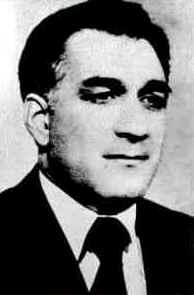
He’d got the best of rival Nur Mohammad Taraki in a power struggle that September, but to the political chaos and the blossoming Islamic insurgency roiling his country, Amin added a level of brutality that was all his own, and a streak of diplomatic independence that was distinctly unwelcome in Moscow.

Amin was a Communist himself, and both he and the predecessor he’d murdered had wanted ever-increasing Soviet aid to keep the country stable.

But that proved to be a Faustian bargain.

Though Kabul radio would announce that Amin had been tried and summarily executed for “crimes against the state,” the short-lived dictator’s fate had been decided two weeks before when the Soviet Politburo passed a secret resolution for his ouster — having lost whatever confidence it had once held in him as a dependable satellite governor.

“The Soviet Union,” said the New York Times in a more innocent time,

has seemed deeply troubled by the inability of either the Taraki or Amin governments to put down the rebellions in Afghanistan, which have been largely tribal but also militantly anti-Communist.

Amin survived a KGB poisoning, so the Red Army dispensed with subtlety by raiding the palace, plucking their preferred satrap out of exile in eastern Europe to take Amin’s place.

It would not see the last of Afghanistan until 10 years, 15,000 Soviet dead, and hundreds of thousands of Afghan casualties later.


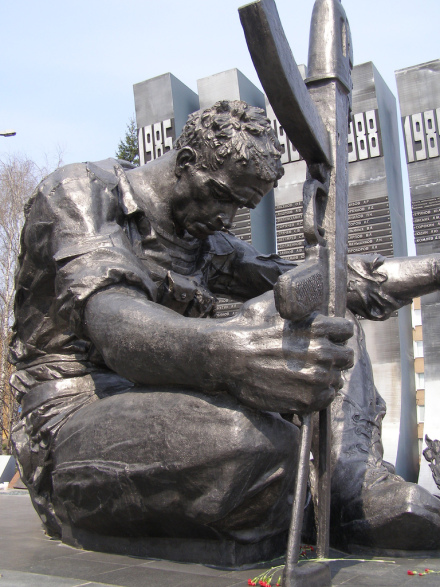
A memorial in Ekaterinburg, Russia, to the Soviet dead in the Afghan war. Image courtesy of beatdrifter (Andy Holmes).

On this day..

1182: Maria of Antioch

On an uncertain date thought to be around the end of 1182, the mother of the Byzantine emperor was strangled to death in Constantinople on her adolescent son’s authority.

In signing his mother’s death warrant, 13-year-old Alexios II signed his own … and that of his dynasty.

The progeny of a nearby Crusader principality, Maria of Antioch was dynastically married to Alexios’ dad, Manuel I.

Two realms separated by a common religion, Orthodox Byzantium’s relationship with western Crusaders was fraught at best, and it was about to get a lot testier. Maria’s Latin heritage went over like a lead balloon in the Greek empire.

When her husband died in 1180, the widow was left in a tenuous position as the unpopular regent of a child-emperor in a political snakepit.

In short order, Andronikos I Komnenos, after a lifetime of scheming, got his mitts on the throne two years after he’d been obliged to grovel in chains before Maria’s husband to be allowed a peacable retirement.

Some retirement.

Byzantine historian Niketas Choniates narrates Andronikos’s ruthless divide-and-conquer path to the purple.

Having thus slaughtered those whom he had been most eager to seize, Andronikos bided his time to assail others; some he delivered over to prison, some he condemned to banishment, and some he utterly destroyed in various ways. Those few who remained were anxious to go along with the majority and to reverse their former course. They changed their minds like the unstable planets and offered their necks to Andronikos to be tread underfoot, revolving around him as their axis, and so Andronikos hastened to bring about the ruin of the empress. After leveling several accusations against her, he finally charged her with treason and convened a court sympathetic to his cause with judges certain to condemn, not try, the wretched woman. The empress, who had attempted to enlist the help of her sister’s husband, Bela [III], the king of Hungary, writing him letters and tempting him with grand promises to ravage the lands around Branicevo and Belgrade, was led away to a cramped dungeon near the Monastery of Saint Diomedes. There she was grossly reviled by the guards as the butt of their jokes, and, pining with hunger and thirst, she was haunted by a vision of the executioner standing on her right where his edge would cut most surely. Andronikos’s ferocity did not abate even a whit. In the words of David, he perceived trouble and wrath and hastened to deliver her over to death, annoyed by the fact that she was still numbered among the living. Ere long he again assembled the justices who mete out injustice and whose right hand is the right hand of iniquity. He inquired as to what punishment the laws decree for traitors of cities and provinces, receiving in hand a written judgment sentencing such criminals to death, his assault against the empress went unchecked. When these lawless men raised their voices and shouted aloud as they cast their votes that this ill-starred woman must depart this life, a decree condemning her to death was immediately signed by her son, the emperor, written as though with a drop of his mother’s blood.

Elected to carry out this loathsome and unholy deed were Andronikos’s firstborn son Manuel and the sebastos George, the brother of Andronikos’s wife. Both men recoiled from their selection in disgust and contemned the emperor’s decree, declaring that they had not concurred earlier in the empress’s execution and that their hands would remain guiltless of such defilement; now, even more so, they could not endure to see her innocent body broken. This unexpected reply struck Andronikos like a thunderbolt. He continually twisted the hairs of his beard around his fingers, his eyes were filled with fire, and, shaking his head up and down, he repeatedly pitied himself and was greatly troubled that he did not have friends who delighted in blood and were eager to commit murder at the nod of his head. Holding his rage in check, like a hot-blooded horse champing at the bit or like smoke wrapping itself around a flame, he quenched his unremitting anger and postponed the execution. A few days later he condemned the ill-starred empress to a wretched death by strangulation. The sentence was carried out under the supervision of Constantine Tripsychos, who held the office of hetairarch, and the eunuch Pterygeonites … And she, who was the sweet light and a vision of beauty unto men, was buried in obscurity in the sand of the nearby shore (O Sun, who didst look down upon this defilement, and Thou, O Word of God, who art without beginning, how inscrutable is thy forbearance!). The bloodthirsty soul of Andronikos exulted at this, for with the extermination of Manuel’s family, with the imperial garden laid waste, he would reign as sole monarch over the Roman empire and hold sway with impunity.

The next year, Andronikos dispensed with the charade and had the young Alexios strangled, too.

A much worse fate awaited Andronikos himself not long after, with still less able successors to follow him … sending the Byzantine Empire into a calamitous tailspin that would see Constantinople sacked by those antagonistic western Crusaders within a generation.

Update: Maria’s German Wikipedia page pegs her execution date at August 27, 1182, citing Detlev Schwennike, Europäische Stammtafeln Band II, Tafel 177, Verlag Stargardt, Marburg, 1984.

On this day..

1796: Jose Leonardo Chirino, Venezuelan slave revolt leader

On this date in 1796, insurrectionary Jose Leonardo Chirino was hanged in Caracas for leading a slave revolt in Spain’s oppressive New World sugar plantations.

Nearly all the information readily available online about Chirino is in Spanish, and all the links in this post are to Spanish pages.

The influence of the Haitian Revolution, and the philosophical precepts of the French Revolution that had helped spawn it, sent waves through the Caribbean washing up on every shore it touched.

Most of those lands had a ready audience under the lash of European colonial masters; the eastern Venezuelan city of Coro, home to the sugar aristocracy and the groaning underclass that crop implied, must have had one of the readiest.

On May 10, 1795, Chirino — a Zambo of mixed African and Amerindian blood who was himself a free farmer — led an uprising of the Congolese slaves in the area who worked the sugarcane and declared a Republic under the “Law of the French,” with slavery and white privilege abolished.

Forcibly.

The rebellion’s attempt on Coro itself failed, and it was swiftly put down by the colonial authorities. Though many involved were killed summarily, the Spanish took their sweet time after capturing Chirino in August 1795: only the following year was he transferred to Caracas for execution, after which his body was dismembered and his head set in an iron cage displayed on the road to Coro. (For good measure, they sold his family into slavery.)

[flv:https://www.executedtoday.com/video/Jose_Leonardo_Chirino.flv 440 330]

(Video from here)

Of course, Chirino was on the right side of history. The city square in Caracas where Chirino hung is now Plaza Bolivar, named for Latin America’s eponymous liberator.

Coro itself is today served by Jose Leonardo Chirino airport, and for the African diaspora in Venezuela, Chirino is a special inspiration.

[audio:Jose_Leonardo.mp3]

Like any worthwhile symbol, he’s also contested territory — claimed as a forerunner (if a questionable one) of socialism by the “Bolivarian Republic” now governed by Hugo Chavez.

On this day..