1692: Bridget Bishop, the first Salem witch hanging

On this date in 1692, the pious folk of Salem, Mass., hanged their first witch.

Local bawd Bridget Bishop, pushing 60 and onto her third husband, was a natural target for the emergent civic insanity.

She liked living it up down at the tavern with a red bodice and the occasional game of shuffleboard. When she entered the courtroom, all the little brats with the sorcery stories (strangers to the accused before all this started) fell down and howled. When the Salem goodwives were tasked with groping her for bodily disfigurements that might be a witches’ mark, they

discovered a preternathurall Excresence of flesh between the pudendum and Anus much like to Tetts & not usuall in women

Bishop was obstinate in repelling the charges against her, even uppity enough to question her persecutors’ categorical assumptions.

I am innocent I know nothing of it I am no witch I know not what a witch is.

(Both the above excerpts can be found in the proceedings against Bishop — and other witchcraft defendants — lodged here.)

The local respectable citizens certainly weren’t about to entertain any wisecracking about the whole “witch” construct from the likes of Bishop. (She’d already been accused once before, in 1680.) In Puritan Bible-basher Cotton Mather’s embarrassing 1693 defense of the proceedings, he’s got Bishop’s WMDsdaemonic influences confidently sussed out.

There was little Occasion to prove the Witchcraft, it being Evident and Notorious to all Beholders. Now to fix the Witchcraft on the Prisoner at the Bar, the first thing used, was the Testimony of the Bewitched; whereof several Testify’d, That the Shape of the Prisoner did oftentimes very grievously pinch them, choak them, Bite them, and Afflict them; urging them to write their Names in a Book, which the said Spectre called, Ours. One of them did further Testify, that it was the Shape of this Prisoner, with another, which one Day took her from her Wheel, and carrying her to the River side, threatned there to Drown her, if she did not Sign to the Book mentioned: which yet she refused. Others of them did also Testify, that the said Shape did in her Threats brag to them that she had been the Death of sundry persons, then by her Named; that she had Ridden a man then likewise Named. Another Testify’d the Apparition of Ghosts unto the Spectre of Bishop, crying out, You Murdered us! About the Truth whereof, there was in the matter of Fact but too much Suspicion.

With this kind of slam-dunk evidence, Puritan New England wasn’t the sort of place to suffer a condemned enchantress a lot of dilatory appeals. Victims demanded closure, and two days after Bridget Bishop heard her sentence, she was strung up at Salem’s aptly named Gallows Hill.

There is at this point in the timeline of the Salem hysteria a slight pause in the proceedings as, having crossed the Rubicon and actually begun stretching necks, colonial elites consulted one another as regards the unfolding tragedy (and in the case of one of the judges, resigned).

The remainder finding themselves still committed to the crazy, Salem fired up its witch trials in earnest at the end of the month and greased the hanging rope for 18 more noosings, plus the nasty pressing to death of Giles Corey, over the months ahead.

On this day..

1693: Anne Palles, the last witch executed in Denmark

On this date in 1693, fortified with a half-pot of wine provided at public expense, 74-year-old Anne Palles was beheaded and then burned as a sorceress — the last “witch” put to death in Danish history.

Palles got caught up in the usual way: an aged farmer’s wife misfortunate enough to be attached to a couple of incriminating coincidences. Nine-tenths of Denmark’s 1,000 or fewer executed witches were women, two-thirds of them over 50 years old. (Danish-language source.)

Palles was accused (Danish) by a “wise woman” who was herself trying to beat a rap for attempted murder with black magic.

Once that happened, it all started to make sense (more Danish): the sudden death of a woman her husband had once danced with; the poor production of cows passing a place where Palles had pissed.

Clap her in prison and twist her arm a little, and she’ll cop to having “given herself to the Devil, life and soul”, and rolled with an infernal familiar (a black cat: how trite) by the name of “Puus”.

Though you wouldn’t call a thousand executions a drop in the bucket, Denmark never really experienced the witches’ holocaust that occurred in some other European locales. A 1576 law* providing an automatic judicial appeal for sorcery condemnations is often credited for this happy-ish circumstance; in this case, Palles recanted her confession on appeal as torture-induced, and a divided high court in Copenhagen only confirmed the death sentence by an 11-6 vote. (Antonin Scalia writing for the majority.) Even her burning-alive sentence was moderated by the crown to beheading, followed by posthumous burning.

Everyone being a little uncomfortable with the case didn’t ultimately do Anne Palles much good. Another woman, Anne Kruse, had died in prison with her, and was posthumously burned at the stake; the woman who’d made the initial accusations was flogged … and Anne Palles had her head struck from her body and her remains burned to ashes as a witch.

But an era had passed with the cooling of those embers.

Just three years later, an outbreak of witch accusations — the “possessions of Thisted” — rocked northern Jutland. This case boomeranged on its accusers (we’ve seen that elsewhere in Scandinavia), and largely put a stop to witchcraft prosecutions … though the superstition that generated them would persist for quite some time longer.

After 1650 — and thus long before the official day of reckoning for witch-belief during ‘the possession of Thisted’ in 1696-98 — a marked drop in the numbers of witch-trials took place … and the Jutland High Court judges grew more and more sceptical. One of them, the Professor of Mathematics, Villum Lange [Danish bio], wrote to Peder Schumacher (the later Griffenfeldt) in 1670: ‘During the past few days we have had a crowd of women brought before us, accused of sorcery. We have condemned a number of them to the stake; but because they are so foolish and simple-minded we have recommended to the court that the case should first be brought before His Majesty for appeal … One of them confessed to us herself that she had talked with the devil; but whether it was melancholia or some other form of fantasy, or was the honest truth, God alone knows. To me she appeared to be a person in her second childhood.’ No wonder that rumours soon began to circulte that this High Court judge ‘was siding with the sorceresses and saying that no sorceresses existed.’ Towards the close of the century the common people were complaining that the Jutland High Court judges never condemned anyone to the stake any more, and tht was the reason for there being so many sorceresses in Jutland.

But it was only among the educated upper clases [sic] that attitudes were changing. Among ordinary folk the need for witch-trials continued to be felt far into the future, and when the authorities would no longer agree to her this type of case, people several times took the law into their own hands. In 1722 some pesants at Gronning on Salling lynched a witch by burning, and in 1800 the last murder of a witch occurred at Brigsted in the neighbourhood of Vejle.

Gustav Henningsen, “Witchcraft in Denmark”, Folklore, Vol. 93, No. 2 (1982), pp. 131-137

* The first of its kind in Europe. Two other legal ordinances from earlier in the 16th century restricted the use of torture to gain confessions and barred courts from crediting the accusations of other convicted witches, and they also helped constrain outbreaks of widespread persecutions. (Anne Palles’s case looks to have skated pretty close to the line on both of those counts.)

On this day..

1692: Giles Corey, “more weight!”

Monday, September 19, 1692. About noon, at Salem, Giles Corey was press’d to death for standing mute; much pains was used with him two days, one after another, by the Court and Capt. Gardner of Nantucket, who had been of his acquaintance: but all in vain.
Diary of Salem witch trials judge Samuel Sewall

Pressing to death — peine forte et dure — was a brutal procedure that wasn’t technically a method of execution: courts used it to extract a plea from a defendant, since the law of the time (altered in the 18th century) would not allow criminal proceedings to get underway without one.

Procedure: stake a fellow down and start piling crushing weight on his chest for hours or days until he agrees to enter a plea and start the trial.

For the sufficiently obstinate prisoner, it was a manner of exiting the world quite a bit more unpleasant than hanging. But it came with one significant advantage: since one died without a capital conviction, one could pass on one’s property rather than having it confiscated by the state. For Giles Corey, that was worth two days of agony.

PROCTOR: And Giles?

ELIZABETH: You have not heard of it?

PROCTOR:* I hear nothin’, where I am kept.

ELIZABETH: Giles is dead.

(He looks at her incredulously.)

PROCTOR: When were he hanged?

ELIZABETH (quietly, factually): He were not hanged. He would not answer aye or nay to his indictment; for if he denied the charge they’d hang him surely, and auction out his property. So he stand mute, and died Christian under the law. And so his sons will have his farm. It is the law, for he could not be condemned a wizard without he answer the indictment, aye or nay.

PROCTOR: Then how does he die?

ELIZABETH (gently): They press him, John.

PROCTOR: Press?

ELIZABETH: Great stones they lay upon his chest until he please aye or nay. (With a tender smile for the old man.) They say he give them but two words. ‘More weight,’ he says. And died.

PROCTOR (numbed — a thread to weave into his agony): ‘More weight’.

ELIZABETH: Aye. It were a fearsome man, Giles Corey.

Arthur Miller‘s The Crucible

Hard core, that Giles Corey.

Giles Cory pleaded not guilty to his indictment, but would not put himself on Tryal by the Jury (they having cleared none upon tryal) and knowing there would be the same witnesses against him, rather chose to undergo what death they would put him to. In pressing his tongue being forced out of his mouth, the Sheriff with his Cane forced it in again, when he was dying. He was the first in New England that was ever prest to death. (Source)

* Arthur Miller availed himself some dramatic license in The Crucible; among the more trifling was that the historical John Proctor was actually hanged a month before Giles Corey’s death.

On this day..

1691: Jack Withrington, highwayman

On this date in 1691, highwayman Jack Withrington hanged at Tyburn.

THIS fellow was the youngest of five brothers, who were all born at Blandford, in Dorsetshire. The other four were all hanged in the country, but Jack had the good fortune to be reserved for Tyburn, and by that means to have his name transmitted to posterity. He was bound to a tanner in Shaftesbury, a town in his native county, with whom he served about three years. Then he entered into the Earl of Oxford’s Regiment of Horse, in which, when Monmouth‘s rebellion was suppressed in the West of England, he came up to London, where he soon met with opportunities of discovering his valour to the world. These occasions were two quarrels in which he was engaged: the first with a man famous for fighting, against whom he behaved with so much bravery and skill that it won him a vast reputation; the second with a person of great estate, but a noted coward, when he showed himself a gentleman by his adherence to the point of honour and good breeding. By these duels he won abundance of applause, so as thereby to contract a familiarity with all the greatest fighting men of the time, especially those in his own regiment. Withrington however carried his manhood so far as to get himself turned out of the regiment within a year after, for challenging his captain. He then became a perfect bully and gamester; and, being fortunate, in a little time by these means saw himself master of a considerable sum of money. Notwithstanding all this good luck at first, he found himself afterwards subject to the fate of gamesters —- viz. to be frequently without money in spite of his large winnings. This brought him at last to consider the uncertainty of Fortune and endeavour to make himself master of her, by supplying with fraud what he might want in plain open skill. But this also did not continue long; for everyone began to be aware of him as a common sharper, and none who knew him would venture to play with him.

In the common scale of knavery the next step above a sharper is a downright thief. Withrington made bold to ascend this degree, and was resolved to take the most honourable station thereon, that of a highwayman. He had money enough to buy him a good horse and accoutrements, so that the resolution and the real attempt were not long asunder. His first adventure was with a farmer, from whom he took forty pounds, giving him in return only an impudent harangue, occasioned by the countryman’s reproaching him with the robbery.

The next that fell in Withrington’s way was Mr Edward Clark, gentleman usher to the Duchess of Mazarin. They met in Devonshire, on the road between Chudleigh and Ashburton. Mr Clark made some resistance, so that in the scuffle Withrington’s mask fell off and discovered his face, which Mr Clark knowing, he called him by his name, and said he hoped he would not rob an old acquaintance. “Indeed I shall, sir,” quoth Withrington, “for you get your money much easier than I do, who am forced to venture my life for a maintenance; you have so much a year for eating, drinking and entertaining your lady with scandal and nonsense. What I shall take from you will do you little harm; it is only putting a higher price upon half-a-score reputations, which you know how to do as well as any coxcomb in England. Ladies never let such faithful servants go unrewarded, nor will yours suffer your loss to fall on yourself.” He got about eight guineas out of this gentleman’s pocket, and for old acquaintance sake bade him “Good-b’w’ye” very heartily.

Withrington’s robberies in less than a year and a half were talked of almost all over the kingdom. But alas! he met with a diversion, common to mankind, that draws even the most stupid into the rank of polite persons. The poor man was in love; and with whom but a rich widow inn-keeper in Bristol! Farewell to the highway: Withrington has another scent to pursue. No more robberies to be thought of from a man who was himself robbed of his heart! He employed an old bawd in the affair, who was intimately acquainted with our hostess, and by this flesh-broker’s mediation things had like to have come to an issue, and Jack to have been master of the Swan Inn. In short, there was nothing prevented it but the accidental coming of a certain gentleman, who knew our highwayman, and informed his mistress what he was. The effects of this discovery were Jack’s being kicked out of doors by the ostler and chamberlain, and the commitment of madam the negotiatress to Bridewell, in order to mill Dolly.

After his return to the highway he and one of his companions met with Mr Thompson, a noted tailor, in a part of Hertfordshire that was convenient for robbing. They took from him about thirty pounds in silver, and then, dismounting him, they ordered him to stay where he was till they brought him more company. As soon as they were gone from him he remounted his horse and attempted to ride off as fast as he could; but our highwaymen perceiving what he was at, and having the best horses, they fetched him back, and mistrusting he had more money, by his being in so much haste, they searched him afresh, he protesting all the while that he had not so much as a farthing left if it were to save his soul. In a literal sense he might be right; but they made a shift to find forty guineas, which they thought better than farthings. Withrington upon this exclaimed that it was a sad thing that one Christian could not believe another! They then shot his horse, to put a stop to his speed, and so rode away and left him.

These, we pause to digress, are not the only stock and store among the (surely half-legendary) c.v. of this colorful bandit. The verbosely entitled Complete History of the Lives and Robberies of the Most Notorious Highwaymen, Footpads, Shoplifts and Cheats of Both Sexes reports that Withrington delivered himself of an even wordier critique of the nascent economic order of the day.

[T]ravelling the road, he met a rich farmer, from whom he took £40. Quoth he, Is not this a downright robbery? Roberry? replied Withrington; So let it be; who is there now-a-days does not rob? The tailor steals before his customer’s face; the weaver steals by eking out the length of a piece of cloth with the remainder of broken ends; the surgeon steals by prolonging a cure; the apothecary steals with a quid pro quo, using one drug for another for cheapness, without any regard to the age and constitution of the patient; the merchant steals by putting his money into the Bank of England; the scrivener steals by selling the soul of a poor man for the money that he can take of a forfeit; the grocer steals by using false weights; the vintner steals by adulterating his wine; the butcher steals by blowing up his meat; the victualler steals by drawing in short measures; the cook steals by roasting his meat twice over; the baker steals by raising his bread when there’s no occasion; and the shoe-maker steals by stretching his leather as much as he does his conscience. Thus, as there is cheating and cozening in all trades but mine, you cannot blame me for borrowing this small trifle; which I shall honestly pay you when we meet again; so till then, farewell.

And a bit of, er, gallantry.

Another time Jack Withrington meeting a gentleman and his wife on the road betwixt St. Albans and Dunstable, he very submissively craved their benevolence; but they not instantly granting his request, he shot the horse on which they both rode, and swore that as he denied him his money, he would take his wife. So forcing her into an adjacent copse, and acting a man’s part by her, he restored her to her husband again, from whom taking eleven or twelve guineas he said, This is no more than my due for I am not obliged to do your drudgery for nothing.

Rape and repartee! Dreamy.

But we know where this is heading.

The last robbery Withrington committed was alone. He stopped a nobleman on Hounslow Heath attended by two footmen. There was a short dispute, but Withrington having the best of it, he took a portmanteau in which were two hundred and eighty guineas, sixty pounds in silver, and a parcel of fine linen. A hue and cry was soon issued out after him, and he was apprehended by means of it at Malmesbury, in Wiltshire, from whence he was removed to London, where he was condemned for this fact.

The sentence of death seemed to have no effect on his temper, for he was as gay and humorous under that circumstance as ever he had been before. When he was riding up Holborn Hill he ordered the cart to stop, and calling up the Sheriff’s deputy, “Sir,” said he, “I owe a small matter at the Three Cups, a little farther on, for which I am afraid of being arrested as I go by the door; therefore I shall be much obliged to you if you will be pleased to carry me down Shoe Lane and bring me up Drury Lane again into the road by which I am to travel this devilish long journey.” The deputy informed him that if such a mischance should happen he should come to no damage. “For,” says he, “I’ll be bail for you myself, rather than you shall go back to prison again.” “Thank you heartily, sir,” quoth Jack; “I protest I could not have thought that I had a friend in the world who would have stood by me so in such a time of need.” After this he rode very contentedly to the place of execution, where he was tucked up with as little ceremony as usual. This fatal day was Wednesday, the 1st of April, in the year 1691.

Part of the Themed Set: Selections from the Newgate Calendar.

On this day..

1697: Godfrey McCulloch, on the maiden

On this date in 1697, Godfrey McCulloch was beheaded for murder.

A lesser Scotch noble, McCulloch was heir to a family that had seen better times. His forebears had built and laid their [attached] heads at cozy Cardoness Castle, but hard times had seen the Gordon clan foreclose a bum McCulloch mortgage, and that put the families at pistols drawn.*

A minor confrontation between Godfrey McCulloch and Sir William Gordon saw McCulloch plant in Gordon’s leg a bullet wound that festered into a fatal infection.

McCulloch fled to the continent, but eventually — there’s no place like home — returned, and was recognized in Edinburgh.

One boring scaffold speech later, and that was that … unless you credit the legend that his headless body sprang up and ran 100 yards.

McCulloch was beheaded on the Maiden, a guillotine precursor that automated the chopping process.

He seems to have the distinction of being the last person so executed. (Update: Perhaps not.)

* McCulloch, who was also a member of the Scottish Parliament, held a sheriff’s commission in Wigton. Although anti-Covenanter, he washed his hands of the Wigtown martyrs case.

On this day..

1699: William Chaloner, Isaac Newton’s prey

(Thanks to Thomas Levenson of the Inverse Square Blog. Prof. Levenson is head of the Graduate Program in Science Writing at MIT, and author of the forthcoming Newton and the Counterfeiter.)

Early in the morning of March 22, 1699, William Chaloner raged.

Chaloner, a convicted coiner, refused the Newgate Jail Chaplain’s plea to show proper penitence, shouting with “more Passion than Piety,” of his wronged state and unmerited destination (according to his anonymous biographer in the one surviving account of his life). In time, he calmed sufficiently to accept the sacrament, and so proceeded to the execution convoy to be borne from Newgate to the hanging tree at Tyburn (now Marble Arch, just to the west of the old City of London).

There Chaloner’s fury mounted again, and he shouted to the crowd, drawn as always to the spectacle of public hanging days, that “he was murder’d … under pretence of Law.” He mounted the ladder to the top of Tyburn’s gibbet. He prayed, and then pulled the hood over his eyes without aid. When the moment came, the executioner’s men pulled the ladder out of the way and Chaloner dangled, twitching and jumping (the “hangman’s dance”) as long as it took –- minutes, at least — for life to choke out of him. Richer men often paid the hangman to pull on their legs to speed death. Not the destitute Chaloner. He had to choke till he drooped, to the greater amusement of the crowd.

The investigator who had sent Chaloner to the noose was not present; or at least nowhere in his copious notes and letters did he admit to curiosity about the fate of a man whose pursuit occupied him for almost three years. The Warden of His Majesty’s Mint had more pressing duties to perform, and so Isaac Newton allowed the date of Chaloner’s death to pass unmarked.

Isaac Newton? That Newton?
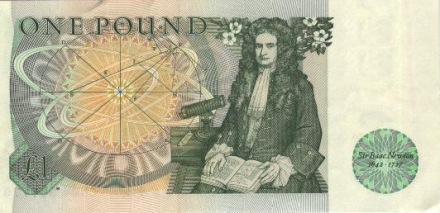

Appropriately, Newton himself wound up on the currency.

The accidents of place and time that brought the man who was recognized in his own day as the greatest mind of the age into conflict with Chaloner, an uncommonly gifted common criminal have fascinated me since I first learned of them through reading Chaloner’s last, piteous letter to the implacable Newton, written days before the hanging. In it Chaloner begged, writing “O dear S[i]r nobody can save me but you O God my God I shall be murderd unless you save me.”

What I wanted to answer was the obvious question: how and why did Isaac Newton come to pass judgment on the life of any other man? I had always thought of him as the nearly cloistered scholar of Trinity College, Cambridge, his home for more than thirty years. It was there he performed the experiments and the calculations that led him, in 1687, to write his masterwork, Philosophiae naturalis principia mathematica the Mathematical Principles of Natural Philosophy — better known simply as the Principia -– as well as pursuing his decades-long program of alchemical research.

So how, I wondered, did he end up in London, wallowing in the muck with the capital’s criminal underground?

Not to put too fine a point on it, finding out has turned into a book Newton and the Counterfeiter, published by Houghton Mifflin Harcourt and scheduled for release on June 4. But, to anticipate that longer story, here is the gist: Newton, after Principia found himself an international celebrity, and, as one of Cambridge University’s representatives to the Convention Parliament of 1689 that legitimized William of Orange‘s seizure of the English throne from the deposed Stuart King James II, he had nearly a year to enjoy the acclaim of London and Europe’s thinking and political elites before returning to the quiet of Cambridge, then a small town of about 5,000 inhabitants. It was an intellectual backwater too, especially compared to the big city in which he encountered figures like Robert Boyle, John Locke, Robert Hooke (whom he despised), Samuel Pepys (whom he did not) and so on. So he started, with Locke’s help, to seek a patronage appointment that would allow him to live comfortably in London. It took six years to find the right one, but ultimately he was offered the Warden’s post at the Mint. That job was supposed to be a sinecure, a nearly no-show position that would pay him a very comfortable wage.

And so it would have turned out were it not for the terribly debased state of England’s silver coinage, which had deteriorated to about half its legal weight for a whole host of reasons. So Newton arrived at a time when (a) the Mint was attempting to recall and recoin the entire stock of silver money for the entire country –- all the smaller units of money essential to everyday transactions –- and (b) coining, counterfeiting, was flourishing as enterprising men and women set out to get rich by filling in the gaps in the money supply with coins that never felt the stamp of an official Mint die. As Warden, it became Newton’s duty to see that legal money was produced fast and fairly, and to pursue all those who set up on their own.

Of those who did none were more technically skilled or ambitious than William Chaloner. His is a fascinating story, told at much greater length in my book, in which you see the currents of rapid economic change, class and ambition all converge within this one, barely remembered life. He was born desperate poor, a weaver’s son in Lincolnshire. He ran from his first apprenticeship to London, where he started out at the very bottom of the criminal ladder, hawking porn on street corners. He rose rapidly, first with his clearly impressive gift of gab, and then, after falling in with someone who knew how to gild surfaces, as the central figure in a series of ever grander schemes to counterfeit gold and silver money. He had sidelines as an informer, betraying conspiracies that he would himself set up, but his central gift and fascination was in the creation of fakes. Ultimately, he was one of the first to recognize the power of paper, and he started to counterfeit a variety of the early experiments with paper money and bank instruments.

In this sense Chaloner’s career –- and Newton’s urgent pursuit of him –- offer a window into the birth of the modern idea of money, of finance. And one of the things that fascinated me about this case is the degree to which this old story tracks some of our immediate problems. England’s and Europe’s economies were in rapid revolution in the late seventeenth century. The old idea of money as a chunk of metal with a pretty picture on it could no longer come close to accommodating the kind of enterprises governments and individuals wanted to undertake, from war to the funding of global webs of trade. And so people came up with all kinds of different ways of trying to represent value and exchange and even the idea of the changing worth of an investment over time. And the people making these experiments did not fully understand the implications of each expedient they tried. The last piece of paper Chaloner counterfeited was called a Malt Lottery Ticket, and it was at once simply paper money, a bond, and a gamble. Traders attempted to value these kinds of things in embryonic financial markets -– which would in a couple of decades blow up in a financial collapse that possess some striking similarities to our current predicament. Newton himself would lose a considerable fortune in that collapse, a sum worth a couple of million pounds, maybe more, in 21st century money.

It was that sense of precariousness that made the pursuit of counterfeiters so urgent in the midst of the late 17th century; England’s money supply was genuinely at risk, and no one had a good grasp of what it would take to make both the daily experience of small transactions and the high finance of war and trade go smoothly. So anyone threatening either or both levels of money was public enemy number one.

Of those who tried their hand at currency crime, Chaloner was the most accomplished, and notorious. By his own admission he counterfeited on the order of 30,000 pounds worth of currency over a seven- or eight-year career, an enormous fortune for the day. His big mistake, though, was to challenge Newton directly, accusing him in public of incompetence or fraud in his management of the recoinage of silver money between 1696 and 1698. He laid that charge both in testimony to Parliament and in a pamphlet he had printed for public distribution, and the scandal could genuinely have wounded Newton, were it not for the influence of his friends in power in Parliament at the moment.

It was enough, certainly, to propel Newton into an extraordinary investigation, an exercise of what may be seen as true non-fiction scientific detection. He set up a net of agents and informers throughout the worst neighborhoods and pubs in London, tracking any instance of coining he could find, interrogating suspects at the Tower or in jail, trying to build a web of connections around Chaloner. That story is contained within a collection of several hundred depositions and summaries of interrogations, all signed by Newton, that have survived, largely unexamined until now. Those records show that it took Newton almost two years in all, but aided in the end by listeners whose lives he held at his disposal inside Chaloner’s cell at Newgate, he managed to collect a sufficient weight of testimony to ensure that he could convict a prisoner clever enough to have escaped several previous attempts at prosecution.

The trial itself was something of a sham. Chaloner had feared being charged on the Malt Lottery Ticket forgery, (as we know from the accounts in Newton’s files of informers in the cells) but Newton actually presented evidence of a coining spree that almost certainly did not take place as described. Among other confounding facts, Chaloner was supposed to have made six different denominations of both silver and gold coins in a single day, which would have involved an enormous confusion of tools and materials that ran counter to basic counterfeiting practice.

No matter: the sheer volume of precise detail that Newton’s witnesses were able (or convinced) to provide produced a conviction within a very short time –- the whole trial took no more than an hour or so on March 3, 1699. There was a truncated appeal process -– really just a request for clemency from the crown, which was denied, and Chaloner’s sentence came down.

Formally, he had been found guilty of high treason, an assault upon the crown in the form of the king’s likeness and authority represented on the face of England’s coins. The punishment for high treason was essentially that suffered by William Wallace of Braveheart fame: to be strangled to the point of death, to be disemboweled whilst still living, to be beheaded and then quartered. By the date of Chaloner’s execution, the punishment had eased this far: convicted coiners were drawn to the place of execution on a rough sledge, subject to all the filth and abuse London’s open-sewered streets possessed; then hung until dead, and then, on rare occasions, to suffer post-mortem dismemberment. Chaloner himself was not, so far as any records revealed, actually cut into pieces. (As a gesture to public decency, women convicted of coining or other capital crimes were not supposed to be hung, lest their twitching at rope’s-end seem lewd. So they were burnt instead – though by the eighteenth century it was common to strangle them to death before lighting the pyre. Mercy, after the fashion of the times.)

Levenson lectures on his book at the MIT Writer’s Series.

One last note in a post gone much too long: Newton was involved in a number of counterfeiting investigations, and by some reckonings at least two dozen people went to their deaths as a result. Some historians, notably Frank Manuel, have speculated that Newton pursued this work with implausible eagerness, out of a kind of frustrated blood lust born of his abandoned and unhappy childhood.

This seems to me to be nonsense. The specific historical context matters here: Newton did not author the bloody code, nor did he send everyone he could to the gallows. Rather, the record of his depositions shows him to be simply a relentless practical man doing his job. He used little fish to catch big fish, and at least some of those low on the ladder received their escape from the gibbet. What you can see here, surprisingly, is the birth of a modern idea of a civil service. The Warden -– even Isaac Newton — was simply a man in a job doing the functions of that job, which included organizing the investigation and prosecution of counterfeiters.

What’s striking, of course, is that this civil servant, this bureaucrat, happened to possess the greatest scientific mind in history. And that’s the real sting in this tale. There is a connection between Newton’s pursuit of counterfeiters and his attempts to understand nature. He did employ the same resources of concentration and logical organization in his criminal investigations that he did when he tackled any problem. But more than the commonality of work habits, there is, I think this link: Newton can be seen as many people: the mathematician, the theoretical physicist, the empirical experimentalist, the alchemical mystic, the heretically devout religious thinker –- and the government functionary too.

And yet he was, of course, a single man, one with many interests, but ultimately with a consistent ambition, to reduce to order the complexity of any problem which was posed to him. Newton did not expect as Warden to have to chase crooks; when he found out that was part of the job he wrote a rather whiny letter to the Treasury to see if he could wriggle out of the duty. When he found he could not, he responded as he always had to the job at hand.

As one consequence, on this day three hundred and ten years ago, William Chaloner died.

On this day..

1697: Thomas Aikenhead

On this date in 1697, Scottish medical student Thomas Aikenhead was hanged on the road from Edinburgh to Leith for blasphemy, an already-archaic punishment inflicted for what reads like headstrong youthful atheism of a decidedly garden variety.

Aikenhead partook of the times’ emerging (albeit forbidden) store of humanist and skeptical literature, and chatted most unguardedly with University of Edinburgh “friends” who tattled to authorities to the extent that, not content with testifying against him, one published a pamphlet demanding the offender “atone with blood, the affronts of heaven’s offended throne.”

Said authorities scarcely elevated the dignity of the temporal throne in their own eagerness to swing a sledgehammer against a fly, trying the young hothead for his life under a Restoration law which by its own letter should not have lodged him in mortal peril until his third offense.

Thou Aikenhead, the indictment thundered in the second person:

shakeing off all fear of God and regaird to his majesties lawes, have now for more than a twelvemoneth by past…[vented] your wicked blasphemies against God and our Saviour Jesus Christ, and against the holy Scriptures, and all revealled religione…you said and affirmed, that divinity or the doctrine of theologie was a rapsidie of faigned and ill-invented nonsense, patched up partly of the morall doctrine of philosophers, and pairtly of poeticall fictions and extravagant chimeras

He called the Old Testament “Ezra’s fables”, Jesus the “Imposter Christ” (preferring Mahomet), and anticipated the extirpation of Christianity.

It was a bare two weeks from conviction to execution. Accounts of Aikenhead’s last days seem inconsistent; the prisoner recanted, possibly sincerely, but the Church — explicitly handed the power to at least reprieve him by its intervention — demanded hurried and “vigorous execution.”

Macaulay disgustedly pictured the scene:

The preachers who were the boy’s murderers crowded round him at the gallows, and, while he was struggling in the last agony, insulted Heaven with prayers more blasphemous than any thing that [Aikenhead] had ever uttered.

The singular punishment meted out this day — the last hanging for blasphemy throughout what was soon to become the United Kingdom — cast a long shadow into the coming century’s remarkable Scottish renaissance and lingers even today as a suggestion to some just how near the menace of theocracy might yet remain.

And Britain’s blasphemy laws? They’re only now facing repeal.

On this day..

1695: Zumbi dos Palmares

On this date in 1695, Zumbi dos Palmares, the last leader of Brazil’s most famous free colony of fugitive slaves, was captured by the Portuguese and summarily beheaded.

From the very beginning of European settlement in the New Wold, Maroon communities of escaped slaves, free-born blacks, Indians, poor whites, and mixed-race outcasts formed at the fringes of slave states.

Colonial power did not welcome their presence.

Consequently, the community of Palmares faced repeated harassment from the Portuguese and the Dutch West Indies Company from the time of its establishment around 1600 — even as it burgeoned into a kingdom of over 30,000 inhabitants.

Zumbi, a black free-born in Palmares, was kidnapped by such a sortie and raised with a missionary priest who taught him Portuguese and Latin. At 15, he escaped and returned to Palmares, quickly rising to prominence and in 1678 overthrowing his adoptive uncle King Ganga Zumba when the latter attempted to accept peace under Portuguese rule.

Zumbi’s skepticism was vindicated when the followers of Zumba who had defected to Portugal were re-enslaved, but free Palmares soon faced intensified Portuguese pressure. In 1694, artillery finally battered its largest settlement into submission — forcing its ruler into the bush, where he long eluded capture.

In Zumbi’s honor, November 20 is a Brazilian celebration of national pride and especially pride for those of African descent … while the king who would not be a slave has lent his name, somewhat paradoxically, to an international airport.

On this day..