On this date in 1916, a young soldier drugged with rum to the point of stupefaction was dragged to the stake and shot near the western front.
There are hooks on the post; we always do things thoroughly in the Rifles. He is hooked on like dead meat in a butcher’s shop. His eyes are bandaged – not that it really matters, for he is already blind. … A volley rings out — a nervous volley it is true, yet a volley. Before the fatal shots are fired I had called the battalion to attention. There is a pause, I wait. I see the medical officer examining the victim. He makes a sign, the subaltern strides forward, a single shot rings out. Life is now extinct. (quoted in Forgotten Soldiers: The Irishmen Shot at Dawn)
The Belfast youth — who may or may not have been underage; reports appear to vary on this point — enlisted in the 9th Royal Irish Rifles during the initial blush of wartime enthusiasm.
The service of these loyal units from both north and south while Ireland teetered on the brink of of civil war and some of its partisans treated with the Germans was naturally valorized by the crown.
They would experience the full measure of that war’s ample stock of horrors — including numerous executions to enforce military discipline.
Just a few months after 9th was shipped to France, Crozier was found wandering miles behind lines, unarmed and out of uniform, apparently shellshocked.
Events moved quickly from there; Crozier’s lackadaisical service record weighed against him, and it was decided to make an example of him.
Charged with carrying out the sentence* was Frank Crozier (no relation), who would attain some controversial postwar renown. In his memoirs, he recalled the pathos of James Crozier’s fate.
He was no rotter deserving* to die like that. He was merely fragile. He had volunteered to fight for his country … at the dictates of his own young heart. He failed. And for that failure he was condemned to die — and he did at the hands of his friends, his brothers, with the approval of his church.
Eventually, the British government came to agree.
Crozier’s posthumous pardon, from his family genealogy. His Commonwealth War Graves Commission entry is here.
* According to Timothy Bowman, an officer of the 9th Royal Irish Rifles convicted on the same offense received a free pardon days after James Crozier’s conviction, to the consternation of the rank and file.
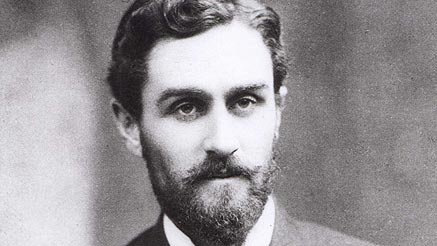
On this date in 1916, Roger Casement was hanged for treason by the British crown that had knighted him only a few years before.
Casement died for his part in the Easter Rising, but this Irish nationalist hero’s layered story has long made him a very different sort of cultural marker than, say, James Connolly.
Casement came to public prominence for his damning report on Belgium’s atrocious treatment of natives in its Congo colony, e.g.:
[T]he great decrease in population, the dirty and ill-kept towns, and the complete absence of goats, sheep, or fowls — once very plentiful in this country — were to be attributed above all else to the continued effort made during many years to compel the natives to work india-rubber. Large bodies of native troops had formerly been quartered in the district, and the punitive measures undertaken to his end had endured for a considerable period. During the course of these operations there had been much loss of life, accompanied, I fear, by a somewhat general mutilation of the dead, as proof that the soldiers had done their duty.
. . . Two cases (of mutilation) came to my actual notice while I was in the lake district. One, a young man, both of whose hands had been beaten off with the butt ends of rifles against a tree; the other a young lad of 11 or 12 years of age, whose right hand was cut off at the wrist. . . . I both these cases the Government soldiers had been accompanied by white officers whose names were given to me. Of six natives (one a girl, three little boys, one youth, and one old woman) who had been mutilated in this way during the rubber regime, all except one were dead at the date of my visit.
[A sentry in the employ of one of the concessionary private companies] said he had caught and was detaining as prisoners (eleven women) to compel their husbands to bring in the right amount of rubber required of them on the next market day. . . . When I asked what would become of these women if their husbands failed to bring in the right quantity of rubber . . , he said at once that then they would be kept there until their husbands had redeemed them.
Casement’s is an honorable name in the campaign for the Congo, an early human rights and anti-colonial struggle; in this 92-minute BBC documentary on the notorious depredations in the Congo, the Casement report’s creation and impact are treated from about 1:15:15 through the end:
A similar investigation undertaken in Peru — where the lens focused on British employers, rather than strictly the malfeasance of foreign states — earned him knighthood in 1911, but Casement’s personal evolution from loyal Protestant* imperial operative with a sympathy for the Irish cause to revolutionary nationalist was already underway. “This journey into the depths of the Congo has been useful in helping me discover my own country and understand her situation, her destiny, her reality,” he wrote his sister. “I’ve also found my true self: the incorrigible Irishman.”
He resigned from the consular service and began recruiting for the Irish Volunteers.
As World War I opened, Casement identified British aggression as its cause, an extension of the violent imperial hegemony he chronicled in The Crime Against Europe:
The British Empire was not founded in peace; how, then can it be kept by peace, or ensured by peace-treaties? It was born of pillage and blood-shed, and has been maintained by both; and it cannot now be secured by a common language any more than a common Bible. The lands called the British Empire belong to many races, and it is only by the sword and not by the Book of Peace or any pact of peace that those races can be kept from the ownership of their own countries.
While any Irish Republican would have agreed with that sentiment, the resulting moral and tactical calculus for the Irish cause to ally with the German was not universally embraced — and was certainly anathema to the British.
All that was beautiful and just,
All that was pure and sad
Went in one little, moving plot of dust
The world called bad.
Came like a highwayman, and went,
One who was bold and gay,
Left when his lightly loving mood was spent
Thy heart to pay.
By-word of little street and men,
Narrower theirs the shame,
Tread thou the lava loving leaves, and then
Turn whence it came.
Ætna, all wonderful, whose heart
Glows as thine throbbing glows,
Almond and citron bloom quivering at start,
Ends in pure snows.
Casement spent the first two years of the Great War in Germany itself, and arranged a shipment of guns that would have supported the Easter Rising, but thought the aid too little and too late. He had a German U-boat drop him at Ireland, trying to get word to the Republican leadership to postpone the revolt.** Instead, he was picked up three days before the doomed rising and hanged after a sensational trial.†
His “treason” — and of course, the very crime of which he was convicted imports a British legitimacy in Ireland that Casement explicitly rejected — shocked many old associates, but he still had friends in high places. To dampen the international clemency campaign, England circulated the notorious “Black Diaries,” photographs of supposed Casement diary pages detailing the author’s homosexuality.
This dirty (and successful) trick brings a personal-is-political quality to Casement’s legacy as well as an enduring debate over the diaries’ authenticity. Since Irish nationalism gained mainstream acceptance well before homosexuality, right-thinking folk long held the Black Diaries a forgery, and time was you solicited a black eye by saying otherwise in the wrong company.
The gay rights movement has seen a posthumous redefinition of Casement; although homosexuality was not on the indictment against him, one could argue that it was the reason he hanged. Given recent handwriting forensics that support the diaries’ authenticity, the general‡ consensus about the Black Diaries has inverted with the effect of only heightening sympathy for their alleged author, albeit at the expense of some tension over how to situate that characteristic within the whole of Casement’s life and thought.
And that is only one aspect of the shifting place of Casement in the firmament of Republican martyrs since his death. His hagiography waxed in the interwar years, with Yeats among those calling for the return of Casement’s remains in The Ghost of Roger Casement”.
But the humanitarian’s German ties were an inconvenience as World War II raged, and not until afterward was that cause renewed. When his body was finally returned in 1965, an Irish state funeral elided the matter of the diaries.
Even Casement himself, who would be the last to die for the Easter Rising, had a hand in the myth-making. His last mission’s purpose to avert the Easter Rising fit neither the government’s interest in maximizing his perfidy nor Casement’s own in identifying with the Irish cause; he himself therefore owned the Rising fully in his defense which made him fine fodder for Republican hymns like “Lonely Banna Strand”:
RTE radio’s What If? series recently explored Casement’s complex legacy:
As Casement put it in his voluminous personal writing, “It is a cruel thing to die with all men misunderstanding — misapprehending — and to be silent forever.”
* Casement’s father was Protestant and his mother was Catholic; he lived with a somewhat split identity between the two faiths, but formally converted to Catholicism while awaiting execution (which surely did not hurt his memory to the Irish cause) and his last meal was simply the Host.
** The guns themselves were interdicted by the British navy and ended up scuttled to the ocean floor.
† Since Casement’s incitements to rebellion had occurred on foreign soil, there was some fine legal parsing over whether he could be tried for “treason.” The dispute resolved to the placement of a comma in a medieval law — leading to the epigram/-taph that Casement was “hanged by a comma.” In the midst of war and before an English jury, however, punctuation was an even weaker defense than it sounds.
Lynching is such a vile word. Likely taken from the name of Captain William Lynch of Virginia (circa 1780), the term for administering justice while dispensing with a trial had, by 1916, long since taken on its more common meaning of a white-on-black public killing.
But Jesse Washington‘s case defies this simple definition, straddling the line between state execution and an unrestrained populace. Washington’s brutal lynching at the hands of a white mob in Waco, Texas, on May 15, 1916, clearly fits the definition, and the particularly grisly details of his demise conjure all-too-familiar images of violent racism in the pre-Civil Rights South; but in another more disturbing way, Washington was effectively executed, his punishment carried out not by the state of Texas, but by the people themselves.
Jesse Washington’s charred corpse after the lynching.
Washington was born in 1899, a black farmhand who may or may not have been mentally retarded.* While his life is not well-documented, his death most certainly is. Washington was arrested on May 8 of that year for the rape and murder of Lucy Fryer, the 53-year old wife of a well-to-do cotton farmer. Fryer was found bludgeoned to death. Washington was spared for a week by the Waco sheriff, who successfully took him into custody before a pre-trial mob got their hands on him; Washington was then sent to Dallas for holding to prevent a local incident. To appease the mob, he was transferred back to Waco and tried for the crime just one week later.
It’s unclear whether Washington was guilty — evidence is scant and the trial lasted just one hour, but Washington appears to have had ample opportunity to perpetrate the act and is purported to have confessed — but his guilt or innocence in the matter was not on the mob’s mind. On May 15, the well-attended trial ended, and in four minutes, the jury reached its guilty verdict. Before the 17-year old could be sentenced, and with little or no resistance offered by any of the various legal entities in the courthouse, several hundred of the onlookers (some brandishing weapons) rushed Washington and carried him out the doors. Outside, a larger crowd waited to beat and castrate him. A chain was thrown around Washington’s neck, and he was dragged to the town square, where he met an immense crowd as well as the pile of dry goods boxes that was to be his end.
A Fred Gildersleeve image of the lynching of Jesse Washington.
By some estimates, up to 15,000 (mostly white, though not exclusively white) people watched the horrible events unfold; without question, Waco’s mayor as well as several other public officials watched from their second-story perch at town hall on one side of the square. Washington was tossed onto the boxes and coal oil was poured over him. The other end of the chain was thrown over what has become known as the Hanging Tree, and the fuel below Washington’s feet was set ablaze. Immersed in the flames, he attempted to climb the blisteringly hot chain multiple times, each time to be lowered back into the cauldron. It’s unclear how long Washington was alive, but the event lasted more than an hour, after which his fingers and teeth were claimed as souvenirs, his body parts were separated from the torso, and the remains of Washington were dumped in a bag so they might be dragged once more through the Waco streets.
Also watching from the mayor’s position was a cameraman who wanted to sell photographs of Washington’s charred corpse as postcards. Fred Gildersleeve snapped a series of images which would briefly make Waco the most shamefully famous city in the nation. Gildersleeve’s work paints a portrait of a town possessed by spite and uncontrolled rage: thousands of white spectators standing about the burning body of Washington from above, then hundreds of blacks gathered around his burned and brutalized remains from ground level. Others took pictures as well,
some more disturbing than others.
A complete and startlingly brutal account of this murder is given by Patricia Bernstein in her 2005 book The First Waco Horror: The Lynching of Jesse Washington and the Rise of the NAACP, which also tracks the increased viability of the NAACP in the wake of the slaying. What makes this case noteworthy for this column, though, is that Washington was found guilty prior to his lynching, and he would doubtless have received a state-supported death sentence. At the time, Texas law would have allowed for a public hanging; presumably, the spectacle surrounding Washington’s execution would have been just as significant (though not nearly as gruesome). Instead, vigilante justice was administered on the young farmhand, and his case because a linchpin for the Civil Rights movement. As with other lynchings of the time, no persons were charged in the incident, though it was obvious that there was significant planning involved and, from some of the images, that some form of self-appointed executioner actively participated in the deed.
Unlike a state-sponsored execution, though, Washington’s death raised the ire of the jury foreman, who harshly criticized the court for not protecting him. And because he was lynched, his cause was also taken up by several Northern papers, pushed into the national spotlight by NAACP secretary Royal Freeman Nash and Elisabeth Freeman.** Over 90 years later, the town of Waco is still dealing with the Waco Horror. The lynching has reared its head multiple times as many residents have pushed for a plaque to be erected on the site of the lynching, as one was for a distressingly large number of prior lynchings in Waco. Some in the town continue to resist, asserting that Washington’s guilt absolved the mob of responsibility for its act.
A postcard commemorating the lynching; written on the back: “This is the barbecue we had last night. My picture is to the left with a cross over it. Your son, Joe [Myers].”
Washington’s case raises two of the critical issues in the modern death penalty debate: culpability of the executioner (and witnesses), and cruelty of punishment. Nobody in the mob was prosecuted for the crime, and in the Waco of that day, it would have been unusual if someone had; today, we take little interest in the state executioner but would vociferously condemn such mob action. On a similar note, Washington’s death was barbaric and brutal, and few would argue that such an execution should be undertaken through legal channels, but recent Supreme Court cases have found it difficult to identify the meaning of “cruel and unusual punishment”. The debate continues in the United States, but these are two arguments, posed by Cesare Beccaria, that caused Leopold II to outlaw capital punishment in the Grand Duchy of Tuscany in 1789, and cases like Washington’s suggest they should continue at the very least to give us pause today.
* Some accounts state simply that he was illiterate, and if this is the litmus test for mental retardation in the early 1900s, around 6 percent of the population fell into that category.
** Freeman worked tirelessly to drag information from Waco’s inhabitants, her actions likely sparking papers like the local Waco Times-Herald to quickly shut the door on the case; that paper officially apologized 90 years later for its and other newspapers’ roles in venerating the lynch mob.
On this date in 1916, James Connolly was tied to a chair and executed by firing squad along with Sean Mac Diarmada.
James Connolly: Irish revolutionary.
Connolly was born to Irish immigrant parents in Scotland. His first experience in his ancestral home of Ireland was during his stint in the British Army where, stationed in and around Cork, he had the opportunity to witness firsthand both the poor treatment of the native Irish by the British forces as well as the grave disparities between the landowning and peasant classes. When he returned home to Scotland, he fell in with the socialist crowd and quickly rose through the ranks to become one of the movement’s leaders. He actively participated in socialist organizations in several countries and joined the ranks of the Industrial Workers of the World.
A variety of circumstances brought him back to Ireland, where he led Irish socialists in seeking rights for the working class, joining the Irish Transport and General Workers’ Union in 1912. He went on to head the union two years later when the General Secretary, “Big” Jim Larkin, left for a speaking tour. In this capacity, he found a crowd for his increasingly open talks of revolution. Frustrated by what he saw as the unwillingness of the bourgeois Irish Volunteers, Connolly spoke persistently about sacrificing his own life in the name of economic freedom for Ireland, starting The Workers’ Republic journal, then printing his treatise The Re-Conquest of Ireland in 1915. Connolly headed just one revolutionary faction in Ireland at the time. Not wishing to have their festivities spoiled by Connolly, the Irish Republican Brotherhood, another revolutionary paramilitary group, decided to invite him to their Easter party.
The General Post Office in Dublin after the uprising.
The Easter Rising, which had little support from the Irish public at the time, began on April 24, 1916. Connolly led the Dublin Brigrade, which held the Dublin General Post Office, and so was in essence a sort of Commander-in-Chief during the uprising. Six days later, the Easter Rising came to a close with a surrender to British troops; its leaders, who had issued a proclamation of Irish freedom, were quickly sentenced to death by firing squad in the courtyard of Kilmainham Gaol in Dublin.
Injured during the fighting, Connolly had only been given a few more days to live by the doctors that attended him at the Royal Hospital Kilmainham. Unable to stand on his own due to his injuries, he was tied to a chair in order to face the firing squad.
The rapidity and brutality of the executions shocked the Irish public and the conditions of Connolly’s death were most shocking of all. After the executions, the corpses of the 15 put to death (killed between May 3 and May 12) were placed into an unmarked mass grave. The Irish people, previously largely indifferent to the republican rantings of the revolutionaries, angrily regarded British action against the leaders of the Easter Rising, granting legitimacy to the rebellion.
The death of Connolly and the other leaders of the six-day siege presaged the final revolution that led to a free Irish state. Two of Connolly’s cohorts in the Easter campaign were Eamon de Valera and Michael Collins; within a half dozen years, the two* expanded revolutionary tactics through Sinn Fein that forced the British to the bargaining table, meetings that would give rise to the bitterly partitioned Ireland of today. Connolly is still regarded as one of the greatest Britons, though he spent his life fighting the British, and the Irish havecelebrated his memorythrough several songs.
* While de Valera and Collins were regarded as the primary players in Irish statehood, the Easter Rising included dozens of revolutionaries who would spend their lives fighting for Irish independence.