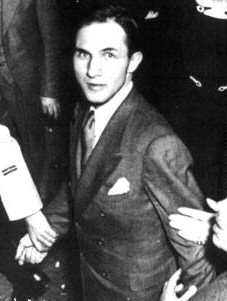
1975: Long Boret, on Day One

On this date in 1975, Phnom Penh fell to the Khmer Rouge — Day One, Year Zero of its nightmarish four-year reign over Cambodia.

That very day, the Prime Minister of the defeated regime, Long Boret, was arrested and summarily shot at the city’s Cercle Sportif.

Only weeks earlier, he had been furiously trying to negotiate any sort of peace with the advancing guerrillas … but his doomed government had little leverage. Boret was among several high-ranking officials whose names were on a death list the Khmer Rouge announced publicly; when the United States abandoned its support and evacuated days before, it was a surprise that Long was not among the Cambodian officials joining them.

He did have a good idea to get out in these very last hours — he and General Sak Sutsakhan, two of the last of the ancien regime remaining. Here is American correspondent Arnold Isaacs’ account of their last meeting:

When Phnom Penh awoke on the 16th, even the hard-line members of the Supreme Committee saw at last that further resistance was impossible … [and] agreed to … the immediate transfer of power to the revolutionaries. They asked only that there be no reprisals against officials and soldiers of the Phnom Penh regime.

…

As dawn broke on the 17th, the dispirited group returned to Long Boret’s house, where they finally received [the Khmer Rouge’s] reply to the previous day’s peace offer. It was a flat, frightening rejection. Not only would the liberation forces accept no arranged handover of power, but the membership of the Supreme Committee had been added to the seven original “traitors” on the Khmer Rouge death list.

…

Stunned, members of the government walked out of the prime minister’s residence and dispersed, leaving a “strange calmness,” General Sak later recalled. Only he and Long Boret were still there when an army officer arrived to report that a few helicopters were preparing to leave from the Olympic Stadium. The two leaders, each in his official car, reached the stadium shortly after eight o’clock and boarded one of the helicopters waiting there. A few minutes later, however, Long Boret’s wife, two children, and his sister, along with some family friends, arrived at the landing zone, and he stepped down to join them on another helicopter. With him went his close friend, Information Minister Thong Lim Huong.

General Sak, with his wife and children, took off at eight-thirty. From the air, as they rose over the city, they could see the prime minister’s party switching to still a third waiting helicopter. Whether both craft were mechanically unflyable or failed to take off for some other reason is not known. But Long Boret never left Phnom Penh. He was seen under arrest that afternoon, and shortly afterward was executed.

On this day..

1947: Fernand de Brinon, Vichy minister with a Jewish wife

On this date in 1947, former Vichy Secretary of State Comte Fernand de Brinon was shot in the Paris suburb of Montrouge for war crimes.

A lawyer and journalist who met future Nazi luminary Joachim von Ribbentrop in 1919, Brinon and his socialite wife Lisette were the toast of right-wing high society in the 1930’s. He even scored a scoop interview with the Fuhrer himself, shortly after Hitler became chancellor.

Germany’s rout of France in 1940 vindicated to many of the French right their critiques of France’s decadence; for Brinon, the natural step was support for collaboration, a career-enhancing philosophy that saw him to the third-ranking position of the Vichy government.

There he struck a post-partisan, consensus-oriented pose vis-a-vis picking sides between the new overlord and the erstwhile ally it was bombing:

To collaborate loyally with our opponents of yesterday in no way signifies in the mind of any man of good sense becoming the enemies of our allies of yesterday. (New York Times)

Men of good sense also knew the Bolsheviks were the real threat to world peace; hence, this Vichy-era newsreel of today’s victim reviewing French troops on the Eastern front:

Brinon knew exactly which side he was on and behaved as such, according to Occupied France: Collaboration and Resistance, 1940-1944:

[O]bsequious, indiscreet and an open admirer of Nazism … his collaboration was ideological, and it exceeded by far the agreements over food, prisoners of war, the demarcation line, and the mass of daily adjustments to the occupation sought by most Vichy officials … [Brinon represented] the Nazi end of the Vichy spectrum.

That made him an easy call for the sternest reprisal liberated France could exact, and he knew it himself: Fernand and Lisette tried to flee for Germany when the western allies began recapturing France in 1944.

What adds poignancy, if perhaps not sympathy, to his fate is the fact that Lisette — Jeanne Rachel Louise Franck, her name had been before he put a ring on her finger — was Jewish, and that fact was not a secret. She spent the occupation years as an official Honorary Aryan, safe from the deportations her husband helped arrange for others.

Lisette was also arrested by the Allies as she fled for Germany in 1944 — and how many Jews can say that? — but was released, and died in 1982. Four years ago, her aged son wrote a soul-searching book about his relationship with his mother and (for Brinon was Lisette’s second marriage) his stepfather, Lisette de Brinon, Ma Mere. There is also a recent biography of Brinon in French (review (also French)).

On this day..

1966: Christiaan Soumokil, South Moluccan President

On this date in 1966, an Indonesian firing squad on the island of Obira (or Obi) shot Chris Soumokil (the link is to his Dutch wikipedia page) for having styled himself the president of the Republic of the South Moluccas.

Soumokil’s fate underscores the many contradictory eddies of nationalism in the post-colonial age, and especially in that “imagined community” par excellence, the scattered archipelago of Indonesia.

Here is the background in outline, from a 2005 anti-terrorism text whose interest in the topic will soon become apparent:

The disintegration of the Dutch East Indies and the rapid dissolution of the federative state was anxiously watched in the Moluccas. … [Moluccans] were a privileged group and had favourable career opportunities … [they] were deeply concerned when Sukarno first proclaimed independence in 1945; indeed, many seemingly chose the side of the Dutch government and hoped for a return to colonial times, because they feared that a Java-dominated Indonesian state would significantly worsen their position. …

When Sukarno, in the spring of 1950, dissolved the state of East Indonesia, of which the Moluccas were a province, a group of Moluccans immediately responded by proclaiming and independent Republic of the South Moluccas (Republik Maluku Selatan) on 24 April. This, of course, was unacceptable for Sukarno. In November 1950, the Indonesian army occupied the island of Ambon, the cultural and political centre of the Moluccas. The RMS government and its sympathizers fled to the island of Ceram, where it started a guerrilla war against the Indonesian government. In the early 1960s it became clear that this struggle was utterly hopeless. In 1962, The Netherlands transferred New Guinea to the Republic of Indonesia, thereby depriving the RMS guerrillas of the safe haven where it [sic] had prepared its actions and found refuge.

Soumokil was captured in December 1962 and imprisoned; he was executed* just a month after the Indonesian government was seized by Suharto, on a programme of putting disorder to the sword.

Although politically moribund, the South Moluccan struggle to which Soumokil is a martyr is far from forgotten. And this is where the story of nationalism takes an unexpected turn.

Moluccan refugees in the Netherlands — a “temporarily” displaced population that became permanent, comprised largely out of ferociously anti-Indonesian former soldiers** among whom the RMS government-in-exile still maintains itself today — carried the memory of this struggle forward, far more so than it persisted in the Moluccas themselves.

For this Moluccan diaspora, already subject to all the strains of migration, the affair was a betrayal by their host country, which had failed to repay their ancestors’ loyalty to Holland during the colonial period by backing their people’s aspirations for independence — and had done this even while placing another colony, Suriname, on precisely the sort of stewardship-to-independence track the RMS had in mind for itself.

Soumokil’s execution (and his widow’s subsequent release to the Netherlands) helped (the link is Dutch) radicalize the next generation of Dutch Moluccans to the extent of carrying out some spectacular terrorist actions.

Though there haven’t been any bombs lately, there remains to this day enough currency in this cause to recommend it in the identity formation of the YouTube generation.

* An account of Soumokil’s last hours given by Soumokil’s widow posted here gives the particulars thus:

On April 11, 1966, Mrs. Soumokil and her son Tommie were given permission to pay a last visit to Mr. Dr. Soumokil from 08.00 AM to 11.30 AM to say good-bye to each other.

On April 12, 1966, at 01.00 AM Mr. Dr. Soumokil had been taken by the Indonesian Military from the condemned cell and transferred by motorboat to the island Obi in the archipelago Pulau Seribu … On April 12, 1966, one minute before 07.00am, Mr. Dr. Soumokil gave his last breath. He had been shot by the Indonesian firing-squad.

** Also generally Christian, vis-a-vis the predominantly Muslim Indonesia.

On this day..

1905: Fou Tchou-Li, by a thousand cuts

On this date in 1905, Fou Tchou-Li suffered the last execution by lingchi in Beijing, for the murder of a Mongolian prince.

Lingchi, or slow slicing, involved the public dismemberment of the victim. As such, it became iconic to westerners as an image of exotic Chinese cruelty — albeit iconic in a mythicized form, the accounts conflicting, undependable, Orientalist. (Many different ones are collected at the Wikipedia page.)

Lingchi is especially notable — apart from fathering the phrase “death by a thousand cuts” in the English lexicology — for its overlap with the era of photography.

Fou Tchou-Li’s death was captured on film, and the images famously captivated Georges Bataille for the expression of seeming ecstasy on the face of the dying (or dead) man.

Bataille was said to meditate daily upon the image below in particular — “I never stopped being obsessed by this image of pain, at the same time ecstatic and intolerable.”

Agony and ecstasy? A sequence of images, strong stuff in spite of their low quality, describing Fou Tchou-Li’s execution can be viewed here. Notice, however, that it’s not the one pictured here — the scholar who maintains this page claims the man’s identity became confused by western interlocutors. The different, unnamed man who as “Fou Tchou-Li” riveted Bataille is pictured here.

In Regarding the Pain of Others, Susan Sontag explained the mystical nexus of pleasure and pain Fou Tchou-Li’s torture suggested to the French theorist, aptly comparing it to graphic but pre-photographic exaltations of torture in the western artistic tradition, such as Saint Sebastian:

To contemplate this image, according to Bataille, is both a mortification of the feelings and a liberation of tabooed erotic knowledge — a complex response that many people must find hard to credit. … Bataille is not saying that he takes pleasure in the sight of this excruciation. But he is saying that he can imagine extreme suffering as a kind of transfiguration. It is a view of suffering, of the pain of others, that is rooted in religious thinking, which links pain to sacrifice, sacrifice to exaltation — a view that could not be more alien to a modern sensibility.

It’s no idle point to say that all this reads quite a lot into a single frame that may not be all that representative of the moment, though that wouldn’t necessarily diminish Bataille’s gist. More, these are western interpretations of — projections upon — an image marked as fundamentally outside in a tableau irresistibly blending the colonizer and the colonized.

The execution was ordered in the last days of the Qing Dynasty, which had long been substantially beholden to European states, especially the British; the prisoner was apparently administered opium to numb the pain, the very product Britain had gone to war to force China to accept.

Taiwanese video artist Chen Chieh-jen interpreted the photography that so captivated Bataille, and its colonial context, in Lingchi: Echoes of a Historical Photograph (review).

Two weeks after this date, China abolished the punishment for good.

On this day..

1975: Eight South Korean pro-democracy activists

At dawn on this date in 1975, the South Korean dictatorship hanged eight pro-democracy activists, the day after the Korean Supreme Court had approved their spurious conviction as agents of the fictitious “People’s Revolutionary Party”.

The eight, Woo Hong-seon, Song Sang-jin, Seo Do-won, Ha Jae-wan, Lee Su-byeong, Kim Yong-won, Doh Ye-jong and Yeo Jeong-nam, were tortured by the Korean CIA into admitting affiliation with this organization supposedly collaborating with the Communist North.

They were among numerous opponents of South Korean strongman Park Chung-hee rounded up for protesting against the legal codification of outright dictatorship in the early 1970’s.

Early last year, a South Korean court officially ruled that they had been wrongly executed, and awarded their surviving family members $26 million.

According to the worldwide anti-death penalty organization Hands Off Cain, the death penalty remains on the books in South Korea but has not been employed for over a decade.

On this day..

1979: Zulfikar Ali Bhutto, Prime Minister of Pakistan

In the small hours of the morning this date, the Pakistani military junta hanged former Prime Minister Zulfikar Ali Bhutto.

At the end of 1971, Bhutto, a former cabinet official who had broken with Pakistan’s military strongman, rode a wave of discontent into power as the economy crumbled, and East Pakistan broke away from Islamabad to form Bangladesh.

Born to a well-heeled Muslim family in British India, the charismatic and often arrogant Bhutto had feets in the streets and a way with both the domestic audience and the global one:

But he did not necessarily have a power bloc equal to the weight of the Pakistani military as he navigated the storm of controversial domestic challenges; in retrospect, it seems only a matter of time before his hold on power would slip.

In July 1977, Army Chief of Staff Muhammad Zia-ul-Haq, a fellow clan member whom Bhutto had promoted ahead of more senior officers, repaid his sponsor by overthrowing him in a virtually bloodless coup.

A protracted — and vengeful — legal drama with a pre-scripted ending unfolded over the ensuing two years, with Bhutto twice released and twice re-arrested, convicted of an earlier political murder on the testimony of “witnesses” who had obviously been tortured and coached, and his sentence upheld by a divided Supreme Court gamed to avoid the presence of a pro-Bhutto judge.

It was not out of character for this affair that the fallen Prime Minister was hanged secretly and before he expected, his (widely protested) death not announced until the following morning.

Allegories of Bhutto and Zia struggle for power in this early Salman Rushdie novel (more).

Bhutto makes a flawed saint, but his turn at power stands as an island of something like democracy in a sea of Cold War Pakistani dictatorships.

The Pakistan Peoples Party he founded still remains a principle organ of liberalism in Pakistan, and still honors its martyred leader. Reflective of both the vision and the personal autocracy of its progenitor, its leadership has passed dynastically through Bhutto family members, most famously daughter Benazir Bhutto, who succeeded Gen. Zia (he died in a suspicious plane crash) as Prime Minister — the first female elected head of state in the Islamic world.

Benazir Bhutto, of course, was assassinated this past December, just ahead of parliamentary elections that have just now produced a coalition government that will vie with Islamabad’s most recent military ruler for power.

The website bhutto.org preserves a considerable collection of the elder Bhutto’s writings, as well as photography, video and other resources.

On this day..

1936: Bruno Richard Hauptmann, The Most Hated Man in the World

On this date in 1936, a German immigrant went to New Jersey’s electric chair for kidnapping and murdering the infant son of famed aviator Charles Lindbergh.

Snatched

The kidnapping of the Lindbergh boy in 1932 had touched off an outpouring of public compassion matched only by the clumsiness of the investigation. The circus that formed around a father desperate to retrieve his boy — and prone to rash decision-making thereto — pulled in underworld figures, military intelligence officers (including the founder of the CIA’s forerunner and the father of Gulf War General Norman Schwartzkopf), a meddlesome schoolteacher, and queer characters like “Cemetery John,” who somehow managed two meetings with Lindbergh’s intermediaries, making off with a box full of ransom cash without anyone so much as tailing him, much less having to fork over the hostage.

The boy, in fact, was dead, and would be discovered weeks later, a few miles from the Lindbergh house, in such a state of decomposition as to suggest that, by accident or intention, he had suffered a fatal head injury almost at the moment of his abduction.

Two years’ fruitless investigation ensued, with leads that frustratingly faded away and at least two suspects who committed suicide. The police job had been a hash from the start, between amateurish cock-ups like failing to measure footprints found on the scene and security breaches in the chaotic weeks following the kidnapping. Most damagingly, a newspaper laid hands on an early ransom note and printed it, making it impossible subsequently to positively discern the kidnapper’s real notes from hoaxes.

But John Law had done one thing right: paid the ransom in soon-to-be-obsolete gold certificate. As they’d hoped, someone was finally caught spending this distinctive currency: Bruno Hauptmann.

Hauptmann actually went by “Richard”, but with its unerring sense of the Zeitgeist, the press played up his menacing alien moniker. After two and a half years, the public was ready to hate someone, and an illegal immigrant with a criminal record* from the late war’s great enemy was pretty much made to order.

Trial of the Century

The one thing Hauptmann didn’t do was confess — and that necessitated the “Trial of the Century,” or in Mencken’s coinage, “the greatest story since the Resurrection.”

It was O.J. before 24-hour cable. Journalists packed the small-town courtroom of Flemington, N.J.; for six weeks early in 1935, an aggressive prosecutor vied with a flamboyant (but cripplingly dissolute) defense attorney hired for the penurious defendant by the Hearst newspaper empire in exchange for inside information.

This newsreel footage of the trial consists mostly of Hauptmann’s own testimony, and even at seventy-plus years’ distance it crackles with drama — and with the persecutorial atmosphere that sealed Hauptmann’s fate, guilty or not. (The defendant often sounds uncertain and evasive in these clips — it cannot have helped his standing with the jury, but it is worth recalling that English was not his native language.)

History’s Verdict

The case was circumstantial, the most powerful circumstance, of course, being Hauptmann’s possession of ransom money — thousands of dollars worth, as it turned out, stashed in his garage. Hauptmann said a friend had left it when returning to Germany; the alibi didn’t convince many, but Hauptmann stuck to it to the end, even refusing to accept a commutation in exchange for a confession. This audio of a convicted Hauptmann still maintaining his innocence comes from the New Jersey Star-Ledger blog.

[audio:Bruno_Hauptmann.mp3]

Much other evidence against him — shaky eyewitness testimony, doubtful courtroom forensics — seems less damning, especially from the perspective of time. Unexplored problems — why would a professional carpenter build such a shoddy ladder? How could he have known the (rare) night the Lindberghs would actually be home? — gesture emptily towards other suspects never pursued, though they are very far from authoritatively exonerating Hauptmann. Ultimately, it’s a case with many unclear data points, whose importance and configuration invite dispute. (Here‘s a site dedicated to Hauptmann’s innocence, including this article (.pdf) outlining the main arguments his partisans make.)

Even the verdict’s defenders, and there are many, concede that portions at trial were exaggerated or outright perjured in an atmosphere hardly conducive to dispassionate review. Whether that makes Hauptmann “guilty but framed” or plausibly innocent (of the kidnapping, if not of opportunistic extortion) has been the subject of far more rumination than this blog can hope to assay.

A few of the many books about the Lindbergh case

An enigmatic criminal tied to an enigmatic icon in a painfully public four-year drama that transfixed the nation and still inspires debate: that “Trial of the Century” marquee holds up pretty well.

* In Germany; Hauptmann’s record was clean stateside — apart, that is, from Charles Lindbergh, Jr.

On this day..

1947: Qazi Muhammed, father of Kurdistan

On this date* in 1947, the only president of the world’s only Kurdish state was hanged with two aides in Mahabad, the Iranian city that had been the capital of his nascent country.

Ground between the maneuvers of much more powerful states — the stereotypical fate of the Kurds — Qazi Muhammed‘s endgame begins not in mountainous northwest Iran where he declared the short-lived Republic of Mahabad (alternatively, Mehabad), but in Berlin, where a distant dictator had hurled Europe’s great powers into war.

The contest for influence in Middle East and its lifeblood of oil for the modern mechanized army forms a crucial sidebar to World War II’s European chessboard, and the unpredictable collisions between rival empires and competing anticolonial interests made many strange bedfellows.

Two months after Germany invaded the Soviet Union, British and Soviet troops jointly seized Iran from its potentially pro-German ruler — securing both oil resources** and a precious route for sending American supplies to Russia’s desperately pressed defenders.

Kurds were very far from Stalin or Churchill’s calculation, but the moment also offered a power vacuum permitting de facto Kurdish self-rule in a narrow band straddling Soviet and British occupation zones.

As the war drew to a close, erstwhile allies began girding for the Cold War — and the disposition of Iran was a dress rehearsal. Moscow was keen to maintain influence in that country’s north, and to that end encouraged Iran’s Azerbaijani region to break away as an independent state — which it did in December 1945. The Kurdish Republic of Mahabad followed suit on January 22, 1946 (a date still commemorated by Kurdish activists) with Qazi Muhammed as president. Although the Mahabad Republic is sometimes characterized as “Soviet-backed,” or even a Soviet puppet, that might be a better description of its hopes than its reality.

Mahabad may have represented the national dream for Kurds, but it was a small pawn to the Soviets, easily sacrificed when its position became untenable. Moscow’s priorities were elsewhere, and this was the brief window when America was the only nuclear power: the Red Army was (diplomatically) forced out of Iran and the breakaway Republics reoccupied by the western-backed Iranian government. And Mahabad, a statelet founded by a middle class party with only limited backing from tribal chiefs, required Soviet support to have any hope of holding up.

Seeing where the wind was blowing, the Kurds submitted in December 1946 to the advancing Iranian army without a hopeless fight, but Muhammed refused on his honor to flee, hoping to placate the Iranians.

For all its inadequacies, Mahabad was the only Kurdish state of the 20th century, and Qazi Muhammed its founder and only president. That has earned him a place of honor in the crowded pantheon of Kurdish martyrs.

After a military court had him hanged, leadership of the Kurdish struggle passed to Mustafa Barzani, whose refugee guerrillas had made declaration of the Kurdish state a possibility in the first place.

In a biography of Barzani written by Barzani’s son, the Kurdish captain describes his last meeting with the president — and if the manifest interest of the reporting parties colors our presumption of its literal authenticity (journalist Jonathan Randal, for instance, reports that Barzani never held Mohammed in high regard), it likewise underscores the place of this day’s victim in the Kurdish mythology.

I went to Qazi Mohammed and asked him what he personally intended to do. He said that he intended to sacrifice his life to prevent bloodshed in Mahabad, that he would surrender to the Iranian forces, and that he had sent an emissary to General Hamayoni in Miyandoab informing him of his decision. He broke down in tears as he continued: “Never rely on anyone but your own group. All those who took the oath of allegiance have betrayed us and are rushing to prove their loyalty to the Iranian forces. Beware of the tribal chiefs who would target you if they could. I hope that you will leave Mahabad as soon as youc an to avoid confronting the Iranian forces.”

…

I insisted that he go with us [to Iraq], and pledged my word of honor that I would sacrifice my life and the lives of all who were with me to defend him, because he was the symbol of our nation. I told him that my advice to him was not to trust Iranian promises. It would be painful to see the first president of the Republic of Kurdistan fall into enemy hands.

In tears, Qazi Mohammed rose and hugged me, saying, “I pray God will give you strength and protect you. May my sacrifice spare the citizens some of their affliction and mitigate the terror and vengeance.” Then, he pulled a flag of Kurdistan from his pocket and gave it to me and said: “This is the symbol of Kurdistan. I give it to you as a token of trust in your honor, for I think you are the bes man to keep it.”

The Encyclopedia of Kurdistan has an excellent entry on Mahabad’s straitened political situation, as well as a good article on the background of tribal politics in the years prior to World War II.

* Some sources report March 30; the small hours in the morning of the 31st seems to have the plurality of scholarship.

** Although Baku was a much more important source of oil for the USSR.

On this day..

2001: Robert Lee Massie, who spent a lifetime dying

On January 7, 1965, 23-year-old Robert Lee Massie shot and killed Mildred Weiss during a botched robbery near her home. He pleaded guilty and, sentenced to die by the state of California, came within 16 hours of execution in 1967, when then-Governor Ronald Reagan temporarily halted his execution so that he could testify at the trial of his alleged co-conspirator. By this time, Massie had begun complaining to anybody who would listen about the conditions on death row, and greeting the prospect of an execution date as a welcome deliverance, was dubbed “the prisoner who wants to die” by the press.

However, Reagan’s reprieve bought him just enough time to live to see a California Supreme Court decision temporarily halting executions, which was followed by the US Supreme Court Furman v. Georgia decision of 1972 banning the death penalty as then being enforced as unconstitutionally arbitrary and capricious.

With Furman, death rows across the country were summarily cleared, and Massie, a model prisoner, was paroled for good behavior in 1978. By this time, the US Supreme Court had handed down the Gregg v. Georgia decision holding that states had revised their death penalty statutes sufficiently to allow executions to resume.

Only months after his release, Massie killed Boris Naumoff in his liquor store and wounded a clerk in another botched robbery. Again pleading guilty, this time over the objections of his court-appointed lawyer, Massie was again sentenced to die.

As before, Massie welcomed his sentence and, acting on a own novel interpretation of the Sixth Amendment guarantee of self-representation, argued that he had a constitutional right to bypass the appeals process usually automatic in capital cases and that there “is no meaningful difference between forcing an automatic appeal upon a defendant and forcing unwanted counsel upon him.” The appeals court disagreed, ruling that “while a litigant may waive the advantage of a law intended solely for his benefit, he may not waive a law established for a public reason.”

Appeals in capital cases were never intended to allow the prisoner to “choose his own sentence,” the Court wrote, and were in fact in place for just such a reason of ensuring full investigation into the “real issue [of] the propriety of allowing the state to conduct an illegal execution of a citizen.” The state was obliged to proceed with Massie’s appeals against his stated wishes, a charge unique to capital cases, because of the singular obligations imposed by the death sentence on the legal machinery of the state — and in fact imposed by the Furman and Gregg decisions that years earlier had ushered Massie unwillingly off death row.

His appeals continuing against his wishes, Massie’s conviction was ultimately overturned in a 1985 California Supreme Court decision holding that the sentence was invalid because his lawyer had not consented to the guilty plea.

Convicted again in a retrial in 1989, Massie was, once again, sentenced to death. Though he was briefly heartened enough to pursue appeals in earnest, those, too, foundered; increasingly convinced that corrupt judges were violating their oath to uphold the Constitution and greasing the machinery of death, he determined once again to pursue his own death.

As his appeals ran out, lawyers and advocates of all stripes stepped in to try to prevent Massie’s execution. A lifetime of abuse in foster care and juvenile detention centers and evidence of clinical depression and mental disorder were all presented at the last minute in a last-ditch attempt to save a man who didn’t want saving.

All were denied, and Robert Lee Massie was executed at the age of 59 on March 27, 2001. He was just the ninth prisoner executed in California in the post-Furman era and the 703rd nationwide.

Massie is one of a growing trend of death row volunteers, prisoners who voluntarily seek to run through their appeals and bring their lives on death row to an end. His frequent visitor in his last years in prison and “next friend,” Michael Kroll,* writes:

My friend, Bob Massie, maneuvered the state of California into assisting in his suicide. He had his own lawyer doing the dance of death with the attorney general and managed to avoid being declared incompetent.

And in the words of a relative of one of Massie’s victims:

I know he wants to die. It makes me think, if he wants out of the suffering, well, maybe we shouldn’t be killing him. Maybe he should just be left there to suffer.

Tossed hither and yon with the shifting legal tides of death penalty law spanning eight presidential administrations, Massie had to aid his executioners to the very last breath: when finally strapped to a gurney 36 years since that young man had murdered Mildred Weiss, he obligingly flexed his arm to help the technician find a suitable vein.

* Kroll tried to prevent Massie’s execution on the grounds that he was mentally ill, incurring his friend’s wrath.

On this day..

1977: Alphonse Massamba-Débat, Congolese Communist

On this date in 1977, the former president of the Congo, Alphonse Massamba-Debat, was summarily shot after his successor was assassinated.

A teacher by training and a member of the country’s powerful namesake tribe, Massamba-Debat (the link is to his French wikipedia page, which has considerably more information than the English entry) was a government minister who took power in a 1963 military coup that overthrew the former French territory’s first post-colonial government.

In a revolutionary age, Massamba-Debat swung with a Marxist-Leninist ideology. He ran a one-party state — winning a post-coup 1963 election by the comfortable margin of 100-0 — and met with Che Guevara during the latter’s African mission, while also setting up the first stirrings of industrialization.

The mix of true belief and opportunism in that formula is anyone’s guess; the brutality of his militias steadily eroded his “unanimous” popular support, and in 1968 he was toppled by another leftist, Marien Ngouabi.

That marked the end of Massamba-Debat’s meaningful political career.

Oddly, he was tried immediately after his overthrow for some of his regime’s notable political murders, but was acquitted and allowed to retire to his village: the new government plainly didn’t consider him much of a threat.

But when Ngouabi was assassinated in his turn on March 18, 1977 — for causes that remain unclear but that may have had to do with French energy interests in the region — the army seized control and purged numerous officials for supposed participation in the plot. Massamba-Debat, notwithstanding a dearth of evidence actually implicating him, was by virtue of being an overthrown former ruler far enough under the shadow of official distrust to find his name on that deadly list.

Massamba-Debat was officially rehabilitated in 1991, and is now far enough clear from the taint of treachery against his still-popular successor to have a stadium named after him. (the link is in French)

On this day..