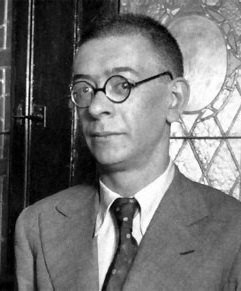
1747: Thomas Fuller, Hawkhurst Gang smuggler

On this date in 1747, a Tyburn hanging dispatched (along with three other, unconnected criminals) Thomas Fuller, member of one of 18th century England’s most notorious gangs.

Named for their home village, the Hawkhurst Gang dominated the trade in contraband in England’s south from Doset to Kent in the 1730s and 1740s, with the arms and ill-temper to trade blow for blow with crown agents who rightly learned to fear the syndicate. In the process that gang contributed several members to Blighty’s gibbets for various deeds of spectacular violence — gentlemen whom this site will revisit in future posts.

Our Mr. Fuller, however, was by the evidence laid at his trial a mere grunt, and his prosecution targeted the gang’s more routine forms of outlawry.

Despite the smuggler’s romantic knight-errant literary profile — Rhett Butler, Han Solo — it was for 18th century England a vast economic sector organized on a nearly industrial scale. Excise duties imposed on in-demand imports, notably tea but also spirits, tobacco, sugar, and other indulgences, made these articles so profitable to move illegally that it’s a fair bet that they were predominantly consumed as contraband. We have seen in these pages, from a post laid 30 years to the future, that tea smuggling was so commonplace that respectable country parsons made no pretense about securing their refreshments on the black market.

It was enterprises like the Hawkhurst Gang that delivered the leaf to its market.

Exploiting the long coastline, from which skiffs could scuttle to rendezvous with channel shipping, the gang built a storage infrastructure, supply chains, distribution networks. We have a taste of how this worked from the words of the attorney general at Fuller’s trial:

About the Beginning of August last the Prisoner at the Bar, with a great Number of other Persons, all of them on Horseback, arm’d with Fire-Arms, the Prisoner particularly, among the rest, with a Carbine or a Blunderbuss, together with the rest, was on Horseback; and they were then accompanied with several drove Horses, and upon the Horses they rode, as upon those they drove, they carried great Quantities of Tea in Oil-skin Bags, and Half-Anchors, peculiar to those Sort of People; a Peculiarity it is which no Goods besides is carried, in order to elude Justice.

Multiple witnesses in this case described how widespread the practice is; they were needed because the crown case had an evidentiary weakness: everyone knew that posses toting oilskin bags were tea smugglers, but the witnesses had not literally seen the defendant reveal the contents of his oilskin bags. Here is a customs agent named Walker explaining the situation:

Sollicitor-General. What is the Practice of Smugglers in carrying off their Goods?

Walker. Such time as I have been an Officer, which has been ten Years, I never took no Tea in my Life upon Horses, but what was in Oil-skin Bags. Wherever I had a Suspicion, and found Oil-skin Bags, I always found Tea.

Q. How many may you have found?

Walker. Thousands of Bags; when they are in a Hurry, and taken from the Sea, they are in Oil-skin Bags; but when they carry them up into the Country, they carry them in Sacks; there is never a Gang that comes from the Sea-side, but rides with something upon their Horses.

Later, a different officer made an equally important observation about the well-known Hawkhurst Gang: “we never attack’d them, because we were over-power’d.” The Hawkhurst Gang was hardly alone in this. As readily as Britons embraced their untaxed smuggled tea and brandy, the underworld firms that delivered them were growing frighteningly in size and propensity to violence during the 1740s.

Accordingly, they were met by a concerted crackdown by authorities. (And, perhaps more helpfully, a reduction in the tea tax.) In 1745, Parliament had stacked upon the century’s vast allotment of property crimes fresh capital offenses for armed smuggling — no matter whether those arms were actually used. For the case at hand, there was no need to link Fuller to a homicide or the like: only to show that he participated in the normal activities of the Hawkhurst Gang.

As was often the case, it was left to the likes of the Ordinary of Newgate to express in words the ideological message of smugglers’ execution. He did so with great vehemence (but less persuasive effect) when Fuller went to hang:

The common People of England in general, fancy there is nothing in the Crime of Smuggling, but cheating the King of a small Part of his Revenue; and that there is no Harm done to the Community in general, or to the Properties of particular Persons: They think they have a Right to shun, as much as possible, paying any Duty for their Goods, and what they get by their Dexterity in that Manner is honest Gain, to be enjoyed as the Fruits of their Industry and Labour; but a little Consideration will teach them to think otherways, and convince them, that Smuggling is in itself a Crime of worse Consequence to Society, and more hurtful to particular Persons, than many other Crimes which Custom has taught them to look upon with great Abhorrence.

The Prejudice done the Society, and the Damage received by Individuals, next to the express Declaration of the divine Will, are the best Marks by which we can judge of the Degree of Immorality in any Action whatever; and if we judge of their Crime of Smuggling by this Criterion, we shall find it a Sin of deep Dye, and to deserve the Resentment of every Man, who pretends to any Share of moral Honesty.

In the first Place, the fair Trader is injured in his Property by their kind of illicit Trade: He pays honestly the Duties and Taxes charged upon his Commodity at his Entry, which in some Cases amounts to near as much as the prime Cost of his Goods at the first Market; this he must charge upon the Consumer, with a living Profit for his Riske, Trouble and Out-lay of his Money; but the Smuggler, who buys his Goods at the same Market, and perhaps at a lower Price, as he chuses the worst Sort upon running them, is able to undersell the fair Dealer at least one Third, and for that Reason is, by the greedy Retailer, preferred, though the Commodity he deals in is worse in Quality. Is not this robbing the honest Merchant of his real Profit, and forcing him either to sell below what his Goods cost, or leave off a Branch of Trade, to which perhaps, he has served an Apprenticeship, and built extraordinary Hopes upon, of being a Support to him or his Family? I appeal to every thinking Man, if there is any material Difference betwixt ruining a Man by robbing him on the Highway, and this Method of beggaring him and his Family by Smuggling? If there is any Difference in Point of Immorality, it must lie on the Side of Smuggling, as the Evil attending it is more universal, and reaches farther. Few Men carry their All in their Pocket; and not one Man in a Thousand is ruined, by what is taken from him by the Highwayman: But there is not a Ship of Goods run upon our Coast but injures Hundreds; perhaps not immediately, but in Process of Time it certainly has that Effect. Not only the Parts adjacent, and the Dealers near the Smuggling Port suffer by this Means, but the most distant Corners of the Kingdom are affected by it in a few Weeks, in Proportion as it lowers the Price of the Commodity, and diminishes the publick Revenue. But it is this lowering the Price which is the great Temptation; the Cheapness of the Smugglers Goods tempts the Retailer to prefer him to the fair Trader, from a mistaken Notion that it is his peculiar Interest to buy as cheap as he can, and consequently he encourages, conceals, and connives at all the Villainies of this Set of People. But if such a Retailer should give himself Time to think, I believe he might easily persuade himself, that he is robbing Peter to pay Paul; that what he gets upon one Article, he loses on another.

It is evident, Taxes must be paid to support the Expences of the Government; and that every Subject, as he enjoys the Benefit of Government, is obliged to contribute his Proportion to that Expence. It is likewise evident, that if the Duties laid upon one Commodity does not answer the Sum charged upon it, that the Deficiency must be charged upon some other. Thus: Suppose the Duties charged upon Teas, Brandy, &c. falls short 100,000 l. of the Sum allotted to be raised upon these Commodities, is it not evident that this 100,000 l. must be charged upon Soap, Candles, Leather, Sand, or some other Branch? Suppose then a Dealer, by dealing with the Smuggler, saves about half the Duty payable to the King, or, which is the same thing, buys it so much cheaper from him than he would from the fair Trader, and that his Gains upon this Article amounts to ten or twenty Pounds a Year, I mean his illicit Gains, or the Difference between the trading Price and smuggling Price; now, as it is evident, that every twenty Pounds gained this Way lessens the Revenue forty Pounds, he or somebody else must re-place this Sum in the Treasury, by a Tax upon another Commodity; from whence it is as clear as the Sum; that instead of gaining twenty Pounds by his smuggling Dealer, he really loses twenty Pounds upon the Ballance. I own, he may not chuse to deal so largely in these other Articles, as to bring it to this Ballance, but some of his Neighbours may. And as much Money as they pay towards making up this Deficiency, occasioned by the Smuggler; just so much does the Person, who deals with such People, rob out of the Pocket of his Neighbour.

If I was to charge several People, who make no scruple for the Lucre of Profit, to buy Goods which they know to be run, with as foul a Crime as Robbery, or even that of cheating their Neighbour, they would be apt to treat me with some Severity, and think I much injured their Reputation: Yet, upon serious considering the Circumstance attending this Practice, they must at last own, they deserve no better Character than that of a Highwayman and Cheat.

Thus it is plain that Smuggling is a Crime of the most dangerous Nature, both against the Community and private Persons, and as such subject to the Divine Displeasure, as much as any other Felony. It is not only a Sin destructive to Society, and contrary to human Laws enacted for the Peace, Protection, and Subsistence of the State, but is a Sin against the literal Precepts, as well as the Meaning and Intent of Christianity: We are commanded Obedience to Government for Conscience sake; we are commanded to pay Tribute to whom Tribute is due. Our Saviour gave that Answer to the Jews, though that People had as much Reason as any People on Earth, to look upon the Romans as Tyrants, and having no Right to that Tribute, but what they founded upon the superior Force of their Arms; but how much stronger is the Christian Obligation, to pay towards the Support of a Government established? Not by Force or Fraud, butby the Consent of a free People, and conducted by all the Arts of prudent Policy conducing to their Happiness, both in their Religious and Civil Capacities.

If we consider ourselves as several Members united in one Society for our mutual Peace and Protection, we must conclude it the highest Piece of Injustice in us to refuse or evade by Force or Fraud to pay our Contingent of the Expence incurred for such valuable Purposes, as the securing our Religion and Liberties.

If the Government was to make any Infringement upon the Properties of Individuals, or aim at lessening the Freedom of the Constitution, how would the Smuggler and his Friends rail and exaggerate the mighty Grievance? Yet at the same Time grudge to pay their Quota, and take all Means in their Power by Deceit or Violence to cheat the Government of what enables them to preserve Order and Peace in the Community.

These Considerations alone are sufficient to awaken the Conscience of the Guilty in this Way, and to hinder us from affording them an unseasonable Compassion; but there yet remains some other Circumstances to blacken the Blackness of their Crime. These are the Manner in which they go about to execute their Smuggling Purposes.

They go in Companies together, armed with all Manner of offensive Weapons, and escorted by the most profligate Wretches they can pick up: They employ none in their Service but Fellows who have given Instances that their Consciences are Proof against all Checks of Morality, Religion or Law, and whose Courage is equal to the most daring Attempts upon the Peace of the Society. By these Men Perjury amongst others, is looked upon as a venial Transgression, beneath the Conscience of a Gentleman Smuggler to be troubled with. Murder, Rapes, and Robberies are with them but as frequent, as they conduce to their Interest. Their Character, their Cruelty, and Numbers has given them another Source of Encouragement, and a new set of Allies. For Numbers of the Country People who perhaps abhor their Practice, from the Dread they have justly conceived of their Power, find themselves obliged, tho’ against their Wills, to connive at or conceal, and even to assist them, and when they are not willing, they are compelled to lend their Aid. For when a Smuggling Vessel touches on the Coast, those concerned or their Associates meet at a Place of Rendezvous, and press all the Horses they meet with for their Service, which they sometimes return, and sometimes not, just as their Business requires, and the Owners dare not complain for fear of having their Throats cut, or their Houses set on Fire: Not only single Houses, but whole Villages and trading Boroughs are kept in this slavish Dependence upon them, out of real Apprehension of Danger, without any Regard to Profit in dealing with them.

On this day..

2016: Jia Jinglong, nail gun avenger

China today carried out the controversial execution of Jia Jinglong, a peasant who found a nail gun was his only avenue of redress.

Jia’s village home in the northern Hebei province was demolished three years ago at the order of a local Communist chief who subsequently balked the family of compensation. (They got a small apartment in a high-rise.)

Rapacious developers backed by the power of the state expropriating dwelling-places in an environment of weak legal protections make for one of the most deeply felt abuses in boomtime China, and it goes without saying that it’s a racket where the wealthy and powerful dip their beaks and the other 99% shift as they can and nurse futile grudges. According to the Associated Press, Jia’s village near the city of Shijiazhuang “is overwhelmed by a cacophony of drilling, pounding and jack-hammering coming from construction sites. More than a dozen cranes could be seen in the distance, adjacent to high-rise apartment towers still being built.” As if to add a literary flourish to the injury, Jia also lost the girl in the end as his fiancee, now deprived the prospective roof over her head, promptly called off the wedding.

“What he has experienced is what many are going through or will be going through,” Jia’s sister Jia Jingyuan told reporters. “Because my brother is part of this society’s underclass, he represents the lives of many ordinary people.”

That’s because Jia Jinglong didn’t allow his grudge to remain futile: he used a nail gun to murder the local party chief who wrecked his house and life. It is hardly the only time that a desperate common person has lashed back at the cruelties of state capitalism with the pleasurable self-destruction of personal violence.

While premeditated homicide with a power tool is surely your basic capital case in any jurisdiction keen on the death penalty, the story behind it brought most of China to Jia’s defense; even some state media editorialized for abating the sentence. That wasn’t only in a spirit of vicariously joining the man’s revenge: the severity of the law towards an ordinary citizen charged with slaying an official raised an obvious equal-treatment grievance when contrasted with the likes of the wife of disgraced party boss Bo Xilai, who had a British businessman assassinated but still dodged execution.

(In fairness to the People’s Republic, China has executed powerful officials and plutocrats in various other recent high-profile cases.)

Thanks to Twitter friends including @jewssf and @luimnea for tipping me this story.

On this day..

1738: False Tsarevich Alexei

From the memoirs of Cristof Hermann von Mannstein, a Prussian officer who served in Russia from 1727 to 1744. As Manstein has this report by second hand, he has no precise dates.

Execution of the false Czarewitz.

In the month of November, there was a terrible execution in the Ukrain[e]. The son of a peasant in that country had given himself out for the Czarewitz, son of Peter I deceased, in the year 1718.

He had come into a village on the frontiers, where he had declared himself as such to three soldiers, who were on guard near the pyramidal beacons fixed along the limits. These had done homage to him, as also the inhabitants of the village. The priest had caused the bells to be rung, and said a mass in his favor.

At length the people of the village assembled, and perhaps the matter would have gone farther, if it had not been for a Sotnick, or Cossack captain, who, hearing of it, acquainted general Romanzow, then in the neighbourhood.

This pretended Prince and his adherents, who were not very numerous, were easily seized, and conveyed to Petersburgh, where they had their trial in the secret chancery; after which they were sent back to the Ukrain[e]. There the major-general Schipow had an order to see them executed.

The self-made Prince was impaled; the priest and the three soldiers were put to different kinds of deaths.

The Empress forgave the peasants, but the village was razed to the ground, and the inhabitants were removed to other places.

On this day..

1544: Maria von Beckum and her sister-in-law Ursula

From the Martyrs’ Mirror catalogue of Anabaptists

In the year 1544, there was a sister in the Lord, named Maria van Beckum, whom her mother had driven from home on account of her faith. This having become known in the Bishopric of Utrecht, and reported to the Stadtholder, he sent one Goossen van Raesveldt with many servants, to apprehend this maiden at her brother’s, John van Beckum, whither she had fled: She was compelled to rise from her bed, and accompany them; and when she saw the great number of people who had come on her account, she asked Ursula, her brother’s wife, whether she would go with her and keep her company.

The latter answered, “If John van Beckum is satisfied, I will gladly go with you, and we will rejoice together in the Lord.” When Maria put this request to her brother, he consented, and Ursula went with her. Here love was stronger than death, and firmer than the grave. Cant. 8:6.

Her mother and sister had come from Friesland to see her; but this could not move her, she took leave of them, for she chose to suffer affliction, rather than to have worldly joy; hence she went with her sister Maria. They were together brought to Deventer. There blind leaders came to them, who with subtlety sought to win them to human institutions. But they answered, “We hold to the Word of God, and do not regard the dictates of the pope, nor the errors of the whole world.” Friar Grouwel also sought to teach them much, but was not able to prove his assertions by the Scriptures.

Now as he could not overcome them, he said “The devil speaks through your mouth, away with them to the fire.”

They greatly rejoiced that they were worthy to suffer for the name of Christ, and to help bear His reproach. Acts 5:41.

They were then brought to the house at Delden; where many efforts were made to cause them to apostatize, yet all in vain. A commissary came from the court of Burgundy, who greatly extolled the mass and all the institutions of the pope; but he could not prevail against the Scriptures which they adduced.

He then asked them whether they were rebaptized. They replied, “We have been baptized once according to the command of Christ and the practice of the apostles; for there is but one true baptism, and he who receives it, has put on Christ, and leads an unblamable life through the Holy Ghost; in the answer of a good conscience.” Eph. 4:5; Gal. 3:27; I Pet. 3:21.

He also asked them, whether they believed that Christ was wholly present in the sacrament. This they considered a blind question, and said, “God will have no likeness or image, neither in heaven nor on earth (Exodus 20:4); for He says through the prophet: ‘I, even I am the Lord; and beside me there is no Saviour.’ Isa. 43:11. But as regards the Supper, we find that Christ left it as a memorial of His death, with bread and wine; as often as we commemorate it, we are to show forth His death till He come.” I Cor. 11:26.

Now as Maria and Ursula regarded all the institutions of the pope as heresy, they were brought into open court at Delden, on the thirteenth of November, before the children of Pilate and Caiaphas, where they were sentenced to death, in which they rejoiced, praising God. When they were led to the stake, many of the people, seeing their steadfastness, wept. But they sang for joy, and said, “Weep not, on account of what is inflicted upon us.”

“We do not suffer,” said Maria, “as witches or other criminals, but because we adhere to Christ, and will not be separated from God; hence be converted, and it shall be well with you forever.” [See Paul Friedland on the implications of this behavior by Protestant martyrs -ed.]

When the time of suffering drew nigh, Maria said, “Dear sister; heaven is opened for us; for what we now suffer for a little while, we shall forever be happy with our bridegroom.” They then gave each other the kiss of peace.

Thereupon they prayed together to God; that He would forgive the judges their sins, since they knew not what they were doing; and that as the world was sunk in blindness, God would have compassion on them, and receive their souls into His eternal kingdom: They first took Maria; who entreated the authorities not to shed any more innocent blood. Then she fervently prayed to God, and also prayed for those who put her to death; whereupon she joyfully arose, and went with such great gladness to the stake, that it cannot be told, saying, “To Thee, O Christ, I have given myself; I know that I shall live with Thee forever. Therefore, O God of heaven, into Thy hands do I commend my spirit.”

The executioner swore because the chain did not suit him; but she said, “Friend, consider what you are doing; my body is not worthy that you should blaspheme Christ on account of it; repent, lest you burn for it in hell.” The preacher, a teacher at Delden, turned Ursula around, but she turned back again, and urgently said, “Let me behold the end of my sister, for I also desire to receive the glory into which she shall enter.”

After Maria was burned, they asked Ursula, whether she would not yet apostatize. “No,” said she, “not for death; I will not thus forsake the eternal riches.” They would also honor her with the sword, but she said, “My flesh is not too good to be burned for the name of Christ.”

To one of her relatives she said, “Bid John van Beckum good night, and tell him to serve God, to whom I am now about to be offered.” When she came to the wood, she clasped her hands, and said, “Our Father which art in heaven.” “Yea,” said the priest, “there you will find Him.” “Because I seek Him there,” she said, “I must die this temporal death. If I should confess Him in the bread, I might live longer.”

When she stepped upon the wood, her foot slipped. “I think I am falling off,” she said. “Stop,” cried the tyrant; “she means to apostatize.” “No,” said she, “the block slips from under me; I will not faint in the Word of God, but constantly adhere to Christ.” Thus both remained steadfast unto the end, and sealed the Word of God with their death, in great patience and boldness, leaving us a good example.

A subsequent entry in the Mirror reveals that Maria at her execution called on believers to witness that “this stake at which I am to be burned [will] grow green, by which you may know that it is the truth for which we here suffer and die” — a prophecy that proved to be accurate.

On this day..

1886: William Wilson

(Thanks to Meaghan Good of the Charley Project for the guest post. -ed.)

On this date in 1886, 45-year-old William S. Wilson was hanged for murder in Jonesboro, Illinois. He had killed his wife, Margaret.

Wilson was good at producing offspring — he was the father of at least seven children and possibly as many as nine — but not so good at providing for them. At Christmas in 1885, he left his family and went to Kentucky, leaving his destitute wife and kids only $5 in cash (the equivalent of about $130 in modern terms) and very little fuel. When supplies ran out in early January, several neighbors took pity on Margaret Wilson and her brood and banded together to cut enough firewood to get them through the winter.

When William returned home on January 7, however, he was furious when he learned Margaret had shamed him by accepting charity.

Daniel Allen Hearn, in his book Legal Executions in Illinois, Indiana, Iowa, Kentucky and Missouri: A Comprehensive Registry, 1866-1965, records,

Wilson berated his wife for allowing the neighbors to act. He chased the heavily pregnant woman out of their cabin and shot her down in the mud and slush. The sight of her near-term unborn baby vainly kicking against the interior wall of her abdomen appalled witnesses, who could do nothing to save it. Details such as these illustrate the brutality that often characterizes these all-too-common wife-killing cases.

William had shot Margaret twice: once in the chest inside the house, and once again outdoors as she was running away. As she lay dying on the frozen ground he walked away. He didn’t get far before he was arrested.

A contemporary newspaper article speculated that William might be crazy, noting that he had been “affected for a long time with some incurable disease” and “is not regarded by some as sane.” But it wasn’t enough. William paid the ultimate price for his crime eleven months after the murder.

On this day..

1807: Ephraim Blackburn, low roller

On this date in 1807, a throw of the dice noosed Ephraim Blackburn.

The son of a Pennsylvanian who served in George Washington’s army, Blackburn sought his own martial adventure by joining the expedition of Louisiana-Mexico border trader Philip Nolan in 1801.

Nolan had spent the 1790s living and trading along the frontier of Mexico and (Spanish, until 1800) Louisiana. Nolan worked in a legal twilight, earning the connivance of some Mexican officials and the hostility of others; perhaps no Anglo was better-acquainted with Texas.

By 1800 he was barred from the territory but assembled a coterie of 30-plus armed men and ventured into Texas once agan on an apparent filibustering operation seeking to carve out control of some piece of Texas. Our man Ephraim Blackburn was among these daring souls, whose wooden palisade somewhere near the Brazos River was quickly overwhelmed by a Mexican attack.

Nolan died in the battle, leading the remainder of his men to surrender. From there they would embark on a strange years-long legal road, their numbers continually winnowed by escapes. Ordinarily when one is prosecuted as a foreign invader, one is not permitted to have the liberty of the city or to go into business, but that is exactly what occurred with the Nolan men.

One of their number, Peter Ellis Bean, is known to have survived his incarceration; he escaped and fought for Father Miguel Hidalgo‘s Mexican revolutionaries against Spain, returned to the United States in 1818, then re-settled in post-independence Mexico. Bean conferred on posterity a memoir recalling that during their imprisonment,*

Some of my companions got leave of the general to go to other towns to live, but I thought I would find out some way of making something. I gave myself out as a hatter. There was a gentleman who trusted me for whatever was necessary to carry on that business. I employed two Spanish hatters to work with me, for, in fact, I was no hatter at all. In about six months I had so raised my name, that no one would purchase hats except of the American. By this means I got a number of journeymen to work with me. I was clear of debt, and making from fifty to sixty dollars per week.

All this entrepreneurialism was unfolding while capital case meandered with no great urgency among Spanish courts. One judge recommended the prisoners’ outright release in 1804; by the time the message had been shipped across the Atlantic and back, it was 1807, and the judge had died. The crown’s reversal horrifyingly required the death of one in every five of the invaders — although since deaths and escapes had now reduced their ranks to just nine, the local authorities mercifully rounded the figure down to one.

On the 9th of November, the nine remaining prisoners were gathered in a Chihuahua barracks and made aware of their situation. They agreed among themselves to cast dice in order of seniority — low roll hangs.**

Blackburn was the oldest, and the first to roll. He threw a 3 and 1. Bean narrates, beginning with the frighteningly mysterious arrival of confessional priests the night before the survival lottery:

all our conversation that night was in view of our being put to death. I told them that we should trust to fate, and not fret ourselves about what we could not remedy. One of them said the bravest would be cast down to see his open grave before him. “But,” said I, “if you find no way to escape that grave, is it not better to march up to it like a man, than to be dragged to it like one dead? It is enough for them to drag me to it when life is gone. The most cowardly, where under sentence of death, have marched up with great bravery. And, as for myself, if I must die, I mean not to disgrace my country.” The reason I talked so was that I did not believe they would put us to death.

Soon the next morning the priests returned, and David Fero asked them if we were to be put to death. They said they did not know — perhaps some might be. I then began to conclude it would be me, and all my companions thought the same thing. I, however, said nothing; for, as I had before talked of valor in such cases, it became necessary for me to support that character. The priests said we must confess all our sins to them, and we should be forgiven. As for myself, I had been taught that God knew all my crimes and it was not worth while to relate them to the parsons. But some of my companions began to confess, and had their sins forgiven. When they asked me, I told them I must have four or five days to recollect all my sins — that they were so many, it was doubtful whether I could ever remember them all. The parsons advised me to begin, and God would enlighten me, and help me to remember them. I told them I could not that day, but perhaps by the next day I could remember some things. They then left us. All that day the talk among us was as to who it would be. I told them, I supposed, as I was the worst, it would be me; and, as my friend Tony Waters had been put in with us to share our fate, I thought, as he had broken open my letter, that if the thing went according to justice, and they hung the worst man, it must be him, for he was, without doubt, the greatest villain and ought to have been dead some years ago. Waters sighed, but said nothing. The next day the parsons came again, and brought with them a colonel, who read to us the king’s order — which was, that every fifth man was to be hung, for firing on the king’s troops. But, as some were dead, there were but nine of us, and, out of the nine, but one had to die. This was to be decided by throwing dice on the head of a drum. Whoever threw lowest, was to be executed. It was then agreed that the oldest must throw first. I was the youngest, and had to throw last. The first was blindfolded, and two dice put in a glass tumbler. He was led to the drum which was put in the room, and there cast the dice on the head of the drum. And so we went up, one by one, to cast the awful throw of life or death. All of my companions, except one, threw high: he threw four. As I was the last, all his hopes were that I should throw lower than he. As for my part, I was indifferent about it, for I had resigned myself to fortune. I took the glass in my hand, and gained the prize of life, for I threw five.

After two days to prepare himself, Blackburn hanged on Chihuahua’s Plaza de los Urangas. The remaining prisoners were scattered to different prisons for many years to come; among the survivors, only Bean is known to have set eyes on his native soil again.

* On the expedition that would staple his name to mainland America’s highest peak, Zebulon Pike was briefly captured by the Mexicans and taken to Chihuahua, where he met some of the Nolan gang prisoners.

** Both the random selection and its circumstances — punishing Anglo adventurers — strongly foreshadow Mexico’s later Black Bean Lottery.

On this day..

1882: Samuel and Milton Hodge

From the Lebanon Daily News, Nov. 11, 1882:

KNOXVILLE, Tenn., Nov. 10 — Samuel and Milton Hodge, both colored brothers, were hanged here to-day in the presence of about 8,000 persons. The doomed men spoke for about ten minutes, each saying they were prepared to die and were “going home to glory.” They warned those present to beware of their fate. As the black cap was pulled over Milton’s face, he sang in a strong voice “Going Home on da Even’ Train,” and Samuel was singing “Going Home to Die no More,” when he was choked by the rope.

The crime for which the Hodge’s [sic] were hanged was the killing of their brother-in-law, James McFarland, over a year ago.

On this day..

1940: Julian Zugazagoitia, Minister of the Interior to republican Spain

On this date in 1940, the late Spanish Republic’s former Interior Minister was shot by Franco’s dictatorship, having received him from the hands of the Gestapo who arrested the man in exile.

A socialist journalist, Julian Zugazagoitia (English Wikipedia entry | the more detailed Spanish) was tapped for the ministry gig by Prime Minister Juan Negrin — a man to whom history appointed the distasteful destiny of trying to turn the Republic away from the abyss that gaped for it.

Negrin’s major resource in this doomed project was Russian aid* — aid conditioned on Kremlin internal control within Spain, against the other factional groups (anarchists, social democrats, and so forth) that comprised the Republic’s “popular front”. Indeed, Negrin himself came to power thanks to a bloody internal coup against anarchists and anti-Soviet communists. Zugazagoitia found this distasteful but for his year in the government he had to toe the line on it: pressed by a British delegation over the political arrests — and sometimes murders — of pro-Republic dissidents like Andres Nin, Zugazagoitia allowed that “We have received aid from Russia and have had to permit certain actions which we did not like.” (quoted (p. 86) in Orwell’s Homage to Catalonia)

Though he managed to escape abroad as the Republic fell to Franco’s armies, Zugazagoitia was caught by the Gestapo in France; as they had done with his fellow politician Lluis Companys in a similar spot, the Germans deported the former Minister of the Interior to certain execution in Spain.

Zugazagoitia’s grandson, also named Julian Zugazagoitia, directs the Nelson-Atkins Museum of Art in Kansas City, USA.

* An embargo on arms shipments by most western countries all but forced Spain to buy Russian arms, on Russian terms.

On this day..

1866: Robert Dodge, haunter

(Thanks to Robert Elder of Last Words of the Executed — the blog, and the book — for the guest post. Fans of this here site are highly likely to enjoy following Elder’s own pithy, almanac-style collection of last words on the scaffold. -ed.)

“The time will come when my innocence will be proven, and then Bob Dodge will haunt you for his murder.”

— Robert S. Dodge, convicted of murder, hanging, California.
Executed November 8, 1866

Borrowing a double-barrel shotgun, ostensibly to hunt quail, Dodge could not account for his whereabouts when a man who was quarreling with his brother was shot. Dodge went through two trials and during the second was found guilty of first-degree murder. In prison, he attempted suicide by taking opium.


To Elder’s hanging-day sketch (and since blog column-inches are free) we add the report of the San Francisco Evening Bulletin, Nov. 10, 1866 — itself channeling the Nevada Transcript. (Meaning Nevada City, Calif., not the state of Nevada.)

[Dodge] was twice tried and convicted of the murder of Mark P. Hammock, and after both trials the case was taken to the Supreme Court, whence the case was once sent back.

The verdict after the second conviction was sustained and the District Court ordered to fix a day for the execution.

The testimony against Dodge was entirely circumstantial.

Sheriff Gentry read the death-warrant, after which Dodge stepped to the rail in front and addressed those in the yard in a speech of ten minutes. He said he had once more the privilege of addressing them in this dark and gloomy world. He alluded to his home, his mother and friends, speaking of them in affectionate terms, and picturing the grief they would feel on hearing that their youngest son had died upon the gallows.

He spoke of the anxiety manifested to witness his death, and warned those present that the time would come when they would repent having seen it, and that when they discovered, as they surely would, that he was innocent, remorse would forever follow them.

He declared that he suffered on account of false testimony offered against him. He alluded to the future, saying that in “eternity Bob Dodge would be seen coming in glory.”

At the conclusion of the speech he turned to Sheriff Gentry and requested him to finish the work quickly. When asked if he had anything further to say by the Sheriff, he replied only “I am innocent.”

He then bid those on the platform good-bye, shaking hands with them, and then stepped upon the trap. His limbs were lashed with cords and the black cap placed over his head.

He then said, in a loud voice, “Boys, I want you all to hear, I am innocent.”

A prayer was read by Mr. Anderson, and at 18 minutes past 1 o’clock the trap fell, and the soul of Dodge was sent to a higher court for judgment.

On this day..

1941: Francisc Panet

On this date in 1941, “the Romanian Einstein” Francisc Panet was shot with his wife Lili and three other Communists at a forest near Jilava.

A chemical engineer by training, Panet or Paneth (English Wikipedia entry | Romanian) was fascinated by the theoretical research then revolutionizing physics.

While studying in Czechoslovakia, his work on elementary particles brought him to Einstein’s attention, and the two met in 1932 and corresponded thereafter. Panet’s advocates claim that Einstein foresaw for him a brilliant future.

But back in a Romania dominated by fascism, his scientific gifts would be required for more urgent and less exalted purposes: cooking homemade explosives in his bathroom for Communist saboteurs.

Eventually the secret police traced the munitions back to Panet, and he and his wife were arrested in a Halloween raid. Condemned to death in a two-hour court martial on November 5, they allegedly went before the fascists’ guns with the Internationale on their lips.

On this day..