Not Ohio’s first execution in the “modern” era — that distinction belongs to Wilford Berry, who voluntarily waived his appeals to hasten a 1999 execution — Jay Scott, who was put to death by lethal injection on this date in 2001, stands at the headwaters of Ohio’s 21st century death penalty binge.
Prior to Scott’s death, Ohio had carried out only that one execution, Berry’s, in all the previous 48 years.
But it’s made up for lost time with another 45 executions in the eleven years since Scott died.
A paranoid schizophrenic and career criminal, Scott entered an East Cleveland deli in May 1983, ordered bologna and crackers, and then shot the 74-year-old proprietess at point-blank range after she served him. Then he went for the restaurant brace by gunning down a security guard at another restaurant. (That death sentence was eventually reversed; technically, Scott died for the first murder only.)
By the time he paid for the crimes, Scott had gotten to know the fledgling Ohio execution process pretty well.
Scheduled death dates on April 17 and May 15 had both been stayed at the last moment over legal appeals around his mental competency — on that latter date, he was three minutes from execution with the shunts that would carry the lethal chemicals already stuck in his arms.
Laborious as it was to finally consummate, Scott’s was the only Ohio execution in 2001.
But the state conducted three the next year — and it’s never carried out fewer than two in any year since then.
On this date last year, a young pianist turned public enemy number one was executed in China for a notorious roadside murder.
Yao Jiaxin, a 21-year-old student at Xi’an Conservatory, hit a waitress on her bike while driving in October 2010.
Seeing her taking down his car’s license plate and fearful that she would revenge herself with financial demands for her minor injuries, an infuriated Yao stabbed her to death there at the scene.
“Yao stabbed the victim’s chest, stomach and back several times until she died,” in the words of one court. “The motive was extremely despicable, the measures extremely cruel and the consequences extremely serious.”
Appropriately, the execution took place on the very day that Chinese students were facing grueling university entrance exams, like the ones Yao himself had passed a few years before.
This event sparked massive national outrage, and Yao — the ivory-tickling son of a well-off couple who worked for the defense industry but didn’t have the pull of true elites — proved to be perfectly cast for the role of public pariah in a country undergoing the cataclysmic social displacements of internal migration, urban proletarianization, social stratification, and uneven capitalistic growth. He reportedly told police in his confession that he feared that his victim, a “peasant woman[,] would be hard to deal with.”
So-called “netizens” thrilled to the scandalous murder and bombarded online communications spaces with demands for Yao’s condign execution — an offering to the hollow bromides of legal egalitarianism that people in China as everywhere else see flouted every day. Yao’s family even fed that in a backhanded way by offering the victim’s family a larger compensation than that demanded by law if they would back off their demand for execution. Those “peasants” spurned the bribe.
Despite the familiar spectacle of public bloodlust over an infamous crime, Yao’s case also had an unsettling effect for at least some. He was, after all, a promising young man undone by a moment of madness and moral frailty: his downfall was distinctly tragic, in the classical sense, and not such a stretch to read as symbolic of China’s challenges and transformations.
Palpably grief-stricken and contrite about it — his parents took him to the police station to turn himself in, and cameras tracked the frail-looking youth through his few months of legal calvary all the way to a pitiably sobbing spectacle in his final court appearance as he pleaded in vain for his life — Yao could inspire pity as well as loathing.
The nature of Yao’s crime makes him an unlikely poster-boy for ending capital punishment per se. Yet there was also something discomfiting about authorities’ theatrical and foreordained compliance with a bloodlust that they had arguably stoked.
And in a China which has moved towards dialing down executions in recent years, even Yao’s individual culpability met some overt challenge: academics and legal professionals prepared to frame it as a crime of passion or something akin to “temporary insanity,” meriting a lesser punishment.
“A lot of people felt shocked,” a Chinese death penalty opponent told a western reporter. “They felt shocked by the process. Some people thought the netizens pushed the court into giving Yao the death penalty.”
On this date in 2008, Curtis Osborne suffered lethal injection in Georgia for a double murder.
In the words of the Atlanta Journal-Constitution report, “Osborne was executed for shooting Arthur Jones and Linda Lisa Seaborne on Aug. 7, 1990. Osborne allegedly killed Jones because Osborne didn’t want to give him the $400 he got for selling Jones’ motorcycle. Seaborne was killed because she was there.”
Pretty awful.
It’s very difficult to capture in individual cases the structural dimensions of the death penalty system, simply because individual cases are, well, individual. Themanyplausibleactualinnocencecasesareonething. Here what you’ve got is a guy who unquestionably shot dead two humans so that he could feed his cocaine habit: making some procedural argument for Curtis Osborne is going to sound like a lot of special pleading.
But those procedural arguments are the very guts of the animal. The U.S. death penalty proposes, as an institution, to attempt not the question, does Curtis Osborne deserve to die?, but the question, among hundreds of Curtis Osbornes, do we have the apparatus to justly distinguish the ones that deserve to die?
As an impoverished drug addict, Osborne was represented at trial by a since-deceased public defender named Johnny Mostiler.
If you search this case, the thing you’ll find immediately is that another defendant being represented at the same time by Mostiler would later swear that Mostiler told him, speaking of Osborne, “that little nigger deserves the chair.” And the context of the conversation was about how Mostiler had just received a plea offer that Mostiler didn’t plan even to relay to Osborne, for the aforementioned reason.
Pretty awful.
This sort of thing is hard to substantiate: the allegation comes from a man serving a murder sentence of his own, and Mostiler isn’t around to defend himself. But on its own, it’s a shocking claim and a reminder of how profoundly the trial attorney’s performance shapes the entire legal experience. As Time magazine put it, what if your lawyer wants you executed?
Whether Mostiler really dropped an N-bomb on Osborne’s case, we really don’t know. But it’s been said that capital punishment means those without capital get the punishment, and the fact of the matter is that not many of any race who have recourse to indigent defense are served at the bar by Atticus Finch.
Leave aside even that shocking racism allegation, one that no court saw fit to adjudicate. (Prosecutors called the racism claim “outlandish”; appellate court ruled it procedurally out of bounds.) Just reckon the structural situation.
The American Prospect profiled the blinged-out, fast-living Mostiler after his death — breathing not a word about Osborne’s case, which was nowhere on anybody’s radar — and described, essentially, the neoliberal project in action for public defenders.
Mostiler represented not only Osborne, but virtually every poor defendant in Spalding County, Georgia … because, in 1990, he’d pitched the county on a fixed annual contract. Mostiler argued that the county was
wasting money paying as many as 20 court-appointed attorneys $50 an hour to handle indigent cases without knowing exactly how many hours those attorneys would bill during any given year. Mostiler proposed instead that the commissioners pay him a flat fee to handle all of the county’s indigent cases, regardless of the number. That way the county would have to deal with only one lawyer, and it would know its final bill at the start of the fiscal year rather than at the end.
Let justice be done though the heavens fallwithin the confines of fiscal probity. This grift was going to be worth a good deal more than $400 … and come with its own body count, too.
Mostiler bragged about saving the county a good million bucks over the course of the nineties. That’s a new definition of the adversarial judicial process, fresh-minted for the race-to-the-bottom era: every exertion by a defense attorney on his client’s behalf costs him part of his own paycheck.
Small wonder that Mostiler hardly ever tried cases — no more than seven a year, he said, out of as many as 900 felonies. Most were dispatched within minutes in shotgun plea deals and no small number of those momentary clients remain on the inside of a Georgia penitentiary as we speak. Did we mention that Mostiler did all this “lawyering” in only 60% of his lawyer time? He kept up a lively private civil practice, too, one where he probably averaged more than 100 minutes per case.
Death sentences, of course, don’t result from plea bargains — but at Mostiler’s zero-sum rates he also wasn’t going to prep this like the Dream Team. Slate reported that
Mostiler never hired a psychiatrist to examine evidence that Osborne was a victim of childhood abuse, and was borderline retarded, despite a court-ordered sanity evaluation that had found “indications of depression, paranoia, and suicidal ideation.” He never examined the history of mental illness in Osborne’s family because, he said, he didn’t know how to conduct that kind of investigation. Mostiler called no expert witnesses to testify for his client and didn’t bother to interview the state’s experts before they appeared at trial. And he rejected appointment of a second attorney to help with Osborne’s defense, which the American Bar Association and all serious death penalty litigators say is essential if a capital murder defendant is to receive a fair trial.
Pretty damn awful.
Once Osborne’s conviction was in the books at the trial level, no appellate court could intervene without clearing a very high bar: would the evidence un-investigated and the argument un-made likely have made a difference? Could anyone prove that Mostiler described his client with a racial slur? Nobody could really say so. End of story.
It was 18 years between the time Osborne laid those two souls in the ground and the time he laid himself down on the gurney. The irony is that all that time, all those exhaustive appeals, left the most salient and troubling questions in his case un-examined. There were substantive questions here, but Georgia prevailed in a procedural argument that those questions remain closed.
All this unsalved death and sorrow, and all for what? So Curtis Osborne could have another hit. So Spalding County, Georgia wouldn’t have to trouble the property levies with billable hours. For nothing but a little bit of money.
On this date in 1992, Johnny Frank Garrett was executed by lethal injection, with the tart last words,
“I’d like to thank my family for loving me and taking care of me. And the rest of the world can kiss my everloving ass, because I’m innocent.”
Although Garrett was only 17 at the time a nun from a neighboring Amarillo convent was raped and murdered, and he may have qualified as developmentally disabled to boot — both factors that today would exclude him from execution — that whole innocence story didn’t have much public traction.
“No, no, not at all,” New Mexico attorney Jesse Quackenbush told this site in an interview. “He was villainized from day one: he was a nun-murderer who needed to be executed. The only sympathy really came from the Pope.”
But two decades on, Garrett’s dying profession is one of the more troublesome skeletons in the Texas execution machine’s closet, thanks in no small part to Quackenbush himself.
Quackenbush directed the documentary The Last Word (viewable free on Netflix), a powerful brief not only for Garrett’s innocence* but against the comprehensive rot of the system that shunted hm off this mortal coil — from the front-line investigators all the way through the Lone Star State’s intentionally broken executive clemency farce.
“It was a system-wide failure that caused this kid to die. It wasn’t just the legal system,” Quackenbush said. “The media played a part. The governor was looking more to her own re-election hopes.* There was a dysfunctional family. The Supreme Court wasn’t morally deep enough to realize that executing 17-year-olds and ‘mentally retarded’ prisoners was wrong. There’s the system in Texas that allowed the prosecutors to hand-pick the pathologists to provide junk science.
“It’s a multifaceted failure, and no one facet is more to blame than the others.”
Garrett, a white teenager, disappeared into a Kafkaesque legal labyrinth, after the alleged supernatural vision of a local soothsayer acclaimed him the culprit in the murder of a nun named Tadea Benz. Corporeal indicia of guilt falls somewhere between circumstantial and laughable: fingerprints in a convent he had visited many times, the inevitable jailhouse snitch, and an unrecorded supposed “confession” that Garrett refused to sign.
As in a preponderance of death cases, especially in Texas (pdf), a meek and all-but-unfunded defense team offered scant resistance as prosecutors made the most of this eminently disputable evidence: once the one-sided trial was in the books and the crucial direct appeals likewise slipped past, the proceedings lay beyond the reach of judicial review.
This novel is inspired by the Garrett case.
For all that, there yet remains one un-litigated piece of evidence.
Around the time of Sister Benz’s death, there was another rape-murder of another elderly Amarillo woman, a crime that authorities publicly described as “too similar” to the Benz case not to be part of the same crime spree.
That case went unsolved … but years after Garrett’s execution, DNA databases matched an old semen sample from that second crime to a Cuban rapist (he was among the criminals and undesirables that Castro expelled to the U.S. during the Mariel boatlift) named Leoncio Perez Rueda.
Suggestive.
More dispositive evidence in the form of still-testable crime scene samples may yet reside in Amarillo’s evidence lockers — semen and blood samples that, in the era of DNA, Quackenbush thinks would exonerate Johnny Frank Garrett.
If testing this sort of thing sounds like a no-brainer, you don’t work for Amarillo.
“The [Garrett] family offered the city of Amarillo complete civic immunity and they still refused to run a DNA test, and threatened to countersue** if the family tried to pursue it,” Quackenbush says. “In the state of Texas there are still only laws protecting DNA access for living people: if you’re already executed, you have no rights.”
Which is a particular pity — since “the chances of executing innocent people are still really high.”
* Quackenbush’s case for Garrett’s innocence is outlined in this legal memo (pdf). This site maintains an extensive archive of resources about the case.
** In this, it’s not unlike the Ruben Cantu case, where post-execution evidence of innocence has also been met with legal threats by the state.
On this day in 2006, Clarence Allen was executed by the state of California for his role in the murders of three people.
Clarence Ray Allen packing heat and bravado in the 1970s (top); and, as a geriatric condemned man (bottom).
He could be seen as a kind of poster child for the death penalty: Allen was already serving a life sentence in prison for murder when he had the witnesses against him killed. As the Ninth Court of Appeals noted,
Given the nature of his crimes, sentencing him to another life term would achieve none of the traditional purposes underlying punishment. Allen … has proven that he is beyond rehabilitation.
The California Attorney General’s office provides a detailed account of his crimes here. (pdf) Crime Magazine ran a detailed piece on Allen in 2009. For Executed Today, a summary will suffice:
Allen, a father of two, presented an outward appearance of respectability (in fact, he ran a thriving security business) while organizing a gang of young people to help him commit many burglaries. In June 1974, Allen, his son Roger and other accomplices burglarized a Fresno supermarket and stole, among other things, $10,000 in money orders. Roger’s seventeen-year-old girlfriend, Mary Sue Kitts, later told Bryon Schletewitz, whose parents owned the supermarket, who had committed the burglary.
Allen had warned his gang that “snitches” would be put to death, and when he found out what Kitts had done he ordered her murder. Another member of the gang, Eugene Farrow, actually committed the deed, strangling Kitts and dumping her body in a canal. Her body has never been found.
Allen was convicted of the burglary and Kitts’s murder in 1977 and sentenced to life. Farrow pleaded guilty to second-degree murder.
After his conviction, Allen ordered the murders of eight of the witnesses who had testified against him at the trial, including Schletewitz and his parents. His other son, Kenneth (lovely family they are), supplied weapons and transportation to Billy Ray Hamilton, a recently paroled prisoner who had been offered $25,000 to commit the murders, and Hamilton’s girlfriend, Connie Sue Barbo. In 1980, Hamilton and Barbo broke into the supermarket and shot Schletewitz as well as Douglas Scott White and Jacqueline Rocha, two teenagers who were just in the wrong place at the wrong time.
Fortunately, Barbo was caught at the scene and Hamilton was arrested just a few days later, before he could get on with the hit list.
In 1982, Allen was sentenced to death for the three murders. Hamilton was also sent to Death Row, where he remains. Barbo got a life term. Kenneth accepted a plea agreement that offered minimal prison time in exchange for his testimony, but when he recanted his original statements the agreement was canceled and he got a life sentence.
Already fifty years old at the time of the supermarket murders, Allen had to wait a further twenty-six years for his date with death. While he was on Death Row his health deterioriated markedly.
By the time he was executed he was diabetic, nearly deaf, legally blind and confined to a wheelchair. He also had a heart attack in 2005 and had to have bypass surgery.
Given the circumstances of his crimes, his advanced age and poor health were the only mitigating circumstances his attorneys could think of to argue for a reprieve. The Ninth Court of Appeals didn’t agree that this constituted cruel and unusual punishment.
Writing for the panel of judges, Judge Kim Wardlaw said,
His age and experience only sharpened his ability to coldly calculate the execution of the crime. Nothing about his current ailments reduces his culpability and thus they do not lessen the retributive or deterrent purposes of the death penalty.
For the same reasons, California Governor Arnold Schwarzenegger refused to intervene to stop the execution, saying, “His conduct did not result from youth or inexperience, but instead resulted from the hardened and calculating decisions of a mature man.”
On the day of Allen’s execution, he had to be lifted from his chair onto the gurney. His last words were: “It’s a good day to die. Thank you very much. I love you all. Goodbye.” It took eighteen minutes and an extra dose of potassium chloride for him to die.
On this date in 2003, Daniel Juan Revilla was executed in Oklahoma for beating his girlfriend’s daughterson to death.
“Daniel gave his last few years to his project in the hope that his laughter and good spirit would live on through his work.”
Six months after his 18th birthday, Revilla appeared at the Jackson County hospital with his girlfriend’s infant son, screaming that the child had stopped breathing. The boy never revived.
Doctors trying to save little Mark Gomez couldn’t help but notice a catalogue of injuries: burns, bruises, cuts, brain hemorrhaging. Revilla’s explanation of careening through the house Homer Simpson-esque with the child — scalding him by trying to revive him with bathwater, bonking his head on the door running out to the hospital — didn’t persuade many.
Indeed, trial testimony from the mother and others tended towards the notion that Revilla openly disliked the kid because it wasn’t his, and was given to violently taking out his frustrated reproductive rivalry. He may have tried to “accidentally” kill the child previously.
The victim’s father, Juan Gomez, emerges from the news reports as a distinctly more impressive character, remembering the “short time, but still a good time” he had with Mark without losing empathy even for his murderous rival.
“I do forgive Mr. Revilla,” Juan Gomez told the media. “He was young at the time and I don’t think he realized what he did until it was too late. And I feel very sorry for his family for the loss of their son.”
Some thoughts of Daniel’s (about death row and the death penalty; he didn’t remark on the facts of the case) remain preserved on an ancient Internet page here. Sample:
The death penalty is unequivocally imposed arbitrarily. If you can’t afford justice, you’ll receive just as much justice as you can buy. In the case ofthe poor, that equals : none. There are those on death row, right now, with witnesses, evidence, DNA proof…etc, who can prove their innocence, if only they could afford it. Sadly, they can’t. Nor can they fight the Goliath system that oppresses them…They will die… The indigent, since they cannot afford to hire competent legal representation, are forced to capitulate. They abdicate their lives to the states ‘indigent defense system.’ An unimpressive, underfunded, jerkwater organization; implemented and appointed by the state, to facilitate the state’s desire to escort you through the formalities and into the execution chamber.
A comic series he drew during the half of his life he spent being escorted through the formalities and into the execution chamber was recently published as Dirt Road.
Murder is not a common occurrence in Trinity County, Texas. The shotgunning of three members of the Hathorn family in their trailer home on the evening of October 9, 1984 remains notorious, even among locals who were not yet born on the date of the crime.
Clues scattered at the crime scene, African-American human hairs and Kool cigarette butts, were supposed to convince authorities that a certain sort of suspect had killed Gene Hathorn, Sr., his wife Linda Hathorn, and their teenaged son Marcus Hathorn. Mr. Hathorn’s recent receipt of a $150,000 property settlement and his recent disputes with his elder son, Gene Hathorn, Jr., led law enforcement in a different direction. Less than one month after the bodies were found, Gene Hathorn, Jr., and his running buddy James Lee Beathard faced charges of capital murder.
Prosecutors developed evidence that Gene Hathorn, Jr., hatched the plot to kill his family in order to inherit his father’s new wealth. It seems he was unaware that his father had formally disinherited him three weeks before he was murdered.
James Beathard was first to stand trial.
Called to the witness stand by District Attorney Joe Price, Gene Hathorn, Jr., testified against Beathard, to devastating effect. Hathorn claimed that Beathard entered the trailer, killed all three victims, and planted the false clues, while he himself fired only one shot through a window. Beathard was sent to death row.
When the younger Hathorn was brought to trial, District Attorney Price reversed his theory from Beathard’s trial, depicting Hathorn as the “inside man” and the strategist who believed he had concocted the perfect crime. Gene Hathorn, Jr., joined James Lee Beathard on Texas’s death row. Hathorn recanted his testimony against Beathard. No appeals court took notice.
In the mid-1980s, Texas’s male death row occupied part of the aging, red brick and steel Ellis I prison unit outside Huntsville. For prisoners such as James Beathard and Gene Hathorn who conformed themselves to the rules, a considerable amount of communication with other prisoners and with the outside world remained possible. Each of these sons of East Texas soon found himself editor of a death row periodical, the Lamp of Hope in Hathorn’s case and the Texas Death Row Journal for Beathard. Over the years, Beathard emerged as a prolific letter-writer and essayist, publishing a brief nonfiction piece describing life on death row in the British Guardian Weekly in August, 1996.
Beathard’s talent as a correspondent won him considerable sympathy during his fourteen years on death row. As they exchanged letters, American playwright Bruce Graham fictionalized Beathard in his short play, Coyote on a Fence.
James Beathard’s intelligence and powers of articulation were unusual among death row prisoners. Since he could be trusted to exit and re-enter his cell with no fuss and to refrain from blithering forth psychotic delusions, he was sometimes trotted out when prison authorities needed a condemned man to meet the press.
James Beathard’s appeals ran out at last in 1999. He was executed, still protesting his innocence, on December 9th of that year.
His partner in crime, Gene Hathorn, Jr., won an appeal in 2009 based on his trial attorney’s failure to introduce evidence of his father’s abuse of him in childhood. He is now serving consecutive life sentences, reportedly working as a prison cook in general population.
He never disclosed the money’s whereabouts, presumably taking the secret with him to the grave. (Or to the organ donor market.)
As gangster capitalists go, Yang could hardly be considered exemplary either by scale or by ruthlessness. His peculation undoubtedly harmed many people, but there’s no known whiff of violence about him; he was caught after attempting suicide.
But by the same token, the occasional sacrifice of such middling malefactors potentially helps discharge some of the tension generated by the structural inequality accompanying China’s new oligarchy. What to do in such a world?
“Preserve your moral integrity and don’t set too much store by business results,” Yang told a newspaper prior to his execution. You said it, brother.
The reader is likely aware that as of 7 p.m. this evening, Georgia Diagnostic and Classification State Prison local time, a man named Troy Anthony Davis will die by lethal injection — barring some sort of intervention that by this point would rate just this side of the miraculous.
Since Davis already had one of those, an extraordinary 11th-hour Supreme Court intervention the last time he was up for death, you’d have to guess he’s over quota as it is.
The controversial particulars of this case are too voluminously available for this space to hope to contribute much. As Scott Lemieux observes, the affirmative case for Troy Davis’s innocence is not a slam dunk: but the evidence as it exists, of unreliable eyewitness accounts from a nighttime scene, supplied under police pressure and later largely retracted, could today hardly approach the threshold of guilt beyond reasonable doubt. I don’t know if Troy Davis shot Mark MacPhail, and neither do you. Davis dies for it tonight just the same: all the paperwork is in order.
The “demon of error,” Illinois Gov. George Ryan called it, as he emptied that state’s death row. This unsettling matter demands one play bookmaker with a man’s life. Are you as much as 80% sure? Would that be sure enough? Maybe the uncertainties are unusually large here, but at some level this is the calculus for most criminal adjudications, death or otherwise.
“If a case like this doesn’t result in clemency, which is a discretionary process that calls a halt to an execution based on doubt surrounding the integrity of the verdict, then it suggests that clemency as a traditional fail-safe is not adequate,” criminologist James Acker told the Christian Science Monitor. “The Davis case raises doubts about the discretionary clemency process and ultimately raises doubts about whether the legal system can tolerate this potential error in allowing a person to be executed.”
Clemency as an inadequate, dead-letter procedure (Gov. Ryan aside) is familiar to any observer of the American capital punishment scene; Rick Perry thinks he can disdain it all the way to the presidency.
Perry’s state of Texas has something in common with Georgia: the clemency decisions are not directly in the hands of the governor. It’s an interesting arrangement that helps to scatter responsibility for that weightiest of decisions; every actor in the apparatus is in a position to say, “I alone did not have power of life and death.”
Georgia is one of just five states (not including Texas, where the governor has final say and exercises significant behind-the-scenes power over his advisors) where the clemency process is entirely vested in a committee.* The Georgia Governor is a fellow named Nathan Deal, and his autopen will spill much ink in the hours ahead signing form response letters explaining that he doesn’t have anything to do with pardons or clemencies in his state and thanks for writing.
It wasn’t always this way.
A predecessor of Deal’s in that mansion, one with a promising political career ahead, was bayed out of politics for exercising his prerogative to spare Leo Frank because “I cannot stand the constant companionship of an accusing conscience.” The modern office-seeker typically comes with this accusatory module helpfully un-installed, but one can see how there’d be advantages to removing from the office anything to invite experimentation with self-destructive scruples.
The roots of Georgia’s current system go back to the 1930s, when the notoriously corrupt Eurith Rivers held the governorship and used the solemn power of pardons like merchants in the temple — and every bit as lucratively.
Among those reforms was the progressive concept of rooting out the pardons racket by removing the authority from the governor’s hands. No pardon power, no embarrassing Marc Rich cases. As Gov. Arnall himself explained,
There were those who used to say facetiously, “If you bring the governor a cow, he’ll get you a pardon for your kinfolks, or if you get him a bale of cotton if you do this, or if you get the right lawyer or if you get the right set-up, you can get pardons, pardons, pardons.” So they had gotten a lot of pardons, and the newspapers were after them day in and day out for granting these pardons.
Pardons, pardons, pardons. You can’t get hold of them for a bale of cotton any longer.
These institutions naturally have a life of their own, and what was forward-looking under Georgia’s 1943 constitution seems anything but to Troy Davis’s supporters this day. In the end, the board is still appointed by governors, and it predictably skews towards prosecutors and police — the latter of whom are out for Davis’s blood since Mark MacPhail wore a badge for his day job. It deliberates behind closed doors, and need not record or account for its considerations.
But this is really the lament against the decision itself more so than the process: individual governors are no more bound to broadcast their decision-making process, although some choose to do so. The rules of the game matter, but whatever they might be, it is humans who apply them — human judgment that makes the choices, whether as the first officers on the scene, as jurors, or as a panel of inscrutable bureaucrats with power over life and death.
* Here’s an example of a similar committee in Nebraska granting a pardon, in the relatively less-fraught circumstance of a man 100 years dead.
Update: After a last-second reprieve that extended into a four-hour execution-night drama, the U.S. Supreme Court denied (pdf) Davis’s last appeal. He was executed at 11:08 p.m.
Core to the experience of capital punishment is the dramatic last-minute reprieve.
As drama, you can’t do a lot better than a last passport to life delivered seconds ahead of the reaper. Or even seconds after! We’ve seen in these pages the paper of record bemoaning the the very prospect of a late stay as a “refinement of cruelty,” but something tells us that neither party to the transaction will opt to forego it.
This date in 2006 offers the anniversary of the (un-stayed) execution of a man who was making his second visit to the gurney — courtesy of one of those last-gasp reprieves eight months before.
And when it was time to go, Hill had the rare benefit of experience.
He’d already been all strapped down on January 24 of that same year, with the IV hooked up and ready for someone to drop the plunger, when Supreme Court Justice Anthony Kennedy issued the last-secondest of last second stays.
The purpose of that stay was to allow Hill to pursue an (ultimately unavailing) suit against the constitutionality of Florida’s lethal injection procedures.
Though Hill got no legal traction — literally, the courts declined to act on Hill’s petitions, and then the Supreme Court ruled 5-4 against taking any further action — the whole situation foreshadowed the juridical and procedural dog’s breakfast that lethal injection has become five years hence.
Twelve weeks after Hill’s (“successful”) lethal injection, the Sunshine State badly botched the lethal injection of another man, leading to a yearlong hiatus in American executions while the courts attempted to sort out that lethal injection stuff for real.

 A paranoid schizophrenic and career criminal, Scott entered an East Cleveland deli in May 1983, ordered bologna and crackers, and then shot the 74-year-old proprietess at point-blank range after she served him. Then he went for the restaurant brace by gunning down a security guard at another restaurant. (That death sentence was eventually reversed; technically, Scott died for the first murder only.)

 In the words of the Atlanta Journal-Constitution report, “
 Although Garrett was only 17 at the time a nun from a neighboring Amarillo convent was raped and murdered, and he may have qualified as developmentally disabled to boot — both factors that today would exclude him from execution — that whole innocence story didn’t have much public traction.
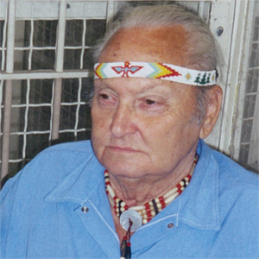
 Clues scattered at the crime scene, African-American human hairs and Kool cigarette butts, were supposed to convince authorities that a certain sort of suspect had killed Gene Hathorn, Sr., his wife Linda Hathorn, and their teenaged son Marcus Hathorn. Mr. Hathorn’s recent receipt of a $150,000 property settlement and his recent disputes with his elder son, Gene Hathorn, Jr., led law enforcement in a different direction. Less than one month after the bodies were found, Gene Hathorn, Jr., and his running buddy James Lee Beathard faced charges of capital murder.
 The
The 
 This date in 2006 offers the anniversary of the (un-stayed) execution of a man who was making his second visit to the gurney — courtesy of one of those last-gasp reprieves eight months before.