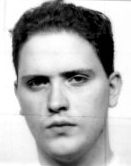
1979: Zulfikar Ali Bhutto, Prime Minister of Pakistan

In the small hours of the morning this date, the Pakistani military junta hanged former Prime Minister Zulfikar Ali Bhutto.

At the end of 1971, Bhutto, a former cabinet official who had broken with Pakistan’s military strongman, rode a wave of discontent into power as the economy crumbled, and East Pakistan broke away from Islamabad to form Bangladesh.

Born to a well-heeled Muslim family in British India, the charismatic and often arrogant Bhutto had feets in the streets and a way with both the domestic audience and the global one:

But he did not necessarily have a power bloc equal to the weight of the Pakistani military as he navigated the storm of controversial domestic challenges; in retrospect, it seems only a matter of time before his hold on power would slip.

In July 1977, Army Chief of Staff Muhammad Zia-ul-Haq, a fellow clan member whom Bhutto had promoted ahead of more senior officers, repaid his sponsor by overthrowing him in a virtually bloodless coup.

A protracted — and vengeful — legal drama with a pre-scripted ending unfolded over the ensuing two years, with Bhutto twice released and twice re-arrested, convicted of an earlier political murder on the testimony of “witnesses” who had obviously been tortured and coached, and his sentence upheld by a divided Supreme Court gamed to avoid the presence of a pro-Bhutto judge.

It was not out of character for this affair that the fallen Prime Minister was hanged secretly and before he expected, his (widely protested) death not announced until the following morning.

Allegories of Bhutto and Zia struggle for power in this early Salman Rushdie novel (more).

Bhutto makes a flawed saint, but his turn at power stands as an island of something like democracy in a sea of Cold War Pakistani dictatorships.

The Pakistan Peoples Party he founded still remains a principle organ of liberalism in Pakistan, and still honors its martyred leader. Reflective of both the vision and the personal autocracy of its progenitor, its leadership has passed dynastically through Bhutto family members, most famously daughter Benazir Bhutto, who succeeded Gen. Zia (he died in a suspicious plane crash) as Prime Minister — the first female elected head of state in the Islamic world.

Benazir Bhutto, of course, was assassinated this past December, just ahead of parliamentary elections that have just now produced a coalition government that will vie with Islamabad’s most recent military ruler for power.

The website bhutto.org preserves a considerable collection of the elder Bhutto’s writings, as well as photography, video and other resources.

On this day..

1757: Robert-Francois Damiens, disciplined and punished

On this date in 1757, Robert-Francois Damiens became the last Frenchman to suffer the dreadful punishment of drawing and quartering.

Damiens attempted to assassinate King Louis XV, inflicting, however, only a slight dagger wound.

He may be best-known today as the subject of the jarring opening passage of Foucault’s Discipline and Punish, in which the full flower of this medieval torture* is described in detail by way of contrasting it with the regimented penal institutions that would sprout up in a few decades’ time. Here’s Foucault’s rendering of the scene:

On 1 March 1757 Damiens the regicide was condemned “to make the amende honorable before the main door of the Church of Paris”, where he was to be “taken and conveyed in a cart, wearing nothing but a shirt, holding a torch of burning wax weighing two pounds”; then, “in the said cart, to the Place de Grève, where, on a scaffold that will be erected there, the flesh will be torn from his breasts, arms, thighs and claves with red-hot pincers, his right hand, holding the knife with which he committed the said parricide, burnt with sulphur, and, on those places where the flesh will be torn away, poured molten lead, boiling oil, burning resin, wax and sulphur melted together and then his body drawn and quartered by four horses and his limbs and body consumed by fire, reduced to ashes and his ashes thrown to the winds” (Pièces originales…, 372-4).

“Finally, he was quartered,” recounts the Gazette d’Amsterdam of 1 April 1757. “This last operation was very long, because the horses used were not accustomed to drawing; consequently, instead of four, six were needed; and when that did not suffice, they were forced, in order to cut off the wretch’s thighs, to sever the sinews and hack at the joints…

“It is said that, though he was always a great swearer, no blashemy escaped his lips; but the excessive pain made him utter horrible cries, and he often repeated: ‘My God, have pity on me! Jesus, help me!’ The spectators were all edified by the solicitude of the parish priest of St Paul’s who despite his great age did not spare himself in offering consolation to the patient.”

Bouton, an officer of the watch, left us his account: “The sulphur was lit, but the flame was so poor that only the top skin of the hand was burnt, and that only slightly. Then the executioner, his sleeves rolled up, took the steel pincers, which had been especially made for the occasion, and which were about a foot and a half long, and pulled first at the calf of the right leg, then at the thigh, and from there at the two fleshy parts of the right arm; then at the breasts. Though a strong, sturdy fellow, this executioner found it so difficult to tear away the pieces of flesh that he set about the same spot two or three times, twisting the pincers as he did so, and what he took away formed at each part a wound about the size of a six-pound crown piece.

“After these tearings with the pincers, Damiens, who cried out profusely, though without swearing, raised his head and looked at himself; the same executioner dipped an iron spoon in the pot containing the boiling potion, which he poured liberally over each wound. Then the ropes that were to be harnessed to the horses were attached with cords to the patient’s body; the horses were then harnessed and placed alongside the arms and legs, one at each limb.

“Monsieur Le Breton, the clerk of the court, went up to the patient several times and asked him if he had anything to say. He said he had not; at each torment, he cried out, as the damned in hell are supposed to cry out, ‘Pardon, my God! Pardon, my Lord.’ Despite all this pain, he raised his head from time to time and looked at himself boldly. The cords had been tied so tightly by the men who pulled the ends that they caused him indescribable pain. Monsieur le [sic] Breton went up to him again and asked him if he had anything to say; he said no. Several confessors went up to him and spoke to him at length; he willingly kissed the crucifix that was held out to him; he opened his lips and repeated: ‘Pardon, Lord.’

“The horses tugged hard, each pulling straight on a limb, each horse held by an executioner. After a quarter of an hour, the same ceremony was repeated and finally, after several attempts, the direction of the horses had to be changed, thus: those at the arms were made to pull towards the head, those at the thighs towards the arms, which broke the arms at the joints. This was repeated several times without success. He raised his head and looked at himself. Two more horses had to be added to those harnessed to the thighs, which made six horses in all. Without success.

“Finally, the executioner, Samson, said to Monsieur Le Breton that there was no way or hope of succeeding, and told him to ask their Lordships if they wished him to have the prisoner cut into pieces. Monsieur Le Breton, who had come down from the town, ordered that renewed efforts be made, and this was done; but the horses gave up and one of those harnessed to the thighs fell to the ground. The confessors returned and spoke to him again. He said to them (I heard him): ‘Kiss me, gentlemen.’ The parish priest of St Paul’s did not dare to, so Monsieur de Marsilly slipped under the rope holding the left arm and kissed him on the forehead. The executioners gathered round and Damiens told them not to swear, to carry out their task and that he did not think ill of them; he begged them to pray to God for him, and asked the parish priest of St Paul’s to pray for him at the first mass.

“After two or three attempts, the executioner Samson and he who had used the pincers each drew out a knife from his pocket and cut the body at the thighs instead of severing the legs at the joints; the four horses gave a tug and carried off the two thighs after them, namely, that of the right side first, the other following; then the same was done to the arms, the shoulders, the arm-pits and the four limbs; the flesh had to be cut almost to the bone, the horses pulling hard carried off the right arm first and the other afterwards.

“When the four limbs had been pulled away, the confessors came to speak to him; but his executioner told them that he was dead, though the truth was that I saw the man move, his lower jaw moving from side to side as if he were talking. One of the executioners even said shortly afterwards that when they had lifted the trunk to throw it on the stake, he was still alive. The four limbs were untied from the ropes and thrown on the stake set up in the enclosure in line with the scaffold, then the trunk and the rest were covered with logs and faggots, and fire was put to the straw mixed with this wood.

“…In accordance with the decree, the whole was reduced to ashes. The last piece to be found in the embers was still burning at half-past ten in the evening. The pieces of flesh and the trunk had taken about four hours to burn. The officers of whom I was one, as also was my son, and a detachment of archers remained in the square until nearly eleven o’clock.

“There were those who made something of the fact that a dog had lain the day before on the grass where the fire had been, had been chased away several times, and had always returned. But it is not difficult to understand that an animal found this place warmer than elsewhere” (quoted in Zevaes, 201-14).

Among the throngs in attendance that day was Casanova who, according to his memoirs, rented out a windowed flat to watch that stomach-churning torture for four hours with some male friends and female companions.

One of the legendary libertine’s friends found this moment, serenaded by the prisoner’s “piercing shrieks”, opportune for an altogether different adventure of the flesh:

The three ladies packing themselves together as tightly as possible took up their positions at the window, leaning forward on their elbows, so as to prevent us seeing from behind. The window had two steps to it, and they stood on the second; and in order to see we had to stand on the same step, for if we had stood on the first we should not have been able to see over their heads. I have my reasons for giving these minutiae, as otherwise the reader would have some difficulty in guessing at the details which I am obliged to pass over in silence.

Tiretta kept the pious aunt curiously engaged during the whole time of the execution, and this, perhaps, was what prevented the virtuous lady from moving or even turning her head round.

Finding himself behind her, he had taken the precaution to lift up her dress to avoid treading on it. That, no doubt, was according to the rule; but soon after, on giving an involuntary glance in their direction, I found that Tiretta had carried his precautions rather far, and, not wishing to interrupt my friend or to make the lady feel awkward, I turned my head and stood in such a way that my sweetheart could see nothing of what was going on; this put the good lady at her ease. For two hours after I heard a continuous rustling, and relishing the joke I kept quiet the whole time. I admired Tiretta’s hearty appetite still more than his courage, but what pleased me most was the touching resignation with which the pious aunt bore it all.

Casanova’s Complete Memoires are available free online; this episode is recounted in the first chapter of “Paris and Holland”.

* Damiens’ punishment was in fact already archaic at the point when it was inflicted. Somewhat unsure of itself, the court sought precedent in the last regicide executed — Francois Ravaillac, who in 1610 was also the most recent person to suffer this horrific penalty. The clumsiness of the Damiens’ execution can surely be attributed to the art being a century and a half out of practice.

On this day..

2001: Robert Lee Massie, who spent a lifetime dying

On January 7, 1965, 23-year-old Robert Lee Massie shot and killed Mildred Weiss during a botched robbery near her home. He pleaded guilty and, sentenced to die by the state of California, came within 16 hours of execution in 1967, when then-Governor Ronald Reagan temporarily halted his execution so that he could testify at the trial of his alleged co-conspirator. By this time, Massie had begun complaining to anybody who would listen about the conditions on death row, and greeting the prospect of an execution date as a welcome deliverance, was dubbed “the prisoner who wants to die” by the press.

However, Reagan’s reprieve bought him just enough time to live to see a California Supreme Court decision temporarily halting executions, which was followed by the US Supreme Court Furman v. Georgia decision of 1972 banning the death penalty as then being enforced as unconstitutionally arbitrary and capricious.

With Furman, death rows across the country were summarily cleared, and Massie, a model prisoner, was paroled for good behavior in 1978. By this time, the US Supreme Court had handed down the Gregg v. Georgia decision holding that states had revised their death penalty statutes sufficiently to allow executions to resume.

Only months after his release, Massie killed Boris Naumoff in his liquor store and wounded a clerk in another botched robbery. Again pleading guilty, this time over the objections of his court-appointed lawyer, Massie was again sentenced to die.

As before, Massie welcomed his sentence and, acting on a own novel interpretation of the Sixth Amendment guarantee of self-representation, argued that he had a constitutional right to bypass the appeals process usually automatic in capital cases and that there “is no meaningful difference between forcing an automatic appeal upon a defendant and forcing unwanted counsel upon him.” The appeals court disagreed, ruling that “while a litigant may waive the advantage of a law intended solely for his benefit, he may not waive a law established for a public reason.”

Appeals in capital cases were never intended to allow the prisoner to “choose his own sentence,” the Court wrote, and were in fact in place for just such a reason of ensuring full investigation into the “real issue [of] the propriety of allowing the state to conduct an illegal execution of a citizen.” The state was obliged to proceed with Massie’s appeals against his stated wishes, a charge unique to capital cases, because of the singular obligations imposed by the death sentence on the legal machinery of the state — and in fact imposed by the Furman and Gregg decisions that years earlier had ushered Massie unwillingly off death row.

His appeals continuing against his wishes, Massie’s conviction was ultimately overturned in a 1985 California Supreme Court decision holding that the sentence was invalid because his lawyer had not consented to the guilty plea.

Convicted again in a retrial in 1989, Massie was, once again, sentenced to death. Though he was briefly heartened enough to pursue appeals in earnest, those, too, foundered; increasingly convinced that corrupt judges were violating their oath to uphold the Constitution and greasing the machinery of death, he determined once again to pursue his own death.

As his appeals ran out, lawyers and advocates of all stripes stepped in to try to prevent Massie’s execution. A lifetime of abuse in foster care and juvenile detention centers and evidence of clinical depression and mental disorder were all presented at the last minute in a last-ditch attempt to save a man who didn’t want saving.

All were denied, and Robert Lee Massie was executed at the age of 59 on March 27, 2001. He was just the ninth prisoner executed in California in the post-Furman era and the 703rd nationwide.

Massie is one of a growing trend of death row volunteers, prisoners who voluntarily seek to run through their appeals and bring their lives on death row to an end. His frequent visitor in his last years in prison and “next friend,” Michael Kroll,* writes:

My friend, Bob Massie, maneuvered the state of California into assisting in his suicide. He had his own lawyer doing the dance of death with the attorney general and managed to avoid being declared incompetent.

And in the words of a relative of one of Massie’s victims:

I know he wants to die. It makes me think, if he wants out of the suffering, well, maybe we shouldn’t be killing him. Maybe he should just be left there to suffer.

Tossed hither and yon with the shifting legal tides of death penalty law spanning eight presidential administrations, Massie had to aid his executioners to the very last breath: when finally strapped to a gurney 36 years since that young man had murdered Mildred Weiss, he obligingly flexed his arm to help the technician find a suitable vein.

* Kroll tried to prevent Massie’s execution on the grounds that he was mentally ill, incurring his friend’s wrath.

On this day..

1933: Giuseppe Zangara, who is not on Sons of Italy posters

On this date in 1933, Giuseppe Zangara went to Florida’s electric chair for the murder of Chicago mayor Anton Cermak — the man he had accidentally shot while attempting to assassinate President-elect Franklin Delano Roosevelt.

Zangara had to stand on a chair to take the shot: he was only five feet tall. This image is from Miami Police of Yesterday, a site by a descendant of one of the officers who arrested Zangara.

A strange and strangely forgotten man, the Italian immigrant came within inches of dramatically altering American history.

On February 15, 1933, at a Roosevelt speech in Miami’s Bayfront Park, Zangara perched himself on a metal folding chair within ten meters of the man who was then President-elect, but somehow managed to miss him. A bystander, Lillian Cross, grabbed his arm, and others in the crowd wrestled him down.

Certainly Zangara would be better remembered if he had shot Roosevelt (and Roosevelt would be very much less remembered), but his head-scratching persona accounts for at least some of his obscurity.

He’s sometimes called an anarchist — the early 20th-century equivalent of calling him a terrorist — and he talked the talk. Here, his last words:

You give me electric chair. I no afraid of that chair! You one of capitalists. You is crook man too. Put me in electric chair. I no care! Get to hell out of here, you son of a bitch [said to the chaplain] … I go sit down all by myself… Viva Italia! Goodbye to all poor peoples everywhere!… Lousy capitalists! No picture! Capitalists! No one here to take my picture. All capitalists lousy bunch of crooks. Go ahead. Pusha da button!

Zangara was a working-class immigrant. But his specific motivation for murdering Roosevelt seems murky at best — there’s no clear subversive organization or cause with which Zangara seemed a dedicated fellow-traveler. The wikipedia page about him describes his lifelong stomach pains as the cause of his act, which seems a queer thing to make a fellow shoot a president.

The major conspiracy proposal, that the anti-mob mayor Cermak was the real target all along of a mafia-engineered hit (here (.doc) is a version) is highly speculative, to put it generously. (Update: More on this here, via Chicagoland) Certainly Zangara might have been, as he claimed and most believe, a lone nut — many have done worse for less cause.

The world didn’t have long to unravel this man’s mysteries; justice moved with a rapidity terrifying even by the standards of the time — as reflected in the title of one of the books about him, The Five Weeks of Giuseppe Zangara.

Zangara had already been sentenced to a long prison term for the several bystanders his errant shots had struck when Anton Cermak finally succumbed — after 19 painful days — to a gut shot. Two weeks after that, his killer was dead, too.

During his first trial, the judge pressed him on his motivation, as reported in a press clipping that became part of Zangara’s FBI file:

Q. Have you ever been in jail before? Ever been in any trouble?

A. No, this is the first time.

Q. Did you ever hurt anyone before?

A. No, me no hurt anyone.

Q. Did you plan this shooting?

A. No.

Q. When did you decide to do it?

A. I got it in my mind capitalist hurt people. They are to blame for my stomach hurting. My stomach was hurting bad. It was like I was on fire. It burns my mind, I act like a drunken man. It came in my mind when I was suffering.

At this trial — the one before Cermak died — he pled unsuccessfully for execution: “I am sorry only because I did not kill. I am sorry about nothing. Put me in the electric chair.” It reads like “suicide by cop”.

Zangara might not be a name of Oswaldesque dimensions among the assassinariat, but he comes in for a scene in Stephen Sondheim’s strange musical theater, Assassins.

Officially, Zangara was punished for the man he killed, not the soon-to-be-President he was (presumably) aiming at. But such a close scrape for such a transformative American leader, a man sometimes credited with saving capitalism from itself in an age of crisis, has made Zangara’s one famous act fodder for alternative history that asks the question “what might have been?”

On this day..

1952: Jurgen Stroop, the Warsaw Ghetto’s destroyer

On this date in 1952, SS Gruppenfuhrer Jurgen Stroop was hanged in Poland near the site of the Warsaw Ghetto he had liquidated nine years before.

A World War I veteran, Stroop caught the Nazi star as it ascended and was carried to various wartime posts in occupied Poland. The experience he thereby garnered in countering partisans made him a hot ticket when the Warsaw Ghetto revolted. Dissatisfied with the slow suppression of the Jewish quarter, Heinrich Himmler put Stroop in charge in April 1943.

Stroop got results: unburdened by the slightest need to save the village or win hearts and minds, he simply put it to the sword. Wholesale slaughter followed vicious house-to-house urban warfare, with buildings torched or demolished to drive out defenders. By mid-May, the Jewish ghetto in Warsaw had not been pacified: it had been annihilated.

His “Stroop Report”, a masterpiece of oblivious horror in the clipped narrative of the military bureaucracy, helped to hang him* with entries like this:

Progress of large-scale operation on 16 May 1943, start 1000 hours.

180 Jews, bandits, and subhumans were destroyed. The former Jewish quarter of Warsaw is no longer in existence. The large-scale action was terminated at 2015 hours by blowing up the Warsaw Synagogue.

Total number of Jews dealt with 56,065, including both Jews caught and Jews whose extermination can be proved.

In one of those ironies history is so unnervingly fond of, Stroop was imprisoned in Communist-controlled Poland in the same cell with a resistance fighter from the anti-Communist Home Army.**

Kazimierz Moczarski, who survived a death sentence of his own, infiltrated this bizarre roommate scenario into the (nonfiction) literary canon with his Conversations with an Executioner — published in the 1970s.

* Stroop was also condemned to death for war crimes by an American tribunal prior to being repatriated to Poland. He was separately convicted in Poland and hanged under that latter sentence.

** These pages have previously taken note of the anti-Nazi partisans’ rivalries.

Part of the Themed Set: The Written Word.

On this day..

1999: Walter LaGrand, a German gassed in America

(Thanks to German political scientist Matthias Lehmphul for the guest post -ed.)

The last man — so far — to die in the gas chamber, Walter LaGrand, was executed by the state of Arizona on March 3rd, 1999. He was one of just 11 prisoners gassed among the 1,099 executions to date since the U.S. death penalty was reinstated in 1976.

The United States introduced the gas chamber as an execution method in the beginning of the last century. The first death row inmate ever executed with poisoned air was Chinese migrant Gee Jon, who died at the Nevada State Prison in 1924. Relative to the other methods in use at the time — the electric chair, hanging, and the firing squad — gas was believed the most humane way of taking a person’s life.

It took 70 years for a court to finally recognize it as cruel and unusual punishment. In 1994 a federal judge ruled that the gas chamber violated the eighth amendment of the U.S. Constitution. Shortly before Walter LaGrand’s scheduled execution, the Ninth Circuit Court of Appeals issued a stay whose logic would have banned lethal gas forever. This was overruled by the U.S. Supreme Court, leaving it as it remains today -– a backup or secondary option for putting a delinquent to death in five states: Arizona, California, Maryland, Missouri and Wyoming.

Death penalty for a murder in a bank


Walter LaGrand (top) and his brother Karl.

Walter LaGrand was following his brother Karl LaGrand, who Arizona had executed by lethal injection a week earlier. The brothers were sentenced to death on December 14th, 1984 for stabbing to death an employee of a bank in Marana, Arizona.

On January 7, 1982, 19-year-old Walter and 18-year-old Karl drove from Tucson to Marana to rob the Valley National Bank. Brandishing a toy gun, they ordered the bank manager, Ken Hartstock, to open the vault. Mr. Hartstock, however, did not have the complete combination. The brothers bound Mr. Hartstock’s hand together with electrical tape. When he attempted to shout at Karl, he was stabbed to death with a letter opener.

Another bank employee, Ms. Lopez, was in the room at the time of the murder. Her hands had also been bound, and she too suffered several stab wounds. She later became the state’s key witness.

When they were arrested, Karl LaGrand confessed to the killing and tried to shield his older brother from a capital murder charge by stating that Walter was not in the room when the stabbing occurred.

Ms. Lopez, however, testified that both brothers were surrounding Mr. Hartstock at the time of his death.

Between different worlds: A childhood without a home

At the time Walter and Karl LaGrand were born, their mother, Emma Maria Gebel, lived in Augsburg in what was then West Germany. The boys were cared for either by Emma’s mother or a babysitter. When Emma’s mom became ill and could no longer handle the children, the two kids were put into an orphanage.

During the two years they remained at this place they suffered an egregious lack of care. Deprivation of food and blankets were common punishments at this institution. When Emma took the boys back they already suffered insomnia and post-trauma disturbances. In 1966 Emma married Masie LaGrand, an American soldier stationed in Augsburg. He adopted the two boys and their older sister Patricia. Together they moved to the USA in 1967.

Soon their new dad was send to Vietnam. After returning from this war he never was the same; Emma and Masie divorced in 1973. The boys’ delinquent record can be tracked back to 1978 — when they first ran away from home and shoplifted.

Though Karl and Walter were adopted, they never were naturalized by the national immigration service. They remained German citizens — and that set the stage for another legal controversy in the days before their execution.

Power Politics: How the United States overrules international law

In a personal meeting with President Bill Clinton, German Chancellor Gerhard Schröder expressed his concerns about the fate of both brothers. However, the main argument was not the execution method but the lack of consular assistance by the time of arrest.

The Vienna Convention on Consular Relations (VCCR) is one of the bedrock documents of international law. Under Article 36 of the VCCR any arresting authority is obliged to promptly notify a detained foreign national of his or her right to contact and seek assistance from their consulate.

This article does not exempt foreign citizens from prosecution, nor does it give special rights under the law. It only insures that foreign nationals -– including Americans abroad –- have the means to defend themselves in a uniquely vulnerable situation. The United States and Germany are among the VCCR’s 169 signatories.

On January 22nd, 1998 the Special Rapporteur to the UN High Commissioner of Human Rights Bacre W. Ndiaye criticized the United States for its arbitrary disregard for treaty obligations like consular notification:

There seems to be a serious gap in the relations between federal and state governments, particularly when it comes to international obligations undertaken by the United States Government. The fact that the rights proclaimed in international treaties are already said to be a part of domestic legislation does not exempt the Federal Government from disseminating their provisions. Domestic laws appear de facto to prevail over international law, even if they could contradict the international obligations of the United States. (Extrajudicial summary on arbitrary executions, E/CN.4/1998/68/Add.3:C.108 — full document (.pdf))

Much too late, Germany opened a legal case against the United States on Walter LaGrand’s behalf at the International Court of Justice (ICJ) in The Hague, Netherlands.

Karl LaGrand has been already executed when Berlin filed suit against Washington. Justice Christopher Weeramantry urged the United States to spare the life of Walter LaGrand. The White House argued it was a matter of the State of Arizona, outside the purview of federal authority. Under extreme international pressure, the Arizona Board of Pardons and Paroles took an unprecedented step: for the first time ever, it recommended an 60-day reprieve to await the decision of Germany’s suit against the United States at the ICJ.

Governor Jane D. Hull ignored it.

Past … and Prologue?

Walter and Karl LaGrand always had a close relationship and that did not change during their trial or time on death row. Until the end of 1998 they were celled beside one another and enjoyed the ability to talk freely. They held mirrors through the bars of their cells, so that they could see the other while talking. The chance to go out together on a work crew (when they were allowed to work) always excited them due to the fact that they were then able to see each other. In fact, they were emotionally so close that, if they have to die, they had expressed a preference to be executed on the same day.

Given a choice in their method of execution, both brothers tactically opted for the gas chamber to give the legal challenges to lethal gas a chance to save them. With those challenges foundering, both were offered a late switch to lethal injection in exchange for dropping suit.

Karl took the deal. Walter, as the New York Times put it, “opted for the gas, with its resonance of the Holocaust for Germans.”

Before the executioner switched the lever to initiate a chemical reaction between cyanide pellets (KCN) and sulfuric acid (H2SO4) the inmate was given his last words. Walter LaGrand said:

To all my loved ones, I hope they find peace. To all of you here today, I forgive you and hope I can be forgiven in my next life.

This date’s gassing with hydrogen cyanide (HCN) took 18 minutes until the heart of Walter LaGrand stopped beating. While the execution took place witnesses left the room nauseated.

Will history repeat? There are some 125 foreign nationals on death row in the United States today. Another pair of German brothers, Michael and Rudi Apelt, are as of this writing waiting to be put to death in Arizona — perhaps, if they choose it, in the same gas chamber where Walter LaGrand perished.

Legal and diplomatic fallout

Still smarting from the LaGrands’ execution, German foreign minister Joschka Fischer said at the 55th Session of the Commission on Human Rights in Geneva on March 23rd, 1999:

States whose justice system kill are not meeting their responsibility to set an example to society. Europeans believe that the death penalty cannot be justified either ethically or legally and has not proved to be an effective means of combating crime.

The ICJ ruled in favor of Germany‘s LaGrand suit on June 26th, 2001, more than two years after the brothers had been put to death. It was the first time that a country won a case against the United States on this matter.

In 2005, facing multiplying challenges from death-sentenced foreign nationals similarly denied their rights under the VCCR, the Bush administration formally withdrew the United States from the ICJ’s oversight for such cases.

On this day..

1877: Jack McCall, Wild Bill’s murderer

On this date in 1877, Jack McCall was hanged in Yankton, South Dakota, for the murder of Wild Bill Hickok.

It was the most notorious crime in the old west: the legendary gunfighter and lawman shot from behind playing poker in the gold rush town Deadwood, S.D. on August 2, 1876.

McCall‘s grievance against Wild Bill remains unclear, which seems no less than properly atmospheric. One version has him losing at cards to Hickok the night before the murder, then humiliated to accept Hickok’s charity for his evening meal. Since Deadwood sprang up on Lakota Sioux land in defiance of treaty obligations and thus was an outlaw settlement without legal oversight, McCall might also have been engaged by another party to eliminate the town’s de facto source of law further to some private profit.

That speculation gains some circumstantial support from the surprising proceedings the following day. An impromptu “miner’s court” acquitted McCall — the defendant claimed to have been avenging the murder of a brother who does not seem to have ever existed at all — of a murder they plainly knew he committed. This obliging verdict prompted a newspaper to remark,

Should it ever be our misfortune to kill a man … we would simply ask that our trial may take place in some of the mining camps of these hills.

McCall made for Wyoming, but couldn’t resist boasting of his famous crime, which was known to have graduated into a fair gunfight in his retelling. The times and the lands were unsettled enough that with an ounce of discretion he might have vanished. Instead, his loose lips got him nabbed by a federal marshal and extradited back to South Dakota — where he learned that the miner’s court verdict of an illicit settlement didn’t count as a legal acquittal for purposes of double jeopardy.

His hanging this morning — with the pertinent last words, “draw it tighter, Marshal” — was the first legal execution in South Dakota.

Like the reason for his one memorable act, McCall was an obscure character; his background was uncertain even when he lived. It was only through his victim that he left an imprint: he certainly elevated the legend of Hickok, whose cinematic demise also bequeathed to the arcane poker argot the term “dead man’s hand” — a pair of aces and a pair of eights (or more specifically, the black aces and black eights; the fifth card is uncertain) — after the last hand of cards Wild Bill ever held.

The dead man’s hand. Image used with permission.

On this day..

2002: Monty Allen Delk, in a Three-Pronged Failure

(Thanks to David Elliot at Abolish the Death Penalty for the guest post -ed.)

Six years ago today the state of Texas executed an FBI agent, a state district judge, the president of Kenya and a war hero who commanded a nuclear-powered submarine during the Civil War. More aptly put, Texas executed a seriously mental ill inmate named Monty Allen Delk who, at varying times, believed he was all of these things.

Delk was convicted and sentenced to death for the murder of Gene “Bubba” Allen of Anderson County in East Texas. Although the state of Texas maintained that Delk was “malingering,” i.e., pretending to be mentally ill to stave off execution, the prison system’s former chief mental health officer stated that Delk suffered from a severe mental illness, one that had become progressive in nature since it was first noticed in 1989 –- years after Delk was tried and convicted.

A close examination of the Delk case reveals yet another significant flaw in the capital punishment system:

The U.S. Supreme Court has ruled that executing severely mentally ill inmates violates the U.S. Constitution.

The court also has held that a death row inmate must be mentally competent in order to drop his appeals.

But the court has not directly addressed the issue of whether a death row inmate must be mentally competent in order to pursue his state and federal habeas appeals. In fact, the Texas Court of Criminal Appeals, and the 5th Circuit Court of Appeals, which has jurisdiction over death penalty cases in Texas, have ruled that prisoner competence during state and federal habeas proceedings is not constitutionally required.

The question is fundamental to due process. Habeas is the first, last and often only avenue of appeal for death row inmates whose sentences have been upheld on direct appeal by the Texas Court of Criminal Appeals. But because Delk was unable to assist his attorney through his habeas appeals, he could not answer simple questions that were key to his case -– questions such as, did he commit the crime? Did he think his trial was fair? Did he think his trial lawyers adequately represented him? Were there circumstances about the crime or about his personal history that mitigated against a death sentence?

The fact that Delk’s execution was allowed to proceed represented a three-pronged failure on the part of Texas’ death penalty system. The first failure must be attributed to the courts, which failed to order a psychiatric evaluation of Delk, despite repeated requests by Delk’s very able attorney, John Wright of Huntsville.

The second failure lies with Texas’ executive clemency system. Because of his mental illness, Delk’s sentence should have been commuted to life in prison. Yet the Board of Pardons and Paroles as well as Texas Gov. Rick Perry did nothing. (It is important to note that four days before Delk’s execution, the Georgia Parole Board, acting in a similar case, commuted death row inmate Alexander Williams sentence to life in prison after pleas from human rights activists. Williams is a chronic paranoid schizophrenic who thinks Sigourney Weaver is God and that little green frogs are in his prison cell, staring at him.)

The third failure rested with the Texas media. While Williams’ case attracted comprehensive media coverage in Georgia and beyond, newspapers in Texas largely failed to investigate Delk’s case. Government -– including the criminal justice system –- works best under the glare of public scrutiny. Absent such scrutiny, abuses occur. In this case, no one outside Texas’ fervent anti-death penalty community took much notice of Delk’s execution.

The good news is Texas’ newspapers are beginning to sit up and take notice. If I am not mistaken, every major Texas newspaper has called either for abolition of the death penalty or for a moratorium on executions. The issue of capital punishment has advanced from the margins to the mainstream. In today’s climate, one wonders whether Texas officials could get away with executing a person as severely mentally ill as Delk.

Ultimately, the Supreme Court will have to directly confront the issue of whether a death-sentenced prisoner need be mentally competent during his habeas appeals. Until that happens, we simply will have to ask ourselves a key question:

Is executing someone who is so severely mentally ill he does not know who he is not the very definition of an insane act?

On this day..

1902: Harry “Breaker” Morant and Peter Handcock, “scapegoats for Empire”

On this date in 1902, two Australian officers were shot in virtual secrecy at Pretoria for atrocities they committed in service of the crown during the Second Boer War.

Harry “Breaker” Morant — he got the nickname from his aptitude with horses — was the famous one of the pair and the reason the date is so well-known to posterity as to merit its own cinematic treatment (review):

A colorful son of the Commonwealth’s hardscrabble strata, Breaker Morant led a life that has been improved into mythology, not least by his own efforts. Impoverished but educated, he migrated in 1883 from England to Australia where he carved out a larger-than-life profile as a bush poet, married the (subsequently) famous anthropologist Daisy Bates and eventually — fatefully — volunteered for service in South Africa.

The Second Boer War, Britain’s (ultimately successful) fight to corral the Dutch-descended Boer republics into the empire, started sunnily enough for the English, but as the Boers abandoned a conventional war they could not win and adopted guerrilla tactics, it descended into an exceedingly dirty conflict — notable for Britain’s pioneering use of concentration camps.

It was also notable for savagery between combatants. When Morant’s best friend in the unit was tortured and mutilated by Boer guerrillas, the poet went on a rampage, ordering a number of prisoners’ summary executions over a period of weeks. It was for this that he and his confederate were shot this day. The fact of his confinement was not communicated to the Australian government; Peter Handcock’s wife only learned of his execution weeks later, from press reports.

The defendants maintained that there was a standing order from the top to kill any Boer caught wearing British khaki, a tactic the Boers were known to employ, and that the order was frequently enforced. Though the prosecution strenuously maintained otherwise at trial, the existence of that (unwritten) directive has become accepted to posterity.

What remains murky is the matter of why — why these two, why now? And is Breaker Morant a hero or a villain? Those questions are also prisms for the many currents of Morant’s case so strikingly prescient for the century that lay ahead.*

Asymmetric warfare and the legal status of guerrillas. Human rights and war crimes. Corruption and plausible deniability. The moral culpability of subordinates for the orders of the brass. And certainly all the contradictory forces of empire and resistance entailed by an Australian adventurer shot by a Scottish detachment for killing Dutchmen in Africa at the behest of London.** It was an old-time colonial war in a world becoming, for we of the early 21st century, recognizably modern.

Hard-living to his dying breath, Morant stayed up the night before he was shot scribbling his last poem — piquantly titled “Butchered to Make a Dutchman’s Holiday”.

In prison cell I sadly sit,
A d__d crest-fallen chappie!
And own to you I feel a bit-
A little bit – unhappy!

It really ain’t the place nor time
To reel off rhyming diction –
But yet we’ll write a final rhyme
Whilst waiting cru-ci-fixion!

No matter what “end” they decide –
Quick-lime or “b’iling ile,” sir?
We’ll do our best when crucified
To finish off in style, sir!

But we bequeath a parting tip
For sound advice of such men,
Who come across in transport ship
To polish off the Dutchmen!

If you encounter any Boers
You really must not loot ’em!
And if you wish to leave these shores,
For pity’s sake, DON’T SHOOT ‘EM!!

And if you’d earn a D.S.O.,
Why every British sinner
Should know the proper way to go
Is: “ASK THE BOER TO DINNER!”

Let’s toss a bumper down our throat, –
Before we pass to Heaven,
And toast: “The trim-set petticoat
We leave behind in Devon.”

His last words were hurled at his firing squad: “Shoot straight, you bastards! Don’t make a mess of it!”

* It is no coincidence that the Australian film excerpted in this post was released while the Vietnam War was still a fresh memory.

** Breaker Morant’s memory would develop into a point of Australian suspicion towards the British military, especially after Morant’s persecutor helped author World War I’s infamous hecatomb of Australian (and New Zealand) troops at Gallipoli. Morant and Handcock turned out to be the last Australians executed by the British military.

Update: Via Airminded, an Australian history program took a skeptical look at the Breaker Morant myth a few years ago.

On this day..

1953: Emil August Fieldorf, Polish anti-Communist

On this date in 1953, Polish Home Army General Emil August Fieldorf was hanged at Warsaw’s Mokotow Prison by the Polish Communist government as a “fascist-Hitlerite criminal.”

The officer suffered a hard fate for the geopolitical jostling of great powers in its neighborhood. He had escaped German detention to become a Brigadier General and the second-in-command of the Polish Home Army, the occupied country’s resistance movement answerable to its government in exile.

Polish-Russian animosity is an ancient and fragrant vintage, just the sort of intoxicant to lend an especial bloodthirstiness to the ample brutality of politicking under Stalin’s sway.

As the Red Army threw back the Wehrmacht, the rivalry between the government in exile, (organically descended from the less-than-liberal prewar Polish government) and Poland’s Communist soon-to-be occupiers escalated.

Diplomatically, the government in exile engaged a (losing) joust with Stalin over the postwar Polish state’s borders and political structure; on the ground, Polish and Russian forces nominally united against Hitler maneuvered against one another — and at least one researcher has characterized their enmity as an outright dirty war.

Fieldorf had been detained by the NKVD at the war’s end, but he passed under an assumed name and therefore survived an internment in the Soviet Union. Shortly after his return, a sham offer of “amnesty” to Home Army survivors induced him to reveal himself under his true identity. He was convicted in a show trial of authorizing the killing of Soviet partisans. The post-Communist Polish government posthumously pardoned him.

It would be safe to say that “forgive and forget” is not a governing principle in the current memory of Soviet-Polish relations. Fieldorf’s fate is one more bill on the indictment, and in his case, quite literally so: spurred by the general’s daughter, Poland has doggedly pursued the extradition of Fieldorf’s prosecutor, Helena Wolinska Brus, now an octogenarian pensioner in Britain.

The years-long legal duel between these two women has ballooned into a sort of proxy fight over the still-sensitive definition of heroism and victimhood in the Poland of Hitler and Stalin.

The Jewish* Brus, who narrowly escaped the Nazis to join a leftist partisan unit, is contemptuous of the charge. To some, she is shamelessly exploiting her Jewishness to escape her own culpability. To others — aided not a little by the general’s daughter’s own remarks — the charge springs from a Polish polity whose own insistence upon victimhood (of Communism) has authorized historical forgetfulness over its complicity in genocide.

Someday soon — in a year or two, or five or ten; in England or Poland or some other spot — Helena Wolinska Brus will follow the man she hanged into the clay that awaits all us wretches. So will the general’s daughter, only a few years the junior of her foe. The bitter specter of wrongs that can never be righted is sure to long outlive their passing.

* Jewish partisans form a distinct population whose membership will make all-too-predictable appearances in these pages. Communist units were generally happy to have them, while Catholic Poles fighting for the anti-Semitic ancien regime were generally not — although in some instances, all-Jewish partisan bands organized outside these two forces.

On this day..