This was the date in 1982 of the “December murders” (“Decembermoorden”), when 15 opponents of Suriname’s military dictatorship were shot at Fort Zeelandia.
Though the killings weren’t secret at the time, their circumstances have always been murky, beyond the plain fact of being murders of political dissidents — “counterrevolutionaries,” in the parlance of the “Socialist Republic”.
President Desi Bouterse had seized power in a coup in early 1980, and some of the casualties this day might have been suspected of plotting to pull the same trick on him: at least, several were made to read statements to that effect. Others were regime opponents of a less existential menace: dissident university professors; critical journalists; a prominent former footballer. (When in Paramaribo, take in a match at Andre Kamperveen Stadion, which is named for him.)
Bouterse took political responsibility for the slaughter while claiming not to have ordered it. But it’s long been said that Bouterse was actually present for the shootings, personally interviewing/interrogating/”judging” the prisoners. (That’s what the massacre’s lone survivor, the since-deceased Fred Derby, said. (Dutch link))
Decades later, Bouterse — now an ex-dictator — is finally facing trial for the December murders, including fresh evidence of his involvement in the day’s notorious affair.
November 23, 1974 was “Bloody Saturday” in Ethiopia for that day’s* surprise purge of some threescore politicians and soldiers by the ruling Derg.
It was barely ten weeks since the Derg — an Amharic word meaning “committee”, in this case a leftist military junta — had formally overthrown Emperor Haile Selassie, so ancient that he was already middle-aged back when he’d been leading Ethiopia’s resistance against Mussolini.
It’s strange to say in retrospect, but having spent the best part of a year systematically supplanting the political authority of the decrepit ancien regime with widespread public support, the Derg had engendered hope that its revolution would be accomplished without slaughter.
“Ityopiya tikdem/yala mimin dem” — “Let Ethiopia progress/Without any bloodshed” — became the popular slogan of that heady time. (pdf source)
Black Saturday turned the leaf on all that, and opened the sanguinary chapter of Ethiopian history today evoked by the name of the Derg.
“The prospect,” concluded the analysis that appeared under this headline in the Nov. 29, 1974 London Times, “is that the mass executions will be followed by further drastic action aimed at consolidating the control of the new military rulers.” The same author, Michael Knipe, had written on Nov. 16 that “the firmness of [the military’s] control appears to be matched by an overall moderation of approach, which holds promise for Ethiopia’s future.”
The Derg long remained a shadowy body, its members largely unknown and its internecine factional politics only guessed-at. The executions this date are generally read as the consolidation of the coup’s “radical” elements as against its “moderates” and the first signal event in Derg member Mengistu Haile Mariam‘s eventual conquest of supreme authority.
The crucial issue that separated radicals from moderates at the revolution’s early stage appears to be their approach to the ongoing struggle of coastal Eritrea — then still a province of Ethiopia.
Ethnically Eritrean officer Aman Michael Andom, the first titular head of the Derg who had been deposed from his position only a week ago, was a noteworthy advocate of negotiating a peacable settlement with Eritrean agitators. He was among the casualties of Black Saturday. (Aman was later reported to have been killed resisting arrest, rather than actually executed; many of the available accounts of this massacre have slightly varying numbers and particulars.) Henceforth, military force would be Addis Ababa’s only approach to the Eritrean problem.
A few other Aman supporters in the Derg shared his fate in a political wipeout. But more numerous among the 29 civilian and 31 military men announced as casualties the next morning — and there had been no prior warning that executions were imminent — were aristocrats and officials of the Haile Selassie government, including:
Two former Prime Ministers, Endelkachew Makonnen and Aklilu Habte-Wold (or Aklilou Wold), both of whom had been slated for trial for the recent famine in Wollo (London Times, Nov. 14, 1974);**
Solomon Abrahami, the former governor of Wollo;
Selassie’s own grandsom, Rear Adm. Iskender (Alexander) Desta;
16 generals, including Selassie’s son-in-law (and former Defense Minister) Abiye Abebe.
(This Nov. 25, 1974 New York Times article — behind the paper’s pay wall — lists all 60 vicitms.)
These were a selection of some 200 political prisoners held by the Derg; how hard to come down on these officials was another point of contention between radicals and moderates. It emerged later that the Derg had met earlier on the 23rd to vote, name by name, which among its prisoners deserved execution.
So if you look at it right, summarily machine-gunning only 30% of your political prisoners is a moderate policy. Alas: these would hardly be the last.
After the Derg government was itself finally overthrown in 1991 — and the troubled province of Eritrea finally won its independence from Ethiopia — some of the perpetrators of its genocidal atrocities were themselves put on trial.
* It’s obscure — perhaps permanently so — whether the nighttime killings transpired before or after the end of the day, and both the 23rd and 24th are variously cited as the date of death. “Reliable sources said the executions were by machine gun at midnight,” the unhelpfully breezy New York Times reported on Nov. 25. This account (pdf) has the shootings occupying several batches with midnight passing during the process. We give precedence to Saturday the 23rd here because that’s the day that earned the “Bloody” appellation.
Pleaseth it your lordship to be advertised, that … the same 15th day [of November] the late abbot of Glastonbury went from Wells to Glastonbury, and there was drawn through the town upon a hurdle to the hill called the Torre, where he was put to execution; at which time he asked God mercy and the king for his great offences towards his highness, and also desired my servants then being there present to see the execution done, that they would be meane [communicate] to my lord president and to me that we should desire the king’s highness of his merciful goodness and in the way of charity to forgive him his great offences by him committed and done against his grace, and thereupon took his death very patiently, and his head and body bestowed in like manner as I certified your lordship in my last letter. And likewise the other two monks [John Thorne and Roger James, executed with Richard Whiting] desired like forgiveness, and took their death very patiently, whose souls God pardon.
And whereas I at my last being with your lordship at London moved your lordship for my brother Paulett, desiring your lordship to be a mean that he might have the surveyorship of Glastonbury, which I doubt not but he will use and exercise the said office to the king’s most profit and advantage, and your lordship’s goodness herein to him to be shown he shall recompense to his little power, I assure your lordship he hath been very diligent, and divers others by his means, to serve the king at this time, according to his duty and right…
the late abbot of Glastonbury, afore his execution, was examined upon divers articles and interrogatories to him ministered by me, but he could accuse no man but himself of any offence against the king’s highness, nor he would confess no more gold nor silver nor any other thing more than he did before your lordship in the Tower …
Once one of the greatest religious houses in England (and the legendary burial place of King Arthur), Glastonbury Abbey today is a picturesque ruin. Cornell University has published some 19th century photos of the abbey’s remains in a less manicured, more gorgeously overgrown situation.
Pollard had just a few weeks before exonerated the monastery of any profligacy, and the abbot seems perhaps not to have even been properly charged or attainted … but as one can discern in Pollard’s cloying appeal to keep the surveying position in the family, the practical henchman had no qualms as events unfolded about taking a commercial position on the end of the Abbot of Glastonbury.
On this date in 1780, Incan-Peruvian indigenous leader Tupac Amaru launched his insurrection against the Spanish with the public execution of a Spanish corregidor.
Antonio de Arriaga, as Spain’s man in Tungasuca, had as part of his job description forcing curacas to extract the crown’s tribute from the natives. This put some tension between him and the likes of the strong-willed Tupac Amaru, who advocated fiercely enough for his people’s rights that Arriaga threatened him with death.
It also made Arriaga’s death an invitingly emblematic scene to open the indigenous revolt.
On Nov. 4, 1780, Tupac Amaru kidnapped Arriaga returning from a dinner party, then forced him to sign letters summoning Spaniards and curacas alike to Tungasuca.
Account of the Most Horrible Crime Committed by Jose Gabriel Tupac Amaru, Cacique of Pampamarca
On the morning of Friday, November 10th, Tupac Amaru ordered that three columns … be organized from all the people from his Province that were already there. Two were composed of Spaniards and Mestizos armed with muskets, sabers, and sticks; and one of Indians with slings. In the middle of this, he brought out the Corregidor, dressed in his military uniform, and publicly started taking his uniform off, stripping him of his rank following the rituals he had understood and seen in other occasions, until he was left in his shirt. He then put a shroud on him … that had the title of La Caridad on it. He then gave the order to take him to the gallows, accompanied by the Priest and two other clergymen, where he went with a resignation and patience worthy of somebody who was already touching the portals of eternity.
Once on the gallows the Corregidor was forced by the tyrant to publicly declare that he deserved to die in that way. A black slave of the Corregidor [named Antonio Oblitas -ed.] served as his executioner, but the ropes snapped and both fell to the ground. But they suspended them again with a lariat around their necks, and thus they completed the execution in clear sight and tolerance of all his Province. [“they” is as rendered in the book; I have no indication that more than one person was executed. -ed.] Not one voice was raised that would disturb the operation. And most surprising of all was that those same Collectors and those close to the Corregidor were the ones who (oh, what an awful spectacle of perfidy!) sped his way to the ignominious place of execution, and who pulled on his feet so he could die even more violently.
On this date in 1845, husband-and-wife murderers Crawford and Lavinia Burnett (nee Sharp) danced a gallows jig built for two in Fayetteville, Arkansas.
The duo contrived with their son, John, to rob and murder a nearby recluse, Jonathan Selby, for the money he was thought to be hoarding.
The family the slays together, pays together.
Alas for mom, dad, and big brother, 15-year-old daughter Minerva shopped them.
John-boy was still on the lam at this time — he’d be caught soon, and hanged December 26 — but Lavinia and Crawford hanged together before a large crowd in the vicinity of the present-day Fayetteville National Cemetery.
It was the first recorded execution of a woman in Arkansas history, and would be the only such until the year 2000.
On this date* in 1796, France enacted what was long held to be one of its most notorious miscarriages of criminal justice by cutting off the head of Joseph Lesurques.
Lesurques was taken for the one of a gang who had sensationally robbed and murdered a mail courier early in 1796, and on the basis of slight eyewitness testimony condemned to die. The only reason he was associated with the crime in the first place was because his friend had been mistakenly accused, and then released, and Lesurques accompanied him to the court to retrieve the friend’s papers where he was “recognized.”
Eyewitness testimony having juridical pull far in excess of its dependability,** this “recognition” was worth the man’s life.
The famous French Revolution executioner Sanson was still in the game at this point, and his grandson (not yet born at this time) used the family notes to pull together this quasi-firsthand account in Memoirs of the Sansons. It’s a tale familiar to any present-day wrongful conviction scenario, of bad evidence snowballing, a blinkered prosecutor intent on conviction, pettifogging appellate authorities, and grim, relentless bureaucratic momentum.
(The names the Memoirs render as “Courriol” and “Dubosc” are also given as “Couriol” and “Dubosc” in other sources.)
the instructing magistrate … instead of imitating the prudence of his Parisian colleague and trying to discover the truth, applied himself to the collection of proofs of the guilt of the prisoners …
Fifteen witnesses on behalf of the defence proved an alibi in favour of Lesurques, eighty-three others spoke highly of his well-known respectability; but their evidence went for nothing in opposition to those who, with singular pertinacity, maintained that Lesurques was one of those who had been seen lurking near the scene of the murder on the night when it was committed …
On hearing his condemnation, Lesurques, who had been firm and collected throughout the trial, lost his self-possession, and raising his hands to heaven he exclaimed:
“The crime which is imputed to me is indeed atrocious and deserves death; but if it is horrible to murder on the high road it is not less so to abuse the law and convict an innocent man. A day will come when my innocence will be recognised, and then may my blood fall upon the jurors who have so lightly convicted me, and on the judges who have influenced their decision!”
…
On the 9th of Brumaire, year 5 (October 30, 1796), my grandfather and father proceeded to the Conciergerie, and found the convicts in the hall, through which so many had passed during the Reign of Terror. David Bernard† was in a state of utter prostration; Courriol, on the contrary, was excited. As to Lesurques, he was as calm and fearless as ever. When he saw my grandfather, whose white hair sufficiently designated him as the chief executioner, he stepped up to him, and said, holding out a sealed letter:
“Citizen, I hope for the honour of human justice that your functions do not often compel you to shed the blood of a guiltless man; I hope, therefore, that you will grant the last request of a man who is about to suffer for what he has not done. Be good enough to keep this letter, which may hereafter contribute to the restoration of the honour of my wife and poor children, whereof they have been so unjustly deprived.”
While one of his assistants was cutting the unfortunate man’s hair, my grandfather read the paper Lesurques had just given him. It was a letter addressed to Dubosc, the man in whose place he was condemned. It ran as follows:
“To Citizen Dubosc.
“Citizen Dubosc, — I do not even know you, and I am going to suffer the death which was reserved for you. Be satisfied with the sacrifice of my life. Should you ever be brought to account, remember my three children and their mother, who are disgraced for ever, and do not prolong their agony. Confess that you are the man.”
…
All preparations were now concluded. Lesurques, of his own choice, was dressed in spotless white, symbol of his innocence. He was the first to take his place in the cart; Courriol followed him, and Bernard, who had fainted, was deposited on the straw. Then began the most dismal and extraordinary journey that ever was made from the Conciergerie to the Place de Greve. Lesurques and Courriol stood in front. At every turn of the wheel, Courriol exclaimed in a piercing voice:
“I am guilty! Lesurques is innocent!”
And for twenty minutes, that is during the whole way to the guillotine, he perseveringly repeated his awful protest against justice. The crowd was horrified, and there were few who did not believe the murderer who confessed his crime, but who proclaimed his companion’s innocence. Courriol again repeated his words at the foot of the scaffold with extraordinary energy and vehemence, and the thump of the knife but just covered his supreme shriek:
“Lesurques is innocent!”
…
The judicial authorities have perseveringly refused to recognise this flagrant miscarriage of justice. And yet the innocence of Lesurques was amply demonstrated a short time after his execution: all the real murderers of the courier of Lyons designated by Courriol were captured; Dubosc himself, whose fatal resemblance to Lesurques was the cause of the latter’s death, was taken and tried … he was executed just four years after Lesurques …
The Lesurques heirs were left paupers by the state’s punitive confiscation of the “bandit’s” effects; after a quarter-century (during which the widow died in a madhouse), they were at least able to recoup their material loss, but although repeatedly challenged, the conviction itself was never reversed.
Judicial and literary skirmishing over the Lesurques matter continued for decades, gradually forming into a general consensus (whatever the courts might admit) that the man was wrongly accused.
As a result, Lesurques remained a potent symbol of capricious criminal justice overreach throughout the 19th century and into the 20th: this 1874 reader, Famous Cases of Circumstantial Evidence, has a full chapter on the case; a popular Victorian play titled The Lyons Mail was translated into a now-lost 1915 silent film and a 1931 talkie … albeit with a happy ending.
To a certain, inevitably well-represented, authoritarian demographic, any credence given to the self-evident proposition that wrongful convictions happen smacks of effrontery towards betters, and the Lesurques case was no exception … especially when paired with the coincident low ebb of public esteem for Power during the Dreyfus affair, which hit while The Lyons Mail was in vogue.
An advert insert in an unrelated 1903 book plumps a “Lesurques was guilty” position, riffing on the then-current Dreyfus controversy (“recent efforts in France to bring about the revision of a celebrated case”). This book is listed, but unavailable, on Amazon.com.
L’ affaire Lesurques never (so far as I can determine) reached a resolution; it simply faded away, 140 years or so after its namesake lost his head.
A late (1930) review of its particulars in the Journal of the American Institute of Criminal Law and Criminology (“The Moving Story of the Lyons Stage,” by Max Radin of UC-Berkeley, May 1930) proceeds with ingenuousness embarrassingly unbecoming a professor of the law.
Judicial errors do not occur in the United States. [!!!] Under these circumstances, we can look with some satisfaction on times and places in which this happy condition did not prevail. If in the cycle of existences our perfection should ever become visibly tainted, it may happen that we shall hang men or electrocute them and subsequently regret the fact. Perhaps some one will then recall the moving story of the Lyons stage.
Sounds like it’s ready for a revival.
* A few sources say March 10, 1797, but the most and best clearly lean to October 30, 1796.
** “Juries have an unfortunate faith in the accuracy of eyewitnesses,” William Davis Gross observes. “The propensity for blunder is so great that it is nearly equal to all other forms of error combined.” (“The Unfortunate Faith: A Solution to the Unwarranted Reliance Upon Eyewitness Testimony,” Texas Wesleyan Law Review, spring 1999)
† Bernard is a footnote in the story, but he seems to have received a raw deal himself: he was the liveryman who procured the horses for the highwaymen, but did not participate in the crime. Sanson passingly refers to Bernard as “but slightly guilty.”
This day is called the feast of Crispian.
He that outlives this day and comes safe home,
Will stand o’ tiptoe when the day is named
And rouse him at the name of Crispian.
He that shall see this day, and live old age,
Will yearly on the vigil feast his neighbors
And say, “Tomorrow is Saint Crispian.”
Then will he strip his sleeve and show his scars,
And say, “These wounds I had on Crispin’s day.”
…And Crispin Crispian shall ne’er go by,
From this day to the ending of the world,
But we in it shall be remembered-
We few, we happy few, we band of brothers.
In the world of Henry V, the Battle of Agincourt is a source of bursting pride for the English, a wellspring of superiority over the French and proof of the soul of those from the Isle. In spite of the inspiring speeches, the battle has passed into history as one of the enduring examples of a well-positioned army besting a much larger force.
Were it not for the story of the triumphant underdog, Agincourt would have fallen into international obscurity with much of the Hundred Years’ War, a simmering conflict for the French throne that spanned from 1337 to 1453. The notoriety of the Hundred Years’ War comes not from its intensity but from its longevity and breadth: an international conflict that swept up hundreds of wealthy European houses, it featured the first significant post-Roman standing armies, organized cavalry, and formative nationalism in both France and England.
The interminable war centered around the English crown’s claim to succession of the French throne — a claim events had overtaken by the end of the conflict in 1453 — and had already been going off and on for nearly eighty years as we lay our scene in 1415, with King Henry V of England initiating what would be known as the Lancastrian War.
Henry’s English and Welsh forces battered the French port of Harfleur starting in August 1415, which was the first holding to fall to the invading army. Almost immediately after taking control in late September of that year, the English king made a curious decision to march across Northern France from Harfleur to Calais, approximately 100 miles away.
As he tromped northeast, French troops shadowed his movements, and Henry made several attempts to shake them. After passing through Frévent, Henry turned his men north. He crossed the last major tributary of the Canche River south of Maisoncelle, hopeful that the exhausting trip was nearly through. His scouts, however, had hairy news for their king: the French force had cut the corner and was amassing north of their position. The way was blocked.
Archer? I Hardly Knew Her!
Agincourt (now spelled Azincourt) lay across a ploughed field from Tramecourt, making for a narrow defile not suited to maximizing the French force’s advantage in numbers and heavy cavalry.
Nevertheless, that advantage was considerable, or at least has conventionally been thought so, and it was in the face of desperately dwindling supplies that Henry was forced to initiate battle. The opposing French forces, ostensibly commanded by Constable Charles d’Albret, Comte de Dreux, and Marshal Boucicaut, Jean Le Maingre, allegedly outnumbered the British by at least 2 to 1 (estimates range as high as 6 to 1*).
The English drew up longbowmen in a wedge along the woods adjacent the field (map), and it was these positions that provided the decisive turn.
When the Gallic banners advanced, the English archers moved into firing range and dug in palings they had hastily manufactured from the local forest; this made a direct assault problematic while the woods prevented a flanking maneuver. French cavalry attempted to dislodge them with a concerted assault, but the defensive postures held, and the cavalry was turned away. All the while, the hail of arrows mowed down the flower of French chivalry, whose lines crumbled in panic and disorder.
Before, however, the general attack commenced, numbers of the French were slain and severely wounded by the English bowmen. At length the English gained on them so much, and were so close, that excepting the front line, and such as had shortened their lances, the enemy could not raise their hands against them. The division under sir Clugnet de Brabant, of eight hundred men-at-arms, who were intended to break through the English archers, were reduced to seven score, who vainly attempted it. True it is, that sir William de Saveuses, who had been also ordered on this service, quitted his troop, thinking they would follow him, to attack the English, but he was shot dead from off his horse. The others had their horses so severely handled by the archers, that, smarting from pain, they galloped on the van division and threw it into the utmost confusion, breaking the line in many places. The horses were become unmanageable, so that horses and riders were tumbling on the ground, and the whole army was thrown into disorder, and forced back on some lands that had been just sown with corn. Others, from fear of death, fled; and this caused so universal a panic in the army that great part followed the example.
A confused chain of command in the French camp (the English, of course, were personally commanded by their sovereign) facilitated the rout.
Despite their military status, d’Albret and Boucicaut were outranked by several of the nobles heading the lines behind them, said nobles being prone to glory-seeking freelance charges as chivalrous as they were tactically unavailing. The Constable led the front line, followed by the Duke of Bar and the Duke of d’Alençon.
After the disastrous first charge, what remained of the second line moved in to join the fray. The French peasantry was massacred during the fight, and Constable d’Albret and the Duke of d’Alençon, along with the Duke of Orleans and Duke of Barant, along with several other nobles, fell during the assault, further disorganizing the French. (The highest-ranking English casualty was the Duke of York.)
With thousands of French dead, the third line, headed by the Count of Merle and Count of Falconberg, fell away before they entered the battle. While England’s longbows dominated the field, France’s bowmen never even participated in the battle, squeezed to the back by too many bluebloods demanding the right to charge.
Only 100-200 English are thought to have died this day; the death toll for the French was in the thousands, with hundreds more taken prisoner.
Uh-oh.
It is a portion of this lot summarily executed during the battle who offer this blog an excuse to survey the battlefield.
After a successful raid on the English supply van — the signal French achievement in the battle, and one that briefly threatened to knock out the monarch himself and turn the tide — Henry got worried that his oversized contingent of French prisoners was liable to get loose and wreak havoc in his rear. He issued the expedient but decidedly unseemly order to put his captives to death.†
Parts 1, 2, 3 and 4 of this documentary, which among other things unpacks the longbow’s actual role in the victory, given that English arrows could not penetrate French knights’ plate armor.
The Battle of Agincourt has inspired innumerable interpreters, from Shakespeare to Star Trek.
Shakespeare’s classic Henry V is frequently staged, and has hit the silver screen multiply — here’s Laurence Olivier’s version of the stirring St. Crispin’s Day speech followed by the start of battle from the 1944 production addressed to the martial fervor of World War II.
The year after Agincourt, Henry V claimed all of Normandy, and in subsequent years forced the French to sign the Treaty of Troyes in 1420, which established the line of succession for Henry’s heirs to unify the crowns of the adversaries. Henry’s grand plan was foiled by his untimely death just two months after the death of King Charles VI of France, which left Henry VI — then less than a year old — as the heir to both English and French thrones.
The Dauphin Charles of France, officially disinherited by Troyes but still widely supported in France, swooped in to claim power in France, but internal dissent made his rule difficult; 30 years later (and after the intervention of Joan of Arc), Charles finally expelled the English from Aquitaine, and brought all France together not under the House of Lancaster but under the House of Valois.
* Accounts are sketchy in this regard. Some modern analysis puts the values at 4:3 for the French. However, contemporaneous accounts suggest a much heavier French advantage. Of course, people are notoriously bad at crowdestimation.
† Shakespeare covers this notorious massacre as well, in Act 4, Scene 6 (the next scene opens with Englishmen horrified at the order, but the matter drops as they realize they’ve won the battle)
Alarum
But, hark! what new alarum is this same?
The French have reinforced their scatter’d men:
Then every soldier kill his prisoners:
Give the word through.
On this date in 1415, on the eve of the Battle of Agincourt, the young English King Henry V approved the execution of his onetime boon companion Bardolph in William Shakespeare’s Henry V.
The fictional Bardolph had been the ruddy-nosed friend of Henry’s in the Henry IV plays (Part 1, Part 2), where the hard-drinking, rabble-rousing young prince is a disappointment to the father who fears his heir will never merit the throne.
By Henry V, the boy has become the ruler, and launched an audacious incursion into France during the Hundred Years’ War.
Hal’s willingness to own the rough decisions of statecraft — in this case having his friend put to death further to his win-French-hearts-and-minds policy — is part of his coming of age as Henry V.
Whether that means Hal’s maturation into regal dignity or the corruption of his humanity by power is up to the reader.
KING
How now Fluellen, cam’st thou from the Bridge?
FLUELLEN
I, so please your Maiestie: The Duke of Exeter
ha’s very gallantly maintain’d the Pridge; the French is
gone off, looke you, and there is gallant and most praue
passages: marry, th’ athuersarie was haue possession of
the Pridge, but he is enforced to retyre, and the Duke of
Exeter is Master of the Pridge: I can tell your Maiestie,
the Duke is a praue man
KING
What men haue you lost, Fluellen?
FLUELLEN
The perdition of th’ athuersarie hath beene very
great, reasonnable great: marry for my part, I thinke the
Duke hath lost neuer a man, but one that is like to be executed
for robbing a Church, one Bardolph, if your Maiestie
know the man: his face is all bubukles and whelkes,
and knobs, and flames a fire, and his lippes blowes at his
nose, and it is like a coale of fire, sometimes plew, and
sometimes red, but his nose is executed, and his fire’s
out
KING
Wee would haue all such offendors so cut off:
and we giue expresse charge, that in our Marches through
the Countrey, there be nothing compell’d from the Villages;
nothing taken, but pay’d for: none of the French
vpbrayded or abused in disdainefull Language; for when
Leuitie and Crueltie play for a Kingdome, the gentler
Gamester is the soonest winner.
This is Laurence Olivier’s 1944 version of the scene, with the commoner Bardolph well off-camera:
… and Kenneth Branagh’s more pathos-laden 1989 interpretation, with the king wavering a moment as he locks eyes with his doomed subject, and flashing back to bygone scenes of conviviality before delivering his troop the stern lesson of his friend’s strangling:
Although Bardolph himself and his prior relationship with his sovereign are fiction, the action of the scene actually proceeds from reality. Shakespeare has (as is his wont) cribbed Holinshed, who relates that Henry’s army was under strict orders not to pillage the countryside, and observed that discipline to a man —
except one, which was, that a souldiour tooke a pix out of a church, for which he was apprehended, and the king not once remooved [i.e., he halted] till the box was restored, and the offendor strangled. The people of the countries thereabout, hearing of such zeale in him, to the maintenance of justice, ministered to his armie victuals, and other necessaries, although by open proclamation so to doo they were prohibited.*
* As quoted in the very apt 1992 “Shakespeare’s Henry the Fifth and the Law of War” by Theodor Meron, American Journal of International Law, vol. 86, no. 1.
On this date in 1789, two working stiffs literally became stiffs for a noteworthy bread riot during the French Revolution’s early days.
Ah, 1789.
It was the best of times, it was the worst of times … it was the season of Light, it was the season of Darkness; it was the spring of hope, it was the winter of despair. And we know how all that ends.
Just three months after the Bastille was stormed, France was merely pregnant with its coming Terrors. The Revolution was in its “moderate stage”.
Some moderation.
“Events of the 22nd of October, 1789: The hanging of a man named Francois, a baker”. Despite the title, sources (like this French-language study in the Annales historiques de la Revolution francaise, overwhelmingly date the baker’s murder to the 21st.
The tumbrils may not have been running (actually, the Revolution’s iconic execution device had not yet even been created), but the “October Days” had enough to scare you, especially if you were a sensible constitutionalist type like the Marquis de Lafayette.*
Like a mob dragging the King back to Paris from Versailles, with the heads of his royal guards on pikestaffs.
A drought had created a calamitous bread shortage, which in turn helped stir the Revolutionary pot. The mob that invaded Louis XVI‘s palace a couple of weeks before had celebrated his return to Paris singing “We Have the Baker, the Baker’s Wife, and the Baker’s Son. We Shall Have Bread.” When the king’s presence failed to ease the shortage, fresh disturbances followed.
On October 21, 1789,** the baker Denis Francois became the unfortunate focus of one such, when a famished woman spuriously denounced him a monopolist. A frenzied crowd lynched the hapless boulanger before he could get a word in edgewise.
This event occasioned the Constituent Assembly to pass a martial law decree, permitting a municipality to signal martial law by raising a red flag, whereupon anyone failing to disperse made him- or herself liable to summary military execution.
During the disturbance stirred up against the baker Francois, another one broke out in the Faubourg Saint-Antoine, the object of which was to unite with the Faubourg Saint-Marcel for purposes of reducing the price of bread, and for getting into the convents under the pretext of taking the muskets stored there. The National Guard, in breaking up these seditions, arrested the assassin of the baker [a dock porter named Blin] and the principal instigator of the faubourg [i.e., the Faubourg Saint-Antoine, namely a laborer named Michel Adrien†]. Both were judged and hanged the next day.
* We meet Lafayette here as captain of the National Guard; in a few years, the progress of the Revolution that he struggled to contain and direct will make him persona non grata in his country.
** Six Thousand Years of Bread: Its Holy and Unholy History gives the date as Oct. 20, though it’s not clear upon what authority. Archibald Alison placed it on the 19th. Whenever the murder of Francois occurred, the martial law decree’s passage on the 21st appears to be firmly dependable, which would mean the supposed malefactors’ deaths on this date should be as well.
† Revolutionary propagandist Camille Desmoulins later seized on the very skimpily justified Adrien execution — he “was judged and hanged in twenty-four hours for circulating a seditious flyer, although he didn’t know how to read” — to contrast with the outsized tenderheartedness shown for aristocrats who have “different weights on the scales of justice.” (Revolutionary Justice in Paris: 1789-1790)
Two years ago today, the U.S. Supreme Court unexpectedly accepted a case, Baze v. Rees, challenging the constitutionality of lethal injection — the supposedly humane execution method that seemed less and less so.
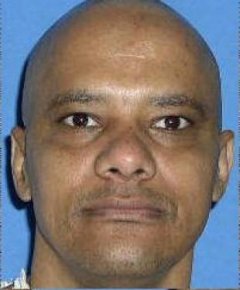
Texas inmate Michael Richard, condemned for raping and murdering Marguerite Dixon in 1986, was slated to die that very evening, also by lethal injection.
As Richard’s Texas Defender Service lawyers scrambled to prepare a last-minute legal challenge based on the pending Supreme Court case — for how could Texas carry out a procedure whose constitutionality was in question? — they tripped over an unexpected stretch of red tape that ultimately claimed their client’s life:
The Texas Court of Criminal Appeals closed at 5 p.m. on the day of the scheduled 6 p.m. execution, and refused to accept an appeal filed a few minutes after 5.
This bizarre situation, complicated by the fact that the Lone Star State did not have written rules for handling last-minute appeals (it does now), has a thicket of procedural detail best appreciated by lawyers.
Keller, who has what you might say is an inordinate regard for “finality” (and for prosecutors), has herself been forced to defend her conduct in hearings of the State Commission on Judicial Conduct. Those hearings could result in her removal from the bench over this incident; a decision is expected soon. (Update:She skated.)
Though it was not completely clear for a few more weeks, it was in fact true that the pending Baze decision suspended the death penalty in the United States. As a result, Michael Richard — whose execution would have been stayed had the appeal entered the judicial system — was the last American put to death until May of 2008.




 Lesurques was taken for the one of a gang who had sensationally robbed and murdered a mail courier early in 1796, and on the basis of


 Texas inmate