On this date in 1997, serial killer Ricky Lee Green died by lethal injection in Texas.
The radiator repairman was executed specifically for castrating and stabbing to death Steven Fefferman in 1986, but he killed at least three other people — two women and a 16-year-old boy — and investigators associated his m.o. with up to eight other unsolved murders. (Green also copped to another murder after his conviction, possibly to help another man, William Chappell, avoid execution. It didn’t work; Chappell was executed for that crime in 2002.)
“They all deserved it. They were kind of the dregs of society.”
“A Jekyll and Hyde thing” is how Green’s true-crime biographer characterized him — a lifetime of physical and sexual abuse and a drug habit dating to childhood had seriously warped the dude.
And the most famous serial killer from tiny Boyd, Texas might’ve kept getting away with it if wasn’t for his darn estranged wife.
Someone sure was grateful for Sharon Dollar Green’s help: even though she’d participated in some of the murders, she shopped hubby and skated with ten years’ probation as more Green’s victim than his accomplice.
Green went the popular “death row conversion” route while awaiting the inevitable, or so — atheists in foxholes and all — maintained his last statement.
I want to thank the Lord for giving me this opportunity to get to know Him. He has shown me a lot and He has changed me in the past two months.
I have been in prison 8 1/2 years and on death row for 7, and I have not gotten into any trouble. I feel like I am not a threat to society anymore. I feel like my punishment is over, but my friends are now being punished.
I thank the Lord for all He has done for me.
I do want to tell the …
But the lethal cocktail had begun, and the sentiment went to the grave with Ricky Lee Green.
On this date in 1993, Texas gave a lethal injection to a young man for murder — a crime many involved in the case no longer believe he committed, since the sole witness against him has recanted.
Lise Olsen — interviewed by NPR here — blew up the case; Cantu’s jury forewoman and the district attorney who tried him for his life are among those who have publicly regretted their roles in what has emerged one of the most compelling cases of an executed innocent in the modern American death penalty era. Nobody could possibly have predicted that pitiable public defender resources and an extremely aggressive capital punishment regime could result in such a thing.
On this date in 1862, German immigrants fleeing Confederate conscription were caught near Texas’ Nueces River and slain to a man.
The nomenclature of the “Nueces Massacre” is controversial since this party of Union loyalists making a leisurely pace* for Mexico got its shots off as it was gunned down in a gully by Texas Partisan Rangers in the predawn hours.
But the incident becomes a clear candidate for these pages with the summary execution of the surviving captured and wounded men later this day. Here’s the account of an obviously upset member of the Confederate party:
[S]ome of the more humane of us did what we could to ease the sufferings of the wounded Germans. They had fought a good fight, and bore themselves so pluckily I felt sorry I had taken my part against them. We bound up their wounds, and gave them water, and laid them as comfortably as we could in the shade. Poor creatures, how grateful they were!
He then pauses for breakfast and helps gather up the scattered German horses; we rejoin the narration after 4 o’clock in the afternoon.
I hurried over to where we had left the German wounded to see how they were getting on, and was surprised to find them gone. Asking what had become of them, I was told they had been moved to a better shade a short distance away. With this answer I was quite satisfied, and never dreamed the brutes with whom I served would be guilty of foul play, especially after the gallant fight the enemy had made.
Just then one of our wounded called for water, and I brought him some from the cool spring. As I was giving it to him, the sound of firing was heard a little way off. I thought at first they were burying some of the dead with the honors of war; but it didn’t sound like that either. Then, possibly it might be an attack on the camp; so I seized my rifle and ran in the direction of the firing. Presently I met a man coming from it who, when he saw me running, said, “You needn’t be in a hurry, it’s all done; they shot the poor devils, and finished them off.”
“It can’t possibly be they have murdered the prisoners in cold blood!” I said, not believing that even Luck [a villainous — to the diarist’s mind — lieutenant] would be guilty of such an atrocious crime. “Oh, yes; they’re all dead, sure enough — and a good job too!” Feeling sick at heart, though I hardly even then credited his report, I ran on, and found it only too true.
It seems they were asked if they wouldn’t like to be moved a little way off into better shade. The poor creatures willingly agreed, thanking their murderers for their kindness. They were carried away, but it was to the shade and shadow of death, for a party of cowardly wretches went over and shot them in cold blood.
More summary justice followed in the weeks ahead against members of the party who had escaped** and others, and Confederate Haengerbande would plague Texas Germans of insufficient southern enthusiasm for the remainder of the war.
This day’s victims are honored by the Treue der Union obelisk, the only Union monument in Confederate territory, a prominent distinction that (as with all things in the Civil War) invites political football. This conservative article throws cold water on the “Germans-as-antislavery-Unionists” trope, and academic papers from a 1990’s conference gathered in this volume treat Nueces among other topics of “disloyalty” in the Confederacy.
The photo is taken by Steve & Marion Daughtry In Comfort, Texas. Image used with permission.
* An escapee recounted decades later by way of explanation for the party’s fatal inattention to either haste or defense, “Having read a proclamation from the Confederate government announcing that all persons not friendly to it might leave the country, we believed we had a right to do so in large or small bodies, as best suited our convenience, to the border and there cross over into Mexico.”
** About half the group had separated from the main body just before the Confederates engaged them. From this number come the “escapees,” many of them later killed in the hills or while crossing into Mexico. Those who stayed put all died this day.
The case of Kelsey Patterson, who was executed in 2004, is one of the most compelling examples of what can happen when the mental health system fails to provide adequate care and in doing so, puts the public at risk. For more than two decades, Patterson struggled with paranoid schizophrenia. His severe delusions and elaborate conspiracy theories led him to commit several irrational and motiveless assaults. Yet instead of investing resources in a long-term treatment plan, the state of Texas largely left Patterson to his own devices, until one day his mental illness pushed him to the point of no return.
A Cycle of Illness, Violence, and Neglect
Kelsey Patterson spent much of the 1980s in and out of two state mental hospitals. His condition would be stabilized, but would deteriorate once he was removed from psychiatric care. According to a Houston Chronicle from 11 August 2002 (“Mentally Ill Killer’s Life on the Line”), when he stopped taking his medication, he would become belligerent. An earlier article in the same newspaper (“Is Mentally Ill Death Row Inmate Sane Enough to Die?”, Houston Chronicle, 14 November 1999) noted he was “left half-treated and unsupervised by the state for years despite a history of psychotically inspired, near-fatal assaults.”
Kelsey Patterson: Not all there.
In 1980, Patterson shot and wounded Richard Lane, a Dallas co-worker who he believed was conspiring against him and attempting to poison his food (it was Lane’s first day on the job). Lane survived and Patterson was sent to the maximum security unit at Rusk State Hospital, where he was found incompetent to stand trial and diagnosed with schizophrenia. Although restored to competency through treatment, doctors determined that he had been unable to conform his conduct to the law, a key provision of Texas’ insanity statute at the time. Prosecutors dismissed the charges, deeming him insane at the time of the crime.
In 1983, Patterson shot and wounded a co-worker in his hometown of Palestine in another motiveless, delusional assault. Again he spent months at Rusk State Hospital before being restored to competency. Once again he was found unable to conform his behavior to the law, and the attempted murder charge was dismissed.
Back in Dallas in 1986, he assaulted yet another co-worker and was sent to Terrell State Hospital. As with the previous incidents, no charges were filed because of his mental health status. He was hospitalized once more in 1988 after reportedly threatening family members and complaining that people were trying to poison him. That hospital stay lasted only 34 days.
Throughout this period, Patterson denied that he was mentally ill, would stop taking his medications, and refused to comply with treatment plans. His delusions continued to worsen, and he believed that everyone was out to get him, particularly “the authorities.” According to his brother, he sometimes would tape the edges of his windows and doors to determine if anyone had come in the room. He also heard voices talking to him through the walls and over the loudspeakers during his time in jail.
On September 25, 1992, just days after his brother once again tried to have him committed to a psychiatric facility, Patterson walked a short distance from his home to a local oil supply business in Palestine, where he shot and killed both the owner, Louis Oates, and his secretary, Dorothy Kay Harris, at whom he screamed “You ain’t going to get away with it.” After the shooting, he put down the gun, stripped to his socks, and paced, shouting incomprehensibly until the police arrived. As with his previous assaults, there seemed to be no real motive or explanation for the crime – Patterson had only a casual acquaintance with the victims. Yet in this instance, the state not only decided to pursue charges but also to seek the death penalty, arguing that Patterson met the new legal standard of sanity, which merely required the defendant to know that his conduct was wrong. The ability to conform one’s conduct to the law was no longer part of the insanity defense in Texas. By all accounts, however, Patterson’s delusional beliefs were the same as always.
Excerpt from a 13-page letter from Kelsey Patterson to the Texas Court of Criminal Appeals. (Image owned by author.)
Patterson’s Competency Hearing and Capital Trial
At his competency hearing, two physicians did not dispute his mental illness but declared Patterson to be competent to stand trial. Dr. James Grigson – who had diagnosed Patterson with schizophrenia 12 years earlier – reversed course and testified that in this latest assault, Patterson had been sane at the time of the crime. He had spoken with Patterson for less than five minutes and had not conducted a comprehensive evaluation, yet was absolutely confident in his assessment.*
Against the advice of his attorneys, Patterson took the witness stand during the hearing and rambled about the conspiracies against him. He offered this explanation for his behavior:
They have some type of implant devices that they used on me in the military, which I receive. Like the device that they put in the inner ear in which they can send subliminal message and make a person act beyond their controllability to know you have taken an action.”
The jury found him competent to stand trial, in spite of the clear evidence that he did not possess a rational or factual understanding of the proceedings against him and was unable to consult with his attorneys, whom he believed were plotting against him. Patterson was constantly removed from the courtroom during his trial because of his disruptive behavior and outbursts about the devices implanted in his body. The jury rejected his insanity defense, found him guilty of capital murder, and sentenced him to death.
A Permanent Stay of Execution
During his time on death row, Patterson consistently maintained that he was the victim of an elaborate conspiracy, and he wrote rambling, incoherent letters to court officials, his family, politicians, and others. He refused to meet with mental health professionals or his lawyers, which made it impossible to formally assess his competence. Both state and federal courts upheld his conviction and found him competent to be executed. In November 2003, the U.S. Supreme Court refused to hear his appeal and the state set his execution for the following May.
Upon learning of his execution date, Patterson’s letters referred to a “permanent stay of execution” that he said he had received on grounds of innocence. Competency for execution requires an inmate to be aware of the impending execution and the reason for it.
On May 17, 2004, the Texas Board of Pardons and Paroles issued an extremely rare recommendation of clemency for Kelsey Patterson because of his mental illness; the vote was 5-1 and was only the second such recommendation in the board’s history. Governor Rick Perry rejected the recommendation, however, “in the interests of justice and public safety.” Kelsey Patterson was executed on May 18, 2004, delusional until the very end, as evidenced by his incoherent last statement:
Statement to what? State what? I am not guilty of the charge of capital murder. Steal me and my family’s money. My truth will always be my truth. There is no kin and no friend; no fear what you do to me. No kin to you undertaker. Murderer. … Get my money. Give me my rights. Give me my rights. Give me my rights. Give me my life back.
* Dr. Grigson was known as “Dr. Death” because his testimony was instrumental in sending so many people to death row. He later was expelled from the American Psychiatric Association and Texas Society of Psychiatric Physicians because of his unethical, unscientific testimony in such cases.
Kristin Houle is a 2007 Soros Justice Fellow based in Austin, Texas.
Lynching is such a vile word. Likely taken from the name of Captain William Lynch of Virginia (circa 1780), the term for administering justice while dispensing with a trial had, by 1916, long since taken on its more common meaning of a white-on-black public killing.
But Jesse Washington‘s case defies this simple definition, straddling the line between state execution and an unrestrained populace. Washington’s brutal lynching at the hands of a white mob in Waco, Texas, on May 15, 1916, clearly fits the definition, and the particularly grisly details of his demise conjure all-too-familiar images of violent racism in the pre-Civil Rights South; but in another more disturbing way, Washington was effectively executed, his punishment carried out not by the state of Texas, but by the people themselves.
Jesse Washington’s charred corpse after the lynching.
Washington was born in 1899, a black farmhand who may or may not have been mentally retarded.* While his life is not well-documented, his death most certainly is. Washington was arrested on May 8 of that year for the rape and murder of Lucy Fryer, the 53-year old wife of a well-to-do cotton farmer. Fryer was found bludgeoned to death. Washington was spared for a week by the Waco sheriff, who successfully took him into custody before a pre-trial mob got their hands on him; Washington was then sent to Dallas for holding to prevent a local incident. To appease the mob, he was transferred back to Waco and tried for the crime just one week later.
It’s unclear whether Washington was guilty — evidence is scant and the trial lasted just one hour, but Washington appears to have had ample opportunity to perpetrate the act and is purported to have confessed — but his guilt or innocence in the matter was not on the mob’s mind. On May 15, the well-attended trial ended, and in four minutes, the jury reached its guilty verdict. Before the 17-year old could be sentenced, and with little or no resistance offered by any of the various legal entities in the courthouse, several hundred of the onlookers (some brandishing weapons) rushed Washington and carried him out the doors. Outside, a larger crowd waited to beat and castrate him. A chain was thrown around Washington’s neck, and he was dragged to the town square, where he met an immense crowd as well as the pile of dry goods boxes that was to be his end.
A Fred Gildersleeve image of the lynching of Jesse Washington.
By some estimates, up to 15,000 (mostly white, though not exclusively white) people watched the horrible events unfold; without question, Waco’s mayor as well as several other public officials watched from their second-story perch at town hall on one side of the square. Washington was tossed onto the boxes and coal oil was poured over him. The other end of the chain was thrown over what has become known as the Hanging Tree, and the fuel below Washington’s feet was set ablaze. Immersed in the flames, he attempted to climb the blisteringly hot chain multiple times, each time to be lowered back into the cauldron. It’s unclear how long Washington was alive, but the event lasted more than an hour, after which his fingers and teeth were claimed as souvenirs, his body parts were separated from the torso, and the remains of Washington were dumped in a bag so they might be dragged once more through the Waco streets.
Also watching from the mayor’s position was a cameraman who wanted to sell photographs of Washington’s charred corpse as postcards. Fred Gildersleeve snapped a series of images which would briefly make Waco the most shamefully famous city in the nation. Gildersleeve’s work paints a portrait of a town possessed by spite and uncontrolled rage: thousands of white spectators standing about the burning body of Washington from above, then hundreds of blacks gathered around his burned and brutalized remains from ground level. Others took pictures as well,
some more disturbing than others.
A complete and startlingly brutal account of this murder is given by Patricia Bernstein in her 2005 book The First Waco Horror: The Lynching of Jesse Washington and the Rise of the NAACP, which also tracks the increased viability of the NAACP in the wake of the slaying. What makes this case noteworthy for this column, though, is that Washington was found guilty prior to his lynching, and he would doubtless have received a state-supported death sentence. At the time, Texas law would have allowed for a public hanging; presumably, the spectacle surrounding Washington’s execution would have been just as significant (though not nearly as gruesome). Instead, vigilante justice was administered on the young farmhand, and his case because a linchpin for the Civil Rights movement. As with other lynchings of the time, no persons were charged in the incident, though it was obvious that there was significant planning involved and, from some of the images, that some form of self-appointed executioner actively participated in the deed.
Unlike a state-sponsored execution, though, Washington’s death raised the ire of the jury foreman, who harshly criticized the court for not protecting him. And because he was lynched, his cause was also taken up by several Northern papers, pushed into the national spotlight by NAACP secretary Royal Freeman Nash and Elisabeth Freeman.** Over 90 years later, the town of Waco is still dealing with the Waco Horror. The lynching has reared its head multiple times as many residents have pushed for a plaque to be erected on the site of the lynching, as one was for a distressingly large number of prior lynchings in Waco. Some in the town continue to resist, asserting that Washington’s guilt absolved the mob of responsibility for its act.
A postcard commemorating the lynching; written on the back: “This is the barbecue we had last night. My picture is to the left with a cross over it. Your son, Joe [Myers].”
Washington’s case raises two of the critical issues in the modern death penalty debate: culpability of the executioner (and witnesses), and cruelty of punishment. Nobody in the mob was prosecuted for the crime, and in the Waco of that day, it would have been unusual if someone had; today, we take little interest in the state executioner but would vociferously condemn such mob action. On a similar note, Washington’s death was barbaric and brutal, and few would argue that such an execution should be undertaken through legal channels, but recent Supreme Court cases have found it difficult to identify the meaning of “cruel and unusual punishment”. The debate continues in the United States, but these are two arguments, posed by Cesare Beccaria, that caused Leopold II to outlaw capital punishment in the Grand Duchy of Tuscany in 1789, and cases like Washington’s suggest they should continue at the very least to give us pause today.
* Some accounts state simply that he was illiterate, and if this is the litmus test for mental retardation in the early 1900s, around 6 percent of the population fell into that category.
** Freeman worked tirelessly to drag information from Waco’s inhabitants, her actions likely sparking papers like the local Waco Times-Herald to quickly shut the door on the case; that paper officially apologized 90 years later for its and other newspapers’ roles in venerating the lynch mob.
Six years ago today the state of Texas executed an FBI agent, a state district judge, the president of Kenya and a war hero who commanded a nuclear-powered submarine during the Civil War. More aptly put, Texas executed a seriously mental ill inmate named Monty Allen Delk who, at varying times, believed he was all of these things.
Delk was convicted and sentenced to death for the murder of Gene “Bubba” Allen of Anderson County in East Texas. Although the state of Texas maintained that Delk was “malingering,” i.e., pretending to be mentally ill to stave off execution, the prison system’s former chief mental health officer stated that Delk suffered from a severe mental illness, one that had become progressive in nature since it was first noticed in 1989 –- years after Delk was tried and convicted.
A close examination of the Delk case reveals yet another significant flaw in the capital punishment system:
The U.S. Supreme Court has ruled that executing severely mentally ill inmates violates the U.S. Constitution.
The court also has held that a death row inmate must be mentally competent in order to drop his appeals.
But the court has not directly addressed the issue of whether a death row inmate must be mentally competent in order to pursue his state and federal habeas appeals. In fact, the Texas Court of Criminal Appeals, and the 5th Circuit Court of Appeals, which has jurisdiction over death penalty cases in Texas, have ruled that prisoner competence during state and federal habeas proceedings is not constitutionally required.
The question is fundamental to due process. Habeas is the first, last and often only avenue of appeal for death row inmates whose sentences have been upheld on direct appeal by the Texas Court of Criminal Appeals. But because Delk was unable to assist his attorney through his habeas appeals, he could not answer simple questions that were key to his case -– questions such as, did he commit the crime? Did he think his trial was fair? Did he think his trial lawyers adequately represented him? Were there circumstances about the crime or about his personal history that mitigated against a death sentence?
The fact that Delk’s execution was allowed to proceed represented a three-pronged failure on the part of Texas’ death penalty system. The first failure must be attributed to the courts, which failed to order a psychiatric evaluation of Delk, despite repeated requests by Delk’s very able attorney, John Wright of Huntsville.
The second failure lies with Texas’ executive clemency system. Because of his mental illness, Delk’s sentence should have been commuted to life in prison. Yet the Board of Pardons and Paroles as well as Texas Gov. Rick Perry did nothing. (It is important to note that four days before Delk’s execution, the Georgia Parole Board, acting in a similar case, commuted death row inmate Alexander Williams sentence to life in prison after pleas from human rights activists. Williams is a chronic paranoid schizophrenic who thinks Sigourney Weaver is God and that little green frogs are in his prison cell, staring at him.)
The third failure rested with the Texas media. While Williams’ case attracted comprehensive media coverage in Georgia and beyond, newspapers in Texas largely failed to investigate Delk’s case. Government -– including the criminal justice system –- works best under the glare of public scrutiny. Absent such scrutiny, abuses occur. In this case, no one outside Texas’ fervent anti-death penalty community took much notice of Delk’s execution.
The good news is Texas’ newspapers are beginning to sit up and take notice. If I am not mistaken, every major Texas newspaper has called either for abolition of the death penalty or for a moratorium on executions. The issue of capital punishment has advanced from the margins to the mainstream. In today’s climate, one wonders whether Texas officials could get away with executing a person as severely mentally ill as Delk.
Ultimately, the Supreme Court will have to directly confront the issue of whether a death-sentenced prisoner need be mentally competent during his habeas appeals. Until that happens, we simply will have to ask ourselves a key question:
Is executing someone who is so severely mentally ill he does not know who he is not the very definition of an insane act?
Polling data reveals interesting things about U.S. public opinion and the death penalty. If you ask an open-ended question about the death penalty –- for example, “Do you feel the death penalty is appropriate for certain egregious crimes?” –- then you usually see somewhere around a 65 to 35 percent split in favor. On the other hand, if you ask which is preferred – the death penalty or life in prison without parole, the results tend to be closer to 50-50.
Upon occasion, another question is asked: Do you feel an innocent person has been put to death in the U.S.? The results are pretty emphatic: Americans don’t trust their government to get it right, and they do believe innocent people have been executed, by a ratio of about three to one.
So the question fairly arises: Have innocent people been executed in the U.S. in what we sometimes refer to as the “modern era,” i.e., since executions were allowed to resume in 1976?
Enter Cameron Todd Willingham.
On Feb. 17, 2004, Cameron Todd Willingham was strapped to a gurney in a Texas death chamber as he declared his innocence for the last time. Minutes later, he was executed by lethal injection. In December of the same year, the Chicago Tribune uncovered secrets behind the Willingham case, addressing questions left unanswered and raising doubts left unacknowledged.
The Fatal Fire
Cameron Todd Willingham with one of his purported victims — his daughter, Amber.
On Dec. 23, 1991, Willingham was at home with his three daughters. His wife, Stacy, left their home in the morning to pay the bills and shop for Christmas gifts at a Salvation Army store. The family had been struggling that year; Todd, as everyone called him, had recently been laid off, and Stacy was supporting the family with her wages from a bar. The Willinghams were two months behind on rent, and they had even stopped paying some bills in order to save money for Christmas.
Willingham recalled waking up briefly as his wife was leaving the home around 9 a.m. When he heard their one-year-old twins, Karmon and Kameron, crying, he woke up to feed them and went back to sleep. About an hour later, his two-year-old daughter Amber woke him with her cries, and the house was already full of smoke. Willingham remembers not being able to see “anything but black” toward the front of the house.
The circuits were popping throughout the home as Willingham frantically went to his daughters’ bedroom. At this point, his hair caught on fire, and he was able to see little more than the glowing of the ceiling. Willingham called out for his children and felt along the floor and bed for them, but he could not find them. This is when debris began falling from the ceiling, causing him to burn his shoulder. He fled the home through the front door.
After fleeing his house, he asked his neighbors to call the fire department and screamed to them, “My babies is in there and I can’t get them out.” A neighbor, Mary Barbee, then asked other neighbors to place the call because her own telephone was disconnected. Willingham reported that, while this was happening, he tried to re-enter his home, but it was too hot. Then, he knocked out two bedroom windows with a pool cue, but could not get into the bedroom.
Buvin Smith arrived on the scene after hearing the neighbor’s call over a radio scanner. Smith remembered restraining Willingham from going onto the porch, and heard him yelling that his “babies were in the house” and noticed that he was “acting real hysterical.”
A Circumstantial Case
Almost immediately, Willingham became a suspect. According to the Chicago Tribune, prosecutors often are able to rely on circumstantial evidence in cases when a child dies and the parent survives. In this case, the prosecution convinced the jury that Willingham killed his children because they interfered with his beer-drinking, dart-throwing lifestyle. The jury believed it.
Neighbors told investigators that they did not believe Willingham tried hard enough to save his children. In fact, Barbee said that she saw Willingham standing by the fence as heavy smoke came out of the windows. Also, she told investigators that Willingham seemed more concerned with moving his car away from the burning house as the windows blew out than with saving his children.
Willingham’s wounds were treated shortly after the fire. Firefighters did not think that his burns were severe enough had he indeed searched for his daughters in the manner he described. His shoulder, back, and hair were burned, but his bare feet were not burned at the bottom.
Police stated that, the day after the fire, Willingham complained about not being able to find a dartboard in the wreckage of his home. Others mentioned hearing loud music and laughter in the following days as the couple attempted to salvage their belongings.
A police chaplain grew suspicious that Willingham’s hysterics during the fire were not genuine. The chaplain, George Monaghan, noted that Willingham seemed “too distraught.”
In addition to these evaluations of Willingham’s behavior, fire investigators reported over 20 indicators of arson. These include the “crazed glass,” or the web-like cracks in the glass. Until more recent research was completed, arson specialists believed this to be a clear indication that an accelerant had been used in the fire. The fire experts also noted that the fire had reached a stage known as flashover, when a fire reaches such a high temperature that an explosion results. This further supported their reasoning that an accelerant had been used.
Willingham was charged with murder on Jan. 8, 1992, just two weeks after the fire. In August of the same year, his trial began, after Willingham turned down a deal from the prosecution and insisted that he was innocent. During the trial prosecutors presented inmate Johnny E. Webb as a witness. He testified that Willingham confessed at the county jail to killing his children in order to cover up the fact that his wife, Stacy, had been physically abusing them. Webb, a recovering drug addict, was taking psychiatric medication to relieve post-traumatic stress syndrome. The prosecution also presented as witnesses the neighbors who claimed that Willingham should have done more. Fire investigators Doug Fogg and Manuel Vasquez also testified at Willingham’s trial. Both of these investigators testified in court that the fire was caused by arson.
Both of these investigators testified to assumptions about fire that have been scientifically proven to be wrong.
Forensic Evidence Reconsidered
When the Chicago Tribune investigated the case, several experts reviewed documents, trial testimony, and video documentation of the fire scene and concluded that the original investigation was terribly flawed. Gerald Hurst, a Cambridge University-educated chemist, and John Lentini, John DeHaan, both private consultants specializing in fire investigation, along with Louisiana fire chief Kendall Ryland, examined the materials. They suggest that this fire may have been simply accidental.
After the Chicago Tribune investigation, Lentini worked with the Innocence Project to assemble an independent, peer-review panel of arson experts. The five-member panel –- with a combined 138 years in high-level fire investigation experience –- issued a 44-page report (.pdf) on the case.
They determined that “each and every one” of the forensic interpretations made by the state’s experts at Willingham’s trial was not scientifically valid. For example, the original investigators determined that an accelerant was used because wood cannot burn hot enough to melt aluminum. In fact, according to these leading experts, it can.
The 1991 investigators also claimed that the brown rings on the Willingham’s front porch indicated accelerant usage. Experts called this “baseless speculation,” explaining that fire-hose water often leaves brown rings on surfaces after evaporation.
Was it Known Before the Execution?
This information didn’t only come to light recently. Shortly before Willingham was executed, Hurst reviewed the case and issued a report that dismissed every single indicator of arson Fogg and Vasquez had originally cited. What was done with this report? Texas judges and Gov. Rick Perry turned it aside, confident of Willingham’s guilt.
Jury members are less confident now. One jury member asked, “Did anybody know about this prior to his execution? Now I will have to live with this for the rest of my life. Maybe this man was innocent.”
There has not been “a single case—not one—in which it is clear that a person was executed for a crime he did not commit. If such an event had occurred in recent years, we would not have to hunt for it; the innocent’s name would be shouted from the rooftops.”
Ten years ago today, born-again murderess Karla Faye Tucker died by lethal injection in Texas — her reprieve refused by politically ambitious Governor George W. Bush.
At the bottom, Tucker‘s case was a simple one: on a drug-fueled jag at age 23, she’d committed two grisly axe murders in the course of a robbery.* By the time her appeals ran out and her case reached the executive clemency stage, she’d become an outspoken born-again Christian and was asking for mercy.
She was far from the first prisoner to have undergone that conversion.
But she was, to begin with, to be the first woman executed in Texas since the Civil War, which by itself gave her case a special valence. That she was white and relatively photogenic surely did not hurt her cause. By hook or by crook, if not by any objectively consistent standard, her situation caught the public eye –attracting support from some ordinarily pro-death penalty evangelicals as well as more predictable allies. She appeared live on Larry King‘s talk show three weeks before her execution. For a few weeks, Tucker became the emblematic dilemma of reform and redemption pitting the death penalty’s various partial rationales against one another: between retribution for her crime and the present interest of her society, which has precedence? And who decides?
The decider today** was a first-term governor of Texas due to face re-election nine months hence and already looking ahead to the 2000 presidential election.
The case presented George W. Bush with a delicate political situation. Bush was carving out a public persona as a tough-talking lawman — at this point in time, his willingness to execute might have been the thing he was best-known for nationally. He would need evangelical support to run for president, but parsing out life and death on that basis would raise its own difficulties.
The calculus pointed towards proceeding with the execution under cover of pious flimflammery. Sister Helen Prejean of Dead Man Walking fame later recalled it:
[O]n the night of Karla Faye’s killing, my anger at George W. Bush turned to outrage when Larry King aired Bush’s press statement and I heard the way Bush invoked God to bless his denial of clemency … “May God bless Karla Faye Tucker and may God bless her victims and their families.”
Immediately after the statement, King turned to me for a response … [I] said, “It’s interesting to see that Governor Bush is now invoking God, asking God to bless Karla Faye Tucker, when he certainly didn’t use the power in his own hands to bless her. He just had her killed.”
Bush’s political instincts proved grimly accurate this day, but Karla Faye Tucker very nearly returned to derail his presidential bid a year later.
In an interview the following year with a conservative journalist, Bush mocked Tucker’s plea for mercy with shocking cruelty, subsequently related in Talk magazine:
In the week before [Karla Faye Tucker’s] execution, Bush says, Bianca Jagger and a number of other protesters came to Austin to demand clemency for Tucker. “Did you meet with any of them?” I ask.
Bush whips around and stares at me. “No, I didn’t meet with any of them,” he snaps, as though I’ve just asked the dumbest, most offensive question ever posed. “I didn’t meet with Larry King either when he came down for it. I watched his interview with [Tucker], though. He asked her real difficult questions, like ‘What would you say to Governor Bush?’ ”
“What was her answer?” I wonder.
“Please,” Bush whimpers, his lips pursed in mock desperation, “don’t kill me.”
The journalistic principle demands acknowledging the president-to-be’s denial of the remark, but the denial is a self-evident lie. That story briefly threatened to punch a hole in Bush’s presidential campaign positioning as a “compassionate conservative,” and especially of having somberly reviewed the myriad death warrants he signed. But the matter vanished harmlessly.
At the end, for the relentless churn of the news cycle, Karla Faye Tucker was a passing shadow. What was left — this day, and a decade after — was an intensely personal story, rich with those timeless and unfathomable mysteries of the human experience cast by the executioner into such sharp relief.
This documentary, sympathetic to Tucker but not only to her, was made around the time of the execution but stands up well for its presentation of the widely divergent, equally heartfelt perspectives of several drawn into the passion — Tucker herself, a victim’s brother who forgave her, and a victim’s spouse who hated her until the end.
Part 1:Part 2:The literature left behind by this day’s case likewise tends — when it is not about the President — to the devotional qualities of Karla Faye’s personal path.
A roundup of Karla Faye Tucker coverage is here. A detailed biography is here. A pro-Karla Faye site memorializes her here.
* Along with her boyfriend, who was also sentenced to death but died in prison. Even before she was an “attractive” woman seeking clemency, the case — like that of many death row women — had a sexualized context as well: she boasted of reaching orgasm as she struck the victims, and recordings of those boasts were played at her trial.
** Legally, the Governor of Texas had — and still has — limited powers of clemency: if the parole board did not recommend mercy, Bush could do nothing more than offer a 30-day stay. That statutory limitation was more apparent than real, however: board members are political appointees and their deliberations are secret; they essentially answer to the governor. On the one occasion Bush actually did want to grant clemency, he made his desire known and the board obliged with the needed recommendation.


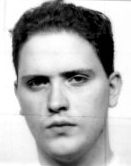 Delk was convicted and sentenced to death for the murder of Gene “Bubba” Allen of Anderson County in East Texas. Although the state of Texas maintained that Delk was “malingering,” i.e., pretending to be mentally ill to stave off execution, the prison system’s former chief mental health officer stated that Delk suffered from a severe mental illness, one that had become progressive in nature since it was first noticed in 1989 –- years after Delk was tried and convicted.


 At the bottom,