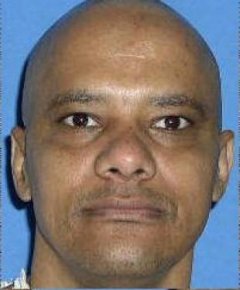
2009: Khristian Oliver, Bible basher

(Thanks to John Temple, author of The Last Lawyer: The Fight to Save Death Row Inmates and journalism professor at West Virginia University, for the guest post. -ed.)
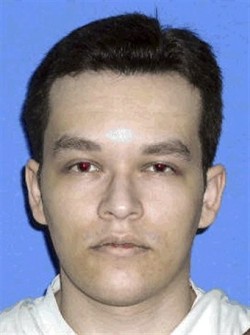
Barring a last-minute stay of execution, Khristian Oliver will be put to death late this afternoon.

(Update: Khristian Oliver has indeed been executed as scheduled. His likeness lives on in an altarpiece made by his father, an artist.)

In 1998, Oliver, now 32, shot and killed a man whose home he was burglarizing. Oliver’s guilt isn’t being questioned. The argument his attorneys and supporters are using to stave off his upcoming execution has to do with how the jurors in his case handled his sentencing.

An Oct. 15 story in The Guardian described the scene in the jury room this way:

A clutch of jurors huddled in the corner with one reading aloud from the Book of Numbers: “The murderer shall surely be put to death” and “The revenger of blood himself shall slay the murderer.”

Another juror highlighted passages which she showed to a fellow juror: “And if he smite him with an instrument of iron, the murderer shall surely be put to death.” (Apparently one of the same passages, Numbers 35:16, in fuller context.)

Juries debating this most difficult decision often reach for Biblical guidance, and there are no shortage of verses that relate to capital punishment, including the famous “eye for an eye” passage(s). Courts have ruled this improper, not because the Bible is a religious document, but because it is extrinsic evidence, meaning it was not properly introduced as evidence.

The same issue arose in the central case in my new book, The Last Lawyer: The Fight to Save Death Row Inmates.

To write the book, I shadowed a North Carolina legal team for four and a half years as they fought to overturn the death sentence of a man named Bo Jones. The attorneys crisscrossed the back roads of North Carolina to track down and interview most of the jurors from the trial, two of whom chased them off their property. In the end, the attorneys found one woman who claimed that a Baptist minister on the jury had brought a Bible into the room and quoted passages from it.

In the end, this claim didn’t help Bo Jones. A federal appeals judge threw it out, saying his lawyers hadn’t proved that the Bible-quoting had influenced the jury’s verdict. But Jones’s attorneys had plenty of other arguments up their sleeves, while Oliver’s supporters seem to be putting most of their emphasis on the Bible argument.

It remains to be seen whether this will bewas not enough to spare his life.

Update: Prolific death penalty defense attorney David R. Dow (author of Autobiography of an Execution) on his client, Khristian Oliver.


On this day..

2005: Luis Ramirez, claiming innocence

On this date in 2005, Luis Ramirez was executed in Texas for engineering the murder-for-hire of his ex-wife’s new flame.

Ramirez went to his death still insisting on his innocence.

I did not kill your loved one, but I hope that one day you find out who did. I wish I could tell you the reason why, or give some kind of solace; you lost someone you love very much. The same as my family and friends are going to lose in a few minutes. I am sure he died unjustly, just like I am.

Maybe so. Maybe not.

Contrary to the widespread misapprehension that DNA and other forensic evidence are rendering criminology a perfect science, the majority of criminal procedures make do without them — consequently depending on the more impressionistic and time-honored pillars of jurisprudence: a weighing of circumstantial evidence; an estimate of the credibility of competing witnesses; the structural advantage of the well-resourced prosecutor’s office against its typical adversaries.

There may never be an answer to Luis Ramirez’s last statement, simply because there’s no obvious prospect of a dramatic forensic science reveal.

Wherever Ramirez’s soul might truly stand on the matter of capital murder, he left behind this interesting portrait of human connection on death row.

I’m about the share with you a story who’s telling is long past due. It’s a familiar story to most of you reading this from death row. And now it’s one that all of you in “free world ” may benefit from. This is the story of my first day on the row.

I came here in May of 1999. The exact date is something that I can’t recall. I do remember arriving in the afternoon. I was placed in a cell on H-20 wing over at the Ellis Unit in Huntsville, TX. A tsunami of emotions and thoughts were going through my mind at the time. I remember the only things in the cell were a mattress, pillow, a couple of sheets, a pillow case, a roll of toilet paper, and a blanket. I remember sitting there, utterly lost.

The first person I met there was Napoleon Beazley. Back then, death row prisoners still worked. His job at the time was to clean up the wing and help serve during meal times. He was walking around sweeping the pod in these ridiculous looking rubber boots. He came up to the bars on my cell and asked me if I was new. I told him that I had just arrived on death row. He asked what my name is. I told him, not seeing any harm in it. He then stepped back where he could see all three tiers. He hollered at everyone, “There’s a new man here. He just drove up. His name is Luis Ramirez.” When he did that, I didn’t know what to make of it at first. I thought I had made some kind of mistake. You see, like most of you, I was of the impression that everyone on death row was evil. I thought I would find hundreds of “Hannibal Lecters” in here. And now, they all knew my name. I thought “Oh well,” that’s strike one. I was sure that they would soon begin harassing me. This is what happens in the movies after all.

Well, that’s not what happened . After supper was served, Napoleon was once again sweeping the floors. As he passed my cell, He swept a brown paper bag into it. I asked him “What’s this?” He said for me to look inside and continued on his way. Man, I didn’t know what to expect. I was certain it was something bad. Curiosity did get the best of me though. I carefully opened the bag. What I found was the last thing I ever expected to find on death row, and everything I needed. The bag contained some stamps, envelopes, notepad, pen, soap, shampoo, toothpaste, tooth brush, a pastry, a soda, and a couple of Ramen noodles. I remember asking Napoleon where this came from.

He told me that everyone had pitched in. That they knew that I didn’t have anything and that it may be a while before I could get them. I asked him to find out who had contributed. I wanted to pay them back. He said, “It’s not like that. Just remember the next time you see someone come here like you. You pitch in something.”

I sat there on my bunk with my brown paper bag of goodies, and thought about what had just happened to me. The last things I expected to find on death row was kindness and generosity. They knew what I needed and they took it upon themselves to meet those needs. They did this without any expectation of reimbursement or compensation. They did this for a stranger, not a known friend. I don’t know what they felt when they committed this act of incredible kindness. I only know that like them, twelve “good people” had deemed me beyond redemption. The only remedy that these “good people” could offer us is death. Somehow what these “good people” saw and what I was seeing didn’t add up. How could these men, who just showed me so much humanity, be considered the “worst of the worst.”

Ever since Napoleon was executed, for a crime he committed as a teen, I’ve wanted to share this story with his family. I would like for them to know that their son was a good man. One who I will never forget. I want for them to know how sorry I am that we as a society failed them and him. I still find it ridiculous that we as a people feel that we cannot teach or love our young properly. I’m appalled at the idea that a teen is beyond redemption, that the only solution that we can offer is death. It’s tragic that this is being pointed out to the “good people” by one of the “worst of the worst”. God help us all.

What’s in the brown paper bag? I found caring, kindness, love, humanity, and compassion of a scale that I’ve never seen the “good people” in the free world show towards one another.

On this day..

2007: Michael Richard, whose time ran out

Two years ago today, the U.S. Supreme Court unexpectedly accepted a case, Baze v. Rees, challenging the constitutionality of lethal injection — the supposedly humane execution method that seemed less and less so.

Texas inmate Michael Richard, condemned for raping and murdering Marguerite Dixon in 1986, was slated to die that very evening, also by lethal injection.

As Richard’s Texas Defender Service lawyers scrambled to prepare a last-minute legal challenge based on the pending Supreme Court case — for how could Texas carry out a procedure whose constitutionality was in question? — they tripped over an unexpected stretch of red tape that ultimately claimed their client’s life:

The Texas Court of Criminal Appeals closed at 5 p.m. on the day of the scheduled 6 p.m. execution, and refused to accept an appeal filed a few minutes after 5.

Or more specifically, Judge Sharon Keller refused to accept the appeal, for which she came under immediate fire — and launched campaigns like the website SharonKiller.com.

This bizarre situation, complicated by the fact that the Lone Star State did not have written rules for handling last-minute appeals (it does now), has a thicket of procedural detail best appreciated by lawyers.

But it caught worldwide attention as an illustration of Texas’s cavalier approach to its numerous death penalty cases.

Keller, who has what you might say is an inordinate regard for “finality” (and for prosecutors), has herself been forced to defend her conduct in hearings of the State Commission on Judicial Conduct. Those hearings could result in her removal from the bench over this incident; a decision is expected soon. (Update: She skated.)

Though it was not completely clear for a few more weeks, it was in fact true that the pending Baze decision suspended the death penalty in the United States. As a result, Michael Richard — whose execution would have been stayed had the appeal entered the judicial system — was the last American put to death until May of 2008.

On this day..

1993: Leonel Herrera, perilously close to simple murder?

On this date in 1993, Leonel Herrera was executed by lethal injection in Huntsville, Texas, for shooting two policemen. Herrera’s last statement averred,

Herrera’s sister Norma self-published this book about the case — keeping a promise to her executed brother.

I am innocent, innocent, innocent. Make no mistake about this; I owe society nothing. Continue the struggle for human rights, helping those who are innocent, especially Mr. Graham. I am an innocent man, and something very wrong is taking place tonight. May God bless you all. I am ready.

Well, Herrera wasn’t the first to go to his death maintaining his innocence. The circumstances (and circumstantial evidence) of the crime rate on the forgettable side.

But Leonel Torres Herrera was a bit different from his cousins in hopeless protestation: while he died this evening, his name lived on … in a landmark Supreme Court decision

Herrera v. Collins

Years after Herrera was convicted and death-sentenced, multiple affidavits were produced to the effect that his late brother, Raul, was the real killer.

This evidence was naturally pursued with gusto by the condemned man.

Unfortunately, a claim like Herrera’s of “actual innocence” faces a very high bar when raised in appellate courts, once a prisoner has already been convicted and their presumption of innocence become a presumption of guilt.

That this arbitrary rule of the game has a defensible rationale — could any criminal justice system operate if prisoners could continually relitigate their cases while memories fade and evidence ages into obsolescence? — does not make it the less Kafkaesque for individual prisoners, some of whom are in fact innocent.

Herrera presented this problem in unusually stark terms. Lacking any procedural violation upon which to hang his hat as an appeals issue, his claim pitted substance against form in the Supreme Court. (Oral arguments at Oyez.org)

You already know how it ended.

Chief Justice William Rehnquist’s opinion patiently explained a jurisprudential truism loftily uncolored by any experience in life liable to introduce a sense of kinship with a Hispanic man charged with a Texas cop-killing who uncovers too late the evidence that could save him.

“[A]ctual innocence” is not itself a constitutional claim.*

Instead, the Court recommended — tongue no doubt planted firmly in cheek — that Herrera apply for executive clemency, a dead letter procedure in Texas used exclusively in a good cop/bad cop routine opposite the black robes.

“Judicial restraint forbids relieving you,” says the court. “Go ask the governor.”

“The courts have thoroughly reviewed the case,” intones the governor. “May God have mercy on your soul.”

Herrera himself may or may not have been innocent. At the end of the day, he went down because the game was rigged against him: his exculpatory evidence was not available at trial, when it might have introduced “reasonable doubt” — as Rehnquist’s opinion put it, “in state criminal proceedings the trial is the paramount event for determining the guilt or innocence of the defendant.” Once that evidence became available deep in the appeals process, it was procedurally barred, and far from such a slam-dunk exoneration that any institutional actor would stick his, her or its neck out to lift Leonel Torres Herrera from the gurney.

Justice Harry Blackmun’s dissent retorted,

Just as an execution without adequate safeguards is unacceptable, so too is an execution when the condemned prisoner can prove that he is innocent. The execution of a person who can show that he is innocent comes perilously close to simple murder.

Whether “simple murder” happened in Huntsville this night in 1993, perhaps no one can really say with certainty.

But as DNA evidence and other forensic advances in the intervening years have increasingly eroded confidence in the reliability of the justice system that metes out death, Herrera v. Collins stands as a key precedent in a case now before the Supreme Court — in which states (joined by the Obama administration) are asking the justices to agree that convicted prisoners have no right to cheap, simple, and frequently dispositive DNA testing that may not have been available when they were tried.

Given the composition of the court (including three holdovers from the Herrera majority), that decision figures to have Leonel Herrera rolling over in his grave.

* Rehnquist conceded a theoretical possibility that extraordinarily persuasive evidence could generate relief on due process grounds. Antonin Scalia and Clarence Thomas went much further, claiming that prisoners had no right to anything but their trial and their (procedural) appeals.

On this day..

1992: Billy Wayne White, after 47 minutes

On this date in 1992, longtime heroin user Billy Wayne White waited 47 minutes while his executioners probed for a vein suitable to inject the lethal cocktail he incurred for a 1976 robbery-murder in Houston.

On this day..

1836: Goliad Massacre

On this date in 1836 — Palm Sunday, as it happened — over 300 Anglo POWs fighting to separate Texas from Mexico were executed en masse outside Goliad’s fortress

Less widely celebrated than the Battle of the Alamo preceding it by a fortnight, the Battle of Coleto on March 19-20 had seen Mexican troops surround and capture another force of Texians at Goliad.

Unaware of a Mexican order issued the previous December to execute foreign prisoners,* the men under Col. J.W. Fannin — a dithering commander whose military competence didn’t quite equal his romantic aspirations — expected to be released in a matter of weeks. They were marched out this morning on some innocuous pretext and had bare moments to apprehend their impending fate before their guards mowed them down. (Fannin was individually shot apart from his troops.)

Nineteenth-century musketry was a mediocre tool for mass slaughter, especially when the targets were nearly as many as their executioners. A number of prisoners survived the volley and managed to escape the subsequent cavalry charge and bayoneting by leaping into a nearby river. A fortunate few others were intentionally preserved. This thorough site on the massacre** preserves several survivor accounts.

These memoirs also detail life in the unit and troop maneuvers that are certainly of interest; in these pages, of course, we are most drawn to the accounts of those who stared death in the face — like this (understandably melodramatic) description by Herman Ehrenberg:

Either life or death! Behind were the bayonets of the murderers, and before me was the sword of a coward that crossed my way to the saving stream. Determinedly I rushed upon him. Forward I must go, and — the coward took flight in characteristic Mexican gallantry. Now the path was open, near was the point of my escape.

Arriving at the other bank of the river, I looked around once more to where my comrades were dying, while the bullets of the still firing enemies whistled about me. The hellish exaltations of the enemy mixed with the cries of pain of my dying brothers sounded over to me. What feelings took possession of me here! I cast another look and a farewell greeting to my dead companions and turned to flee. I had to hasten if I did not wish to fall into the hands of the lancers who were now on this side of the river less than a half a mile below me.

Which makes an interesting stylistic contrast with the story of John C. Duval, similar in its events but strikingly low-key, even ironic:

Some one near me exclaimed “Boys! they are going to shoot us!” and at the same instant I heard the clicking of a musket locks all along the Mexican line. I turned to look, and as I did so, the Mexicans fired upon us, killing probably one hundred out of the one hundred and fifty men in the division. We were in the double file and I was in the rear rank. The man in front of me was shot dead, and in falling he knocked me down. I didn’t get up for a minute, and when I rose to my feet, I found that the whole Mexican line had charged over me, and were in hot pursuit of those who had not been shot and who were fleeing towards the river about five hundred yards distant. I followed on after them, for I knew that escape in any direction (all open prairie) would be impossible, and I had nearly reached the river before it became necessary to make my way through the Mexican line ahead. As I did so, one of the soldiers charged upon me with his bayonet (his gun I suppose being empty). As he drew his musket back to make a lunge at me, one of our men coming from another direction, ran between us, and the bayonet was driven through his body. The blow was given with such force, that in falling, the man probably wrenched or twisted the bayonet in such a way as to prevent the Mexican from withdrawing it immediately. I saw him put his foot upon the man, and make an ineffectual attempt to extricate the bayonet from his body, but one look satisfied me, as I was somewhat in a hurry just then, and I hastened to the bank of the river and plunged in. The river at that point was deep and swift, but not wide, and being a good swimmer, I soon gained the opposite bank, untouched by any of the bullets that were pattering in the water around my head.


The Texas state flower — the bluebonnet — blooms in front of the monument put up to the Goliad Massacre on its centennial. Creative Commons image from Matthew Lee High.

History buffs in the Goliad environs this weekend can catch the annual re-enactment of the Goliad Massacre this weekend at Presidio La Bahia.

* The order came from the top, but the general who captured Goliad had no stomach to carry it out. He asked for leniency … but received an emphatic confirmation of the execution order.

** Also see its unit rosters tracking the particular fates of most of Fannin’s men, and these biographies of the unit.

On this day..

1836: The defenders of the Alamo, much remembered

On this date in 1836, Mexican forces commanded by President Antonio Lopez de Santa Anna overran the Alamo — and executed those few of its defenders who survived the day’s battle.

“Remember the Alamo!”

This most memorable battle of the Texas Revolution has since retained its place in the founding mythology of Texas and its draw as a tourist destination in San Antonio, no matter the complexities on the ground. (You can watch the earliest surviving film treatment, The Martyrs of the Alamo, free online. D.W. Griffith made it the same year he made Birth of a Nation.)

That Alamo of blood and legend, and the countervailing interpretations it eclipses, are much beyond our scope here, but we are attracted to notice the reputed summary execution of five to seven defenders who had surrendered or otherwise been captured during the fight. (A few dozen mostly civilian noncombatants in the former mission also survived, and were not executed.)

According to Robert Scott, Santa Anna was empowered by a Mexican resolution holding (not without cause) that

“foreigners landing on the coast of the Republic or invading its territory by land, armed, and with the intent of attacking our country, will be deemed pirates.”

Who counted, at this moment, as “foreigners” among the Anglo settlers trying to break away from Mexico and their supporters among from the United States to which Texas would eventually attach poses a historiographical riddle. But then, Santa Anna wasn’t there to write a dissertation, but to win a war — and he was said to be sorely annoyed at the defenders having tied him down for a week and a half.

King of the Wild Frontier

Covered by most any definition of “foreigner” would have been the Alamo’s most famous defender, Tennessee frontiersman and former U.S. Congressman Davy Crockett. He had arrived in Texas just a few months before, on a rendezvous with destiny.*

It’s a matter of dispute whether Crockett was among those last few executed; in an event this emotionally remembered, every version of the Crockett death scene — from “found dead of injuries amid a heap of Mexican casualties” to “cravenly bargained for his life” — gores someone’s ox.

Even if the account of Crockett’s presence among the executed derives from a disputed source — well, this blog has not scrupled to highlight the fictional and the mythological, those executions whose resonance transcends factual accuracy.

And even if Davy Crockett was not among those anonymous souls put to death this day, it is by his name that they have their tribute, as in the 2004 film** The Alamo:

* Destiny by way of Walt Disney.

** This Disney film diddles with the Crockett legend that Disney helped to inflate in the 1950’s — to the annoyance, of course, of traditional-minded Alamo partisans.

On this day..

2001: Larry Keith Robison

(Thanks to Kristin Houlé of the Texas Coalition to Abolish the Death Penalty for the guest post, adapted from her Mental Illness and the Death Penalty Resource Guide (pdf link). Kristin blogs at Prevention Not Punishment. -ed.)

A mentally ill man who had been refused treatment because his condition had not yet turned him violent suffered lethal injection in Texas eight years ago today for finally turning violent.

Larry Robison was diagnosed with paranoid schizophrenia at the age of 21, three years before the murders for which he was sentenced to die. He began hearing voices and acting strangely as a teenager, claiming to have secret paranormal mental powers and the ability to read people’s minds and move objects from a distance. He joined the Army but was discharged after only a year.

Robison’s parents sought help and warned mental health authorities of their son’s erratic and increasingly aggressive behavior, but were told that the state could offer no resources unless he turned violent. He was shuffled in and out of mental hospitals, admitted after aggressive behavior and released after a period of medicated passivity. He received no regular, ongoing treatment. Robison was not covered by his parents’ insurance, nor did he have his own.

Robison claimed that voices in his head, which came through the clocks in his room, spewed out warnings about Old Testament prophecies of the Apocalypse and told him to murder, behead, and mutilate his roommate, Bruce Gardner. Robison then went next door and murdered four of his neighbors. When authorities arrested him, he told them that he had committed the murders in order to “find God.”

The four prosecutors developing the case against Larry Robison recognized his past history of mental illness and were willing to accept an insanity plea in exchange for life in a mental institution. The Tarrant County district attorney overruled them, however, and ordered them to seek a death sentence. In the courtroom, most evidence of Robison’s mental illness was ruled inadmissible, so the jury heard little of it. None of the three doctors who had diagnosed Robison before the crime as suffering from paranoid schizophrenia were called to testify at his trial. The jury rejected his plea of not guilty by reason of insanity.

Once in prison, evidence of Robison’s mental illness continued to accumulate. The Texas Court of Criminal Appeals stayed his execution at one point, doubtful as to whether or not he was competent to be executed. When asked what the execution would be like, Robison replied that he felt like “a little kid at Christmas time waiting for Santa Claus to come.” Eventually, he demanded that his lawyers cease filing appeals based on his mental illness, but only if the state agreed to execute him on the night of a full moon. Despite protests from mental health organizations and concerned citizens throughout the world, the state complied.

Larry Robison’s case drew attention largely as a result of the tireless efforts of his own family, taking a public profile unusual for the family of the condemned. CBS News’ 48 Hours profiled the Robisons shortly before Larry’s execution. They continue to maintain a website, larryrobison.org; mother Lois Robison remains a vocal critic of executing the mentally ill, and delivered this address to a Murder Victims’ Families for Human Rights conference last fall.

On this day..

1917: Thirteen black soldiers of the 24th U.S. Infantry Regiment

On this date in 1917, thirteen black soldiers were secretly hanged at dawn at a military camp outside San Antonio for their parts in a Houston race riot four months earlier.

During the nadir of American race relations and just months after America’s entry into World War I, the soldiers of this historic all-black unit had been dispatched to build military facilities in Harris County, where they met animosity from whites beyond the everyday insults of Jim Crow law. Here, the service of “arrogant, strutting representatives of black soldiery” was hated and feared.

When white police arrested a black infantryman who tried to prevent their detaining a drunk black woman, then beat up and shot at a black corporal sent to inquire after him, hostility boiled over. Over one hundred soldiers marched through the city — confronting a mob of white citizens and police who had likewise armed themselves. Fifteen whites and four blacks were killed in the ensuing confrontation.

This documentary segment is from Mutiny on the Bayou:

The next day’s Houston Chronicle knew just what to do about it.

Their lenient treatment has led negro soldiers to believe that the government is in sympathy with their arrogance and impudence toward white people …

A COURT MARTIAL, A HOLLOW SQUARE AND A FIRING SQUAD WILL SETTLE THE MATTER FOR ONCE AND FOR ALL.

No white Houstonian was ever prosecuted for the day’s events, but the largest court-martial in U.S. military history tried 63 black soldiers and condemned 13 to die:

Sgt. William C. Nesbitt
Corp. Larsen J. Brown
Corp. James Wheatley
Corp. Jesse Moore
Corp. Charles W. Baltimore*
Pvt. William Brackenridge
Pvt. Thomas C. Hawkins
Pvt. Carlos Snodgrass
Pvt. Ira B. Davis
Pvt. James Divine
Pvt. Frank Johnson
Pvt. Rosley W. Young
Pvt. Pat MacWharter

The sentence was carried out without appeal, the time and place only announced after the men had already hanged but evidently witnessed by the New York Times reporter who wrote that “the negroes, dressed in their regular uniforms, displayed neither bravado nor fear. They rode to the execution singing a hymn, but the singing was as that of soldiers on the march.”

Two more mass courts-martial would follow, resulting in six more hangings the following year.

For years afterward, the incident clouded and complicated race relations, especially in the War Department.

Some blacks openly applauded the mutiny as a justified resistance against racist provocation. This inflammatory opinion piece, quoted in Mark Ellis’ Race, War and Surveillance, landed the editor who agreed to run it in federal prison:

We would rather see you shot by the highest tribunal of the United States Army because you dared to protect a Negro woman from the insult of a southern brute in the form of a policeman, than to have you forced to go to Europe to fight for a liberty you cannot enjoy. Negro women regret that you mutinied, and we are sorry that you spilt innocent blood, but we are not sorry that five southern policemen’s bones now bleech [sic] in the graves of Houston, Tex.

Meanwhile, the Army noted “the tendency of the Negro soldier, with fire arms in his possession … to become arrogant, overbearing, abusive and a menace to the community in which he happens to be stationed.” It held down its black enlistment throughout the interwar period.

Sympathizers with the policy would continue — until the raw manpower requirements of World War II trumped the discussion — to cite the Houston riots both as evidence of the dangers of arming blacks, and the disloyalty of a populace willing to register open disgust with lynch law during wartime.

* Baltimore was the soldier who had come after the missing men; his altercation with a white policeman who answered, “I don’t report to any negro” and pistol-whipped him — and, it was incorrectly rumored among the 24th Infantry that night, killed him — triggered the riot.

Baltimore’s role is developed in a fascinating study of primary documentation on the case in Edgar A. Schuler’s “The Houston Race Riot, 1917” published in The Journal of Negro History, Vol. 29, No. 3 (July, 1944). Schuler also treats the interesting tensions between the Houston black community and the black regiment, and the emergence of a white narrative of uppity, out-of-control Negroes rather than ones responding (however wrongly) to specific provocations … which conveniently turned Jim Crow law from the problem into the solution.

On this day..

1928: Marshall Ratliff lynched for the Santa Claus Bank Robbery

On this date in 1928, the man whose disguise christened one of the most bizarre crimes in Texas’s colorful history was lynched behind a theater … producing “The Noose”.

The Santa Claus Bank Robbery was, in the words of one columnist present for the affair,

the most spectacular crime in the history of the Southwest … surpassing any in which Billy the Kid or the James boys had ever figured.

The story begins on December 23, 1927, in the town of Cisco, where a genial man dressed as Saint Nick strolled down the main drag dandling playful children en route to the First National Bank.

Santa — Marshall Ratliff — and three accomplices then conducted one of the most inept bank robberies in that craft’s ample stock of ineptitude.

A general gun battle erupted during the robbery, owing to the general citizenry being armed, and a standing reward available from the bank association for shooting a bank robber in the act. When the quartet finally fought their way to the getaway car — killing two cops in the process — they realized it was almost out of gas.

After a few days’ dodging a manhunt, everyone was rounded up, one of them in corpse form. Two of the surviving three drew death sentences, and Henry Helms sat in the Lonestar State’s electric chair on September 6, 1929.

But Kris Kringle — er, Ratliff — had his execution delayed by a sanity hearing that brought him back to Eastland County, where he feigned illness and killed a guard in an abortive escape attempt. The good folk decided they’d had about enough of due process.

Quoth a newspaper report of the day (reproduced in A.C. Greene’s book on the case):

All yesterday afternoon they gathered in little groups about the town and muttered about [the guard] Jones’ shooting which physicians said probably would prove fatal. Last night a crowd in front of the jail swelled to nearly a thousand at 8:30 o’clock.

At about 9 o’clock, some 200 men slipped into a side door of the jail and asked for the man. Jailer Gilborn refused to give him up. They overpowered Gilborn, took his keys and got Ratliff.

… He was dragged in the direction of the public square, but the crowd would not wait to go those few blocks.

At 200 yards from the jail a strong telephone cable was pointed out, a rope flung across it. A noose was put around Ratliff’s neck, a dozen men on the other end of the rope bent their weight, and Ratliff was jerked from the ground.

The rope broke. Messengers were sent for another, and again the mob set to its task. Then someone remembered that men about to die are usually given a chance to say a last word. For another moment he was lowered to the ground, but, displeased at his mumbling, the crowd yelled, “String him up!”

Part of the Themed Set: The “Ex” Stands For “Extrajudicial”.

On this day..