Austria’s last execution took place on this date in 1950. Johann Trnka, murderer of a 51-year-old widow and her maid — the late Hermine Kolle’s apartment became popularly notorious as the Grauen Haus (“horror house”) after Trnka had finished with it* — holds the distinction.
Austria abolished the death penalty for ordinary civilian crimes on June 30 of that same year, and for all crimes in 1968. It’s gone, but naturally not forgotten; German speakers might enjoy this short pdf survey of the annals of Austrian executioners.
On this date in 1954, Eugen Turcanu and 16 other Romanian political prisoners were executed at Jilava prison.
Turcanu et al were noted as the truncheon arm of one of 20th century’s more blood-chilling torture programs, the Pitesti experiment. (Named for the facility where it began, Pitesti prison.)
As if taking Orwell’s 1984 as a paragon instead of a grim dystopian warning, the Pitesti experiment subjected several thousand political and religious dissidents to a savage course of ideological re-engineering. The object was to beat and brainwash undesirables into model Communists.
“Power is in inflicting pain and humiliation,” Orwell’s torturer-apparatchik O’Brien remarks in the novel. “Power is in tearing human minds to pieces and putting them together again in new shapes of your own choosing.”
Turcanu knew from the inside just what that sort of transformation entailed. He was by all appearances a proper Communist and a member of the right clubs thereto when, on the cusp of his 23rd birthday in 1948, he was arrested for a youthful prewar affiliation with the fascist Legionary movement.
He caught a harsh seven-year sentence but found his (short) life’s work in prison. His wheedling convinced wardens of his ideological suitability, and his Herculean physique suggested tasks that could only be entrusted to a co-founder of the Organization of Convinced Communist Detainees.
From late 1949 into 1952, Turcanu and a team of fellow goons were employed dishing out near-lethal thrashings on a wholesale scale to wrongthinkers. One thousand to five thousand souls are thought to have passed through the hands of Turcanu’s team; Soviet gulag survivor Aleksandr Solzhenitsyn called Pitesti “the most terrible act of barbarism in the contemporary world.”
As is customary with torturers, the ordeals extended far beyond brute force to invasive ritual debasement: people forced to eat shit, sexually humiliated, and manipulated into themselves turning torturer on their fellow prisoners and former friends. There’s a video documentary about this program (forcusing especially on its religious persecutions) embedded in its entirety here.
Obviously such practices, enacted on a nigh-industrial scale, were not the freelance initiatives of a few bad apples in the prison system. But no reader of the 21st century will be surprised that it was only the kapos like Turcanu who were punished for it once Stalin’s death relaxed the oppressive ideological terror in eastern Europe. While 22 prisoners were condemned (and 17 ultimately shot), the officers of Romania’s state police who had overseen them “suffered” things like reprimands and amnestied misdemeanor convictions.
On this date in 1950, Taiwan’s former nationalist governor Chen Yi was shot for a dalliance with the Reds.
A Kuomintang officer since China’s 1920s Warlord Era, Chen Yi was from 1934 Chiang Kai-shek’s governor of Fujian province — the mainland territory directly across from the island of Taiwan. Chen had the honor at the end of World War II of accepting Japan’s surrender of Taiwan — the occasion commemorated by Taiwan’s unofficial October 25 holiday, Retrocession Day. Postwar, he became governor of that island, back before it was synonymous with nationalist China itself.
His life ended in 1950, when Chiang suspected him of negotiating with the Red Chinese who had overrun the mainland. By that point, however, Chen’s political career was already history, courtesy of the most lasting of his legacies, the 228 Massacre (or more diplomatically … “Incident”).
Taiwan’s new managers — the place had been in Japanese hands since 1895 — made an immediate mess after 1945. Taiwan’s productive economy was essentially siphoned for the civil war the KMT had underway against the Communists, as well as for the venal enrichment of various well-connected mainlanders who hopped over to Formosa for plum assignments that displaced Taiwan’s own local elites.
Billowing inflation fed ethnic resentments, and the whole situation boiled over, as the name implies, on 2/28 of 1947.
On that date, frustrations boiled over* in island-wide protests that turned to riots and even took over administration of Taipei and many other cities. Chen, on whose watch the many grievances had accumulated, suppressed those with enormous violence. Chen regained control of the situation only with considerable violence: well over 10,000 are thought to have been killed in suppression during early March, many of them executed in cold blood by mainland military reinforcements.
An American who had just arrived in China from Taihoku said that troops from the mainland arrived there March 7 and indulged in three days of indiscriminate killing and looting. For a time everyone seen on the streets was shot at, homes were broken into and occupants killed. In the poorer sections the streets were said to have been littered with dead.
There were instances of beheadings and mutilation of bodies, and women were raped, the American said.
Two foreign women, who were near at Pingtung near Takao, called the actions of the Chinese soldiers there a “massacre.” … people were machine gunned. Groups were rounded up and executed.
The man who had served as the town [of Pingtung]’s spokesman was killed. His body was left for a day in a park and no one was permitted to remove it.
While effective in reasserting political power, this didn’t exactly bury the animosities between Taiwanese and mainlanders. It did put an end to Chen Yi’s governorship, however, since it was on his watch that things came to this pass in the first place. Given he then doubled as the author of the bloodbath, he assured himself a place of opprobrium in Taiwanese history.
In 1949, the Kuomintang nationalist government fled rout on the mainland and holed up on Taiwan, implementing an authoritarian state under martial law with a running “White Terror” against dissidence, often broadly conflated with communism. Until political liberalization in the late 1980s, public discussion of 228 was strictly taboo.
Today, there’s enough distance that the event is openly commemorated; indeed, Lee Teng-hui, the politician who embraced Taiwan’s democratic transition around the end of the Cold War, was himself a participant in the 228 protests. There are a variety of memorials and parks remembering 228 in present-day Taiwan … but you’d have to look very hard to find one for Chen Yi.
* The specific boiling point for the protests was a violent confrontation on February 27 when state agents had seized the unlicensed cigarettes of a local peddler. The way things were going, however, there was always going to be something like this to catalyze Taiwanese anger.
On this date in 1954, Lucretiu Patrascanu was shot in Jilava Prison outside Bucharest.
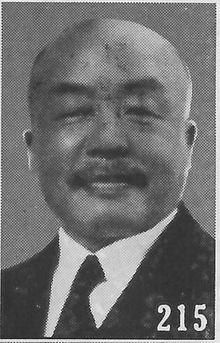
The widow’s-peaked longtime pol was one of the first inductees of the Romanian Communist Party (PCR) after its 1921 founding. Patrascanu (English Wikipedia entry | Romanian) was 21 years old then: the spirited politicking within the Communist movement would define the whole of his adult life.
By the 1930s, he held a position of national leadership. Patrascanu served in the Romanian legislature, and became a party representative to the Comintern.
It might have been at a Comintern road trip to Moscow in the 1930s that Patrascanu’s disillusionment with Stalin began. If so, it was beside the point: leftists in Romania (like everywhere else) had the more immediate threat of fascism to contend with.
After spending most of the war years under arrest, Patrascanu re-emerged as a state minister. He personally helped to author the August 23, 1944 coup that flipped Romania out of the Axis camp. But by the very next year he was under police surveillance.
He fell in the Soviet-driven late 1940s purge of Eastern European Titoists, for having such insufficiently internationalist notions as “before we are Communists, we are Romanians.” His time in prison was long enough for authorities to model his show trial on the 1952 Czechoslovakian Slansky trial, though Patrascanu himself disdained to denounce himself, or even to dignify the proceedings with a defense.
I have nothing to say, except [that I] spit on the charges brought against me.
In 1954, the Dexter Avenue Baptist Church in Montgomery, Alabama hired as its pastor a 25-year-old fresh out of Boston University’s doctoral program.
In his memoir, Dr. Martin Luther King, Jr. remembered his entry to civil rights activism in Montgomery. One of his first steps was setting up a Social and Political Action Committee for his church, prominently emphasizing voter registration.
But his next engaged a major death penalty case that haunted Montgomery throughout the 1950s.
After having started the program of the church on its way, I joined the local branch of the NAACP and began to take an active interest in implementing its program in the community itself. Besides raising money through my church, I made several speeches for the NAACP in Montgomery and elsewhere. Less than a year after I joined the branch I was elected to the executive committee. By attending most of the monthly meetings I was brought face to face with some of the racial problems that plagued the community, especially those involving the courts.
Before my arrival in Montgomery, and for several years after, most of the NAACP’s energies and funds were devoted to the defense of Jeremiah Reeves. Reeves, a drummer in a Negro band, had been arrested at the age of sixteen, accused of raping a white woman. One of the authorities had led him to the death chamber, threatening that if he did not confess at once he would burn there later. His confession, extracted under this duress, was later retracted, and for the remaining seven years that his case, and his life, dragged on, he continued to deny not only the charge of rape but the accusation of having had sexual relations at all with his white accuser.
The NAACP hired the lawyers and raised the money for Reeve’s defense. In the local court he was found guilty and condemned to death. The conviction was upheld in a series of appeals through the Alabama courts. The case was appealed to the United States Supreme Court on two occasions. The first time, the Court reversed the decision and turned it back to thes tate supreme court for rehearing. The second time, the United States Supreme Court agreed to hear the case but later dismissed it, thus leaving the Alabama court free to electrocute. After the failure of a final appeal to the governor to commute the sentence, the police officials kept their promise. On March 28, 1958, Reeves was electrocuted.
The Reeves case was typical of the unequal justice of Southern courts. In the years that he sat in jail, several white men in Alabama had also been charged with rape; but their accusers were Negro girls. They were seldom arrested; if arrested, they were soon released by the grand jury; none was ever brought to trial. For good reason the Negroes of the South had learned to fear and mistrust the white man’s justice.
Reeves’s plight struck much closer to home for Claudette Colvin.
A Montgomery native, she was a classmate of Reeves at Montgomery’s segregated Booker T. Washington High School.
On March 2, 1955, Colvin boarded a city bus in front of King’s church on her way back from school, and plopped herself down in the middle of it. As the bus meandered on its route, it began to fill up. Montgomery’s segregated-bus rules at the time reserved a few rows up front for whites, and opened the middle rows for blacks … but only until the white rows overflowed, at which point black riders in the midsection were expected to give up their seats.
Colvin refused to do it.
She furiously argued with the police summoned by the bus driver, invoking her constitutional rights.
When they arrested her, she didn’t do nonviolent resistance: she fought back.
“Other kids got home and told Mama what happened,” Colvin remembered. “She already knew how hurt I was about Jeremiah Reeves. She knew this wasn’t a one-day thing. This was a rebellious time that started with Jeremiah … I just couldn’t get over Jeremiah being framed.”
Colvin’s spur-of-the-moment act of civil disobedience predated the more famous refusal of Rosa Parks by nine months. (Colvin’s parents knew Rosa Parks, and Parks was an advisor to the NAACP Youth Council, which Colvin was involved in.)
Montgomery civil rights leaders were already looking for a test case to mount a challenge against Montgomery buses’ racial ridership rules. Colvin was considered for the part, but ultimately Montgomery’s leaders took a pass on the case: she was an angry teenager, very dark-skinned, and from a working-class family; moreover, she soon became pregnant by an older, married man whom Colvin refused to name. Nevertheless, her name, and her act, became well-known in Montgomery and nationwide. The first pamphlets about Parks’s arrest reference Colvin as the well-known precedent.
And Colvin was one of four plaintiffs in the federal suit that forced desegregation in Montgomery.
Claudette Colvin’s refusenik notoriety made it so difficult for her to work in Montgomery that she moved to New York in 1958 — the same year her schoolmate was finally electrocuted for that supposed rape.
Days after Reeves died in Alabama’s electric chair, an Easter rally assembled on the lawn of that state’s capitol building to protest the execution — and gird for the struggles still to come.
We assemble here this afternoon on the steps of this beautiful capitol building in an act of public repentance for our community for committing a tragic and unsavory injustice. A young man, Jeremiah Reeves, who was little more than a child when he was first arrested, died in the electric chair for the charge of rape. Whether or not he was guilty of this crime is a question that none of us can answer. But the issue before us now is not the innocence or guilt of Jeremiah Reeves. Even if he were guilty, it is the severity and inequality of the penalty that constitutes the injustice. Full grown white men committing comparable crimes against Negro girls are rare ever punished, and are never given the death penalty or even a life sentence. It was the severity of Jeremiah Reeves’s penalty that aroused the Negro community, not the question of his guilt or innocence.
But not only are we here to repent for the sin committed against Jeremiah Reeves, but we are also here to repent for the constant miscarriage of justice that we confront every day in our courts. The death of Jeremiah Reeves is only the precipitating factor for our protest, not the causal factor. The causal factor lies deep down in the dark and dreary past of our oppression. The death of Jeremiah Reeves is but one incident, yes a tragic incident, in the long and desolate night of our court injustice.
…
Let us go away devoid of biterness, and with the conviction that unearned suffering is redemptive. I hope that in recognizing the necessity for struggle and suffering, we will make of it a virtue. If only to save ourselves from bitterness, we need vision to see the ordeals of this generation as the opportunity to transfigure ourselves and American society … Truth may be crucified and justice buried, but one day they will rise again. We must live and face death if necessary with that hope.
-Martin Luther King, ““Statement Delivered at the Prayer Pilgrimage Protesting the Electrocution of Jeremiah Reeves” (pdf transcription)
* Parks would say that she had been thinking on the occasion of her refusal of that summer’s murder of Emmett Till in Mississippi.
On this date in 1957, Jorge Villanueva Torres was shot in Lima, Peru as the notorious “Monstruo de Armendáriz”.
Except Jorge Villanueva Torres wasn’t actually the monster. His case is well-known in Peru but less so beyond, and all links in this post are to Spanish pages.
Villanueva’s hasty transmogrification began on the ninth of September 1954, when headlines announcing the discovery of a dead three-year-old child near Lima commenced a national crime hysteria. Authorities surmised that the little boy had been raped, too.
Vague eyewitness fixing on the suspect’s height and dark skin* brought many arrests of people fitting these loose criteria. Villanueva, a career petty criminal, fit that bill; when police announced him as the suspect, he became the object of his countrymen’s hatred.
Convicted in an atmosphere of prejudicial hysteria on the strength of eyewitness testimony loosely matching him to someone who might have given the victim a sweet to lure him off, Villanueva exploded with rage, even attempting to attack the judge. Naturally this only served to further implicate him as an uncontrollable beast — not as a falsely accused man pitiably near the breaking-point after two years as a nation’s scapegoat.
Villanueva asserted his innocence all the way to the fatal stake.
Those futile protestations are today widely accepted as true. There was little firm evidence against him and even the contemporary autopsy ruled against the incendiary child-rape allegation. Later forensic investigations have suggested that the poor child might simply have been the victim of a hit-and-run car accident. The mingled torments of guilt and relief in such a motorist as the matter played out must have been profound.
This case remains in present-day Peru a standing warning against occasional attempts to reintroduce the death penalty in response to the outrageous crime du jour. (Peru abolished the death penalty for all peacetime offenses in 1979.)
The Peruvian band Nosequien and Nosecuantos muses on the injustice in a single that shares its title with Villanueva — “Monstruo de Armendáriz”.
Whomever was the true “monster” — and whatever that person’s true measure of monstrosity — has never been known.
* Racism in Peru against black skin was then and remains today endemic.
Elli Barczatis hooked up in 1949 with Karl Laurenz when both worked in the DDR Ministry of Industry. (Both these links are in German, as are most that follow.)
Their careers went in opposite directions thereafter. Barczatis scored a plum appointment as Prime Minister Otto Grotewohl‘s administrative aide while Laurenz got booted out of the Communist party altogether for political unreliability: he’d been a mere social democrat before the communist takeover.
Laurenz started scratching out a living as a freelance journalist in both East and West Berlin, prior to Berlin Wall days, and was recruited by West Germany’s intelligence service to brief them on the goings-on in the East.
In December 1950, a former coworker saw Barczatis and Laurenz at a cafe rendezvous — and saw Barczatis pass the reporter a sheaf of papers. The coworker reported it to East Germany’s secret police, the Stasi.
Because of Barczatis’s proximity to the head of government, the Stasi had to investigate the tip with great delicacy. But no matter; the East German spooks could be patient as death when the occasion demanded. So over the course of four-plus years, they cautiously surveilled, and eventually entrapped, the lovers.
At last, on March 4, 1955, those grim security men arrested Barczatis at her apartment in the suburb of Kopenick. Laurenz, returning laster that day to the East from a West Berlin meeting with intelligence officers, was nabbed as well.
Laurenz confessed to espionage right away; it might have been a cathartic experience for him. “The accused became provocative, comparing the State Secretariat for State Security of the German Democratic Republic with the fascist Gestapo and the Nazi SD,” a Stasi officer reported after marathon interrogation sessions. “He remarked that the treatment of prisoners by the State Secretariat for State Security is worse than the treatment by the SD and the Gestapo.” But the doomed spy still stubbornly protected his contacts, sources — and Elli Barczatis. He insisted that she was more leaker than spy, and gave him information thinking only that it was background for his reporting.
What was the extent of Elli Barczatis’s espionage? What did she betray that justified her execution? Incredibly, the interrogation record reveals not a single instance in which she furnished Laurenz with material so sensitive that it could be interpreted as having endangered the security of the communist state. She betrayed no military or defense secrets. She merely told her friend about letters her office received from the populace complaining about food shortages; mismanagement that created problems in industry; government personnel changes; and Westerners who visited Prime Minister Grotewohl. The absurdity of all communist regimes was that such tidbits of information were considered state secrets.
Baczatis’s and Laurenz’s beheading on the fallbeil was the culmination of a mid-Fifties security crackdown by East Germany that also eliminated (although not by execution) at least two other highly-placed West German assets, Hermann Kastner and Walter Grosch. (Source.)
On this date in 1953, housekeeper Louisa May Merrifield, the so-called Blackpool Poisoner, was hanged at Machester’s Strangeways Prison for killing her employer.
She was the third-last woman hanged in Britain and the very last woman to be executed at that particular prison, which now houses only men; the job was performed by Albert Pierrepoint.
Born in 1906, Louisa had already served prison time for ration book fraud by the time of the murder, and she lost custody of her four children due to her excessive drinking and neglect.
She couldn’t seem to hold on to a man (she was married three times) or a job (she had 20 in three years).
She took her final position on March 12, 1953, after she and her husband of one month, 71-year-old Alfred Edward Merrifield, became housekeepers and live-in companions to Sarah Ann Ricketts, a spinster who was nearly eighty years old. Sarah Ricketts owned a bungalow at 339 Devonshire Road, North Shore, Blackpool.
The Merrifields indulged in elder abuse and neglect, and Sarah Ann complained she didn’t get enough to eat and that her housekeepers swilled rum on her dime. Meanwhile, Louisa was going around boasting that she’d inherited a £3,000 house.
When someone asked her who had died, she answered, “She’s not dead yet, but she soon will be.”
Louisa’s prophecy was eerily accurate: Sarah Ann Ricketts expired on the night of April 14, 1953, only a month after she’d hired the Merrifields and three days after Louisa’s prediction … but not before drafting a new will which left her bungalow to the Merrifields.
Louisa didn’t call a doctor until the next morning. She said that, as the old woman was clearly beyond help, she didn’t want to drag anyone out of bed in the middle of the night.
The suspicious GP refused to sign a death certificate and insisted on an autopsy, which revealed the cause of death as phosphorus poisoning, administered in the form of a rat poison called Rodine.
Although a police search of the bungalow didn’t turn up any Rodine, a check at the local pharmacy showed Louisa had recently purchased the stuff and signed the poison register.
The Merrifields found themselves charged with murder. Louisa was arrested first, two weeks after Sarah Ricketts died, and Alfred a few days later.
At their trial in July 1953, Louisa was convicted and sentenced to hang. The judge called her crime “as wicked and cruel a murder as I ever heard tell of.”
The jury couldn’t reach a verdict on Alfred, however, and the district attorney decided not to prosecute again. He was released and in due time inherited a half-share in Mrs. Ricketts’s bungalow. He died in 1962 at the age of 80.
Louisa Merrifield’s ghost is said to haunt the cell she once inhabited at Strangeways Prison.
AMMAN, Jordan, Sept. 4 — Four men sentenced to death here last week for complicity in the assassination of King Abdullah in July were hanged today in Amman prison. Regent Emire Naif had confirmed the sentences of the special tribunal.
Those put to death were Musa Abdulla el-Husseini, Abed Okkeh, Abdulkadir Farhat and Zakariya Okkeh.
Col. Abdulla el-Tell, former governor of Jerusalem, and Musa Ayyubi who were sentenced to death in absentia are reported to be living in Egypt.
–New York Times, September 5, 1951*
The men hanged this day were among the authors of “the most dastardly crime Jordan ever witnessed”: the July 20, 1951 assassination of independent Jordan’s first king.
The cagey Hashemite monarch Abdullah I had been emir of Transjordan, an artificial British mandate jigsaw-piece that Abdullah got by virtue of cutting a deal with Winston Churchill.
This sinecure came with the significant drawback of dependency on London’s reach and interests, and Abdullah’s great achievement was to set Transjordan-cum-Jordan** on firm enough footing to survive the postwar sunset of the British Empire.
Abdullah faced an early test of Jordan’s chops shortly after his country’s 1946 independence when the Arab-Israeli War erupted. For Abdullah, this was a state-building opportunity; indeed, his government had for years backed Palestinian-partition plans that other Arab states had opposed — with the expectation that Jordan could help itself to the eastern part of that partition.
Abdullah did just that in 1948, invading and annexing the Jordan River’s West Bank all the way to East Jerusalem … while willingly acceding to (some have said actively colluding in) the creation of a partitioned Jewish state that was theoretically anathema to Jordan’s allies.
Jordanian territorial aggrandizement, however, brought with it the West Bank’s Palestinian population, severely aggrieved at having seen their aspirations to statehood cynically sacrificed by Abdullah. They got, into the bargain, Jordanian citizenship and a severe suppression of independence agitation.
So when Abdullah came to visit Jerusalem’s Al-Aqsa Mosque, a Palestinian gunman murdered him.
While the assassin himself was immediately shot dead by the king’s bodyguards, ten allegedly in on the plot were very hastily tried in mid-August … eight in the Amman courtroom, and two overseas in Egypt tried in absentia. Dr. Musa Abdullah el Husseini, Abdel Kadir Farahat, and the brothers Abed and Zakariya Okka were condemned to die, along with the absconded Abdulla el Tel and Musa Ahmed el Ayoubi. (The latter two would never be executed.)
According to the London Times‘ Aug. 29, 1951 wrap of the legal proceedings,
The events leading up to the murder, as they were described during the hearing, began with two meetings in Egypt, in September and October [1950], between el Tel and el Ayoubi, who decided then that the king should die. El Tel then met el Husseini i Cairo, and henceforth directed and financed the plot with el Ayoubi as his chief lieutenant. Abed Okka acted as an intermediary, and Zachariya Okka and Farahat were later drawn into the plot, the latter ultimately providing the murderer with a revolver.
The remaining four men who faced trial — Dr. Daud el Husseini, Franciscan Father Ibrahim Ayyad, Tawfik el Husseini, and Kamil Kaluti — were acquitted.
This event, which might have been feared to prefigure a more terrible disruption within Jordan, within Palestine, even in the entire Middle East, did nothing of the sort. Power transitioned to the long reign of Abdullah’s grandson King Hussein, who was actually present at his grandfather’s assassination. (And might have shared his fate, save for a medal the teenaged Hussein had pinned to his breast that deflected a bullet.)
There was an element of cover-up in the conduct of the trial. The grievances and frustrations of the accused were not broached … The idea of an independent Palestine was, for the moment, dead. Abdullah’s assassination was a terrible revenge wreaked for the death of that idea, but it signified retribution for events that were already history, not the beginning of the new order … Though not without parallels in the future, it was without echoes.
Jordan would govern the West Bank, albeit absent virtually any internationally-recognized legitimacy there, until Israel attacked and occupied the territory in the Six-Day War in 1967. The legacy of this event will be familiar to the reader.
In 1988, Jordan officially resigned its own claims on the West Bank to the Palestine Liberation Organization, “the sole legitimate representative of the Palestinian people.”
* Any number of online sites say this hanging occurred on September 6. Given the existence of September 5 papers reporting the execution, I think it’s safe to rule those erroneous. Wikipedia sources this version to James Lunt’s Hussein of Jordan.
** “Transjordan” officially became simply “Jordan” in 1949. Events in this post span either side of that re-branding, so for the sake of clarity, we’re just going to use “Jordan” throughout.
On this date in 1955, Albert Pierrepoint escorted the alluringly tragic Ruth Ellis to the gallows at Holloway Prison — the last woman ever hanged in Great Britain.
The former hostess had tracked her inconstant and abusive lover David Blakely to a Hampstead pub a few months before — getting the ride, and the murder weapon, from her unrequited hanger-on Desmond Cussen — and shot Blakely dead on the street. Five bullets: the last, a coup de grace. (Another missed entirely and winged a passerby.)
A bitterly controversial case from the moment it entered the public eye, Ellis’s hanging bolstered the movement to abolish Britain’s death penalty. Juridically, however, it was resolved in the blink of an eye when a crown’s attorney cross-examined the murderess:
Christmas Humphreys: Mrs. Ellis, when you fired that revolver at close range into the body of David Blakely what did you intend to do?
Ellis: It was obvious that when I shot him I intended to kill him.
The jury, which never heard that Blakely regularly beat his killer (including once to induce a miscarriage), needed 14 minutes to convict her.
ET: I think at a certain point in time, everyone in Great Britain would have known who Ruth Ellis was, and quite a few abroad, too. How true is that still, nearing 60 years after her execution?
I think her name is still quite familiar, to be honest.
When I began researching the book, everyone I discussed it with either already knew the very basic facts of Ruth’s story, and at the very least that she was the last woman to be hanged in England. The 1985 biopic Dance with a Stranger left a big impression too, even though it wasn’t entirely faithful to Ruth’s character, making her seem much more hysterical a personality than she actually was, although I thought Miranda Richardson was brilliant in the role — as she always is!
What led you to the Ruth Ellis story?
I’ve always been interested in Ruth and that period in history — and I vividly remember going to see ‘Dance with a Stranger’ when it came out in the cinemas here. But it always struck me that her full story had never been told, particularly the last few months of her life after she shot David Blakely. And a couple of years ago there was quite an intense debate about bringing back capital punishment; Ruth’s name was always mentioned in relation to that particular argument, and I really felt it was time to explore her whole story.
What are the greatest misconceptions people have of her? Have her previous biographies and screen portrayals fed those misconceptions?
Without doubt, many people see Ruth as she was shown in ‘Dance with a Stranger’ — very screechy, out of control and violently jealous.
I think it’s true to say that she and David were both deeply jealous of each other (both giving the other reason to be so), but Ruth was not as hysterical as she was portrayed in the film. In fact, it was quite the opposite — the men were hysterical and it was Ruth who usually vented a sort of quiet fury. There is one scene in the film which shows her smashing the windows of David’s car and screaming in the street. Reading the original police statement about that night reveals a very different story; she was described as very calm and rational. There was no screaming, and although she did damage the vehicle, it was not remotely as it was shown in the film.
I think other adaptations have also done her a disservice. Ironically, probably the most accurate portrayal is in the film ‘Pierrepoint,’ where the character of Ruth appears for no more than a minute or two on screen.
I get the sense that Ruth was always running uphill against her class position, trying to climb a little higher than she could reach — right up to the end where her lover is a well-off cad and the rivals for the lover’s affection are his middle-class friends. What role did England’s class relations have in Ruth Ellis’s life and death, and in the way that others perceived her? Do they still shape the way we talk about her all these years later?
Class and politics played a huge role in Ruth’s life generally.
England was distinctly class-led at the time and when the case hit the headlines, she was described as a working-class floozie who attached herself to the upper-class David Blakely purely in order to hoist herself up the class ladder.
That couldn’t have been further from the truth; if she was only interested in using men to better herself socially, she would surely have married her sometime-lover Desmond Cussen, who was a much steadier prospect with money and property and who wanted very much to marry her. Ruth worked hard to better herself but she didn’t use the men she loved to do so.
And when it came to her trial, the class values of the time were heavy in the courtroom with the male barristers and judge and so on all very much men of the upper classes — and who viewed her accordingly. I hope we have got beyond all that nonsense now — but it does add a very distinct dimension to discussions of her case.
She was working as a hostess when she met David Blakely. What would a hostess do, who worked in this trade, and who were the clientele? Was it usual for “real” relationships to evolve? Do people still have this job in the same form as Ruth had it?
Hostessing in the clubs in which Ruth worked was quite straightforward — or it should have been, but there was Morris Conley to contend with, and he was quite a character.
Ruth’s basic job description was to look good and to chat to customers (mostly men) in the clubs, laugh at their jokes and keep them buying food and drink for as long as possible. Most hostesses were in their late teens and early twenties, working-class girls who thought the lifestyle was more glamorous than toiling in a factory or in a shop.
They were usually paid badly and relied on tips to make ends meet, but were given a dress allowance so that they could look as alluring as possible. The clientele mainly consisted of demobbed servicemen who suddenly seemed to have lost their attractiveness to women after the war — where once they had been heroes, by the late 1940s many of them were down on their luck and working as door-to-door salesmen, very lonely and eager to talk to pretty young girls about their war exploits.
The girls who worked for Morris Conley, like Ruth, were expected to sleep with the clients if that was asked of them, and often had to sleep with ‘Morrie’ and his less than respectable friends too. Many of them were very poor young women who lived in flats owned by Conley and his wife — and if they didn’t toe the line, they lost their jobs and their homes in one fell swoop.
Did real relationships evolve? Yes, they did, but very rarely. There are girls all over the world doing very similar jobs today — from London to Japan and everywhere in between too, no doubt.
You have this quote from Ruth about David Blakely: ‘I thought the world of him; I put him on the highest of pedestals. He could do nothing wrong and I trusted him implicitly.’ Ruth had an alcoholic, abusive father, and then she had two children from marriages with two different men that both fell apart — one from bigamy and abandonment, the second from alcoholism and domestic violence. Blakely himself cheated on her. Why wasn’t she more cynical about Blakely? If you take away the tragic ending to this particular relationship, was something like this a pattern she was doomed to keep repeating ad infinitum?
She loved him — it’s really as simple as that.
Although she obviously had a good degree of self-awareness and knew what David was and always would be, she truly loved him and for a time believed they had a future together. As for a pattern — I don’t know. Perhaps if she had met one good, steady man to whom she was attracted as much as she was to David, her life — and David’s too of course — might have been very different.
I’m going to phrase this inelegantly: what is the DEAL with Desmond Cussen?
Good question! I really think that he was as confused and tormented by everything that was happening as a result of Ruth’s and David’s relationship as Ruth herself.
I think he did love Ruth, and he tried hard to make things work with her, but he knew her heart was with David. His apparent lack of self-respect and backbone is baffling — quite why he kept ferrying her across London and out to Buckinghamshire in pursuit of David is a bit mystifying. I did question in the book why no one seemed to query his state of mind as much as Ruth’s — and as to whether he gave her the gun or not, knowing what she intended to do … I am sure he did, even though he must have known where it would end for Ruth herself.
Perhaps he hoped that with David out of the way, she would be reprieved and they could then have a life together. But I really don’t know!
Ruth’s legal defence was legendarily feeble. That said, I’m very interested in the barrister’s attempt to frame its insanity defense around feminine hysteria — “the effect of jealousy upon a female mind can so work as to unseat the reason and can operate to a degree in which a male mind is quite incapable of operating.” This was bound to be undermined by Ruth’s own calm and the statements about her intent to kill that she gave to police and in court. Was it the case that the law at the time didn’t have the instruments to situate Ruth’s context and state of mind, other than hysterical/not? Or could an abler barrister have presented a different story?
I think part of the difficulty is obviously that the defence of diminished responsibility was not introduced in the courts here until 1957 — largely as a direct result of this particular case.
Ruth’s lawyers tried to argue this as a defence for her to some extent, but it just wasn’t possible legally. That said, I think they served her quite badly and didn’t bring out so much that might have enabled the jury to see her crime in context. There was no mention of the abuse in her childhood, no mention of the violence she had suffered at the hands of her ex-husband and very little said about David’s own brutal treatment of her.
But Ruth herself did not seem to care much what happened in the courtroom, once it became evident that the story as she saw it — David’s friends having, in her view, deliberately destroyed the relationship between them — was not going to come to light. She gave up, and volunteered nothing that could have helped her, minimizing the violence to which she had been subjected and dismissing most of the questions put to her in a short sentence or two.
She also infamously replied to the prosecution’s question of what she intended to do when she set out to find David with the gun, “It is obvious when I shot him I intended to kill him.” That one line completely sealed her fate.
Despite all this, the public did seem to be shocked by Ruth Ellis’s hanging, and it’s supposed to have boosted the anti-death penalty campaign. If one may phrase it this way, were people shocked for the right reasons? How much did the symbolic “Ruth Ellis” that even her supporters among the general public had in view have to do with the real person as you understand her?
I think any case is always immeasurably more complex than it is presented in newspaper columns and headlines.
I think, again, the outcry at her execution has to be seen in context — people were becoming more and more opposed to the death penalty and there had been some very high-profile, contentious cases that really did cause a great deal of debate, anger, and distress: the hanging of Timothy Evans in 1950 and of Derek Bentley in 1953 for instance (both of whom were posthumously pardoned).
The fact that Ruth was a young, attractive, lively woman with two small children caused many people to question the validity of capital punishment. It was her death on the scaffold that gave the abolition movement its emotional spur.
What became of Ruth Ellis’s body after her hanging? And what became of her family and the others who were part of the story?
Ruth was buried in the confines of Holloway Prison after her execution, sharing her unmarked grave with four other women who had been hanged there. In 1971, when the prison was demolished and rebuilt, her body was released to her son for burial.
He had hoped to lay his mother to rest alongside David Blakely at the Holy Trinity churchyard in Penn but the vicar there would not allow it. Ruth was instead buried in the churchyard of St Mary’s in Amersham, a few miles away.
As to what became of her family: her son Andre (who was ten when Ruth was executed) was diagnosed with schizophrenia as a very young man and never came to terms with the loss of his mother. He committed suicide in 1982. Ruth’s daughter, Georgina, had quite a colourful life, becoming a successful model who was in the newspapers fairly often as part of the George Best ‘set.’ She married and had children and worked hard to win a posthumous pardon for her mother, of whom she spoke often. She died of cancer at the age of only 50.
As for Desmond Cussen: he emigrated to Australia and opened a flower shop there. He never married and became an alcoholic, dying in Perth on 8 May 1991 of pneumonia and organ failure following a fracture dislocation of the neck in a fall at his home.

 A
A  The widow’s-peaked longtime pol was one of the first inductees of the
  Villanueva’s hasty transmogrification began on the ninth of September 1954, when headlines announcing the discovery of a dead three-year-old child near Lima commenced a national crime hysteria. Authorities surmised that the little boy had been raped, too.

 Born in 1906, Louisa had already served prison time for ration book fraud by the time of the murder, and she lost custody of her four children due to her excessive drinking and neglect.
