1996: John Albert Taylor, the last American to face a firing squad

Moments past midnight on this date in 1996 five anonymous marksmen fired four .30-.30 caliber rounds (one rifle had blanks, a balm to the shooters’ consciences) into the heart of Utah rapist John Albert Taylor: the last use to date of a firing squad in the United States. (Update: Not anymore.)

Actually, he’s the only person put to death by shooting under the modern American death penalty regime besides Gary Gilmore.

Like Gilmore, Taylor voluntarily dropped his appeals and sought his own execution for the 1989 rape-murder of Charla Nicole King. A confidante would later reveal that health problems led him to do so in preference to the feared alternative of dying alone in his cell.

As he chose death, so he chose the method: not a clinical, forgettable lethal injection, but the discomfiting tableau of the target pinned over his heart, the protective sandbags stacked up behind him, and the tray of blood beneath the chair he was strapped into. Taylor said he wanted to make a statement. (And that he feared “flipping around like a fish out of water” on an injection gurney, his other option in Utah.)

The reclusive Taylor denied the crime to the end, but never found many takers for the story he was selling — that he’d just so happened to leave his fingerprints on the phone cord later used to strangle the prepubescent girl in the course of committing an unrelated robbery. It didn’t help that Taylor had raped his own sister when she was 12.

For the national and international media circus — British, Australian, Japanese, German, Italian, French, and Spanish media all represented — the story was the anachronistic method of execution, right out of the Wild West.

That story doesn’t have many rounds left in the chamber, as it were. In 2004, Utah succumbed to pressure to change its execution method to lethal injection alone. Though the firing squad is technically on the books in Idaho (at the discretion of the state, not the prisoner) and Oklahoma (as a backup option to lethal injection), it’s vanishingly unlikely to be used in either state.* That leaves just a few of the pre-2004 Utah prisoners grandfathered into the option to supplant John Albert Taylor for the distinction of suffering the last firing squad execution in American history.


That’s a “last,” but given our bloggy medium, we would be remiss not to notice a milestone “first” that also attended Taylor’s death.

According to the Deseret News (Jan. 26, 1996), the ACLU sponsored an America Online chat with anti-death penalty actor Mike Farrell during the hours leading up to and following this execution — “the first-ever death-penalty vigil in cyberspace.”

* Predominantly Mormon Utah has been the firing squad’s last redoubt thanks to the sect’s “blood atonement” theology. (As seen in its pioneer days.) According to the Espy file (pdf) of historical U.S. executions, the last American execution by shooting not to occur in the state of Utah was that of Andriza Mircovich in Nevada back in 1913. (Oklahoma used the firing squad routinely in the 19th century.)

Part of the Daily Double: Throwback Executions.

On this day..

1996: Billy Bailey, the last American hanged

On this date in 1996, Billy Bailey was hanged for murdering an elderly couple in Delaware.

Bailey was condemned in 1980, which was before Texas debuted the lethal injection trend that would sweep the nation; therefore, he was sentenced to hang. When Delaware switched to injection in 1986, Bailey had the choice between his original hempen-necktie sentence or the newfangled gurney.

Authorities wanted him to get with the times. Warden Robert Snyder, who would also serve as hangman, told the press, “Our gallows is pretty primitive here. We’ve made some improvement, but hopefully this will be the last hanging in Delaware.”

Billy Bailey wasn’t interested.

“I’m not a dog,” he said to one visitor. “I’m not going to let them put me to sleep.”

For all the worry that a state out of practice with its gallows technique would botch the job, Delaware carried it off without embarrassment.

Though Bailey’s pretty certain to be the last man hanged in the Blue Hen State — Delaware has gone and dismantled that primitive gallows — he is no lock to keep his place as the last hanged anywhere in the U.S.

Washington state, which hanged two people in the early 1990’s and did some consulting on the procedure for Delaware officials, still allows the condemned a choice between lethal injection and hanging. Executions there aren’t common — it’s been over eight years as of this writing — but they’re not unheard-of. Between the prospect of a lethal injection botch and the morbid appeal of notching milestone status, it’s only a matter of time before someone else opts to hang.

(New Hampshire, which is even more out of practice with the art, also still retains hanging as a backup option.)

Part of the Daily Double: Throwback Executions.

On this day..

1993: Westley Allan Dodd, child molester

Just after midnight this date in 1993, Washington state carried out the first legal hanging in the U.S. since 1965.

Pornstached child molester Westley Allan Dodd is the textbook “incorrigible sex offender” case study. That’s certainly how Dodd himself asked us to interpret him.

“I have said all along the system does not work,” he wrote of his long career in pedophilia, notoriously unrehabilitated by the criminal justice system. “I knew what I was doing, I knew it was wrong. I knew I could get the death penalty if caught.”

From the usual humble beginnings in teenage child-groping, and despite several arrests over the years, Dodd devolved into abducting young boys to actualize horrific fantasies he did not scruple to jot in his journal.

Incident 3 will die maybe this way: He’ll be tied down as Lee was in Incident 2. Instead of placing a bag over his head as had previously planned, I’ll tape his mouth shut with duct tape. Then, when ready, I’ll use a clothespin or something to plug his nose. That way I can sit back, take pictures and watch him die instead of concentrating on my hands or the rope tight around his neck — that would also eliminate the rope burns on the neck . . . I can clearly see his face and eyes now…

He suspects nothing now. Will probably wait until morning to kill him. That way his body will be fairly fresh for experiments after work. I’ll suffocate him in his sleep when I wake up for work (if I sleep).

In short: not the nicest guy, though also a monster as much pathetic as diabolic.

Dodd pleaded guilty to his three sex murders, and fought for his own execution. The state of Washington obliged him in a speedy three years.

Although the Evergreen State had lethal injection on the books, Dodd also availed his right to select its holdover alternative method, hanging.

Those kids didn’t get a nice, neat painless easy death. Why should I?

Which justification’s nobility (such as it is) is considerably more socially gratifying than, say, a hankering for the gallows’ post-mortem priapism.

(He didn’t get everything, though: they turned down his request to televise the hanging.)

Not content with his headline-grabbing mode of departing the world, Dodd had a hand in a statutory milestone, too. His stranger-danger nightmare case surfacing in the fall of 1989 was part of the background that drove Washington to pass the nation’s first sexually violent predator law, the Community Protection Act of 1990.*

Trutv.com’s Crime Library has a good deal more about the mind of this particular maniac.

* It was really Earl Shriner’s crimes more than Dodd’s that led most directly to the new law, which licensed indefinite “civil commitment” of sexually violent predators after the completion of their criminal sentences.

On this day..

1996: Dr. Mohammad Najibullah

On this date in 1996, the man who once ruled ruled Afghanistan under the aegis of a superpower succumbed to the tender mercies of his country’s fundamentalist insurgency.

Mohammad Najibullah was the last president of the Soviet-backed Democratic Republic of Afghanistan. Unfortunately for Najibullah, he was on the job when Moscow decided to throw in the towel on the Soviet-Afghan War.

After losing the subsequent civil war, the former President was trapped for a nervous few years in Kabul — blocked from joining his family in flight to India by the offices of former Soviet client and present-day American client Abdul Rashid Dostum.

When Kabul finally surrendered to the Taliban in 1996, the hated onetime Communist viceroy — whose stepping-stone to that post was heading the hated Afghan secret police — had a problem.

At the instigation of future Taliban second-in-command Mohammad Rabbani, Najibullah and his brother were hauled out of the U.N. compound where they had taken refuge, publicly beaten, tortured and castrated, and strung up on a traffic barricade.

There was a new sheriff in town.


On this day..

1997: Zoleykhah Kadkhoda survives stoning

On this date in 1997, Zoleykhah Kadkhoda was tried, condemned, and immediately stoned in the West Azerbaijan (Iran) city of Bukan.

Less commonly used but still to this day among the execution methods in Iran, stoning involves burying the victim in a hole — a man to his waist, a woman to her chest — and pelting him or her with rocks until dead. Plainly a horrible way to go, stoning is typically associated with adultery, which was Kadkhoda’s crime.

Kadkhoda made international headlines by surviving her attempted execution, either (accounts differ) because of popular intervention in the heavily Kurdish town, or by reviving at the morgue after being taken for dead.

International pressure caused the death sentence to be lifted; Kadkhoda was released later in that year.

On this day..

1997: Norio Nagayama, spree killer and author

On this date in 1997, the wait was over for a writer who had spent his entire adult life awaiting the noose.

Norio Nagayama witnessed another (eventually executed) murderer‘s Tokyo shooting spree in 1965, and three years later popped four people (two security guards and two cabbies) himself. The killing spree shocked Japan.

Only 19 at the time, which made him a juvenile by Japanese law, Nagayama was sentenced, unsentenced, re-sentenced. Twenty-eight years he spent from his arrest until his execution, not necessarily an atypical span for Japan.

It’s what Nagayama did with those years that makes him so remarkable: entering the criminal justice system from an impoverished background, Nagayama became a literary figure and a prominent public spokesman for social justice. He’s still commemorated years after his death.

Nagayama is credited with nine works, the first (Tears of Ignorance) about the poverty he blamed for his murders; the last (Hana) published posthumously from his manuscripts; he donated proceeds to victims’ families and poor children, especially in Peru. In fact, all these years dead, he’s still raising money for children.

Some books by Norio Nagayama
(all in untranslated Japanese)

Nagayama’s death was triggered, at last, by apprehension of a 14-year-old for a sensational crime barely a month prior to this date; in hanging Nagayama, the government aimed “to foster support for legislation that would ‘get tougher’ on juvenile offenders. Indeed, in 2000 Japan’s Juvenile Law was revised to make it easier to transfer minors to adult court.”

Nagayama was hanged in Tokyo with another murderer, Hideki Kanda; a husband-wife convict couple were executed the same day in Sapporo.

On this day..

1993: Leonel Herrera, perilously close to simple murder?

On this date in 1993, Leonel Herrera was executed by lethal injection in Huntsville, Texas, for shooting two policemen. Herrera’s last statement averred,

Herrera’s sister Norma self-published this book about the case — keeping a promise to her executed brother.

I am innocent, innocent, innocent. Make no mistake about this; I owe society nothing. Continue the struggle for human rights, helping those who are innocent, especially Mr. Graham. I am an innocent man, and something very wrong is taking place tonight. May God bless you all. I am ready.

Well, Herrera wasn’t the first to go to his death maintaining his innocence. The circumstances (and circumstantial evidence) of the crime rate on the forgettable side.

But Leonel Torres Herrera was a bit different from his cousins in hopeless protestation: while he died this evening, his name lived on … in a landmark Supreme Court decision

Herrera v. Collins

Years after Herrera was convicted and death-sentenced, multiple affidavits were produced to the effect that his late brother, Raul, was the real killer.

This evidence was naturally pursued with gusto by the condemned man.

Unfortunately, a claim like Herrera’s of “actual innocence” faces a very high bar when raised in appellate courts, once a prisoner has already been convicted and their presumption of innocence become a presumption of guilt.

That this arbitrary rule of the game has a defensible rationale — could any criminal justice system operate if prisoners could continually relitigate their cases while memories fade and evidence ages into obsolescence? — does not make it the less Kafkaesque for individual prisoners, some of whom are in fact innocent.

Herrera presented this problem in unusually stark terms. Lacking any procedural violation upon which to hang his hat as an appeals issue, his claim pitted substance against form in the Supreme Court. (Oral arguments at Oyez.org)

You already know how it ended.

Chief Justice William Rehnquist’s opinion patiently explained a jurisprudential truism loftily uncolored by any experience in life liable to introduce a sense of kinship with a Hispanic man charged with a Texas cop-killing who uncovers too late the evidence that could save him.

“[A]ctual innocence” is not itself a constitutional claim.*

Instead, the Court recommended — tongue no doubt planted firmly in cheek — that Herrera apply for executive clemency, a dead letter procedure in Texas used exclusively in a good cop/bad cop routine opposite the black robes.

“Judicial restraint forbids relieving you,” says the court. “Go ask the governor.”

“The courts have thoroughly reviewed the case,” intones the governor. “May God have mercy on your soul.”

Herrera himself may or may not have been innocent. At the end of the day, he went down because the game was rigged against him: his exculpatory evidence was not available at trial, when it might have introduced “reasonable doubt” — as Rehnquist’s opinion put it, “in state criminal proceedings the trial is the paramount event for determining the guilt or innocence of the defendant.” Once that evidence became available deep in the appeals process, it was procedurally barred, and far from such a slam-dunk exoneration that any institutional actor would stick his, her or its neck out to lift Leonel Torres Herrera from the gurney.

Justice Harry Blackmun’s dissent retorted,

Just as an execution without adequate safeguards is unacceptable, so too is an execution when the condemned prisoner can prove that he is innocent. The execution of a person who can show that he is innocent comes perilously close to simple murder.

Whether “simple murder” happened in Huntsville this night in 1993, perhaps no one can really say with certainty.

But as DNA evidence and other forensic advances in the intervening years have increasingly eroded confidence in the reliability of the justice system that metes out death, Herrera v. Collins stands as a key precedent in a case now before the Supreme Court — in which states (joined by the Obama administration) are asking the justices to agree that convicted prisoners have no right to cheap, simple, and frequently dispositive DNA testing that may not have been available when they were tried.

Given the composition of the court (including three holdovers from the Herrera majority), that decision figures to have Leonel Herrera rolling over in his grave.

* Rehnquist conceded a theoretical possibility that extraordinarily persuasive evidence could generate relief on due process grounds. Antonin Scalia and Clarence Thomas went much further, claiming that prisoners had no right to anything but their trial and their (procedural) appeals.

On this day..

1994: John Wayne Gacy, scary clown

This date in 1994 was the last on earth for Pogo the Clown — better known as John Wayne Gacy.


Hello, children.

The local small businessman and closeted pederast filled his crawlspace with the remains teenage boys he’d either kidnap off the street, or hire in his capacity as an independent contractor.

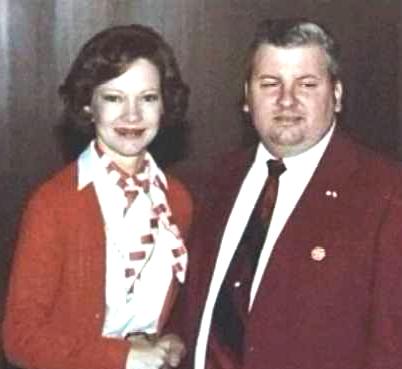
When he wasn’t raping and murdering, he kept up appearances as a Democratic machine operative (once photographed with First Lady Rosalynn Carter) and amateur block party harlequin.

Gacy was a notable “serial killer artist” in the years he spent awaiting lethal injection.* In that capacity, the clown motif continued to inspire him.


* The lethal injection was botched with a clogged IV tube. It took 18 minutes.

On this day..

1995: Nie Shubin. Oops.

On this date in 1995, Nie Shubin was shot in the back of the head in Hebei Province for the rape and murder of a woman in Zhang Ying village.

According to a 1994 newspaper report (.pdf) supplied by the authorities,

After a week of skillful interrogation, including psychological warfare and gathering evidence, police officers made a breakthrough. On September 29, this vicious criminal finally confessed to having raped and murdered the victim. On August 5, while loitering around Zhang Ying village, he stole a shirt and then walked to the vicinity of the Xinhua Road police station, where he saw Ms. Kang ride her bicycle into a corn-field path. He went after her, knocked her off her bike, dragged her into the field, beat her unconscious and raped her. He then used the shirt to strangle her to death.
Sounds pretty definitive, even if they did have to beat it out of him. A confession is a confession, after all.

Except, not.

In 2005, another man admitted to the murder, reportedly supplying persuasive crime scene details to boot.

Nie Shubin’s parents — who had complied with China’s one-child policy — have unsurprisingly been devastated by the loss of their only son, which they learned about the day after his execution when the boy’s father attempted to deliver a care package to the prison.

“All my hopes,” said the mother, “rested with him.”

Update: As of late 2011, the poor mother is still fighting to formally exonerate her executed son.

On this day..

1992: Billy Wayne White, after 47 minutes

On this date in 1992, longtime heroin user Billy Wayne White waited 47 minutes while his executioners probed for a vein suitable to inject the lethal cocktail he incurred for a 1976 robbery-murder in Houston.

On this day..