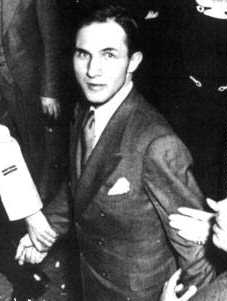
1905: Fou Tchou-Li, by a thousand cuts

On this date in 1905, Fou Tchou-Li suffered the last execution by lingchi in Beijing, for the murder of a Mongolian prince.

Lingchi, or slow slicing, involved the public dismemberment of the victim. As such, it became iconic to westerners as an image of exotic Chinese cruelty — albeit iconic in a mythicized form, the accounts conflicting, undependable, Orientalist. (Many different ones are collected at the Wikipedia page.)

Lingchi is especially notable — apart from fathering the phrase “death by a thousand cuts” in the English lexicology — for its overlap with the era of photography.

Fou Tchou-Li’s death was captured on film, and the images famously captivated Georges Bataille for the expression of seeming ecstasy on the face of the dying (or dead) man.

Bataille was said to meditate daily upon the image below in particular — “I never stopped being obsessed by this image of pain, at the same time ecstatic and intolerable.”

Agony and ecstasy? A sequence of images, strong stuff in spite of their low quality, describing Fou Tchou-Li’s execution can be viewed here. Notice, however, that it’s not the one pictured here — the scholar who maintains this page claims the man’s identity became confused by western interlocutors. The different, unnamed man who as “Fou Tchou-Li” riveted Bataille is pictured here.

In Regarding the Pain of Others, Susan Sontag explained the mystical nexus of pleasure and pain Fou Tchou-Li’s torture suggested to the French theorist, aptly comparing it to graphic but pre-photographic exaltations of torture in the western artistic tradition, such as Saint Sebastian:

To contemplate this image, according to Bataille, is both a mortification of the feelings and a liberation of tabooed erotic knowledge — a complex response that many people must find hard to credit. … Bataille is not saying that he takes pleasure in the sight of this excruciation. But he is saying that he can imagine extreme suffering as a kind of transfiguration. It is a view of suffering, of the pain of others, that is rooted in religious thinking, which links pain to sacrifice, sacrifice to exaltation — a view that could not be more alien to a modern sensibility.

It’s no idle point to say that all this reads quite a lot into a single frame that may not be all that representative of the moment, though that wouldn’t necessarily diminish Bataille’s gist. More, these are western interpretations of — projections upon — an image marked as fundamentally outside in a tableau irresistibly blending the colonizer and the colonized.

The execution was ordered in the last days of the Qing Dynasty, which had long been substantially beholden to European states, especially the British; the prisoner was apparently administered opium to numb the pain, the very product Britain had gone to war to force China to accept.

Taiwanese video artist Chen Chieh-jen interpreted the photography that so captivated Bataille, and its colonial context, in Lingchi: Echoes of a Historical Photograph (review).

Two weeks after this date, China abolished the punishment for good.

On this day..

1975: Eight South Korean pro-democracy activists

At dawn on this date in 1975, the South Korean dictatorship hanged eight pro-democracy activists, the day after the Korean Supreme Court had approved their spurious conviction as agents of the fictitious “People’s Revolutionary Party”.

The eight, Woo Hong-seon, Song Sang-jin, Seo Do-won, Ha Jae-wan, Lee Su-byeong, Kim Yong-won, Doh Ye-jong and Yeo Jeong-nam, were tortured by the Korean CIA into admitting affiliation with this organization supposedly collaborating with the Communist North.

They were among numerous opponents of South Korean strongman Park Chung-hee rounded up for protesting against the legal codification of outright dictatorship in the early 1970’s.

Early last year, a South Korean court officially ruled that they had been wrongly executed, and awarded their surviving family members $26 million.

According to the worldwide anti-death penalty organization Hands Off Cain, the death penalty remains on the books in South Korea but has not been employed for over a decade.

On this day..

1857: Mangal Pandey, rebellious sepoy

On this date in 1857, ten days before the scheduled date for his execution, Mangal Pandey was hanged at Barrackpore, India, for mutiny against his British officers — a death sentence at the intersection of technology, faith and empire that would prefigure India’s first large-scale rebellion against English authority.

For a man of whom much is written and ponderous historical weight is imputed, Mangal Pandey is a mysterious character. Little is known of his life save the very end of it; its significance, as is so often the case, derives from the larger history that preceded and followed it on the subcontinent.

The march of industry was driving better and better ways to kill people, and to this end the British were upgrading old smoothbore firearms with more accurate rifled weapons. Early in 1857, Indian forces got the Pattern 1853 Enfield.

Soldiers of the day loaded their guns by biting open a paper cartridge, which Indian troops had been doing for years. But the Enfield cartridge, coated with a waterproofing grease, smelled or tasted different to many — and rumors spread that it was manufactured with pork lard (which would be an affront to Muslims) or beef tallow (which would be an affront to Hindus).

Controversially, this book says Pandey “is part of that imagination of historians. He had no notion of patriotism or even of India.”

The British didn’t take seriously the potential implications of this postulate among a population already resentful of aggressive Christian proselytizing. When a general petitioned for the expediency of switching back to the old cartridge paper, he got a characteristic response:

“Concessions made to the murmurs and threats of an ignorant race only increase their perversity and folly.”

On March 29, Pandey — possibly high — went on a protracted rampage on the parade grounds. The Indian soldiery resisted orders to restrain him, although it also did not answer Pandey’s incitement to mutiny, leaving the sepoy to a solitary performance in which he fought off in melee two British officers. Only the arrival of a general — the one who had wanted to replace the cartridges — mastered the situation.

The verdict was a foregone conclusion, but the criminality of Pandey’s outburst from the standpoint of the British military is a much easier matter to establish than the chain of events elevating him into national hero. Pandey lived his life forward, but his noteworthiness derives from retrospection.

A month after he hanged, the Indian Rebellion of 1857 broke out, an event (debatably) construed as an Indian War of Independence, dramatically recontextualizing the Barrackpore hanging. His exhortations about the cartridges, about “our religion”, suggest him as a like-minded martyr, but there is almost nothing to firmly establish why he did what he did. He even declined to defend himself at trial.

None of this undermines his place in India’s national pantheon, and perhaps Pandey’s own blank backstory facilitate his mythological adoption. A 2005 Indian film, Mangal Pandey: The Rising, recently placed it on the silver screen, drawing criticism both for naive Indian nationalism and for insufficient reverence for the title character.

Its rendition of Pandey’s conviction and hanging are here:

Update: BBC radio’s In Our Times takes on the 1857 mutiny.

* A weapon widely used by both sides in the U.S. Civil War.

On this day..

2007: Du’a Khalil Aswad, honor killing victim

On or about this date one year ago, a 17-year-old Kurdish Yazidi (alternatively, Yezidi) girl was stoned to death by her own community for falling in love with a Muslim boy.

Details on exactly how Du’a Khalil Aswad came to her end are slightly unclear: whether or not she converted to Islam, for instance, and whether she was lured to her death or simply taken by force.

What is blood-chillingly plain is the end itself — a mob “honor killing,” carried out publicly by (at least in part) men of her family, and anachronistically filmed with cell phones and therefore soon to rocket around the Internet. The existence of this video is what makes this incident notable to the wider world.


Caution: This video contains graphic footage. We have issued this warning before in these pages, but what follows here is of a different character: this is a powerless child, communally beaten to death while she pleads for help, recorded from a couple meters’ distance by someone (one of many, one can see) who felt filming was the most pressing possible occupation of his time at this moment. It’s exceedingly violent, exceedingly personal and exceedingly recent. Even at that, this is only an excerpt of a half-hour ordeal.

The fact that this video is hosted by Spiked Humor and comes with the associated teaser link adds an unwanted layer of perversity, but YouTube has repeatedly censored it; it takes some digging (this clip turned up here; a longer one can be downloaded here) to find any extended clip.

So, to repeat: This video contains extraordinarily graphic footage.

This is, to be sure, borderline as an execution — although it is one community’s ritual slaying in judgment, which is an uncomfortably close definition. Whatever one calls it, it apparently prompted a retaliatory massacre of Yazidis by Sunni gunmen,* and some months later, the deadliest suicide bombing of the American occupation.

It has also prompted at least some agitation for addressing the continued existence of honor killings especially in northern Iraq. Arrests for carrying out this killing were reported last spring, but I have been unable to find any subsequent report indicating a trial, conviction, acquittal or release.

** Although the existence of that context for the latter massacre was immediately reported, the video itself didn’t reach a worldwide audience until some days afterwards.

Update: Honor killing activists remember Aswad on the anniversary of her death here.

On this day..

1888: Jochin Henry Timmerman, “don’t let them take you alive”

On this date in 1888, Jochin Henry Timmerman was hanged across from the cemetery in Goldendale, Washington for the murder of a freight driver.

The account of this bit of local color in a territory still a year away from statehood comes from Washington’s HistoryLink website.

The page includes a lengthy account of the crime and capture of the only man ever hanged in Klickitat County. We excerpt here the affair’s climax.

Because Timmerman steadfastly maintained his innocence, the execution was scheduled to take place after the arrival of the April 6 daily overland mail stage. This was in case Territorial Governor Eugene Semple (1840-1908) sent a stay of execution. Early Klickitat Valley Days states “Friends of Timmerman had a skilled long distance rider with a swift saddled horse waiting at a railroad telegraph station (in) Grant, Oregon, 15 miles from Goldendale, across the Columbia River. A steam ferry tug waited on the Oregon shore, so the rider would not be delayed, if a coveted life saving yellow envelope was placed in his hands” (p. 78). Governor Semple sent no telegram, and the mail stage arrived without a letter of reprieve.

Timmerman, meanwhile, was given a quart of whiskey upon awakening and allowed to consume it all in preparation for his ordeal. The execution took place in Goldendale under Sheriff VanVector’s [sic] direction on a gibbet erected directly across from the town cemetery. The event drew a large crowd. Cora E. Van Hoy Ballou, who watched the execution as a young child, later remembered her mother calling to her and her sister on the morning of April 6, “Wake up children, pappy has gone to the barn to get the team. We’re going to town to see the hanging” (Early Klickitat Valley Days, p. 78). The Van Hoy family was not alone: The Washington Standard reported that more than 3,000 people witnessed Timmerman’s execution.

Timmerman rode to his execution in a wagon sitting up in his own coffin, reportedly smoking the cigar. He mounted the scaffold unassisted and tossed the cigar butt into the crowd, who fell upon it and fought for bits as souvenirs. Local tradition later told that just before his hanging Timmerman prophesied that Goldendale would soon be destroyed by fire, and indeed, on May 13, 1888, a little more than a month after Timmerman’s execution, seven blocks of Goldendale’s business district did burn down.

Timmerman went to his death maintaining his innocence. His last words are reported to have been this advice: “All I can say is that if you ever get caught in a scrape like this, don’t let them take you alive”

On this day..

1794: Georges Danton and his followers

At twilight this date in 1794, the most magnetic and perhaps most statesmanlike politician of the French Revolution mounted the scaffold at the Place de la Revolution in the revolution — as described by the poet Arnault:

In the dying light of day the great leader seemed to be rising out of his tomb as much as preparing to descend into it. Never was anything more bold than that great athlete’s countenance, never anything more formidable than the look of that profile which seemed to defy the knife. That great head, even as it was about to fall, appeared to be in the act of dictating laws.

The famously ugly revolutionary had been the moving spirit overthrowing the monarchy of Louis XVI in 1792; as the firmest public minister holding up against the ensuing military collapse he was for a few weeks something close to the head of the government.

Some credit him with saving Paris from military rout or internal anarchy during this time; some implicate him in the horrific September Massacres — and it may well be that neither view is mistaken.

He was destroyed by his sometime ally Robespierre — Danton had returned from semi-retirement on his farm late in 1793 to engage this losing power struggle — and the two are easily, albeit simplistically, read as yin and yang in the Revolution.

Danton’s earthy, all-too-human joie de vivre — his carnality, profanity, arrogance, venality — opposed to cold-blooded, sexless Robespierre, “the Incorruptible”; Danton’s (arguable) far-seeing vision of Revolutionary France’s place in the wider world opposed to Robespierre’s bloodthirsty peccadilloes of “virtue”. For most observers, though by no means all, the comparison profits Danton. (Just see if France ever names a warship for Robespierre.)

“We must dare, and again dare, and forever dare.”

Like many before him, most especially the Girondins who had (fatally to both parties) scorned an alliance with the Dantonists, Danton sought to arrest the revolution where he stood. The confrontation that finished him was precipitated by Danton’s attempt — with the assistance of his longtime confederate Camille Desmoulins, the most notable of the other men to lose their heads this day — to apply the brake to the excesses of Robespierre’s Committee of Public Safety, that lethal organ he himself established as a pillar of order for a time of peril now abated. With the worst of the very real dangers to the Revolution checked, Danton in the Convention and Desmoulins in his fiery journalistic writings proposed to rein in the bloodbath and overturn the power of the sans-culottes.

The time was not yet ripe for the former, although the far-left Hebertist party preceded Danton to the guillotine by a few weeks. In this clip from the 1983 film Danton (review | another | still another (pdf)), Robespierre — who had long resisted denouncing Danton, but did it with characteristic gusto once he committed to the course — turns the terrified Convention against the title character:

Danton’s action in those last days seems vacillating, uncertain; fate devours him. For Georg Buchner in Danton’s Death (here it is free in the original German), he’s paralyzed by the contradictions and uncertainties of an unknown new world in its birth pangs, despairing as all his good-natured philosophies drench themselves in gore.

He roused himself one last time for a ferocious and hopeless defense before the Revolutionary Tribunal, coming near enough to swinging the mob in his favor that the Convention felt obliged to vote a measure to gag him.*

He went to his death this day in full character, making the most of his last turn on that stage — strutting, jesting,** boastful to the very end, prophesying (accurately) Robespierre’s imminent demise. He was the last to lose his head, having seen Desmoulins and his fellows die before him, “with such coolness as does not belong to man,” the headsman Sanson recalled. His last words were an instruction to the executioner: “Show my head to the people. It will be worth it.”

* Later codified into a regulation preventing any prisoner mounting a defense, the law would boomerang against its authors when Robespierre’s cadre was hailed before the Tribunal and condemned without a hearing.

** Another in the doomed party, Fabre d’Eglantine, was a writer who on the day of the execution complained of the loss of his verses, vers, a French word also meaning “worms.” Danton observed that he’d soon be making plenty more vers.

On this day..

1979: Zulfikar Ali Bhutto, Prime Minister of Pakistan

In the small hours of the morning this date, the Pakistani military junta hanged former Prime Minister Zulfikar Ali Bhutto.

At the end of 1971, Bhutto, a former cabinet official who had broken with Pakistan’s military strongman, rode a wave of discontent into power as the economy crumbled, and East Pakistan broke away from Islamabad to form Bangladesh.

Born to a well-heeled Muslim family in British India, the charismatic and often arrogant Bhutto had feets in the streets and a way with both the domestic audience and the global one:

But he did not necessarily have a power bloc equal to the weight of the Pakistani military as he navigated the storm of controversial domestic challenges; in retrospect, it seems only a matter of time before his hold on power would slip.

In July 1977, Army Chief of Staff Muhammad Zia-ul-Haq, a fellow clan member whom Bhutto had promoted ahead of more senior officers, repaid his sponsor by overthrowing him in a virtually bloodless coup.

A protracted — and vengeful — legal drama with a pre-scripted ending unfolded over the ensuing two years, with Bhutto twice released and twice re-arrested, convicted of an earlier political murder on the testimony of “witnesses” who had obviously been tortured and coached, and his sentence upheld by a divided Supreme Court gamed to avoid the presence of a pro-Bhutto judge.

It was not out of character for this affair that the fallen Prime Minister was hanged secretly and before he expected, his (widely protested) death not announced until the following morning.

Allegories of Bhutto and Zia struggle for power in this early Salman Rushdie novel (more).

Bhutto makes a flawed saint, but his turn at power stands as an island of something like democracy in a sea of Cold War Pakistani dictatorships.

The Pakistan Peoples Party he founded still remains a principle organ of liberalism in Pakistan, and still honors its martyred leader. Reflective of both the vision and the personal autocracy of its progenitor, its leadership has passed dynastically through Bhutto family members, most famously daughter Benazir Bhutto, who succeeded Gen. Zia (he died in a suspicious plane crash) as Prime Minister — the first female elected head of state in the Islamic world.

Benazir Bhutto, of course, was assassinated this past December, just ahead of parliamentary elections that have just now produced a coalition government that will vie with Islamabad’s most recent military ruler for power.

The website bhutto.org preserves a considerable collection of the elder Bhutto’s writings, as well as photography, video and other resources.

On this day..

1936: Bruno Richard Hauptmann, The Most Hated Man in the World

On this date in 1936, a German immigrant went to New Jersey’s electric chair for kidnapping and murdering the infant son of famed aviator Charles Lindbergh.

Snatched

The kidnapping of the Lindbergh boy in 1932 had touched off an outpouring of public compassion matched only by the clumsiness of the investigation. The circus that formed around a father desperate to retrieve his boy — and prone to rash decision-making thereto — pulled in underworld figures, military intelligence officers (including the founder of the CIA’s forerunner and the father of Gulf War General Norman Schwartzkopf), a meddlesome schoolteacher, and queer characters like “Cemetery John,” who somehow managed two meetings with Lindbergh’s intermediaries, making off with a box full of ransom cash without anyone so much as tailing him, much less having to fork over the hostage.

The boy, in fact, was dead, and would be discovered weeks later, a few miles from the Lindbergh house, in such a state of decomposition as to suggest that, by accident or intention, he had suffered a fatal head injury almost at the moment of his abduction.

Two years’ fruitless investigation ensued, with leads that frustratingly faded away and at least two suspects who committed suicide. The police job had been a hash from the start, between amateurish cock-ups like failing to measure footprints found on the scene and security breaches in the chaotic weeks following the kidnapping. Most damagingly, a newspaper laid hands on an early ransom note and printed it, making it impossible subsequently to positively discern the kidnapper’s real notes from hoaxes.

But John Law had done one thing right: paid the ransom in soon-to-be-obsolete gold certificate. As they’d hoped, someone was finally caught spending this distinctive currency: Bruno Hauptmann.

Hauptmann actually went by “Richard”, but with its unerring sense of the Zeitgeist, the press played up his menacing alien moniker. After two and a half years, the public was ready to hate someone, and an illegal immigrant with a criminal record* from the late war’s great enemy was pretty much made to order.

Trial of the Century

The one thing Hauptmann didn’t do was confess — and that necessitated the “Trial of the Century,” or in Mencken’s coinage, “the greatest story since the Resurrection.”

It was O.J. before 24-hour cable. Journalists packed the small-town courtroom of Flemington, N.J.; for six weeks early in 1935, an aggressive prosecutor vied with a flamboyant (but cripplingly dissolute) defense attorney hired for the penurious defendant by the Hearst newspaper empire in exchange for inside information.

This newsreel footage of the trial consists mostly of Hauptmann’s own testimony, and even at seventy-plus years’ distance it crackles with drama — and with the persecutorial atmosphere that sealed Hauptmann’s fate, guilty or not. (The defendant often sounds uncertain and evasive in these clips — it cannot have helped his standing with the jury, but it is worth recalling that English was not his native language.)

History’s Verdict

The case was circumstantial, the most powerful circumstance, of course, being Hauptmann’s possession of ransom money — thousands of dollars worth, as it turned out, stashed in his garage. Hauptmann said a friend had left it when returning to Germany; the alibi didn’t convince many, but Hauptmann stuck to it to the end, even refusing to accept a commutation in exchange for a confession. This audio of a convicted Hauptmann still maintaining his innocence comes from the New Jersey Star-Ledger blog.

[audio:Bruno_Hauptmann.mp3]

Much other evidence against him — shaky eyewitness testimony, doubtful courtroom forensics — seems less damning, especially from the perspective of time. Unexplored problems — why would a professional carpenter build such a shoddy ladder? How could he have known the (rare) night the Lindberghs would actually be home? — gesture emptily towards other suspects never pursued, though they are very far from authoritatively exonerating Hauptmann. Ultimately, it’s a case with many unclear data points, whose importance and configuration invite dispute. (Here‘s a site dedicated to Hauptmann’s innocence, including this article (.pdf) outlining the main arguments his partisans make.)

Even the verdict’s defenders, and there are many, concede that portions at trial were exaggerated or outright perjured in an atmosphere hardly conducive to dispassionate review. Whether that makes Hauptmann “guilty but framed” or plausibly innocent (of the kidnapping, if not of opportunistic extortion) has been the subject of far more rumination than this blog can hope to assay.

A few of the many books about the Lindbergh case

An enigmatic criminal tied to an enigmatic icon in a painfully public four-year drama that transfixed the nation and still inspires debate: that “Trial of the Century” marquee holds up pretty well.

* In Germany; Hauptmann’s record was clean stateside — apart, that is, from Charles Lindbergh, Jr.

On this day..

1582: John Payne, snitched out

On this date in 1582, the Jesuit priest John Payne suffered drawing and quartering at Chelmsford for his forbidden faith.

This blog tips its cap to any fellow who prefers that awful punishment to a timely change of doctrine. Payne (or Paine) is accordingly one of the Forty Martyrs of England and Wales recognized by the Catholic church.

But at our present distance, Payne hardly stands out from the slew of 16th century Catholic martyrs in the way an Edmund Campion does.

We pause instead to take note of a small continuity between Payne and Campion, a secondary character whose shadow we observe but fleetingly, but whose presence suggests the condition of a community under siege — and whose character seems not unknown to our time.

Campion was apprehended by a police informant named George Eliot (“Judas Eliot”, Protestants as well as Catholics would call him).* A Catholic himself, Eliot took to collecting bounties on fugitive priests — to relieve himself, the Catholics said, of a murder charge pending against him. Eliot attended Campion’s last service, excused himself, and returned with a posse.

Later, he would meet his prize in prison:

“If I had thought that you would have had to suffer aught but imprisonment through my accusing of you, I would never have done it,” [Eliot] said, “however I might have lost by it.”

“If that is the case,” replied Campion, “I beseech you, in God’s name, to do penance, and confess your crime, to God’s glory and your own salvation.”

But it was fear for his life rather than for his soul that had brought the informer to the Tower; ever since the journey from Lyford,** when the people had called him “Judas,” he had been haunted by the specter of Catholic reprisal.

“You are much deceived,” said Campion, “if you think the Catholics push their detestation and wrath as far as revenge; yet to make you quite safe, I will, if you please, recommend you to a Catholic duke in Germany, where you may live in perfect security.”

But it was another man who was saved by the offer. Eliot went back to his trade of spy; Delahays, Campion’s jailer, who was present at the interview, was so moved by Campion’s generosity that he became a Catholic.

In fact, not long after Campion met his death, Eliot testified against Payne:

The said priest Payne went about once to persuade me to kill (Jesus preserve her) the Queen’s Majesty, and said that there were divers matters from the Pope published against her, that it was lawful to kill her Highness without any offence to Godward … the Pope would yield as much allowance of money as would fully furnish fifty men, to every man a good horse, an arming sword, a privy coat, and a pocket-dagge.

Which Payne answered:

For Eliot I forgive his monstrous wickedness and defy his malicious inventions; wishing that his former behaviour towards others being well known, as hereafter it will, were not a sufficient reproof of these devised slanders.

Reviled to posterity — to the extent he is not utterly obscure — Eliot enjoyed the material rewards of his labors. The Catholic source we have been citing reports that “he had been made a yeoman of her Majesty’s guard, and had come flaunting into court with his red coat.”

On this date, when John Payne was hanged, drawn and quartered still professing his innocence of treason and adherence to the Roman church, Eliot pocketed £4 for his service.

* The informants themselves became public figures who not only had to defend their integrity from the impeachments of their victims but contend with one another for pride of place. Eliot and fellow-informant Anthony Munday, later to make himself a name less blackened as a minor playwright, wrote competing pamphlets each asserting (and justifying) their own contributions to Campion’s arrest. (Source)

** Eliot arrested Campion at Lyford; on the journey to prison, Catholic tradition has it that Campion was supported by the crowd and Eliot openly jeered.

On this day..

325: Licinius, Constantine’s last obstacle

On an uncertain date in the spring of 325, the Roman Emperor Constantine the Great had his onetime co-emperor — and now prisoner — Licinius executed for a purportedly treasonable plot.

In the system of tetrarchy whereby the Roman world was divided in two, each half governed by an Augustus with a lieutenant Caesar, Constantine and Licinius had established themselves as masters of the west and the east, respectively.

History, which records Constantine as the vessel of Christianity’s political triumph, recommends religious faction as the cause of the strife between them: the two had jointly promulgated the Edict of Milan establishing religious toleration, but their realms had become poles of the two hostile religions — rising Christendom gathering under Constantine’s banner; the pagan world it would supplant dominant under Licinius. The latter is said to have reneged his toleration, though not necessarily to the extent of a full persecution.

Whether we can accept religious policy as a cause sufficient to throw the Roman world into civil war, or suspect more prosaic rivalries over land and power, the two were at one another’s throats before long. Conflicts, invariably won by Constantine, and truces stabilizing an increasingly one-sided balance of power, punctuated the fraying relationship during the decade before Licinius’ decisive defeat.

Upon his deposition, Licinius was allowed to live, courtesy of the offices of his wife, Constantine’s half-sister — legacy of bygone imperial marital politics — but his confinement in Thessalonica didn’t last long.

Fifth-century Greek historian Socrates Scholasticus describes the former emperor’s allegedly treasonable end:

Accordingly he having taken him alive, treated him with the utmost humanity, and would by no means put him to death, but ordered him to take up his abode and live in tranquillity at Thessalonica. He having, however, remained quiet a short time, managed afterwards to collect some barbarian mercenaries and made an effort to repair his late disaster by a fresh appeal to arms. The emperor being made acquainted with his proceedings, directed that he should be slain, which was carried into effect. Constantine thus became possessed of the sole dominion, and was accordingly proclaimed sovereign Autocrat.

Writing much later, Gibbon had a more skeptical interpretation of this convenient execution:

[Licinius’] confinement was soon terminated by death, and it is doubtful whether a tumult of the soldiers, or a decree of the senate, was suggested as the motive for his execution. According to the rules of tyranny, he was accused of forming a conspiracy, and of holding a treasonable correspondence with the barbarians; but as he was never convicted, either by his own conduct or by any legal evidence, we may perhaps be allowed, from his weakness, to presume his innocence. The memory of Licinius was branded with infamy, his statues were thrown down, and by a hasty edict, of such mischievous tendency that it was almost immediately corrected, all his laws, and all the judicial proceedings of his reign, were at once abolished. By this victory of Constantine, the Roman world was again united under the authority of one emperor, thirty-seven years after Diocletian had divided his power and provinces with his associate Maximian.

It was upon Licinius’ tomb that Constantine built that legacy so fundamental to the western world down to the present day. That same pregnant year of 325, he would summon the Council of Nicea, establishing Christian orthodoxy in a pact with temporal power; soon after, he built up Constantinople, to which he then relocated his court and transferred to the future Byzantine Empire such brio as still persisted in the listing hulk of Rome.

On this day..