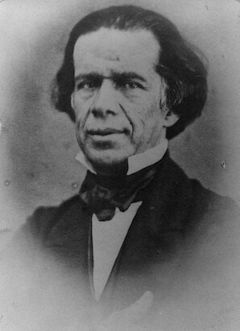
1566: Bartholome Tecia, Geneva sodomite

On this date in 1566, student Bartholome Tecia was drowned in Geneva as a sodomite.

Trial documents make him a youth from the valleys of northwest Italy’s Piedmont, where pockets maintained loyalty to the Evangelical Church of Vaud — Vaud being an adjacent Swiss canton that had been annexed by Calvinist Geneva. He was in the big city to study under Theodore Beza, Calvin’s successor in theological preeminence.

He’s been rediscovered by a more queer-friendly posterity. An eponymous play by Jean-Claude Humbert received a Geneva municipal literary prize in 2005, and the present-day Geneva visitor will see a commemorative marker for Tecia unveiled in 2013.


Plaque in Geneva honoring Bartholome Tecia, which reads “BARTHOLOME TECIA. Piedmontese student aged 15, denounced, tortured and sentenced on June 10, 1566 to be drowned in this place, for crime of homosexuality. Today, sexual orientation and gender identity must be universally recognized as basic human rights. Around the world, people continue to be discriminated against, persecuted and sentenced simply because of their sexual orientation or gender identity.” (cc) image by MHM55.

There’s been a bit of pushback against this memorialization in view of the coercion alleged against him by two younger students. Executed Today would be the last to disclaim adolescents’ capacity for sexual predation, but it’s also the case that all three boys as participants in same-sex rendezvous would have feared themselves under the pall of the executioner: Geneva had drowned a similar trio for sodomy in 1554. While it’s obviously impossible at our remove to have anything better than a guess at the motivations and perspectives of the people involved, it does bear consideration that the accusers were powerfully incentivized to put the entire onus on someone other than themselves. For what it’s worth, Tecia militantly refused to confess, even when put to torture.

It happens that one of Tecia’s accusers was Theodore Agrippa d’Aubigne, the son of a participant in the Huguenot Amboise conspiracy to depose King Francis II. Agrippa d’Aubigne would go on to a scintillating military career during the French Wars of Religion, eventually settling in as Governor of Maillezais when his guy Henri IV won that war. That would have been a nice capstone to his career, except that France’s anti-Reformation turn following Henri’s assassination obliged him to flee a French death sentence for exile … to Geneva. He left an impressive literary legacy containing, to the best of my knowledge, no comment on l’affaire Tecia.

On this day..

2010: Melbert Ray Ford, abusive partner

Melbert Ray Ford was executed by lethal injection in Georgia on this date in 2010, for murdering his ex-girlfriend and her niece.

On tilt from when Martha Chapman Matich broke up with him several weeks prior to the March 1986 crime, Ford had menaced her repeatedly by phone while openly fantasizing to friends about murdering her execution-style after forcing her to beg for mercy. It did not require the benefit of hindsight to know that this was more than idle talk; Ford had a previous conviction (from 1978) for making terroristic threats and criminal trespass. He’d also been violently abusive to Matich during their relationship of more than a year.

On March 6, Ford hired an unemployed teenager to drive him to the Newton County grocery where Matich worked, just after closing. (That driver, Roger Turner, got a prison sentence and was paroled in 1991.) Matich was working alone there — another employee had gone home sick — accompanied only by her 11-year-old niece Lisa.

As the terrified woman sounded the store’s alarm, Ford blasted his way through the locked glass door, then shot his former lover thrice. As for the little girl, “Lisa was at the store playing with the minnows and crickets sold as bait and didn’t want to leave her aunt alone at the store. According to the March 23, 1986 edition of The Covington News, Turner confessed that ‘Ford described killing Lisa Chapman in the bathroom at the grocery. Turner said that Ford told him that she was crouched by the toilet staring at him, so he felt he had to shoot her.’ ‘She was begging him not to do it in the bathroom where she went to hide,” said [Lisa’s mother Cindy] Chapman-Griffeth.”

Ford fled the store with a sack of loot and left the scene with his confederate — the last night he would spend at liberty on this earth. Police responding to the store alarm rolled up minutes later, to find Martha Matich dead behind the counter and Lisa Chapman convulsing on the restroom floor with a mortal gunshot wound to the head.

On this day..

1627: Catlyn Fiermoing, village witch

The sorceress Catlyn Fiermoing was burned on this date in 1627 at the village of Wommersom.

A standard witch-hunt case, Fiermoing apparently got into hot water calling on the devil in a fight with her husband 19 years before her death, which summons Old Scratch duly answered and duly sealed the bargain with the usual promissory notes and carnal violations: this at least is the gist of what her interrogation records preserve us. (Dutch speakers can read a summary in here: part 1 | part 2.) She used her supernatural powers to get a little bit of money and kill some local rivals’ cows.

On this day..

1754: Captain John Lancey, Devonshire arsonist

On this date in 1754, Captain John Lancey hanged at Execution Dock on the Thames — the victim of his brother-in-law’s clumsy insurance scheme.

We here defer to the dolorous annals known as the Newgate Calendar, so familiar around these parts, which subtitles its entry as …


Executed at Execution Dock, 7th of June, 1754, for burning a Ship at the Instigation of a Member of Parliament

This unfortunate man fell a dupe to an artful and wicked villain, his employer, who at the time was a disgraceful Member of the House of Commons, and who, to avoid the punishment due to his crimes, fled, and left the unfortunate subject whose case is before us a victim to his baseness.

Not this John (de) Lancie.

Captain John Lancey was a native of Bideford, in Devonshire, respectably born and well educated. As he gave early proofs of an inclination for a seafaring life he was taught navigation, was attentive to his studies, and gave proofs of a goodness of disposition that promised a better fate than afterwards attended him.

Lancey was sent to sea as mate of a ship, of which Mr. Benson, a rich merchant at Biddeford, was the proprietor. Lancey, having married a relation of Benson’s, was soon advanced to the command of the vessel. This Benson was Member of Parliament for Barnstaple, in Devonshire, and what kind of character he deserved will appear in the sequel.

After Lancey had returned from a long voyage he was for a considerable time confined to his bed by a violent illness, the expense of which tended considerably to impoverish him. When he had partly recovered, Benson told him that he proposed to refit the ship in which he had formerly sailed; that Lancey should have the command of her; that he (Benson) would insure her for more than double her value, and then Lancey should destroy the vessel.

This proposal appeared shocking to Lancey, who thought it but a trial of his honesty, and declared his sentiments, saying that he would never take any part in a transaction so totally opposite to the whole tenor of his conduct.

For the present nothing more was said; but soon afterwards Benson invited Lancey and several other gentlemen to dine with him. The entertainment was liberal; and, Captain Lancey being asked to stay after the rest of the company were gone, Mr Benson took him to a summer-house in the garden, where he again proposed destroying the ship, and urged it in a manner that proved he was in earnest.

Captain Lancey hesitated a short time on this proposal and then declined to have any concern in so iniquitous a scheme, declaring that he would seek other employment rather than take any part in such a transaction. But Benson, resolving if possible not to lose his agent, prevailed on him to drink freely, and then urged every argument he could think of to prevail on him to undertake the business, promising to shelter him from punishment in case of detection.

Lancey still hesitated. But when Benson mentioned the poverty to which his family was reduced by his late illness, and offered such flattering prospects of protection, the unhappy man at length yielded, to his own destruction. A ship was now fitted out, bound for Maryland: and goods to a large amount were shipped on board, but relanded before the vessel sailed, and a lading of brickbats taken in by way of ballast. They had not been long at sea when a hole was bored in the side of the ship and a cask of combustible ingredients was set on fire, with a view to destroying her. The fire no sooner appeared than the Captain called to some convicted transports, then in the hold, to inquire if they had fired the vessel; which appears to have been only a feint to conceal the real design.

The boat being hoisted out, all the crew got safe on shore; and then Lancey repaired immediately to Benson to inform him of what had passed. Benson instantly dispatched him to a proctor, before whom he swore that the ship had accidentally taken fire, and that it was impossible to prevent the consequences which followed.

Lancey now repaired to his own house, and continued with as much apparent unconcern as if such a piece of villainy had not been perpetrated; but he was soon afterwards taken into custody by a constable, who informed him that oath had been made of the transaction before the Mayor of Exeter by one of the seamen. Lancey, however, did not express much concern, secure in his idea of protection from the supposed influence of Benson.

On the following day Lancey and one of the ship’s crew were committed to the jail of Exeter, where they remained three months; and being then removed to London were examined by Sir Thomas Salisbury, the judge of the Admiralty Court, and committed to the prison of the Marshalsea. Application was afterwards made to the Court of Admiralty to admit them to bail; and there appeared to be no objection to granting the favour, but Benson, on whom they had depended for bail, had absconded, to escape the justice due to his atrocious crime.

Being committed to Newgate, they were brought to trial at the next Sessions of Admiralty held at the Old Bailey,when Lancey was capitally convicted, and received sentence of death, but the other was acquitted.

Lancey lay in prison about four months after conviction, during which his behaviour was altogether consistent with his unhappy situation. His Christian charity was remarkable towards Benson; for, though that wicked man had been the cause and instigator of his ruin, yet he never once reflected on him, but imputed all the crime to himself, and appeared to behold it in its genuine light of deformity.

It was presumed, when he was first apprehended, that he might have been admitted an evidence against Benson, if he would have impeached him; but this he steadily refused to do.

His devotional exercises were exemplary: he attended prayers in the most regular manner, and gave every proof of his contrition. He was accompanied to the place of execution by two clergymen; and, having confessed his guilt in a speech to the surrounding multitude, he underwent the sentence of the law on the 7th of June, 1754, at Execution Dock, in the 27th year of his age.

On this day..

1895: John Eisenminger, forgiven

From the Harrisburg (Pa.) Patriot of June 7, 1895.

On this day..

1984: Sadiq Hamed Al-Shuwehdy, live from Benghazi

On this date in 1984, Libyan television broadcast the live hanging of dissident engineer Sadiq Hamed Al-Shuwehdy (or Shwehdi). Needless to say, the embed following is Mature Content.

Arrested a couple of months previous protesting against the government of Muammar Qaddafi, Al-Shuwehdy was horribly exhibited bound and kneeling at the center of a Benghazi basketball stadium packed with students surprised to discover they were about to witness a public execution. There he vainly pled for mercy while Qaddafi loyalists chanted for his death — during Ramadan, no less. It remains one of the most viscerally memorable atrocities of the colonel’s 42-year reign.

As the prey strangled slowly on his noose, a monstrously opportunistic university student named Huda Ben Amer vaulted herself to instant national fame or infamy by rushing out of the crowd and pulling on Al-Shuwehdy’s legs to kill him. “Huda Al-Shannaga” — “Huda the Executioner” — earned the eye of the dictator who was himself watching the broadcast, and was quickly elevated into powerful posts in the Libyan government. She was mayor of Benghazi until the 2011 civil war.

On this day..

1951: Sandor Szucs, Hungarian footballer

Twenty-nine-year-old footballer Sandor Szucs was hanged on this date in 1951 for attempting to defect from communist Hungary.

The defender for Ujpest FC, who had also featured internationally for the emerging national team juggernaut destined for legend as the Golden Team, Szucs embarked a politically dangerous extramarital affair with singer Erzsi Kovacs.

When the two attempted to flee the country together, they were arrested just this side of the Yugoslavian border. Kovacs spent four years in prison — she would go on to a successful international career — while Szucs was harshly sentenced to death as a traitor on the strength of a murky military law that had been invoked in no other case. His comrades from the pitch found that their pull did not extend to any effectual aid for him.

It’s presumed that Szucs’s execution was at least in part meant as a warning to these very same mates not to exploit the international team’s travels for any embarrassing defections.

If so, they were right to worry: when the Hungarian Revolution erupted in 1956 while the Golden Team’s primary club mirror was playing an away match in Belgium, several players refused to return to their Soviet-occupied homeland, including superstars Ferenc Puskas, Sandor Kocsis and Zoltan Czibor.

On this day..

1861: Melchor Ocampo, liberal statesman

On this date in 1861, the Mexican statesman Melchor Ocampo was summarily executed by right-wing guerrillas.

Once a seminarian, Ocampo (English Wikipedia entry | Spanish) turned his face towards public life, becoming a most eloquent exponent of the era’s movement of liberalism and anticlericalism.

He was among the faction who rebelled in 1854 against recurrent strongman Santa Anna; he served in the ensuing epochal presidency of Benito Juarez and helped to draft the liberal constitution that governed Mexico until 1917. Secular, egalitarian marriage vows promulgated in 1859 by Ocampo are still used in many marriage ceremonies to this day.

The revolutionary social reordering of these years was achieved only by civil war, a conflict remembered as the Reform War which ended only when the conservatives surrendered Mexico City on New Year’s Day of 1861.* Ocampo, who had the stature to stand for president himself, preferred to consolidate the victory by throwing his support to Benito Juarez in the ensuing elections.

Retiring thereafter to private life, he was targeted by one of the numerous remnant right-wing militias that still persisted in the countryside months after the putative conclusion of the Reform War. These abducted him from his home in Michoacan on May 30 and held him for some days, permitting him to write his last letters, before having him shot and strung up on June 3. His remains currently repose in honor at Mexico City’s Rotunda of the Illustrious … as do those of Ocampo’s longtime comrade Santos Degollado, who undertook to hunt down and revenge himself upon his friend’s killers but instead became their prey.

The town of Melchor Ocampo is, quite obviously, named for the man; his surname has been attached as an honorific to his home region of Michoacan, one of Mexico’s 32 states (officially called Michoacan de Ocampo) and to Tepeji del Rio de Ocampo, the place where he was executed.

On this day..

Feast Day of St. Erasmus (St. Elmo)

June 2 is the feast date of early Christian martyr Saint Erasmus of Formia.

If a real historical figure, Erasmus of Formia was a martyr from the persecutions of Diocletian, but the most sure thing about him is that his legend has accumulated like barnacles a variety of “spurious” myth and folklore. It’s an agglomeration that reached a critical mass sufficient to elevate him to the ranks of the Fourteen Holy Helpers, medieval Christendom’s roster of popular big-time intercessors.

He was supposedly a Syrian who landed in Italy as a prelate; there’s a St. Erasmus of Antioch who might either be the same guy in his previous guise or a completely different fellow whose conflated feats explain how Erasmus (of Formia) was both a bishop and a hermit. Oddly enough the Roman Martyrology doesn’t even say that he was put to death for the faith, for Erasmus “was first scourged with leaded whips and then severely beaten with rods; he had also rosin, brimstone, lead, pitch, wax, and oil poured over him, without receiving any injury. Afterwards, under Maximian, he was again subjected to various most horrible tortures at Mola, but was still preserved from death by the power of God for the strengthening of others in the faith. Finally, celebrated for his sufferings, and called by God, he closed his life by a peaceful and holy end.”

Later legends do much him much better for drama and Executed Today eligibility, crediting him with a gory disemboweling death. It’s possible that this association proceeds from Erasmus’s official patronage of sailors: it is he who is the namesake of St. Elmo’s Fire, the electric blue light that gathers to a ship’s mast during a storm,* and his nautical portfolio made his iconographic device the windlass, a winch-and-rope crank that devotees have found suggestive (since so many saints are depicted carrying the instruments of their own martyrdoms) of a device for spooling a man’s intestines. Over time, execution by mechanical evisceration became by popular consensus the passion of Saint Elmo.

“This is one example,” writes Rosa Giorgi in Saints in Art “where imagery influenced hagiography.”

For wincingly obvious reasons, he’s also the saint to call on for any variety of abdominal distress, from stomach and intestinal maladies to the pangs of birth.

* And also a Brat Pack film.

On this day..

1661: James Guthrie, protester

With the words “the covenants, the covenants, shall yet be Scotland’s reviving!” Presbyterian minister James Guthrie was executed on this date in 1661 at Edinburgh’s Mercat Cross, after the post-Oliver Cromwell restoration of the Stuarts.

Guthrie was a principal combatant in the interregnum-specific schism of resolutioners versus protesters.

The protesters were protesting against their opposite numbers’ hasty alliance with the exiled then-pretender King Charles II after the beheading of Charles I: correctly perceiving the Stuart heir hostile to the substantive object of presbyterian church governance, the protesters warned not “to promise any power to the King before he had evidenced the change of his principles, and the continuing of that power in his hand was sinful till that change did appear.”

Notably, and in his case fatally, Guthrie made an early exit from the royalist cause and butted heads personally with Stuart loyalist John Middleton — an officer whom Charles would advance to an earldom, and appoint to adjudicate Guthrie’s own trial. Guthrie’s prosecution has often been read as an excess of personal pique on the part of Middleton for the sharp words Guthrie had given him many years before.

He hanged together with a Scottish army deserter (who was very much the undercard attraction on this occasion) named William Govan. Guthrie claimed in his last speech that he eschewed opportunities to escape his prison so as “not [to] stain my conscience with the suspicion of guiltiness by my withdrawing.”

On this day..