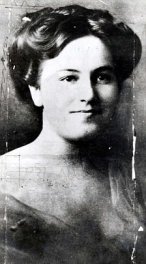
1915: George Joseph Smith, Brides in the Bath murderer

(Thanks to Meaghan Good of the Charley Project for the guest post. -ed.)

On this day in 1915, serial uxoricide George Joseph Smith was hung by the capable John Ellis at Maidstone Prison in the UK.

Smith had committed three murders and various forms of larceny as well; he’d earned his noose several times over.

Two things tend to trip people up when they’ve seemingly committed the perfect crime: either they brag about it to impress others, or they repeat the crime using the same methodology as before, since it worked so well the first time. Either of those actions greatly increases the risk of the criminal’s getting caught.

Smith made the latter mistake. He was in a sense a victim of his own success.

Smith was born on January 11, 1872. His criminal record began when he was sent to a reformatory at nine and served a seven-year sentence. In young adulthood he was in and out of prison on theft- and fraud-related convictions.

His complicated marital career began when he married Caroline Beatrice Thornhill, a domestic servant, in 1898. Smith persuaded her to steal from her employers. Caroline served time in prison as a result, and implicated her husband, who got two years for his role in the thefts.

After George Smith’s release, Caroline thought it wise to put a few thousand miles between herself and her estranged husband, and so she left the UK for Canada. She never filed for divorce, however.

Smith remained legally married to her for the rest of his life, so none of his numerous other marriages were legal.

Unlawfully Wedded …

The guy wasn’t good-looking, but he could charm like any good con artist. A year after his marriage to Caroline, Smith bigamously married another woman. He cleaned out her saving account and then deserted her.

Between 1908 and 1914, he married no fewer than seven additional women, usually under an alias, and deserted most of them after a short time, sometimes only a matter of days — but not before he helped himself to their possessions and bank accounts.

As true crime writer Harold Schechter tells it in his book The Serial Killer Files: The Who, What, Where, How, and Why of the World’s Most Terrifying Murderers:

Smith initially limited himself to scamming gullible spinsters out of their life savings by luring them into bigamous marriages … The moment Smith had his hands on his new bride’s money, he would disappear. Usually telling her he was going out on an errand — to pick up a newspaper or buy a pack of cigarettes — he would never return. On one occasion, he brought his newlywed wife to the National Gallery of Art and, after viewing some paintings, excused himself to go to the bathroom. She never saw him — or her life savings — again.

That particular bride was named Sarah Faulkner. Smith had already plundered £350 in cash from her and her jewelry as well, and while she was waiting for him to return from the loo he was back at their hotel, swiping her clothing and the rest of her money.

The only wife that didn’t fit this pattern was Edith Pegler.

Smith was away from her side for months at a time on “business trips” and when he returned it was always to ask for money, but he never left her for good and they remained together for seven years. As to whether he actually harbored some form of affection for her or whether he just didn’t want to kill his cash cow while it was still milkable, we can only speculate.

Yet all these women were, in a sense, lucky.

Smith may have broken their hearts and taken their cash, but he left them their lives.

… ‘Til Death Do Us Part

The first unlucky wife was Bessie Mundy, whom Smith murdered on July 13, 1912.

They’d married in August 1910, but he left her after persuading her to give him £150 in cash. On the way out the door, he accused her of giving him a venereal disease.

Eighteen months later, Bessie ran into Smith on the street. Somehow, the charmer got his ex to forgive him and resume their relationship.

In fact, Smith wanted to get his hands on Bessie’s £2,500 inheritance, but it was in trust and he couldn’t touch it.

After their reunion, the couple drew up mutual wills, naming each other as beneficiaries. Bessie willed her husband £2,579. Less than a week later, she was mysteriously dead.

Smith rented a house for them in Herne Bay and had a new cast-iron bathtub installed. Tragically, Bessie drowned in the bath. Her husband said he’d been out buying dinner and returned to discover the body.

Since Smith claimed his bride suffered from epilepsy and that she’d had a seizure the day before she died, it was easy to believe she’d simply had an unfortunate accident.

In spite of his newfound wealth, Smith had Bessie consigned to a pauper’s grave and even returned the slightly-used bathtub to the ironmonger for a £1 17s. refund.

This, perhaps, is where Smith might have counted himself lucky and checked out of the homicide business — or at least thought about a different m.o. Instead, hubris and habit got him hanged.

The Brides of Bath murder victims: from left to right, Bessie Mundy, Alice Burnham, and Margaret Lofty.

Next to go was Alice Burnham, who was making a goodly living as a nurse. Smith married on November 4, 1913, and became her widower on December 13.

Alice and her new husband were honeymooning at a seaside boardinghouse in Blackpool when she drowned in the bathtub while he was supposedly out getting eggs.

Smith, who claimed she had a weak heart, had insured her life for £500. She too was buried on the cheap.

Margaret Elizabeth Lofty died in her London home a little over a year later, on December 18, 1914. Newspapers reported she had drowned in the bathtub while her husband — identified as Robert Lloyd — was out buying tomatoes. He and the landlady found the body. Lofty and “Lloyd” had married only the day before and, appropriately enough, the ceremony was performed in the city of Bath.

Although it was initially classified as death by misadventure, Margaret’s murder ultimately lead to Smith’s downfall.

Rotten luck, it was: Alice Burnham’s father read an account of her death in the newspaper and, even though the husband had a different name, he couldn’t help but notice that Margaret’s death was suspiciously similar to his daughter’s.

Joseph Crossley, who was the couple’s landlord at the time of Alice’s death, noticed the same thing. Since both the Burnhams and Crossleys had taken a dislike to Smith from the get-go, they both wrote the police, asking them to open an investigation.

Authorities quickly determined that George Joseph Smith and Robert Lloyd were the same man. They sure had the same playbook.

Margaret had made out a will just hours before she died, naming her husband the sole heir to her estate. She had also withdrawn her life savings from the bank the same day, and three days before she had taken out a £700 life insurance policy on herself, with her husband as the beneficiary. Ka-ching.

When the grieving widower showed up at the insurance office to collect on Margaret’s policy, he was arrested. Lloyd/Smith was initially charged with putting a false name on a marriage certificate, but bigamy and murder charges would follow fast.

When news of the arrest was published, a police chief from Kent read the story and told the London police about Bessie Mundy’s death, which was strikingly similar to the other two.

Forever Hold Your Peace

But how could he could have drowned the women in the tub, without leaving marks of violence on their body?

Margaret had only a small bruise on her elbow. For answers, the police turned to renowned pathologist Bernard Spilsbury. The first thing he did was exhume the bodies to determine whether the women had, in fact, drowned. They had.

After experimenting with the very same bathtub Margaret Lofty died in, he determined how it might have happened. John Brophy, a crime writer, describes it chillingly:

With honeymoon playfulness he would enter the room where his bride was already in the bath, admire her naked beauty, bend over her fondly, and, still murmuring endearments, hold her feet. Suddenly, he would tug her feet upward, jerking her head at the end of the bath, below the water, so that in a few moments she would be drowned with no bruises on the body or other signs of assault or resistance.

Effective. Actually, you can see why he stuck to his system.

When Smith went to trial, it was only for the murder of Bessie; British law didn’t permit him to be tried for multiple murders in one go. However, the prosecution wanted to bring evidence in the Lofty and Burham deaths into the trial, arguing that they indicated a criminal “system.”

The judge allowed it, setting a precedent that would be used in later criminal cases.

In pretrial investigations later described in court, Spilsbury demonstrated his murder theory using Bessie’s bathtub and a female police officer in a bathing suit. It worked all too well: she lost consciousness immediately and they had to drag her out of the tub and perform artificial respiration to revive her.

No wonder the jury was only out for twenty-two minutes before it delivered a guilty verdict.

Caroline Thornhill, Smith’s legal wife, returned to Britain for his trial. She married a Canadian soldier the day after his execution.

The “Brides in the Bath” case has remained vividly alive in British memory.

The historian Harold Nicholson compared Smith’s behavior to Adolf Hitler’s in his 1939 book, Why Britain is at War; Smith was mentioned in novels by Evelyn Waugh, Agatha Christie and Dorothy Sayers, and in 1952 the case was made into an episode for the true-crime radio show The Black Museum.

[audio:http://www.archive.org/download/OTRR_Black_Museum_Singles/BlackMuseum-03-TheBathTub.mp3]

More recently, in 2003 the murders were featured into made-for-TV movie called The Brides in the Bath.

Warning: Video contains NSFW naked ladyparts. Oh, and homicide.

At least two plays, Tryst and The Drowning Girls, are based on the story. In 2010, the author Jane Robins published a book about the case, called The Magnificent Spilsbury and the Case of the Brides in the Bath.

Part of the Themed Set: Branded.

On this day..

2008: Leon David Dorsey, the Blockbuster Killer

On this date in 2008, Leon David Dorsey IV died by lethal injection in Texas.

Dorsey was the “Blockbuster Killer.”

No, not Netflix. Just a small-time hood who robbed a Dallas Blockbuster (back when there was such a thing) of $392, and in the process wasted the two employees minding the till.* Something about it — the familiar ubiquity of video rental joints in the 1990s, maybe — really resonated. The Blockbuster murders were immediately notorious.

Though Dorsey was a suspect in this crime — because he told his girlfriend, and she ratted him out — police concluded that the man in the surveillance tapes was too tall. He wasn’t charged.

Dorsey actually got convicted (non-capitally) of a different murder and the Blockbuster homicides went unsolved — until a cold cases unit dug into the surveillance tapes, decided the telemetry fit Dorsey after all, and went knocking on his cell door. The guy was still foolishly willing to gab about it.

“They’re dead,” he would say dismissively of his victims in a pre-trial interview. “That’s over and done with. I could have came in here and been, ‘Oh, I’m sorry, I’m so bad.’ But I don’t feel like that. That’s not being honest with myself.”

One doesn’t doubt that sentiment is shared by many malefactors great and small, but blithe narcissism is not quite the pose calculated to win a lot of sympathy from a jury when you’re on trial for your life.

Dorsey stayed “honest with himself” on death row to the tune of 95 disciplinary violations, including a stabbing attack on a guard, and he vowed to fight the team that came to take him to the gurney. (Texas officials reported that he didn’t actually fight.)

And two years after the Blockbuster killer got his … so did Blockbuster.

* The Blockbuster Corporation’s outreach to the families of its slain employees was considered a model stroke of public relations (Dallas Morning News, Nov. 2, 1994).

Part of the Themed Set: Branded.

On this day..

1828: William Corder, for the Red Barn Murder


This nostalgic emblem of bygone pastoral idylls doubles as a great place to dump a body. (cc) image from boodie131.

This date in 1828, throngs of thousands at Bury St. Edmunds saw the climax of the Red Barn Murder case in the form of the public hanging of William Corder.

This broadside blockbuster got its start in a Suffolk village, where a local ladies’ man and his paramour plotted a rendezvous at the titular shed for the purpose of elopement — she having become pregnant by the young man’s offices.

When the meeting was over, Corder had vanished from town … and Maria Marten had just plain vanished.

Almost a year later, Maria Marten’s stepmother began reporting dreams that the poor girl had been murdered and stashed in the barn. And sure enough, when they searched it, there lay Maria — with William Corder’s handkerchief around her neck. Corder was found in London living with his new wife.

(About the stepmom: she was just a year older than her “daughter”, and considering her essential role in divining the body’s location, has to be considered suspect herself. It’s not too hard to picture her as Maria’s rival for the tomcatting Corder. She never faced any charges, though.)

In a standing-room-only trial that commenced a mere four days before the hanging — papers reported shortages of post-horses owing to the influx of rubberneckers — Corder failed to persuade anyone that he merited the least bit of mercy with his cockamamie story that Marten done shot herself through the eye.* He was doomed by the jury with 35 minutes’ deliberation.

The Red Barn murder is one of dozens in Judith Flanders’ The Invention of Murder (Review)

The London Times (Aug. 11, 1828) waxed unctuously pleased with this circumstance.

We congratulate the country on a manifest improvement in the condition of its moral feeling, since the sickly sensibility of the press, and of the multitude to whose foul taste it ministered, was wont to declare itself on the side of ruthless and treacherous murder, and to stifle at once every movement of honest compassion for the victim, and all reverence for the principles by which justice is vindicated and human society held together.

Another base ruffian has now equalled or exceeded Thurtell in guilt, and is about to follow him in the experience of lawful retribution. To the honour of the people, we have not yet heard one ejaculation of unnatural pity for the miscreant who deliberately butchered the mother of his infant on pretence of accompanying her to the altar. Corder has united in this one deed of horror — if it be his only one — whatever the heart revolts at most in the conduct of man to woman. He seduced — then betrayed — then massacred the wretched creature, in cold blood; and providential were the means of his detection, as his crime was hateful to God and man.

Why will not unhappy females bethink themselves before it be too late, that he who is depraved enough to corrupt their innocence, has already made no small advance in that course which ends too often in his exacting from them the only remaining sacrifice?

Corder left the scaffold just as he had reached it, corrupting females all the way down.

Seated on a wall, which gave a commanding view of the whole scene, were several ladies, dressed in the first style of fashion. I mention this fact because it shows the intense curiosity prevalent in this county respecting every action of Corder: for nothing else could have brought respectables females to behold a catastrophe so uncongenial with the usual kindness and benevolence of the female character.

–London Times, Aug. 12, 1828

An account of the trial is long since in the public domain and available free from Google books; especially recommended is the collection of dozens of Victorian-Craigslist notes Corder received when he advertised for a wife upon reaching London.

Also of interest: this journal article comparing popular ballads around the case, and even linking to a recorded performance.

As befits such a magnetic public spectacle, Corder’s body was slated for a long afterlife as a macabre totem of the principles by which justice is vindicated.

His corpse was publicly displayed — some 5,000 people are reported to have filed past it — and the hanging rope sold off in increments. Gruesome relics from the case — Corder’s scalp, his death mask, a book bound in his skin — were harvested for exhibition. (Tourists also poured into Corder’s village of Polstead, stripping souvenirs from the red barn and chipping Maria Marten’s gravestone down to the nub.)

The murderer’s skull was one of these trophies, but its owner became convinced it was cursed and had it buried. The rest of Corder was anatomized, as was the style at the time, and its skeleton remained on public display until just a few years ago with that of 18th century crime lord Jonathan Wild.

While the traditional ballads are to be expected …

this venial crime among commoners has sustained popular memory of sufficient longevity to put the Red Barn Murder onto such unanticipated media as the silver screen …

… and Tom Waits’ somber blues/rock.

* Corder confessed before his execution.

Part of the Themed Set: Branded.

On this day..

1888: Hugh Mottram Brooks, for the Trunk Murder

Entomb your mate in a trunk and the Show-Me State will hoist your neck on a rope: Hugh Mottram Brooks found that out on this date in 1888.

This story had made worldwide headlines within hours of the time an employee at St. Louis’s Southern Hotel had opened the door to a guest bedroom emitting a horrible stench and discovered a corpse stuffed in a trunk.


Headline of the St. Louis Daily Globe-Democrat, April 15, 1885. The story occupied the entire front page.

The remains, in life, had belonged to Charles Arthur Preller, an English traveling salesman who had been hanging about the hotel with his impecunious countryman, Brooks.

Those two had been understood on the premises to have been involved, in the Oscar Wilde sense. But the spark for homicide was mere avarice.

The dramatic note left pinned to the late Preller — “so perish all traitors to the great cause” — was almost immediately deemed a red herring, and suspicion descended on Preller’s recent companion, who had absconded with our dead salesman’s money.

A global manhunt pursued the fugitive, who was found to have fled to San Francisco and thence overseas; he was soon arrested in Auckland and extradited back to face a sensational trial — which, by the by, entailed disinterring the corpse to search it for evidence that it had been catheterized. (It hadn’t, and this rubbished the defendant’s alibi that he’d accidentally killed the guy while consensually chloroforming him in the course of a bit of home medicine.)

The wonderful 19th century crime site Murder by Gaslight covers this case and Brooks’s futile defense in meticulous detail. Aptly enough, the Trunk Murderer didn’t have a leg to stand on.

Brooks hanged along with another murderer, Henry Landgraff. The British government did make diplomatic representations on its citizen’s behalf, but they were ignored — prosecutors retorting that London had recently given short shrift to American citizen Patrick O’Donnell.

Part of the Themed Set: Branded.

On this day..

1961: José Isaías Constante Laureano, the last executed in Mexico

At dawn fifty years ago today, Jose Isaias Constante Laureano was shot in Saltillo, Coahuila for murder — the last application of capital punishment in Mexican history.

Laureano, an infantryman, died under military law for getting drunk and shooting dead two of his comrades in arms. (Spanish link; here’s another)

Though only formally abolished in 2005, capital punishment in Mexico simply dwindled away in the middle part of the century. The last civilian execution was all the way back in 1937. Mexico’s closest engagement with the death penalty these days has been protesting the dozens of cases of Mexican nationals condemned in the United States after being denied Vienna Convention rights of consular access.

Since past performance is no guarantee of future returns, nowhere is it written that the next five decades will also remain death penalty-free in Mexico. In fact, given the country’s wave of destructive drug war crimes, calls to restore the ultimate sanction have been heard from Coahuila’s own governor as well as from such unexpected quarters as Mexico’s Green Party.


Green Party pro-death penalty billboard in Mexico. (cc) image from Randal Sheppard.

On this day..

1523: Jean Valliere, the first Protestant burnt in France

On this date in 1523, a Norman hermit named Jean Vallière was burned at the stake at a Paris pig market, while the books of the humanistic nobleman Louis de Berquin were burned in front of Notre Dame by the Paris parlement.

Berquin would follow Valliere’s fate ere that first decade of Lutheranism was out, but the obscurity who died on this date seems to have been an Augustinian preacher whose zany idea that Jesus was the son of Joseph and not God would have been no more welcomed by Luther than by Rome.

Friend and foe alike tended to project onto Luther any old subversive project that wanted either the imprimatur of theological credibility or the brand of the heresiarch and his “pestilential doctrine full of execrable errors.” (That’s how the Sorbonne condemned Luther in 1521.)

In this case, guilt by association was intended to intimidate with Valliere’s example scholars like Berquin. A most particular threat was a clique of reform-oriented intellectuals at Meaux under the leadership of Jacques Lefevre d’Etaples; d’Etaples that very year of 1523 completed a French translation of the New Testament.

These folk in Meaux persisted only under the personal protection of the French King Francis I and his reformist sister Marguerite of Navarre. Their project of reform within the church never really took, and neither did the Meaux circle commit itself to martyrdom for the new faith(s). But Marguerite of Navarre’s grandson would be the man to settle this century’s French Wars of Religion by conquering as a Huguenot, converting to Catholicism, and ruling illustriously as Henri IV.

On this day..

1942: Janusz Korczak and his orphans

(Thanks to Meaghan Good of the Charley Project for the guest post. -ed.)

On August 6, 1942, in the Warsaw Ghetto, Polish/Jewish hero Janusz Korczak marched with his orphans to the death trains and into legend.

The man, his activities in the ghetto, and above all his famed final walk to the Umschlagplatz, are mentioned in many books and memoirs about the ghetto.

The story of his final days also has been told many times in books for children such as The Champion of Children: The Story of Janusz Korczak, A Hero and the Holocaust: The Story of Janusz Korczak and his Children, and Janusz Korczak’s Children.

However, one of the former residents of his orphanage said, “I don’t want to talk about the dead Korczak, but the living one.”

The living Korczak’s story is told in Betty Lifton’s award-winning biography The King of Children: The Life and Death of Janusz Korczak.

Korczak’s real name was Henryk Goldschmidt. He took the name Janusz Korczak (pronounced “ya-nish kor-chok”) for his writing and it wound up taking over his entire life, a la Mark Twain.

Born in an observant Jewish household in Warsaw (which was then Russian Territory) in either 1878 or 1879,* he became man of the house after his father suffered a nervous breakdown in 1889 and eventually had to be hospitalized.

By thirteen, bored by school, he was writing poetry and learning foreign languages by himself. He went to medical school and served as a military doctor with the Russian Army in the Sino-Japanese War of 1905-1906. Eventually he was promoted to the rank of major.

Korczak’s true calling wasn’t in medicine, however, but in writing and in working with children. He found himself drawn to neglected and abused youngsters, and believed in treating every child with honesty and respect.

While he was in China with the military, his first book, Child of the Drawing Room, became famous in Poland. He didn’t realize he was a celebrity until he returned home.

He tried to distance himself from his writing and his fame and be an ordinary pediatrician, but people wanted to see him, to the extent that they would pretend their children were sick in order to entice him to their homes.

Korczak wrote later that one woman claimed her sons had the flu and, when he made a house call, insisted on serving him tea.

“Have you been writing anything lately?” she asked.

“Prescriptions,” he replied, and left, realizing he’d been had.

In 1910, he gave up his medical practice to start an orphanage for Jewish children age seven to fourteen. His institution was very different from most of that time and place, for Korczak had very democratic ideas: the children wrote their own newspaper and had their own parliament and court system.

If one child had a falling-out with another, the urchin could “sue” and bring a case to be decided before the orphanage court, which met once a week. (Even teachers and other staff members could be sued.) The orphanage court also held trials for children accused of violating one of the home’s rules.

Children were rewarded for good behavior, and spanked only as a last resort. Every child had a private, lockable drawer to hold their most precious belongings. Korczak carefully monitored the children’s health and also acted as a sort of informal therapist, encouraging them — most of them orphans from backgrounds of desperate poverty and abuse — to talk about their feelings. The children called him Pan (“Mister”) Doctor.

When World War I broke out, Korczak left the orphanage to serve in the Army again. He left it in good hands, however, in the care of teachers and staff he had trained himself.

“All the world is submerged in blood and fire, in tears and mourning,” he wrote sadly of his war experiences.

It was while in the trenches on the Eastern Front that he began writing a book on child development, titled For The Love of a Child. In 1918, the war finally ended, Poland became a free and independent nation, and Korczak returned to his orphans in Warsaw.

He stayed busy, setting up a second orphanage in 1919, and afterwards writing King Matt the First. The novel, a children’s story about a young boy who becomes king and puts the country’s children in charge, became a bestseller throughout the country in the wake of the calamity lately unleashed by the grown-ups. The sequel, King Matt on the Desert Island, was also a commercial success.

Korczak continued to work for his children, however; he consulted at Warsaw’s juvenile court, and in 1928 founded third orphanage, called Our Home, which had attached dormitories for teachers-in-training and was intended for Catholic children.

In 1925, Korczak wrote another book called When I Am Little Again, told from the point of view of a middle-aged teacher and meant to be read by both children and adults.

He started a children’s newspaper, the Little Review, in 1926. Saying he wanted to “defend children” in his new paper, he invited children from all over Poland to write and tell him the stories of their lives. The newspaper lasted until 1939.

He also hosted a hugely popular radio show, using the name “Old Doctor.” The program was terminated in 1937, however, after only a couple of years; Korczak’s employers with the radio station were reluctant to keep a Jew on the air. When his identity became known, the right-wing press castigated him, saying that as Jew he could never be a real Pole and shouldn’t be allowed to educate Polish children.

Like any public figure, Korczak had his critics. Anti-Semites called Our Home “a new nest of Masonry and potential Communism erected in the heart of the capital.” Communists said his institutions weren’t Communist enough; Zionists criticized him for not directing the children towards a life in Palestine; religious Jews said there wasn’t enough religion in the orphanages while assimilationist Jews said there was too much.

Yet Korczak’s methods worked.

In a follow-up study he conducted of all the former residents 21 years after the first of his institutions was opened, he found that only a few had turned to crime or prostitution as adults. The same could not be said for children who graduated from other children’s homes in Poland.

During the 1930s, many of Korczak’s friends encouraged him to move to Palestine to escape the growing problems in Poland. He actually visited a kibbutz there, but he couldn’t make up his mind whether or to go; he had trouble leaning Hebrew and wasn’t sure a man of his age could start a whole new life.

“I don’t have forty years to spend in the desert,” he wrote to a friend.

Germany’s invasion of Poland in 1939 settled the question for him; leaving the country was no longer an option. Korczak volunteered for the Army again, but was turned down due to his age.

As the Nazis tightened their strangehold around Poland and Poland’s Jews, Korczak did the best he could to shied his orphans from the chaos, suffering and bigotry around them.

He turned his pen to appeals for funds for the children. As a protest against the occupation, he walked around the city openly in his old Polish Army uniform as well as the required Star of David armband.

The uniform proved surprisingly useful: he told a friend that when he went door to door asking for money for the children, “Some people are generous, but not everyone. If they’re difficult, I just undo my coat and reveal my Polish uniform. They get so nervous about having someone in uniform in their place that they give me something just to make me leave.”

The Warsaw Ghetto opened in 1940, and the orphanage was outside its boundaries, so they had to move. (Later, the Germans reduced the size of the ghetto, and Korczak’s orphanage had to relocate again.)

The Warsaw Ghetto was a kind of hell for Jews; allotted rations of only 800 calories a day — if they could get that — people died in droves of starvation and related diseases, including typhus and tuberculosis, as well as deliberate murder by the Nazis and their collaborators.

As recorded in Betty Lifton’s biography, a gentile friend, Igor Newerly, offered to help Korczak escape this fate:

“Everyone’s worried about your going into the ghetto with the children,” Newerly told him. “Just say the word and we’ll get you false identity papers to live on our side.”

“And the children?”

“We’ll try to hide as many as we can in monasteries and private homes.”

Korczak put down his cigarette, took off his glasses in their cheap round metal frames, and began wiping them with his handkerchief as he always did when he was stalling for time.

Finally, he asked: “Do you realize how difficult it would be to hide one hundred and seventy Jewish children — that’s that’s how many we have now.”

“We’d try,” Newerlv repeated.

“But can you guarantee me that every child will be safe?”

Newerly shook his head sadly: “I’m afraid that’s impossible. We can’t guarantee anything” — he
paused — “even for ourselves.”

Korczak thanked his friend, but turned him down. He would take his chances in the ghetto. His decision was sensible for the time — the “Final Solution” had not been conceived of, and no one knew what the eventual fate of the ghetto residents would be.

Lifton records:

On the day they were scheduled to depart, November 29, the children lined up in the courtyard as rehearsed, while Korczak made a final inspection of the wagons filled with the coal and potatoes that he had so arduously procured on his daily rounds. The children waved goodbye sadly to the Polish janitor, Piotr Zalewski, who was staying behind to care for the house. His face was swollen almost beyond recognition from the beating he had received the day before when he and the laundress had applied to the Nazi police for permission to go into the ghetto with the orphans. The Germans had thrown the laundress out, but detained Zalewski for questioning. Didn’t he know that Aryans were no longer allowed to work for Jews? When the janitor replied that after twenty years of service he considered the orphanage his home, the Germans thrashed him with whips and rifle butts.

[…]

The orphans tried to sing as they marched out of the courtyard and into the street, clutching their few possessions. The green flag of King Matt, with a Jewish star on one side, flew over the little parade as it made its way through the teeming streets the short distance to 33 Chlodna Street. When they reached the place where the wall cut along Chlodna, slicing its “Aryan” half off from the ghetto, they found German and Polish police at the gate demanding identification, as if they were crossing a foreign border.

Within the ghetto, Korczak continued his activities for children’s welfare.

He tirelessly solicited aid for the orphanage to keep the children clothed and fed. He and others held benefit concerts and poetry readings, and put posters all around the ghetto saying “OUR CHILDREN MUST LIVE” and “A CHILD IS THE HOLIEST OF BEINGS.”

He took the job as director of a hopelessly underfunded shelter that housed a thousand children; in spite of his efforts, the mortality rate there was sixty percent.

Everywhere children were dying of starvation and disease on the streets or in filthy, overcrowded hovels; Korczak lobbied for the creation of a sort of hospice where they could at least breathe their last in clean, quiet surroundings.

For himself he functioned mostly on pure willpower. It was hard for him to eat when he knew the children were hungry. Five shots of pure alcohol a day, mixed with water, provided precious calories.

Yet his health was failing. His friends noticed how emaciated he had become: “ill, wasted and stooped.” He had a persistent cough and a doctor who examined him diagnosed him with pulmonary edema. Nightmares interrupted his sleep. “How hard it is to live,” he wrote, “how easy to die!”

Yet he carried on.

In the summer of 1942, it became increasingly apparent that the ghetto would be liquidated. Igor Newerly approached Korczak again and offered to help save whoever he could.

Korczak declined his offer again, but gave him his diary for safekeeping — a sign that Korczak, too, knew the end was coming. He had decided to throw his lot in with the children.

In July, the Nazis announced that there were “too many Jews” and they were sending away the children, the old, the sick and anyone else who could not work. Orphans, of course, would be at the top of the list. Resettlement meant death, and many of the ghetto residents knew it, although a substantial number clung to the hope that they would be placed in work camps and find someway of surviving a little longer.

Adam Czerniaków, the Warsaw Ghetto Chairman and Korczak’s personal friend, took his own life rather than supervise the deportations.

For the next few weeks, people were marched or dragged to the death trains, packed inside and driven off to the Treblinka Extermination Camp for gassing.

Many people tried to hide, for the most part unsuccessfully, to escape being deported. Some of the ghetto residents were so hungry that they volunteered to go, because the Nazis promised bread and marmalade to anyone who reported of their own accord.

Korczak’s orphanage’s turn came on August 6. He and the staff had made up their minds earlier: all of them would go together. And they would go quietly, in an orderly fashion, so as not to frighten the children.

Their walk to the death trains, witnessed by thousands, has passed into Holocaust legend.

Lipton records:

The Germans had taken a roll call: one hundred and ninety-two children and ten adults. Korczak was at the head of this little army, the tattered remnants of the generations of moral soldiers he had raised in his children’s republic. He held five-year-old Romcia in one arm, and perhaps Szymonek Jakubowicz…

Stefa followed a little way back with the nine- to twelve year-olds. There were Giena, with sad, dark eyes like her mother’s; Eva Mandelblatt, whose brother had been in the orphanage before her. Halinka Pinchonson, who chose to go with Korczak rather than stay behind with her mother. There were Jakub, who wrote the poem about Moses; Leon with his polished box; Mietek with his dead brother’s prayer book; and Abus, who had stayed too long on the toilet.

There were Zygmus, Sami, Hanka, and Aronek, who had signed the petition to play in the church garden; Hella, who was always restless; big Hanna, who had asthma; and little Hanna with her pale, tubercular smile; Mendelek, who had the bad dream; and the agitated boy who had not wanted to leave his dying mother. There were Abrasha, who had played Amal, with his violin; Jerzyk, the fakir. Chaimek, the doctor; Adek, the lord mayor. , and the rest of the cast of The Post Office, all following their own Pan Doctor on their way to meet the Messiah King. One of the older boys carried the green flag of King Matt, the blue Star of David set against a field of white on one side. The older children took turns carrying the flag during the course of their two-mile walk…

The young protagonist of Jerry Spinelli’s novel Milkweed described it this way:

The orphans were going by. They were marching. Their heads were high and they were singing the song I had learned. I sang along with them. Not one was dressed in rags. Everyone wore shoes. Doctor Korczak lead the way…

“The very stones of the street,” wrote Yehoshue Perle, another chronicler, “wept at the sight of the procession.”

As the group waited for the trains to leave, Korczak’s many friends were seeking out anyone with influence, desperately trying to get them out of Umschlagplatz and back to the orphanage to die another day.

It was said that a German officer, who had been a fan Korczak’s King Matt books as a child, offered him the chance to leave — without the children. Korczak refused.

His presence kept the children calm; if he left them they might panic. He knew what was coming, and he knew he could not force the children to face death alone. The fact that he was in such poor health and probably would not have survived the war in any case does not make his sacrifice any less.

Eventually the orphans and the staff boarded the train and were hauled away. There were no survivors. His name is listed on a memorial stone at the site where Treblinka once stood — the only such stone with a name on it.

Korczak’s books were translated into many different languages, including English, and some are still in print: his children’s novel King Matt the First, which was a best-seller in Poland when it first came out; Loving Every Child: Wisdom for Parents; When I Am Little Again and The Child’s Right to Respect, two books in one; and his final piece of writing, his Ghetto Diary. The editor Sandra Josephs also put together the compilation of his works called A Voice for the Child: The Inspirational Words of Janusz Korczak.

Korczak’s legacy is not just in books; his name and image have been used in a lot of memorabilia over the years, and have appeared on stamps in Poland, Israel and Germany. In 1991, Polish filmmaker Andrzej Wajda made a film about Korczak and his last march. There are four statues of him in Warsaw, and a school for street children in Thailand is named after him.


From Andrzej Wajda’s Korczak.

* His year of birth is uncertain; Korczak himself may not have known it.

On this day..

1909: Georges-Henri Duchemin, matricide

On this date in 1909, Georges-Henri Duchemin was guillotined in Paris for murdering his mother. It was the first execution in that city in a decade.

An aimless gadabout, Duchemin mostly sponged off his dear mom, and the filial bond of nature proved insufficiently developed to restrain him strangling the old lady when she held out on him one time.

The ungrateful child made off with a couple hundred francs, but his sister knew right where to direct the police.

His lawyer bid to represent the killer as unbalanced (French link; most of the material on this criminal is in French). The general public horror of parricide and the undisguisedly mercenary nature of the murder made it a no-go.

France had taken a death penalty hiatus of three-plus years from late 1905 to early 1909, under the anti-death penalty president Armand Fallieres. But even those in the first half of the decade had been elsewhere than the capital: Paris hadn’t seen the national razor shave a head since Alfred Peugnez in 1899.


“[Juve] led Fandon just behind the guillotine, to the side where the severed head would fall into the basket. ‘We shall see the poor devil get out of the carriage, and being fastened on to the bascule, and pulled into the lunette.’ He went on talking as if to divert his own mind from the thing before him. ‘That’s the best place for seeing things: I stood there when Peugnez was guillotined, a long time ago now, and I was there again in 1909 when Duchemin, the parricide, was executed.-
–Fantomas

With the new death penalty era in the new century came a new location for the guillotine: just outside La Sante Prison. (The guillotine had formerly been stationed outside La Roquette Prison, but that facility had closed in 1900; today, it’s a park — but look sharp and you can still find the guillotine’s old support stones.)


Le Petit Parisien provided this map to curious onlookers as part of its vast Aug. 5, 1909 coverage of Paris’s biggest crime story of the summer.

On this day..

1882: Ham Yeatts

On this date in 1882, William Hamilton “Ham” Yeatts was hanged in Chatham, Va., for the murder of his friend Pressley Adkerson.

When a fellow lures you to a deserted stretch of rural train-track and pops a cap in your head, it’s a given that he’s nursing some manner of grievance.

In the case of Ham Yeatts, that grievance is said to have been a rivalry with Pressley Adkerson — really, we couldn’t make these names up — over the affections of the local knockout, Fanny Rorer. This here page claims that Yeatts, having just wed the girl, was aghast to discover that his friend had deflowered her premaritally.

But we take note of this report of the hanging in the Richmond Daily Dispatch to the effect that the provocation was merely the victim’s nasty prophecy that Yeatts was liable to end up in a penitentiary, the stronger cuckolding allegation arising as the doomed youth made a desperate play for clemency.

Yeatts’s hanging was delayed by a week when he raised these claims of offended manhood — resulting in a bid on his life by a lynch mob, “defeated of their laudable ambition by the alertness of the guards”* — but it was all to no avail.

He requested that he be executed in a blue flannel suit, and that his body be encased in a metallic coffin with a glass face and be placed in an upright position in a cemented grave with steps leading down into it so that those who wished to see him “lying in state” could do so.

So … add vanity to wrath, envy, and lust on Ham’s cardinal sins register.

After the execution the crowd turned their attention to the circus, which had just entered the town, and Yeatts and his crime were for the time forgotten.

Oh.

Though sometimes described as the last hanging in Pittsylvania County, it apparently wasn’t.

Yeatts was only one of four men hanged in various places around the U.S. that August 4, as the Augusta (Ga.) Chronicle described in its next day’s edition …

FERNANDINA, Fla., August 4. — Merrick Jackson, colored, was hanged here to-day, at 1 o’clock, p.m. He murdered a colored boy, named John Thomas, near King’s Ferry, on November 19, 1881. On the scaffold he offered up a prayer, and thanked the Sisters of Charity for their kindness to him. He met his fate with composure. He died by strangulation.


JACKSONVILLE, Fla., August 4. — Harrison Carter, colored, who murdered Lewis Adams, colored, at Baldwin, in this county, on January 6, 1882, was executed in the ail hard here to-day.


MOBILE [Ala.], August 4. — Armand Coleman, colored, was hanged, to-day, at West Point, Miss., for the murder of Georgia Bright, on May 13, 1880. He was sentenced to be hanged on May 4, 1881, and the case was carried to the Supreme Court, where he was resentenced, but respited by the Governor till to-day. Three thousand persons were present, a large number of whom were negro women. The prisoner ascended the scaffold with a firm step, smiling pleasantly. He said he was willing to go and trusted in God. He denied his guilt to the last.


It was not all the hangman’s day, however. Louisiana Gov. John McEnery respited the scheduled August 4 execution of Jack Chapman in Bossier parish. (Chapman still hanged, on September 22.)

* The Daily Inter Ocean (Chicago, Ill.), July 31, 1882.

On this day..

1573: William Kirkcaldy of Grange, former king’s man

On this date in 1573, William Kirkcaldy of Grange was hanged at Edinburgh. A marker at Edinburgh Castle honors the man who “held this castle for Queen Mary from May 1568 to May 1573 and after its honourable surrender suffered death for devotion to her cause.”

It’s a surprising epitaph.

The fellow’s father, James Kirkcaldy, was one of the realm’s prominent Protestants, and young William worked in France as an English secret agent in the 1550’s while that same Queen Mary held court there as the consort of crown prince turned underprepared child-king Francis II.

After Francis died in 1560, his widow returned to Scotland — not only as Mary, Queen of Scots but as a potential Catholic champion for the throne of England itself.

Kirkcaldy was a natural enemy in a confusing political situation. Scotland in the 1560s slid into civil war between the “Marian” party and the (more Protestant, more pro-English) “king’s men” supporting the regents governing in the name of Mary’s son, James VI.*

As one might expect, Kirkcaldy was a king’s man. He beat Mary in battle in 1567 and took her prisoner, helping force her abdication; after she escaped and had another go at it, he beat her again, and Mary fled to England, never to see Scotland again.

But a funny thing happened to Kirkcaldy on his way to the winner’s circle. In the jockeying that followed Mary’s flight, a fellow pol pulled him over to the Marian party.

Kirkcaldy’s considerable talents now strained themselves for the return of the monarch and the curtailment of the regents. He lost.

When it came again to open conflict, the king’s men (backed by aid from England) trapped Kirkcaldy in Edinburgh Castle and besieged it until the man was forced to surrender to the scanty mercy of his captors and the immortality of that latter-day plaque.

* James is notable in these pages for his adulthood penchant for witch hunting.

On this day..