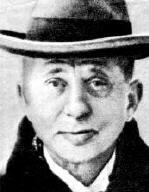
1497: Nicholas II of Niemodlin

On this date in 1497, the Polish Duke Nicholas II of Niemodlin was executed in Nysa.

During a summit to dispel tensions with Casimir II, Duke of Cieszyn, our Nicholas tried to murder both Casimir and a mediator bishop.

After a failed attempt to claim sanctuary, the grandees in attendance decided to have him speedily beheaded rather than accept his large gold bribe in settlement.

This very nearly triggered a wider war when Nicholas’s brother, also a duke, began preparing for a retaliatory military expedition; deft diplomacy by the king of Bohemia defused the crisis.


(cc) image from Jacek Halicki.

On this day..

1483: Fernando II, Duke of Braganza

Fernando II, Duke of Braganza, was beheaded as a traitor on this date in 1483.

This lord (English Wikipedia entry | Portuguese) represented perhaps the mightiest noble house in Portugal. Fernando’s grandfather, Duke Afonso I, had made himself the power behind the throne of the young King Afonso V; Fernando’s father, Duke Fernando I, had sat as regent in Portugal while the king went off to war in Morocco.

Fernando II likewise luxuriated in the honors of royal proximity … while Afonso V kept the throne.

In the early 1480s, the ailing Afonso abdicated in favor of his son. The young King John II was an aspiring absolutist who keenly grasped the danger posed to him by overmighty aristocrats, and systematically set about reducing their privileges.

As Portugal’s largest landholder, nobody had more to lose from this project than Braganza, and he boldly appealed in secret correspondence to Queen Isabella* of neighboring Castile — a realm against which the Portuguese state, and Fernando personally, had been at war just a couple of years before.

As one will suppose from Fernando’s presence on this here blog, John caught wind of the conspiring.

This bad behavior got the Braganzas proscribed, briefly, but the house was soon restored to its station and has written an illustrious history. Indeed, the Braganzas came to the Portuguese throne in 1640 and their Bragantine lasted as long as the institution of monarchy did in that country. There’s still a Duke of Braganza to this day.

* Of Christopher Columbus-sponsoring, Isabella-and-Ferdinand fame.

On this day..

1492: Jan van Coppenolle

On this date in 1492 the Flemish rebel Jan van Coppenolle was beheaded at the Vrijdagmarkt in Ghent.

When the formerly doughty duchy of Burgundy faltered as an independent polity after the death of Charles the Bold in 1477, Ghent and its sister Low Countries trading cities had forced upon Charles’s heir Mary an expansive recognition of those cities’ rights.

It was known as the Great Privilege, and it was greatly dependent on the political weakness of the recognizing authority.

Mary expressed this weakness in another way as well: with her marriage to the Habsburg heir Maximilian I of Austria — tying her patrimony to the Austrian empire. Upon this marriage did the House of Habsburg found a redoubling of its already expansive holdings, for Mary herself brought the wealthy Low Countries into the fold while the couple’s son Philip married a Spanish infanta and founded the line of Habsburg Spanish monarchs.* Apt indeed was the House Habsburg motto: “Leave the waging of wars to others! But you, happy Austria, marry; for the realms which Mars awards to others, Venus transfers to you”

Mary, unfortunately, was not around to enjoy the triumph of her matrimonial arrangements, for in early 1482 a horse threw her while out on a ride, breaking her back. Philip might have had a bright future ahead, but he was only four years old.

It was Maximilian’s flex on direct power in the Low Countries — and in particular his ambition to raise taxes to fund expansionist wars — that brought to the stage our man van Coppenolle (German Wikipedia entry | Dutch). He became a preeminent popular leader of a decade-long Flemish rebellion against the future Holy Roman Emperor that verged towards a war of independence.

Briefly forced to flee to exile in France after Maximilian quelled the initial resistance in 1485, van Coppenolle returned with French backing and controlled Ghent from 1487 when the rebellion re-emerged. This second installment had some legs, especially since Maximilian was imprisoned several months by the city of Bruges, allowing van Coppenolle leave enough to even mint his own coinage, the Coppenollen … before the Habsburgs finally suppressed the risings.

* The present Spanish king, Felipe VI, is a descendant of Philip I.

On this day..

1345: Arnaud Foucaud, jobbing trooper

The unmourned fate of Arnaud Foucaud, a peasant swept into the maelstrom of the Hundred Years’ War as a sword-arm for hire in English service, was excavated as an incidental microhistory in Jonathan Sumption’s The Hundred Years War: Trial by Battle.

[F]ighting fell to volunteers drawn from a growing military underworld of disparaged gentry, refugees, drifters, malcontents and petty criminals. The court records and letters of pardon of the period are filled with the stories of their lives. The tale of Arnaud Foucaud could stand for many of them.

He came from the small village of Clion in Saintonge. His family seem to have been rich peasants. He had learned how to fight on horseback and could handle a lance. When Foucaud was about fourteen or fifteen years old he got involved in a village feud and killed one of his antagonists in a fight. This was in 1337, the first year of the war, as the French were overrunning English-occupied Saintonge.

When the Seneschal‘s officers came to arrest him he fled to the nearest ‘English’ garrison, which was at Montendre, an enclave of the duchy about 15 miles from his home. The commander there, a louche petty nobleman from Bearn, hired him as a soldier.

His life at Montendre consisted in keeping watch and periodically pillaging and burning villages. When the castle was captured by the French in July 1338, Foucaud received a safe conduct as part of the terms of capitulation and returned home.

In 1340, after two relatively uneventful years, he went to Jonzac, the nearest market town, and met two relatives of the man whom he had killed. There was a fight. Foucaud himself was badly wounded, but both his antagonists were killed.

Five weeks after this incident, as he was still nursing his wounds, he was arrested. But he never stood trial. The Seneschal only wanted to be rid of him. So he allowed him to go free on condition that he leave the province for good.

Foucaud went to Bordeaux. Here, he took service in the household of Jean Colom, a rich urban knight who employed him as a cavalryman and took him on several expeditions with the army of Oliver Ingham.

In June 1341 another soldier in Colom’s pay persuaded him to join a small armed band which was being formed for some private purpose of the La Motte family. This turned out to be the daring capture of Bourg, by far the most brazen of the [English-allied -ed.] Bordeaux government’s breaches of the truce of Esplechin.

Foucaud fought gallantly in this enterprise and served in the garrison of the town after it had fallen. But his reward was meagre. His wages were unpaid and his share of the spoils amounted to no more than ten livres’ worth of equipment. Moreover, he quarrelled with the garrison commander, who suspected him of being a French sympathizer, and tried to extract a confession by torturing him.

By 1342 he was back in Bordeaux hiring out his services as a jobbing trooper. He joined a band of 100 men recruited by the lord of Pommiers* to carry out long-range raids in Saintonge, but the pillage of this enterprise was worth only fifty livres to be divided between all of them. He fought with Ingham’s army in the campaign of Saintonge and Angoumois in the autumn of 1342, taking part in the capture of Blanzac, and gaining ten livres in cash as his share of the spoil.

At some stage during 1343 he seems to have obtained a pardon from the French royal lieutenant in the south, the Bishop of Beauvais. [the younger brother of Enguerrand de Marigny -ed.] But by the autumn of 1344 he was back in Bordeaux. According to evidence which he gave under torture (and which he tried to retract) he was next hired in Bordeaux by a Bearnais nobleman to take part with twenty-five others in a raid on a small priory not far from the city. He and six men stood guard outside, while the rest went in, tied up the Prior and his servants and stripped the place of gold and silver, horses and everything of value. But the captain of the troop took most of the spoil for himself. Foucaud’s share was only twenty florins.

This incident was his undoing, for it was not covered by his pardon. It is not clear how he fell into French hands. He probably tried to go home. In May 1345 he was taken to Paris and held in the prison of the Chatelet to answer charges of treason, robbery and murder. He was convicted on the 27th and beheaded in Les Halles on the following day.

Foucaud was twenty-three years old when he died. Booty was an incidental bonus for men like him, but it was not booty that drew them to warfare and most of them got very little of it. They were drop-outs, desperados.

* This lord of Pommiers was Guillaume-Sanche III. Guillaume-Sanche IV was destined to end in a very beautiful Froissart chronicle illustration of his 1377 beheading.

On this day..

2009: The brother of an Iraqi rape victim

Wikileaks published this incident report from the monumental trove of war secrets leaked at incredible personal cost by whistleblower Chelsea Manning.


AAA MISSION/OPERATION: IRAQI FREEDOM VI / CJSOTF-AP

BBB WHO: MAJOR ABBAS MOHAMMED ARDANI (HADITHAH SWAT CDR)

CCC WHAT: ALLEGEDLY TRANSFERRED A HADITHA SWAT PRISONER TO FACILITATE EJK. (MNC-I CCIR #8)

DDD WHERE: 38S KC 57632 80544, HADITHAH DISTRICT IP STATION

EEE WHEN: 26MAY2009

FFF WHY: MAJ ABBAS (SWAT CDR) HAD PERSONAL GRIEVANCES WITH THE PRISONER.

GGG DETAILED DESCRIPTION OF EVENT: ON 25MAY09, MAJOR ABBAS (SWAT CDR) AND COL FARUQ (DCOP) TOLD NSWDET-7D1 LEADERSHIP THAT THEY WERE GOING TO DELIVER TWO DETAINEES TO AL HADR IN THE NORTH BECAUSE THERE WAS MORE INCRIMINATING EVIDENCE ON THE TWO DETAINEES IN AL HADR THAN IN HADITHAH. WHILE TRAVELLlNG NORTH, MAJ ABBAS ORDERED HIS CONVOY TO PULL OVER AND TRANSFER THE TWO DETAINEES TO HIS UNCLE AND FOUR BROTHERS. ACCORDING TO COL FARUQ, THE AL HADR IP FOUND ONE OF THE DETAINEES DECAPITATED AND THE OTHER WAS RELEASED BY MAJ ABBAS’ FAMILY MEMBERS. MAJ ABBAS IS CURRENTLY IN IP CUSTODY.

OVER A YEAR AGO MAJ ABBAS WAS RELIEVED AS HADITHAH SWAT CDR DUE TO HIS ALLEGED INVOLVEMENT IN THE RAPING OF A FEMALE LOCAL NATIONAL. THE BEHEADED DETAINEE IS REPORTED TO BE THE BROTHER OF THE RAPED FEMALE WHO ALLEGEDLY KILLED MAJ ABBAS’ BROTHER IN RETALIATION FOR THE RAPING OF HIS SISTER.

Closed 090530

On this day..

1936: Adolf Seefeldt, Uncle Tick-Tock

German serial killer Adolf Seefeldt was beheaded on this date in 1936 by the Third Reich.

The tramp timepiece-fixer with twenty-plus years of child molestation prison time in his 66 years of life, “Uncle Tick Tock” killed at least a dozen boys in the early 1930s whose creepy uniting feature was sailor suit garb. Their bodies — peacefully posed and innocent of any visible sign of violence — would be discovered in protected forest preserves; the nature of the killings makes it possible that he had other prey who have never been recognized as murder victims, but simply taken for natural deaths. Given that he’d dodged a previous murder charge as far back as 1908 one can’t help but wonder.

It’s been debated whether Seefeldt (English Wikipedia entry | German) poisoned his victims, as he confessed, or suffocated them, or even — fanciful hypothesis — dropped them into a hypnotic sleep only to abandon them outdoors to death by exposure.

On this day..

1893: Ai Yone

For today’s post we refer you to the fine and regrettably retired blog Made In Thailand, which describes in detail the May 19, 1893 beheading of a man named Ai Yone. Although the post admits to a bit of novelization in service of dramatization, this was absolutely a real execution in Siam.

At 7:15 a.m., the procession arrived at Wat Matkasan, where preparations for the execution got underway. Ai Yone remained bound and shackled on board the boat, smoking and engaging in animated conversation with those around him. Meanwhile, the executioners — seven in number — began the lengthy ritual, first making offerings of boar’s head, fowls, rice and betels at the temporary altar, erected for the occasion. The swords to be used for the execution were placed on the altar and duly consecrated and anointed. Looking on from the boat, Ai Yone seemed disinterested and detached as he received the last ministrations of the Buddhist monks. He held his head high, and showed no signs of fear.

Promptly, he was brought onto land and placed on the grass. The executioners were arrayed in red, and had wrapped red sashes around their foreheads. They knelt in front of Ai Yone and asked his pardon for what they were about to do. Some of the executioners took Ai Yone a little distance away, where they removed his neck-chain and handcuffs, then tied his elbows to a bamboo post, securely planted in the ground. He sat cross-legged on freshly-cut plantain leaves, neck exposed to receive the fatal blow, murmuring prayers and holding lighted tapers between his pressed palms. Next, his ears were closed with wet clay, so that he would not hear the deadly approach of the executioner. A line was drawn across his neck, to guide the descending sword; a white cloth wrapped around his body. All was ready.

Ready for what? Read on.

On this day..

1855: Giovanni Pianori

On this date in 1855, Giovanni Pianori submitted to the guillotine for an unsuccessful assassination attempt — pictured above — on the French Emperor Napoleon III.

Himself an Italian nationalist in his youth, Napoleon as prince had gutted his former cause by intervening to crush the revolutionary Roman Republic and restore the exiled pope to power. No small number of fellow-travelers in the patriotic cause thought Napoleon’s betrayal deserved a bullet.

Pianori’s were launched, without effect, on the Champs-Elysees on April 28, 1855, just sixteen days before his execution.

On this day..

Feast Day of Saint Mocius

May 11 is the feast date in the Orthodox confession* of Saint Mocius or Mucius, Hieromartyr of Amphipolis, Macedonia.

Mosaic image of Mocius from the Greek monastery of Hosios Loukas. (cc) image from Hans A. Rosbach.

A hieromartyr is someone who was clergy when he died for the faith; Mocius, as a Christian presbyter, rallied his flock against a public festival for the wine-god Bacchus, allegedly destroying an icon of that hedonic deity.

Since this occurred during the anti-Christian crackdown under the Emperor Diocletian, Mocius got what what was coming to him from this behavior although not until they were able to take him to Byzantium for beheading: attempts to punish him by fire and by throwing him to wild animals were divinely interdicted.

He’s not to be confused with the quasi-mythical Gaius Mucius Scaevola, a hero of Rome’s Etruscan Wars whose legendary steel in the face of execution in the Etruscan camp — “Watch so that you know how cheap the body is to men who have their eye on great glory,” he declared as he thrust his right hand into a brazier without flinching in pain — led his astonished enemies to release him instead. “Scaevola”, meaning “lefty”, is the honorary cognomen his countrymen bestowed upon him thereafter; the feat has inspired later harm-seeking imitators ranging from Jean-Jacques Rousseau to Friedrich Nietzsche to Paul Atreides.

* Catholics mark the feast on May 13.

On this day..

1942: Julius “Babe” Hoffmeister, alcoholic POW

An American Morris-Knudsen civilian contractor captured when the Japanese forces seized Wake Island during World War II was executed on this date in 1942.

Julius “Babe” Hoffmeister’s essential offense was alcoholism; this indeed was the reason for his presence on Wake in the first place, as he’d signed up for this remote hitch in an effort to force himself to cold-turkey detox. Thereafter finding himself in a war zone did no favors for his illness.

During the December 1941 Japanese bombardment of Wake, Hoffmeister looted alcohol from the hospital and stashed it around the atoll, stealing back to them periodically in the subsequent months of slave labor for the occupiers to self-medicate against the misery of his situation. By May those stockpiles had been exhausted, forcing Hoffmeister to more desperate ventures.

We catch a glimpse of this unfortunate man his countrymen’s diaries.

One of those observers was an officer named Leal Henderson Russell, whose rank entitled him to milder treatment and a degree of cordiality with his Japanese opposite numbers. On May 8th, Russell’s journal (self-published in 1987 and hard to come by) recorded —

Wakened by guards on coming into the barracks. They went inside and I could hear them questioning someone. After breakfast I found that they had arrested Babe Hoffmeister who was out of the compound during the night. Okazaki told me later he had broken into the canteen. They called several of the men in to question them concerning it but I think he was alone at the time. I also heard he was drunk. It is apt to go very hard on Babe as he had been repeatedly warned.

Two days afterwards, it did go very hard.

May 10th — Julius ‘Babe’ Hoffmeister was murdered this morning. Nearly all foremen and dept. superintendents were called to witness it. Possibly it will serve as a warning to some who still feel that they have some rights here.

A different prisoner, Logan Kay, noted well the warning —

The Japs made Hoffmeister crouch on his hands and knees. A Jap officer took his sword, laid the blade on his neck, brought it back like a golf club and then down on his neck, severing his head with a single blow.

Far more extensive horrors awaited the prisoners of Wake as the war progressed.

On this day..