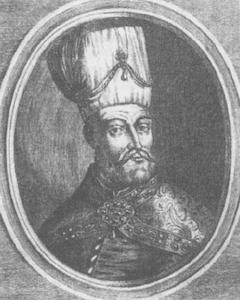
1879: Anthony Blair

From the New York Times, September 27, 1879:


ANTHONY BLAIR HANGED

TEN THOUSAND SPECTATORS TO SEE HIM DIE — THE HISTORY OF HIS CRIME.

Nashville, Tenn., Sept. 26. — A Morristown (Tenn.) special to the Banner says: “Your reporter to-day witnessed the execution of Anthony Blair, colored, for the murder of his step-daughter, Maggie Blair, a girl of 16 years, on the 30th of July last. The crime for which he suffered death was looked upon in this community as a most atrocious murder; there was no seeming cause or provocation, no excuse for it. This execution is pronounced by all as just.

Blair was perhaps 30 years of age, an African in every lineament, brutal and sensuous in appearance, and looked to be capable of any crime. At 12 o’clock, Sheriff Loop, with 28 guards, went to the jail, and with your reporter entered Blair’s cell. Blair seemed callous, and without feeling. He submitted quietly to the manacles, and walked with a firm step to the wagon on which he rode to the gallows.

After religious service by the Rev. George Blainer, colored, the prisoner was allowed to talk. His harangue was such as would be expected from such a man. He admitted his guilt, but developed a state of facts leading to the crime which are unfit for publication.

At 1:30 the rope was tied, the black cap arranged, and, at 1:35, the wagon moved from under him. In nine minutes no pulse could be distinguished; in 10 minutes his heart had ceased to act; in 15 minutes he was pronounced dead, and in just 22 minutes after he swung off he was lowered into his coffin. This was the first hanging in Hamblen County, and the crowd present was estimated to number 8,000 to 10,000.

Blair lived in Washington County, near Jonesboro. From some cause Maggie had left his house, and came to this county some time in May last, and when killed was in the service of Esquire William Donaldson, and was represented as a very smart, industrious girl.

Blair, hearing of her whereabouts, came down to Russelville July 29, and immediately made his way to the residence of Esquire Donaldson. He entered the kitchen where the girl and Mrs. Donaldson were engaged in preparing dinner. He asked the girl, looking savagely at her, to come outside the house, that he had something to say to her. The girl refused to go out, telling him that if he had anything to say, he should say it before Mrs. Donaldson.

About this time Esquire Donaldson rode up, and Blair immediately left the house, and was seen no more until Wednesday, July 30. That night the girl, in company with others, went up to the colored church near Russelville to prayer-meeting.

Returning, Blair was met in the road by parties who had been at the prayer-meeting. After some conversation Blair passed on to Russelville, but upon going a short distance, he turned back and took another road, which the young folks, including Maggie Blair, had taken. He overtook the party, and immediately walked up to Maggie, who was walking in the rear by the side of a colored by named Taylor.

Pressing Taylor away, he caught her hand, and said: “You must go home with me on the train to-night to your grandpa,” and pulled her along the road 150 or 200 yards, saying she should go. Maggie struggled to get loose from Blair’s grasp, saying that she would rather die than go, whereupon he drew a pistol and shot her twice, from the effects of which she died the following Saturday.

On this day..

1714: Geczy Julianna, the White Woman of Locse

On this date in 1714, Geczy Julianna was executed in the marketplace of Gyor as a traitor.

“The White Woman of Locse” — which is also the title of an 1884 romantic novel about her life by Mor Jokai — this woman allegedly betrayed that place* into the hands of imperial Habsburg troops during Hungary’s unsuccessful 1703-1711 rebellion. Sober historians view her as simply a person trusted to serve as the emissary between the garrison and its Habsburg besiegers which role would eventually entail her communicating the defenders’ surrender.

She salvaged her reputation for posterity — and set herself up for torture and execution — by paying the betrayal forward to the empire when she destroyed a number of documents sought by the imperial marshal Janos Palffy that could have incriminated Kuruc nobles in plotting for a renewal of hostilities.

“How can a woman sacrifice her whole country for a kiss, and then sacrifice her handsome head for the same country?” Jokai mused of his paradoxical subject. “What reconciles the heaven and hell in the character of a woman?”

* Formerly part of Hungary’s northern reaches, this town today resides in Slovakia.

On this day..

1788: Levi and Abraham Doan, attainted Tories

On this date in 1788, Pennsylvania highwaymen-cousins Levi and Abraham Doan(e) were hanged on Windmill Island, Philadelphia.*

A whole clan of outlaws turned Revolutionary War Tories, the Doans — brothers Moses, Aaron, Mahlon, Joseph and the aforementioned Levi plus their cousin Abraham — “were all of the Quaker faith and did not believe in war,”** according to a descendant, but “The new government levied a tax upon Joseph, Sr., the father of the Tory Doan boys, confiscated his farm, threw his wife, 3 daughters and youngest son off of the land, jailed Joseph Sr. for non payment of taxes and branded him on his hand as a criminal. This was the given reason for the start of the notorious group known as the Tory Doans.” During the Revolutionary War they served their pecuniary interest by pillage, and their political interest by informing for the British army, in an exciting sequence of adventures. (A public domain history of the Doans amid the revolution can be enjoyed here.)

None of these activities being well calibrated to earn sympathy in the independent United States that emerged and Pennsylvania hit the lot with a judicial attainder issued by the Supreme Court and ratified by the General Assembly.

In a few years’ time the newborn country’s constitution would prohibit acts of attainder but for a few short years this heritage from the mother country — enabling some organ of the state to levy legal penalties on some outlaw party by decree, absent any sort of trial — incongruously continued in that land of the free. In these very pages we have previously noticed an attainder controversially invoked by brand-name founding fathers of Virginia, also against bandits with a pronounced Tory lean.

Likewise in Pennsylvania the Doan attainder “provoked a constitutional test.” (Source) When gang leader Aaron Doan was arrested, he faced the prospect of immediate execution; however, he was able to produce an alibi relative to the specific incident charged — the robbery of a county treasurer in 1781 — and “to the disappointment of many, he was reprieved under the gallows.” (Maryland Journal, Aug. 19, 1788) He later emigrated to Canada. (His brother Joseph did likewise.)

The kinsmen were not so lucky, this time coming out on the short end of the constitutional test case — as described by patriot statesman Charles Biddle, who made an unsuccessful intervention on their behalf in the Supreme Executive Council that wielded executive power in the commonwealth until 1790.†

The Legislature were inclined to pass a bill in their favor, and appointed a committee, consisting of Mr. Lewis, Mr. Fitzsimons and Mr. Rittenhouse, to confer with the Supreme Executive Council on the subject of their pardon. This I believe was what proved fatal to these young men. Several of the members of the Council thought the Legislature had no business to interfere, as the power of pardoning, by the Constitution, was given to the Council. They refused to pardon or extend the time fixed for their execution. It was in vain the members of the Legislature and the minority in the Council urged the peculiar situation of these unfortunate men; the majority were jealous of the interference of the Legislature, and it was carried by a very small majority, that they should suffer. Going to the Council the day afterwards, I met them going in a cart to the gallows, followed by their relations and friends. It was a very affecting sight. They died with great firmness.

* An island in the Delaware River which was later bisected by a ferry channel, dividing it into Smith’s Island and Windmill Island. Both islands were removed by civil engineers in the late 19th century as an aid to the Philadelphia port.

** To revolutionary patriots, Quakers looked a rather suspiciously British-friendly bunch.

† The body’s president at the time of the Doan hangings was no less than the $100 bill guy himself, Benjamin Franklin. Surprisingly, Benjamin’s son William Franklin had during the war years been the Tory governor of New Jersey in which capacity he had signed off on some political executions of his own.

On this day..

1730: Cathrine M’Canna, mother’s daughter

Original Dublin broadsheet via James Kelly’s Gallows Speeches: From Eighteenth-Century Ireland:


THE LAST SPEECH, CONFESSION AND DYEING WORDS OF

CATHRINE M’CANNA

who is to be Executed near St. Stephens Green, this present Wednesday being the 23d of this Instant September 1730. She being Guilty of several Robberies, in and about the City of Dublin.

Good People,

Since the just Hand of Almighty God has at length over reach’d me, and that I must be cut off in the midst of my Transgressions, I shall in a few Words give you a short Narrative of my base and vicious Life, which is as follows, viz.

I drew my first Breath in this City, and descended of very honest Parents, but I wicked wretch about ten Years ago committed a Robbery, and the said Robbery being found with me, I Swore it was my poor Mother gave it me, upon the same she was Hanged, tho’ Innocent of the fact; and had I never been Guilty of no other offence but that, I doubt were I to live a thousand Years, I should not be able to make Restitution for that one Crime; and if so, Oh my God! what shall become of me, who have spent my time in Whoring and Thieving since I came to the Knowledge of committing either, yet my God will I not Despair in thy Mercies, tho’ I must Confess thou have been over and above good to me, in saving my Life when I was to be Hang’d at Killmainham not long since, that thy saying might be fulfilled, who desireth not the Death of a Sinner, but that he should live and save his Soul alive. But it was not so with me, for I no sooner got my Liberty, but (Dog like return’d to his Vomit,) I follow’d my old Trade again, spearing neither Rich nor Poor. Thus I ran on till about the beginning of August last, I went to the Pyde Bull in St. Thomas Street, and Stole thereout the vallue of five Pounds in Linnen and other things, belonging to one Mr. Murphy in said House, but I was soon taken and committed to Newgate, but when I was Try’d and lawfully convicted for the same, I began to plead my Belly, thinking to save my life but all was in vain, for my Jury of Mattrons would not forswear them selves for me, so I must Dye this Day.

Having no more to say, but beg of all Children to be more Dutiful to their Parents than I have been, I also beg the Prayers of all good Christian, [sic] I dye a Roman Catholick, in the 38th Year of my Age, and the Lord Receive my Soul. Amen.

On this day..

1882: Jack Chatman, waxed wroth

On this date in 1882, Jack Chatman hanged in Louisiana’s Bossier County for murder.

The attached, racist article is from the New Orleans Times-Picayune of August 4, 1882 — anticipating an execution that day from which our man won a short reprieve.

Jack Chatman married a woman, although he and the woman were already married at the time. He resided at the Larkin Place in Bossier. One evening he went to Cash’s plantation, three miles above Shreveport, and found his wife there in company with a cotton picker named John Williams.

He waxed wroth and seizing his spouse by the feet, dragged her out of the house to another cabin a few hundred yards distant. The woman feared violence at his hands, and after a desperate struggle freed herself and ran off, Williams in the meantime came up and the men fought with bare knuckles and it is said Williams got the best of the set-to.

The next morning Chatman took up his position in some cotton near Williams’s cabin, and as soon as Williams appeared at his door Chatman brought his double-barreled shotgun to bear upon his rival and shot him. The secret of the murder was too terrible to keep locked in his bosom, and his mouth soon gave all a key to the real offender.

Chatman was arrested, and on October 24, 1881, he was tried by a jury, composed of colored men, and found guilty of murder unqualified by any phrase which might save his life. An effort to have the verdict reversed by the Supreme Court failed, and there was nought to stand between him and his punishment.

Jack Chatman is thirty-three years of age, and although not tall, is heavily built, weighing 180 pounds, and is credited with having even less intelligence than the average negro.

He admits having killed Williams, but if the deed was to be done over again he does not think he would do it. He says he expects to go to heaven, but boasts that Williams will not be found there, he not having had time to properly prepare himself for eternity.

On this day..

2011: Alireza Molla-Soltani, killer of Rouhollah Dadashi

A sobbing 17-year-old* Alireza Molla-Soltani was publicly hanged at dawn on this date in 2011 in Karaj for slaying an Iranian muscleman.


Yoked: the murder victim, Rouhollah Dadashi.

A powerlifter and bodybuilder who was two-time (2009 and 2010) champion of Iran’s “Strongest Man” competition, Rouhollah Dadashi was stabbed to death during a traffic-related altercation barely two months prior: three youths fled the scene in their ride but were picked up within days, even as thousands thronged the celebrity athlete’s burial.

His murder raised a public outcry. Vainly, Molla-Soltani pleaded that he had knifed Dadashi in fear of his own life. He reportedly broke down crying and begging for mercy under the noose.

Warning: Mature Content. This is not film, but a compilation of the numerous still photographs searchable online of the execution.

* Iranian officials contended that Molla-Soltani had reached maturity with 18 lunar years. A lunar year is 11 days shorter than a solar year.

On this day..

1821: Corporal Chaguinha, Brazil’s saint of freedom

On this date in 1821, Brazil’s saint of freedom was martyred by the Portuguese.

Francisco José das Chagas, fondly remembered as Corporal Chaguinha, led a mutiny in Santos of enlistees aggrieved by wages five years overdue, and the unequal treatment of Brazilian as compared to Portuguese soldiers.

It was a fraught and contradictory political moment; the Portuguese royal family had spent the past decade-plus in the quasi-exile of their New World colony after fleeing Napoleon. In the process they had (even formally) elevated Brazil from a mere dependency to a coequal in the empire, and attempts to reverse this promotion once the royals returned to Portugal in early 1821 found little welcome in Brazil.

Chaguinha was born to symbolize in his death his countrymen’s frustration.

To great popular indignation a customary pardon was not extended to the man, who was instead publicly hanged in a notorious botch. After the rope broke repeatedly — and again a public clamor for clemency was refused — they strangled him slowly with a leather strap. A Catholic priest named Diogo Antônio Feijó, who in time would rise to become the regent of independent Brazil, would describe seeing “with my own eyes” seeing the still-surviving Chaguinha being murdered lying under the gallows after his last noose failed to support him.

Brazil declared independence from Portugal one year later almost to the date (September 7, 1822), and won the war to clinch it. The martyred corporal was thereafter improved by veneration as a popular saint credited with miraculous intercessions for suitably patriotic Brazilians.

On this day..

1868: Melvin Baughn, Pony Express rider turned horse thief

We cadge today’s entry from the August 1950 Kansas Historical Quarterly; the article “Legal Hangings in Kansas” by Louise Barry can be perused in pdf form here.

A footnote in the original notes that “During the time in 1860 and 1861, when the Pony Express was in operation, one of the well-known riders on the route between St. Joseph, Mo., and Seneca, was Melvin Baughn. It is said he turned to a life of crime by joining a gang of horse thieves, soon after the Pony Express ended. Mooney is said to have been lynched sometime later.”


The Hanging of Melvin E. Baughn

Three Doniphan county men arrived in Seneca on November 19, 1866, with warrants for four horse thieves known to be in the vicinity. Sheriff William Boulton and a posse of Nemaha county men joined in the hunt. Jackson and Strange, two of the wanted men, were captured a little east of town. Three posse members (Charles W. Ingram, Henry H. Hillix and Jesse S. Dennis) overtook the other two criminals on the road to Capioma. When they rode up to arrest the men — Melvin E. Baughn and Zach Mooney — they were fired upon. Hillix was wounded severely and Dennis was fatally shot in the back, dying a few minutes later. The horse thieves escaped.

Baughn was arrested in Leavenworth on January 6, 1867, on a robbery charge. When recognized as Dennis’ murderer, he was turned over to Nemaha county officers who placed him in the Seneca jail. Four days later an unsuccessful attempt was made to lynch him. On February 6 he and another prisoner escaped.

More than 15 months later Baughn was captured near Sedalia, Mo., after being wounded by officers attempting to arrest him for a robbery. Upon being identified, he was returned to Kansas and to the Seneca jail. He was tried during the next term of the district court, early in August, Judge R. St. Clair Graham presiding. The jury found him guilty of murder in the first degree and on August 7 he was sentenced to be hanged on September 18, 1868.

A gallows was erected on the south side of the Nemaha county jail, and an area of the jail yard was enclosed by a “fence” of canvas. And, on the appointed day, at 3:18 in the afternoon, Baughn was hanged.

On this day..

1682: Ivan Khovansky

On this date in 1682, the boyar Ivan Andreyevich Khovansky went from being the power behind the throne to one of the skulls under it.

A veteran military commander, Khovansky (English Wikipedia entry | Russian) became a key figure in the months after the death of Tsar Feodor III of Russia. This perilous political moment left the throne in the hands of two underage half-brothers overseen by a female regent.

With benefit of hindsight we know that 10-year-old (in 1682) Peter will emerge from this troika to become the mighty Tsar Peter the Great. In 1682, it was anybody’s guess whether any of these dubious prospective autocrats might survive at all.

Peter in particular had cause to fear for his life in May 1682 when the Streltsy, a hereditary guard of Moscow musketeers, bloodily rebelled in favor of his co-heir’s privileges and against his own, rampaging through the Kremlin murdering princes in Peter’s circle. And at the head of these furies stood Khovansky.

Many years later, Peter would revenge himself upon the Streltsy for this horror but in the moment it carried the day, incidentally also carrying Khovansky to a preeminent position in the state.

But he was pitted almost immediately against his erstwhile patron and ally, the regent Sophia Alekseyevna.

Even though the Streltsy rebellion had been conducted on Sophia’s behalf, she could see as well as the next tsar the perils of embracing these latter-day praetorians‘ authority to remake the government by force … and the Streltsy made sure to remind her of it almost immediately when the “Old Believer” movement that predominated among its ranks started raising complaints about Sophia’s religious accommodations.*

Fearing an overmighty nobleman at the head of a treasonable host — and Khovansky has been suspected by both his contemporaries and posterity of coveting the regency for himself — Sophia and the young co-tsars briefly fled Moscow “because we could not tolerate the many offences, unlawful and gross actions and violations committed by criminals and traitors.” Meanwhile she maneuvered adroitly to isolate him politically and had the boyar Duma vote his attainder.

His fate was sealed by the discovery of an anonymous (probably fabricated) letter of denunciation. On 17 September, her own name day, Sophia succeeded in luring Ivan Khovansky and his son Ivan to the royal summer residence at Vozdvizhenskoe outside Moscow. The charges against them centred on their ‘evil designs upon the health and authority of the great sovereigns’ which involved no less than plotting to use the strel’tsy to kill the tsars, Tsaritsa Natalia, Sophia and the patriarch, then to raise rebellion all over Moscow and snatch the throne. The lesser charges included association with ‘accursed schismatics’, embezzlement, dereliction of military duty, and insulting the boyars. The charges were full of inconsistencies and illogicalities, but their sheer weight sealed the Khovanskys’ fate and Prince Ivan and his son were beheaded on the spot … The strel’tsy were forced to swear an oath of loyalty based on a set of conditions, the final clause of which threatened death to anyone who ‘speaks approvingly of the deeds of late, or boasts of committing murder or makes up phrases inciting rebellion as before, or stirs up people to commit criminal acts.’ (Source)

He’s the subject of the Mussorgsky opera Khovanshchina.

* Old Believers wanted a rollback of religious reforms decreed in recent years; Sophia said no dice. Once Peter the Great took over, Sophia and Old Believers alike would end up in the same boat.

On this day..

1581: Peter Niers

The execution of legendary German bandit and mass-murderer Peter Niers took place in Neumarkt on this date in 1581 … or at least, it started on this date.

A veritable bogeyman figure thanks to the reputation-magnifying effects of early print culture, Niers/Niersch (English Wikipedia entry | the cursory German) enjoyed a years-long career in brigandage across the fractured German map, with upwards of 500 murders to his name.*

No matter the plausibility discount we we might reckon for this sensational figure, it is verifiable that Niers was was an early modern public enemy for years before his death. He enters the documentary trail in 1577 when the first of several known crime pamphlets** about him hit movable type upon Niers’s arrest in the Black Forest town of Gersbach. Under torture, he copped at that time to 75 murders … and then he broke out of captivity and into the nightmares of every German traveler wending gloomy highways through the unguarded wilds.

Actually “rather old,” according to an arrest warrant, with crooked fingers and a prominent scar on his chin, the fugitive Niers gained an outsized reputations for disguise and ferocity. As Joy Wiltenburg describes in Crime & Culture in Early Modern Germany, that Niers of fable became like Keyser Soze “assimilate[d to] various supernatural elements” that elevated the crafty gangster into a shapeshifter or magician powered by a demonic patron.

The roving killer Peter Niers and his gang appeared in a number of accounts, several without demonic content. Johann Wick followed Niers’s career with horror; his collection includes three pamphlets on his misdeeds between 1577 and 1582. Niers was arrested and tortured in Gersbach in 1577, confessing to seventy-five murders. According to a song pamphlet from 1577, he learned the art of invisibility from an earlier arch-murderer, Martin Stier. (Wick also owned an account of Stier’s misdeeds and added a note in the margin of the Niers pamphlet, cross-referencing Stier’s 1572 execution in Wurttemberg.) Both Stier and Niers confessed to killing pregnant women. Each had also ripped a male fetus from the mother’s body, cut off its hands, and eaten its heart. Niers evidently escaped in 1577, to be rearrested in 1581 and this time finally executed. According to the pamphlet account, he was caught only because he was separated from the sack containing his magical materials and so could not turn invisible. Here the capture is considered an act of God, but the Devil gets no explicit credit for Niers’s evil magic or his 544 murders, including those of 24 pregnant women. Only the final pamphlet, printed in Strasbourg in 1583, fully explains the diabolical reason for the mutilation of fetuses. Here, the Devil makes an explicit pact with the killers and promises them supernatural powers from the fetal black magic.

He must have been a few fetuses late by the end, for it was his disguise that failed him when he slipped into Neumarkt in August 1581 intending to freshen up at the baths. Instead, he was recognized and arrested.

His body — already put to the tortures of pincers and oil — was shattered and laid on the breaking-wheel on September 16, 1581, but it was two agonizing days before this terror of the roads finally breathed his last.

* 500 murders sounds like plenty to you, me, and Ted Bundy, but it wouldn’t have even made him the most homicidal German outlaw executed in 1581.

** A 1582 print reporting Niers’s execution is available online here.

On this day..