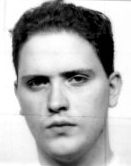
2004: Jerry McWee, a former policeman

On this date in 2004, South Carolina executed a man who had once been on the other side of the law.

Jerry Bridwell McWee hardly fit the profile of a future death row inmate when he met one George Scott. McWee was pushing 40, had no criminal record, and had once done a stint as an Augusta, Ga., police officer.

But it wasn’t many months that the two had iced a couple of Aiken County denizens in a hunt for drug money.*

It may have worked to Scott’s advantage that he was a career criminal, and had the instinct to turn state’s evidence before his confederate could send him to the gurney. Even so, it took some wheedling to get a death sentence out of the jury, which was clearly better inclined to give McWee life. A law (since reversed) at that time forbade advising jurors on parole scenarios, so the jury’s repeated pleas to know when the prisoner might be released under a life sentence — actual answer: age 71, at the earliest — were denied.

It was bum luck for Jerry under the circumstances, but also a mess of his own making; there was no question of innocence or some other mitigating point that gave him any likelihood of winning South Carolina’s first executive clemency.

The invaluable archives at the Clark County (Ind.) prosecutor’s web page collect news stories about every modern execution in the United States. On Jerry McWee’s page, an Associated Press report from the death chamber sketches an affecting portrat of two families’ grief.

In his final statement read by his lawyer, McWee asked both his own family and [victim John] Perry’s family to forgive him. “I only wished that things could have been different,” McWee wrote. “I would give anything if only that could have been the case.” A tear formed in his eye as his mother blew a kiss back at him and his final words were read. That tear finally rolled down the side of his head moments after he stopped breathing. More than 10 minutes later, McWee was officially declared dead at 6:18 p.m.

Celia McWee softly sobbed, a well-wadded tissue in her hand, as she waited for prison officials to open the curtain to the death chamber. She gasped “Oh my God” and her cries got louder as the curtain opened and she saw her clean-shaven son strapped to the gurney, his arms extended, and intravenous tubes stretching through a nearby wall. A minister put his hand on her shoulder. After glancing at his mother, Jerry McWee looked back at the ceiling, softly mumbling as the tubes shuddered. He blinked several times and his breathing got shallow, then stopped. Celia McWee’s sobs got softer as it was obvious McWee was no longer breathing. But she never took her eyes off her son.

A member of Perry’s family also witnessed the execution, and his gaze never left McWee’s body either. After the execution, Perry’s wife and family issued a statement thanking the community, law enforcement and prosecutors and saying it was not a time to rejoice. “God has given us free will – we are each responsible for our actions,” part of the statement read. “Please make choices you can live with. Please pray for the soul of Jerry B. McWee.”

The executed man’s mother, Celia McWee, also lost a daughter to murder in 1980; she had been, and remains, a mainstay of the anti-death penalty movement. On this biographical page, she sets the scene through a mother’s eyes.

One day Jerry came to my work. We said hello but I was still angry and didn’t ask if he wanted to talk. I thought, “If you’re going through a hard time, then good, because now you’re being punished for what you did.” To this day I’ll never forgive myself for not reaching out to him.

Jerry didn’t want me to witness the execution but I fought tooth and nail to be there. I couldn’t let him die in front of a room full of strangers. … The wife of Jerry’s victim wasn’t there, and I would say she’s the most sympathetic person I’ve ever known. She never publicly denounced what my son did, nor did she ever call for his execution.

Just before the lethal injection, Jerry turned to take a good long look at me and then blew me a kiss. After that he closed his eyes and I watched the blood drain from his face. I don’t know what could be harder than watching your son die like that. A mother does not see a 30, 40, 50-year-old man strapped to that cross-like gurney. She sees the child she gave birth to, the child that in her eyes never grew up.

* In two separate crimes, each had been the triggerman once. Formally, McWee was executed only for the first murder, a clerk McWee had shot in the course of robbing a convenience store of $350. He subsequently pleaded guilty to the second murder, for which he received a life sentence; Scott did likewise.

On this day..

2001: Robert Lee Massie, who spent a lifetime dying

On January 7, 1965, 23-year-old Robert Lee Massie shot and killed Mildred Weiss during a botched robbery near her home. He pleaded guilty and, sentenced to die by the state of California, came within 16 hours of execution in 1967, when then-Governor Ronald Reagan temporarily halted his execution so that he could testify at the trial of his alleged co-conspirator. By this time, Massie had begun complaining to anybody who would listen about the conditions on death row, and greeting the prospect of an execution date as a welcome deliverance, was dubbed “the prisoner who wants to die” by the press.

However, Reagan’s reprieve bought him just enough time to live to see a California Supreme Court decision temporarily halting executions, which was followed by the US Supreme Court Furman v. Georgia decision of 1972 banning the death penalty as then being enforced as unconstitutionally arbitrary and capricious.

With Furman, death rows across the country were summarily cleared, and Massie, a model prisoner, was paroled for good behavior in 1978. By this time, the US Supreme Court had handed down the Gregg v. Georgia decision holding that states had revised their death penalty statutes sufficiently to allow executions to resume.

Only months after his release, Massie killed Boris Naumoff in his liquor store and wounded a clerk in another botched robbery. Again pleading guilty, this time over the objections of his court-appointed lawyer, Massie was again sentenced to die.

As before, Massie welcomed his sentence and, acting on a own novel interpretation of the Sixth Amendment guarantee of self-representation, argued that he had a constitutional right to bypass the appeals process usually automatic in capital cases and that there “is no meaningful difference between forcing an automatic appeal upon a defendant and forcing unwanted counsel upon him.” The appeals court disagreed, ruling that “while a litigant may waive the advantage of a law intended solely for his benefit, he may not waive a law established for a public reason.”

Appeals in capital cases were never intended to allow the prisoner to “choose his own sentence,” the Court wrote, and were in fact in place for just such a reason of ensuring full investigation into the “real issue [of] the propriety of allowing the state to conduct an illegal execution of a citizen.” The state was obliged to proceed with Massie’s appeals against his stated wishes, a charge unique to capital cases, because of the singular obligations imposed by the death sentence on the legal machinery of the state — and in fact imposed by the Furman and Gregg decisions that years earlier had ushered Massie unwillingly off death row.

His appeals continuing against his wishes, Massie’s conviction was ultimately overturned in a 1985 California Supreme Court decision holding that the sentence was invalid because his lawyer had not consented to the guilty plea.

Convicted again in a retrial in 1989, Massie was, once again, sentenced to death. Though he was briefly heartened enough to pursue appeals in earnest, those, too, foundered; increasingly convinced that corrupt judges were violating their oath to uphold the Constitution and greasing the machinery of death, he determined once again to pursue his own death.

As his appeals ran out, lawyers and advocates of all stripes stepped in to try to prevent Massie’s execution. A lifetime of abuse in foster care and juvenile detention centers and evidence of clinical depression and mental disorder were all presented at the last minute in a last-ditch attempt to save a man who didn’t want saving.

All were denied, and Robert Lee Massie was executed at the age of 59 on March 27, 2001. He was just the ninth prisoner executed in California in the post-Furman era and the 703rd nationwide.

Massie is one of a growing trend of death row volunteers, prisoners who voluntarily seek to run through their appeals and bring their lives on death row to an end. His frequent visitor in his last years in prison and “next friend,” Michael Kroll,* writes:

My friend, Bob Massie, maneuvered the state of California into assisting in his suicide. He had his own lawyer doing the dance of death with the attorney general and managed to avoid being declared incompetent.

And in the words of a relative of one of Massie’s victims:

I know he wants to die. It makes me think, if he wants out of the suffering, well, maybe we shouldn’t be killing him. Maybe he should just be left there to suffer.

Tossed hither and yon with the shifting legal tides of death penalty law spanning eight presidential administrations, Massie had to aid his executioners to the very last breath: when finally strapped to a gurney 36 years since that young man had murdered Mildred Weiss, he obligingly flexed his arm to help the technician find a suitable vein.

* Kroll tried to prevent Massie’s execution on the grounds that he was mentally ill, incurring his friend’s wrath.

On this day..

1998: Gerald Eugene Stano, misogynist psychopath

(Thanks to the tireless Lilo of Lost In Lima Ohio and Perverted Primates for the guest post.)

On this date in 1998, the story of a boy named Paul ended in Florida’s electric chair.

Paul was born in 1951, in Schenectady, New York. He was the fifth child born to his mother, and would be the third she put up for adoption. At thirteen months old, Paul was malnourished and neglected both physically and emotionally to the point that county officials found him unfit to be adopted. But out of the slightest bit of luck, the small child caught the attention of Eugene and Norma Stano, who fought for six months to adopt the severely delayed child. And it was out of that luck that Paul became Gerald Eugene Stano.

Gerald Eugene Stano’s problems didn’t end with his new life with his adoptive parents; instead, he continued to develop a series of problems that would follow him, shaping his outlook on the world forever, and likely providing him with the excuses he needed to justify his actions later in life.
Gerald still wet the bed at ten, was the target for bullies and regularly laughed at by girls. Late in his life he would claim that women used to pull his hair, and even threw beer bottles at him, all without any provocation. He lagged behind in school, failing to graduate high school until he was 21 years old, and except for music class never achieved a grade higher than a C or D.

Yes, Gerald had a sad and difficult life, one that most people would find it easy to sympathize with. Despite his claims of being an outcast, Gerald flaunted his high opinion of himself, often going as far as to refer to himself as a “real Italian stallion”.

It seems that few really paid attention to Stano — not until March 25, 1980, when a woman by the name of Donna Hensley stumbled away from him, and walked into a police station.

Hensley would tell police that she was a prostitute, and had been approached by a man requesting her services. Once at her motel room, the two began to argue and the man ended up slicing her with a knife before insulting her and fleeing. Hensley was adamant that the man be found and charged.

An officer investigating the incident went looking for the prospective suspect, but ended the search with only a license plate for a car that matched the description. Following up with the plate number, the officer found the vehicle was registered to Gerald Eugene Stano, a 28-year-old man with a long arrest record but no convictions. Hensley gave a positive identification from Stano’s mug shot, and thus began investigation into a series of grisly murders.

On February 17, 1980 two college students had stumbled onto the decomposing remains of a young woman, and police had begun investigating the gruesome murder. The victim, 20-year-old Mary Carol Maher, was found in a remote area lying on her back, her arms at her side. Police believed she had been there for weeks, and upon moving the body discovered that she’d been repeatedly stabbed in the back, legs and chest.

During questioning for the assault on the prostitute, Stano, who fit the profile of the person sought for Maher’s slaying, was asked about the murder victim. Despite having confessed to the assault, Stano would only provide enough information to confirm that he’d previously seen Maher. But with more questioning, Stano broke and began replaying the scene out with the detective, even accompany the detective to the murder scene, and confirming the position of the body.

After returning to the police station, another detective suggested questioning Stano on a missing persons case, that of Toni Van Haddocks, a 26-year-old prostitute who had not been seen for some time. Stano denied any involvement in that case.

On April 15, 1980 a human skull was found in a garden by a Daytona resident, and a search of the area lead to clothing and more bones. Police would determine that these were the remains of Haddocks. Stano was again questioned and despite his first denials, later confessed to the murder, and would soon begin confessing to many more.

In the end, Stano admitted the gruesome murders of over 40 women, and was sentenced to death. After many failed appeals, his execution took place on March 23, 1998.

The death penalty has always been a very touchy subject. Many of its opponents believe that nothing justifies the taking of another person’s life, even if done by the state as a means of punishment. I agree that every life has value, but am personally compelled to ask whose life had more value — the victims that Stano murdered, or Stano himself?

My answer would favor the victims, and therefore I am resolved to believe that giving him any punishment less than what he received — death — would be an injustice to those who were killed by his hands.

On this day..

2002: Monty Allen Delk, in a Three-Pronged Failure

(Thanks to David Elliot at Abolish the Death Penalty for the guest post -ed.)

Six years ago today the state of Texas executed an FBI agent, a state district judge, the president of Kenya and a war hero who commanded a nuclear-powered submarine during the Civil War. More aptly put, Texas executed a seriously mental ill inmate named Monty Allen Delk who, at varying times, believed he was all of these things.

Delk was convicted and sentenced to death for the murder of Gene “Bubba” Allen of Anderson County in East Texas. Although the state of Texas maintained that Delk was “malingering,” i.e., pretending to be mentally ill to stave off execution, the prison system’s former chief mental health officer stated that Delk suffered from a severe mental illness, one that had become progressive in nature since it was first noticed in 1989 –- years after Delk was tried and convicted.

A close examination of the Delk case reveals yet another significant flaw in the capital punishment system:

The U.S. Supreme Court has ruled that executing severely mentally ill inmates violates the U.S. Constitution.

The court also has held that a death row inmate must be mentally competent in order to drop his appeals.

But the court has not directly addressed the issue of whether a death row inmate must be mentally competent in order to pursue his state and federal habeas appeals. In fact, the Texas Court of Criminal Appeals, and the 5th Circuit Court of Appeals, which has jurisdiction over death penalty cases in Texas, have ruled that prisoner competence during state and federal habeas proceedings is not constitutionally required.

The question is fundamental to due process. Habeas is the first, last and often only avenue of appeal for death row inmates whose sentences have been upheld on direct appeal by the Texas Court of Criminal Appeals. But because Delk was unable to assist his attorney through his habeas appeals, he could not answer simple questions that were key to his case -– questions such as, did he commit the crime? Did he think his trial was fair? Did he think his trial lawyers adequately represented him? Were there circumstances about the crime or about his personal history that mitigated against a death sentence?

The fact that Delk’s execution was allowed to proceed represented a three-pronged failure on the part of Texas’ death penalty system. The first failure must be attributed to the courts, which failed to order a psychiatric evaluation of Delk, despite repeated requests by Delk’s very able attorney, John Wright of Huntsville.

The second failure lies with Texas’ executive clemency system. Because of his mental illness, Delk’s sentence should have been commuted to life in prison. Yet the Board of Pardons and Paroles as well as Texas Gov. Rick Perry did nothing. (It is important to note that four days before Delk’s execution, the Georgia Parole Board, acting in a similar case, commuted death row inmate Alexander Williams sentence to life in prison after pleas from human rights activists. Williams is a chronic paranoid schizophrenic who thinks Sigourney Weaver is God and that little green frogs are in his prison cell, staring at him.)

The third failure rested with the Texas media. While Williams’ case attracted comprehensive media coverage in Georgia and beyond, newspapers in Texas largely failed to investigate Delk’s case. Government -– including the criminal justice system –- works best under the glare of public scrutiny. Absent such scrutiny, abuses occur. In this case, no one outside Texas’ fervent anti-death penalty community took much notice of Delk’s execution.

The good news is Texas’ newspapers are beginning to sit up and take notice. If I am not mistaken, every major Texas newspaper has called either for abolition of the death penalty or for a moratorium on executions. The issue of capital punishment has advanced from the margins to the mainstream. In today’s climate, one wonders whether Texas officials could get away with executing a person as severely mentally ill as Delk.

Ultimately, the Supreme Court will have to directly confront the issue of whether a death-sentenced prisoner need be mentally competent during his habeas appeals. Until that happens, we simply will have to ask ourselves a key question:

Is executing someone who is so severely mentally ill he does not know who he is not the very definition of an insane act?

On this day..

2004: Cameron Willingham, for an accidental fire?

(Thanks to David Elliot at Abolish the Death Penalty for the guest post -ed.)

Update: Heartbreaking New Yorker article shreds the state’s case.

Polling data reveals interesting things about U.S. public opinion and the death penalty. If you ask an open-ended question about the death penalty –- for example, “Do you feel the death penalty is appropriate for certain egregious crimes?” –- then you usually see somewhere around a 65 to 35 percent split in favor. On the other hand, if you ask which is preferred – the death penalty or life in prison without parole, the results tend to be closer to 50-50.

Upon occasion, another question is asked: Do you feel an innocent person has been put to death in the U.S.? The results are pretty emphatic: Americans don’t trust their government to get it right, and they do believe innocent people have been executed, by a ratio of about three to one.

So the question fairly arises: Have innocent people been executed in the U.S. in what we sometimes refer to as the “modern era,” i.e., since executions were allowed to resume in 1976?

Enter Cameron Todd Willingham.

On Feb. 17, 2004, Cameron Todd Willingham was strapped to a gurney in a Texas death chamber as he declared his innocence for the last time. Minutes later, he was executed by lethal injection. In December of the same year, the Chicago Tribune uncovered secrets behind the Willingham case, addressing questions left unanswered and raising doubts left unacknowledged.

The Fatal Fire

Cameron Todd Willingham with one of his purported victims — his daughter, Amber.

On Dec. 23, 1991, Willingham was at home with his three daughters. His wife, Stacy, left their home in the morning to pay the bills and shop for Christmas gifts at a Salvation Army store. The family had been struggling that year; Todd, as everyone called him, had recently been laid off, and Stacy was supporting the family with her wages from a bar. The Willinghams were two months behind on rent, and they had even stopped paying some bills in order to save money for Christmas.

Willingham recalled waking up briefly as his wife was leaving the home around 9 a.m. When he heard their one-year-old twins, Karmon and Kameron, crying, he woke up to feed them and went back to sleep. About an hour later, his two-year-old daughter Amber woke him with her cries, and the house was already full of smoke. Willingham remembers not being able to see “anything but black” toward the front of the house.

The circuits were popping throughout the home as Willingham frantically went to his daughters’ bedroom. At this point, his hair caught on fire, and he was able to see little more than the glowing of the ceiling. Willingham called out for his children and felt along the floor and bed for them, but he could not find them. This is when debris began falling from the ceiling, causing him to burn his shoulder. He fled the home through the front door.

After fleeing his house, he asked his neighbors to call the fire department and screamed to them, “My babies is in there and I can’t get them out.” A neighbor, Mary Barbee, then asked other neighbors to place the call because her own telephone was disconnected. Willingham reported that, while this was happening, he tried to re-enter his home, but it was too hot. Then, he knocked out two bedroom windows with a pool cue, but could not get into the bedroom.

Buvin Smith arrived on the scene after hearing the neighbor’s call over a radio scanner. Smith remembered restraining Willingham from going onto the porch, and heard him yelling that his “babies were in the house” and noticed that he was “acting real hysterical.”

A Circumstantial Case

Almost immediately, Willingham became a suspect. According to the Chicago Tribune, prosecutors often are able to rely on circumstantial evidence in cases when a child dies and the parent survives. In this case, the prosecution convinced the jury that Willingham killed his children because they interfered with his beer-drinking, dart-throwing lifestyle. The jury believed it.

Neighbors told investigators that they did not believe Willingham tried hard enough to save his children. In fact, Barbee said that she saw Willingham standing by the fence as heavy smoke came out of the windows. Also, she told investigators that Willingham seemed more concerned with moving his car away from the burning house as the windows blew out than with saving his children.

Willingham’s wounds were treated shortly after the fire. Firefighters did not think that his burns were severe enough had he indeed searched for his daughters in the manner he described. His shoulder, back, and hair were burned, but his bare feet were not burned at the bottom.

Police stated that, the day after the fire, Willingham complained about not being able to find a dartboard in the wreckage of his home. Others mentioned hearing loud music and laughter in the following days as the couple attempted to salvage their belongings.

A police chaplain grew suspicious that Willingham’s hysterics during the fire were not genuine. The chaplain, George Monaghan, noted that Willingham seemed “too distraught.”

In addition to these evaluations of Willingham’s behavior, fire investigators reported over 20 indicators of arson. These include the “crazed glass,” or the web-like cracks in the glass. Until more recent research was completed, arson specialists believed this to be a clear indication that an accelerant had been used in the fire. The fire experts also noted that the fire had reached a stage known as flashover, when a fire reaches such a high temperature that an explosion results. This further supported their reasoning that an accelerant had been used.

Willingham was charged with murder on Jan. 8, 1992, just two weeks after the fire. In August of the same year, his trial began, after Willingham turned down a deal from the prosecution and insisted that he was innocent. During the trial prosecutors presented inmate Johnny E. Webb as a witness. He testified that Willingham confessed at the county jail to killing his children in order to cover up the fact that his wife, Stacy, had been physically abusing them. Webb, a recovering drug addict, was taking psychiatric medication to relieve post-traumatic stress syndrome. The prosecution also presented as witnesses the neighbors who claimed that Willingham should have done more. Fire investigators Doug Fogg and Manuel Vasquez also testified at Willingham’s trial. Both of these investigators testified in court that the fire was caused by arson.

Both of these investigators testified to assumptions about fire that have been scientifically proven to be wrong.

Forensic Evidence Reconsidered

When the Chicago Tribune investigated the case, several experts reviewed documents, trial testimony, and video documentation of the fire scene and concluded that the original investigation was terribly flawed. Gerald Hurst, a Cambridge University-educated chemist, and John Lentini, John DeHaan, both private consultants specializing in fire investigation, along with Louisiana fire chief Kendall Ryland, examined the materials. They suggest that this fire may have been simply accidental.

After the Chicago Tribune investigation, Lentini worked with the Innocence Project to assemble an independent, peer-review panel of arson experts. The five-member panel –- with a combined 138 years in high-level fire investigation experience –- issued a 44-page report (.pdf) on the case.

They determined that “each and every one” of the forensic interpretations made by the state’s experts at Willingham’s trial was not scientifically valid. For example, the original investigators determined that an accelerant was used because wood cannot burn hot enough to melt aluminum. In fact, according to these leading experts, it can.

The 1991 investigators also claimed that the brown rings on the Willingham’s front porch indicated accelerant usage. Experts called this “baseless speculation,” explaining that fire-hose water often leaves brown rings on surfaces after evaporation.

Was it Known Before the Execution?

This information didn’t only come to light recently. Shortly before Willingham was executed, Hurst reviewed the case and issued a report that dismissed every single indicator of arson Fogg and Vasquez had originally cited. What was done with this report? Texas judges and Gov. Rick Perry turned it aside, confident of Willingham’s guilt.

Jury members are less confident now. One jury member asked, “Did anybody know about this prior to his execution? Now I will have to live with this for the rest of my life. Maybe this man was innocent.”

In fact, a similar debunking of arson forensics by the same expert resulted in another Texas death row inmate’s exoneration and release — just seven months after Willingham was put to death.

Have innocent people been executed in the U.S.? Indeed they have. You can read more about other cases at www.InnocentAndExecuted.org


Update: After a 2009 New Yorker expose made Cameron Todd Willingham a byword for wrongful executions, our guest author’s former shop, the National Coalition to Abolish the Death Penalty, took a cue from Justice Antonin Scalia‘s scornful dismissal of the prospect.

There has not been “a single case—not one—in which it is clear that a person was executed for a crime he did not commit. If such an event had occurred in recent years, we would not have to hunt for it; the innocent’s name would be shouted from the rooftops.”

On this day..

1998: Karla Faye Tucker, for an axe murder and a Republican presidency

Ten years ago today, born-again murderess Karla Faye Tucker died by lethal injection in Texas — her reprieve refused by politically ambitious Governor George W. Bush.

At the bottom, Tucker‘s case was a simple one: on a drug-fueled jag at age 23, she’d committed two grisly axe murders in the course of a robbery.* By the time her appeals ran out and her case reached the executive clemency stage, she’d become an outspoken born-again Christian and was asking for mercy.

She was far from the first prisoner to have undergone that conversion.

But she was, to begin with, to be the first woman executed in Texas since the Civil War, which by itself gave her case a special valence. That she was white and relatively photogenic surely did not hurt her cause. By hook or by crook, if not by any objectively consistent standard, her situation caught the public eye –attracting support from some ordinarily pro-death penalty evangelicals as well as more predictable allies. She appeared live on Larry King‘s talk show three weeks before her execution. For a few weeks, Tucker became the emblematic dilemma of reform and redemption pitting the death penalty’s various partial rationales against one another: between retribution for her crime and the present interest of her society, which has precedence? And who decides?

The decider today** was a first-term governor of Texas due to face re-election nine months hence and already looking ahead to the 2000 presidential election.

The case presented George W. Bush with a delicate political situation. Bush was carving out a public persona as a tough-talking lawman — at this point in time, his willingness to execute might have been the thing he was best-known for nationally. He would need evangelical support to run for president, but parsing out life and death on that basis would raise its own difficulties.

The calculus pointed towards proceeding with the execution under cover of pious flimflammery. Sister Helen Prejean of Dead Man Walking fame later recalled it:

[O]n the night of Karla Faye’s killing, my anger at George W. Bush turned to outrage when Larry King aired Bush’s press statement and I heard the way Bush invoked God to bless his denial of clemency … “May God bless Karla Faye Tucker and may God bless her victims and their families.”

Immediately after the statement, King turned to me for a response … [I] said, “It’s interesting to see that Governor Bush is now invoking God, asking God to bless Karla Faye Tucker, when he certainly didn’t use the power in his own hands to bless her. He just had her killed.”

Bush’s political instincts proved grimly accurate this day, but Karla Faye Tucker very nearly returned to derail his presidential bid a year later.

In an interview the following year with a conservative journalist, Bush mocked Tucker’s plea for mercy with shocking cruelty, subsequently related in Talk magazine:

In the week before [Karla Faye Tucker’s] execution, Bush says, Bianca Jagger and a number of other protesters came to Austin to demand clemency for Tucker. “Did you meet with any of them?” I ask.

Bush whips around and stares at me. “No, I didn’t meet with any of them,” he snaps, as though I’ve just asked the dumbest, most offensive question ever posed. “I didn’t meet with Larry King either when he came down for it. I watched his interview with [Tucker], though. He asked her real difficult questions, like ‘What would you say to Governor Bush?’ ”

“What was her answer?” I wonder.

“Please,” Bush whimpers, his lips pursed in mock desperation, “don’t kill me.”

The journalistic principle demands acknowledging the president-to-be’s denial of the remark, but the denial is a self-evident lie. That story briefly threatened to punch a hole in Bush’s presidential campaign positioning as a “compassionate conservative,” and especially of having somberly reviewed the myriad death warrants he signed. But the matter vanished harmlessly.

At the end, for the relentless churn of the news cycle, Karla Faye Tucker was a passing shadow. What was left — this day, and a decade after — was an intensely personal story, rich with those timeless and unfathomable mysteries of the human experience cast by the executioner into such sharp relief.

This documentary, sympathetic to Tucker but not only to her, was made around the time of the execution but stands up well for its presentation of the widely divergent, equally heartfelt perspectives of several drawn into the passion — Tucker herself, a victim’s brother who forgave her, and a victim’s spouse who hated her until the end.

Part 1:Part 2:The literature left behind by this day’s case likewise tends — when it is not about the President — to the devotional qualities of Karla Faye’s personal path.

So too the cinematic treatment Forevermore:

A roundup of Karla Faye Tucker coverage is here. A detailed biography is here. A pro-Karla Faye site memorializes her here.

* Along with her boyfriend, who was also sentenced to death but died in prison. Even before she was an “attractive” woman seeking clemency, the case — like that of many death row women — had a sexualized context as well: she boasted of reaching orgasm as she struck the victims, and recordings of those boasts were played at her trial.

** Legally, the Governor of Texas had — and still has — limited powers of clemency: if the parole board did not recommend mercy, Bush could do nothing more than offer a 30-day stay. That statutory limitation was more apparent than real, however: board members are political appointees and their deliberations are secret; they essentially answer to the governor. On the one occasion Bush actually did want to grant clemency, he made his desire known and the board obliged with the needed recommendation.

On this day..

1992: Ricky Ray Rector, “a date which ought to live in infamy for the Democratic Party”

(Thanks to David Elliot at Abolish the Death Penalty for the guest post -ed.)

The strange case of Ricky Ray Rector, executed by the state of Arkansas on Jan. 24, 1992, is what many observers of the death penalty system in the U.S. might call a trifecta.

First, Rector was African American. Of course, African Americans are disproportionately represented on death rows in the U.S., compared with their representation in the general U.S. population.

Second, Rector was severely mentally impaired. More about that in a couple of paragraphs.

Third, Rector suffered from a botched execution. It took a team of five executioners 50 minutes to find a suitable vein in which to inject the lethal cocktail. During this time, witnesses heard continued moaning from the inmate. (The process of repeatedly jabbing an inmate with a needle, over and over and over again, might not seem as torturous as, say, garroting or drawing and quartering. But it can hardly be described as painless.)

Now, on with the story.

According to Wikipedia, on March 21, 1981, Rector and some friends drove to a dance hall at Tommy’s Old-Fashioned Home-Style Restaurant in Conway. When one of Rector’s friends was refused entry after being unable to pay the three dollar cover charge, Rector became incensed and pulled a .38 pistol from his waist band. He fired several shots, wounding two and killing a third man. The third man, Arthur Criswell, died almost instantaneously after being struck in the throat and forehead. Rector left the scene of the murder in a friend’s car and wandered the city for three days, alternately staying in the woods or with relatives. On March 24, Rector’s sister convinced him to turn himself in. Rector agreed to surrender only to Officer Robert Martin, who he had known since he was a child.

Officer Martin arrived at Rector’s mother’s home shortly after three p.m. and began chatting with Rector’s mother and sister. Shortly thereafter, Rector arrived and greeted Officer Martin. As Officer Martin turned away to continue his conversation with Mrs. Rector, Rickey pulled his pistol from behind his back and fired two shots into Officer Martin, striking him in the jaw and neck. Rector then turned and walked out of the house. Once he had walked past his mother’s backyard, Rector put his gun to his own temple and fired. Rector was quickly discovered by other police officers and was rushed to the local hospital. The shot had destroyed Rector’s frontal lobe, resulting in what was essentially a self-lobotomy.

Rector survived the surgery and was put on trial for the murders of Criswell and Martin. His defense attorneys argued that Rector was not competent to stand trial, but after hearing conflicting testimony from several experts who had evaluated Rector, Judge George F. Hartje ruled that Rector was competent to stand trial. Rector was convicted on both counts and sentenced to death.

When Rector’s execution day approached, he was given the standard last meal. For dessert, he was offered a slice of pecan pie, which he moved to the window sill of his holding cell. When asked why he was not eating his pie, he remarked that he was “saving it” for “after the execution.”

If there had been any doubt that Rector did not understand his impending fate, that sealed it. His execution proceeded nonetheless – this was, after all, Arkansas in the early 1990s.

If that were the end of the story, we probably would not be writing about Rector today. (Then again, given the nature of this blog, maybe we would.)

But, completely unbeknownst to him, Rector would enter the annals of American presidential politics.

Back in 1988, at one time, Democratic nominee Michael Dukakis enjoyed a huge advantage in the polls over the Republican nominee, George H. W. Bush. Why he lost that lead is probably the focal point of another blog somewhere, but one reason is certainly due to The Question.

The Question came during a presidential debate between Bush and Dukakis when CNN Anchor Bernard Shaw asked Dukakis what his view on the death penalty would be if his wife Kitty were raped and murdered. To this day, pundits remember Dukakis’ tepid, emotionless and altogether inadequate response.

Enter Bill Clinton, 1992 presidential candidate. Clinton interrupted campaigning in New Hampshire to fly home to preside over the execution of the mentally challenged Rector. (Such an act was not necessary legally – the execution could well have proceeded without the governor’s presence in the state. But Clinton wanted to prove that he was a “new” Democrat, tough on crime.)

History has not treated Clinton kindly for this calculated and callous act of political opportunism. In 2002, a columnist for the San Francisco Chronicle wrote:

A date which ought to live in infamy for the Democratic Party is Jan. 24, 1992. That’s the day Ricky Ray Rector was executed in Arkansas while Gov. Bill Clinton stood by and did nothing. On that day in Arkansas, the Democratic Party also died. Its body is still with us, to be sure, but its heart and soul died 10 years ago.

There’s evidence this could be changing. Although no major Democratic candidate (sorry, Dennis) has come out against the death penalty, the fact of the matter is the death penalty, at least in Democratic circles, has lost its saliency as a political issue.

And that, at least, is a baby step.

On this day..

2006: Angel Diaz

On this date one year ago, Angel Diaz suffered lethal injection for the 1979 murder of a topless bar manager.

And “suffered” was the word. The procedure was botched, and Diaz took 34 minutes — and a second dose of the lethal three-drug cocktail — before dying, with chemical burns left on both arms.

The incident provoked an immediate media storm and a moratorium on executions in Florida pending the perversity of public servants molding killing procedure by committee. As a result, Diaz remains the last person executed in Florida, and 2007 will be the first year since 1982 that the Sunshine State puts nobody to death.

The debacle in Florida has been a microcosm for the nation. Lethal injection as an execution protocol was by this time last year already facing growing scrutiny. It was immediately apparent that Diaz’s execution could spell serious trouble for the American death penalty’s legal machinery.

And indeed that machinery has now ground to a halt, if only a temporary one. Facing judicial confusion, the Supreme Court is weighing a potential landmark case on the constitutionality of lethal injection, with actual executions — at least involuntary ones — under a de facto moratorium for months yet to come.

That same disquiet is setting down legislative as well as judicial milestones: New Jersey is poised to has this very day become the first American state to abolish the death penalty since 1965.

On this day..

2001: Lois Nadean Smith

On this date in 2001, Lois Nadean Smith was executed by lethal injection in Oklahoma for the murder of her son’s ex-girlfriend.

By the standards of the 1,099 executions in the “modern” death penalty in America — those since the 1972 Furman v. Georgia Supreme Court decision — very little especially distinguished Smith‘s case.

Sentenced some 19 years before her death, she had committed a single horrifying and rather tawdry kidnapping and murder. Her guilt was in no question, although she stood trial along with her son — who received a life sentence — and would later argue on appeal that their lawyer had pursued a defense intentionally shifting blame onto her in order to save him.

As a woman, though, Smith was inherently an oddity. This date completed a remarkable year in which Oklahoma, having not put any woman to death since 1903, emptied its women’s death row with three such executions.

Including those three, only eleven women have been executed in the United States since Furman — or, indeed, since the Kennedy administration. There had been no calendar year in which three women were executed in the entire country since 1953 … and no single state had executed three women in one year since Virginia when the women in question were property.*

According to the Death Penalty Information Center:

Death sentences and actual executions for female offenders are also rare in comparison to such events for male offenders. In fact, women are more likely to be dropped out of the system the further the capital punishment system progresses. Following in summary outline form are the data indicating this screening out effect:

  • women account for about 1 in 10 (10%) murder arrests;
  • women account for only 1 in 50 (2.1%) death sentences imposed at the trial level;
  • women account for only 1 in 70 (1.4%) persons presently on death row; and
  • women account for only 1 in 90 (1.1%) persons actually executed in the modern era.**

At the end of a chain of improbabilities, Smith apparently met her death with composure. “To the families, I want to say I’m sorry for the pain and loss I’ve caused you,” she said from the gurney. “I ask that you forgive me. You must forgive to be forgiven.”

* See charts of female executions through 1962 and since 1900, both courtesy of the comprehensive Espy file of all executions in American history.

** This calculation appears to be slightly dated, with women currently accounting almost exactly 1 in 100 persons actually executed. The last 117 American prisoners executed have all been men.

(All stats are as of publication date in December 2007)

On this day..