On this date in 2004, Dhananjoy Chatterjee hanged at Calcutta’s Alipore Central Jail for the 1990 rape-murder of 14-year-old Hetal Parekh.
Chatterjee’s hanging also brought into the limelight the garrulous, publicity-hounding 84-year-old executioner Nata Mallick, who conducted the hanging with his son and grandson and told anyone with a microphone stories of the hangman’s glory days.
Those days are long past on the subcontinent.
Among death penalty countries, India is the anti-Singapore: despite its billion-plus population, death sentences are vanishingly rare. Chatterjee is not only the most recent person hanged in India as of this writing, but the only one hanged there since 1995.
One actual hanging in fourteen years for a billion-person country? The only lower execution rate would be actual abolition.
Chatterjee may be relieved of his milestone distinctions in the not-too-distant future, however. (Where “not-too-distant” by the standards of the Indian death penalty might still mean years away.)
The hanging this date at Kent’s Maidstone Prison of Thomas Wells for the murder of the Dover postmaster stamped the understated debut of England’s era of private executions.
It was a shift almost a century in the making; in 1783, Albion had eliminated London’s traditional, disorderly procession to Tyburn in favor of public hangings just outside the walls of the prison — to the chagrin of traditionalists like Samuel Johnson.
As the 19th century unfolded, even this compromised spectacle attracted increasing criticism, noticeably from literary types who decried the aesthetics, effectiveness, and/or morality of public execution.
Our day’s otherwise mundane murderer became the first to answer for his crime in this brave new behind-prison-walls world. And if the objective was to banish the spectacle and theater of the scaffold — well, the report in next day’s London Times of Thomas Wells’ hanging would suggest the measure achieved its purpose.
Yesterday morning Thomas Wells, aged 18, who was found guilty at the last Kent Assizes of the wilful murder of Mr. Walsh, the master of the Priory Station on the London, Chatham, and Dover Railway, by shooting him in revenge for a reprimand which that gentleman, under whom he served as a porter, had given him for some misconduct, suffered the extreme penalty of the law. This was the first execution under the new Act requiring executions in future to be inflicted within the prison walls.
It was, of course, generally known that the execution would be conducted in private, and that the only sign would be the hoisting of a black flag outside the prison wall. At the moment of the falling of the drop there were very few, if any, strangers in the vicinity of the prison, and the town presented quite its ordinary appearance, presenting a marked and extraordinary contrast to that which it has hitherto exhibited on the occasion of a public execution. The scaffold was erected in a small yard adjoining the debtors’ portion of the gaol, which had at one time been used as an exercise yard for the prisoners. It is enclosed by four high walls. The apparatus is the same that was formerly used, with some slight alterations. The drop is on a level with the stone paving of the yard, and the executioner has to descend several steps to remove the bolt which supports the platform, and the latter then drops into a recess prepared for it. No one was present at the execution but the undersheriff, governor, sergeant, chaplain, and the representatives of the Press.
After his trial the culprit seemed to have been fully aware that there was no hope for him, but he expressed remorse for the act he had committed, and wrote a very penitent letter to Mrs. Walsh, the widow of the deceased, entreating her forgiveness. No efforts appear to have been made in any quarter to obtain a remission of the capital sentence.
The culprit prayed fervently with the Rev. Mr. Frazer, the chaplain, for a few seconds, and as the drop fell he was singing with a loud clear voice the 486th hymn. He appeared to die after two or three convulsive struggles.
Of course, not everything old can be new overnight; this hanging was carried out by longtime public hangman William Calcraft, who’d had his start in the trade back in 1829 and was renowned for unpleasantly strangling his charges with his itty-bitty drops. Though the Times report downplays the climax, other press attendees agreed that Wells died hard.
This day’s milestone, nevertheless, was a way station en route to further innovations, the decisive transition from an ancient form of public corporal discipline to the rational, calculated, mechanistic procedure meet for an industrial empire.
The natural end of that evolution, some would have us believe, is disposing the rope altogether. If Wells’s private hanging held the seed of capital punishment’s eventual abolition, it sprouted quite neatly indeed: it was this same date in 1964 that England conducted its last private hangings — or executions of any kind.
* The act was passed only three days after the last public hanging in England.
On this date in 1812, Daniel Dawson “suffered the awful sentence of the law, at the top of Cambridge Castle, amidst a surrounding assemblage of at least twelve thousand spectators, it being market-day.”
The crowd was an appropriate ornament to the condign punishment of the most famous horse-poisoner in English history — and perhaps the most severely-punished sports cheat in all of modernity.
A tout scrabbling his living about the storied Newmarket tracks of Cambridge, Dawson killed the favorite for a high-profile race (and three other horses besides) by poisoning their trough, intending only to hamper the beasts enough to make good a variety of bookies’ bets against the fair Pirouette.
Although acquitted for that crime, Dawson was promptly returned to the dock for a previous, and previously unsolved, horse-poisoning, and convicted under a “black act” statute to punish livestock-killing.
According to the inevitable trial pamphlet, freely available from Google Books,
DAWSON behaved with a sullen and impudent levity during the trial, and he frequently abused the witnesses whilst giving their testimony, loud enough to be heard throughout the court … with horrid imprecations, ill becoming his unhappy situation, and at other times he was nodding at and saluting with his hand different persons in court. The verdict of GUILTY had not the slightest effect on him, and his general conduct was altogether depraved. On his return to the castle, his conduct, at times, bordered on insanity, and he appears too illiterate to feel a consciousness of wrong, although he has confessed his guilt to the full extent.
(Katherine Watson adds that although Pirouette’s owner sought a reprieve for the poisoner, Dawson “spoke bitterly of the hypocrisy of the Jockey Club, few of the members of which were above cheating.”)
“Who cannot be sorrowful and amazed that he should be a traitor against your majesty? He that was so advanced by your majesty, he whose surety was only by your majesty, he who loved your majesty, as I ever thought, no less than God; he who studied always to set forward whatsoever was your majesty’s will and pleasure; he that cared for no man’s displeasure to serve your majesty; he that was such a servant, in my judgment, in wisdom, diligence, faithfulness, and experience, as no prince in this realm ever had …
If he be a Traitor, I am sorry that ever I loved him, or trusted him, and I am very glad that his treason is discovered in time; but yet again I am very sorrowful; for who shall your grace trust hereafter, if you might not trust him? Alas!”
It was on this date in 1540 that the Machiavellian minister of Henry VIII fell by the instrument he had wielded so ably against so many others.
While Henry strove to get his end away, Thomas Cromwell made the Reformation, setting his energetic hand to the needfully violent reordering of England.
In almost a decade as the king’s chief minister, he had dissolved so many monasteries, annulled so many noble prerogatives, backstabbed so many courtiers, and sent so many of every class to the scaffold that most at court had some reason to hate him. (Cranmer was the only one to (cautiously) object to his old partner’s arrest.)
Hilary Mantel’s acclaimed Man-Booker Prize-winning 2009 novel Wolf Hall humanizes Cromwell’s side of his clash with Thomas More. (Review)
Though it may be, as Edward Hall recorded, that “many lamented but more rejoiced” at Cromwell’s fall from the very height of his power — “and specially such as either had been religious men, or favoured religious persons; for they banqueted and triumphed together that night [of his execution], many wishing that that day had been seven year before” — the reasons for it are murky enough to invite recourse to the royal person’s irrationality.
The bedroom politics get all the press: Cromwell’s bit of marital statecraft arranging Henry’s marriage to Anne of Cleves was a famous dud, but negotiations to end it were well on their way by the time of Cromwell’s arrest.
Why, too, should the minister have been ennobled Duke of Essex in April 1540, months after the disastrous union? That Cromwell, whose own security rested upon the stability of the realm, was a radical Protestant promulgating inflammatory religious ideas — and he was condemned for both treason and heresy, incidentally giving the king wide latitude for just how painfully to kill his former servant — seems to beggar belief.
Once fallen, Cromwell was kept alive long enough to add testimony to the Cleves divorce; that much is clear. But then why keep him alive still three weeks more?
In the end, maybe it was inevitable that one in his position, at his time and place, had to follow to the scaffold the many he had sent thither, just the Tudor version of that familiar “bad advisors” trope: it were not treason to murmur against the aide whose ill counsel did wrong by His Majesty, and so Cromwell stood to accumulate the share of hostility that properly belonged to his sovereign. As an expert practitioner of the game of power politics, Thomas Cromwell could hardly be in a position to complain.
Oh, and by the by: with the German princess on the outs, the king’s wandering eye had fallen upon a niece of Cromwell’s enemy. On the day that Cromwell lost his head, Henry married Catherine Howard. No matter your brilliance, in Henrican England you only had to lose at court politics once, even if the king would be lamenting this injudicious trade within months.
Henry gave his loyal servant the easiest death, beheading on Tower Hill (although it turned out to be a botched job) — alongside a distinctly undercard attraction, Walter Hungerford, the first person executed under the Buggery Act.
Hall records Cromwell playing ball with a fine entry in the scaffold-speech genre that kept his son in the peerage.
I am come hether to dye, and not to purge my self, as maie happen, some thynke that I will, for if I should do so, I wer a very wretche and miser: I am by the Lawe comdempned to die, and thanke my lorde God that hath appoynted me this deathe, for myne offence: For sithence the tyme that I have had yeres of discrecion, I have lived a synner, and offended my Lorde God, for the whiche I aske hym hartely forgevenes. And it is not unknowne to many of you, that I have been a great traveler in this worlde, and beyng but of a base degree, was called to high estate, and sithes the tyme I came thereunto, I have offended my prince, for the whiche I aske hym hartely forgevenes, and beseche you all to praie to God with me, that he will forgeve me. O father forgeve me. O sonne forgeve me, O holy Ghost forgeve me: O thre persons in one God forgeve me. And now I praie you that be here, to beare me record, I die in the Catholicke faithe, not doubtyng in any article of my faith, no nor doubtyng in any Sacrament of the Churche.* Many hath sclaundered me, and reported that I have been a bearer, of suche as hath mainteigned evill opinions, whiche is untrue, but I confesse that like as God by his holy spirite, doth instruct us in the truthe, so the devill is redy to seduce us, and I have been seduced: but beare me witnes that I dye in the Catholicke faithe of the holy Churche. And I hartely desire you to praie for the Kynges grace, that he maie long live with you, maie long reigne over you. And once again I desire you to pray for me, that so long as life remaigneth in this fleshe, I waver nothyng in my faithe.
And then made he his praier, whiche was long, but not so long, as bothe Godly and learned, and after committed his soule, into the handes of God, and so paciently suffered the stroke of the axe, by a ragged and Boocherly miser, whiche very ungoodly perfourmed the Office.
If Cromwell’s dying sentiment concealed any lasting bitterness for the crown, maybe his spirit would take some satisfaction a century later when another of his name and family rose high enough to behead a king.
* Cromwell’s bit about the “Catholic faith” in his dying confession is to be carefully handled; it’s sometimes rendered “the traditional faith,” and occasionally treated by later Protestant polemicists as a phony addition made by Roman apologists. It’s not, appearances aside, walking back the Reformation; according to Charles Carlton’s “Thomas Cromwell: A Study in Interrogation” (Albion: A Quarterly Journal Concerned with British Studies, Vol. 5, No. 2 (Summer, 1973)) our day’s victim “did not see himself as a Catholic separate from the Church, but as a Christian, who, with his King, had escaped the Pope’s usurped authority.” Cromwell is also explicit in this passage about rejecting sacramentarianism, which was part of the heresy accusation against him.
As of today, it’s been 70 years since the U.S. state of New Hampshire carried out an execution, despite maintaining a death penalty statute almost continuously since.
“Craving for boys,” Long was condemned for molesting and beating to death a 10-year-old in 1937, evidently his second molestation/murder: in the first, he reportedly drove around for 10 hours with his prisoner before plucking up the heart to do the thing, the sort of mental picture to cast a child murder victim of a wannabe-serial killer in the unexpected aspect of boredom.
Long’s execution in the bicentennial of New Hampshire’s first legal hangings was itself the first in 21 years in the Granite State. Although a handful of cases since have potentially fit the steadily narrowing set of death penalty circumstances, none has actually come so far as the gallows (or, today, theoretically, lethal injection) before taking one of the many possible exits — plea bargain, sentence reduction, premature death — from the capital punishment system.
New Hampshire’s present-day death row consists of only one person, and earlier this year its legislature actually voted to abolish the death penalty, a measure spearheaded by State Rep. Renny Cushing, who is the son of a murder victim.* The measure was vetoed by Gov. John Lynch.
On this date in 1931, a carpenter became the first Gibraltar native hanged by the British on that strategic peninsula.
Ernesto Opisso was convicted, in his second trial (the first jury hung), of murdering Marie Bassano, the true crime sensation of the day. Strangely, the elderly woman had been killed in her apartment but neither robbed nor sexually assaulted; Opisso was placed in the vicinity by a witness despite his denials, and a “maybe they got into a fight” theory sufficed to outfit him for the halter.
(Courtroom color: Opisso’s lawyer, evidently something of a functional alcoholic, got around a no-drinking-in-court rule by dipping bread in liquor. “Not drinking, m’Lord,” he replied when the judge’s suspicions were aroused. “Eating.”)
Popular dissatisfaction with the questionable verdict against a local was widespread; because nobody on Gibraltar itself would carry out the execution, a hangman had to be imported from Britain.
The London Times reported of the scene on the eve of the hanging, once all prospect of reprieve had been refused,
Scenes of wild disorder were witnessed to-night when crowds surged through the streets demonstrating against the execution fixed for to-morrow morning of a carpenter, Ernesto Opisso, who has been sentenced to be hanged for the murder of an elderly woman. It will be the first execution in Gibraltar since 1896. A reprieve was refused by the Governor in Council. The crowds thronged the streets demanding a reprieve and forced cafes and places of amusement to close. No taxis were to be had, as the drivers are on strike.
So ugly was the situation that troops turned out and are patrolling the streets armed with hockey sticks.
It was Gibraltar’s first execution of any kind since 1896 — and remains to date its last peacetime execution. (Two Spanish citizens were hanged for wartime offenses in 1944.)
On this date in 1962, Georges Kageorgis* was shot at Usumbura (now Bujumbura) for assassinating the charismatic national figure seemingly destined to lead the country into its postcolonial age.
“It was a bit like what could have happened in South Africa if Nelson Mandela was murdered before assuming the presidency in 1994,” said one pol later.
A prince, a pro-independence nationalist, a Tutsi who had married a Hutu and spurned a tribal leadership position lest he cast too sectarian a profile, Louis Rwagasore became prime minister in the fall of 1961 on the strength of his party‘s comprehensive electoral victory.
Rwagasore admired Patrice Lumumba. He was destined to share Lumumba’s fate.
Two weeks after his election, “the one truly popular national figure” was gunned down by Kageorgis, a Greek mercenary drawing pay from Belgian settlers who reckoned a better situation (French link) for themselves with Hutu governance. A revolution of (Belgian- and Catholic-backed) Hutu in Rwanda had had a “neo-colonial” character, according to Rene Lemarchand … and it had heightened ethnic tensions in Burundi.
With the murdered prince went ethnic cohesion; the bloody Kamenge riots of January 1962 presaged worse to come as leadership in the Rwagasore-less party collapsed. Ethnic conflict sharpened through the 1960’s, with a Tutsi-dominated dictatorship ultimately gaining control of the country and setting the stage for intermittent massacres (two classed as genocides) that haunt Burundi to this day and form part of the context for the Rwandan genocide.
Rwagasore Day — October 13, the anniversary of the prince’s assassination — is still observed in Burundi. Kageorgis’s execution date is notable for other reasons: it was the last day before Belgian authority in Ruanda-Urundi officially ended.
Dennis Gunn’s conviction marked a watershed in the mainstreaming of the youthful science, especially in New Zealand and the British Empire/Commonwealth: the first execution that hung — so to speak — on a print.
The 25-year-old was tied to the murder of Ponsonby postmaster Augustus Braithwaite because a smudge left on a stolen cashbox matched the prints Gunn had contributed to the nascent New Zealand fingerprint library when he had been convicted of evading military service two years before.
Armed with this connection, a police search of Gunn’s environs turned up the apparent tools of the crime — a revolver (with yet another matching print), a thieves’ kit, and more pilfered proceeds of the postal strongroom.
Gunn attempted to indict the reliability of the fingerprint evidence at trial, and according to the London Times (Apr. 20, 1920) he had the support in this endeavor of “public demonstrations of sympathy, men and women rushing to shake hands with Gunn.”
disposes of all attempts to question the conclusiveness of this class of evidence, and proves the truth of the remark of the Chief Justice of Australia, that a man who leaves a clear fingerprint on an object leaves there an unforgettable signature.
Law enforcement organs around the world rapidly accepted the principle.
Too rapidly? Some think so; and, in the train of a new century’s bulletproof identification technology, DNA, wrongful convictions founded on purported fingerprint matches have drawn some renewed scrutiny (pdf) to the technique that put Dennis Gunn on the Mount Eden Prison gallows this date in 1920.
* Playing for time after conviction, Gunn copped to the robbery and tried to pin the murder on a supposed confederate. No dice.
On this date in 1795, the Mountain that had so recently dominated revolutionary France was destroyed by the blade.
This largely forgotten date is actually a significant milestone of those years’ imbroglio: the date on which the French bourgeoisie achieved its revolution by slaying the last sans-culottes-affiliated deputies in punishment for the last sans-culottes uprising.
In the year since the fall of Robespierre, a White Terror had purged his former adherents — or in class terms, had put Madame Guillotine to work pushing the Paris working class out of its former political authority.
The latter’s last hurrah of resistance was the Prairal Rebellion of May 20, 1795, when a mob stormed the Convention.
[I]t billows free through all Corridors; within and without, far as the eye reaches, nothing but Bedlam, and the great Deep broken loose! … Insurrection rages; rolls its drums; will read its Paper of Grievances, will have this decreed, will have that.
… National Representation, deluged with black Sansculottism, glides out; for help elsewhere, for safety elsewhere; here is no help.
About four in the afternoon, there remain hardly more than some Sixty Members: mere friends, or even secret leaders; a remnant of the Mountain-crest, held in silence by Thermidorian thraldom. Now is the time for them; now or never let them descend, and speak! They descend, these Sixty, invited by Sansculottism: Romme of the New Calendar, Ruhl of the Sacred Phial, Goujon, Duquesnoy, Soubrany, and the rest. Glad Sansculottism forms a ring for them; Romme takes the President’s chair; they begin resolving and decreeing. Fast enough now comes Decree after Decree, in alternate brief strains, or strophe and antistrophe, — what will cheapen bread, what will awaken the dormant lion. And at every new decree,* Sansculottism shouts “Decreed, decreed!” and rolls its drums.
Fast enough; the work of months in hours, — when see, a Figure enters … And then Gilt Youth, with levelled bayonets, countenances screwed to the sticking-place! Tramp, tramp, with bayonets gleaming in the lamp-light: what can one do, worn down with long riot, grown heartless, dark, hungry, but roll back, but rush back, and escape who can? The very windows need to be thrown up, that Sansculottism may escape fast enough. Money-changer Sections and Gilt Youth sweep them forth, with steel besom, far into the depths of Saint-Antoine. Triumph once more! The Decrees of that Sixty are not so much as rescinded; they are declared null and non-extant. Romme, Ruhl, Goujon and the ringleaders, some thirteen in all, are decreed Accused. Permanent-session ends at three in the morning. Sansculottism, once more flung resupine, lies sprawling; sprawling its last.
The so-called Cretois were hailed before a tribunal; six were condemned to death on this date.**
They dramatically attempted to cheat the headsman by stabbing themselves after the trial, somehow passing down the line without intervention a single knife smuggled by Goujon.
Three of them died of their self-inflicted injuries. The other three went immediately to the guillotine.
“They were,” Carlyle concludes, “the Ultimi Romanorum … Sansculottism sprawls no more. The dormant lion has become a dead one; and now, as we see, any hoof may smite him.”
** Other less treasonably culpable former Montagnards who had not cast their lot squarely with the Thermidorians were proscribed or otherwise cut off from power in the aftermath of the Prairal rebellion.
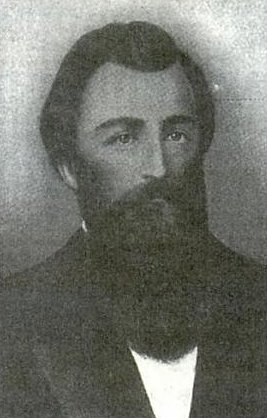
On this date in 1862, a 42-year-old gambler hanged at the New Orleans mint where, six weeks before, he had pulled down the Stars and Stripes of the arriving Union occupiers to the delight of a Confederate mob.
Moving to secure the Mississippi, Northern forces had the Big Easy encircled and about to surrender when, an advance team landed in the undefended city and pulled down the Stars and Bars over the mint on Esplanade Avenue.
William Bruce Mumford was among the Confederate loyalists who took exception to the Yankee flag, so he chopped it down and dragged it through the street (provoking a cannonade from a Union warship). The flag was little but tatters by the time he had through with it.
Although the city was not officially occupied at the time of this incident, the mint was a federal building. Army General Benjamin Butler resolved to make a salutary example out of the incident to quell any possible civil unrest.
I find the city under the dominion of a mob. They have insulted our flag — torn it down with indignity. This outrage will be punished in such a manner as in my judgment will caution both the perpetrators and abettors of the act, so that they will fear the stripes, if they do not reverence the stars of our banner.
Butler, it should be allowed, had some reason for this conclusion. The Picayune exulted the act as, well, a call to resistance.
The names of the party that distinguished themselves by gallantly tearing down the flag that had been surreptitiously hoisted, we learn, are W. B. Mumford, who cut it loose from the flag-staff amid the shower of grape. Lieutenant N. Holmes, Sergeant Burns and James Reed. They deserve great credit for their patriotic act. New Orleans, in this hour of adversity, by the calm dignity she displays in the presence of the enemy, by the proof she gives of her unflinching determination to sustain to the uttermost the righteous cause for which she has done so much and made such great sacrifices, by her serene endurance undismayed of the evil which afllicts her, and her abiding confidence in the not distant coming of better and brighter days — of speedy deliverance from the enemy’s toils — is showing a bright example to her sister cities, and proving herself, in all respects, worthy of the proud position she has achieved. We glory in being a citizen of this great metropolis.
This free book argues that Butler’s clemency a few days before to a group of condemned southern enlisted men made mercy politically impossible in the Mumford case, lest the citizenry interpret executive weakness as an invitation to lawlessness.
If that was Butler’s calculus, Confederate die-hards did not appreciate it.
Accordingly, when Mumford was “hung … from a flag-staff projecting from one of the windows under the front portico” of the mint, he won promotion into the pantheon of southern martyrs.
Confederate President Jefferson Davis issued an order condemning General Butler, and even his officers, to death, along with some outsized bluster about embargoing prisoner exchanges that the Confederacy had not the manpower to seriously intend:
William B. Mumford, a citizen of this Confederacy, was actually and publicly executed in cold blood by hanging alter the occupation of the city of New Orleans by the forces under the command of General Benjamin F. Butler when said Mumford was an unresisting and non-combatant captive, and for no offense even alleged to have been committed by him subsequent to the date of the capture of the said city …
the silence of the Government of the United States and its maintaining of said Butler in high office under its authority for many months after his commission of an act that can be viewed in no other light than as a deliberate murder, as well as of numerous other outrages and atrocities hereafter to be mentioned, afford evidence only too conclusive that the said Government sanctions the conduct of said Butler and is determined that he shall remain unpunished for his crimes:
Now therefore I, Jefferson Davis, President of the Confederate States of America, and in their name do pronounce and declare the said Benjamin F. Butler to be a felon deserving of capital punishment. I do order that he be no longer considered or treated simply as a public enemy of the Confederate States of America but as an outlaw and common enemy of mankind, and that in the event of his capture the officer in command of the capturing force do cause him to be immediately executed by hanging; and I do further order that no commissioned officer of the United States taken captive shall be released on parole before exchange until the said Butler shall have met with due punishment for his crimes.
And whereas the hostilities waged against this Confederacy by the forces of the United States under the command of said Benjamin F. Butler have borne no resemblance to such warfare as is alone permissible by the rules of international law or the usages of civilization but have been characterized by repeated atrocities and outrages
… (examples of atrocities omitted) …
I, Jefferson Davis, President of the Confederate States of America and acting by their authority, appealing to the Divine Judge in attestation that their conduct is not guided by the passion of revenge but that they reluctantly yield to the solemn duty of repressing by necessary severity crimes of which their citizens are the victims, do issue this my proclamation, and by virtue of my authority as Commander-in-Chief of the Armies of the Confederate States do order-
1. That all commissioned officers in the command of said Benjamin F. Butler be declared not entitled to be considered as soldiers engaged in honorable warfare but as robbers and criminals deserving death, and that they and each of them be whenever captured reserved for execution.
2. That the private soldiers and non-commissioned officers in the army of said Butler be considered as only the instruments used for the commission of the crimes perpetrated by his orders and not as free agents; that they therefore be treated when captured as prisoners of war with kindness and humanity and be sent home on the usual parole that they will in no manner aid or serve the United States in any capacity during the continuance of this war unless duly exchanged.
3. That all negro slaves captured in arms be at once delivered over to the executive authorities of the respective States to which they belong to be dealt with according to the laws of said States.
4. That the like orders be executed in all cases with respect to all commissioned officers of the United States when found serving in company with armed slaves in insurrection against the authorities of the different States of this Confederacy.
The Confederates never got a chance to enforce the order; he resumed his colorful political career and died in 1893 hailed as Massachusetts’ greatest citizen-soldier. Complain (pdf) as they might of his iron-heeled rule, the residents of New Orleans had good cause to appreciate the relatively early and orderly occupation of their city, which spared it the flames visited on more recalcitrant rebel strongholds.
For the South, the loss of its largest city and the gateway to the Mississippi was a severe blow. As the rebel position crumbled in the months to come, Jefferson Davis must have had a worry for his own neck.
Somehow, he and every other Southerner escaped execution for their treasonable design, which leaves William Bruce Mumford, the riverboat gambler who tore down Old Glory, as the only American since at least the War of 1812 to be put to death for treason against the United States.*
* Anti-slavery rebel John Brown was hanged for treason in 1859, but it was treason against the state of Virginia — not against the U.S. Julius and Ethel Rosenberg were electrocuted for espionage, not treason.


 Moving to secure the Mississippi, Northern forces had the Big Easy