On this date in 1862, Union Gen. John McNeil had ten Confederate soldiers shot in what history has recorded as the Palmyra Massacre.
The Slave Power’s northern salient, Missouri was surrounded to the east, north, and west by free soil — which made it an antebellum flashpoint since the days of the Missouri Compromise.*
In the 1850s, the Missouri conflict spilled into neighboring Kansas as the enemy sides of the slavery question fought to determine whether Kansas would enter the Union as slave state or free. The Missouri borderlands of Bleeding Kansas was where the radical abolitionist martyr John Brown made his name, commanding free state militia in a guerrilla war that presaged the coming clash of North and South.
By the time we lay our scene in 1862, John Brown has exited courtesy of Virginia’s gallows, and the dragon’s teeth sown in Missouri and Kansas and everywhere else had sprung to horrible life. Missouri’s own civil war pitted neighbor against neighbor throughout the state in a bushwhacking conflict that extended locally for many years after Appomattox.**
The nastiness of the years to come is aptly suggested by this date’s events.
Like neighboring Kentucky, Missouri was a border state with a Union government, albeit one contested by a rival Confederate government. From the standpoint of the North, all Confederate activity there was behind its lines and the perpetrators therefore potentially subject to treatment (up to and including execution) as spies, saboteurs, and the like.†
Joseph Chrisman Porter, a Confederate officer, was one such possible client of this here site, tapped as he was for recruiting and raiding operations in northeast Missouri. His Union adversary Gen. John McNeil saw Porter as basically a terrorist. In August of 1862, Porter’s aide Frisby McCullough fell into McNeil’s hands: the Union general had McCullough shot.
On September 12, Porter raided the town of Palmyra, where McNeil held a number of Confederate prisoners. In the course of the raid, he kidnapped Andrew Allsman, a 60-year-old Palmyra resident. “It was said of him that he was able to inform the military authorities of certain movements of the enemy, and that he gave definitive information as to the homes and whereabouts of many men of Confederate leanings,” in the words of this pro-Confederate 1902 pamphlet on the incident. “Naturally, this placed him in disfavor with the Southern sympathizers and those who were fighting in that cause.”
What happened next — though it was not known to the Union at the time — was that Allsman was shot. The pamphlet just cited attempts to obfuscate this event into the fog of war and not really Porter’s fault. The bare fact is that his raiders had gone out of their way to seize an aged non-combatant and then summarily executed him.
Not knowing Allsman’s fate, McNeil responded with an ultimatum to his opposite number.
Palmyra, Mo., Oct. 8, 1862.
To Joseph C. Porter.
Sir: — Andrew Allsman, an aged citizen of Palmyra and a non-combatant, having been carried away from his home by a band of persons unlawfully arraigned against the peace and good order of the State of Missouri, and which band was under your control, this is to notify you that, unless Andrew Allsman is returned unharmed to his family within ten days from date, ten men, who have belonged to your band, and unlawfully sworn by you to carry arms against the government of the United States, and who are now in custody, will be shot as a meet reward for their crimes, amongst which is the illegal restraining of said Allsman of his liberty, and if not returned, of presumptively aiding in his murder. Your prompt attention to this will save much suffering.
Yours, etc.,
W.R. Strachan
Provost Marshal General Northeast District of Missouri
By order of Brigadier General commanding McNeil’s column
The Confederates, of course, could not produce Allsman.
So, on the evening of Oct. 17, five rebel prisoners in the Palmyra stockade plus five more held in Hannibal were informed that they would be shot the next afternoon, in ruthless enforcement of the threat.
The men who died this date in 1862 by a volley of musketry at the Palmyra fairgrounds were:
Captain Thomas Sidenor
William T. Baker
Thomas Humston
Morgan Bixler
John McPheeters
Hiram Smith
Herbert Hudson
John Wade
Marion Lair
Eleazer Lake
Their names adorn the base of a monument erected in Palmyra in 1907 commemorating the so-called “Palmyra Massacre”. The state of Missouri as a digital archive of original documents relating to the affair available here.
* Missouri was where the slave Dred Scott lived; his owner taking him to the neighboring free state of Illinois and thence points north occasioned the notorious Supreme Court case that bears his name.
** Frank and Jesse James were Confederate partisans for William Quantrill in the Missouri war; they segued directly into their more celebrated career in outlawry right after the war ended — robbing banks whilst settling scores with pro-Union men for the rest of the 1860s, before branching out to other points on the frontier.
† The Union might obviously have chosen to treat the entire Confederacy as a treasonable enterprise rather than a legitimate enemy belligerent. As a historical matter, it did not take this perspective.
(Thanks to friend of the blog Sonechka for research, translation, and background information touching this post. -ed.)
October 14 (October 1 O.S.) is a liturgical feast celebrating the protective intercession of the Virgin Mary, a date of particular significance in Russia and Ukraine. Indeed, Red Square’s St. Basil’s Cathedral is actually the Cathedral of the Intercession of the Most Holy Theotokos [i.e., Mary] on the Moat, just one of many Orthodox churches so named.
Also known as Pokrov — a quaint Slavic term for covering, denoting safeguarding — the holiday celebrates an incident from 10th century Byzantium when a saint beheld Mary descend through the dome of the church, then spread her garment protectively over the entire congregation.
It is of special significance in Ukraine where the ecclesiastical celebration pulls double duty as the Day of the Ukrainian Cossacks. And it is in honor of Pokrov that we dedicate this post.
17th century icon of the Madonna’s broad cloak protecting Ukrainians.
On an unspecified date in 1638, a Cossack named Ostryanin was broken on the wheel in Warsaw … maybe.
The Ostryanin Uprising of 1638 was one of the ongoing cycle of Cossack disturbances in the southern reaches of the Polish-Lithuanian Empire — modern-day Ukraine. Like many of these, it was a short-lived affair considered on its own, but the pattern of disaffected Cossacks struggling against the Polish crown for some combination of recognition, largesse, and autonomy was an ongoing pattern in the 17th century — and by the 1650s it would begin tearing apart the formerly mighty Polish-Lithuanian realm and transferring Ukrainian territory from Polish to Russian domination.
Tradition held that after the rising was stamped out in the summer of 1638, Stepan Ostryanin himself was treacherously seized and taken to Warsaw for execution. A late 18th century chronicle* of a distinctly patriotic bent called Istoriya Russov embroiders upon that death by breaking-wheel with racist gusto:
in accord with their treachery, insidious and duplicitous, having learned through their Jew spies that hetman Ostryanin’s would travel unguarded … the Lyakhs [term for “Poles”; it’s derogatory in present-day Russian but may have been less so at the time -ed.] surrounded him in Kanev monastery with a host of men. They, having tied the hetman and his men, altogether thirty seven people, … prepared an execution for them in Warsaw unprecedented in its cruelty, which posterity will scarcely believe to be true, because it would not occur to even the most barbarous and ferocious Japanese (!) and the reality of which would terrify the very beasts and monsters.
On the other hand, a Cossack named Yakiv Ostryanin was to be found on Russian soil in the subsequent years, until he was murdered in 1641. Some historians think that he was the very same namesake Cossack rebel escaped from Polish vengeance, and the story about him being broken on the wheel in Poland is pure sentimental folklore; alternatively, Stepan and Yakiv might have just been two different Cossacks named Ostryanin who met two different fates.
Quite a difference for our supposed Stepan Ostryanin, but a minor mystery from this distance in time. Nevertheless, our man, whoever he was, had a posthumous contribution yet to make to the letters of his Slavic brethren.
Polish historian Szymon Okolski rode along with the Polish commander Mikolaj Potocki in Potocki’s successful campaign of the spring-summer 1638 to suppress this rebellion. Okolski’s field diaries of the campaign are a key historical source on the Cossacks and are thought to have been used extensively by the Cossack-descended writer Nikolai Gogol in composing his short story Taras Bulba.
A product of Gogol’s youth, Taras Bulba has a rough romanticism — and a romanticism for the Cossack (read: national Ukrainian) cause specifically that nonplussed Russian authorities at the time. (And probably now, too.)
Taras Bulba‘s title character is a mature Cossack patriot who with his two sons joins the Cossack risings against Poland. Its location in time is indeterminate, not unlike the unending cycle of risings themselves. Taras Bulba is a nearly eternal character, almost a fixture of nature, because his war seemed eternal too.
And of course it contains some cracking execution scenes. The execution by breaking-wheel of Taras Bulba’s son might havebeen inspired by the Istoriya Russov‘s outraged account of that full Japanese barbarism. The excerpt below hails from this public-domain English translation.
Ostap had been seized and bound before his very eyes, and that he was now in the hands of the Lyakhs. Grief overpowered him. He pulled off and tore in pieces the bandages from his wounds, and threw them far from him; he tried to say something, but only articulated some incoherent words. Fever and delirium seized upon him afresh, and he uttered wild and incoherent speeches. Meanwhile his faithful comrade stood beside him, scolding and showering harsh, reproachful words upon him without stint. Finally, he seized him by the arms and legs, wrapped him up like a child, arranged all his bandages, rolled him in an ox-hide, bound him with bast, and, fastening him with ropes to his saddle, rode with him again at full speed along the road.
“I’ll get you there, even if it be not alive! I will not abandon your body for the Lyakhs to make merry over you, and cut your body in twain and fling it into the water. Let the eagle tear out your eyes if it must be so; but let it be our eagle of the steppe and not a Polish eagle, not one which has flown hither from Polish soil. I will bring you, though it be a corpse, to the Ukraine!”
Thus spoke his faithful companion. He rode without drawing rein, day and night, and brought Taras still insensible into the Zaporozhian Setch itself. There he undertook to cure him, with unswerving care, by the aid of herbs and liniments. He sought out a skilled Jewess, who made Taras drink various potions for a whole month, and at length he improved. Whether it was owing to the medicine or to his iron constitution gaining the upper hand, at all events, in six weeks he was on his feet. His wounds had closed, and only the scars of the sabre-cuts showed how deeply injured the old Cossack had been. But he was markedly sad and morose. Three deep wrinkles engraved themselves upon his brow and never more departed thence. Then he looked around him. All was new in the Setch; all his old companions were dead. Not one was left of those who had stood up for the right, for faith and brotherhood. And those who had gone forth with the Koschevoi in pursuit of the Tatars, they also had long since disappeared. All had perished. One had lost his head in battle; another had died for lack of food, amid the salt marshes of the Crimea; another had fallen in captivity and been unable to survive the disgrace. Their former Koschevoi was no longer living, nor any of his old companions, and the grass was growing over those once alert with power. He felt as one who had given a feast, a great noisy feast. All the dishes had been smashed in pieces; not a drop of wine was left anywhere; the guests and servants had all stolen valuable cups and platters; and he, like the master of the house, stood sadly thinking that it would have been no feast. In vain did they try to cheer Taras and to divert his mind; in vain did the long-bearded, grey-haired guitar-players come by twos and threes to glorify his Cossack deeds. He gazed grimly and indifferently at everything, with inappeasable grief printed on his stolid face; and said softly, as he drooped his head, “My son, my Ostap!”
…
The square on which the execution was to take place was not hard to find: for the people were thronging thither from all quarters. In that savage age such a thing constituted one of the most noteworthy spectacles, not only for the common people, but among the higher classes. A number of the most pious old men, a throng of young girls, and the most cowardly women, who dreamed the whole night afterwards of their bloody corpses, and shrieked as loudly in their sleep as a drunken hussar, missed, nevertheless, no opportunity of gratifying their curiosity. “Ah, what tortures!” many of them would cry, hysterically, covering their eyes and turning away; but they stood their ground for a good while, all the same. Many a one, with gaping mouth and outstretched hands, would have liked to jump upon other folk’s heads, to get a better view. Above the crowd towered a bulky butcher, admiring the whole process with the air of a connoisseur, and exchanging brief remarks with a gunsmith, whom he addressed as “Gossip,” because he got drunk in the same alehouse with him on holidays. Some entered into warm discussions, others even laid wagers. But the majority were of the species who, all the world over, look on at the world and at everything that goes on in it and merely scratch their noses. In the front ranks, close to the bearded civic-guards, stood a young noble, in warlike array, who had certainly put his whole wardrobe on his back, leaving only his torn shirt and old shoes at his quarters. Two chains, one above the other, hung around his neck. He stood beside his mistress, Usisya, and glanced about incessantly to see that no one soiled her silk gown. He explained everything to her so perfectly that no one could have added a word. “All these people whom you see, my dear Usisya,” he said, “have come to see the criminals executed; and that man, my love, yonder, holding the axe and other instruments in his hands, is the executioner, who will despatch them. When he begins to break them on the wheel, and torture them in other ways, the criminals will still be alive; but when he cuts off their heads, then, my love, they will die at once. Before that, they will cry and move; but as soon as their heads are cut off, it will be impossible for them to cry, or to eat or drink, because, my dear, they will no longer have any head.” Usisya listened to all this with terror and curiosity.
The upper stories of the houses were filled with people. From the windows in the roof peered strange faces with beards and something resembling caps. Upon the balconies, beneath shady awnings, sat the aristocracy. The hands of smiling young ladies, brilliant as white sugar, rested on the railings. Portly nobles looked on with dignity. Servants in rich garb, with flowing sleeves, handed round various refreshments. Sometimes a black-eyed young rogue would take her cake or fruit and fling it among the crowd with her own noble little hand. The crowd of hungry gentles held up their caps to receive it; and some tall noble, whose head rose amid the throng, with his faded red jacket and discoloured gold braid, and who was the first to catch it with the aid of his long arms, would kiss his booty, press it to his heart, and finally put it in his mouth. The hawk, suspended beneath the balcony in a golden cage, was also a spectator; with beak inclined to one side, and with one foot raised, he, too, watched the people attentively. But suddenly a murmur ran through the crowd, and a rumour spread, “They are coming! they are coming! the Cossacks!”
They were bare-headed, with their long locks floating in the air. Their beards had grown, and their once handsome garments were worn out, and hung about them in tatters. They walked neither timidly nor surlily, but with a certain pride, neither looking at nor bowing to the people. At the head of all came Ostap.
What were old Taras’s feelings when thus he beheld his Ostap? What filled his heart then? He gazed at him from amid the crowd, and lost not a single movement of his. They reached the place of execution. Ostap stopped. He was to be the first to drink the bitter cup. He glanced at his comrades, raised his hand, and said in a loud voice: “God grant that none of the heretics who stand here may hear, the unclean dogs, how Christians suffer! Let none of us utter a single word.” After this he ascended the scaffold.
“Well done, son! well done!” said Bulba, softly, and bent his grey head.
The executioner tore off his old rags; they fastened his hands and feet in stocks prepared expressly, and—We will not pain the reader with a picture of the hellish tortures which would make his hair rise upright on his head. They were the outcome of that coarse, wild age, when men still led a life of warfare which hardened their souls until no sense of humanity was left in them. In vain did some, not many, in that age make a stand against such terrible measures. In vain did the king and many nobles, enlightened in mind and spirit, demonstrate that such severity of punishment could but fan the flame of vengeance in the Cossack nation. But the power of the king, and the opinion of the wise, was as nothing before the savage will of the magnates of the kingdom, who, by their thoughtlessness and unconquerable lack of all far-sighted policy, their childish self-love and miserable pride, converted the Diet into the mockery of a government. Ostap endured the torture like a giant. Not a cry, not a groan, was heard. Even when they began to break the bones in his hands and feet, when, amid the death-like stillness of the crowd, the horrible cracking was audible to the most distant spectators; when even his tormentors turned aside their eyes, nothing like a groan escaped his lips, nor did his face quiver. Taras stood in the crowd with bowed head; and, raising his eyes proudly at that moment, he said, approvingly, “Well done, boy! well done!”
But when they took him to the last deadly tortures, it seemed as though his strength were failing. He cast his eyes around.
O God! all strangers, all unknown faces! If only some of his relatives had been present at his death! He would not have cared to hear the sobs and anguish of his poor, weak mother, nor the unreasoning cries of a wife, tearing her hair and beating her white breast; but he would have liked to see a strong man who might refresh him with a word of wisdom, and cheer his end. And his strength failed him, and he cried in the weakness of his soul, “Father! where are you? do you hear?”
“I hear!” rang through the universal silence, and those thousands of people shuddered in concert. A detachment of cavalry hastened to search through the throng of people. Yankel turned pale as death, and when the horsemen had got within a short distance of him, turned round in terror to look for Taras; but Taras was no longer beside him; every trace of him was lost.
Despite his cunning escape on this occasion, Taras Bulba himself is also in the end put to death: the story ends with him going to the stake as his soul summons the brethren he can still see in the distance to resume the fight, again and again.
[A] band of Lyakhs suddenly rushed up, and seized him by the shoulders. He struggled with all might; but he could not scatter on the earth, as he had been wont to do, the heydukes who had seized him. “Oh, old age, old age!” he exclaimed: and the stout old Cossack wept. But his age was not to blame: nearly thirty men were clinging to his arms and legs.
“The raven is caught!” yelled the Lyakhs. “We must think how we can show him the most honour, the dog!” They decided, with the permission of the hetman, to burn him alive in the sight of all. There stood hard by a leafless tree, the summit of which had been struck by lightning. They fastened him with iron chains and nails driven through his hands high up on the trunk of the tree, so that he might be seen from all sides; and began at once to place fagots at its foot. But Taras did not look at the wood, nor did he think of the fire with which they were preparing to roast him: he gazed anxiously in the direction whence his Cossacks were firing. From his high point of observation he could see everything as in the palm of his hand.
…
“Farewell, comrades!” he shouted to them from above; “remember me, and come hither again next spring and make merry in the same fashion! What! cursed Lyakhs, have ye caught me? Think ye there is anything in the world that a Cossack fears? Wait; the time will come when ye shall learn what the orthodox Russian faith is! Already the people scent it far and near. A czar shall arise from Russian soil, and there shall not be a power in the world which shall not submit to him!” But fire had already risen from the fagots; it lapped his feet, and the flame spread to the tree…. But can any fire, flames, or power be found on earth which are capable of overpowering Russian strength?
Broad is the river Dniester, and in it are many deep pools, dense reed-beds, clear shallows and little bays; its watery mirror gleams, filled with the melodious plaint of the swan, the proud wild goose glides swiftly over it; and snipe, red-throated ruffs, and other birds are to be found among the reeds and along the banks. The Cossacks rowed swiftly on in the narrow double-ruddered boats—rowed stoutly, carefully shunning the sand bars, and cleaving the ranks of the birds, which took wing—rowed, and talked of their hetman.
* The Istoriya Russov had a great influence on young writers in the early 19th century. The text can be read as advancing a nationalism of all the Russias, or as speaking in a more specifically Ukrainian voice. See The Cossack Myth: History and Nationhood in the Age of Empires.
“Owing to the state of my nerves, I find that I cannot carry on as I should. I’ve tried my best all through but four years has been a little too much.”
In honor of the 90th anniversary year of the war’s end back in 2008, the National Archives produced a podcast series titled “Voices of the Armistice”. The episode “Court Martial” dramatizes Knight’s fate via readings of archive records, and can be found here.
According to a UPI wire story from Saigon which ran in American newspapers beginning Monday, September 27,
The Viet Cong said they executed two American prisoners Sunday … Although the broadcast did not say so, the executions apparently were in retaliation for the deaths Thursday of three anti-American demonstrators. The demonstrators were convicted by a military tribunal of engaging in terrorist activities and put before a firing squad in a soccer stadium at Da Nang.
An earlier execution of a Viet Cong terrorist by the government June 24 brought an announcement from the Communists that they had executed Sgt. Harold G. Bennet[t], a captive from Arkansas.
Irish lance corporal Peter Sands was shot as a deserter one hundred years ago today at Fleurbaix, near Armentières.
Sands, a nine-year veteran age 26 or 27, left the Royal Irish Rifles with another soldier on a home leave pass in February 1915 and returned to his family in Belfast.
Sands had a pass for four days. Instead, he stayed for five months — openly living with his wife, and wearing his military uniform, until some unknown busybody turned him in as a deserter that July.
He would tell his court-martial that he had lost his travel documents to return to the horrible front, and had been blown off when he visited a Belfast barracks to see about a replacement. He did not aim to desert, he insisted; “Had I intended to desert I would have worn plain clothes, but up to that time I was arrested I always wore uniform.” It is not so hard to reach Corporal Sands, psychologically — a man perhaps indulging a lethal opiate of denial. Suppose his “desertion” began with a good-faith mishap and thereafter did not last for five months, but just for one day more … day upon day.
He had no pass, so what was he to do next? He stayed in Belfast with his wife and daughter wearing his service duds while he contemplated that question. (Who can say whether he contemplated it in bemusement or terror.) He stayed every day in March, and it became every day in April, and every day in May and June, too. Nobody came for him on any of those days.
Had his war ended, then? Had he somehow slipped the toils of the machine back to a domestic idyll?
Maybe he truly had … but for that anonymous snitch.
Even if it had to be reminded of its prodigal corporal’s absence, His Majesty’s royal meatgrinder expected a little more hustle from its meat than one barracks call in five months: while Sands was at home, his mates had gone out of the trenches in the Battle of Neuve Chapelle (11,000+ British casualties), and the disastrous* Battle of Aubers Ridge (another 11,000+).
His commanding officer “consider[ed] this a bad case of desertion and I recommend that the sentence be carried out.” And it was.
Sands was buried at a nearby churchyard, but his resting-place was lost during the war. He has a marker at Cabaret-Rouge Military Cemetery at Souchez.
In the German-occupied city of Przemysl, Poland on September 6, 1943, Michal Kruk and several other non-Jewish Poles were publicly executed for their roles sheltering Jews being rounded up for the local ghetto — bound, naurally, for worse fates thereafter.
On this date in 1430, the Breton visionary La Pierronne was handed over to the secular authorities and burnt for blasphemy.
Not much is known of La Pierronne, save that she was a companion and follower of Joan of Arc — one of several women, who all shared Joan’s confessor, an itinerant monk known as Friar Richard. (Not much is known of him, either.)
La Pierronne was captured by the English at Corbeil in the spring of 1430, along with a younger companion whose name is not known. Rumor had it that she and Joan had both taken communion multiple times the previous Christmas, which was an irregular activity but not technically an outlawed one.
Still, cavalier behavior with the Host plus a surfeit of fealty to the Maid put our seer squarely in the sights of the Grand Inquisitor Jean Graverent. It was a preview of the sort of interrogation Joan herself would soon face.*
Like Joan of Arc, La Pierronne maintained that God spoke to her — and not only spiritually but in the shape of a physical apparition. This was clear heresy in the Church’s eyes — a direct ticket to the fire in the absence of speedy abjuration.
On the third of September, both women were presented with their options in the form of a sermon presented in the presence of the stakes that would otherwise receive them. Joan herself would face this test of faith, and would fail it on her first encounter. Here, the younger woman recanted — but La Pierronne held to her visions at the cost of her life.
Two women, who about half a year before had been captured at Corbeil and brought to Paris, had a sermon preached over them in the court before Notre Dame. The elder of these was Pierronne, and she was from Bretagne speaking Breton. She asserted and maintained that dame Joan (the Maid), who fought for the Armagnacs, was a good woman, and that what she did was well done and according to God.
Also she admitted having received the precious Body of our Lord twice in one day. Also she asserted and swore that God often appeared to her in human form, and spoke to her as one friend speaks to another, and that the last time she had seen Him, He was clad in a long white robe with a crimson doublet under it; which is nothing short of blasphemy. And she would never retract this statement that she often sees God clothed in this form, for the which, on this same day, she was sentenced to be burned, and so it was done and she died on the Sunday named persisting in this assertion, but the other woman was set at liberty at the same time.
On the second of September in 1914, the mayor of Senlis, France, was shot by the occupying Germans in the opening weeks of World War I.
Detail view (click for the full image) of a map of the British Expeditionary Force’s retreat in northern France during the first days of World War I.
The beautiful ancient town, where the Carolingian dynasty met its end (King Louis V was killed in a hunting accident there in 987, enabling Hugh Capet to take the throne), unhappily found right in the path of the German army smashing its way towards Paris as France and her allies gave way.
German troops reached Senlis by the first of September, and overwhelmed the city in a minor battle.
On guard from the experience of being picked off by franc-tireur snipers during the Franco-Prussian War many years before, the Germans entered this urban skirmish with far more concern for the safety of their troops than for that of noncombatants. A number of civilians were seized for use as human shields by the Germans as they moved through the streets, and some others reportedly executed summarily. Numerous buildings were torched.
In doing all this, the occupying army considered itself entitled not to suffer the resistance of its new (if ever so temporary) subjects — indeed it insisted upon the point with lead. On September 2, the German firing squads shot several French civilians accused of firing at German soldiers. The French Wikipedia page on the affair gives these names:
Hours later, the town’s mayor Eugène Odent heroically shared their fate. He had been accused by the Germans of orchestrating “terrorist” civilian resistance — shuttering buildings for the convenience of snipers, failing to demand orderly submission from his neighbors, and generally inconveniencing the new boss. (Most of Senlis’s 7,000 residents had fled town ahead of the approaching attack, presumably shuttering up in the process.)
The stunning German attack seemed on the brink of capturing Paris at this point, but just days later the disordered French “miraculously” — it’s literally known as the Miracle of the Marne — threw the invaders back at the Battle of the Marne.
This battle crushed Berlin’s dream of a knockout victory and allowed the combatants to settle in for four bloody years of miserable trench warfare. It also enabled the French to recapture Senlis, whose horrors — Eugene Odent and all — were collected for early entry into the war’s annals of barbaric-Hun propaganda.
For most prisoners at the Netzweiler-Struthof concentration camp in Alsace, the fall of 1944 marked a time of disbursement to other detention sites — a clear sign that Allied forces were close at hand.
But both the disbursement order (in mid-September) and the Allied arrival at Struthof (in November) were just a little too late for Jacques Stosskopf, who was executed by the Nazis on Sept. 1 that year, even as the Germans were beginning preparations to disband the camp. How he was executed is unclear; stories from witnesses differ about whether prisoners at the camp were hanged, shot or gassed.
But it isn’t Stosskopf’s end that catches attention; rather, it is how he spent the war years, and his involvement, as a Frenchman, in the German U-boat war.
A native of Paris (born Nov. 27, 1898, in the City of Light), Stosskopf was of Alsatian heritage and spoke fluent German. He joined the French artillery in 1917 and received the French Croix de Guerre for his actions in World War I.
After the war, he entered the Ecole Polytechnique and earned a degree in marine engineering. As World War II approached, Stosskopf was appointed to lead the naval construction unit at Lorient, on the French coast. He eventually was promoted to the rank of Chief Engineer, 1st Class.
In June 1940, the German army took control of Lorient and began using the naval facility there to repair and resupply their U-boats. When they realized that the U-boats were vulnerable to attack by Allied air forces, the Germans set about fortifying the base as a refuge for their submarines.
Stosskopf worked with the Germans to design the new U-boat station, creating one of the most famous and impenetrable naval bases of the war: the double roof over the bunkers allowed them to withstand even a direct bomb hit, so even though the city of Lorient itself was almost 90% destroyed by Allied bomb raids, the bunkers continued to stand.
Between 1940 and 1944, the Germans built three such bunkers, capable of sheltering more than 25 submarines; from these fastnesses, German U-boats carried out relentless attacks against both military and civilian targets.
Because of his involvement with the naval station, Stosskopf was considered a collaborator by the local French citizenry. So when he disappeared in February 1944, they assumed that he had been promoted by his German compatriots and had been called to work in Germany.
In fact, all the while he was working on the U-boat port, Stosskopf had been collaborating not with the Germans but with the Alliance Reseau, a French resistance group headed by Marie-Madeleine Fourcade. Each week, he met with his resistance contact, providing information about boats going out to sea, the names of their captains, and the location of the missions. Because of these reports, many U-boats were intercepted at sea and their captains killed in Allied attacks.
In the end, Stosskopf was given up by a captured member of the Resistance, and he was caught up in the German Nacht und Nebel (Night and Fog) program. This roundup of suspected resistors of the Reich was undertaken by the Germans as a last-ditch attempt to regain some control over a war they could see slipping away; Nacht und Nebel abductees were spirited away at night and disappeared “into the fog” — never to be heard from again.
Stosskopf’s ultimate fate lay at Natzweiler-Struthof, a small concentration camp in the Vosges Mountains, in the Alsace region. Struthof, as it was called, was the only camp built on French territory, and it was the primary holding place for captured members of the French Resistance.
It was also the first camp liberated by the Allies (on Nov. 23, 1944), but by that time, most of the detainees had been evacuated. (For more detailed information on this camp and its prisoners, go to www.scrapbookpages.com/Natzweiler. Or, for a different perspective, read Night and Fog, by Arne Brun Lie, a prisoner’s account of life at Struthof, or the novel Necropolis, by Boris Pahor, a story based on his own experiences at the camp.)
At war’s end, the citizens of Lorient were amazed to learn the truth of Stosskopf’s activities, which were made public when he posthumously received the French Legion of Honour (1945). In 1946, the submarine base at Lorient was renamed in his honor. Today, visitors can tour the base at Lorient and see how it was operated.
Submarine Base Chief Engineer Stosskopf
Arrested and deported by the Gestapo Feb 21, 1944, for his activity in the resistance.
Disappeared.
To get a personal look at Jacques Stosskopf, read Jacques Camille Louis Stosskopf 1898-1944, a book of documents and testimony about his life compiled by his children, Francois Stosskopf and Elizabeth Meysembourg-Stosskopf.
The Death of Sir Charles Lucas and Sir George Lisle, Monday, Aug. 28, 1648
By the old wall at Colchester,
With moss and grass o’ergrown,
The curious, thoughtful wanderer
Will note a small, white stone.
Tis sunken now — yet slight it not;
That stone can speak, and tell
A tale of blood; it marks the spot
Where Lisle and Lucas fell.
On earth there is no abject thing
So abject as a fallen king.
And Charles, despoiled, cashiered, discrowned,
In his own halls a captive bound,
Spurned, crushed by countless ills forlorn,
Drinks to the dregs the cup of scorn.
Yet in that hour of blank despair, Lisle, Lucas, Capel, Compton dare
Their wrecks of shattered strength to call To Colchester’s beleaguered wall;
Round Charles, in hope ‘gainst hope to cling
Proclaim, e’en yet, that Charles is king;
And one more mighty effort try
For honour, love, and loyalty.
Vain all the dauntless venture — vain
Their valour, piety, and pain.
Who in the field the foe repels
Grim Famine in the city quells.
The soldier, gaunt and staggering, crawls
From post to post along the walls;
With leaden eyes the townsmen meet,
Like spectres, in the howling street.
No bread within — without, the foe —
No friend, no succour nigh —
The leaguer closer drawn — they know
They needs must yield, or die.
They yield — and Fairfax, bloody heart!
Ere yet the shades of evening part,
Dooms to a sudden, felon grave
Lisle, Lucas, bravest of the brave;
And Ireton, in exultant glee,
Hastes on the murderous tragedy.
“Haste on the murderous tragedy!
Nor let them live another night,
Nor mother, sister, brother see;
Nor give them space to order right
Their souls to meet their Maker’s sight!”
One hour — brief respite! So to prayer,
Last refuge of the soul, they went —
To prayer, and blessed Sacrament;
And then rose up, refreshed, to bear
Whate’er of added scorn or sting
The circumstance of death might bring.
“Lead Lucas forth!” Forth Lucas came,
And on the files of musqueteers
Smiled as in scorn; in step and frame
No trembling, and in soul no fears.
But, as from fields of carnage wet,
He oft had marched to victory,
Though vanquished, fettered, doomed to die,
He stands the victor-hero yet;
And cried, “In battle’s stern embrace
Oft I and death met face to face;
See now in death I death defy,
And mark how Lucas dares to die.”
He bowed his knees a little space,
With clasped hands, and eyes lift up;
And craved of Jesu parting grace
To sweeten pain’s last bitter cup;
Then laid his bosom bare, and cried,
“I’m ready: rebels, do your worst;”
Fell on his face, and groaned, and died,
Pierced with four savage wounds accurst.
“Haste on the murderous tragedy!
Yea, howl aloud for victims more;
And with remorseless butchery,
Let Lisle be bathed in Lucas’ gore.”
He treads the stage of death, his eye
Glancing defiance round —
He sees his brother’s body lie
Stretched on the bloody ground.
Tis more than e’en a Lisle can bear —
The mighty heart gives way;
He weeps amain, and kneeling there
Beside his dead, in love’s despair
Kisses the lifeless clay;
And sobs his requiem: “Oh, my friend,
My brother, thou hast reached thy goal!
Christ is thy rest — Christ me defend;
My spirit with thy spirit blend,
Thou peerless and unspotted soul!”
Then stands erect, the anguish past;
And marks in lines the levelled gun —
“Come nearer, men.” “Nay,” answered one,
“Fear not, good Sir, we’ll hit you fast.”
“Ah!” cried the warrior, “oft in fight
Nearer to me than now ye came;
In field and fort, by day and night
I met you, and ye missed your aim.
And oh, how oft as well ye know,
In hottest blood and deadliest strife,
I checked my hand, and spared the blow,
And sheathed my sword, and gave you life.
I die content; my God shall bring
Grace for my soul’s anneal;
I die for faith, for Charles my King,
And for my country’s weal.”
With invocations loud and deep
On Jesu’s blessed name.
E’en as he prayed, he fell asleep
When the death-volley came.
Where Lucas fell, there Lisle lay dead —
They slept on one same gory bed.
One in their common death; in life
One in the same dread, glorious strife;
As one to live in honour high,
So one in mighty heart to die.
One grave contains the sacred dead —
Go, ponder there awhile;
Then say with pride, “My country bred
A Lucas and a Lisle.”

 The men who died this date in 1862 by a volley of musketry at the Palmyra fairgrounds were:


 The
The 

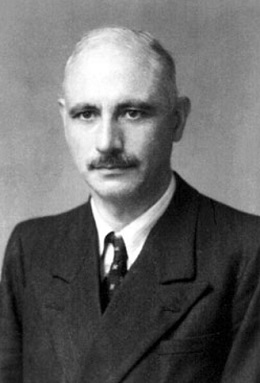 A native of Paris (born Nov. 27, 1898, in the City of Light), Stosskopf was of Alsatian heritage and spoke fluent German. He joined the French artillery in 1917 and received the French
