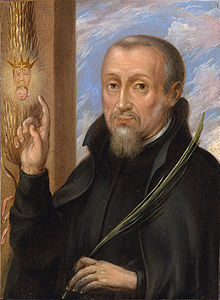
1432: Francesco Bussone da Carmagnola, scheming condottiero

Italian mercenary Francesco Bussone da Carmagnola was beheaded on this date in 1432.

A successful condottiero was defined by a mixture of battlefield success and cutthroat scheming, and it was his clumsiness with the latter that did in Carmagnola.

His name denotes his origin, from a town in the Piedmont where despite his low birth, his talents raised him to a command for Filippo Maria Visconti‘s brutally successful campaign* to reunite his father’s divided patrimony and make the Duchy of Milan a peninsular power.

So you might think that Carmagnola stood to reap ample rewards for fastening himself to a rising star. But Visconti, perhaps fearing the prospect of a subordinate accumulating enough power to mount a coup d’etat, used a niggardly hand with the emoluments that his general was anticipating — and this led Carmagnola to ditch the Duchy and make an arrangement with its rival, Venice.

The turncoat had the satisfaction of smashing his former Milanese mates at the 1427 Battle of Maclodio, a battle that helped to achieve for Serene Republic its largest-ever Italian territorial expanse.

But his failure to follow up the victory aggressively soon tested the patience of his new patrons. After a short interval of peace, Venice resumed war with Milan in 1431, and here Carmagnola dilated unacceptably (Italian link), failing to advance on Cremona and instead proposing to winter his army — in August.

The Venetian Council of Ten also caught wind that Carmagnola was maintaining a secret correspondence with Milan and exploring the prospect of changing teams yet again.

Determined to have done with the snake, it summoned him back to Venice under the pretense of convening a war council for the 1432 campaign season. He arrived to find that it was too late in the day to meet the Doge, but as he started for his gondola to retire one of the Venetian gentlemen who had been sent to meet him instead directed his steps away.

“That is not my way,” Carmagnola objected.

“Yes, yes, this is your right path,” the man insisted — and Bussone, beholding him gesturing to the yawning gate of the Piombi dungeon, could only exclaim, “I am lost!”


The arrest of Francesco Bussone da Carmagnola

He was beheaded as a traitor between the scenic columns of San Marco and San Todaro. His widow returned to Milan and eventually repatriated the late commander’s remains to his native soil.

* Carmagnola left a nasty legacy to the world’s architectural heritage during this time by collapsing the Trezzo sull’Adda Bridge, the widest-spanning single-arch bridge ever built before the industrial age.

On this day..

1685: John Nevison, speed demon

It might have been this date in 1685* that the famously speedy highwayman John Nevison (or William Nevison) was hauled to York’s gallows on the Knavesmire and launched into eternity.

The 1660s and 1670s were his time, when the ex-soldier Nevison made the coachmen of the Great North Road stand and their their passengers deliver from York to Huntingdon. “In all his pranks he was very favourable to the female sex, who generally gave him the character of a civil obliging robber,” the Newgate Calendar would later memorialize. “He was charitable also to the poor, relieving them out of the spoils which he took from them that could better spare it; and being a true Royalist, he never attempted anything against that party.”

Not all that much is really known of Nevison, but he earned his place in outlaw lore with a reputed 1676 escapade. After the pre-dawn robbery of a traveler in Kent, in the southeast of Britain, Nevison hopped on a rocket horse and spurred it north all the way to York. Google Maps makes that 350+ km trip a nearly four-hour drive today, by the A1. Nevison miraculously made it on horseback by sundown, then cleaned himself up and strolled out to the bowling green to lay a friendly, and alibi-establishing, wager with the Lord Mayor.

Unfortunately for Nevison, Harrison Ainsworth appropriated the legend of the bandit’s impossibly fast ride for a later outlaw, Dick Turpin — who in Ainsworth’s Rookwood rides his famous mare Black Bess to death in a wholly fictitious sprint from London to York.

To be completely fair to that fickle muse Clio, it has been postulated that Nevison’s own legend was appropriated from yet another highwayman, Samuel Nicks, which would account for the nickname “Swift Nick” or “Swiftnicks” won by this feat of horsemanship. Nicks and Nevison might be one and the same man, but they might very well be two different humans whose legends were already conflated before Ainsworth was even a twinkle in his father’s eye.** If there was a distinct “Swiftnicks”, Nevison has the considerable advantage over him for our purposes of having some identifiable biography and an identifiable hanging-date. But it is to this other fellow, Nicks, that Defoe attributed the gallop in his A Tour Thro’ the Whole Island of Great Britain, available online here:

it was about four a clock in the morning when a gentleman was robb’d by one Nicks on a bay mare, just on the declining part of the hill [Gad’s Hill, Kent -ed.], on the west-side, for he swore to the spot and to the man; Mr. Nicks who robb’d him, came away to Gravesend, immediately ferry’d over, and, as he said, was stopp’d by the difficulty of the boat, and of the passage, near an hour; which was a great discouragement to him, but was a kind of bait to his horse: From thence he rode cross the county of Essex, thro’ Tilbury, Homden, and Bilerecay to Chelmsford: Here he stopp’d about half an hour to refresh his horse, and gave him some balls; from thence to Braintre, Bocking, Wethersfield; then over the downs to Cambridge, and from thence keeping still the cross roads, he went by Fenny Stanton to Godmanchester, and Huntington, where he baited himself and his mare about an hour; and, as he said himself, slept about half an hour, then holding on the North Road, and keeping a full larger gallop most of the way, he came to York the same afternoon, put off his boots and riding doaths, and went dress’d as if he had been an inhabitant of the place, not a traveller, to the bowling-green, where, among other gentlemen, was the lord mayor of the city; he singling out his lordship, study’d to do something particular that the mayor might remember him by, and accordingly lays some odd bett with him concerning the bowls then running, which should cause the mayor to remember it the more particularly; and then takes occasion to ask his lordship what a clock it was; who, pulling out his watch, told him the hour, which was a quarter before, or a quarter after eight at night.

The public gallows, nicknamed “York Tyburn”, was torn down in the early 19th century. A worn stone labeled simply “Tyburn” today marks the former site of the fatal tree.

* May 4, 1685 is one of several execution dates suggested for Nevison; all appear to lack recourse to any definitive primary document. The Ballads and Songs of Yorkshire, Transcribed from Private Manuscripts, Rare Broadsides, and Scarce Publications is our source here; it attributes its dating to Macaulay, although I have not found it in the latter’s History of England. Other possibilities include May 8, or March 15, in either 1684 or 1685.

** This site suggests that Nicks might also be the same as, or conflated with, yet another highwayman, Captain Richard Dudley.

On this day..

1606: Henry Garnet, Gunpowder Plot confessor

On this date in 1606, the English Jesuit Henry Garnet was hanged, drawn and quartered in the churchyard of Old St. Paul’s Cathedral.

Garnet, “the prime scholar of Winchester College” as a gifted young student, left England to enter the Society of Jesus and study under Robert Bellarmine, a theologian so Catholic that he would later bring the hammer down on Galileo’s heliocentrism.

After eleven years in letters on the continent, the Society called Garnet to return to England in 1586 as the lead missionary to his native realm’s Catholic minority. It was a lonely burden for Garnet, especially after his opposite number Robert Southwell was arrested in 1592. (Southwell, too, went to the scaffold.) But Garnet carried it off as well as anyone. He remained free for nearly twenty years — creating an underground press and numerous illegal cells.

“Under his care the Jesuits in the English mission increased from one to forty, and that not a single letter of complaint, it is said, was sent to headquarters against him,” lauds the Catholic Encyclopedia.

Theologically, Garnet was noted for his defense of the doctrine of equivocation — that is (in the hostile reading of its Protestant interlocutors) of finding hair-splitting rationales for lying. It was an intellectual exercise of many centuries’ vintage, but for England’s beleaguered Catholics it was as urgent as life and death. Most specifically, this doctrine reckoned an oath insufficient to compel a truthful response to official inquiries as to the whereabouts and activities of fellow-Catholics who’d be liable with discovery to attain martyrdom. The liberal definition of “truth” to include an outright lie with a “secret meaning reserved in [one’s] mind” was obviously ripe for the scorn of persecutors for whom it was little but treason neatly clothed.

Knock, knock! Who’s there, in th’ other devil’s name?
Faith, here’s an equivocator that could swear in both
the scales against either scale, who committed
treason enough for God’s sake, yet could not
equivocate to heaven. O, come in, equivocator.

Macbeth (c. 1606), Act 2, Scene 3

Much of Garnet’s last weeks in custody ahead of his execution were spent in harrowing the doctrine of equivocation; indeed, this is even the very last exchange he had with doctors of the English church sent to accompany him.

One of those standing near him then asked him, “Whether he still held the same opinion as he had formerly expressed about equivocation, and whether he thought it lawful to equivocate at the point of death?” He refused to give an opinion at that time; and the Dean of St. Paul’s sharply inveighing against equivocation, and saying that seditious doctrine of that kind was the parent of all such impious treasons and designs as those for which he suffered, Garnet said, “that how equivocation was lawful, and when, he had shewn his mind elsewhere, and that he should, at any rate, use no equivocation now.”

There were nevertheless equivocations that Garnet would never countenance. His A Treatise of Christian Renunciation, compiling quotes from Church fathers detailing the things a good Catholic must be prepared to renounce for his faith, excoriated those who attended Anglican chuches. Their pretense, he said, was nothing but their own comfort.

Certaine private persons, who have wholly addicted them selves to make them Gods either of their belly and ease, or of the wicked mammon, setting God behind all things which may delight them … refuse also to beleeve that the do amisse …

Judas with a kisse dost thou betray me? amongst hereticks dost thou professe me? no other place to professe chastity, but in the bedd of a harlott?

Harried as they were, England’s Catholics greeted with anticipation the 1603 accession of King James: raised Protestant, but the son of the Catholic Mary, Queen of Scots. Garnet shared Catholics’ hope that James would ease off harassment of the Old Faith; he even authorized the betrayal of fellow-Catholics’ regicidal Bye Plot as a show of loyalty and to pre-empt a possible backlash. “Quiete et pacifice,” he begged.

But toleration was still not quickly forthcoming, and soon Catholics had reverted to “a stage of desperation.” James was only in his thirties: would the trials be neverending?

Garnet continued endeavouring to keep Catholics calm and give the new sovereign the political space necessary to relax persecution. But many of his flock soon tired of quiete et pacifice.

In 1605, there would be another try — one that is still remember, remembered to this day.

Here Garnet again gets into hot water with theological doctrine. Garnet caught indirect wind of Guy Fawkes’ terrorist plot — but he heard it kind-of-sort-of under the seal of the confessional: another priest who himself had heard the design under confession told it to Garnet in a more ambiguous circumstance.

Garnet’s excuses here might strike the reader as far too fine; certainly that is how his prosecutors viewed it. The circumstances of the plot’s revelation certainly appeared to give the priest enough leave to find a way to reveal it, especially since he knew about it for many months before that almost-fateful Fifth of November. Garnet seems to have wanted the resolution — or loathed to plant another Judas-kiss. Maybe he thought his exhortations could stop it without anyone winding up drawn on a hurdle. Maybe, after 19 furtive years knowing every morning that his next sleep might be in a dungeon, his heart of hearts wanted to see it to go ahead.

When the attempt to explosively decapitate the English state was discovered Garnet was hunted to ground; his last days of “liberty” were spent stuffed in a coffin-sized priest hole at Hindlip Hall before the “customs of nature which must of necessity be done” finally forced him to out into the sight of his captors.

His fate looks like a foregone conclusion in retrospect, but Garnet did fight it — for two months before his condemnation, and five more weeks after from trial until his execution during which he maneuvered to exculpate himself. (See Investigating Gunpowder Treason for an exploration of this.) Since Reformation English law of course did not recognize the seal of the confessional, the most charitable reading of Garnet’s own admissions start at misprision of treason. It is but a single step from there to the scaffold if one supposes his long silence shrouded any sort of approval of or aid to the plotters.

Garnet received the mercy of being hanged to death before he was cut down for the public butchery part of his sentence.

On this day..

1910: Mathias Muff, reproached by 15 orphans

Thanks to the outstanding Trove digitized records of Australian newspapers, we have this item from the Advertiser (Adelaide) published May 4, 1910, concerning an affair from two days previous on the other side of the globe.

The death penalty was barely in use in Switzerland at this point; Muff’s execution would be the fifth-last for common crimes in Swiss history.


LONDON, May 3.

Mathias Muff, who some time ago murdered four persons in the canton of Lucerne, was executed in Lucerne, the capital, yesterday, the guillotine being used.

This is the first execution which has taken place for many years in Switzerland, Lucerne being one of the cantons which have re-enacted the death penalty after its abolition. Muff, when urged to sign a petition to the President for the commutation of the death sentenced, refused, saying, “I cannot live to hear the voices of fifteen orphans reproaching me.”

There was some difficulty in obtaining a guillotine, there being none in existence in Switzerland, and the authorities were compelled to secure the loan of one from the French Government. In France there are but two official guillotines, and both are kept in Paris, but one is specially reserved for executions in the provinces. Neither of these could be spared, but one was obtained from the French colonies, which between them have nine.

The cost of the guillotines is said to be £250 each, but they are well made, for the two now in use in France were made in 1870 in the place of those burnt during the Commune and by all accounts they still work as well as when first tested on a bundle of straw.

On this day..

2013: Steven T. Smith

(Thanks to Meaghan Good of the Charley Project for the guest post. -ed.)

At 10:29 a.m. on this date in 2013, 46-year-old Steven T. Smith was executed in Lucasville, Ohio for the 1998 murder of his girlfriend’s daughter, Autumn Breeze Carter.


Killer and victim.

The Ohio Parole Board called him “the worst of the worst” and concluded, “It is hard to fathom a crime more repulsive or reprehensible in character.”

No wonder: Smith had literally raped six-month-old Autumn to death.

Summing up the case in January 2002, the Ohio Supreme Court wrote,

We find nothing about the nature and circumstances of the offense to be mitigating. For ten to thirty minutes, Smith brutally raped and murdered Autumn Carter while her mother was asleep in the apartment. The violent nature of the attack was demonstrated by the fact that Autumn’s hair was ripped out, her vagina and anus were seriously damaged, she was suffocated by the weight of Smith on her small body, and she suffered subarachnoid and retinal hemorrhages. The crime is nothing less than a horrific, senseless murder committed against a small, defenseless baby.

Little Autumn died on the night of September 29, 1998. Her mother, nineteen-year-old Kesha Frye, woke up at 3:30 a.m. to discover a naked and extremely drunk Smith placing the baby’s naked body on the bed. Autumn’s tiny pink sleeper was found under the living room coffee table, clumps of her hair were on top of the coffee table, and shreds of her diaper were scattered around the room. The rest of the diaper was in a trash can outside.

According to court documents, paramedics summoned by Frye’s frantic 911 call

observed injuries on [Autumn’s] head and bruising around her eyes. They began CPR, and Autumn was transported to the hospital. The emergency room doctor testified that upon her arrival, Autumn had no pulse and had suffered a retinal hemorrhage. In addition to her visible bruising, the physician also stated that Autumn had bruising around her rectum and that the opening of her vagina was ten times the normal size for a baby her age…

They spent an hour trying to revive her, but it was too late.

Smith denied knowing anything about it: “I didn’t do anything. I’m not sick like that.”

He would keep up his denial for the next fourteen and a half years.

The cause of death was determined to be compression asphyxia and blunt force trauma to the head. Medical experts would testify that Smith could have suffocated the child by accident about three to five minutes into the assault, which may have lasted up to half an hour. The prosecution, however, contended he had deliberately beaten Autumn to death.

(During the trial, the coroner used a baby CPR doll to demonstrate how Autumn was injured. The doll’s head and one its legs actually came off in the process. One is reminded of the “Brides in the Bath” case where, when they were demonstrating how the defendant might have drowned his victim, they nearly killed their model.)

Five witnesses testified on Smith’s behalf during the sentencing phase of his trial. Relatives stated he’d started drinking at age nine or ten and struggled with an alcohol problem his whole life. His biological father was absent and his first stepfather was a violent substance abuser, but his second stepfather was a “decent guy” and his grandmother was also a positive influence early in his life.

A clinicial psychologist who tested him placed his IQ in the low-average range and could find nothing wrong with him mentally other than alcoholism and chronic, mild depression. A corrections officer testified Smith rarely broke the rules in jail and was always respectful of the guards. Prior to his arrest for Autumn’s murder, Smith’s only criminal convictions had been for DUI.

The month before his death, when he appealed to the parole board for clemency, Steve Smith finally admitted his crime. He said he hadn’t meant to kill Autumn and offered the lame excuse that he was too drunk to realize what he was doing. His attorneys called it “a horrible accident.”

That Steve Smith was very, very drunk that night was never in doubt. Eight hours after the attack his blood alcohol level tested at .123, well above the legal limit. The police found ten beer cans in the trash bin with Autumn’s diaper. An expert who testified for the defense believed Smith’s blood alcohol level was somewhere between .36 and .60 at the time of Autumn’s murder — enough to kill most people, but Smith had developed a tolerance.

Smith’s last meal consisted of fried fish, pizza, chocolate ice cream and soda. He declined to make a final statement. He only stared at his daughter behind the glass. She and her cousin wept after Smith was pronounced dead; Autumn’s family cheered.

The various people involved in the case had different reactions to Smith’s execution.

Kesha Frye: “I’m glad he’s dead, and I hope he burns in hell.”

Patrick Hicks, Autumn’s grandfather: “Because of him, Autumn never had a chance to take her first step, she never had her first birthday or a first day at school. It’s just unfortunate that this man gets to die a peaceful death after the torture he put Autumn through.”

Brittney Smith, Steve’s 21-year-old daughter: “I know my dad’s innocent. I do not believe he did this, and you know, he raised all my cousins, my sister before I was even born, and he never did anything [sexual].”

Steve’s attorney: “He was well-behaved and sober while in prison, causing no problems in the institution and living each day with the guilt and grief caused by his alcohol-fueled crime. While some may trumpet his execution as appropriate revenge for his crime, Ohio is no safer having executed Steven Smith than had he lived the remained of his natural life in prison.”

Maybe so. But Ohio probably felt better for it.

On this day..

1963: Jorge del Carmen Valenzuela Torres, Chacal de Nahueltoro

On this date in 1963, Jorge del Carmen Valenzuela Torres — better known as Chacal de Nahueltoro — was shot at Chillan for murder.

Perhaps Chile’s most recognizable mass-murderer (in the nonpolitical category) the drink-addled young peasant one summer’s afternoon in 1960 took a scythe to his 38-year-old inamorata — and slaughtered all of her five children besides. (None of the children were Valenzuela’s own.)

The horrifying crime became grist for an acclaimed movie, but “the Jackal” was also noted for his dramatic personal turnaround during the two-plus years he spent awaiting his firing squad. In one of those paradoxes of the poor, Valenzuela was a man whose world cared for him only once he was condemned to death: he learned to read and write in prison and embraced spiritual counseling that made the fellow in front of the guns an altogether different creature from the homicidal brute.

While this rebirth made the execution itself controversial, it has also amazingly helped to elevate Valenzuela into the ranks of Latin America’s criminal folk saints. His tomb in San Carlos is crowded with votive offerings in thanksgiving for his intercessions.

(The actor who played Valenzuela in that film later collaborated on a 2005 documentary Bajo el Sur: Tras la Huella de un Asesino Milagroso — exploring the popular devotions that have arisen around his character’s real-life inspiration.)

For murderabilia that pairs with a juicy cut of meat, don’t miss out on Botalcura Winery’s blood-red Chacal de Nahueltoro merlot.

On this day..

2015: Eight drug smugglers in Indonesia

Moments after midnight today, Indonesia shot eight men for drug trafficking.


Coffins and grave markers for the condemned, readied prior to their executions.

Bitterly controversial in Australia and dominating headlines there at this hour, the execution’s most prominent victims were Andrew Chan and Myuran Sukumaran, condemned as ringleaders of an Australian drug-smuggling ring dubbed the Bali Nine. (The other seven members of the ring have prison sentences.)

Australia has reportedly withdrawn its ambassador to Indonesia to protest Jakarta’s turning a deaf ear to the many public and private appeals it has floated on behalf of its citizens.

The others shot early this morning were:

  • Nigerians Okwuduli Oyatanze, Martin Anderson, Raheem Agbaje Salami, and Silvester Obiekwe Nwolise
  • Brazilian Rodrigo Gularte
  • Indonesian Zainal Abidin

The party of eight was initially to be as many as ten. Frenchman Serge Atlaoui mounted a legal challenge that has for now delayed his execution; Filipina Mary Jane Veloso, who has claimed that she was completely unaware of the heroin hidden in her luggage when she arrived in Indonesia as an Overseas Filipina Worker, was spared just minutes before the execution at Manila’s urgent request when the woman alleged to have been her handler turned herself into police in the Philippines. But neither Atlaoui’s nor Veloso’s death sentence has actually been lifted, and both could eventually be shot to death

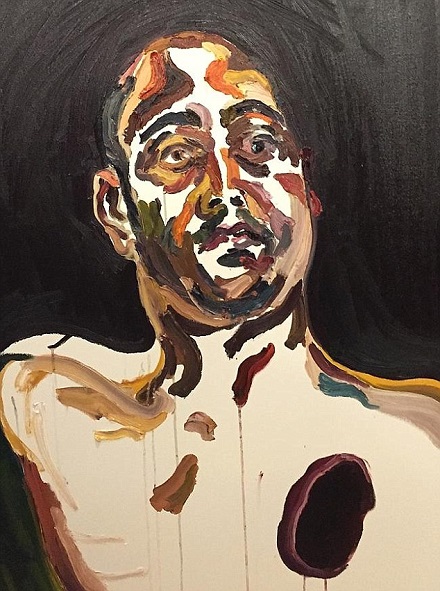
Chan’s and Sukumaran’s executions in particular are playing worldwide as a stark culture clash relative to a West that is more and more backing off the drug war,* especially given the widely advertised rehabilitation of Bali Nine duo. Chan found god; Sukumaran, a passion for painting.


Myuran Sukumaran’s ominous painting from just a few days ago: “Time is Ticking: Self-Portrait”

But one of the most self-evident readings of the affair is as a banal exercise in political expedience.

Indonesian President Joko Widodo, who hasn’t the firmest grasp on power in his country, has a surefire political winner in executing drug smugglers — plus a cherry on top for defying Australian meddling into the bargain.

Not that Widodo was ever likely to waver, but his southern neighbor’s great gnashing of teeth probably only strengthened his resolve to pull the trigger. If the intent of Indonesia’s death sentence is to scare prospective mules off crossing Indonesian soil, it was so much free advertising.

“This cannot be simply business as usual,” Australian Prime Minister Tony Abbott said — but both leaders know the score. Countries don’t undo statecraft for common criminals.

Feelings are sure to be raw for the immediate future, and matters might develop quickly for the still-ongoing sagas of Serge Atlaoui and Mary Jane Veloso. Live blogs at the Guardian have a fascinatingly wide spectrum of reaction (Twitter intervention by @AxlRose!) from the evening of the execution and its aftermath.

* What’s past is prologue.

On this day..

1634: Mikhail Borisovich Shein, for failing to take Smolensk

On this date in 1634, the Russian general Mikhail Borisovich Shein was executed on Red Square for losing to the Poles.

Shein (English Wikipedia entry | Russian) was an accomplished boyar officer who had made his bones during Russia’s Time of Troubles.

During the Time of Troubles — 15 war-torn years following the end of Ivan the Terrible‘s dynasty — the neighboring Polish-Lithuanian Commonwealth had eagerly exploited Russia’s chaos, invading Russia, backing an imposter who tried to claim the throne, and at last settling for tearing off a chunk of territory in war.

By the 1630s, Russia had her shit back together under the first Romanov tsar, and when the Polish king died in 1632 saw an opportunity to return stripe for stripe on its opportunistic neighbor.

This was the Smolensk War, so named because the recapture of that city was its primary objective. Shein, the respected elder military statesman who had lost Smolensk to a Polish siege twenty-odd years before, was just the man to lead the campaign.

The span of time tested by the 1632-1633 Russian siege was not merely that measured by the larder of Smolensk’s vastly outnumbered garrison — but that of Poland-Lithuania’s unwieldy succession process. Although the successor king was self-evident, the span required for his actual election left a six-month interregnum: nothing compared to the Time of Troubles, but perhaps enough for a frontier reversal.

But as it happened, Shein could not force Smolensk’s capitulation in 1633 and by the latter half of that year a superior Polish army was arriving. By October of 1633, a year after the Russians had begun hostilities, not only was the siege of Smolensk broken, but the Russian camp itself was encircled by the Poles. Having no prospect of a relief force such had just delivered his enemies, Shein could not hold out for even a single Friedman Unit and soon surrendered. He received liberal terms: the Russians had to abandon their artillery, but Shein’s army returned to Moscow unharmed, with its standards.


The Surrender of the Russian Garrison of Smolensk before Vladislaus IV Vasa of Poland, by an unknown Polish artist (c. 1634)

Having seen their jolly war of choice come to such a humilitating pass, the Moscow boyars received their defeated commander in a rage. A tribunal vengefully condemned Shein, his second-in-command Artemii Vasilevich Izmailov, and Izmailov’s son Vasili, to death for treason and incompetence in command.

(According to Nancy Kollmann, a German scholar present in Russia in 1634 recorded that the execution took the men by surprise, as they had been led to believe that they would receive a last-minute commutation.)

In even the most slightly longer term, the debacle proved to be only a minor strategic setback. Poland was unable to follow up its victory with any inroads on Russian soil. That June, the two belligerents came to a peace restoring the status quo ante bellum — and they managed to pass a whole generation before they fought again.

On this day..

1889: The first executions in French-occupied Tunis

TUNIS.

PARIS, April 28.

The first execution in Tunis since the French occupation took place yesterday. Three Kroumirs, Ali Ben Debbah, Mahomed Ben Salah, and Ali Ben Salah, who had assassinated two Kabyle merchants in order to rob them, were guillotined in the morning at the Saadoun Gate.


The Saadoun Gate circa 1880. (Via)

At half-past 4 o’clock, M. Herbault, the Procureur of the Republic, in presence of several officials, announced to the condemned men that their appeal for mercy had been rejected. They received the statement very quietly, although they protested, as they had previously done, that they were innocent. As the prison is at some distance from the place of execution, it was not till 25 minutes past 5 that the prison van, preceded and followed by a company of Zeuaves, reached the place of execution, where a large crowd had assembled. At half-past 5 the bodies were removed to the Sadiki Hospital.

In order to put down any attempt at disturbance a large number of soldiers were drawn up near the guillotine, but there was no occasion for their services. There were very few natives among those present at the execution. A fourth Kroumir, who was condemned to death for the same crime, was informed yesterday that his sentence had been commuted by the President of the Republic.

London Times, April 29 1889

On this day..

Feast Day of Popes Cletus and Marcellinus

Back before being pope meant jeweled slippers and your own guillotine, the bishopric of Rome — at least as chronicled in the early histories of the Church — was a virtual halfway house to a pagan executioner.

Granted, the very earliest pontiffs are mostly ciphers to posterity; little dependable information about most of them survives. We have sketchy documentation, conflated names, and traditions of legendary hagiography further to the glory of Christianity’s earliest fathers. They are almost universally ranked as both saints, and martyrs.

But is it really right that literally none of these heirs of St. Peter for three centuries reached leadership positions by dint of being venal political hustlers? Or that none just dropped dead of some inglorious disease before they could exalt their deaths in martyrdom?

Persecutions of Christianity were not, after all, literally continuous throughout this age; indeed, prominent as they are in our latter-day remembrance, instances where they turned deadly were likely rather few and far between. Roman governors had provinces to administer; not many of them viewed hunting down and killing otherwise law-abiding cultists as the most important thing to prioritize.

“Christians and pagans could live on very good terms with each other,” Victor Duruy writes in his History of Rome, and of the Roman People, from its Origin.

Asper declared openly that he was disinclined to prosecutions of that kind … Severus furnished them the reply which permitted him to discharge them … Candidus treated them as contentious persons, and sent them back to their towns with these words: “Go, and be at peace with your fellow-citizens.” “Unhappy men,” said another to them [i.e., to Christians seeking their own martyrdom], “if you are resolved to perish, are there not ropes or precipies enough for you?” and he drives them from his tribunal.

Little as we know of these men, it is a sure thing that, pre-Constantine, they did run some risk of life and limb to profess Christianity under the noses of Rome’s rulers. Even a period of toleration could turn ugly with the rise of a hostile emperor or some chance shift of the political winds; the first persecution, after all, is supposed to have been initiated by Nero as an expedient to deflect anger over the Great Fire of Rome. But despite this site‘s use of the martyrology, we can hardly take for granted that any early Christian of significance was put to a baroque death by bloodthirsty Romans.

April 26 is or was the shared feast date of two of these popes from Rome’s antiquity — both of them traditionally considered martyrs, but both now on the outs with Rome’s official chronicle. It’s a reminder that even the ancient past isn’t really past and that history, like religion, is not so much holy writ as an eternal process of becoming.

Pope Cletus was the third pope, and the second in a row after Peter’s direct successor Pope Linus to make you think of a cartoon character. One early chronology named Cletus and Anacletus (or Anencletus) as the third and fourth popes; it is generally understood now that these were merely two different names for one single man. In 1960 a distinct July 13 feast for “Saint Anacletus” was removed from the calendar, collapsing everything to April 26.

Still, basically nothing definite is known of Pope St. Cletus — including the occasion or circumstances of his death, which may well have been promoted to a martyrdom simply from reverence of Cletus’s Erdos numberChrist number of 3 or less. Cletus is said to have ordained 25 priests, and died in the year 88 or 92. He was ultimately removed from Catholicism’s liturgical calendar in 1969, though he still remains in the Roman Martyrology.

Near the opposite chronological end of Rome’s era of official intolerance we find Pope St. Marcellinus.

Marcellinus was the 29th pope, and had the tiara* when the Diocletian persecutions began in 303. While such information as survives about Marcellinus is also not very substantial, it is quite interesting.

When anti-Christian persecutions did crop up, those Christians who weren’t in active pursuit of martyrdom had a difficult choice to make: either apostasy, or punishment. Confronted in the breach with a demand to make the requisite obeisance to the gods of Rome, many ordinary Christians preferred the expedient burning a few sacrificial herbs to the prospect of, if not death, prison, torture, exile, harassment, property seizure, or whatever else was on offer for their sect at that moment. These were the lapsi — the lapsed ones.

Such episodes tended to create post-persecution friction between the go-along, get-along crowd on the one hand, and the purists who refused any such accommodation on the other. Could lapsi be re-admitted to the communion after renouncing their faith to please a Roman proconsul? (Broadly speaking, the official church did welcome lapsi back with some kind of penance and absolution.)

Pope Marcellinus is interesting because he too is said to have lapsed under the initial pressure of Diocletian’s persecution. The Liber Pontificalis, likely combining distinct traditions that were in circulation about Marcellinus, says that he burned incense to the Roman gods when it was demanded of him — and that only afterwards did he repent his weakness and confess Christianity unto martyrdom.

It is not at all certain that Marcellinus did apostatize, but it is clear that a story to that effect (disputed by ex-apostate St. Augustine, among others) was out there in late antiquity — and it’s a bit suspicious that Marcellinus’s name is omitted from some early lists of popes. (It’s possible he was being conflated with his successor, Marcellus: the opposite of what happened with Pope Cletus.) It’s also very uncertain that Marcellinus was in fact martyred; the Catholic encylopedia considers his “in all probability, a natural death” in 304. And it was probably not in April that this death occurred.

Given all those question marks, Marcellinus’s April 26 celebration was booted from the liturgical calendar in the same 1969 cleanup that fixed Pope Cletus.

* The papal tiara did not yet literally exist at this point, of course.

On this day..