On this date in 1876, a 19-year-old murderer was twice hanged in Dayton.

Lafcadio Hearn.
Attending John Murphy’s death was a young writer working the crime beat for the Cincinnati Commercial: Lafcadio Hearn.
This rootless Greek emigre, years and miles away yet from his best-remembered station as the Japanese folklorist better known as Koizumi Yakumo, produced for the next day’s edition a startling and evocative slice of Americana from an otherwise obscure hanging.
It also records the physical intrusion — not merely the psychological postulating — of the author himself, wandering the prison corridors in the dark, laying his hand (so it would seem) upon the condemned boy’s ebbing pulse.
“Gibbeted” ran in the August 26 Cincinnati Commercial:
GIBBETED.
EXECUTION OF A YOUTHFUL MURDERER.
SHOCKING TRAGEDY AT DAYTON.
A Broken Rope and a Double Hanging.
Sickening Scenes Behind the Scaffold-Screen.
The execution of James Murphy, yesterday afternoon, at Dayton, for the murder of Colonel William Dawson, in that city, on the night of August 31,1875, was an event, it must be said, which the people of Montgomery County had long looked forward to with no small degree of satisfaction. The murder was of itself peculiarly atrocious, from the fact that it was actually committed without a shadow of provocation. The victim was a worthy and popular citizen, and the feeling of the public in regard to the crime was sufficiently evinced in the fact that the city authorities, subsequent to the arrest of Murphy, were obliged to call out the militia that the claim of legal justice to deal with the criminal might be protected. Colonel Dawson, it may be remembered, was murdered apparently for no other reason than that he refused a drunken party permission to intrude upon the quiet enjoyments of a private wedding party. The Colonel was Superintendent of the Champion Plow Works, at Dayton, and the bridegroom being an employe of the company, the Colonel had, by request, assumed the management of the wedding ball. When Murphy was refused admittance, he induced one of his companions, Lewis Meyers, to entice the Colonel out of doors on the pretext of getting a drink; and soon after the invitation had been accepted. Murphy struck Dawson, and during the subsequent scuffle, suddenly plunged a long knife up to the halt in the Colonel’s left side. The victim of this cowardly assault lived but a few moments afterward, and died without being able to positively identify his assassin.
Circumstantial evidence, notwithstanding, clearly pointed to Murphy as the criminal, and to Meyers as his accomplice; the former being sentenced to death, and the latter, being convicted of manslaughter, to a term of two years in the State Penitentiary. Sentence was passed on the 28th of April, the jury having disagreed upon the first trial, in February, which necessitated a second.
The youth of the prisoner—he was only nineteen years of age—did not, strange as it may seem, excite any marked degree of sympathy for his miserable fate. He was a fair skinned, brown haired, beardless lad, with rather large features, a firm, vicious mouth; sullen, steady gray eyes, shadowed by a habitual frown; a rather bold forehead, half concealed by a mass of curly locks, brushed down, — a face, in short, that, notwithstanding its viciousness, was not devoid of a certain coarse regularity. His parents were hard-working Irish people, but his own features showed little evidence of Celtic blood.
Perhaps the dogged obstinacy of the prisoner in denying, almost to the last, his evident crime, had no little to do with the state of public feeling in regard to him. Moreover, he had long been notorious in the city as a worthless loafer and precocious ruffian, perpetually figuring in some street fight, drunken brawl or brutal act of violence. For a considerable period of time, previous to the murder of Colonel Dawson, he had been the boasted leader of a band of young roughs, from nineteen to twenty years of age, who were known in Dayton as the “chain-gang.”
The boy’s mother had died while he was yet young; but he did not lack a home, and the affection of an old father, and of brothers and sisters—the latter of whom he is said to have cruelly abused in fits of drunken passion. In this connection it of course be in order, religiously, to discourse upon the results of neglecting early admonitions; and, philosophically, upon the evidence that the unfortunate lad had inherited an evil disposition, whereof the tendencies were not to be counteracted by any number of admonitions. But the facts in the case, as they appeared to the writer, were simply that a poor, ignorant, passionate boy, with a fair, coarse face, had in the heat of drunken anger taken away the life of a fellow-being, and paid the penalty of his brief crime, by a hundred days of mental torture, and a hideous death.
Perhaps there are many readers of this article, who may have perused and shuddered at the famous tale of the “Iron Shroud.” You may remember that the victim, immured in the walls of a dungeon, lighted by seven windows, finds that each successive day of his imprisonment, one of the windows disappears forever. There are first seven, then six, then five, then four, then three, then two, then but one—dim and shadowy;—and then the night-black darkness that prefigures the formless gloom of the Shadow of Death. And through the thick darkness booms, hour after hour, the abysmal tones of a giant bell, announcing to the victim the incessant approach of the fearful midnight when the walls shall crush his bones to shapelessness. No one ever read that tale of the Castle of Tolfi without experiencing such horrors as make the flesh creep. Yet the agony therein depicted by a cunning writer is, after all, but a very slight exaggeration of the torture to which condemned criminals are periodically subjected in our prisons—not for seven days, forsooth, but for one hundred. This is the mercy of the law! – to compel the wretched victim to await the slow but inevitable approach of the grimmest and most ignominious of deaths for one hundred days. Fancy the ghastly mental computation of time which he must make to his own heart— “ninety-nine—ninety-eight—ninety-seven—ninety-six—ninety-five,” until at last the allotment of life is reduced to a miserable seven days, as frightfully speedy as those of the Man in the Iron Shroud. And then the black scaffold with the blacker mystery below the drop, the sea of curious and unsympathetic faces, the moment of supreme suspense after his eyes are veiled from the light of the world by the sable hood. But this pyramid of agony is not absolutely complete until apexed by the vision of a fragile rope, the sudden hush of horror, and the bitterest period of agony twice endured. It is cruel folly to assert that because the criminal be ignorant, uneducated, phlegmatic, unimaginative, he is incapable of acutely feeling the torture of hideous suspense. That was asserted, nevertheless, and frequently asserted yesterday, by spectators of the execution. We did not think so. The victim was young and strong, a warm-blooded, passionate boy, with just that coarse animal vitality which makes men cling most strongly to life, as a thing to be enjoyed in the mere fact of possession—he mere ability to hear, see, feel.
The incidents of the prisoner’s jail life during the last week—how he ate, drank, smoked, talked—might be very fully dwelt on as matters of strictly local interest, but may be briefly dismissed in these columns. There is, however, one story connected with that jail-life too strange and peculiar to be omitted. It seems that young Murphy learned to entertain a special affection for Tom Hellriggle, a Deputy Sheriff of Montgomery County, who had attended him kindly since his removal from the jail-room to a cell on the third floor, which opened in the rear of the scaffold. One night recently. Murphy said to Hellriggle, confidentially: “I knew I was going to be hanged, long ago. Do you know that I knew it before I was sentenced?”
“Why, how did you know that?” curiously asked the deputy.
Then the lad told him that during the intervals of the trials, one night between 12 and 1 o’clock, he heard the voice of a woman crying weirdly and wildly in the darkness, and so loudly that the sound filled all the jail-room, and that many of the men awoke and shuddered.
“You remember that, don’t you?” asked the lad.
“I do,” said the deputy; “and I also remember that there was no living woman in the jail-room that night.’
“So,” continued the boy, “they asked me if I heard it, and I said yes; but I pretended I did not know what it was. I believe I said no human being could cry so fearfully as that. But I did know what it was, Tom—I saw the woman.”
“Who was it?” asked Tom, earnestly.
“It was my mother. And I knew why she cried so strangely. She was crying for me.”
There are few men who enter the condemned cell and leave it for the gallows without having entertained during the interval a strong desire to take their own lives, and are for the most part deterred from so doing rather by the religious dread of a dim and vague Something after death, than by any physical fear. So it appears to have been with Murphy. When all hope, except the hope of pardon from the All-forgiving Father, was dead within him, and the Governor of Ohio had refused to grant a reprieve or commutation of sentence, then the prisoner listened much more calmly to the admonitions of Father Murphy, a fat, kindly, red-cheeked Irish priest, who took a heartfelt interest in the “spiritual welfare” of his namesake. He soon expressed repentance for his crime, and even agreed to confess all publically—an act, all the circumstances properly considered, which really evinced more manhood than the act of “dying game” with the secret.
Shortly afterward he handed to Deputy Sheriff Hellriggle a small, keen knife, which he had managed to conceal, despite all the vigilance of his guards “I would not take my own life, now,” he said, “though I were to be hung twice over.” Yet at the time the poor fellow probably had little idea that he would actually suffer the penalty of the law twice. It was evident, however, that he had frequently premeditated suicide, as in a further conversation with his guard he pointed out certain ingenious and novel modes of self-destruction which he had planned. That the criminal possessed no ordinary amount of nerve and self-control under the most trying circumstances, can not for a moment be questioned; nor can it be truthfully averred that his courage was merely the result of stolid phlegm and natural insensibility. None of the family, indeed, appear to inherit over-sensitive organizations, as a glance at the faces of the visitors to the condemned cell sufficiently satisfied us. When James’ oldest brother, a ruddily-featured young man of twenty, visited the prisoner day before yesterday, he mounted the black scaffold erected outside the cell-door, and, after a few humorous remarks, actually executed a double-shuffle dance upon the trap-door, until Sheriff Patton, hearing the noise, at once turned him out of the corridor. But James’ actions in jail, his last farewell to his relations, his sensitiveness in regard to certain reports afloat concerning his past career, and lastly, the very fact that his nerve did finally yield under a fearful and wholly unexpected pressure, all tend to show that his nature was by no means so brutally unfeeling as had been alleged.
The scaffold had been erected at the rear end of the central corridor of the jail hospital ward in the third story of the building, immediately without the cell-room in which the prisoner had been confined subsequent to his removal from the gloomier jail-room below, where he had heard the loud knocking of the carpenters’ hammers, and the hum of saws—sounds of which the grim significance was fully recognized by him without verbal interpretation. “Ah, they are putting up the gallows!” he said: “The noise don’t frighten me much, though.” To the reporter who visited the long, white corridors by lamp-light, with the tall, black-draped and ebon-armed apparition at its further end, these preparations for an execution under roof, instead of beneath the clear sky, and in the pure air, seemed somewhat strange and mysteriously horrible. It is scarcely necessary to describe the mechanism of the scaffold, further than to observe that the trap-door was closed by curved bolts, the outer ends of which were inserted into or withdrawn from shallow sockets in the framework at either side of the door, by foot-pressure upon a lever, which connected with the inner ends of the bolts, and worked them like the handles of huge pincers. The rope did, however, attract considerable attention from all who examined it previous to the execution. It seemed no thicker than a strong clothes-line, though actually three eighths of an inch, and appeared wholly unequal to the task for which it had been expressly manufactured from unbleached hemp. Yet Sheriff Gerard, of Putnam County, who had officiated at five executions, and was considered an authority upon such matters, had had it well tested with a keg of nails and other heavy weights, and believed it sufficiently strong. A bucket of water was suspended to it for some twenty-four hours, in order to remove its slight elasticity. But the bucket turned slowly around at intervals, and, under the constant pressure and motion, it seems that the rope became worn and weakened at the point of its insertion into the cross-beam. The drop-length was regulated to three feet and a half.
The unfortunate boy’ s mental impressions, yesterday morning, must assuredly have consisted of a strange and confused vision of solemn images and mysterious events. From the opening door of his cell he could plainly perceive every mechanical detail of the black gibbet, with its dismal hangings of sable muslin. Sisters of Charity, in dark robes; solemn-faced priests, with snowy Roman collars; Sheriffs and Deputy Sheriffs of austere countenance, which appeared momentarily to become yet more severe; policemen in full dress whispering in knots along the white corridor, a score of newspaper correspondents and reporters scattered through the crowd, writing and questioning and occasionally stealing peeps at the prisoner through the open door; calm-visaged physicians consulting together over open watches, as though eager to feel the last pulsations of the dying heart; undertakers, professional, cool and sad, gathered about a long, handsome black walnut coffin, adorned with silver crosses, which stood in the comer of one hospital room—these and other figures thronged the scene of death and disgrace while without a bright sun and a clear sky appeared for the last time to the wandering eyes of the condemned. He had early in the morning gone through the necessary formal preparations of being shaved, bathing, and putting on the neat suit of black cloth for which he had been measured a few days before. He had slept soundly all night; after having listened to the merry music of the city band, playing before the columned Court-house, but his sleep was probably consequent upon physical and mental exhaustion from haunting fear, rather than a natural and healthy slumber. He had risen at 7 o’clock, made a full confession in presence of the Sheriff, heard mass, listened to Father Murphy’s admonitions, ate a light breakfast, and smoked several cigars. Father Murphy’s admonitions, delivered in simple language, and a strong old-country brogue, seemed to us passive listeners somewhat peculiar, especially when he stated that the “flesh and blood of Jesus Christ, which not even the angels were worthy to eat,” would give strength to the poor lad “to meet his God at half-past 1 o’clock.” But if ever religious faith comforted the last moments of a young criminal, it did in this instance; and it was owing to the kindly but powerful efforts of the little priest that the youth made a full public confession of his crime. This is the confession:
MONTGOMERY COUNTY JAIL,
DAYTON, 0., August 24,1876.
To Warren Munger and Elihu Thompson, my Attorneys:
I will now say to you, and the public in general, that ever since you became my attorneys, at all times until to-day, I have denied that I struck and killed William Dawson, for which crime I am now under sentence of death. This statement I have made you in the mistaken hope and belief that it might do me some good, and I therefore put the blame on another person—Charles Tredtin. Now that all hope is gone, I have to say that you have done all you could for me as my attorneys, and that I feel satisfied with your efforts in my behalf. I am willing now to make public all I know about the murder of Colonel William Dawson. and I desire to make the statement, for I am now about to die, and do not want to die with a lie upon my lips. I do not wish Tredtin to be pointed out as long as he lives as the person who stabbed Colonel Dawson; and I desire also that justice may be done Meyers, who is entirely innocent, and was not connected in any way with the killing of Dawson. The following are the facts:
On the evening of the murder, Jim Alien, John Petty, George Petty, Charles Hooven and myself were at a dance on McClure street. From there I and Hooven and George Petty went down the street to Barlow’s Hall, where there was a dance going on, but of which we did not know until we arrived there. We went in and went up to the bar, and had a drink of beer. About fifteen minutes after this, Gerdes and I started up to get into the ball-room, but before we started Kline, Petty and Tredtin had gone up. When we got within two or three steps of the top of the first stairway I met Brunner there on duty as door-keeper, and he asked me if I had a pass. I told him no, and then he said, “You’ll have to go down stairs.” I said, “All right.” Then Dawson grabbed hold of me and said, “Get down, or I’ll throw you down.” I jerked away from him, laughed at him, and went down stairs. Then Gerdes and I went and saw the man who got married, and asked him if he couldn’t let me up stairs. He said, “Yes, of course I can;” and then I went up with Gerdes and the man who got married, and he told Brunner to let me in. We went into the ball-room, where Kline, Tredtin and Petty were standing. Then Kline said, “Where’s that big son of a bitch that was going to throw you down stairs?” and I said, “What do you want to know for?” He then said, “I want to know.” Then I said, “There he is; whatever you want to say to him, say it.” Then Kline said, “Oh, you big son of a bitch!” After about half an hour Petty and I went down stairs to the bar-room. Gerdes, Tredtin and Kline came down there, where I saw them, but whether they came together or not I don’t know. Kline, Petty and I drank beer together. We all five then went back up stairs. Dawson and Meyers went down stairs, into the bar-room; then we five followed on down, and went out at the side door on the street. We then began talking about the occurrence on the stairway between Dawson and myself, and some one said, but I don’t recollect who it was, “Damn him, we’ll get him before morning.” I don’t recollect that there was anything more said. Meyers was not with us then on the street, or at all in any way connected with us or our party that evening. All five of us then went back together up stairs, where we saw Meyers and Dawson. We staid there some five or ten minutes, when we saw Meyers and Dawson go down stairs and then we five followed after them, and saw them go out of the side door on to the street, and we followed them out. Kline said to me and Petty, near the comer of the side street and Fifth street, “You go down this side of the street and we’ll go down the other.” Petty and I followed after Meyers and Dawson, some distance behind them, while Kline. Gerdes and Tredtin went across to the north side of the street, and went down west on that side of Fifth street. We saw Meyers and Dawson try to get in at the big gate at Weidner’s, and Pearl street. When we came together Dawson sort of turned around, and I struck him with both fists in the breast; Petty struck Meyers, and Meyers caught hold of a post and prevented himself from falling into the gutter, and then straightened himself up and ran away eastward, and Petty started across the street as soon as Meyers ran. My strokes in Dawson’s breast staggered him, and he didn’t recover himself until after Meyers and Petty had left. About the time Dawson recovered himself, Kline and Tredtin run in and struck Dawson too. My passions were now aroused. I drew my knife out of my inside breast coat pocket and stabbed Colonel Dawson. I did it on the instant, and took no second thought about it. I do not remember of hearing Dawson say anything before or after I cut him. He may have said something, but I did not hear him. The purpose of our party of five in following Meyers and Dawson out was to lick them both. I saw Gerdes about the middle of the street coming towards us, but he didn’t get up to us. Which way Kline and Tredtin went I do not know. Dawson started east on Fifth street on a run. I was facing the east when I cut Dawson. After Dawson run I was alone on the sidewalk, when Frank came up and struck at me with his club. I dodged him and struck at him with my knife, but don’t know whether I cut his clothes or not. I then wheeled and started to run west, As I run he threw his club at me, and as I started to run across the street, I fell over the hitching-post in front of Weidner’s, and there I dropped my cap and knife. Frank fired at me with a pistol, and shot at me just as I fell. I got up and started to run across the street, and Frank fired a second time at me as I was about to enter the alley on the north side of Fifth street. I stood in the alley awhile, and then I went home to my father’s house, where I was afterward arrested by the police. Whisky and bad company have been the ruination of me, and the cause of all my bad luck. I had drank a good deal that night of beer and whisky.
This is a true and correct statement about the murder, and is all I wish to say about the matter.
JAMES MURPHY.
He also dictated a letter of thanks to Sheriff Patton. his deputies, and all who had been kind to him during his confinement. Sheriff Patton himself paid for the prisoner’s coffin, a very neat one.
At half-past one o’clock. Deputy Sheriff Freeman appeared at the door of the cell-room, which opened directly upon the ladder leading to the scaffold, and observed in a low, steady voice: “Time’s up, Jim; the Sheriff wants you.” The prisoner immediately responded, “All right; I am ready;” and walked steadily up the steps of the ladder, accompanied by Fathers Murphy and Carey. His arms had been pinioned at the elbows by a strong bandage of black calico. Probably he looked at that moment younger and handsomer than he had ever appeared before; and a hum of audible surprise at his appearance passed through the spectators. Accompanied by his confessor and Father Carey he walked steadily to the front of the platform; and after looking quietly and calmly upon the faces below, spoke in a deep, clear, bold voice, pausing between each sentence to receive some suggestion from the priest at his side.
“Gentlemen, I told a lie in the Court-house by saying Tredtin was guilty.”
“I think I am guilty”—with a determined nod of the head.
“I return thanks to Sheriff Patton, his deputies and all my friends.
“I forgive all my enemies and ask their forgiveness.
“If there is any one here who has any hard feelings toward me, I ask their forgiveness.
“This is my last request.
“Gentlemen, I want all young men to take warning by me. Drink and bad company brought me here to-day.
“And I ask the forgiveness of Mrs. Dawson and her children, whom I injured in passion, when I did not know what I was doing.
“I believe Jesus Christ will save me.”
Sheriff Patton then read in a quiet, steady voice, the death-warrant. It was heavily bordered in black, and bore a great sable seal. “It is my solemn duty,” said the Sheriff, “to execute the sentence passed upon you by the Court:
“State of Ohio, Montgomery County—To William Patton, Sheriff: Whereas, at the January Term, 1876, of the Court of Common Pleas, within and for the County of Montgomery and State of Ohio, to-wit, on the 28th day of April, 1876, upon a full and impartial trial, one James Murphy, now in your custody, was found guilty of deliberate and premeditated murder of one William Dawson, in manner and form as found in a true bill of indictment by the grand jury on the 30th day of October, 1875; and whereas the Court aforesaid, at the term aforesaid, to-wit: on the 12th day of May, 1876, upon the conviction aforesaid, ordered, adjudged and sentenced the said James Murphy to be imprisoned in the County jail until the 25th day of August, 1876, and that on that day, between the hours of 10
A.M. and 4 P.M., he be taken from said jail, and hanged by the neck until he be dead, this is therefore to command that you keep the said James Murphy in safe and secure custody until said day, August 25,1876; and that on said day, between said hours, you take said James Murphy, and in the place and manner provided by law, hang him by the neck until he be dead. Of this warrant, and all your proceedings thereon, you shall make due return forthwith thereafter.
“Witness: JOHN S. ROBERTSON, Clerk of said Court.
“And the seal thereof of the city of Dayton, in said county, this 20th day of June, 1876.
“[Seal Court of Common Pleas]”
“JOHN S. ROBERTSON, Clerk.”
In the meantime Deputy Sheriff Freeman adjusted the thin noose about the prisoner’s neck, and pinioned his lower limbs. “James Murphy, good-bye, and may God bless you!” observed Patton in a whisper, handing the black cap to a deputy. At this moment the representative of the Commercial succeeded in obtaining admittance to the little audience of physicians in rear of the scaffold; and took up his position immediately to the left of the trap-door. The next instant the Sheriff pressed the lever with his foot, the drop opened as though in electric response, the thin rope gave way at the crossbeam above, and the body of the prisoner fell downward and backward on the floor of the corridor, behind the scaffold screen. “My God. My God!” cried Freeman, with a subdued scream; “give me that other rope, quick.” It had been laid away for use “in case the first rope should break,” we were told.
The poor young criminal had fallen on his back, apparently unconscious, with the broken rope around his neck, and the black cap vailing his eyes. The reporter knelt beside him and felt his pulse. It was beating slowly and regularly. Probably the miserable boy thought then, if he could think at all, that he was really dead—dead in darkness, for his eyes were vailed—dead and blind to this world, but about to open his eyes upon another. The awful hush immediately following his fall might have strengthened this dim idea. But then came gasps, and choked sobs from the spectators; the hurrying of feet, and the horrified voice of Deputy Freeman calling, “For God’s sake, get me that other rope, quick!” Then a pitiful groan came from beneath the black cap.
“My God! Oh, my God!”
“Why, I ain’t dead—I ain’t dead!”
“Are you hurt, my child?” inquired Father Murphy.
“No, father, I’m not dead; I’m not hurt. What are they going to do with me?”
No one had the heart to tell him, lying there blind and helpless and ignorant even of what had occurred. The reporter, who still kept his hand on the boy’s wrist, suddenly felt the pulsation quicken horribly, the rapid beating of intense fear; the youth’s whole body trembled violently.
“His pulse is one hundred and twenty,” whispered a physician.
“What’s the good of leaving me here in this misery?” cried the lad. “Take me out of this, I tell you.”
In the meantime they had procured the other rope—a double thin rope with two nooses—and fastened it strongly over the crossbeam. The prisoner had fallen through the drop precisely at 1:44 1/2 P.M.; the second noose was ready within four minutes later. Then the deputies descended from the platform and lifted the prostrate body up.
“Don’t carry me,” groaned the poor fellow, “I can walk—let me walk.”
But they carried him up again. Father Murphy supporting his head The unfortunate wanted to see the light once more, to get one little glimpse at the sun the narrow world within the corridor, and the faces before the scaffold. They took off his ghastly mask while the noose was being readjusted. His face was livid his limbs shook with terror, and he suddenly seized Deputy Freeman desperately by the coat, saying in a husky whisper, “What are you going to do with me?” They tried to unfasten his hand, but it was the clutch of death-fear. Then the little Irish priest whispered firmly in his ear, “Let go, my son; let go, like a man – be a man – die like a man.” And he let go. But they had to support him at arm’s length while the Sheriff pressed the trap-lever—six and one-half minutes after the first fall It was humanely rapid work then.
The body fell heavily, with a jerk, turned about once, rocked backward and forward, and became almost still. From the corridor only the head was visible—turned from the audience. Father Murphy sprinkled holy water upon the victim. The jugular veins became enlarged, and the neck visibly swelled below the black cap. At this time the pulse was beating steadily at 100; the wrist felt hot and moist, and we noticed the hand below it tightly clutched a little brass crucifix placed there by the priest at the last moment. Gradually the pulse became fainter’ Five minutes later, Dr. Crum, the jail physician, holding the right wrist announced it at eighty-four. In ten minutes from the moment of the drop it sunk to sixty. In sixteen minutes the heart only fluttered, and the pulse became imperceptible. In seventeen minutes Dr. Crum, after a stethoscopic examination, made the official announcement of death.
The body was at once cut down by Sheriff Patton, and deposited in the handsome coffin designed for it. Half an hour later we returned to the jail, and examined the dead face. It was perfectly still, as the face of a sleeper, calm and undisfigured. It was perhaps slightly swollen, but quite natural, and betrayed no evidence of pain. The rope had cut deeply into the flesh of the neck, and the very texture of the hemp was redly imprinted on the skin. A medical examination showed the neck to have been broken.
On this day..
- 1783: John Grinslade and John Cunningham
- Feast Day of St. Genesius
- 1854: Willis Washam, "I never done it, though, boys"
- 1945: Seven German POWs
- 1743: James Hunt and Thomas Collins, Pepper-Alley sodomists
- 1792: Barnabé Farmian Durosoy, royalist journalist
- 1944: Durga Malla
- 1916: Benjamin De Fehr, fragging driver
- 897: Pope Stephen VII, Cadaver Synod convener
- 1936: Grigory Zinoviev and Lev Kamenev, Old Bolsheviks
- 1972: Vassilis Lymberis, the last executed in Greece
- 1945: John Birch, Society man

 A paranoid schizophrenic and career criminal, Scott entered an East Cleveland deli in May 1983, ordered bologna and crackers, and then shot the 74-year-old proprietess at point-blank range after she served him. Then he went for the restaurant brace by gunning down a security guard at another restaurant. (That death sentence was eventually reversed; technically, Scott died for the first murder only.)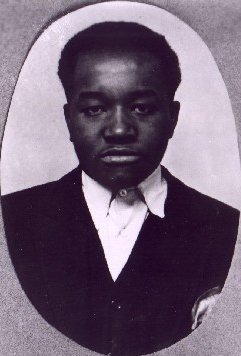
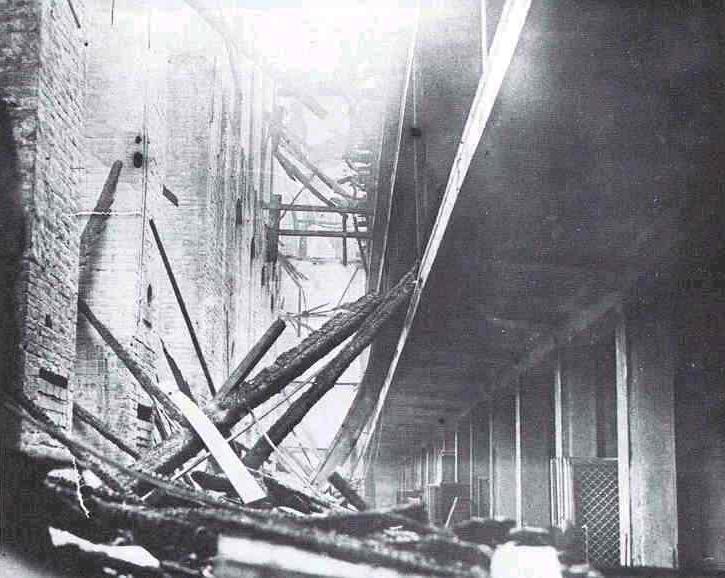

 Ward makes his notorious entry in the annals of Ohio crime by killing his wife after which, in the words of a wire story, he “sits up nights, with his door locked, cuts her into small pieces, and burns up her remains in the stove. This process occupied several days, in which time he drew largely on the shops around for shavings, and the unsavory scent went forth from the chimney, and filled the nostrils of those who happened to be in that vicinity.”
 Originally an Atlantic coast peoples — “Manhattan” is a Delaware word, although
 Garner had burglarized the Cincinnati, Ohio apartment of Addie F. Mack on January 26, 1992, after he stole her purse and keys while she was being treated in a hospital emergency room.
 Say this for Barton: the experience of failed marriages had not jaded him on the institution. When his fourth wife, Kimbirli Jo, proposed to leave him, he was distraught enough to shoot her dead in a fit of passion, and then turn the gun on himself, too. “I couldn’t stand the thought of living without her,” he
  But the evidence of the
