1758: William Page, forgotten highwayman

This date in 1758 marked the hanging of a somewhat more down-market highwayman than we have seen in these parts — the son of a farmer whose scrapes on the lam and gift for evading justice might have served for the day’s gallows-foot mongers, but left little worth posterity’s time.

We’ll bypass the folklorish purported early events of Page’s life — watery graves narrowly survived, further to the proverb that he who is born to be hanged shall never be drowned — to find him a young man bereft, like so many such, of station or direction until a short stint as a livery servant delivers him to a new career:

[Page’s] master having been robbed on his way to town, he formed a notion that highway robbery was an easy and profitable mode of living, and determined that so soon as he should have the means of starting in the profession he would become a “gentleman of the road.”

Page applied a bit of ungentlemanly industry to his apprenticed profession, which seem to have profited his longevity at the expense of his legend.

[H]e had drawn, from his own observation and for his private use, a most curious map of the roads twenty miles round London, and, driving in a phaeton and pair, was not suspected for a highwayman.

In his excursions for robbery he used to dress in a laced or embroidered frock, and wear his hair tied behind; but when at a distance from London he would turn into some unfrequented place and, having disguised himself in other clothes, with a grizzled or black wig, and saddled one of his horses, he would ride to the main road and commit a robbery. This done, he would hasten back to the carriage, resume his former dress, and drive to town again.

Meanwhile, he robbed, gambled it away, made love, was taken by his paramour, revenged himself by more robbery, and so forth.

Page’s habit of going about in disguise helped him dodge several capital charges on account of the difficulty of identifying him. But, you know — ever thus with deadbeats (at least in these pages): one finally stuck, and Page expiated his unusual career in the usual way at Maidstone.

Part of the Themed Set: Selections from the Newgate Calendar.

On this day..

1722: Arundel Cooke and John Woodburne, despite a novel defense

On this date in 1722, Arundel Cooke and John Woodburne were hanged at Bury St. Edmunds, curiously becoming the first victims [edit: or maybe not] of a law of unintended consequences.

This duo’s path to the gallows begins years before their births, when Stuart Restoration parliamentarian John Coventry trod on the royal toes and was in consequence beaten up by some of Monmouth‘s goons.

Incensed, parliament passed the Coventry Act.

By this statute it is enacted that if any person shall of malice aforethought, and by laying in wait, unlawfully cut or disable the tongue, put out an eye, slit the nose, cut off the nose or lip, or cut off or disable any limb or member of any other person, with intent to maim or disfigure him, such person, his counsellors, aiders and abettors, shall be guilty of felony, without benefit of clergy.

“Previous to the passing,” claims The Newgate Calendar, “it was customary for revengeful men to waylay another and cut and maim him, so that though he did not die of such wounds he might remain a cripple during the remainder of life, and such case was not then a capital offence. It was also a dangerous practice resorted to by thieves, who would often cut the sinews of men’s legs, called ham-stringing, in order to prevent their escape from being robbed.”

Sounds like an interesting time. One may well wonder how very customary this practice was, with the half-century lapse before the law found its first prey.

Cooke and Woodburne, for that matter, did not commit the sort of crime that long-ago parliament had had in mind.

Cooke, a well-off barrister, desired to secure for himself the sizable estate to which he was married, and hired working stiff John Woodburne to bump off his brother-in-law, on Christmas evening no less. The would-be assassin jumped him in a churchyard and

knocked down the unhappy man, and cut and maimed him in a terrible manner, in which he was abetted by the counsellor [Cooke].

Imagining they had dispatched him, Mr Cooke rewarded Woodburne with a few shillings and instantly went home; but he had not arrived more than a quarter of an hour before [the victim] knocked at the door, and entered, covered with wounds, and almost dead through loss of blood. He was unable to speak, but by his looks seemed to accuse Cooke with the intended murder, and was then put to bed and his wounds dressed by a surgeon. At the end of about a week he was so much mended that he was removed to his own house.

The perps were easily discovered, and having maimed the intended victim, appeared to fall within the compass of the Coventry Act.

But had they really committed a hanging offense? The defendant put his professional legal training to use.

[Cooke] urged that judgment could not pass on the verdict, because the Act of Parliament simply mentions an intention to maim or deface, whereas he was firmly resolved to have committed murder.

That’s a defense you don’t hear every day. Evidently, the court wanted to keep it that way.

Lord Chief Justice King, who presided on this occasion, declared he could not admit the force of Mr Cooke’s plea, consistent with his own oath as a judge — “For,” said he, “it would establish a principle in the law inconsistent with the first dictates of natural reason, as the greatest villain might, when convicted of a smaller offence, plead that the judgment must be arrested because he intended to commit a greater. In the present instance judgment cannot be arrested, as the intention is naturally implied when the crime is actually committed.”

Cooke’s university education and oleaginous lawyering did, however, enable him to make a successful request to be hanged before dawn on his scheduled day of execution, so as not to be exposed to the rude opprobrium of the commoners. John Woodburne (whether due to class position or the value he put on his last hours of life, the text does not inform us) was not extended the same courtesy, and swung later that day in full public view.

Part of the Themed Set: Selections from the Newgate Calendar.

On this day..

1719: Nicholas Horner, a minister’s son

On this date in 1719, Nicholas Horner was hanged for his highwayman career.

Actually, he was lucky to have made it to his thirties, having dodged the noose thanks to the old man after his first condemnation.

THIS unhappy wretch was the younger son of the minister of Honiton, in Devonshire, and was a very wild untoward child even from infancy. However, his indulgent father, in order to provide for him, bestowed as much learning upon him as qualified him to be clerk to an attorney … but he soon falling into extravagant company, and addicting himself very much to drunkenness and whoredom, ran away from his master before he had served him three years, and betook himself to the highway in order to support himself in the pursuit of those vices. He had such ill luck, nevertheless, in his new profession, as to be taken in the very first robbery he attempted to commit, and accordingly … brought to trial and condemned. However, his father made such interest for him at Court that Queen Anne, who was always known to have a great veneration for the clergy, in consideration of his father’s being one of that order, was prevailed upon to grant him a pardon, upon condition of his being transported out of her Majesty’s dominions, and not settling in any part of Europe for the term of seven years, within six months after his going out of jail.

The Newgate text then indulges a picturesque excursion to the hinterlands, with Horner shipped to India and his English wife being carried off by the Hindoos, then obliged to undergo self-immolation when her Indian husband died.

We rejoin Horner having returned home to find his parents dead. He quickly blew his inheritance and “had again recourse to the highway.”

A slow-moving highway, since his stickup schtick took some time to unfold.

One day, being upon his rambles in quest of prey, and coming up with a rich farmer — “Well overtaken, friend,” said Horner; “methinks you look melancholy: pray what may be your affliction? If you are under any misfortunes by crosses and losses in the world, perhaps it may be in my power to relieve you.” The farmer very frankly replied: “Ah! dear sir, were I to say that I have had any losses in the world, I should be telling a great lie; for I have been a thriving man all my lifetime, and should want for nothing had I but content. But indeed I have crosses enough, through a damned scolding wife at home … Wherefore, could any man tell me a remedy that would cure it, I have a hundred pounds about me in gold and silver which I would freely give him with all my heart for so great a benefit as I should receive by taming this confounded shrew.”

At the mention of the agreeable name of a hundred pounds Horner pricked up both his ears and answered: “Sir, I will first tell you the ingredients which enter into the composition of a scold, and the cause of a distemper being truly known, ’twill be the more easy to complete the cure. You must understand, then, that Nature, in making an arrant scold, first took of the tongues and galls of bulls, bears, wolves, magpies, parrots, cuckoos and nightingales, each a like number; the tongues and tails of vipers, adders, snails and lizards, six apiece; aurum fulminans, aqua fortis and gunpowder, of each one pound; the clappers of seventeen bells and the pestles of thirty apothecaries’ mortars. These being all mixed together, she calcined them in Mount Strombolo, and dissolved the ashes in water taken just under London Bridge at three-quarters’ flood; she then filtrated the whole through the leaves of Calepine’s Dictionary, to render the operation more verbose, after which she distilled it a second time through a speaking trumpet, and closed up the remaining spirits in the mouth of a cannon.

“Then she opened the graves of all newly deceased pettifoggers, mountebanks, barbers, coffee-men, newsmongers and fishwives from Billingsgate, and with the skin of their tongues made a bladder, which she covered over drum-heads, and filled with storms, tempests, whirlwinds, thunder and lightning; and in the last place, to make the whole composition the more churlish, she cut a vein under the tongue of the dog-star, extracting from thence a pound of the most choleric blood, and then, sublimating the spirits, she mixed them up with the foam of a mad dog, and putting all together in the fore-mentioned bladder stitched them up therein with the nerves of Socrates’ wife.”

“A damned compound indeed this is,” rejoined the farmer. “Surely it must be impossible at this rate for any man to tame a scold.” “Not at all,” continued Horner; “for when she first begins to be in her fits, which you may perceive by the bending of her brows, then apply to her a plaster of good words; after that give her a wheedling potion, and if that will not do, take a birch rod and apply the same with a strong arm from shoulder to flank, according to art; that will infallibly complete the cure.” The farmer, being very well pleased with the prescription, not only gave Horner many thanks, but a good treat at the next inn they came to. Afterwards they rode on together again, and when they came to a convenient place, said Horner: “Will you be pleased to pay me now, sir, for the good advice I have given you?” “I thought, sir,” answered the farmer, “that the treat I gave you in return was sufficient satisfaction.” “No, sir,” quoth Horner, “you promised a hundred pounds, and, d–n me, sir,” continued he, presenting a pistol to his breast, “deliver your bag this instant, or you are a dead man.” At this rough compliment the farmer delivered it to him; but not without a hearty curse or two, and swearing withal that his wife should pay dearly for it the first time he tried the experiment of the birch rod upon her.

Evidently some kind-hearted fellow-bandit, or a target with appointments to keep, or something, helped tighten up Horner’s delivery.

Not long after this exploit Horner met with a gentleman upon Hounslow Heath, whom he saluted with the terrifying words: “Stand and deliver.”

(whew.)

Whereupon the person assaulted gave him what money he had about him, amounting to about six guineas, and said to him: “Truly, sir, you love money better than I do, to venture your neck for it.” “I only follow the general way of the world, sir,” quoth Horner, which now prefers money before either friends or honesty, yea, some before the salvation of their souls; for it is the love of gold that makes an unjust judge take a bribe; a corrupt lawyer plead a wrong cause in defiance of truth and justice; a physician kill a man whom he pretends to cure, without fear of hanging; a surgeon keep a patient long in hand, by laying on one plaster to heal, and two to draw his wound. ‘Tis gold that makes the tradesman tell every day a thousand lies behind the counter, in putting off his bad wares; ’tis that makes the butcher blow his veal, the tailor covet so much cabbage, the miller take toll twice, the baker wear a wooden cravat, and the shoemaker stretch his leather as he does his conscience. In short, ’tis that makes gentlemen of the pad, as I am, wear a Tyburn tippet, or old Storey’s cap, on some country gallows, which all of our noble profession value no more than you, sir, do the losing of this small trifle of six guineas.”

Social criticism of this sort is often put into the mouths of the Newgate Calendar’s evildoers, and in particular its gentleman robbers; note the very close parallel of this last critique to that supposedly uttered by James Withrington.

It is, in fact, essential to the highwayman archetype, and an identity real-life highwaymen intentionally played to — the gentleman thief (mirrored by contemporaries in the Golden Age of Piracy), who here opposes, and there merely parallels, the ascendant order of capitalism.

The complexity of 18th century England’s relationship to the highwayman, filtered through a blossoming mass media, has much exercised later historians: where does a pattern of speech like this fit in its milieu? Can one find in a highwayman’s travesty of bourgeois values, with Linebaugh, an expression of class resistance, or is he merely a failed satirist? Does he truly oppose — or does the futile romance of the road waste genuine opposition on escapism?*

The qualities of resistance, satire and escapism were well-known to the 18th century. That century’s smash theatrical hit, The Beggar’s Opera, staged the noble rogue’s critique to packed houses, and to the dismay of the moralistic element.

Since laws were made for every degree,
To curb vice in others, as well as me,
I wonder we han’t better company,
Upon Tyburn Tree!
But gold from the law can take out the sting;
And if rich men like us were to swing,
‘Twould thin the land, such numbers to string
Upon Tyburn Tree!

Decades later, highwaymen like Paul Lewis were still humming this tune en route to the gallows and self-consciously playing “Macheath”.

Nicholas Horner was hanged before The Beggar’s Opera debuted, but he — either the man or the character — had more sharp words for another keystone of propriety, holy wedlock. Whether this is the voice of the robber or his interlocutor, we may venture (given the shrew-taming digression above), that it’s someone whose domicile was less than blissful.

Horner overtook, beyond Maidenhead Thicket, a young man and a young woman who were going to be married at Henley-upon-Thames, with a couple of bridesmen and bridesmaids.

These he presently attacked … [and] demanded also the wedding-ring, for which the intended bridegroom entreated him yet more earnestly than for his money; but Horner being resolutely bent upon having it, they delivered it to him; whereupon he said: “You foolish young devils, do you know what you are going about? Are you voluntarily going to precipitate yourselves into inevitable ruin and destruction, by running your heads into the matrimonial noose with your eyes open? Do you know it is an apprenticeship for life, and a hard one too? You had better be ruled by me, and take one another’s words; and if you do, you’ll find in taking my counsel that it is the best day’s work you ever did since the hour of your birth.”

Ah, for the days when intercity transit entailed the omnipresent prospect of a gentlemanly robbery.

Let’s conclude on a light note — since we know the end of the story, after all — and picture whether this escaped mugging constituted news-you-can-use for broadsheet readers of a thespian bent.

Not long after this exploit a lady of distinction, being alone in the stage-coach … was informed by the coachman … that if her ladyship had any things of value about her, it would be her best way to secure them as well as she could, for he saw several suspicious fellows scouting up and down the heath … [T]he lady put her gold watch, a purse of guineas and a very fine suit of laced head-cloths under her seat. This done she dishevelled her hair in a very uncouth manner all over her head and shoulders, by which time Horner had ridden up to her, and presenting a pistol into the coach demanded her money.

Hereupon the lady … [acted] the part of a lunatic, which she did to the life, for opening the coach door and leaping out, and taking Horner by one of his legs, she shrieked out in a most piteous and lamentable shrill voice: “Ah! dear Cousin Tom, I am glad to see you. I hope you will now rescue me from this rogue of a coachman, who is carrying me, by that villain my husband’s order, to Bedlam for a madwoman.” “D— me,” replied Horner, “I am none of your cousin; I don’t know you. I believe you are mad indeed, so Bedlam is the fittest place for you.” “Ah! Cousin Tom,” said the lady again, “but I will go along with you; I won’t go to Bedlam.” She then clung close to Horner and his horse, and counterfeited lunacy with such dexterity that he really thought it natural, and asked the coachman: “Do you know this mad b—h? “Yes,” replied the coachman, “I know the lady very well she is sadly distracted, for she has torn her head-cloths all to pieces and thrown them away as we came along; and I am now going with her by her husband’s orders to London, to put her into a madhouse, where she may be cured; but not into Bedlam, as she supposes.” “E’en take her then along with you to the devil, if you will,” said Horner in a passion, “for I thought to have met with a good purchase, and I find now there is nothing to be got of this mad toad.” So he set spurs to his horse and rode away as fast as he could, for fear of being plagued any more with her, for she seemed mighty fond of her cousin, and ran a good way after him; but after he was gone out of sight she was better pleased with his absence than his company, and got safe to London.

* The issues at stake, and the literature on them, are explored at length in Andrea McKenzie’s “The Real Macheath: Social Satire, Appropriation, and Eighteenth-Century Criminal Biography,” Huntington Library Quarterly December 2006, Vol. 69, No. 4, Pages 581–605.

Part of the Themed Set: Selections from the Newgate Calendar.

On this day..

1781: John Donellan, Esq.

On this date in 1781, John Donellan was hanged for murdering his brother-in-law to secure an inheritance.

JOHN DONELLAN had been a captain in the army, and was the son of Colonel Donellan. He certainly distinguished himself as a good soldier, for not only had he been much wounded in the service, but, if his own account may be credited, he was singularly instrumental in the taking of Mazulapatam. … In June, 1777, he married Miss Boughton; and on Friday, 30th of March, 1781, he was tried at the assizes at Warwick for the wilful murder of Sir Theodosius Edward Allesley Boughton, Bart., his brother-in-law.

… Sir Theodosius was twenty years old on the 3rd of August past. On his coming of age he would have been entitled to above two thousand pounds a year, and in the event of his dying a minor the greater part of his fortune was to descend to his sister, the wife of Mr Donellan. It was known in the family on the evening of Tuesday, the 26th that Sir Theodosius was to take his physic the next morning. … As he was taking it he observed that it smelled and tasted very nauseous; upon which [his mother, Lady Boughton] said: “I think it smells very strongly like bitter almonds.” He then remarked that he thought he should not be able to keep the medicine upon his stomach.

Here a bottle was delivered to Lady Boughton containing the genuine draught, which she was desired to smell, and inform the Court whether it smelled like the medicine Sir Theodosius took. She answered in the negative. She was then desired to smell another containing the draught, with the addition of laurel-water, which she said had a smell very much like that of the medicine she gave to Sir Theodosius. … Two minutes after Sir Theodosius had taken the draught he struggled very much. It appeared to her as if it was to keep the draught down. He made a prodigious rattling in his stomach, and guggling …

She saw Mr Donellan less than five minutes after. … he asked her where the physic bottle was; on which she showed him two draughts; when he took up one of the bottles and said, “Is this it?” she answered, “Yes.” He then rinsed it, and emptied it into some dirty water that was in a washhand-basin; and on his doing so she said: “What are you at? You should not meddle with the bottles.” Upon that he snatched up the other bottle and rinsed it …

We omit the forensic testimony presented to confirm that the victim was indeed poisoned.

As well as the latter-day observer can tell, we have a guilty — and fairly clumsy — poisoner after his brother-in-law’s boodle.

We’ll never know the answer, but the Newgate author hints at other family members who might have had the same means, motive and opportunity … like Donellan’s wife:

[Lady Boughton] soon afterwards went into the parlour, where she found Mr and Mrs Donellan; and the former told his wife that her mother had been pleased to take notice of his washing the bottles, and that he did not know what he should have done if he had not thought of saying that he had put the water into them to put his finger to it to taste.

Lady Boughton’s just full of evidence! Don’t suppose she could have had anything to gain, hmm? Let’s ask a jailhouse snitch:

John Darbyshire deposed that he had been a prisoner in Warwick jail for debt, and that Mr Donellan and he had had a bed in the same room for a month or five weeks. He remembered to have had a conversation with him about Sir Theodosius being poisoned. On his asking him whether the body was poisoned or not, he said there was no doubt of it. The witness said: “For God’s sake, Captain, who could do it?” He answered it was amongst themselves; he had no hand in it. The witness asked whom he meant by themselves. He said: “Sir Theodosius himself, Lady Boughton, the footman and the apothecary.” The witness replied, “Sure, Sir Theodosius could not do it himself!” He said he did not think he did — he could not believe he would. The witness answered: “The apothecary could hardly do it — he would lose a good patient; the footman could have no interest in it; and it is unnatural to suppose that Lady Boughton would do it.” The Captain said how covetous Lady Boughton was: she had received an anonymous letter the day after Sir Theodosius’s death charging her plump with poisoning him; that she called him and read it to him, and trembled. She desired he would not let his wife know of that letter, and asked him if he would give up his right to the personal estate, and to some estates of about two hundred pounds a year belonging to the family. The conversation was about a month after the Captain came into the jail. At other times he said that it was impossible he could do a thing that never was in his power.

Stranger things have happened, but it sounds like a weak attempt to set mom up; it sounded weak to the jury, too.

At seven o’clock on the next day, the 2nd of April, 1781, he was carried to the place of execution at Warwick, in a mourning-coach, followed by a hearse and the sheriff officers in deep mourning. As he went on he frequently put his head out of the coach, desiring the prayers of the people around him.

On his arrival at the fatal spot he alighted from the coach and, ascending a few steps of the ladder, prayed for a considerable time, and then joined in the usual service with the greatest appearance of devotion; he next, in an audible tone of voice, addressed the spectators to this effect: that as he was then going to appear before God, to Whom all deceit was known, he solemnly declared that he was innocent of the crime for which he was to suffer; that he had drawn up a vindication of himself, which he hoped the world would believe, for it was of more consequence to him to speak truth than falsehood, and he had no doubt but that time would reveal the many mysteries that had arisen in his trial.

After praying fervently some time he let his handkerchief fall — a signal agreed upon between him and the executioner — and was launched into eternity. When the body had hung the usual time it was put into a black coffin and conveyed to the town hall to be dissected.

Part of the Themed Set: Selections from the Newgate Calendar.

On this day..

1691: Jack Withrington, highwayman

On this date in 1691, highwayman Jack Withrington hanged at Tyburn.

THIS fellow was the youngest of five brothers, who were all born at Blandford, in Dorsetshire. The other four were all hanged in the country, but Jack had the good fortune to be reserved for Tyburn, and by that means to have his name transmitted to posterity. He was bound to a tanner in Shaftesbury, a town in his native county, with whom he served about three years. Then he entered into the Earl of Oxford’s Regiment of Horse, in which, when Monmouth‘s rebellion was suppressed in the West of England, he came up to London, where he soon met with opportunities of discovering his valour to the world. These occasions were two quarrels in which he was engaged: the first with a man famous for fighting, against whom he behaved with so much bravery and skill that it won him a vast reputation; the second with a person of great estate, but a noted coward, when he showed himself a gentleman by his adherence to the point of honour and good breeding. By these duels he won abundance of applause, so as thereby to contract a familiarity with all the greatest fighting men of the time, especially those in his own regiment. Withrington however carried his manhood so far as to get himself turned out of the regiment within a year after, for challenging his captain. He then became a perfect bully and gamester; and, being fortunate, in a little time by these means saw himself master of a considerable sum of money. Notwithstanding all this good luck at first, he found himself afterwards subject to the fate of gamesters —- viz. to be frequently without money in spite of his large winnings. This brought him at last to consider the uncertainty of Fortune and endeavour to make himself master of her, by supplying with fraud what he might want in plain open skill. But this also did not continue long; for everyone began to be aware of him as a common sharper, and none who knew him would venture to play with him.

In the common scale of knavery the next step above a sharper is a downright thief. Withrington made bold to ascend this degree, and was resolved to take the most honourable station thereon, that of a highwayman. He had money enough to buy him a good horse and accoutrements, so that the resolution and the real attempt were not long asunder. His first adventure was with a farmer, from whom he took forty pounds, giving him in return only an impudent harangue, occasioned by the countryman’s reproaching him with the robbery.

The next that fell in Withrington’s way was Mr Edward Clark, gentleman usher to the Duchess of Mazarin. They met in Devonshire, on the road between Chudleigh and Ashburton. Mr Clark made some resistance, so that in the scuffle Withrington’s mask fell off and discovered his face, which Mr Clark knowing, he called him by his name, and said he hoped he would not rob an old acquaintance. “Indeed I shall, sir,” quoth Withrington, “for you get your money much easier than I do, who am forced to venture my life for a maintenance; you have so much a year for eating, drinking and entertaining your lady with scandal and nonsense. What I shall take from you will do you little harm; it is only putting a higher price upon half-a-score reputations, which you know how to do as well as any coxcomb in England. Ladies never let such faithful servants go unrewarded, nor will yours suffer your loss to fall on yourself.” He got about eight guineas out of this gentleman’s pocket, and for old acquaintance sake bade him “Good-b’w’ye” very heartily.

Withrington’s robberies in less than a year and a half were talked of almost all over the kingdom. But alas! he met with a diversion, common to mankind, that draws even the most stupid into the rank of polite persons. The poor man was in love; and with whom but a rich widow inn-keeper in Bristol! Farewell to the highway: Withrington has another scent to pursue. No more robberies to be thought of from a man who was himself robbed of his heart! He employed an old bawd in the affair, who was intimately acquainted with our hostess, and by this flesh-broker’s mediation things had like to have come to an issue, and Jack to have been master of the Swan Inn. In short, there was nothing prevented it but the accidental coming of a certain gentleman, who knew our highwayman, and informed his mistress what he was. The effects of this discovery were Jack’s being kicked out of doors by the ostler and chamberlain, and the commitment of madam the negotiatress to Bridewell, in order to mill Dolly.

After his return to the highway he and one of his companions met with Mr Thompson, a noted tailor, in a part of Hertfordshire that was convenient for robbing. They took from him about thirty pounds in silver, and then, dismounting him, they ordered him to stay where he was till they brought him more company. As soon as they were gone from him he remounted his horse and attempted to ride off as fast as he could; but our highwaymen perceiving what he was at, and having the best horses, they fetched him back, and mistrusting he had more money, by his being in so much haste, they searched him afresh, he protesting all the while that he had not so much as a farthing left if it were to save his soul. In a literal sense he might be right; but they made a shift to find forty guineas, which they thought better than farthings. Withrington upon this exclaimed that it was a sad thing that one Christian could not believe another! They then shot his horse, to put a stop to his speed, and so rode away and left him.

These, we pause to digress, are not the only stock and store among the (surely half-legendary) c.v. of this colorful bandit. The verbosely entitled Complete History of the Lives and Robberies of the Most Notorious Highwaymen, Footpads, Shoplifts and Cheats of Both Sexes reports that Withrington delivered himself of an even wordier critique of the nascent economic order of the day.

[T]ravelling the road, he met a rich farmer, from whom he took £40. Quoth he, Is not this a downright robbery? Roberry? replied Withrington; So let it be; who is there now-a-days does not rob? The tailor steals before his customer’s face; the weaver steals by eking out the length of a piece of cloth with the remainder of broken ends; the surgeon steals by prolonging a cure; the apothecary steals with a quid pro quo, using one drug for another for cheapness, without any regard to the age and constitution of the patient; the merchant steals by putting his money into the Bank of England; the scrivener steals by selling the soul of a poor man for the money that he can take of a forfeit; the grocer steals by using false weights; the vintner steals by adulterating his wine; the butcher steals by blowing up his meat; the victualler steals by drawing in short measures; the cook steals by roasting his meat twice over; the baker steals by raising his bread when there’s no occasion; and the shoe-maker steals by stretching his leather as much as he does his conscience. Thus, as there is cheating and cozening in all trades but mine, you cannot blame me for borrowing this small trifle; which I shall honestly pay you when we meet again; so till then, farewell.

And a bit of, er, gallantry.

Another time Jack Withrington meeting a gentleman and his wife on the road betwixt St. Albans and Dunstable, he very submissively craved their benevolence; but they not instantly granting his request, he shot the horse on which they both rode, and swore that as he denied him his money, he would take his wife. So forcing her into an adjacent copse, and acting a man’s part by her, he restored her to her husband again, from whom taking eleven or twelve guineas he said, This is no more than my due for I am not obliged to do your drudgery for nothing.

Rape and repartee! Dreamy.

But we know where this is heading.

The last robbery Withrington committed was alone. He stopped a nobleman on Hounslow Heath attended by two footmen. There was a short dispute, but Withrington having the best of it, he took a portmanteau in which were two hundred and eighty guineas, sixty pounds in silver, and a parcel of fine linen. A hue and cry was soon issued out after him, and he was apprehended by means of it at Malmesbury, in Wiltshire, from whence he was removed to London, where he was condemned for this fact.

The sentence of death seemed to have no effect on his temper, for he was as gay and humorous under that circumstance as ever he had been before. When he was riding up Holborn Hill he ordered the cart to stop, and calling up the Sheriff’s deputy, “Sir,” said he, “I owe a small matter at the Three Cups, a little farther on, for which I am afraid of being arrested as I go by the door; therefore I shall be much obliged to you if you will be pleased to carry me down Shoe Lane and bring me up Drury Lane again into the road by which I am to travel this devilish long journey.” The deputy informed him that if such a mischance should happen he should come to no damage. “For,” says he, “I’ll be bail for you myself, rather than you shall go back to prison again.” “Thank you heartily, sir,” quoth Jack; “I protest I could not have thought that I had a friend in the world who would have stood by me so in such a time of need.” After this he rode very contentedly to the place of execution, where he was tucked up with as little ceremony as usual. This fatal day was Wednesday, the 1st of April, in the year 1691.

Part of the Themed Set: Selections from the Newgate Calendar.

On this day..

1699: William Chaloner, Isaac Newton’s prey

(Thanks to Thomas Levenson of the Inverse Square Blog. Prof. Levenson is head of the Graduate Program in Science Writing at MIT, and author of the forthcoming Newton and the Counterfeiter.)

Early in the morning of March 22, 1699, William Chaloner raged.

Chaloner, a convicted coiner, refused the Newgate Jail Chaplain’s plea to show proper penitence, shouting with “more Passion than Piety,” of his wronged state and unmerited destination (according to his anonymous biographer in the one surviving account of his life). In time, he calmed sufficiently to accept the sacrament, and so proceeded to the execution convoy to be borne from Newgate to the hanging tree at Tyburn (now Marble Arch, just to the west of the old City of London).

There Chaloner’s fury mounted again, and he shouted to the crowd, drawn as always to the spectacle of public hanging days, that “he was murder’d … under pretence of Law.” He mounted the ladder to the top of Tyburn’s gibbet. He prayed, and then pulled the hood over his eyes without aid. When the moment came, the executioner’s men pulled the ladder out of the way and Chaloner dangled, twitching and jumping (the “hangman’s dance”) as long as it took –- minutes, at least — for life to choke out of him. Richer men often paid the hangman to pull on their legs to speed death. Not the destitute Chaloner. He had to choke till he drooped, to the greater amusement of the crowd.

The investigator who had sent Chaloner to the noose was not present; or at least nowhere in his copious notes and letters did he admit to curiosity about the fate of a man whose pursuit occupied him for almost three years. The Warden of His Majesty’s Mint had more pressing duties to perform, and so Isaac Newton allowed the date of Chaloner’s death to pass unmarked.

Isaac Newton? That Newton?
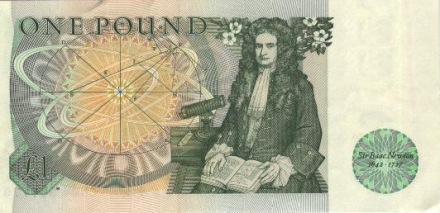

Appropriately, Newton himself wound up on the currency.

The accidents of place and time that brought the man who was recognized in his own day as the greatest mind of the age into conflict with Chaloner, an uncommonly gifted common criminal have fascinated me since I first learned of them through reading Chaloner’s last, piteous letter to the implacable Newton, written days before the hanging. In it Chaloner begged, writing “O dear S[i]r nobody can save me but you O God my God I shall be murderd unless you save me.”

What I wanted to answer was the obvious question: how and why did Isaac Newton come to pass judgment on the life of any other man? I had always thought of him as the nearly cloistered scholar of Trinity College, Cambridge, his home for more than thirty years. It was there he performed the experiments and the calculations that led him, in 1687, to write his masterwork, Philosophiae naturalis principia mathematica the Mathematical Principles of Natural Philosophy — better known simply as the Principia -– as well as pursuing his decades-long program of alchemical research.

So how, I wondered, did he end up in London, wallowing in the muck with the capital’s criminal underground?

Not to put too fine a point on it, finding out has turned into a book Newton and the Counterfeiter, published by Houghton Mifflin Harcourt and scheduled for release on June 4. But, to anticipate that longer story, here is the gist: Newton, after Principia found himself an international celebrity, and, as one of Cambridge University’s representatives to the Convention Parliament of 1689 that legitimized William of Orange‘s seizure of the English throne from the deposed Stuart King James II, he had nearly a year to enjoy the acclaim of London and Europe’s thinking and political elites before returning to the quiet of Cambridge, then a small town of about 5,000 inhabitants. It was an intellectual backwater too, especially compared to the big city in which he encountered figures like Robert Boyle, John Locke, Robert Hooke (whom he despised), Samuel Pepys (whom he did not) and so on. So he started, with Locke’s help, to seek a patronage appointment that would allow him to live comfortably in London. It took six years to find the right one, but ultimately he was offered the Warden’s post at the Mint. That job was supposed to be a sinecure, a nearly no-show position that would pay him a very comfortable wage.

And so it would have turned out were it not for the terribly debased state of England’s silver coinage, which had deteriorated to about half its legal weight for a whole host of reasons. So Newton arrived at a time when (a) the Mint was attempting to recall and recoin the entire stock of silver money for the entire country –- all the smaller units of money essential to everyday transactions –- and (b) coining, counterfeiting, was flourishing as enterprising men and women set out to get rich by filling in the gaps in the money supply with coins that never felt the stamp of an official Mint die. As Warden, it became Newton’s duty to see that legal money was produced fast and fairly, and to pursue all those who set up on their own.

Of those who did none were more technically skilled or ambitious than William Chaloner. His is a fascinating story, told at much greater length in my book, in which you see the currents of rapid economic change, class and ambition all converge within this one, barely remembered life. He was born desperate poor, a weaver’s son in Lincolnshire. He ran from his first apprenticeship to London, where he started out at the very bottom of the criminal ladder, hawking porn on street corners. He rose rapidly, first with his clearly impressive gift of gab, and then, after falling in with someone who knew how to gild surfaces, as the central figure in a series of ever grander schemes to counterfeit gold and silver money. He had sidelines as an informer, betraying conspiracies that he would himself set up, but his central gift and fascination was in the creation of fakes. Ultimately, he was one of the first to recognize the power of paper, and he started to counterfeit a variety of the early experiments with paper money and bank instruments.

In this sense Chaloner’s career –- and Newton’s urgent pursuit of him –- offer a window into the birth of the modern idea of money, of finance. And one of the things that fascinated me about this case is the degree to which this old story tracks some of our immediate problems. England’s and Europe’s economies were in rapid revolution in the late seventeenth century. The old idea of money as a chunk of metal with a pretty picture on it could no longer come close to accommodating the kind of enterprises governments and individuals wanted to undertake, from war to the funding of global webs of trade. And so people came up with all kinds of different ways of trying to represent value and exchange and even the idea of the changing worth of an investment over time. And the people making these experiments did not fully understand the implications of each expedient they tried. The last piece of paper Chaloner counterfeited was called a Malt Lottery Ticket, and it was at once simply paper money, a bond, and a gamble. Traders attempted to value these kinds of things in embryonic financial markets -– which would in a couple of decades blow up in a financial collapse that possess some striking similarities to our current predicament. Newton himself would lose a considerable fortune in that collapse, a sum worth a couple of million pounds, maybe more, in 21st century money.

It was that sense of precariousness that made the pursuit of counterfeiters so urgent in the midst of the late 17th century; England’s money supply was genuinely at risk, and no one had a good grasp of what it would take to make both the daily experience of small transactions and the high finance of war and trade go smoothly. So anyone threatening either or both levels of money was public enemy number one.

Of those who tried their hand at currency crime, Chaloner was the most accomplished, and notorious. By his own admission he counterfeited on the order of 30,000 pounds worth of currency over a seven- or eight-year career, an enormous fortune for the day. His big mistake, though, was to challenge Newton directly, accusing him in public of incompetence or fraud in his management of the recoinage of silver money between 1696 and 1698. He laid that charge both in testimony to Parliament and in a pamphlet he had printed for public distribution, and the scandal could genuinely have wounded Newton, were it not for the influence of his friends in power in Parliament at the moment.

It was enough, certainly, to propel Newton into an extraordinary investigation, an exercise of what may be seen as true non-fiction scientific detection. He set up a net of agents and informers throughout the worst neighborhoods and pubs in London, tracking any instance of coining he could find, interrogating suspects at the Tower or in jail, trying to build a web of connections around Chaloner. That story is contained within a collection of several hundred depositions and summaries of interrogations, all signed by Newton, that have survived, largely unexamined until now. Those records show that it took Newton almost two years in all, but aided in the end by listeners whose lives he held at his disposal inside Chaloner’s cell at Newgate, he managed to collect a sufficient weight of testimony to ensure that he could convict a prisoner clever enough to have escaped several previous attempts at prosecution.

The trial itself was something of a sham. Chaloner had feared being charged on the Malt Lottery Ticket forgery, (as we know from the accounts in Newton’s files of informers in the cells) but Newton actually presented evidence of a coining spree that almost certainly did not take place as described. Among other confounding facts, Chaloner was supposed to have made six different denominations of both silver and gold coins in a single day, which would have involved an enormous confusion of tools and materials that ran counter to basic counterfeiting practice.

No matter: the sheer volume of precise detail that Newton’s witnesses were able (or convinced) to provide produced a conviction within a very short time –- the whole trial took no more than an hour or so on March 3, 1699. There was a truncated appeal process -– really just a request for clemency from the crown, which was denied, and Chaloner’s sentence came down.

Formally, he had been found guilty of high treason, an assault upon the crown in the form of the king’s likeness and authority represented on the face of England’s coins. The punishment for high treason was essentially that suffered by William Wallace of Braveheart fame: to be strangled to the point of death, to be disemboweled whilst still living, to be beheaded and then quartered. By the date of Chaloner’s execution, the punishment had eased this far: convicted coiners were drawn to the place of execution on a rough sledge, subject to all the filth and abuse London’s open-sewered streets possessed; then hung until dead, and then, on rare occasions, to suffer post-mortem dismemberment. Chaloner himself was not, so far as any records revealed, actually cut into pieces. (As a gesture to public decency, women convicted of coining or other capital crimes were not supposed to be hung, lest their twitching at rope’s-end seem lewd. So they were burnt instead – though by the eighteenth century it was common to strangle them to death before lighting the pyre. Mercy, after the fashion of the times.)

Levenson lectures on his book at the MIT Writer’s Series.

One last note in a post gone much too long: Newton was involved in a number of counterfeiting investigations, and by some reckonings at least two dozen people went to their deaths as a result. Some historians, notably Frank Manuel, have speculated that Newton pursued this work with implausible eagerness, out of a kind of frustrated blood lust born of his abandoned and unhappy childhood.

This seems to me to be nonsense. The specific historical context matters here: Newton did not author the bloody code, nor did he send everyone he could to the gallows. Rather, the record of his depositions shows him to be simply a relentless practical man doing his job. He used little fish to catch big fish, and at least some of those low on the ladder received their escape from the gibbet. What you can see here, surprisingly, is the birth of a modern idea of a civil service. The Warden -– even Isaac Newton — was simply a man in a job doing the functions of that job, which included organizing the investigation and prosecution of counterfeiters.

What’s striking, of course, is that this civil servant, this bureaucrat, happened to possess the greatest scientific mind in history. And that’s the real sting in this tale. There is a connection between Newton’s pursuit of counterfeiters and his attempts to understand nature. He did employ the same resources of concentration and logical organization in his criminal investigations that he did when he tackled any problem. But more than the commonality of work habits, there is, I think this link: Newton can be seen as many people: the mathematician, the theoretical physicist, the empirical experimentalist, the alchemical mystic, the heretically devout religious thinker –- and the government functionary too.

And yet he was, of course, a single man, one with many interests, but ultimately with a consistent ambition, to reduce to order the complexity of any problem which was posed to him. Newton did not expect as Warden to have to chase crooks; when he found out that was part of the job he wrote a rather whiny letter to the Treasury to see if he could wriggle out of the duty. When he found he could not, he responded as he always had to the job at hand.

As one consequence, on this day three hundred and ten years ago, William Chaloner died.

On this day..

1789: Catherine Murphy, Britain’s last burning at the stake

On this date in 1789, Catherine Murphy was led past the hanging bodies of her husband and their other male codefendants at Newgate Prison, secured to a stake, and put to the last burning at the stake in English history.

The convicted coiners — counterfeiting rated as high treason at the time — were the last heirs to gender-specific execution methods before the Treason Act of 1790 gave coin-shaving ladies equal access to the halter.

Though Murphy thereby earned an unenviable historical footnote, the de facto practice on the scaffold had long since been changed to spare lawmen the spectacle of a woman roasting to death. Murphy, in fact, was killed by hanging — and the “burning” part of the sentence only imposed upon her corpse. (This, however, was still more than enough: NIMBYing prison neighbors appalled by the stench of burning flesh had lent their support to the Treason Act’s reforms.)

On this day..

2006: Yuan Baojing, gangster capitalist

On this date in 2006, one of Beijing’s wealthiest plutocrats (along with two of his relatives) caught a lethal injection for the shady side of his business.

Yuan Baojing, “stock market whizzkid”, had risen from the nameless masses of China’s countryside to prosper in “Red” China’s authoritarian capitalism.

Though worth billions (or at least hundreds of millions), Yuan went down over the trivial sum of $9 million — the amount he reckoned a business associate had taken by fraud.

But then, it’s always impolite to count the corpses stuffed into the pillars of capital. The surprise here is that Yuan got caught: he’d hired a dirty cop to kill that business partner, but after the plot failed the cop started blackmailing the tycoon. Yuan responded by hiring his brother and cousin to pop the cop.

Yuan survived a scheduled execution the preceding October by transferring billions in assets to the Chinese government — understandably triggering some complaints about fair play.

Those billions bought him five months.*

On this date, he and his hirelings were given a public trial in Liaoyang, followed by an immediate lethal injection in one of China’s mobile execution vans.

* The mogul’s wife, Tibetan dancer Zhou Ma, was herself swindled during this period as she spread around cash trying to save her husband’s life.

On this day..

1885: Not John “Babbacombe” Lee, the man they could not hang

On this date in 1885, a most inexplicable thing occurred on the gallows of Exeter.

It was there that John Lee, nicknamed “Babbacombe”, made his peace with his maker and faced hanging for the murder of an elderly spinster a few months before.

Lee still protested his innocence. He was not generally believed.

We’ll let Charles Hoy Fort, that renowned chronicler of the impossible, take it from here*:

It was a scene of the mechanism and solidity of legal procedure, as nearly real as mechanism and solidity can be.

Noose on his neck, and up on the scaffold they stood him on a trap door. The door was held in position by a bolt. When this bolt was drawn, the door fell —

John Lee, who hadn’t a friend, and hadn’t a dollar —

The Sheriff of Exeter, behind whom was Great Britain.

The Sheriff waved his hand. It represented Justice and Great Britain.

The bolt was drawn, but the trap door did not fall. John Lee stood with the noose around his neck.

It was embarrassing. He should have been strangling. There is something of an etiquette in all things, and this was indecorum. They tinkered with the bolt. There was no difficulty. whatsoever, with the bolt: but when it was drawn, with John Lee standing on the trap door, the door would not fall.

Something unreasonable was happening. Just what is the procedure, in the case of somebody, who is standing erect, when he should be dangling?

Three times they made the attempt. Three times the door failed to open — even though the apparatus performed perfectly when tested without the prisoner.

Lee was returned to his cell by the bewildered authorities, and Home Secretary William Vernon Harcourt commuted his sentence to penal servitude.

Eventually released in 1907, John Lee milked his bizarre celebrity by giving public declamations of his unaccountably aborted Calvary — and continued to maintain his innocence.

After this mighty stroke of — well, was it divine intervention? — that claim carried a lot more weight. Lee’s innocence is hardly an established fact, but the circumstantial nature of the evidence against him looks much weaker now than it did in 1885. The BBC’s Inside Out even speculates that Lee’s own lawyer did the deed.

But does one really care, by now? The principals are long dead and buried. What remains is that brief and timeless encounter with the uncanny.

The British band Fairport Convention cast a look back on Babbacombe Lee with an entire 1971 album.

There’s also a 2001 book, The Man They Could Not Kill (nothing to do with the Boris Karloff movie of the same title), whose online promotional site offers a bounty of information about the case.

* From Fort’s book Wild Talents.

On this day..

1530: Tangaxuan II, the last Tarasco ruler

This date in 1530 marked the end of the pre-Columbian Tarasco Empire, when the Spaniard Nuño Beltrán de Guzmán lashed its last independent king (Spanish link) to a tree and burned him to death.

Legendary even by conquistador standards for his cruelty, Beltran de Guzman eliminated the Tarascan state in western Mexico — a onetime Aztec rival which had got off relatively easy during Cortes’s 1520s incursion by cooperating with the Spanish.

Beltran de Guzman had set out from Spanish holdings on the hunt for gold, butchering the many natives on his westward jag unable or unwilling to comply with his demand for more and better treasure.

Tangaxuan — or Tangaxoan, or Tanganxoan, or Tangaxhuan, and other such variants — met his foreign-born visitor peacefully with some gifts of gold and silver. This only whetted Nuno Beltran de Guzman’s appetite, and he promptly had the king detained and tortured for more pelf before dispatching him by dragging by horses and burning alive at the confluence of the Río Lerma and the Río Angulo. (Spanish, again.)


The monumental Juan O’Gorman mural in Michoacan, the present-day Mexican state occupying what was once Tarascan land, depicts this day’s execution above the inscription, “Tangaxhuán, the last monarch of the Purhépecha Indians was tortured and assassinated by the ferocious hordes led by the sadistic, vile, Nuño de Guzmán.”

Although even other Spanish officials viewed our bloodthirsty conquistador with distaste, his depredations were ultimately rooted in the logic of imperial expansion, and the conquest of Tarasco consolidated (Spanish link) the colonial power’s grip on “New Spain”.

On this day..