On this date in 1858, an “unusual incident” occurred in the life of then 18-year-old architect’s apprentice Thomas Hardy, as related by Hardy’s second wife, Florence.
One summer morning at Bockhampton, just before he sat down to breakfast, he remembered that a man was to be hanged at eight o’clock at Dorchester. He took up the big brass telescope that had been handed on in the family, and hastened to a hill on the heath a quarter of a mile from the house, whence he looked towards the town. The sun behind his back shone straight on the white stone facade of the gaol, the gallows upon it, and the form of the murderer in white fustian, the executioner and officials in dark clothing and the crowd below being invisible at this distance of nearly three miles. At the moment of his placing the glass to his eye the white figure dropped downwards, and the faint note of the town clock struck eight.
The whole thing had been so sudden that the glass nearly fell from Hardy’s hands. He seemed alone on the heath with the hanged man, and crept homeward wishing he had not been so curious. It was the second and last execution he witnessed, the first having been that of a woman two or three years earlier, when he stood close to the gallows.
The man in question was James Seale (or Searle), and this was not only to be the last hanging Hardy witnessed — it was the last in Dorset full stop.
The London Times‘ Aug. 11 blurb of the hanging noticed that
the wretched culprit was tried … for the wilful murder of a young woman named Sarah Ann Griffy, at Stoke Abbotts, on the 30th of April last, and also for having set fire to the house in which his victim resided. The prisoner is a very young man, not having reached his 20th year, and had been working as a labourer for some time past in the vicinity … On the day of the murder … when all the parties, who were farm labourers, were at work, excepting the deceased, the prisoner entered the house, and, after maltreating her, inflicted a most fearful gash in her throat, nearly five inches long, with a clasped cheese knife, and other injuries on the hands, arms, and breast, and then set fire to the house.
As implied by Hardy’s ability to remember the hanging at breakfast, find the telescope, and get to his observation point before the trap dropped at 8 a.m., the youth was an early riser. Michael Millgate’s biography of Thomas Hardy notes that
[b]y eight o’clock in the morning, the time when Seale’s execution took place, Hardy would have been up reading for two or three hours before setting off for Dorchester and Hicks’s office: when only candles were available for indoor illumination it was necessary to keep a countryman’s hours and take advantage of all the available daylight. He had now added the study of Greek to his continuing study of Latin: the signature in his first copy of the Iliad is dated 1858, and he seems to have worked persistently through it until some time in 1860, marking the passages that he had read — and that Jude Fawley, much later, would be described as reading in Jude the Obscure.
On this date in 1669, a French Huguenot agent was publicly broken on the wheel in Paris.
On the dangerous political chessboard of 17th century Europe, the allegiance of Restoration England — governed once again by a dynasty with known Catholic sympathies — was a great prize for contending Catholic and Protestant powers on the mainland.*
Finding the avenues blocked, Marsilly retired to Switzerland and was there abducted by French spies who knew what he was up to.
A trumped-up rape charge served that country’s statecraft, and despite an offer by the prisoner to spill some beans in exchange for his life — and then a suicide attempt —
hee wounded himself … for he knew before hee should dye, butt he thought by dismembering himself that the losse of blood would carry him out of the world …
— Roux could not avoid his fate. In fact, out of fear that Marsilly could still succumb to his self-injury, they
sent word … which made his execution be hastened. Saturday about 1 of the clock he was brought on the skaffold before the Chastelet and tied to St. Andrew’s Crosse all which was while he acted the Dying man and scarce stirred, and seemed almost breathless and fainting …
they went to their worke and gave [Marsilly] eleven blows with a barre and laid him on the wheele. He was two houres dying.
For all those two agonizing hours, Roux de Marsilly really only merits a footnote in a different story.
The Man in the Iron Mask
The mysteriousMan in the Iron Mask was first documented in French custody later in the summer of 1669, and he would remain a guest of the Bourbon dungeons until 1703.
One of the stronger contenders for the crownmask, however, is a prisoner named “Eustace Dauger”, who may in fact have been Roux de Marsilly’s former valet, one “Martin”.
The hypothesis, roughly outlined, is that England and especially France were trying to tie up the loose ends of whatever plots Marsilly had authored, and got hands on his servant to interrogate him about the highly sensitive machinations he might have been privy to.
Possibly having established that Martin/Eustace had no actual information to betray, he still remained under lock and key out of some admixture of bureaucratic inertia and the remorseless paranoia of the security state. Crazy.
[T]he Man in the Iron Mask (if Dauger were he) may have been as great a mystery to himself as to historical inquirers. He may not have known WHAT he was imprisoned for doing! More important is the probable conclusion that the long and mysterious captivity of Eustache Dauger, and of another perfectly harmless valet and victim, was the mere automatic result of the ‘red tape’ of the old French absolute monarchy. These wretches were caught in the toils of the system, and suffered to no purpose, for no crime. The two men, at least Dauger, were apparently mere supernumeraries in the obscure intrigue of a conspirator known as Roux de Marsilly.
…
Marsilly was publicly tortured to death in Paris on June 22, 1669. By July 19 his ex-valet, Dauger, had entered on his mysterious term of captivity. How the French got possession of him, whether he yielded to cajolery, or was betrayed by Charles II., is uncertain. … By July 19, at all events, Louvois, the War Minister of Louis XIV., was bidding Saint-Mars, at Pignerol in Piedmont, expect from Dunkirk a prisoner of the very highest importance–a valet! This valet, now called ‘Eustache Dauger,’ can only have been Marsilly’s valet, Martin, who, by one means or another, had been brought from England to Dunkirk. It is hardly conceivable, at least, that when a valet, in England, is ‘wanted’ by the French police on July 1, for political reasons, and when by July 19 they have caught a valet of extreme political importance, the two valets should be two different men. Martin must be Dauger.
* And, of course, for the Catholics and Protestants in England. This struggle would come to a head in due time, to the grief of the Stuarts.
America’s weird love-affair with Frankenstein execution technology has been an occasional theme on this blog, but the fact is that the old-school execution methods these ghastly machines replaced were unpleasantly hit-and-miss.
On this date in 1879, three different U.S. states produced botched executions, each blurbed this New York Times article. (pdf)
One is attracted most readily to the firing-squad execution of murderer Wallace Wilkerson in Utah.
Wilkerson appealed the constitutionality of this method of execution, and in 1879’s Wilkerson v. Utah, the U.S. Supreme Court held that “the punishment of shooting as a mode of executing the death penalty for the crime of murder in the first degree is not” cruel and unusual punishment.
This legal precedent has actually been cited* by the present-day Supreme Court in rejecting legal challenges to lethal injection. Which is ironic, because a couple of months after the high court issued Wilkerson v. Utah, Wilkerson suffered a very cruel execution indeed.
The doomed man talked the officials conducting his execution into allowing him to die without being strapped down. With the resultant range of motion, Wilkerson at the last breath before the fusillade hit him drew his shoulders up as he braced for the impact — and pulled the white target pinned to his shirt above his heart.
The volley didn’t kill him — it just knocked him out of his chair to the ground, screaming “Oh, my God! My God! They have missed!”
He bled to death in 27 minutes, prompting the tongue-in-cheek observation by the Ogden Junction that “the French guillotine never fails.”
Meanwhile, on the very same day in Missouri …
ST. LOUIS, Mo., May 16.–A special dispatch from Booneville, Mo., says: “John I. West, who murdered a tramp last October, was to-day hanged at the Old Fair Ground near this city. When the trap was sprung, at 11:41 A.M., the rope broke, and the culprit fell to the ground on his back, but was too weak to rise. His groans and the gurgling sounds of strangulation were terrible to hear. He was picked up and speedily raised to the trap again, and, while being held by four or five men, was dropped a second time. This time he swung, and in 11 minutes was pronounced dead.
After reaching the platform of the gallows, West spoke nearly half an hour to the crowd present, reiterating his confession of the murder of Shinn, reviewing his past life, and appealing to young men and women to take his fate as a warning. There were about 8,000 people present, among whom was the father of West, who had come from Chapin, Ill.
(There’s a great deal more about West’s crime in the Times article, but it’s pretty dull reading for all the column-inches. He was a tramp who committed a semi-random murder, seemingly activating all the crime-freakout circuits so familiar to cable news programmers.)
Hillsboro, North Carolina, held a first-ever triple hanging — of the “Chapel Hill burglars”. As you might guess, these gentlemen burgled, and said burgling occurred in Chapel Hill. It was for housebreaking, not murder, that they were condemned, with the help of a confederate who turned state’s-evidence against them as soon as the lot was arrested.
Each of the culprits proclaimed his innocence to the last moment. [Lewis] Carlton spoke for an hour, and said his salvation was sure. The parting between [Henry] Andrews and his sister on the scaffold was most affecting, and moved the crowd of witnesses to tears. All the doomed men bore themselves firmly, and showed no signs of wavering. The hanging took place at 2:30 P.M., and was very badly conducted. The ropes around the necks of [Henry Alphonso] Davis and Carlton were too long, and their feet rested on the ground. They were raised up and the ropes retied, causing death by strangulation.
(According to this “history of the University of North Carolina” page, one of the burglars’ victims was writer Cornelia Phillips Spencer. Famous as the woman who rang the bell re-opening UNC in 1875, her role in closing the university in the first place in 1870 and her retrograde racial politics have recently been in Tar Heel news. The linked article suggests that her brush with the Chapel Hill burglars might have given Spencer an appreciation for the Ku Klux Klan’s version of order. After all, a white supremacist vigilante is just a liberal who’s been burgled.)
The St. Louis Globe-Democrat of May 17, 1879 adds of our men’s exit (in an addendum to a report primarily about the aforementioned West) that
[t]he execution was romantic in the extreme. Just as the doomed men ascended the platform a murky cloud, which had been drifting around, hung over the crowd and the instrument of death. Alfonso Davis began to speak, and as he opened his mouth the thunder began to peal, and the rain came down in torrents. Not a man, woman or child in the vast crowd moved or seemed to be aware that the rain was falling, so wrapped up in the death scene were they. At times the cloud threw such a dense shadow over the scene that it seemed as though night had enveloped the place. Then the lightning, vivid and intense, lit up the field of blood and cast forward, in bold and statuesque relief, the figures of the doomed and their executor as he stood like an artilleryman, lanyard in hand, ready to send the signal of death forward … the souls of three burglars went out and beyond, forked lightning illuminating their way and the wildest of thunder pealing their requiem.
The Bayou State redeemed this black day for the executioner’s craft by the uneventful hanging one Robert Cheney (black, of course) “for ravishing Amelia Voight in June, 1878.”
All told, four states killed six men on May 16, 1879, but only two of them died “cleanly.”
* The author of the New York Times opinion piece cited here, Gilbert King, has guest-blogged on this site:
Condemned in 1987, Ross spent 17 years fighting execution before a 2004 volte face had him waiving his appeals in the interests of sparing victims’ families any further agony.
This precipitated an intense last-minute legal melee over whether the admittedly disturbed Ross possessed legally sufficient competency to pursue his own death. A scheduled execution in January was scratched at the last moment when a federal judge insisted on a competency determination.
A serial killer who consents to his own execution wouldn’t typically be the sort to attract a lot of sympathy, but in true-blue New England, any brush with the executioner is cause for public hand-wringing.
Ross, of course, was adjudged competent to drop his appeals, and that was that.
After the execution, one of the psychiatrists who disputed Ross’s competency to choose execution received a mailed taunt from the killer, dated May 10:
Check, and mate. You never had a chance!
And it seems our date’s principal reserved an even gnarlier gambit for the judge who once blocked his execution.
District Court jurist Robert Chatigny has found himself much in the news with Michael Ross since he was nominated by President Barack Obama for a seat on the Second Circuit Court of Appeals. That nomination has been held up thus far largely because Chatigny berated and threatened Ross’s attorney (the one who was trying to get his client executed) with disbarment.
* The last one before Michael Ross? Joseph Taborsky, electrocuted in Connecticut on May 17, 1960.
** His criminal career began in Ithaca, N.Y. Cornell is famous for its suicides, but Ross apparently couldn’t go through with his after he contemplated taking his own life.
Ross was also a graduate of something called Killingly High School. True story.
On this date fifty years ago, death row author and celebrity Caryl Chessman choked to death in San Quentin Prison’s gas chamber while the phone outside rang, too late, with his stay.
During his abnormally protracted* (for the times) 12 years fighting death, Chessman became the poster child for the anti-capital punishment cause and the most recognizable face on death row.
He was condemned as the “Red Light Bandit,” a Los Angeles criminal who would waylay cars in lovers’ lanes with police-like flashing red lights, then rob and, for some female victims, rape them. A career felon, Chessman denied his guilt to his death (he insisted that his signed confession was beaten out of him by the LAPD, which would not exactly have been out of character).
The prickly Chessman — “not generally regarded as a pleasant or socially minded fellow,” he conceded about himself — unwisely represented himself at trial, where the confession plus eyewitness testimony of Bandit victims were enough to convict him.
Not, however, of murder.
Instead, Chessman drew two death sentences under one of the country’s several draconian “Little Lindbergh” anti-kidnapping statutes, on the intriguing jurisprudential theory that the Red Light Bandit’s having dragged a rape victim several feet from her car constituted “kidnapping.”**
This astonishingly expansive reading only became more controversial when California repealed the kidnapping law in question in the 1950s. But the repeal was not retroactive.
That left Chessman to fight his sentence with a terrifyingly iron willpower, fending off eight execution dates in the process. The last of them came in February 1960, an 11th-hour reprieve as had been several others, when a two-month stay was granted ostensibly to protect the traveling President Eisenhower from some act of vengeful local retaliation from one of Chessman’s legions of international supporters.
A cat, I am told, has nine lives. If that is true, I know how a cat feels when, under the most hair-raising conditions, it has been obliged to expend the first eight of those lives in a chamber-of-horrors battle for survival, and the Grim Reaper gets it into his head that it will be great sport to try to bag the ninth. All pussy can do is spit. Homo sapiens can write books.
-Caryl Chessman
So Chessman wrote.
Fiction and nonfiction books, numerous articles — copping to a criminal life but insistently denying his involvement in the crimes that would doom him. For a time, prison officials seized his work and forbade his writing, and Chessman resorted to sacrificing his sleep to write illicitly by night and encode his work in putative “legal documents”. Bandit or not, the man had an indomitable spirit, and it won him worldwide attention and support.
Books by and about Caryl Chessman
And bandit or not, the Grim Reaper had a mind to take that ninth life.
One might have thought that for such a lightning-rod anti-death penalty case, the election of anti-death penalty Gov. Edmund “Pat” Brown in 1958 would spell good news.
According to Hamm, Pat Brown claimed he would have been “impeached” if he had granted clemency to his uppity prisoner, leaving Chessman and his lefty backers† expediently triangulated by a Democratic governor. It’s a timeless story.
With executive clemency off the table, Chessman’s lawyer Rosalie Ashler was scrambling on the morning of the 10 a.m. execution to interest a judge in an appeal claiming that one Charles Terranova was the actual Red Light Bandit. The judge took his time reading the brief, and by the time his secretary placed a call to the death house (legend says, after once misdialing it), the cyanide pellets had already dropped.
I thought Chessman must be dead but no, there was another agonizing period during which he choked on the gas. And again. And then again. There was a long period, another deep gasp. At the fourth such straining, Chessman’s head lolled in a half circle, coming forward so that he faced downward with his chin almost touching his chest. This must be the end. But the dying went on.
A deep gasp, his head came up for an instant, dropped forward again. After two or three deep breaths, which seemed something like sobs, a trembling set up throughout the body. Along the line of his broad shoulders, down the arms to his fingers, I could see the tremor run.
Then I saw his pale face grow suddenly paler, though I had not thought that it could be after his 12 years in prison. A little saliva came from his lips, spotted the white shirt that a condemned man wears for his last appearance. Even more color drained from his face and the furrows in his head smoothed out a little. And I knew he was dead.
Chessman would persist as a cultural touchstone for the issue of capital punishment for a generation.
Jim Minor, “Death Row” (1960)
Ronnie Hawkins, “The Ballad of Caryl Chessman” (1960)
Merle Haggard, “Sing Me Back Home” (1968)
(Though this tune about watching men taken to the gas chamber doesn’t explicitly reference Caryl Chessman, it was inspired by Haggard’s own prison stint where he met Chessman and experienced a “scared straight” moment.)
Neil Diamond, “Done Too Soon” (1970)
The Hates, “Do the Caryl Chessman” (1980)
In view of Chessman’s onetime celebrity, he’s an oddly forgotten character today: too strange an individual for easy approachability; too ethically indeterminate for convenient demagoguery; not sufficiently emblematic of any larger cause or community that would tend to his memory. His non-murder death sentence and method of execution seem anachronistic, no longer relevant.
Chessman surely was an avatar of the end to capital punishment that unfolded in the 1960s and 1970s, but as it went with his own case, so it went with his legacy: the simultaneous right-wing backlash ultimately rewrote the story. After all, the “liberal” governor too chicken to spare Chessman would go on to lose his office to Ronald Reagan.
Our day’s protagonist might have had a different place in the national consciousness, in stories with the phrase “as late as 1960,” had that interregnum of “abolition” Chessman presaged not turned out to be a false start.
I am not guilty. I am sure a future generation will listen.
-Caryl Chessman
* While 12 years between sentence and execution wouldn’t raise an eyebrow today (especially in California), Chessman at the time was thought to have set a record for the longest stint on death row in U.S. history.
** The legal weirdness didn’t stop with the kidnapping law. The official court reporter in Chessman’s case actually died with his trial transcription still in semi-legible shorthand. It was partially reconstructed (by a relative of prosecuting attorney J. Miller Leavy, who also won the death sentence against Barbara “I Want to Live!” Graham), but portions that could not be read were ballparked by the recollections of … prosecutor Leavy.
Appeals courts, of course, frequently have recourse to the original trial record to make various legal determinations; the evidentiary gap left by this second-hand-abridged-by-the-DA transcript was frequently protested by Chessman’s camp on appeal.
† They weren’t exclusively leftists. William Buckley and Billy Graham both supported clemency for Chessman. Nor were they all political: the directors of the schlocky cult horror flick The Hypnotic Eye crassly pitched the headline-grabbing condemned con on a hypnotism promotional stunt, and ended up themselves being drawn into the case and believing Chessman was innocent.
On this date in 1925, German serial killer Fritz Haarmann dropped his head in a basket in Hanover.
One of the most iconic and most terrifying among Weimar Germany’s ample crop of mass murderers, Haarmann is thought to have slain dozens of boys and young men from 1918 to 1924. (He was charged with 27 murders and convicted in 24 of them; Haarmann himself suggested the true number might be north of 50.)
Such gaudy statistics require teamwork.
This predatory pedophile partnered with one Hans Grans, a younger lover-slash-confederate; together they would lure fresh “game” (Haarmann’s word) for a meal and more.
Everyone dined well — Haarmann especially. Notorious as one of the most prolific “vampire” killers (the press also favored him with this moniker its its search for some epithet equal to the offenses; “werewolf” and “butcher” were also current), Haarmann liked to gnaw through his victims’ throats.
A chilling ditty paid tribute to the unsubstantiated rumor that Haarmann would even butcher the human flesh and sell it as “pork” on the black market. (He was known to trade in black-market meat.)
Just you wait ’til it’s your time,
Haarmann will come after you,
With his chopper, oh so fine,
He’ll make mincemeat out of you.
In the 1931 Fritz Lang classic M, for which Haarmann is one of several influences on the fictional serial killer at the center of the action, this rhyme appears with the name “Haarmann” replaced by “black man”.
Much deeper delves into the mind of this particular madman are to be had here, here and here.
And here:
That accomplice of his, Hans Grans, drew a death sentence too, but Haarmann somehow exculpated him successfully. Not only did Grans get out of prison, the once-notorious homosexual killer lived out the Nazi regime in Hanover un-tortured.
On this date in 1984, Elmo Patrick Sonnier was electrocuted in Louisiana’s Angola Prison for abducting and murdering two teens in St. Martin Parish.*
Elmo and his brother Eddie posed as police officers and handcuffed two high schoolers parked at a local makeout point. Then they raped the girl, and shot both of them dead.
Eddie managed, as he said, to “give it back” on the grounds that Patrick was the one who did the shooting.
Once Eddie was clear of the death penalty, he tried to cop to the shooting after all, in order to save his little brother.
The appellate life of this case involved unedifying revisions of the “who shot whom” story. Ultimately, Eddie’s later claim to have been the triggerman, though quite possibly true, is not likely to win very much sympathy for his brother. It didn’t help him in the courts, either.
Just the 17th person executed since reinstatement of the death penalty, Sonnier learned that his longshot bid for clemency had been denied straight from the man who denied it — colorful, corrupt Louisiana Gov. Edwin Edwards, who personally phoned Sonnier to give him the bad news.
Little did Sonnier know that he had equally famous company meeting him in his cell.
Sonnier was the first condemned inmate to receive the spiritual ministration of Sister Helen Prejean.
The then-obscure Louisiana nun would later write the bestseller Dead Man Walking about her experiences with Sonnier and a second death row prisoner, Robert Lee Willie. Prejean remains among the most well-known death penalty opponents in the world today.
While the book Dead Man Walking treats Sonnier and Willie in a nonfiction vein, the film adaptation (review) amalgamated those people into a single character, the fictional “Matthew Poncelet”. It’s apparent from the flashbacks in Dead Man Walking‘s execution scene, however, that Sonnier is the predominant influence on “Poncelet”.
Dead Man Walking is an interesting movie. Though its principals were all vocal death penalty opponents, the film itself is much better art than propaganda. Arguably, the doomed criminal attains a sort of personal redemption — finally admitting responsibility for a crime he had denied for much of the film; seeking the forgiveness of his victims’ surviving family — only because the death penalty awaits him.
Susan Sarandon won an Oscar for Best Actress for her turn as Sister Helen. Note that while Sonnier was in fact put to death in the electric chair (as was Robert Lee Willie), director Tim Robbins opted to portray a lethal injection because, as Helen Prejean herself put it,
we don’t want to give people the moral out whereby people could say ‘oh well, we used to do electrocution but that’s too barbaric so now we are humane and inject them’
* The murder that led to this date’s execution took place in the same area where Willie Francis survived a trip to the electric chair: the very chair that killed Patrick Sonnier.
On this date in 1985, Texas executed serial killer Stephen Morin for murdering and robbing Carrie Marie Scott in 1981 — one of at least three, and up to thirty, of his victims, most of whom were (unlike Scott) abducted for rape and kindred brutalizing.
Just the sixth person executed in Texas under its modern death penalty regime, Morin was an IV drug addict.
Death chamber technicians required 40-plus minutes to bore through the resultant scar tissue well enough to poison Morin. He’s been a bullet point on the anti-lethal injection brief ever since. (Oddly, Morin’s execution is not on this list of recent botches.)
But Morin’s most prominent afterlife is a very different object lesson: not medical ethics, but spiritual warfare.
It seems the last woman he kidnapped, Margy Mayfield, survived the encounter by converting the desperate fugitive to evangelical Christianity; this story is still stocked and sold by Focus on the Family. This is Mayfield’s own account of their meeting.
On this date in 1994, Ukrainian serial killer Andrei Romanovich Chikatilo was shot dead in a soundproof room in Novocherkassk, Russia, for a stupendous serial murder spree in the 1980s USSR.
The quintessential case study in anonymous middle-aged melancholy turned larger-than-life horror, the sexually dysfunctional Chikatilo raped, murdered and mutilated dozens in a homicidal career beginning at the unusually late age of 42.
After that initial foray into rape-murder in 1978, three years passed before the factory clerk (molestation allegations had drummed him out of teaching in the interval) began his harvest of 50-plus victims: children and teenagers of both sexes, and young adult women.
In addition to the staggering body count, the murders of the “Rostov Ripper” were marked by orgiastic savagery: breasts severed, eyes gouged out, genitalia mutilated and even eaten, and bodies lacerated with scores of stab wounds.
Like many monsters, he was also, as much as his more well-adjusted fellows, a creature of his own time and place.
Chikatilo was a socially maladjusted child in part due to his father’s capture by the Germans during World War II, subjecting the family to the postwar ostracism that awaited returning POWs. (Some sources also say Chikatilo saw his mother raped by German soldiers.)
The part of his life for which he’s most famous, meanwhile, drew out into a years-long bloodbath even though he was a suspect from the very first murder — a crime for which another man was wrongfully executed. Sclerotic bureaucracy and investigative cock-ups hobbled the police effort throughout, a sort of criminological emblem of the Soviet Union’s twilight. Authorities were loathe to involve the public by admitting the presence of a serial killer, a type officially associated with bourgeois society.
Chikatilo was arrested once in 1984 carrying a Bundy-esque murder kit, but authorities couldn’t make anything stick (Chikatilo’s Communist Party membership helped); another officer stopped him leaving the forest where bodies turned up, but didn’t search the satchel which contained his most recent victim’s severed breasts. Chikatilo was investigated early on, but ruled out as a suspect because of a blood type mismatch between his blood and crime-scene semen — apparently the result of a rare biological anomaly that (combined with authorities’ outsized confidence in forensic detection) bought him years of killing and involved thousands more suspects before investigators finally circled back to Andrei Romanovich.
Even at his last arrest, investigators who knew they had their man nearly let him slip away because they couldn’t charge him within 10 days — finally cajoling a confession and the killer’s cooperation at nearly the last possible hour.
According to Cannibal Killers, the Chikatilo task force solved 1,062 unrelated crimes, including 95 murders, while puzzling out the Rostov Ripper.
There’s much more about Chikatilo’s career at trutv.com; the 1995 film about the Chikatilo murders, Citizen X, indulges some dramatic license, but it’s pretty watchable for a TV movie.
At 6:30 this morning a century ago, two black men were hanged in Kansas City, Mo., for raping a white violinist less than seven weeks before.
There was really only one way this case was going to end.
The assault was of such a nature that intense feeling was aroused. Threats of lynching frequently were heard …
Prisoners in the County Jail raised bedlam when the verdict became known. They had previously threatened to lynch the negroes in the exercise room of the jail.
That’s from the Los Angeles Times blog’s roundup of its A.P. coverage from the Show-Me state a century ago — which further reveals George Reynolds and John Williams enjoyed a five-minute jury deliberation, and this vituperative sentence from the judge:
“They don’t even deserve to be classed with the murderer who must pay the penalty for his crime with his life,” continued Judge Latshaw.* “It would be an insult to these men, who had at least a spark of manhood in their hardened souls, to have such brutes as these put in their class. I don’t care to desecrate the day by ordering these two brutes hanged on the legal hanging day.”
(The regular hanging day — Friday — was safely un-desecrated; Reynolds and Williams hanged on a Tuesday.)
Reynolds fainted at the gallows. “Cowardly Brute,” the LA Times headlined it, also mentioning that he’d been starving himself for a week in a desperate bid to cheat the hangman. He maintained his innocence at the last.
* Judge Latshaw presided over a number of high-profile Missouri trials … oftenacquittals.

 He probably could have used a Thomas Hardy’s Ale.
 After reaching the platform of the gallows, West spoke nearly half an hour to the crowd present, reiterating his confession of the murder of Shinn, reviewing his past life, and appealing to young men and women to take his fate as a warning. There were about 8,000 people present, among whom was the father of West, who had come from Chapin, Ill.
 The
The  During his abnormally protracted* (for the times) 12 years fighting death,
 I thought Chessman must be dead but no, there was another agonizing period during which he choked on the gas. And again. And then again. There was a long period, another deep gasp. At the fourth such straining, Chessman’s head lolled in a half circle, coming forward so that he faced downward with his chin almost touching his chest. This must be the end. But the dying went on.
 One of the most iconic and most terrifying among Weimar Germany’s ample crop of mass murderers,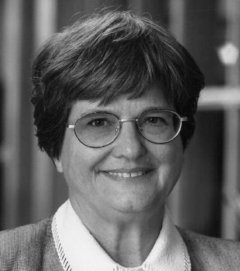
 Just the sixth person executed in Texas under its modern death penalty regime, Morin was an IV drug addict.
 The quintessential case study in anonymous middle-aged melancholy turned larger-than-life horror, the sexually dysfunctional
