Throughout the last days of the Third Reich, it ruthlessly forced its desperate conscripts by threat of summary execution into service to slow the overwhelming Soviet army.
Borrowing a page from Gen. Ferdinand Schoerner‘s no-mercy demonstrative hangings of any “straggler” found behind front lines without orders, Goebbels
issued a radio proclamation to the trapped troops [of Berlin]: “Any man found not doing his duty will be hanged from a lamp post after a summary judgment. Moreover, placards will be attached to the corpses stating: ‘I have been hanged here because I am too cowardly to defend the capital of the Reich. I have been hanged because I did not believe in the Fuhrer. I am a deserter and for this reason I shall not see this turning point in history.
SS members, aware that they would be in for the worst of it after the war (and that their mandatory blood-type tattoos would make them easy to identify) were the ones sufficiently motivated to impose this policy. One German in the city at the time recalled the horror of seeing
boys who were found hiding were hanged as traitors by the SS as a warning that, ‘he who was not brave enough to fight had to die.’ When trees were not available, people were strung up on lamp posts. They were hanging everywhere, military and civilian, men and women, ordinary citizens who had been executed by a small group of fanatics.
Although it’s not specifically an execution story, the horrifying consequences of this lethal paranoia under siege are the theme of the West German film Die Brücke, in which a rare veteran sergeant looking after some child-conscripts is shot by a patrol when he can’t produce orders … leaving the children alone to be butchered pointlessly defending a bridge.
“This event occurred on April 27, 1945,” the film concludes about its (fictional) plot. “It was so unimportant that it was never mentioned in any war communique.”
This doctor made his Nazi bones by forging a relationship with Heinrich Himmler (he married Himmler’s ex-mistress), and joining Himmler’s SS.
Rascher was doing cancer-cure experiments on animals, but once he had Himmler in his Rolodex he graduated to research on homo sapiens.
From 1941 to 1944, Rascher conducted some of the textbook ethical trespasses of Berlin’s human experimentation regime, using Dachau prisoners in:
high-altitude experiments to help fighter pilots, tested by subjecting prisoners to rapid de- and re-pressurization;
freezing experiments, tested by subjecting prisoners to freezing water or outdoor exposure, and then attempting by various methods to restore body warmth;
blood clotting experiments, tested by giving prisoners major gunshot wounds or other grievous bodily injuries, then monitoring how well a new drug slowed the bleeding.
Class act all the way. Rascher did publish some papers and deliver some conference presentations on aspects of his horrifying science, but in one of those little contradictions of the evil security state, the man was foiled in his bid for an advanced academic credential because much of the research was too secret for his peers to review.
In the end it was a much more mundane breach of ethics that did him in: Rascher and wife were arrested in 1944 for having actually kidnapped the children they claimed were their own.
They were stashed away in separate camps. For unclear reasons — perhaps because Rascher connected all this atrocious research back to Himmler, who was vainly trying to cut a peace deal with the West at this point, or maybe simply because Himmler was annoyed at the embarrassment his protege’s misconduct had given him — the bad doctor was summarily shot in his cell as the Allies bore down on Dachau.
(We will note in passing this argument, and this, disputing that story as well as this execution date. Executed Today is not in a position to contribute to that conversation.)
Elsewhere …
Caption: Polish and Russian forced laborers shot by the SS after they had collapsed from exhaustion during a death march. Wisenfeld, Germany, April 26, 1945.
On this date in 1945, the commandant of Waffen-Grenadier Regiment 73 was lynched by his own men.
These were remnants of a regiment within the notorious Dirlewanger brigade comprised largely of ex-prisoners set at liberty to do the dirtiest of SS work.
So there was a certain poetic justice to Ehlers’ fate. An SS man since 1938, Ehlers had fought all over in the bloody preceding years (he’d been in the army and the Luftwaffe during the interwar period), and served in several different SS formations.
The Dirlewanger forces at this point had been beaten to a pulp by the Red Army, and were bleeding deserters every day. The remnants of Ehlers’ regiment mustered on this day in an attempt to reorganize. Instead, Ehlers was lynched by his men for reasons unknown: his previous turn commanding Dachau, where many of his men might have once been imprisoned, is one possible factor.
April 25, 1945 is more illustriously marked in the annals of World War II as Elbe Day, when American troops coming from the west and Soviet troops from the east met at Torgau on the Elbe River, splitting the Reich in two.
The canned publicity shot of U.S. and Soviet officers meeting in Torgau.
Lehrter Street Prison, Berlin. Bavarian Social Democratic politician and trade union activist Ernst Schneppenhorst — who spent most of the war years under detention — was executed by the SS.
Moritz Police Barracks, Berlin. While most petty criminals being held by the police were released as the war’s conclusion drew near, an exception was made for four gay policemen.
Otto Jordan, Reinhard Höpfner, Willi Jenoch and a man named Bautz were, instead, summarily shot at Berlin’s Moritz police barracks. In 2011, a memorial plaque honoring the four was installed near the place of their execution.
Regensburg. The pastor of Regensburg Cathedral, Dr. Johann Maier, was hanged here for participating in the previous day’s public demonstration begging the Nazi government to surrender to approaching American forces in order to minimize destruction.
When the government responded by turning water cannons on the crowd, Maier began to protest:
We have not come here to make a disturbance; we Christians do not register any indignation against divinely ordained authority. We have come simply with a request: we ask that the city be surrendered for the following reasons … (Source)
Rather than let him enumerate his reasons, the divinely ordained authority seized him on the spot and hauled him away for a summary trial that night, followed by a hanging and gibbeting the following morning. A pensioner who protested Maier’s arrest was hanged alongside him, while a policeman who argued the point at the foot of the gallows was promptly shot there and demonstratively laid out to make the group a trio.
When the Americans entered Regensburg on April 27, Maier’s corpse was still strung up in the town marketplace, bearing a placard denouncing him as a “saboteur.”
Today, however, the memorial plaque for him in the cathedral salutes him for “giving his life for the preservation of Regensburg.”
Johann Maier’s grave market in the city cathedral. Image (c) Adam Maroney, and used with permission.
Somewhere in Southern Germany. The Canadian Broadcasting Corporation aired a story on this date attributed to no exact date or locale reporting on the recent, routine execution by the U.S. army of a German civilian believed to be a spy.
It seemed like an innocent enough offer at the time. A friendly German civilian approached soldiers from the U.S. 7th Army, offering to help set up a civilian government. But he broke down after being questioned, admitting he was a spy bent on sabotage. The spy was executed, but that wasn’t the end of trouble for the advancing U.S. army, says CBC correspondent Sam Ross, reporting on developments for the U.S. troops.
Remaining pockets of German soldiers are now attempting to ambush the Americans. Nevertheless, the U.S. 7th has managed to take some prisoners from the German People’s Army, the Nazis’ last-ditch militia composed of very young and very old men. And there are other people to contend with on the roads behind Allied lines; German civilians are returning home after fleeing from war, and displaced persons freed from forced-labour camps are heading home on foot to Russia, Belgium, Poland and France.
On this date in 1945 — the same date when, in Berlin, a last mopping-up terminated the remaining participants in the Valkyrie assassination plot, such as Albrecht Haushofer — successive war crimes by the German and Soviet armies slew hundreds at the nearby village of Treuenbrietzen.
In the German installment of the Massaker von Treuenbrietzen, the army led 131 Italian internees taken prisoner after that erstwhile ally had gone over to the Allies in 1943 out to a gravel pit, and gunned them all down. (Stone markers now label the site.)
Only four men survived the mass execution.
“I can not explain this miracle,” said Edo Magnalardo, an Italian who played dead until the heap of corpses was buried, and then climbed out and found some Russians to surrender to/be liberated by. This German article records Magnalardo’s recollections of events, and the long and fruitless struggle for an official investigation.
For Germans in Treuenbrietzen, surrendering to the Red Army was a much less liberating experience … not that anybody had a choice in the matter.
Beginning on this date, Soviet soldiers carried out a horrifying rampage that left upwards of a thousand Treuenbrietzen men dead.
Apparently provoked when a Russian officer celebrating the village’s capture had been shot dead during a brief German reconquest, Soviet troops shot an estimated 270 or so civilians at the edge of the nearby forest on April 23. Over the next two weeks, they kept shooting: some 800 to 1,000 men (mostly) are believed to have been killed in this way by the end of the war. As for the women … there would soon be a need to set up a gynecological station in a local office, and require that all report for VD testing.
Since Treuenbrietzen ended up in communist East Germany after the war, this part of the massacre was seriously downplayed for a long time.
But no matter how officially favored the winning side in the war, the grim fate of so many noncombatants in Treuenbrietzen surely shames those who participated in it. As one survivor put it in the German press, “He who takes revenge can not be celebrated as a liberator, even though he has helped to end this disastrous war.”
This date is locally commemorated in Treuenbrietzen for both massacres, and both Italian and Russian diplomats have participated in memorial ceremonies.
Although his career prospects in Nazi Germany were ultimately limited owing to that lineage’s kinship to Frederick the Great’s Jewish banker, they were not so limited that he was not able to become a university professor and one of the founding figures in the field of engineering network synthesis filters. The elliptical filter is known as the “Cauer filter” in his honor.*
By the end of World War II, he was, like millions of less-distinguished countrymen and -women, merely a person in the way of a terrible conflagration.
Cauer succeeded in evacuating his family west, where the American and not the Soviet army would overtake it — but for reasons unclear he then returned himself to Berlin. His son Emil remembered (pdf) the sad result.
The last time I saw my father was two days before the American Forces occupied the small town of Witzenhausen in Hesse, about 30 km from Gottingen. We children were staying there with relatives in order to protect us from air raids. Because rail travel was already impossible, my father was using a bicycle. Military Police was patrolling the streets stopping people and checking their documents. By that time, all men over 16 were forbidden to leave towns without a permit, and on the mere suspicion of being deserters, many were hung summarily in the market places. Given this atmosphere of terror and the terrible outrages which Germans had inflicted on the peoples of the Soviet Union, I passionately tried to persuade my father to hide rather than return to Berlin, since it was understandable that the Red Army would take its revenge. But he decided to go back, perhaps out of solidarity with his colleagues still in Berlin, or just due to his sense of duty, or out of sheer determination to carry out what he had decided to do.
Seven months after the ending of that war, my mother succeeded in reaching Berlin and found the ruins of our house in a southern suburb of the city. None of the neighbors knew about my father’s fate. But someone gave identification papers to my mother which were found in a garden of the neighborhood. The track led to a mass grave with eight bodies where my mother could identify her husband and another man who used to live in our house. By April 22, 1945, the Red Army had crossed the city limits of Berlin at several points. Although he was a civilian and not a member of the Nazi Party, my father and other civilians were executed by soldiers of the Red Army. The people who witnessed the executions were taken into Soviet captivity, and it was not possible to obtain details of the exact circumstances of my father’s death.
Cauer’s name was actually on a list of scientists the Soviets were looking to recruit, not eliminate. Presumably he and those other civilians who shared his nameless grave fell foul of the occupying army in some incidental way and were shot out of hand in the fog of war.
By contrast, April 22 was the lucky day for Wehrmacht General Helmuth Weidling.
Weidling had been forced by overwhelming Russian power to withdraw from a position and an enraged Hitler ordered him summarily shot.**
Fortunately, it was not effected so “summarily” that Weidling wasn’t able to get his side of the story in and have the execution order revoked. Lucky Helmuth was within hours, uh, “promoted” to commander of the Berlin Defence Area, which is supposed to have led him to remark, “I’d rather be shot than have this honour.”
This was not to be his fate.
Instead, after a week’s overseeing the suicidal exertions of his underaged, underarmed Volkssturm militia, it fell to Weidling on May 2 to issue the order directing remaining garrisons in Berlin to lay down their arms.
On April 30, 1945, the Führer committed suicide, and thus abandoned those who had sworn loyalty to him. According to the Führer’s order, you German soldiers would have had to go on fighting for Berlin despite the fact that our ammunition has run out and despite the general situation which makes our further resistance meaningless. I order the immediate cessation of resistance.
The devastated Berlin of the Soviet encirclement was Weidling’s last glimpse of his homeland: he was flown to the USSR as a prisoner of war and died there in captivity in 1955.
* Also working against the big brain’s career path in academia: “few people could appreciate the vast potential of Cauer’s special field of work … for mathematicians, he seemed too involved in applied sciences, and for electrical engineers his contributions included too much mathematics.” These days, Cauer’s disciplined application of mathematical principles to the field of network filtering is precisely what he’s remembered for.
** This was a notably bad day for der Fuhrer: it was also on April 22 when the impotence of the German army’s remaining shreds caused him to launch into that bunker tirade that has spawned a thousand Internet parodies.
On the night of April 21, 1945 (possibly verging into April 22), 12 women political prisoners were hanged at Hamburg’s Neuengamme concentration camp.
This forced labor camp had its own nasty history during the war, including medical experiments on children that would get the camp doctor hanged after the war. Those unfortunates had just been disposed of the day before.
It was in the spirit of disposing that Neuengamme on April 21 received 71 political prisoners from the Fühlsbüttel prison/satellite camp. This site, one of the very first concentration camps in Germany, was being emptied out (as Neuengamme also soon would be) with the approach of Allied forces from the west: many Fühlsbüttel prisoners were released outright, while several hundred were sent on a death march to another camp.
These special 71, who weren’t especially major antifascists and hadn’t been convicted of anything, thought their transfer to Neuengamme was just a halfway house to their own release — whether directly by the Germans, or via the imminent arrival of Germany’s foes.
All were elated. They showed each other pictures of their husbands and children (Erika Etter did not know that her husband had been executed), made their clothes as nice as possible. Erika, the youngest, wore white knee socks and borrowed lipstick, with her pretty hair down. (From the German Wikipedia page about these killings)
They were in for an unpleasant surprise: although Nazi Germany was going down, there were elements within it still looking to cripple the Left of whatever would emerge postwar. These 71 people — 58 men and 13 women — were communists, or White Rose activists, or other ideological foes whom the camp bureaucracy had tagged as “non-transferrable” elements.
Annemarie Ladewig, a young artist who’d been booted from the academy due to a partial Jewish ancestry, painted this watercolor of a dancer. (More.) Ladewig’s brother and father were among the 58 male political prisoners killed at Neuengamme over the next few days.
They were eliminated over the period from April 21 through April 24.
The women were the first to be put to death on this night, hanged naked in two groups of six. Either the aforementioned Erika Etter or else the actress Hanne Mertens (German link) was killed separately; the other was hanged, along with these eleven (all links below are to German Wikipedia pages):
On this date in 1954, Michael Manning was hanged for the drunken rape-murder of an elderly nurse. It was the last execution in the Republic of Ireland.
Less than 40 years before the modern Irish state had been born in a bloody civil war, notorious for its manyexecutions.
But once Ireland had the stability to draw a line under political executions in the early 1920s, it proved to have scant appetite for capital punishment. Indeed, a provision abolishing it altogether had even been considered for Ireland’s 1922 constitution.
Although Mountjoy Prison had murder hangings in the mid-1920s, which was the style at the time, even by the 1930s actual executions had receded into oddity status: only four men and one woman were hanged in that entire decade. They even had to keep importing British hangman Tom Pierrepoint, and later his famous nephew Albert Pierrepoint, to carry them out. That can’t have helped the popularity of the enterprise.
There was a brief death penalty recrudescence during the war years, and that was pretty much it. Michael Manning’s milestone execution (also in Mountjoy Prison, also conducted by Albert Pierrepoint) was the first one since 1948 … and the last one ever since.
Ireland repealed the death penalty for ordinary crimes in 1964, and has since abolished it for everything else. That constitutional prohibition on the death penalty that Ireland didn’t enact in 1922 was in 2001 adopted after all in what is now a very staunchly abolitionist Ireland.
Like everyone else on that parchment, they were in a world of hurt when Oliver Cromwell died and Charles II returned to the throne. And like a great many of those who figured to reap the whirlwind, they sensibly fled the realm.
Had they stayed hunkered down in Germany, they might have died in their beds.
Instead, they trusted a friend … and died half-hanged, emasculated, disemboweled, and chopped to pieces on a scaffold.
It was an ugly sight from start to finish. The capture of these fugitives was a dirty business mixing treachery, diplomatic subterfuge, and dubious legality, all in the service of violent statecraft. Sort of like it was ripped from the Downing Street memo.
This guy was coming into the prime of his continent- and polity-spanning career: from Puritan New England, to the West Indies, to a gig in Cromwell’s army during the English Civil War. (It was John Okey himself who hooked Downing up: Downing matriculated with Harvard University’s first graduating class thanks to Okey’s sponsorship, and it was in Okey’s regiment that Downing was retained as chaplain.)
An able diplomat for the Protectorate, Downing was able to communicate his discreet abjuration to the exiled Charles II once the handwriting was on the wall, and he therefore effected a convenient volte-face and went right to work for the new boss … even when it meant hunting down his own friends and patrons. You might say it was the zeal of the converted, but maybe it was better-expressed by Downing’s own pledge to secure the refugees with vigor “as much as if my life lay at stake in the busines.”
Sound policy, considering his history. And he couldn’t have pulled it off with an ounce less.
Officially, the Low Countries had agreed not to give refuge to regicides: in reality, regicides could rest pretty easy there. Pro-immigrant, pro-Protestant,* and jealous of their sovereignty, the Dutch had little desire to enforce such clauses at any level of government; and, thanks to a federal structure, multiple state organs each held effective veto over enforcement. Moreover, a silly legalistic fetish required that fugitivies have warrants sworn out against them — warrants that would cause regicides’ many friends and sympathizers to raise the alarm before the target could be taken, which is exactly what happened when Downing tried to get Edward Dendy arrested in Rotterdam.
Downing cogitated all manner of extra-legal options to black-bag a few of the Protectorate personnel for his Majesty’s pleasure. What he ended up with was cunning, vicious, and just barely legitimate.
Turning one of the regicides’ contacts with threats and bribery, he secured advance warning of Barkstead, Corbet, and Okey’s planned visit to Delft in early March 1662. He then waited until the very day he planned to spring his trap to procure a general arrest warrant (concealing the names of his prey) from the Estates General’s capable leader Johan de Witt, and pounced within hours — using a force of his own men and a little more payola to circumvent the inevitable reluctance of the local bailiffs.
Now that the regicides were in irons, Downing had to double down on duplicitous diplomacy by maneuvering to get them delivered to the English — and that against a growing popular resistance as their capture became known. The Delft aldermen dilated; sympathetic local worthies visited the prisoners in their cells; petitions on the Englishmen’s behalf circulated nationwide. The notion of actually marching these guys out into English hands seemed to promise a riot.
Downing spread more palm grease around, maneuvered to frustrate legal aid for the prisoners, posted his own men to watch the prisoners 24-7, and after several tense days finally made arrangements
in the dead of the night to get a boate into a litle channell which came neare behinde the prison, and at the very first dawning of the day without so much as giving any notice to the seamen I had provided … forthwith to slip them downe the backstaires … and so accordingly we did, and there was not the least notice in the Towne thereof, and before 5 in the morning the boate was without the Porto of Delft, where I delivered them to Mr. Armerer … giving him direction not to put them a shoare in any place, but to go the whole way by water to the Blackamore Frigat at Helverdsluice.
Downing was exultant.
“This is a thing the like thereof hath not been done in this country and which nobody believed was possible to be done,” he gloated in his correspondence. “And there is not a thing that hath happened these many yeares that hath occasioned so much discourse here, saying that they are now no longer a free Countrey, and that no man is now sure here.” De Witt and the Dutch Estates General, having never had any intention to actually deliver a regicide to condign punishment in England, had been embarrassingly played. Ordinary Hollanders were infuriated and ashamed at having been a party to the whole business.
Nobody could dispute the excellence of Downing’s operation. But anybody on either side of the channel who wasn’t a dyed-in-the-wool Royalist was somewhere between discomfited and revolted by it, especially as it was achieved against his own personal benefactor by a guy who had once urged Cromwell to make himself king.
Diarist Samuel Pepys (who witnessed the executions, reporting the victims “very cheerful” on that occasion) recorded the mood of the English burgher upon the news
that Sir G. Downing (like a perfidious rogue, though the action is good and of service to the King, yet he cannot with a good conscience do it) hath taken Okey, Corbet, and Barkestead … all the world takes notice of him for a most ungrateful villaine for his pains. (Pepys’s March 12 and March 17 entries for this year)
See: Ralph C.H. Catterall, “Sir George Downing and the Regicides,” The American Historical Review, Vol. 17, No. 2 (Jan., 1912)
* Dutch affinity for religious dissent and for foreigners was all of a piece with its prosperous mercantile empire. One liberal Englishman (quoted by James Walker in “The English Exiles in Holland during the Reigns of Charles II and James II,” Transactions of the Royal Historical Society, Fourth Series, Vol. 30 (1948)) proposed that “Liberty of Conscience would be a more serious blow to Holland than all the victories yet gained.”
This was a sensational and utterly circumstantial case … although the laudatory London Times editorial of March 15, 1912 noted, “as Shakespeare has it, there are ‘strong circumstances which lead directly to the door of truth.'”
(This earnestly presented line might have been inserted by a subversive copywriter, since the Shakespeare character who spoke those words was the duplicitous Iago … in the scene where he misleads Othello into believing his wife unfaithful and sets in motion the play’s tragic outcome.)
Seddon, the district superintendent of the London and Manchester Insurance Company, wouldn’t have been the type to appreciate the irony. He was a prosperous little man who knew the value of a pound and not enough else.
A couple of years before, Seddon’s family had taken on as a boarder an eccentric, cheapskate spinster answering to the name of Eliza Barrow. Everyone got on famously and Barrow came to trust the discreet bourgeois’s financial advice — trusted it even enough to transfer to him thousands of pounds of assets in exchange for a three-quid-a-week lifetime annuity plus rent-free lodgings.*
Annuity Gratuity
Now, Jane Austen would have us believe that “people always live for ever when there is an annuity to be paid them,” but this was not at all the case with Miss Barrow: just a few months after emptying her coffers into Seddon’s, she took ill with stomach pain, refused to pony up for a hospital visit and made Mrs. Seddon nurse her,** and after two weeks’ misery finally died in her bed on September 14, 1911.
The doctor who had called on her a couple of times ruled her, sight-unseen, a casualty of a going diarrhea epidemic, and handed to Seddon a death certificate which conveniently enabled him to arrange her immediate funeral, on the cheap.
And that was that.
Only when Barrow’s relatives caught wind of her fate and came calling, there to get short shrift from the landlord along with news that all their prospective inheritance was now his, did the strange dead woman get on her way to becoming a household name. When the corpse was exhumed fully two months after burial, there was still enough arsenic in it to kill a person.
Odorless, colorless, and tasteless, with symptoms mimicking gastrointestinal disease in a time when cholera was frequent and autopsies were rare, arsenic got its reputation as “inheritance powder” from its supposed-but-difficult-to-prove widespread use in the 19th century to hasten inconvenient rivals and relations off this mortal coil.
The stuff was also pretty easily available, in products like flypaper. The Seddons had purchased some arsenical flypaper a few days before their lodger fell ill, and the inference is that they soaked it† (which you’re supposed to do) and then laced the resulting poison-laced water into Barrow’s victuals (which you’re not).
It’s her own fault she didn’t insist on Acme brand arsenic-free water. (cc) image from Carlton Browne.
Pomp & Circumstance
All this admittedly incriminating stuff hung together as a case on so much supposition: that Barrow died from arsenic, and that the otherwise un-homicidal Seddons had means, motive, and opportunity to kill her, did not quite add up to proof positive.
Of course, one of the many murderous virtues of arsenic was the ease with which one could administer it, suspicion-free. Very rarely did anyone glimpse the villain, eyebrows peaked and mustache a-twirl, theatrically tapping out drops from a skull-labeled vial: even with the forensic methods coming online, arsenic allegations were circumstantial as to who and how and why practically by definition.
Progress of the case that winter made headlines all over, the biggest thing to hit the bar since Dr. Crippen.
It also became a permanent entry in the lawyers’ primer on why not to let your client testify.
Both Frederick Seddon and his wife Margaret stood trial together, and the evidence against each was pretty much the same. But Margaret was a slam-dunk acquittal, and in fact the judge’s charge to the jury all but directed that result.
However, Frederick’s insistence on testifying to rebut some of the aspersions cast on him would backfire catastrophically. (At least, that was Seddon’s lawyer’s take.)
Seddon insisted on his innocence to the very last, and to read with that idea in mind the testimony he gave for himself, it rarely looks substantively damning. But Seddon’s carriage reputedly pulled together for the jury all the trial’s circumstantial bits, into a believable story of a mean and stone-hearted fellow fully capable of killing for lucre. His demeanor was calm to the point of coldness, his command of the finances in his life meanly obsessive, and he showed unnerving insensibility to human fellow-feeling with his late tenant (he started selling her jewelry the day after she died) or her bereaved (he made only a perfunctory effort to notify her family, and gave them little help when they did show up on the grounds that none was the legal next of kin).
“I am not so ready to think evil of people,” Frederick Seddon said ingenuously at one point when the topic was other people who might have been robbing Miss Barrows. It’s like it didn’t occur to him even while on trial for his life that anyone might think evil of him.
Take, for example, this response to the suggestion that he had stolen a couple hundred pounds sterling from the trunk in Eliza Barrow’s room immediately upon her death.
Your suggestion infers [sic! sort of!] that I am a greedy, inhuman monster, committing a vile crime, such as the prosecution suggests, and then bringing the dead woman’s money down and counting it in the presence of my assistants. The suggestion is scandalous. I would have had all day to count the money.
It has a sort of autistic genius, an absolute tone-deafness that would be impossible to place in a literary character’s mouth lest the scene collapse into slapstick. Jurors must have taken the bloodless insurance adjustor for an insect, and accordingly had not the least compunction about squashing him.
Here’s more Seddon testimony under cross-examination. Again, it’s not exactly self-incriminating, but sufficiently calculating and blase to give you the willies when juxtaposed with late events of his life.
The ATTORNEY-GENERAL proceeded to question Seddon on the subject of the annuity which he said he granted to Miss Barrow in consideration of the transfer to him of her leasehold property and India stock.
Had you ever done an annuity transaction before?
“Never in my life.”
This has turned out a remarkably lucky investment from a money point of view?
“Only from that point of view.”
According to what has happened, you paid out altogether £91 and the whole of the property fell to you — you had no longer any money to pay out? You had got the property on the condition that you were to pay out an annuity?
“Exactly, which I did.”
What I am putting to you is that when she died you no longer had to pay out money to her?
“Certainly not — that is the basis on which an annuity is granted.”
…
You were dealing with this woman, who was living in your house and who had no other advice, certainly as regards this matter?
“That is her fault. She was advised to have a solicitor. I bound myself by legal documents to pay her an annuity, and I carried out my obligations.”
Until September 14?
“During the whole course — as long as she lived.”
…
In reply to further questions, the prisoner said he only benefited to the extent of 28s. per week by not having to pay the annuity. Asked whether there would be any one else who would benefit by Miss Barrow’s death, he said he had never given that question any consideration. Asked whether he thought Miss Barrow was a person of ordinary mental capacity, he replied “Yes,” adding that he considered she was a very deep woman. As an insurance agent he from his observations considered that she was an indifferent life.
Did you form that opinion when you were negotiating with her for the annuity?
“I might have done. Her average expectation of life was only 21 years.”
Your view was that she would not live over that term, and according to your view she would live less?
“I did not expect her to live the average expectation of life — a woman in her indifferent state of health. She would not be a life that I would recommend any insurance company to accept.”
The jury only needed an hour to shorten Frederick Seddon’s life expectancy to the next few weeks.
Frederick Seddon receives his death sentence on March 15, 1912.
Yet even with the black cap on his head, the judge — a Freemason to whom fellow-initiate Seddon nakedly appealed in open court, “before the Great Architect of the Universe,” for remission of the penalty — couldn’t really articulate exactly what Seddon had been convicted for.
[E]ven if what you say is strictly correct, that there is no evidence that you were ever left at the material time alone in the room of the deceased person, there is still, in my opinion, ample evidence to show that you had the opportunity of putting poison into her food or into her medicine. You had a motive for this crime. That motive was the greed of gold. Whether it was that you wanted to put an end to the annuities or not, I know not — you only can know. Whether it was to get gold that was or was not, or that you thought was, in the cash-box, I do not know. But I think I do know this — that you wanted to make a great pecuniary profit by felonious means.
That’s been the verdict on Frederick Seddon ever since.
* As much as this reads like a transparent con, the modern reader probably won’t have to stretch very far to suppose why Eliza Barrow might have set more stock by a trusted neighbor with a bookkeeper’s heart than she would by dubious machinations of distant and unaccountable economic institutions. Heck, there’d only just been a bank run.
** Reported regimen: barley water and milk, beef juice, and soda water. Mmm-mmm.
† Trial testimony recounted at least one case where the landlords laid four pieces of flypaper into the soaking water. Since one was all that was needed, the presumptive purpose would be to strengthen the liquid’s concentration of poison.


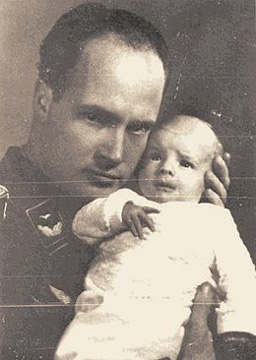 If that’s what happened, it’s no more than Rascher (
.jpg)


 By contrast, April 22 was the lucky day for Wehrmacht General

 This was a sensational and utterly circumstantial case … although the laudatory London Times editorial of March 15, 1912 noted, “as Shakespeare has it, there are ‘strong circumstances which lead directly to the door of truth.'”
