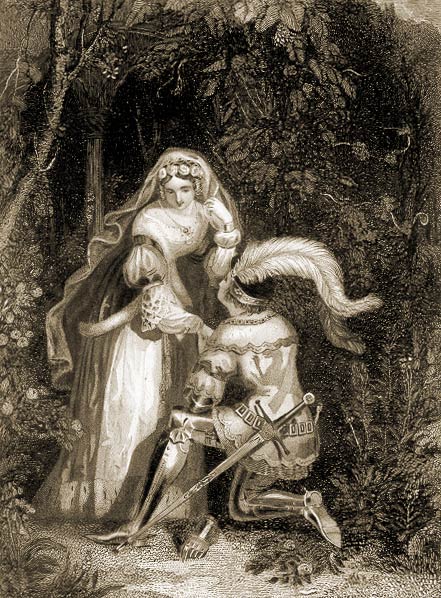
1498: Girolamo Savonarola, as he had once burned vanities

On this date in 1498, the Dominican friar who had once bent Florence to his austere will was hung in chains and burned.

Girolamo Savonarola preached standing-room-only, millenial sermons against worldly immorality, in the early 1490’s. By 1494, when peninsular politics chased a weak Medici scion from Florence, he had become its master.

He makes a complex character, with a streak of flawed greatness even his contemporary enemies recognized; his anti-Renaissance theology was severe but not dour, fired as it was by a genuine spiritual passion that spoke to real needs of his audience and a real crisis growing in the Church. And he did not disdain the revolutionary real-world implications of his faith.

Savonarola instituted Republican government with a touch of the Taliban — a vice squad of young hooligans to rough up rouged ladies and card-players;* a famous Bonfire of the Vanities in which Botticelli incinerated some of his own work — but also a populist economic touch.

For reasons both internal (the killjoy factor of busting up dice games wore out its welcome) and external (his French ally Charles VIII was driven from Italy, and Savonarola made a dire enemy of the corrupt Borgia pontiff Alexander VI), the priest’s grip on Florence weakened. In April 1498, he was arrested with two other clerics; all three were tortured into signing confessions, then hanged in the Piazza della Signoria by an insolent executioner.

The doomed Savonarola anguished that he had not been strong enough to resist the tortures of the rack, and penned in contrition the Latin meditation Infelix ego:

Alas wretch that I am, destitute of all help, who have offended heaven and earth — where shall I go? Whither shall I turn myself? To whom shall I fly? Who will take pity on me? To heaven I dare not lift up my eyes, for I have deeply sinned against it; on earth I find no refuge, for I have been an offence to it…

Like Savonarola’s memory and teachings, it spread — often illicitly — in a Europe ready for religious reform. Infelix ego has been frequently set to devotional music, like this version by Orlande de Lassus:

[audio:Infelix_Ego_Lassus.mp3]

Savonarola might have been in himself a dead end, an unsuccessful prophet quickly rolled back, but he nonetheless possesses a recognizable essence that distills both the Zeitgeist of his time and the immemorial hunger for simplicity and virtue that coexists with the equally human celebration of pleasure and beauty. He left complex legacies to both the Church and the city his reforms sought (and ultimately failed) to scourge.

In religion, his castigation of the vice and sin of the Church (a position of which he was an outstanding but hardly a lonely advocate) prefigured the coming Reformation. But Savonarola also never left off the most devout affiliation to Catholicism, nor sought institutional schism even when he had been excommunicated.** What to make of such a man? He is both depicted (at the base of a Martin Luther statue) at the Worms Reformation Monument, and proposed for present-day Catholic canonization.

So too his secular legacy — the theocrat who burned books and expelled the Medici and was reduced to ashes for his reactionary principles — merits a respectful recollection in Florence, even if few would actually want to live in his republic. He repelled Machiavelli, a libertine counselor of the post-Savonarola Florentine Republic, but perhaps fascinated him as well, as a prince with a precisely backward grasp of his own power.

This stone marking the site of the execution stands at a crossroads of tourist traffic in a thicket of statuary, mostly nude and/or classically inspired, outside the entrance to one of Europe’s principle collections of Renaissance art.

One wonders what the old Dominican would have made of it.

Books about Savonarola’s Florence

* Savonarola also made sodomy punishable by death.

** Alexander VI tried first to get him (in Lyndon Johnson’s fragrant phrase) inside the tent pissing out by making him a cardinal, which Savonarola spurned.

On this day..

1833: Midgegooroo, Noongar rebel

On this date in 1833, an aged aboriginal Noongar (or Nyungar) was sentenced to execution and summarily shot in southwest Australia.

Midgegooroo was one of the many indigenous casualties of European settlement — Perth, in this case.

Little is documented of his life but the end and that, of course, by his enemies; he helped raise resistance to the arriving whites in 1831 after a native was killed trying to raid a potato patch. As tensions heightened over the ensuing months, he was outlawed with a £20 reward on his head. He was sentenced — possibly without any sort of formal trial — and summarily shot a few days after capture.

Midgegooroo’s son Yagan outlived his father two more months, and in that scanty condescension of destiny carved a place as one of Australia’s most illustrious native rebels. (pdf)

In the end, inevitably, Yagan’s fate was the same — not so precisely as to qualify him directly for these pages but ambush by settlers amounted to much the same as the rickety assemblage of formal semi-legalisms that thrust his father into the ground: the law of conquest without apology. It would be years yet before any white would face the law’s lethal sanction for killing Australian natives.

Yagan’s head was hewn off and packed for England as a grisly trophy-cum-souvenir-cum-“anthropological curiosity”. Not until the recent trend towards repatriating such remains was it was finally exhumed and returned to the Noongar nation — in 1997.

On this day..

1425: Parisina Malatesta and Ugo d’Este, for incest

On this date in 1425, the Marquess of Ferrara had his wife and son beheaded for an incestuous affair, along with a courtier who had kept their secret.

The “incest” was social rather than sanguinary: the lovers were not related. Like many a Renaissance despot, Niccolò III d’Este produced a multitudinous assortment of illegitimate children and underaged dynastic wives. Small wonder, one might think, that the 14-year-old (at her marriage) Parisina Malatesta (the link is to her Italian Wikipedia page) should come to prefer the attentions of the Duke’s eldest bastard Ugo (one year her junior) to those of a spouse more than twenty years older.

Awww.

Still, the affair has its curious aspect, apart from the obvious. The Duke was on that timeless monarchical quest for legitimate male issue; Parisina Malatesta would bear him two surviving daughters and a son who died in infancy during her teenage years.

One can hardly fail to think of that more renowned decapitated queen of the next century Anne Boleyn. Like Anne, Parisina lost her head to an incest allegation after a few years’ failure to give her husband an heir.

The need for specifically legitimate succession, however, was somewhat less pressing in tightly run Ferrara than early Tudor England. As the oldest illegitimate son, Ugo himself had a chance to succeed by his father’s appointment — in fact, the second illegitimate son Leonello ultimately did just that. For this reason, Ugo and Parisina — the latter threatening to supplant the former with a legitimate child of her own — might have been natural rivals, and there is some hint of initial enmity between the two. One wonders if there might not have been a twist of obscured courtly skullduggery about this day’s bloody climax.

In any event, interlocutors have preferred the personal aspect, and little wonder. The Marquess played his part by being stricken with anguish and remorse for his ruthless treatment of a favored son, possibly aided by a general reaction of horror among most contemporaries.*

Retold in later years as scandal (though never with much sympathy for the marquess**) its Byronic potential as tragic love story was eventually seized by, well, Lord Byron. His “Parisina” gives us two true hearts in the flower of youth crushed by the cruel weight of their unjust world … although he found it more apt to conclude with only the boy losing his head while the wail of his lover signals a more ambiguous fate.

With all the consciousness that he
Had only passed a just decree;
That they had wrought their doom of ill;
Yet Azo’s† age was wretched still.
The tainted branches of the tree,
If lopped with care, a strength may give,
By which the rest shall bloom and live
All greenly fresh and wildly free:
But if the lightning, in its wrath,
The waving boughs with fury scathe,
The massy trunk the ruin feels,
And never more a leaf reveals.

Mascagni also adapted it for the opera in 1913 — a legendarily tiresome four-hour affair. One review’s famous recommendation (apt enough for the subject as well as the performance) was “Cut, cut, cut!”

* The Marquess was less troubled about his wife, and promulgated a decree imposing like punishment for any other wife guilty of such a crime. The sentence was actually carried out upon a magistrate’s wife.

** Gibbon tut-tutted the affair, simultaneously helping circulate it anew:

Under the reign of Nicholas III, Ferrara was polluted with a domestic tragedy. By the testimony of a maid, and his own observation, the Marquis of Este discovered the incestuous loves of his wife Parisina, and Hugo his bastard son, a beautiful and valiant youth. They were beheaded in the castle by the sentence of a father and husband, who published his shame, and survived their execution. He was unfortunate, if they were guilty: if they were innocent, he was still more unfortunate; nor is there any possible situation in which I can sincerely approve the last act of the justice of a parent.

† Niccolo is “Azo” in the poem, for metric convenience. The House of Este had produced a number of lords named Azzo over the preceding centuries.

On this day..

1536: Anne Boleyn

On this date in 1536, Anne Boleyn lost her head.

Any queen decapitated by her king would of course rate an entry in these grim pages. But this does not quite explain Anne Boleyn‘s enduring appeal, relevance and recognizability for the most casual of modern observers, and her concomitant footprint in popular culture, even with the “Greek tragedy” quality of her life.

Anne stands at the fulcrum of England’s epochal leap into modernity. Whether she was that fulcrum might depend on the reader’s sympathy for the Great Man theory of history, but little more do we injure our headless queen to regard her as the woman for her time and place — the accidental hero (or villain) raised up and thrown down by the tectonic forces of her milieu.

Through Anne was born — for reasons of momentary political arrangements of long-forgotten dynasts, which seems a shockingly parochial proximate cause — the English Reformation, and through the Reformation was born the crown’s decisive triumph over the nobility, the broad middle class nurtured on the spoils of Catholic monasteries, the rising Britannia fit to rule. Most would take as an epitaph historical accidents of such magnitude.

Of course, by those same accidents, Anne was the instrument of thousands of deaths herself, and little did she appear troubled in life by the corpses upon which she ascended the throne.

Her own family maps the change wrought on England. An ancestor was beheaded in the Wars of the Roses, medieval England’s last great breakdown; her uncle Thomas Howard was one of the throwback scheming Dukes, mastered by his sovereign to the extent of issuing Anne’s capital sentence from his own lips;* the beheaded woman’s daughter, Queen Elizabeth I, set a recognizably centralized English state on the path of empire.

Fitting tribute that, from the Tower where she met her end** to lands undreamt-of in her time, people still, like Henry, find her captivating.

[audio:http://www.bl.uk/whatson/podcasts/podcast95533.mp3]

* Anne’s father also declared for her guilt. Unprincipled as these men undoubtedly were, it cannot have been a pleasant responsibility; the question of whether she was actually guilty of adultery-cum-treason, the fatal charge extracted from a supposed lover by torture, has been hotly and inconclusively disputed by posterity.

** With a solemn speech submissive to Henry but not admitting any guilt — in an earlier moment of levity, she had famously remarked of the French swordsman hired to do the job, “I heard say the executioner was very good, and I have a little neck.”

On this day..

2004: Case Study: Kelsey Patterson

The case of Kelsey Patterson, who was executed in 2004, is one of the most compelling examples of what can happen when the mental health system fails to provide adequate care and in doing so, puts the public at risk. For more than two decades, Patterson struggled with paranoid schizophrenia. His severe delusions and elaborate conspiracy theories led him to commit several irrational and motiveless assaults. Yet instead of investing resources in a long-term treatment plan, the state of Texas largely left Patterson to his own devices, until one day his mental illness pushed him to the point of no return.

A Cycle of Illness, Violence, and Neglect

Kelsey Patterson spent much of the 1980s in and out of two state mental hospitals. His condition would be stabilized, but would deteriorate once he was removed from psychiatric care. According to a Houston Chronicle from 11 August 2002 (“Mentally Ill Killer’s Life on the Line”), when he stopped taking his medication, he would become belligerent. An earlier article in the same newspaper (“Is Mentally Ill Death Row Inmate Sane Enough to Die?”, Houston Chronicle, 14 November 1999) noted he was “left half-treated and unsupervised by the state for years despite a history of psychotically inspired, near-fatal assaults.”

Kelsey Patterson: Not all there.

In 1980, Patterson shot and wounded Richard Lane, a Dallas co-worker who he believed was conspiring against him and attempting to poison his food (it was Lane’s first day on the job). Lane survived and Patterson was sent to the maximum security unit at Rusk State Hospital, where he was found incompetent to stand trial and diagnosed with schizophrenia. Although restored to competency through treatment, doctors determined that he had been unable to conform his conduct to the law, a key provision of Texas’ insanity statute at the time. Prosecutors dismissed the charges, deeming him insane at the time of the crime.

In 1983, Patterson shot and wounded a co-worker in his hometown of Palestine in another motiveless, delusional assault. Again he spent months at Rusk State Hospital before being restored to competency. Once again he was found unable to conform his behavior to the law, and the attempted murder charge was dismissed.

Back in Dallas in 1986, he assaulted yet another co-worker and was sent to Terrell State Hospital. As with the previous incidents, no charges were filed because of his mental health status. He was hospitalized once more in 1988 after reportedly threatening family members and complaining that people were trying to poison him. That hospital stay lasted only 34 days.

Throughout this period, Patterson denied that he was mentally ill, would stop taking his medications, and refused to comply with treatment plans. His delusions continued to worsen, and he believed that everyone was out to get him, particularly “the authorities.” According to his brother, he sometimes would tape the edges of his windows and doors to determine if anyone had come in the room. He also heard voices talking to him through the walls and over the loudspeakers during his time in jail.

On September 25, 1992, just days after his brother once again tried to have him committed to a psychiatric facility, Patterson walked a short distance from his home to a local oil supply business in Palestine, where he shot and killed both the owner, Louis Oates, and his secretary, Dorothy Kay Harris, at whom he screamed “You ain’t going to get away with it.” After the shooting, he put down the gun, stripped to his socks, and paced, shouting incomprehensibly until the police arrived. As with his previous assaults, there seemed to be no real motive or explanation for the crime – Patterson had only a casual acquaintance with the victims. Yet in this instance, the state not only decided to pursue charges but also to seek the death penalty, arguing that Patterson met the new legal standard of sanity, which merely required the defendant to know that his conduct was wrong. The ability to conform one’s conduct to the law was no longer part of the insanity defense in Texas. By all accounts, however, Patterson’s delusional beliefs were the same as always.

Excerpt from a 13-page letter from Kelsey Patterson to the Texas Court of Criminal Appeals. (Image owned by author.)


Patterson’s Competency Hearing and Capital Trial

At his competency hearing, two physicians did not dispute his mental illness but declared Patterson to be competent to stand trial. Dr. James Grigson – who had diagnosed Patterson with schizophrenia 12 years earlier – reversed course and testified that in this latest assault, Patterson had been sane at the time of the crime. He had spoken with Patterson for less than five minutes and had not conducted a comprehensive evaluation, yet was absolutely confident in his assessment.*

Against the advice of his attorneys, Patterson took the witness stand during the hearing and rambled about the conspiracies against him. He offered this explanation for his behavior:

They have some type of implant devices that they used on me in the military, which I receive. Like the device that they put in the inner ear in which they can send subliminal message and make a person act beyond their controllability to know you have taken an action.”

The jury found him competent to stand trial, in spite of the clear evidence that he did not possess a rational or factual understanding of the proceedings against him and was unable to consult with his attorneys, whom he believed were plotting against him. Patterson was constantly removed from the courtroom during his trial because of his disruptive behavior and outbursts about the devices implanted in his body. The jury rejected his insanity defense, found him guilty of capital murder, and sentenced him to death.

A Permanent Stay of Execution

During his time on death row, Patterson consistently maintained that he was the victim of an elaborate conspiracy, and he wrote rambling, incoherent letters to court officials, his family, politicians, and others. He refused to meet with mental health professionals or his lawyers, which made it impossible to formally assess his competence. Both state and federal courts upheld his conviction and found him competent to be executed. In November 2003, the U.S. Supreme Court refused to hear his appeal and the state set his execution for the following May.

Upon learning of his execution date, Patterson’s letters referred to a “permanent stay of execution” that he said he had received on grounds of innocence. Competency for execution requires an inmate to be aware of the impending execution and the reason for it.

On May 17, 2004, the Texas Board of Pardons and Paroles issued an extremely rare recommendation of clemency for Kelsey Patterson because of his mental illness; the vote was 5-1 and was only the second such recommendation in the board’s history. Governor Rick Perry rejected the recommendation, however, “in the interests of justice and public safety.” Kelsey Patterson was executed on May 18, 2004, delusional until the very end, as evidenced by his incoherent last statement:

Statement to what? State what? I am not guilty of the charge of capital murder. Steal me and my family’s money. My truth will always be my truth. There is no kin and no friend; no fear what you do to me. No kin to you undertaker. Murderer. … Get my money. Give me my rights. Give me my rights. Give me my rights. Give me my life back.

For more information on death penalty cases involving mental illness, go to http://www.tcadp.org/index.php?page=mental-illness or visit http://preventionnotpunishment.blogspot.com

* Dr. Grigson was known as “Dr. Death” because his testimony was instrumental in sending so many people to death row. He later was expelled from the American Psychiatric Association and Texas Society of Psychiatric Physicians because of his unethical, unscientific testimony in such cases.

Kristin Houle is a 2007 Soros Justice Fellow based in Austin, Texas.

On this day..

1955: Leslie George Hylton, a better bowler than liar

On this date in 1955, Test cricketer Leslie George Hylton was hanged in Spanish Town, Jamaica, for murdering his wife.

Hylton represented the West Indies in six grueling Test cricket matches in the 1930’s. (Career statistics.)

And apparently he had a thing about adultery, because when he found out his wife was having an affair, he shot her dead. Trying to shoot himself, he told John Law, but his alibi was even worse than his aim: she’d been shot seven times, meaning the fast bowler had reloaded.

Hylton is the only Test cricketer known to have suffered the death penalty. Fans took his death in stride:

Australia were touring the West Indies, and when the Jamaican opener JK Holt followed a run of low scores by dropping two catches in the Test at Bridgetown, a play card urged “Save Hylton, hang Holt.”

Cricket officialdom, though, kept such a stiff upper lip that Hylton’s obituary in its leading publication managed not to mention that his passing had involved a noose.

On this day..

1569: Dirk Willems, for loving his enemy

On this date in 1569, Dirk Willems paid the penalty for a famous act of charity.

Willems was condemned by the still-ascendant Catholic church as an Anabaptist, but escaped prison.

Fleeing a pursuer across a frozen pond, Willems had an opportunity to make good his escape when his persecutor crashed through the ice. But he turned back to save the drowning man:

One good turn did not deserve another: the man arrested Willems, and the compassionate Protestant found himself burned to death* this day at Asperen.

Hundreds of Anabaptists suffered similar fates, many of them registered in the Martyrs Mirror (available online here). But Dirk Willems’ story has always been one of the most affecting and popular with the Mennonite communities who trace their lineage to the Anabaptists:

[W]hen he fled he was hotly pursued by a thief-catcher, and as there had been some frost, said Dirk Willems ran before over the ice, getting across with considerable peril. The thief-catcher following him broke through, when Dirk Willems, perceiving that the former was in danger of his life, quickly returned and aided him in getting out, and thus saved his life. The thiefcatcher wanted to let him go, but the burgomaster, very sternly called to him to consider his oath, and thus he was again seized by the thief-catcher, and, at said place, after severe imprisonment and great trials proceeding from the deceitful papists, put to death at a lingering fire by these bloodthirsty, ravening wolves, enduring it with great steadfastness, and confirming the genuine faith of the truth with his death and blood, as an instructive example to all pious Christians of this time, and to the everlasting disgrace of the tyrannous papists.

(Bygones, tyrannous papists: last year, a Mennonite delegation to the Vatican gave Pope Benedict XVI a framed picture of Willems saving his romish persecutor.)

Few are the faiths that lack a martyrology, but notwithstanding the incendiary language of our 17th-century source, the place of martyrs (“Dirk Willems warns Mennonites not to expect to be rewarded for good works — a sharp contradiction to the American gospel of success”) and the right way to commemorate them without stoking confessional hostility occupy unusually nuanced places in Mennonite thought.

* The burning came off badly, the Martyrs Mirror records:

[A] strong east wind blowing that day, the kindled fire was much driven away from the upper part of his body, as he stood at the stake; in consequence of which this good man suffered a lingering death, insomuch that in the town of Leerdam, towards which the wind was blowing, he was heard to exclaim over seventy times, “O my Lord; my God,” etc., for which cause the judge or bailiff, who was present on horseback, filled with sorrow and regret at the man’s sufferings, wheeled about his horse, turning his back toward the place of execution, and said to the executioner, “Dispatch the man with a quick death.” But how or in what manner the executioner then dealt with this pious witness of Jesus, I have not been able to learn, except only, that his life was consumed by the fire.

On this day..

1941: Maurice Bavaud, who couldn’t get a shot off

Early this morning in 1941, a Swiss theology student had his head cut off at Berlin’s Plotzensee Prison for plotting to kill Adolph Hitler.

Maurice Bavaud, 25 at his execution, cuts one of the more quixotic (the link is French) of the many figures who schemed Hitler’s death — and also one of the more affecting, for at this early date he might have spared Europe most of the great war’s horror.

But Bavaud was also, fundamentally, a poor assassin.

Apparently motivated by pique at Germany’s repression of Catholicism — he’s most commonly cast as a lone gunmen, although there are also theories that he was affiliated with a wider network of students — Bavaud slipped into Germany in 1938 and spent the ensuing weeks knocking around Bavaria looking for a chance to do the thing.

That November, the chancellor turned up for the 15th anniversary of the Beer Hall Putsch* … to which Bavaud secured VIP seating. The aspiring assassin had only a low-caliber pistol, but as the Fuhrer passed his vicinity, a copse of saluting arms from the spectators around him obstructed any chance to shoot. November 9, 1938 instead became famous for other reasons.

One can appreciate at this juncture the young man’s discouragement and desire to leave Germany. One can understand that, penniless, he felt obliged to sneak aboard a passenger train. But one will strain very hard to imagine why even the most desperate straits should impel a man to do either of these things while still carrying the incriminating pistol and notes revealing his plans. When he was nabbed for skipping the fare, his situation quickly became catastrophic, with the help of Gestapo torturers. (One can see, in Bavaud’s own hand, a 1940 letter to his family informing them of his sentence here.)

Switzerland essentially exerted no diplomatic effort on behalf of their subject, and this fact informed the Swiss courts which, years after the war, posthumously reduced Bavaud’s sentence. Germany eventually paid reparations to the family of the man who tried to off their head of state.

Update: Maurice Bavaud has been officially rehabilitated by Switzerland.

* He wasn’t even the best failed Hitler assassin in the Bürgerbräukeller that day.

On this day..

1916: James Connolly, socialist revolutionary

On this date in 1916, James Connolly was tied to a chair and executed by firing squad along with Sean Mac Diarmada.

James Connolly: Irish revolutionary.

Connolly was born to Irish immigrant parents in Scotland. His first experience in his ancestral home of Ireland was during his stint in the British Army where, stationed in and around Cork, he had the opportunity to witness firsthand both the poor treatment of the native Irish by the British forces as well as the grave disparities between the landowning and peasant classes. When he returned home to Scotland, he fell in with the socialist crowd and quickly rose through the ranks to become one of the movement’s leaders. He actively participated in socialist organizations in several countries and joined the ranks of the Industrial Workers of the World.

A variety of circumstances brought him back to Ireland, where he led Irish socialists in seeking rights for the working class, joining the Irish Transport and General Workers’ Union in 1912. He went on to head the union two years later when the General Secretary, “Big” Jim Larkin, left for a speaking tour. In this capacity, he found a crowd for his increasingly open talks of revolution. Frustrated by what he saw as the unwillingness of the bourgeois Irish Volunteers, Connolly spoke persistently about sacrificing his own life in the name of economic freedom for Ireland, starting The Workers’ Republic journal, then printing his treatise The Re-Conquest of Ireland in 1915. Connolly headed just one revolutionary faction in Ireland at the time. Not wishing to have their festivities spoiled by Connolly, the Irish Republican Brotherhood, another revolutionary paramilitary group, decided to invite him to their Easter party.

The General Post Office in Dublin after the uprising.

The Easter Rising, which had little support from the Irish public at the time, began on April 24, 1916. Connolly led the Dublin Brigrade, which held the Dublin General Post Office, and so was in essence a sort of Commander-in-Chief during the uprising. Six days later, the Easter Rising came to a close with a surrender to British troops; its leaders, who had issued a proclamation of Irish freedom, were quickly sentenced to death by firing squad in the courtyard of Kilmainham Gaol in Dublin.

Injured during the fighting, Connolly had only been given a few more days to live by the doctors that attended him at the Royal Hospital Kilmainham. Unable to stand on his own due to his injuries, he was tied to a chair in order to face the firing squad.

The rapidity and brutality of the executions shocked the Irish public and the conditions of Connolly’s death were most shocking of all. After the executions, the corpses of the 15 put to death (killed between May 3 and May 12) were placed into an unmarked mass grave. The Irish people, previously largely indifferent to the republican rantings of the revolutionaries, angrily regarded British action against the leaders of the Easter Rising, granting legitimacy to the rebellion.

The death of Connolly and the other leaders of the six-day siege presaged the final revolution that led to a free Irish state. Two of Connolly’s cohorts in the Easter campaign were Eamon de Valera and Michael Collins; within a half dozen years, the two* expanded revolutionary tactics through Sinn Fein that forced the British to the bargaining table, meetings that would give rise to the bitterly partitioned Ireland of today. Connolly is still regarded as one of the greatest Britons, though he spent his life fighting the British, and the Irish have celebrated his memory through several songs.

* While de Valera and Collins were regarded as the primary players in Irish statehood, the Easter Rising included dozens of revolutionaries who would spend their lives fighting for Irish independence.

On this day..

1685: Margaret McLachlan and Margaret Wilson, the Solway Martyrs

On this date in 1685, a woman of 63 and another of 18 were staked to the tidal channel of Bladnoch River near Wigtown and drowned by the rising waters.

Margaret Wilson remembered in heroic — and sexy — marble at Knox College in Toronto, Canada. (Larger version.)

They were holdout Covenanters — Scottish Presbyterians resisting English Episcopalian control in a struggle both theological and political (here’s a backgrounder).

To skip over much meaningful history, the Covenanter movement of local presbyter control had at this point been defeated politically and militarily, if not spiritually. The due demanded by the British crown was prayer for the king — an oath, in effect, of submission to the Episcopal hierarchy and, by the same token, to London. Many Scots remained obdurate, including children — the 18-year-old Margaret Wilson was arrested with her 13-year-old sister, though their father managed to scrape together a bond payment to save the younger girl.

And fiendish penalties were deployed to force their capitulation or cow their sympathizers. In this case, a recent law prescribed public drowning for Covenanter women, and the two Margarets were duly condemned to be

ty’d to palisados fixed in the sand, within the flood mark, and there to stand till the flood overflowed them and drowned them.

The ploy on this day was to put the old woman further out, where she would drown first, in hopes of terrifying the teenager into submission. The young Margaret held firm.

Here is the women’s end related in The History of the Sufferings of the Church of Scotland by Robert Wodrow, who dubbed the bloody suppression of the Covenanter movement in the 1680’s “The Killing Time”:

The two women were brought from Wigton, with a numerous crowd of spectators to so extraordinary an execution. Major Windram with some soldiers guarded them to the place of execution. The old woman’s stake was a good way in beyond the other, and she was first despatched, in order to terrify the other to a compliance with such oaths and conditions as they required. But in vain, for she adhered to her principles with an unshaken steadfastness. When the water was overflowing her fellow-martyr, some about Margaret Wilson asked her, what she thought of the other now struggling with the pangs of death. She answered, what do I see but Christ (in one of his members) wrestling there. Think you that we are the sufferers? No, it is Christ in us, for he sends none a warfare upon their own charges. When Margaret Wilson was at the stake, she sang the 25th Psalm from verse 7th, downward a good way, and read the 8th chapter to the Romans with a great deal of cheerfulness, and then prayed. While at prayer, the water covered her: but before she was quite dead, they pulled her up, and held her out of the water till she was recovered, and able to speak; and then by major Windram’s orders, she was asked, if she would pray for the king. She answered, ‘She wished the salvation of all men, and the damnation of none.’ One deeply affected with the death of the other and her case, said, ‘Dear Margaret, say God save the king, say God save the king.’ She answered in the greatest steadiness and composure, ‘God save him, if he will, for it is his salvation I desire.’ Whereupon some of her relations near by, desirous to have her life spared, if possible, called out to major Windram, ‘Sir, she hath said it, she hath said it.’ Whereupon the major came near, and offered her the abjuration, charging her instantly to swear it, otherwise return to the water. Most deliberately she refused, and said, ‘ I will not, I am one of Christ’s children, let me go.’ Upon which she was thrust down again into the water, where she finished her course with joy.”

Update: Gravestone photos and maps of the area can be found here.

On this day..