2007: Ajmal Naqshbandi, Fixer

On this date in 2007, the Taliban beheaded hostage Ajmal Naqshbandi, an Afghan “fixer” who arranged local contacts for foreign journalists.

Naqshbandi had been pinched on March 6 with La Repubblica writer Daniele Mastrogiacomo while both were out on a story together, even though Naqshbandi himself had set up Taliban interviews before.*

Quiet negotiations over several weeks produced a swap that would free the scribes, but a last-minute breach by the authorities — who decided not to return one of the agreed-upon prisoners — caused the Taliban to hang onto the Fixer. (Mastrogiacomo was set free. The man who was driving these two had been beheaded at the outset to prove the captors meant business.)

The story wasn’t quiet any longer, and as it mushroomed into a worldwide cause celebre with a scramble to save Ajmal, the Taliban evidently perceived a political advantage in butchering its hostage.

Success! Afghan President Hamid Karzai looked like a total stooge, willing to ransom a foreigner but not an Afghan.

So, for that matter, did the Italian government, which got it from both sides for being abject enough to deal with terrorists in the first place, and then ignoble enough once it did so to bail out its own national while letting his local partner die.

Naqshbandi is the subject of the (aptly titled) documentary Fixer: The Taking of Ajmal Naqshbandi (review).

Fellow-hostage Daniele Mastrogiacomo wrote this book about the ordeal.

The film follows Ajmal’s work with journalist Christian Parenti.

Doug Henwood of Left Business Observer interviewed Christian Parenti in the second half of this August 2009 episode from his (highly recommended, though rarely death penalty-related) WBAI radio program/podcast Behind the News, with intriguing coverage of the political context and the role of Pakistani intelligence:

[audio:http://shout.lbo-talk.org/lbo/RadioArchive/2009/09_08_15.mp3]

(Another leftist outlet, Democracy Now!, interviewed Parenti here.)

Pretty brutal.

But then, war is hell for journalists.

* “This work is very dangerous,” Naqshbandi said a few months before his death. “I bring one enemy to meet another.”

On this day..

1520: Gaspar Quesada, Magellan’s expedition mutineer

On this date* in 1520, on his famous voyage of circumnavigation, explorer Ferdinand Magellan ordered the immediate execution of a mutinous captain.

Not to be trifled with.

Having alit just days before at the natural harbor of Puerto San Julien on the Brazilian Argentine coast (Magellan named it) with plans to winter there, the overweening Portuguese explorer faced an uprising of grumpy Spanish officers.

Gaspar Quesada, captain of the Concepcion, along with Luis de Mendoza of the Victoria and recently displaced San Antonio skipper Juan de Cartagena, seized some of the expedition’s ships during the night of April 1-2.

Since you know Magellan’s name five centuries later, you already know he quashed it.

As the sovereign of this fragile floating world, Magellan had little choice but to treat a challenge to his authority mercilessly.**

Though accounts are inconsistent, it seems Mendoza was boldly slain by one of Magellan’s men meeting him under color of “negotiation”.


Mendoza’s assassination. From this site.

Mendoza was then posthumously beheaded and quartered along with Gaspar Quesada. Juan de Cartagena was either executed as well, or else caught a “break”: some sources relate that, instead of executing Cartagena, Magellan had him marooned.

the twentieth of June [1578], wee harboured ourselues againe in a very good harborough, called by Magellan Port S. Julian, where we found a gibbet standing upon the maine, which we supposed to be the place where Magellan did execution upon some of his disobedient and rebellious company.

–From a member of the Francis Drake expedition. Just 12 days later and at the very same place, Drake visited a similar penalty for a similar offense upon one of his own crew.

* “‘The authorities’ are divertingly divergent on the precise date of these events,” says O.H.K. Spate in The Spanish Lake, referring specifically to the dates of the mutiny. “Denucé puts them on Easter Sunday and Monday, 1–2 April; Merriman on Easter Sunday and Monday, 8–9 April; Nowell on Palm Sunday and the next day, with the trial verdict on 7 April. By the Julian calendar, in use until 1582, the dates would be 1–2 April; by the Gregorian, ten days later. Pigafetta and Maximilian, who slur over the whole affair, give no dates at all. It is not of vast moment.” Clearly, O.H.K. Spate never had to write an almanac blog.

Anyway, there’s some primary sourcing on this affair here.

** Though Magellan made an example of the leaders, he pragmatically spared about 40 others after keeping them in chains and working the pumps for three months. After all, the man still needed to crew his ships.

On this day..

1984: Elmo Patrick Sonnier, Dead Man Walking

On this date in 1984, Elmo Patrick Sonnier was electrocuted in Louisiana’s Angola Prison for abducting and murdering two teens in St. Martin Parish.*

Elmo and his brother Eddie posed as police officers and handcuffed two high schoolers parked at a local makeout point. Then they raped the girl, and shot both of them dead.

Both were given death sentences for the crime.

Eddie managed, as he said, to “give it back” on the grounds that Patrick was the one who did the shooting.

Once Eddie was clear of the death penalty, he tried to cop to the shooting after all, in order to save his little brother.

The appellate life of this case involved unedifying revisions of the “who shot whom” story. Ultimately, Eddie’s later claim to have been the triggerman, though quite possibly true, is not likely to win very much sympathy for his brother. It didn’t help him in the courts, either.

Just the 17th person executed since reinstatement of the death penalty, Sonnier learned that his longshot bid for clemency had been denied straight from the man who denied it — colorful, corrupt Louisiana Gov. Edwin Edwards, who personally phoned Sonnier to give him the bad news.

Little did Sonnier know that he had equally famous company meeting him in his cell.

Sonnier was the first condemned inmate to receive the spiritual ministration of Sister Helen Prejean.

The then-obscure Louisiana nun would later write the bestseller Dead Man Walking about her experiences with Sonnier and a second death row prisoner, Robert Lee Willie. Prejean remains among the most well-known death penalty opponents in the world today.

While the book Dead Man Walking treats Sonnier and Willie in a nonfiction vein, the film adaptation (review) amalgamated those people into a single character, the fictional “Matthew Poncelet”. It’s apparent from the flashbacks in Dead Man Walking‘s execution scene, however, that Sonnier is the predominant influence on “Poncelet”.

Dead Man Walking is an interesting movie. Though its principals were all vocal death penalty opponents, the film itself is much better art than propaganda. Arguably, the doomed criminal attains a sort of personal redemption — finally admitting responsibility for a crime he had denied for much of the film; seeking the forgiveness of his victims’ surviving family — only because the death penalty awaits him.

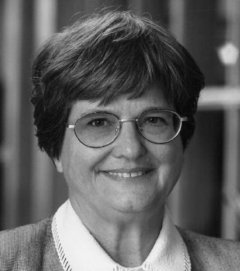
The real-life Sister Helen. Her most recent book is The Death of Innocents:An Eyewitness Account of Wrongful Executions.

Susan Sarandon won an Oscar for Best Actress for her turn as Sister Helen. Note that while Sonnier was in fact put to death in the electric chair (as was Robert Lee Willie), director Tim Robbins opted to portray a lethal injection because, as Helen Prejean herself put it,

we don’t want to give people the moral out whereby people could say ‘oh well, we used to do electrocution but that’s too barbaric so now we are humane and inject them’

* The murder that led to this date’s execution took place in the same area where Willie Francis survived a trip to the electric chair: the very chair that killed Patrick Sonnier.

On this day..

1693: Anne Palles, the last witch executed in Denmark

On this date in 1693, fortified with a half-pot of wine provided at public expense, 74-year-old Anne Palles was beheaded and then burned as a sorceress — the last “witch” put to death in Danish history.

Palles got caught up in the usual way: an aged farmer’s wife misfortunate enough to be attached to a couple of incriminating coincidences. Nine-tenths of Denmark’s 1,000 or fewer executed witches were women, two-thirds of them over 50 years old. (Danish-language source.)

Palles was accused (Danish) by a “wise woman” who was herself trying to beat a rap for attempted murder with black magic.

Once that happened, it all started to make sense (more Danish): the sudden death of a woman her husband had once danced with; the poor production of cows passing a place where Palles had pissed.

Clap her in prison and twist her arm a little, and she’ll cop to having “given herself to the Devil, life and soul”, and rolled with an infernal familiar (a black cat: how trite) by the name of “Puus”.

Though you wouldn’t call a thousand executions a drop in the bucket, Denmark never really experienced the witches’ holocaust that occurred in some other European locales. A 1576 law* providing an automatic judicial appeal for sorcery condemnations is often credited for this happy-ish circumstance; in this case, Palles recanted her confession on appeal as torture-induced, and a divided high court in Copenhagen only confirmed the death sentence by an 11-6 vote. (Antonin Scalia writing for the majority.) Even her burning-alive sentence was moderated by the crown to beheading, followed by posthumous burning.

Everyone being a little uncomfortable with the case didn’t ultimately do Anne Palles much good. Another woman, Anne Kruse, had died in prison with her, and was posthumously burned at the stake; the woman who’d made the initial accusations was flogged … and Anne Palles had her head struck from her body and her remains burned to ashes as a witch.

But an era had passed with the cooling of those embers.

Just three years later, an outbreak of witch accusations — the “possessions of Thisted” — rocked northern Jutland. This case boomeranged on its accusers (we’ve seen that elsewhere in Scandinavia), and largely put a stop to witchcraft prosecutions … though the superstition that generated them would persist for quite some time longer.

After 1650 — and thus long before the official day of reckoning for witch-belief during ‘the possession of Thisted’ in 1696-98 — a marked drop in the numbers of witch-trials took place … and the Jutland High Court judges grew more and more sceptical. One of them, the Professor of Mathematics, Villum Lange [Danish bio], wrote to Peder Schumacher (the later Griffenfeldt) in 1670: ‘During the past few days we have had a crowd of women brought before us, accused of sorcery. We have condemned a number of them to the stake; but because they are so foolish and simple-minded we have recommended to the court that the case should first be brought before His Majesty for appeal … One of them confessed to us herself that she had talked with the devil; but whether it was melancholia or some other form of fantasy, or was the honest truth, God alone knows. To me she appeared to be a person in her second childhood.’ No wonder that rumours soon began to circulte that this High Court judge ‘was siding with the sorceresses and saying that no sorceresses existed.’ Towards the close of the century the common people were complaining that the Jutland High Court judges never condemned anyone to the stake any more, and tht was the reason for there being so many sorceresses in Jutland.

But it was only among the educated upper clases [sic] that attitudes were changing. Among ordinary folk the need for witch-trials continued to be felt far into the future, and when the authorities would no longer agree to her this type of case, people several times took the law into their own hands. In 1722 some pesants at Gronning on Salling lynched a witch by burning, and in 1800 the last murder of a witch occurred at Brigsted in the neighbourhood of Vejle.

Gustav Henningsen, “Witchcraft in Denmark”, Folklore, Vol. 93, No. 2 (1982), pp. 131-137

* The first of its kind in Europe. Two other legal ordinances from earlier in the 16th century restricted the use of torture to gain confessions and barred courts from crediting the accusations of other convicted witches, and they also helped constrain outbreaks of widespread persecutions. (Anne Palles’s case looks to have skated pretty close to the line on both of those counts.)

On this day..

1689: John Chiesly, for alimony

Q. Why is divorce so expensive?
A. Because it’s worth it!

This date brings us a cautionary parable of the dangers of wedlock.

John Chiesly (or Chiesley, or Cheisly), an ill-tempered bloke with a wife he’d wished to put aside, had been ordered in arbitration to support her (and their 11-strong brood) to the tune of a £93 annuity.

Chiesly had a counteroffer to this liberal award: he shot dead the magistrate, Sir George Lockhart, the highest-ranking judicial officer in Scotland.* And he did it in broad daylight, making no attempt to fly.

“I have taught the President how to do justice,” Chiesly boasted as he was arrested.

That was on March 31, 1689.

On April 1, he was tried and convicted (torture was authorized “for discovering if ther were any accomplices, advysers, or assisters to him in that horrid and most inhumane act … yet the samen shall be no preparative or warrand to proceed to torture at any tyme hereafter, nor homologatione of what hes bein done at any tyme bypast”).

On April 3, he was drawn to execution at either Drumsheugh or at the Gallowlee, had the offending right hand cut off while still alive, then was hanged in chains with the murder weapon around his neck.

Then his spirit went on to haunt Dalry as “One-Armed Johnny,” until his remains were discovered and properly buried in 1965.

Still.

If you think this guy had relationship issues, consider the fate of his daughter, Rachel.

She inherited dad’s hot temper and took it to her own marriage.

When her husband tried to ditch her, the woman now known as Lady Grange stalked him so relentlessly that Lord Grange kidnapped her, faked her death, and held her secretly imprisoned in the Hebrides for 15 years. (More in this pdf)

Now that is an expensive divorce.

* Chiesly’s murder orphaned George Lockhart, later a notable anti-union politician; George’s brother Philip Lockhart was himself executed for the 1715 anti-Hanoverian Jacobite rising.

On this day..

1965: John Harris, white anti-apartheid martyr

On this date in 1965, John Harris hanged in Pretoria Central Prison for an anti-apartheid bombing: the first and only white person put to death for political crimes in apartheid South Africa.

An idealistic young teacher, Harris planted a bomb in a whites-only section of Johannesburg’s Park Station, intending to demonstrate that whites, too, opposed racial segregation. But the bomb threat he phoned in was not acted upon, and the symbolic device killed a 77-year-old woman and badly burned many others.

5.30 am was the time set for the execution. We were all awake, thinking of John. Not long afterwards the phone rang. Ad Hain answered. The voice said: “Your John is dead.” She recognised the voice as one of the Special Branch men’s.

-John Harris’s widow’s testimony to the post-apartheid Truth and Reconciliation Commission

His death (reportedly with “We Shall Overcome” on his lips) earned affecting tribute and flattering comparisons from his black countrymen.

Mr. Harris, a teacher and a member of the Liberal Party since 1960, is one of those few courageous White men in South Africa who believed passionately in racial equality, identified himself with the oppressed people and suffered persecution. His passport was seized in 1963. He was served with banning orders in February 1964 preventing him from continuing his work with the Liberal Party and the Non-racial Olympic Committee.

Like many others, he became convinced that there was no way left to influence the situation except by clandestine activity. When most of his colleagues in the underground organization, the African Resistance Movement, were jailed or fled the country, he tried to plan a spectacular demonstration. He placed a bomb in the Johannesburg station and telephoned the police so that the area would be cleared. The police did not act promptly and an elderly lady lost her life as a result of the explosion.

Under the prevailing circumstances in South Africa, the means of struggle are for the liberation movement to decide in the light of the conditions in the country.

The responsibility for the consequences lies very much on the rulers of Pretoria who, in defiance of the world and all sense of decency, created a situation which left no other alternative to decent people than to engage in violence.

In mourning the execution of Mr. Frederick John Harris, let me say that it will not be forgotten that in the struggle of the South African people this man, a member of the privileged group, gave his life because of his passionate belief in racial equality. This will serve to strengthen the faith of all those who fight against the danger of a “race war” and retain their faith that all human beings can live together in dignity irrespective of the colour of their skin.

I have recently received a message sent by him from his death cell in Pretoria Central Prison in January. He wrote:

“The support and warm sympathy of friends has been and is among my basic reinforcements. I daily appreciate the accuracy of the observation that when one really has to endure one relies ultimately on Reason and Courage. I’ve been fortunate in that the first has stood up — my ideals and beliefs have never faltered. As for the second, well, I’m not ashamed — I know I’ve shown at least a modicum of the second. ”

When I think of John Harris, the first White martyr in the cause of equality in South Africa, I am reminded powerfully of a great White American, a man who gave his life over a century ago — on December 2, 1859, to be exact — because of his passionate hatred of slavery: I mean John Brown.

People said then that John Brown was eccentric, that he was unwise in attacking the arsenal at Harper’s Ferry, Virginia, and that his act would only strengthen the slave lords.

History has made a very different judgement. Whether the particular act of John Brown was right or wrong, wise or unwise, his cause was right and invincible.

-1965 statement on this date’s hanging by Achkar Marof

Harris’s conviction was secured with the states-evidence turn of one of his compatriots in the white anti-apartheid African Resistance Movement. For this betrayal, John Lloyd earned his freedom and had already moved to England by the time Harris was executed.

Lloyd built a public service life of his own in the UK. However, his bid for parliament on the Labour ticket in the 1990s was scotched when public exposure of his past (as (a) a leftist terrorist; and (b) a betrayer of his fellow-leftists) brought him more baggage than one man can tote in a general election.

Harris’s rough treatment under arrest also continues to haunt his former interrogators in South Africa.

On this day..

1856: William Bousfield, Calcraft’d

Until the very end of public hanging in 1868 and thereafter in prisons, hangmen were unreliable executioners…

In nearly every year the grim chronicle of bungled executions and lackadaisical hangmen was extended … [William] Calcraft the hangman simply miscalculated the drops required to effect a speedy death. In office since 1829, Calcraft was ‘a mild-mannered man of simple tastes, much given to angling in the New River, and a devoted rabbit fancier’. Nice to rabbits, he had a casual way with people. He hanged them like dogs, it was said. Another dismal apotheosis was reached in the Newgate execution of William Bousfield in 1856. The night before his execution Bousfield* tried to kill himself in his condemned cell by throwing himself into the fire; next morning [March 31, 1856] he had to be carried to the scaffold swathed in bandages. Calcraft was nervous; he had received a letter threatening his assassination. He pulled the bolt to let the drop fall and disappeared hastily into the prison. Astonishingly, Bousfield drew himself up and lodged his feet on the side of the drop. Pushed off by a turnkey, he again found the side of the drop; and yet again. He was defeated only when Calcraft was summoned back to drag on his legs and ‘the strangulation was completed’. In front of an angry crowd, Bousfield gurgled his way to death as church bells rang to celebrate the end of the Crimean War.

After this debacle, they started pinioning the prisoners’ legs to prevent them getting a foothold on the scaffold, removing any hope of preservation to the inscrutable hand of Providence.

* Charles Dickens scribbled a few rambling thoughts on the subject of Bousfield’s trial.

On this day..

1938: Arkadi Berdichevsky, Jon Utley’s father

On this date in 1938, Arkadi (or Arcadi) Berdichevsky, a Russian Jew run afoul of the (pre-KGB) NKVD, was executed in the Arctic Circle prison town of Vorkuta for leading a prisoners’ hunger strike.

Though the powerful whom Stalin purged are well-known to the student of Russian history, Berdichevsky is just one of the countless obscure Soviet citizens who disappeared into the gulag never to emerge again.

Berdichevsky had something most of his fellow-victims did not: an English wife.

Freda Utley and her son Jon Utley — the couple cannily gave the boy his mother’s foreign last name to make it easier to emigrate if it should come to that, as indeed it did — left the USSR and Freda’s communist youth for fame as (paleo)conservative giants.

While young Jon — just two years old when his father was whisked out of their Moscow flat by the spooks — came of age, Freda Utley naturalized as an American and turned against her former ideology with the zeal of the converted.

Berdichevsky’s widow, Freda Utley, published this book in 1940 about her disillusionment with communism. This work and many others by Utley are also available as free pdfs from FredaUtley.com.

She savaged the U.S. government officials who “lost China”, and testified at Sen. Joseph McCarthy’s behest in the latter’s 1950’s red-hunt. (Utley also supplied McCarthy some research. She defended Tailgunner Joe until her death in 1978.)

Along the way, Freda Utley learned the date of her husband’s death, but never the circumstances.

That discovery fell to Jon Utley, who made his own fortune in business and became a conservative activist/intellectual himself, notable for his anti-imperialist position. (Utley writes regularly for antiwar.com, and opposed the recent Iraq blunder.)

In 2004, Jon Utley finally obtained the remarkably detailed records revealing that it was a firing squad rather than cold or malnutrition that took his father’s life. Utley then personally visited the sites of that Calvary in the Komi region of Russia.

Jon Utley gives a video interview about the experience and about his own path as an anti-communist here, but most especially recommended for our purposes is his written account of finding his father: HTML form here; pdf here.

On this day..

1935: Thomasina Sarao, miscalculated

Shortly after midnight this date* in 1935, the career of 71-year-old Canadian executioner Arthur Ellis came to an end with the botched hanging of Thomasina Sarao.

All a simple matter of physics.

When the old-school “drop ’em from a cart” method of strangulation hanging gave way to the “new drop”, the hangman’s art eventually came to encompass the scientific application of the humane level of force to the doomed person’s vertebrae.

Something in the neighborhood of 1,000 ft/lbs was about right. Too little, and the poor wretch strangles to death. Too much, and you rip the head right off.

Thomasina Sarao got too much, and it ripped her head right off.

They’d worked everything out to a handy table, see, where if you weighed this much, they knew to drop you this far, derived from the formula

1020/weight in pounds (less 14 lbs for the head) = drop in feet

Except in the widow Mrs. Sarao’s case — the Italian immigrant had offed her husband to collect the insurance** — Arthur Ellis was given the wrong weight for his client. He coiled a noose for a woman 32 pounds lighter than the person who actually mounted the scaffold, and he therefore made it more than a foot too long.

That whole “ripping off a woman’s head” thing really harshed everyone’s vibe. So, although hangings had long been moved behind prison walls, the Canadian government stopped the ongoing practice of allowing members of the general public to obtain tickets to witness them.

“Arthur Ellis” — it was actually a trade name he’d made up, and so dignified that one of his successors used the same alias — died three years after his grisly retirement party. He’s saluted by the Arthur Ellis Awards, the Crime Writers of Canada’s annual awards: a little trophy of a guy getting hanged.

[Ellis Trophy][Ellis Trophy]
Winners of the Arthur Ellis Award, like Robert J. Sawyer, get this trinket to commemorate. At least the little wooden fetish has his head attached to his shoulders. (Images (c) Robert J. Sawyer, and used with permission.)

* March 28 is sometimes reported, but the period press reports (like this wire story) seem to agree on the 29th, as does this index of Canadian executions.

** Two male co-conspirators, Leone Gagliardi and Angelo Donofrio, were also hanged for the same crime, a few minutes before Sarao on a different scaffold.

On this day..

1845: John Tawell, the man in the Kwaker garb

On this date in 1845, John Tawell was publicly hanged in Aylesbury (while broadsheets were hawked beneath the scaffold to the crowd of thousands) for the murder of his mistress — making history as the first criminal apprehended with the use of the telegraph.

Tawell had had an interesting 60-plus years on the planet. He did well as a young banker on the make to avoid the halter for the capital crime of forging banknotes.*

In those sanguinary days of our penal code, this crime, if brought home, would have led to his certain condemntion and ignominious execution as a felon. The particulars of the affair were, however, suppressed as far as possible, on account of the insuperable disinclination of the bankers to be in any way instrumental in taking away human life.**

Clapped in irons and sent to Australia, he waxed wealthy — “by his fortunate, and, it is to be presumed, honest trading,” our wry biography remarks. (As a pharmacist. That’s what we in the biz call “foreshadowing.”)

Tawell returned to England in 1831, got Sarah Hart as a bit on the side (she’d initially been hired to nurse Tawell’s dying wife), and then married a respectable Quaker woman. To conceal the affair — or perhaps because the payola Tawell was obliged to send for the maintenance of his mistress and the kids he begat with her was chewing into his straitened finances — Tawell poisoned Hart on New Year’s Day 1845.

Unfortunately for him, he was noticed leaving the scene of the crime by a neighbor, who found the victim before she had even expired.

Tawell had hopped a slow train for London ahead of apprehension, but it transpired that the station had installed the newfangled telecommunications device, the telegraph, which was requisitioned to dispatch to Paddington station a famous missive.

A murder had just been committed at Salt Hill and the suspected murderer was seen to take a first class ticket to London by the train that left Slough at 7.42pm. He is in the garb of a Kwaker with a brown great coat on which reaches his feet. He is in the last compartment of the second first-class carriage.

(The telegraph didn’t have a “Q”, so they had to improvise a phonetic spelling. k l8r.)

(This landmark police event is not to be confused with the first use of wireless telegraphy to apprehend a criminal — the next century’s very similar philandering-apothecary-on-the-lam case of Dr. Crippen.)

Caught, convicted,† condemned. (And confessed, secretly, to the prison chaplain.) The usual. Botched strangulation hanging. Hardly unusual. Love triangle murder? Downright trite.

But still: Tawell’s strange and variegated life left a strange and variegated legacy. (pdf)

In Australia, the memory of Tawell lingered for many years after his death because considerable legal argument took place about the validity of the Crown’s hndling of his property there. The Governor, Sir William Denison, affixed the Great Seal of the colony to the grant documents on his own initiative, which creted a serious difference between him and his chief minister. Known as the “Great Seal case”, it dragged on for some 16 years before it was resolved. It provided a dramatic epilogue to Tawell’s activities.

John Tawell had pharmacy qualifications of a sort, and he was no better or worse than many of the doctors around Sydney at the time who had received no regular professional instruction. When Tawell ventured into competition with the medical establishment in the colony it was a huge gamble because until 1820 many government doctors saw private patients and had clerks to do their dispensing, usually from hospital stores. He showed that independent pharmacy could thrive away from the medical shadow, but the commercial nature of his success also showed that the founding of independent pharmacy in Australia occurred as a retailing activity rather than as a needed profession.

* As a teen, Tawell was friends with a Quaker linen-draper who was himself ultimately executed for forgery, Joseph Hunton.

** This claim for bankers’ gentility is advanced in the context of the story of a banker who in fact went on to commit murder. Aside from that obvious paradox, it will come as no surprise to any denizen of the post-bailout neoliberal era that bankers proved more than ready to involve themselves in human misery, sufficiently remunerative. If Tawell’s sweetheart plea bargain reveals anything about the financier class, it’s that bankers aren’t keen on precedents for taking away bankers’ lives.

† John Tawell’s trial lawyer, the eminent jurist and politician Sir Fitzroy Kelly, disputed the coroner’s poisoning conclusion by arguing that Sarah Hart might have just eaten too many apple seeds. (Prussic acid, aka hydrogen cyanide, does occur naturally in many fruits.)

This attempted Chewbacca defense earned the barrister the nickname “Apple-pip Kelly”. However, since the cutting-edge technology of the day was only telegraph and not Twitter, the case does not appear to have launched any of Apple-pip Kelly’s progeny into lucratively pointless careers as famous-for-being-famous socialites.

On this day..