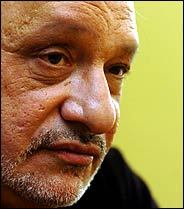
1953: Derek Bentley, controversially

On this date in 1953, Derek William Bentley was hanged by Albert Pierrepoint in London’s Wandsworth Prison for a murder committed by a friend.

The execution of the mentally impaired 19-year-old was a lightning rod when it was pronounced the previous December and remained so over a half-century struggle for his posthumous pardon.

He had been caught robbing a warehouse with an underage friend in November 1952, and in the gunfight that ensued, a police officer was shot — 15 minutes after Bentley was arrested.

In a welter of confusing evidence, the essential fact was that the two youths had engaged a criminal enterprise and thus became jointly liable for every consequence of the crime, regardless of who pulled the trigger. Nevertheless, it rankled as a manifest injustice that the young man should hang for a murder that happened after he was in custody, while the triggerman should not. There was a sense that Bentley faced a maximal punishment in the state’s frustration that the shooter was too young to hang; and, that since the two boys’ ages were barely on either side of 18 and the 17-year-old Christopher Craig arguably the dominant member of the duo, the effect was a great injustice.

The jury’s recommendation for mercy was not taken up, and Home Secretary David Maxwell Fyfe — a Nuremberg prosecutor fresh from crafting the European Convention on Human Rights — declined to extend a reprieve.

This morning’s hanging was hotly protested. Several hundred rallied outside the prison; 200 MPs presented a petition for Bentley’s clemency, and afterwards several were rebuffed attempting to debate the hanging in Parliament. The medical journal Lancet assayed the general disquietude at the situation and opined that

[W]e are obliged to ask ourselves whether in holding to the letter of justice we are letting the spirit escape … To the English, at any rate, revenge is seldom a fully satisfying experience; it carries too much guilt with it. In the case of Bentley the public sense of guilt seems to have been strong — far stronger than the desire for vengeance.*

Bentley’s 21-year-old sister Iris vowed to her brother the night before his death that she would clear his name, and she fought for the rest of her life to do so. She would win that fight in 1998 (one year after her own death) when the conviction was overturned.

In the meantime, Bentley’s fate entered the public conscience, generally but not universally in the capacity of miscarriage of justice.

Bentley is the subject of an Elvis Costello song, “Let Him Dangle”:

… and a 1991 film:

* Lancet also said that “in our view the perpetual public preoccupation with the condemned cell and the gallows is harmful to the mental health of society.” Executed Today does not endorse this position.

On this day..

1781: Mutinous ringleaders of the New Jersey line

On this date in 1781, George Washington quelled a dangerous mutiny in his starving Continental Army with a couple of salutary summary executions.

Weeks before, the Pennsylvania Line had mutinied for better pay — successfully. (When approached by British agents offering hard currency should they turn coat, the mutinous troops patriotically arrested the agents.)

General Washington had cause to fear widespread discontent in his chronically undersupplied army, however. He circulated to Congress and to several state governors an urgent appeal (.pdf) for more aid to hold up morale.

The aggravated calamities and distresses that have resulted from the total want of pay for nearly twelve months, the want of clothing at a severe season, and not unfrequently the want of provisions, are beyond description … it is vain to think an army can be kept together much longer under such a variety of sufferings as ours has experienced … unless some immediate and spirited measures are adopted to furnish at least three months’ pay to the troops in money, which will be of some value to them, and at the same time ways and means are devised to clothe and feed them better … the worst that can befall us may be expected.

Washington vowed in the meantime to “continue to exert every means I am possessed of to prevent an extension of the mischief.”

The mischief, however, extended.

The New Jersey line at Pompton imitated — and the imitation was reportedly explicit — the Pennsylvania line. They had legitimate grievances, like nearly everyone in the Continental Army, and that was precisely the problem: if mutiny became the means to resolve grievances, Washington wouldn’t have a Continental Army much longer.

Washington detailed Gen. Robert Howe to make an example.

Sir: You are to take the command of the detachment, which has been ordered to march from this post against the mutineers of the Jersey line. You will rendezvous the whole of your command at Ringwood or Pompton as you find best from circumstances. The object of your detachment is to compel the mutineers to unconditional submission, and I am to desire you will grant no terms while they are with arms in their hands in a state of resistance. The manner of executing this I leave to your discretion according to circumstances. If you succeed in compelling the revolted troops to a surrender you will instantly execute a few of the most active and most incendiary leaders.

And as Washington reported this afternoon to New Jersey Governor William Livingston … success.

Dr. Sir: I have the pleasure to inform your Excellency, that the measures concerted for quelling the mutiny in the Jersey line were this morning carried into full execution. The mutineers were unexpectedly surrounded and awed into an unconditional surrender with little hesitation and no resistance. Two of the principal actors were executed on the spot, the rest pardonned. The spirit of mutiny seems now to have completely subsided and to have given place to a genuine repentance. This was very far from being the case previous to this step, notwithstanding the apparent submission which the assurances of redress had produced; they still continued insolent and refractory and disobedient to the commands of their officers.

A general pardon was promised by Colonel Dayton, on condition of an immediate and full return to duty. This condition was not performed on the part of the mutineers and of course they were not entitled to the benefit of the promise; besides which the existence of the Army called for an example. I have the honor etc.

That second paragraph of the letter hints at a bit of ass-covering from Washington. The officer on the scene, Elias Dayton, had, according to Charles Patrick Neimeyer, already smoothed the disturbance by promising that a state commission would adjudicate discharge claims.

The placated “mutineers” were therefore surprised to be roused from their beds at Ringwood, N.J., by Howe’s forces and forced to form a firing squad to execute their own sergeants. (Neimeyer also claims that the first six-man squad intentionally missed.)

This in-the-field execution to enforce military discipline was a precedent later cited by Alexander Mackenzie to justify hanging Philip Spencer, Samuel Cromwell and Elisha Small at sea for mutiny.

On this day..

1939: Three Men For Murder, But Not Isidore Zimmerman

On this date in 1937, Isidore “Beansy” Zimmerman spent the day preparing for death in New York’s electric chair … but was spared by an 11th-hour clemency from New York Governor Herbert Lehman.

Here’s the scene, as laid in the anti-death penalty tome of wrongful convictions In Spite of Innocence:

As dawn broke over Sing Sing Prison, Beansy Zimmerman had every reason to think it would be his last day.

Zimmerman numbly went through the pre-execution rituals. The last meal (choose whatever you want), and music (you get to choose that, too) played on the wind-up phonograph. The barber shaves your scalp so the electrodes can fit snugly against your bare skin. The tailor slits one of your trouser legs for another electrode. Officials treat you with unaccustomed politeness. A final family visit — how do you say good-bye when you know it is forever? What should your last words be? Beansy’s mother stayed away, unable to face such finality.

Two hours before execution, Gov. Lehman commuted his sentence.

In this blog, we lay aside each story day by day, but for those affected, it’s rarely so easy — which is why the mothers of the five men condemned today put in their personal clemency appeals to the governor.

For Zimmerman and a fellow “accomplice” named Philip Chaleff whose respective roles in a robbery/murder were doubted, it had the desired effect. (Dominick Guariglia, Arthur Friedman and Joseph O’Loughlin weren’t so lucky.)

Chaleff, a diabetic being kept alive just for execution, soon succumbed. For Zimmerman, the execution that did not happen was to define the rest of his 66 years. He was alive, but to what end?

“I wasn’t dead, no,” he remembered. “But every day from now on they’d bury me a little more.”

Zimmerman fought, by becoming a skilled jailhouse lawyer and in 1962 finally winning exoneration from the New York Supreme Court, which held that the testimony against him had been perjured with the connivance of the prosecutor.

He’d spent nearly a quarter-century in prison. Now, he was just another ex-con scrabbling after dead-end employment.

For years thereafter, Zimmerman fought for a special bill that would allow him to sue the Empire State for wrongful imprisonment, finally winning approval in 1981.

His suit asked for $10 million. The judge reckoned Zimmerman’s time and trouble were worth a tenth of that.

Expenses deducted, Zimmerman walked away with $660,000 — that, and sweet vindication.

Fourteen weeks later, he dropped dead of a heart attack.

On this day..

1795: Unspecified Robespierrists

On this date in 1795, a Balzac story La Comedie humaine reaches its climax as the tumbrils of the Thermidorian Reaction wind their way to the scaffold.

In “An Episode Under the Terror”, a mysterious man appears to a priest in hiding and prevails upon him to say a secret mass for the recently executed Louis XVI.

It transpires in an exchange between the two that the stranger’s own conscience is somehow troubled.

“Remember, my son, [said the abbe] that it is not enough to have taken no active part in the great crime; that fact does not absolve you. The men who might have defended the King and left their swords in their scabbards, will have a very heavy account to render to the King of Heaven — Ah! yes,” he added, with an eloquent shake of the head, “heavy indeed! — for by doing nothing they became accomplices in the awful wickedness—-”

“But do you think that an indirect participation will be punished?” the stranger asked with a bewildered look. “There is the private soldier commanded to fall into line — is he actually responsible?”

We have no more answer in the text than we have in life.

Spoiler (That You Saw Coming) Alert

The stranger returns on the anniversary of the king’s martyrdom, but he remains enigmatic, until the abbe is caught up in a crowd watching the procession to the guillotine.

“What is the matter?” [the abbe] asked Madame Ragon.

“Nothing,” she said; “it is only the tumbril cart and the executioner going to the Place Louis XV. Ah! we used to see it often enough last year; but to-day, four days after the anniversary of the twenty-first of January, one does not feel sorry to see the ghastly procession.”

“Why not?” asked the abbe. “That is not said like a Christian.”

“Eh! but it is the execution of Robespierre‘s accomplices. They defended themselves as long as they could, but now it is their turn to go where they sent so many innocent people.”

The crowd poured by like a flood. The abbe, yielding to an impulse of curiosity, looked up above the heads, and there in the tumbril stood the man who had heard mass in the garret three days ago.

“Who is it?” he asked; “who is the man with—-”

“That is the headsman,” answered M. Ragon.

Meaning (though unnamed as such by Balzac), the phenomenally prolific Sanson.

On this day..

1989: Ted Bundy, psycho killer

Qu’est-ce que c’est?

It was 20 years today that Ted Bundy, the signature sexual psychopath in a golden age of serial killers,* rode the lightning in Florida’s Starke Prison.

Executed Today is pleased to mark the occasion with a conversation with Louisville crime writer Kevin M. Sullivan, author of a forthcoming2009 book on Ted Bundy … and a man who knows how the world looks from inside Bundy’s ski mask.


Ted Bundy is obviously one of the most iconic, written-about serial killers in history. Why a book about Ted Bundy? What’s the untold story that you set out to uncover?

The desire, or drive, if you will, to write an article about Ted Bundy and then create a 120,000 plus word book about the murders, was born out of my crossing paths with his infamous murder kit. Had Jerry Thompson [a key detective on the Bundy case -ed.] left Bundy’s stuff in Utah that May of 2005, well, it would have been an enjoyable meeting with the former detective, but I’m certain it would have all ended quietly there. Indeed, I doubt if I’d even considered writing an article for Snitch [a now-defunct crime magazine -ed.], much less a book about the killings. But it was having all that stuff in my hands, and in my home, and then being given one of the Glad bags from Ted’s VW that made it very real (or surreal) to me, and from this, a hunger to find out more about the crimes led me forward.


Ted Bundy’s gear, right where you want it — image courtesy of Kevin M. Sullivan. (Check the 1975 police photo for confirmation.)

Believe me, in a thousand years, I never would have expected such a thing to ever come my way. I can’t think of anything more odd or surreal.

ET: You mentioned that you think you’ve been able to answer some longstanding questions about Bundy’s career. Can you give us some hints? What don’t people know about Ted Bundy that they ought to know?

I must admit, when I first decided to write a book about the crimes, I wasn’t sure what I’d find, so the first thing I had to do was read every book ever written about Bundy, which took the better portion of three or four months.

From this I took a trip to Utah to again meet with Thompson and check out the sites pertaining to Bundy and the murders in that state. Next came the acquisition of case files from the various states and the tracking down of those detectives who participated in the hunt for the elusive killer.

Now, no one could have been more surprised than me to begin discovering what I was discovering about some of these murders. But as I kept hunting down the right people and the right documents, I was able to confirm these “finds” at every turn. And while I cannot reveal everything here, It’s all in the book in great detail. Indeed, you could say that my book is not a biography in the truest sense, but rather an in-depth look at Bundy and the murders from a vantage point that is quite unique. I wish I could delve further into these things now , but I must wait until it’s published.

The Bundy story has a magnetic villain and a host of victims … was there a hero? Was there a lesson?

The real heroes in this story are the detectives who worked day and night for years to bring Ted Bundy to justice. And if there’s a lesson to be learned from all of this, it is this: It doesn’t matter how handsome or articulate a person might be, or how nicely they smile at you, for behind it all, there could reside the most diabolical person you’ll ever meet! We need to remember this.

But how can you act on that lesson without living in a continual state of terror? Bundy strikes me as so far outside our normal experience, even the normal experience of criminality, that I’m inclined to wonder how much can be generalized from him.

Actually, (and I might say, thank God here!) people as “successful” as Ted Bundy don’t come our way very often. I mean, the guy was a rising star in the Republican Party in Washington, had influential friends, a law student, and certainly appeared to be going places in life. Some were even quite envious of his ascension in life. However, it was all a well-placed mask that he wore to cover his true feelings and intentions. On the outside he was perfect, but on the inside a monster. He just didn’t fit the mold we’re used to when we think of a terrible killer, does he?

Now, there are those among us — sociopaths — who can kill or do all manner of terrible things in life and maintain the nicest smile upon their faces, but again, just beneath the surface ticks the heart of a monster, or predator, or what ever you might want to call them. Having said that, I’m not a suspicious person by nature, and so I personally judge people by their outward appearance until shown otherwise. Still, it’s difficult (if not impossible) to see the “real” individual behind the person they present to us on a daily basis.

You worked with case detectives in researching your book. How did the Ted Bundy case affect the way law enforcement has subsequently investigated serial killers? If they had it to do over again, what’s the thing you think they’d have done differently?

They all agree that today, DNA would play a part of the investigation that wasn’t available then. However, in the early portion of the murders, Bundy made few if any mistakes, as he had done his homework so as to avoid detection. As such, even this wouldn’t be a panacea when it came to a very mobile killer like Bundy who understood the very real limitations sometimes surrounding homicide investigations.

I can’t help but ask about these detectives as human beings, too. Clearly they’re in a position to deal with the heart of darkness in the human soul day in and day out and still lead normal lives … is a Ted Bundy the kind of killer that haunts or scars investigators years later, or is this something most can set aside as all in a day’s work?

They are, first of all, very nice people. And you can’t be around them (either in person, or through numerous phone calls or emails) for very long before you understand how dedicated they are (or were) in their careers as police officers. They are honorable people, with a clear sense of duty, and without such people, we, as a society, would be in dire circumstances indeed.

Even before Bundy came along, these men were veteran investigators who had seen many bad things in life, so they carried a toughness which allowed them to deal with the situations they came up against in a professional manner. That said, I remember Jerry Thompson telling me how he looked at Ted one day and thought how much he reminded him of a monster, or a vampire of sorts. And my book contains a number of exchanges between the two men (including a chilling telephone call) which demonstrate why he felt this way

How about for you, as a writer — was there a frightening, creepy, traumatic moment in your research that really shook you? Was there an emotional toll for you?

Absolutely. But the degree of “shock”, if you will, depends (at least for me) on what I know as I first delve into each murder. In the Bundy cases I had a general knowledge of how Bundy killed, so there wasn’t a great deal that caught me by surprise, as it were. Even so, as a writer, you tend to get to know the victims very well through the case files, their family members or friends, and so on. Hence, I’ll continue to carry with me many of the details of their lives and deaths for the remainder of my life. And so, lasting changes are a part of what we do.

However, I did a story a few years back about a 16 year old girl who was horribly murdered here in Kentucky, and this case did cause me to wake up in the night in a cold sweat. Perhaps it was because I have a daughter that was, at the time, only a few years younger than this girl, and that some of what transpired did catch me off guard, so to speak, as I began uncovering just what had happened to this very nice kid.

Watch for Kevin M. Sullivan’s forthcoming The Bundy Murders: A Comprehensive History from McFarland in summer or fall of 2009.

* In fact, the term “serial killer” was coined in the 1970’s by FBI profiler Robert Ressler, as an improvement on the sometimes inaccurate category of “stranger killer”.


Additional Bundy resources from the enormous comment thread:

On this day..

1903: Arthur Alfred Lynch condemned

On this date in 1903, Irish MP Arthur Alfred Lynch waited 26 minutes for a jury to convict him, then heard the sentence of a British court for having fought against the British Empire in the Boer War.

[T]he jury have found you guilty of the crime of high treason, a crime happily so rare that in the present day a trial for treason seems to be almost an anachronism — a thing of the past. There can be no doubt that in times gone by there was great abuse, and many persons were indicted, convicted, and punished for matters which would not now be thought worthy of serious or, perhaps, any notice. There has been a kind of national reaction by which many persons have been disposed to treat serious crimes against the State as if the name of treason, and as if the thing, no longer existed. One moment of reflection will show you how erroneous is such a conception …

Yes, even if the black cap gave away the ending, the judge was going to take his time getting to it.

The misdeeds which have been done in this case, and which have brought you to the lamentable pass in which you stand, must surely convince the most sceptical and apathetic of the gravity and reality of the crime. What was your action in the darkest hour of your country’s fortunes, when she was engaged in the deadly struggle from which she has just emerged? You joined the ranks of your country’s foes. Born in Australia, a land which has nobly shown its devotion to its parent country, you have indeed taken a different course from that which was adopted by her sons. You have fought against your country, not with it. You have sought, as far as you could, to dethrone Great Britain from her place among the nations, to make her name a byword and a reproach, a synonym for weakness and irresolution. …

Even allowing that this sentence was pronounced before either of the coming century’s world wars, calling the Boer War to conquer South Africa for the crown England’s “darkest hour” only underscores how very long Britannia had stayed in the sun. Were the early shadows of empire’s twilight visible from here … or was it just standard issue judicial showboating?

[Y]ou thought it safe, no doubt, to lift the parricidal hand against your country. You thought she would shrink from the costly struggle wearied out by her gigantic efforts, and that, at the worst, a general peace would be made which would comprehend a general amnesty and cover up such acts as yours and save you from personal peril. You misjudged your country and failed to appreciate that though slow to enter into a quarrel, however slow to take up arms, it has yet been her wont that in the quarrel she shall bear herself so that the opposer may beware of her, and that she is seldom so dangerous to her enemies as when the hour of national calamity has raised the dormant energies of her people — knit together every nerve and fibre of the body politic and has made her sons determined to do all, to bear all, to sacrifice all on behalf of the country that gave them birth.

…

The only — I will not say excuse, but palliation that I can find for conduct like yours is that it has been for some years past the fashion to treat lightly matters of this kind, so that men have been perhaps encouraged to play with sedition and to toy with treason, wrapt in a certain proud consciousness of strength begotten of the deep-seated and well-founded conviction that the loyalty of her people is supreme, and true authority in this country has slumbered or has treated with contemptuous indifference speeches and acts of sedition.

There’s some relish here, the kind you’d hear if Antonin Scalia had an opportunity to pass sentence on Cynthia McKinney.

This ponderous bombast was the culmination of a highly-anticipated, highly-publicized trial of a man who had returned to London and arrest as an elected Irish parliamentarian after upholding the Boer cause in print throughout Europe, and enrolling an Irish unit in the fight.*


Col. Lynch’s Irish Brigade, from this South African military history page.

Incidentally, this is the same judge who sentenced Oscar Wilde for the love that dare not speak its name, intoning on that occasion that “people who can do these things must be dead to all senses of shame, and one cannot hope to produce any effect upon them.” (Mr. Justice Wills’ update of his father’s classic treatise on circumstantial evidence is available from Google books, as is Wanderings Among the High Alps, which he wrote in his capacity as mountaineering hobbyist.)

But had you and those with whom you associated yourself succeeded, what fatal mischief might have been done to … that inheritance of power which it must be our work to use nobly and for good things; an inheritance of influence which will be of little effect even for good unless backed by power, and of duty which cannot be effectually performed if our power be shattered and our influence impaired. He who has attempted to do his country such irreparable wrong must be prepared to submit to the sentence which it is now my duty to pronounce upon you … that you be taken hence to the place from which you came and from thence to a place of execution there to be hanged by the neck until you are dead.

For all this sound and fury, one would hardly know that it was generally and publicly understood the sentence would be swiftly commuted — as it was, a few days later.

Arthur Lynch received a free pardon in 1907, and in 1909 was returned to parliament as an Irish nationalist delegate to resume his remarkable career as writer, physician, engineer and all-around polymath.

* Lynch’s part in the war is included in The Boer Fight for Freedom, another century-old tome in the public domain and available on Google Books.

On this day..

1552: Edward Seymour, deposed Lord Protector

The set of any given Tudor-era costume drama is a walking Who’s Who of scaffold superstars, most notably, of course, the wives of Henry VIII. That king’s bed did not cease exuding power and danger with Henry’s death.

With Henry’s demise, the crown fell to the only legitimate son the old man had produced in a lifetime of trying, the sickly 9-year-old Edward VI, son of Henry’s beloved* third wife Jane Seymour.

Jane’s brothers had leveraged their late sister’s favor into political muscle, and Edward Seymour smoothly outmaneuvered rival factions late in Henry’s life to set himself up as the true ruler of England during the boy king’s regency.

Created Duke of Somerset and Lord Protector,** Edward ran the country for going on three years, executing the other Seymour sibling as a rival along the way.

But the power of the king’s office without the attendant legitimacy turned out to be a double-edged blade.

Edward inherited a campaign against Scotland (and France) to secure the betrothal of the king to the young Mary Queen of Scots, then just beginning her own lifetime as a political and matrimonial football.

That wearisome (and costly) military scenario could only exacerbate the enmities a somewhat tin-eared Somerset generated in the course of everyday politics at the treacherous Tudor court. Catholics resented his liberal religious policy (Thomas Cranmer produced the first Book of Common Prayer on Edward Seymour’s watch); noble rivals wheedled and flattered the youthful king in his charge; and Edward Seymour’s populist political style rubbed stodgier nobles the wrong way without quite satisfying discontent among commoners† who rebelled widely in 1549, a year of terrible harvests and economic breakdown. By October of 1549, he had been politically isolated and was supplanted by John Dudley. (Guess what happened to him.)

Interestingly, that transition initially looked to be as bloodless a coup d’etat as 16th century England could enjoy: Seymour did a couple months in the Tower of London but accepted his place and not only rejoined the Privy Council but dynastically married his daughter to Dudley’s heir.

All it took, however, was an ounce of paranoia on Dudley’s part to suspect the former Lord Protector of plotting against him. The peers of the realm wouldn’t convict him of a trumped-up treason charge, but “compromised” with a felony conviction that had, for old man Somerset, the exact same result.

We have an account of the Duke’s oddly portentous end from diarist Henry Machyn, whose record of the scene in the original text of Early Modern English we present here beside its “translation” — courtesy of Machyn diaries here and here.

[The xxij of January, soon after eight of the clock in the morning, the duke of Somerset was beheaded on Tower hill. There was as] grett compeny as have bene syne . . the kynges gard behynge there with ther ha[lbards, and a] M1. [i.e., a thousand] mo with halbards of the prevelege of the Towre, [Ratcliffe,] Lymhowsse, Whyt-chapell, Sant Kateryn, and Strettford [Bow], as Hogston, Sordyche; and ther the ij shreyfs behyng th[ere present] seyng the execusyon of my lord, and ys hed to be [smitten] of, and after shortely ys body was putt in to a coffin, [and carried] in to the Towre, and ther bered in the chyrche, of [the north] syd of the qwyre of sant Peters, the wyche I beseeche [God] have mercy on ys sowlle, amen! And ther was [a sudden] rumbelyng a lytyll a-for he ded, as yt had byn [guns] shuttyng [i.e., shooting] and grett horsys commyng, that a M1. [i.e., a thousand] fell [to the] grond for fere, for thay that wher at the on syd [thought] no nodur butt that one was kyllyng odur, that [they fell] down to the grond on apon anodur with ther halb[ards], they thought no nodur butt that thay shuld . . . . . sum fell in to [the] dyche of the Towre and odur plasys, . . . and a C. [i.e., 100] in to the Towre-dyche, and sum ran a way for [fear.] He [the Duke of Somerset] was beheaded soon after eight o’clock in the morning, being brought to his execution the sooner to prevent the concourse of the people, who would be forward to see the last end of one so well beloved by them. It was the greatest company as have been seen. The King’s guard being there with their arms, there were a thousand more with halberds of the privilege of the Tower, from Ratcliff, Limehouse, Whitechapel, St. Katherine, and Stratford Bow, as Hoxton, Shoreditch.

And there the two sheriffs being there present seeing the execution of my lord. And his head to be off. And after shortly his body was put into a coffin and carried into the Tower and there buried in the church of the north side of the choir of St. Peter. The which I beseech God have mercy on his soul. Amen.

And there was a sudden rumbling a little before he died as it had been guns shooting and great horses coming, that a thousand fell to the ground for fear. For they that were at the one side thought no other but that one was killing other. That they fell down to the ground, one upon another with their halberds. They thought no other but that they should flee. Some fell into the ditch of the Tower and other places, and a hundred into the Tower ditch, and some ran away.

* Henry was buried next to Jane, a meek spouse who had stayed out of politics, given him an heir, and died from the birth.

** Not the realm’s most famous Lord Protector, of course, but the last to exercise the office as it had been traditionally understood, for the protection of an underage sovereign.

† Notably, Somerset ordered a commission to look into nobles enclosing common land, a burning issue throughout the century. Some think this raised hopes in the hoi polloi for a resolution to the great class conflict that the Duke didn’t have the juice to implement.

On this day..

2001: Larry Keith Robison

(Thanks to Kristin Houlé of the Texas Coalition to Abolish the Death Penalty for the guest post, adapted from her Mental Illness and the Death Penalty Resource Guide (pdf link). Kristin blogs at Prevention Not Punishment. -ed.)

A mentally ill man who had been refused treatment because his condition had not yet turned him violent suffered lethal injection in Texas eight years ago today for finally turning violent.

Larry Robison was diagnosed with paranoid schizophrenia at the age of 21, three years before the murders for which he was sentenced to die. He began hearing voices and acting strangely as a teenager, claiming to have secret paranormal mental powers and the ability to read people’s minds and move objects from a distance. He joined the Army but was discharged after only a year.

Robison’s parents sought help and warned mental health authorities of their son’s erratic and increasingly aggressive behavior, but were told that the state could offer no resources unless he turned violent. He was shuffled in and out of mental hospitals, admitted after aggressive behavior and released after a period of medicated passivity. He received no regular, ongoing treatment. Robison was not covered by his parents’ insurance, nor did he have his own.

Robison claimed that voices in his head, which came through the clocks in his room, spewed out warnings about Old Testament prophecies of the Apocalypse and told him to murder, behead, and mutilate his roommate, Bruce Gardner. Robison then went next door and murdered four of his neighbors. When authorities arrested him, he told them that he had committed the murders in order to “find God.”

The four prosecutors developing the case against Larry Robison recognized his past history of mental illness and were willing to accept an insanity plea in exchange for life in a mental institution. The Tarrant County district attorney overruled them, however, and ordered them to seek a death sentence. In the courtroom, most evidence of Robison’s mental illness was ruled inadmissible, so the jury heard little of it. None of the three doctors who had diagnosed Robison before the crime as suffering from paranoid schizophrenia were called to testify at his trial. The jury rejected his plea of not guilty by reason of insanity.

Once in prison, evidence of Robison’s mental illness continued to accumulate. The Texas Court of Criminal Appeals stayed his execution at one point, doubtful as to whether or not he was competent to be executed. When asked what the execution would be like, Robison replied that he felt like “a little kid at Christmas time waiting for Santa Claus to come.” Eventually, he demanded that his lawyers cease filing appeals based on his mental illness, but only if the state agreed to execute him on the night of a full moon. Despite protests from mental health organizations and concerned citizens throughout the world, the state complied.

Larry Robison’s case drew attention largely as a result of the tireless efforts of his own family, taking a public profile unusual for the family of the condemned. CBS News’ 48 Hours profiled the Robisons shortly before Larry’s execution. They continue to maintain a website, larryrobison.org; mother Lois Robison remains a vocal critic of executing the mentally ill, and delivered this address to a Murder Victims’ Families for Human Rights conference last fall.

On this day..

1758: Francois Macandal, forgotten black messiah

(Thanks to Mark Davis of macandal.org for the guest post on a remarkable historical parallel to today’s inauguration of Barack Obama. -ed.)

The world was astounded when Barack Obama was elected to the Presidency in 2008 knowing the cultural barriers minorities have faced for hundreds of years. The date of inauguration, January 20, also happens to be the anniversary of the burning at the stake of a virtually unknown man, Francois Macandal,* whose epic war against cultural barriers has been buried for centuries.

Read some of his story and judge if the historic election of Barack Obama could have occurred without the man they called “Macandal.”

The parallels with Barack Obama’s journey are numerous, but the life of Macandal was perhaps even more remarkable, reaching great heights and falling into the darkest chasms of despair, yet succeeding in spite of staggering odds. Macandal’s travails may be about finding one’s purpose and dreaming of victory even when condemned by a majority, as he was relentlessly pursued by soldiers and hounded by countless naysayers.

251 years ago on January 20, 1758, Macandal was chained to a post on a platform before thousands of slaves brought together to witness his brutal torture and execution. Because of his importance, the French gathered slaves from hundreds of plantations throughout the colony of St. Domingue (now Haiti and the Dominican Republic). They believed such a horrific spectacle would quash Macandal’s Revolution, which he began to end French rule and abolish slavery, 12 years before.

Around 1746 Macandal escaped his plantation, united thousands of escaped slaves along with many still enslaved, and proclaimed that he would lead them all to independence and freedom. This declaration, from someone who had only six years before been taken from his home in the Congo, was unprecedented, since no slave colony had ever defeated a European nation. Then Macandal mobilized tens of thousands and may have inspired millions to end slavery and defeat colonial hegemony in the Haitian Revolution consummated decades after his death.

But ironically even the famous, black Marxist writer C.L.R. James, attributed one of the greatest revolutions in history to something akin to ‘spontaneous rioting’ by 500,000 black slaves in 1791. Since 1791 almost every historian has reduced the “Haitian Revolution,” the only successful overthrow of a colonial power by black slaves, to a ‘collective rage,’ inspired by the whites of the “French Revolution.” Yet it may have been Macandal’s Revolution, not the starving peasants of France, that inspired their uprising in 1789.

The true story of Macandal represents obscure but recorded testimonies about his life and explains why the slave revolt of 1791 was in fact, “Macandal’s Revolution,” almost 50 years in the making. Macandal foretold the end of slavery, then planned it, plotted it and began it. His story shatters a myth that has gone unchallenged for over 200 years: that the Haitian Revolution of 1791 was a spontaneous slave uprising inspired by the French peasants who had charged the Bastille Prison in Paris two years earlier.

The Haitian Revolution ultimately ousted the French, defeating Napoleon and numerous French generals. It also succeeded against the vaunted British army and established a new government run by former slaves. It was the first domino in a series of colonial defeats and changes in law that led to the end of institutional slavery; and Macandal started it all.

Correcting the Historical Record

Macandal is rarely the focus of historians and when mentioned only his insignificance is noted. But the popular version of his story was immortalized by the original French writers themselves, in the interest of bolstering a self-image of innate superiority as a nation and a race. To have recognized Macandal’s brilliance would have acknowledged slavery’s illegitimacy, so Macandal’s real story had to be trivialized and buried.

This telling of Macandal’s journey from a free child in Africa to slavery and then revolution, relies less on popular writings and more on a review of all of the records in context. For example French writers claimed Macandal broke free because he was tied with ropes and the post was made of rotted wood that fell apart when he was set ablaze. Historians have repeated this without scrutiny. The French on St. Domingue regularly burned slaves to death at the town square of the capital, “Cap Francais.” At Macandal’s execution they gathered thousands of slaves as witnesses, to insure a humiliating defeat and halt his widely supported rebellion. Yet, despite this grandiose staging, we are supposed to believe Macandal was insignificant. And we must accept that the French military was so inept they forgot how to execute and did not know that ropes burn and untreated, rotted wood is flammable. Many such dubious “facts,” are still repeated blithely about Macandal and few Westerners grant him his bravery, genius or impact.

Interestingly, the U.S. Bill of Rights guaranteeing equality for all was also adopted in 1791, but it would be more than seven decades before slavery was outlawed in the U.S. and almost two centuries before equal opportunity laws were passed and enforced. For one tiny nation, Macandal enabled this to occur over 200 years ago.

Background

I began researching the life of Macandal 20 years ago, startled and inspired by one chapter in Wade Davis’ popular book The Serpent and the Rainbow, which focused on secret societies, Voodoo and Zombification. His version of Macandal’s story was dictated to him by Rachel Bouvoir-Dominique, a Haitian Anthropologist I interviewed in 1997, at her office in Cap Haitien. Working under the tutelage of well-known author and expert on Haitian history Michel Laguerre, a professor at U.C. Berkeley, I received grants for a field study and documentary on the subject of Macandal.

Anthropologists often allocate greater weight to oral history, informal observer accounts, burial remains, maps and gravures, re-evaluating more accepted published works historians rely on, and so this account reflects my perspective and research as an Anthropologist. I examined European gravures (illustrations) and colonial records cited commonly more skeptically, because they were clearly burdened by religious, sexist and racial paradigms of the day. For example illustrations portrayed slaves with happy smiles and sanguine facades, enjoying their lives in idyllic settings on the plantations. Yet slaves faced torture, rape, separation of family and death from over-work, every day. Blacks were often drawn with monkey features (toes, ears etc.) and other demeaning caricatures.

Western writers were fiercely loyal to provincial rhetoric, including the gender and racial bias then considered crucial foundations of Christian theology. Western scholars dehumanized natives and women to rationalize slavery, prejudice and justify the infamous “hierarchy of being,” which granted “white men” a closeness to God that no one else could approach. This endowed them with the right to use others as they saw fit.

There were many reasons colonial authorities destroyed or buried the noteworthy exploits of slaves. Few accounts of courageous acts from among the ranks of millions of Africans during 400 years of slavery were recorded and preserved, primarily to maintain the perception that slavery was justified, necessary and Nubian Africans were not truly human but beasts of burden. There are literally thousands of articles, books and films about individuals among the six million Jews who died during the holocaust but only a scant few from among the 100-200 million indigenous peoples killed during the colonial expansion; all the more reason to re-evaluate slaves like Macandal.

A Brief History of Macandal

During the early 18th century, around the age of 12, Macandal was taken from the west coast of Africa, probably the Loango Kingdom in the Congo. I claim the date of his birth was 1728 primarily because oral historians in Haiti I interviewed believed him to be 30 when he was fastened to a post before thousands and set on fire in 1758.

The French called him Macandal which may derive from a city in the Congo called “Makanda.” The town of Makanda no longer exists due to civil war but could have ancient roots and slaves were often named after the places they came from. His name may have been taken from the term makanda (plural form of “kanda”) referring to African societal groups. Some written accounts report that Macandal claimed to be descended from a ranking societal group and the son of a Chief or King.

Amazingly, Macandal could speak, read and write Arabic fluently. Some believe this is because he was raised Muslim, yet the Congo was Christianized long before Macandal was born. Portuguese mercenaries, missionaries and armies had combed every square inch of the Congo beginning in the late 1400’s, searching for gold, diamonds and slaves, forcing conversion to Christianity. However Macandal’s words and actions reveal a unique knowledge of both Christianity and Islam. His ancestors may have emigrated from the east coast where Muslims and Asians had allied with Swahilis to build beautiful cities and schools before the Portuguese invasion. His family may have then hidden themselves for centuries.

Conversion to Christianity was also a requirement for slaves on colony plantations but Macandal defied the French by learning the underpinnings of Christianity, to understand the roots of slavery and challenge newly acquired doctrines. Despite many influences the adult Macandal claimed no affiliation with Christianity, Islam, Voodoo or Animism.

As a child Macandal was educated and known to be accomplished in both music and art, including painting and sculpture. His dedication to learning was apparent throughout his life. He displayed a vast knowledge of plants, became a doctor on the plantation he was taken to and was sought by even the French themselves for treatment of diseases and ailments. Yet the vegetation on St. Domingue was completely different from that of the Congo; therefore, Macandal had to study his new environment and learn the properties of perhaps hundreds of plants. He secretly taught himself French and became so eloquent that the French aristocrats remarked that he could speak it better than they themselves, though education was strictly forbidden for slaves.

Based on historical records and interviews, it appears that Macandal was first sentenced to death on his plantation, around 1746 at the age of 18, for falling in love with the plantation owner’s favorite lover, a young and beautiful house slave. He underwent a scene of heinous torture intended to culminate in his death in front of many witnesses, but escaped mysteriously and fled into the hills. The French replaced this account with a tale about Macandal becoming handicapped from losing a hand in a sugar mill and then being left unguarded. His escapes were always attributed to poor guard oversight.

Though Macandal probably began his new life of freedom with the intention of bringing vengeance to his former owner Lenormand de Mezy and rescuing his true love, for some reason his objective evolved. Perhaps because of the totality of his traumatic experiences or because of the influence of Maroons (ex-slaves already living in the distant mountains) Macandal met after escaping, he began working for a new goal of freedom for all.

Macandal led a sweeping and unwavering revolution during the 12 years after his escape from the plantation. Unlike other escaped slaves, Macandal actually made the end of slavery his stated mission. He became the first to unite thousands of disparate Maroons who were living free but divided by tribal affiliation and known to be ardently dedicated to the destruction of each other. His uniting of these groups was an extraordinary accomplishment and he is the first known black leader and ex-slave to do so.

He began calling himself the “Black Messiah” and gave rousing speeches in secret locations to recruit slaves. He made dangerous and daring appearances on plantations during the night to urge loyalty and inspire hope. The name “Black Messiah” had great meaning to Macandal as evidenced by one of his famous speeches at a secret recruitment meeting. The words exposed Macandal’s understanding of Islam and Christianity and their link to institutional slavery. The term was a powerful catalyst he used to preempt religious and ethical indoctrination of blacks and free them from the ideological bonds of slavery. He had to usurp the authority of the Church and French government to convince slaves they deserved equality, freedom, family sanctity, education and self-government.

Macandal became a brilliant strategist and had a large, organized camp with lieutenants, captains and other ranks. He led countless attacks and escaped capture mysteriously many times. His tactics were unique and devastating. They were known to be carried on after his disappearance despite the brutal efforts of the French to extinguish illegal grassroots activity. During his reign as a Maroon leader he may have recruited half or more of the 100,000 slaves living on the plantations as secret agents of his revolution.

Maroons and slaves apparently employed his tactics for decades after his disappearance in 1758. During the decade before the final thrust for overthrow in 1791, and despite harsh measures to thwart rebellion, Maroon activity greatly increased. This activity was so secret that virtually nothing is known about this period and is one reason historians assume the war for independence was unplanned, even though the first massive attack was led by Boukman Dutty, formerly a cruel black overseer who was a contemporary of Macandal. His gathering, which launched the war, was convened at a hidden location where Macandal formerly gave his speeches, the symbolism of which cannot be denied.

Generals that followed Boukman used ingenuity and unique strategies to win the 13-year war and Toussaint L’Ouverture is given most of the credit for the victory. But Toussaint refused to support the war until after it had begun; its inevitability certain. He was 13 when Macandal was sentenced to death in 1758. A voracious reader and student of warfare he was well aware of Macandal but content as a slave under a liberal planter.

It is my thesis the “Macandal Revolution” continued through the three decades preceding the Haitian Revolution. No other slave is known to have prophesied and promised the end of slavery yet Macandal predicted that blacks would defeat the French, become free and independent of colonial rule and control the colony of St. Domingue. His rally cry and pronouncement repeatedly rang throughout the colony despite opposition and betrayal from many slaves who greatly feared the French and did not believe victory was possible.

The Haitian Revolution remains the only successful movement by black slaves to defeat a colonial power and achieve complete independence. It stands alone as a towering victory against incalculable odds. Though it is characterized as a ‘riot’ that generated its own momentum, 500,000 slaves and free blacks mysteriously rose up in unison, using sticks and stones, against over 50,000 heavily armed soldiers, landowners and henchmen.

The Fall of Colonialism

As Macandal’s victories mounted I propose that word of his revolution spread to Europe and bolstered many anti-colonial movements. For example one of his closest secret allies was a French Jesuit priest and the Jesuits along with other religious leaders in Europe began fomenting rebellion during this period. Before news of Macandal’s revolt spread, many in Europe believed the slave trade was not only profitable but philanthropic. It had long been heard in the churches that slaves were heathens being brought to Christ and treated well in the process. His uprising no doubt made many Europeans aware that slaves were not being treated well and were desperate. Macandal’s shocking victories may have provoked Europeans to finally condemn colonialism and slavery. His fearless attacks and disregard for colonial might may have also seeded the French Revolution.

What really happened on January 20, 1758? Macandal endured great agony during an intense and excruciating punishment. He did this so that slaves everywhere might become free. The French claim Macandal was burned alive at the town square in Cap Francais.** Admitting he broke free and leaped out of the fire, they wrote that soldiers reclaimed Macandal and threw him back in. However some observers claimed Macandal broke his chains and fled, never to be seen again. How he broke free during any of his escapes despite being surrounded by guards and soldiers, is not known. It is interesting to note that his remains were never found and there is no burial site. Given the French proclivity for making examples of slaves to increase fear and enforce discipline, a successful execution should have been commemorated by another French monument.

For most historians, January 20, 1758, came and went with barely a mention in official memorandums. Yet a detailed search of documents reveals a massive cover-up, confusion and consternation. Macandal’s Revolution was not quashed or even slowed; instead it was impelled and sent wildly rumbling down a path of manifest destiny. Plantation owners later discovered their most trusted slaves were working for the revolution. New restrictions were put on all blacks throughout the colony and 4-5 rebels were burned at the town square every month to strike fear into the rest. Intense interrogation and torture revealed ever more depth to the conspiracy. Macandal’s execution day inflamed slaves and intensified their commitment to him and they became more united and fervently bent on winning freedom. Jesuits were banned from St. Domingue five years later.

As the first U.S. President with African roots is inaugurated on January 20, no one will speak of Macandal or Macandal’s Revolution, which led to equal rights in 1804 for one small nation. January 20, 1758, the day the French sought to secure colonialism and slavery in perpetuity, became a day of victory for Macandal and a watershed event which brought colonialism down. Though Macandal has been denied his place, his actions may have ended slavery and paved the way for people like Barack Obama to make history.

Mark Davis received his Bachelor of Arts degree in Anthropology from U.C. Berkeley and a Master’s in Anthropology from the University of Hawaii. He is the foremost authority on Macandal and his one hour documentary The Black Messiah was broadcast on PBS in 1997. He publishes information through his website at www.macandal.org.

* The man’s true name is lost to us; the one he was given by the French can be alternately spelled “Mackandal” or “Makandal” or “Mackendal”.

** Renamed Cap Haitien after Haiti won its independence.

On this day..

1870: Jean-Baptiste Troppmann, mass murderer

Outside Paris’s La Roquette prison this morning in 1870, mass murderer Jean-Baptiste Troppmann was guillotined for the sensational butchery of a family of eight.

Katherine Taylor’s In the Theater of Criminal Justice conceptualizes Troppmann‘s crime and trial as a test case for the evolving public performance of justice.

The Alsatian-born Troppmann, or Traupmann (French Wikipedia page | German) was apprehended trying to catch a ship for America shortly after a murdered woman and her five murdered children were discovered on the Plaine de Pantin on the outskirts of Paris.

The horrific state of the bodies (caution: link displays grisly post-mortem photos) produced a public sensation with the curious phenomenon of mass citizen pilgrimmages to the “field of cadavers” such that the Parisian police chief would later remember that “[i]t was necessary to close the entrance gate of the train station on the crowd that could no longer go in or out, that screamed from every direction in explosions of terror and rage: ‘Yet another victim of Pantin!'”

Troppmann had last been seen accompanying family father Jean Kinck on a business trip from which the latter was destined never to return … and it soon came to light that Jean Kinck had been the first of Troppmann’s victims, followed by the eldest son, interspersed with letters written to Kinck’s unwitting widow requesting bank transfers in the name of his deceased business partner.

As a judicial matter, this case was open and shut; Troppmann was convicted three months after his arrest, and went under the blade three weeks after that.

But the immense public fascination he generated would be a milestone in the development of the French tabloid press, which did brisk business* stoking the lucrative hysteria.

Small wonder such a staggering throng assembled for the dawn beheading — assembled even from the previous evening, to catch a glimpse of the grim apparatus being assembled for the next day’s play.

Among the multitude were various intellectual worthies, including the liberal Russian author Ivan Turgenev. His subsequent “Kazn’ Tropmana” (“The Execution of Troppmann” — the link is in Russian; I haven’t found a full English version), which includes meeting the remorseless prisoner and witnessing his pre-execution “toilette,” reflects the writer’s discomfiture with Madame Guillotine. Too appalled to watch the beheading, he turns away and narrates its sound.

a light knocking of wood on wood — that was the sound made by the top part of the yoke with the slit for the passage of the knife as it fell round the murderer’s head and kept it immobile … Then something suddenly descended with a hollow growl and stopped with an abrupt thud … Just as though a huge animal had retched … I felt dizzy. Everything swam before my eyes. … None of us, absolutely none looked like a person who realized that he had been present at the implementation of an act of social justice; each one tried mentally to turn aside and, as it were, throw off any responsibility for this murder

“I will not forget that horrible night,” Turgenev later wrote to a friend (pdf link), “in the course of which ‘I have supp’d full of horrors’ and acquired a definite loathing for capital punishment in general, and in particular for the way it is carried out in France.”

Most others present are presumed to have experienced the opposite sensation, as made plain in this more democratic English-language account freely available from Google books. Nevertheless, Troppmann enjoyed a literary afterlife with a poetic name-check in Maurice Rollinat’s Les Nevroses (French link; “Soliloque de Troppmann” is about 75% of the way down the page); and as noted in Richard Burton’s Blood in the City, death-obsessed Georges Bataille used the infamous surname for both a pen name and the name of a main character in two separate works more than half a century later. (Update: Victor Hugo got in on the act, too. See the comments.)

Although Troppmann’s name appears on some lists of serial killers, his eight homicides do not fit the term’s usual definition of a compulsive pattern of murders spread over time. Troppmann’s blood offerings were meant for no other idol but Mammon.

* According to Thomas Cragin’s Murder in Parisian Streets: Manufacturing Crime and Justice in the Popular Press, 1830-1900, the circulation of everyman broadsheet Le Petit Journal surged by 50% overnight after the discovery of Troppmann’s victims — “But just as cases such as this one could boost sales, their absence temporarily reduced circulation … [and] its publishers tried to ensure a steady supply [of murder stories].”

On this day..