1935: Del Fontaine, punch drunk boxer

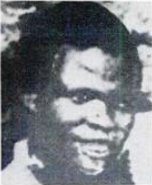
On this date in 1935, Canadian pugilist Del Fontaine was hanged at Wandsworth Prison, “the bravest fellow we ever saw go to the scaffold.”

Winnipeg-born as Raymond Henry Bousquet, Fontaine twice won the Canadian middleweight belt.

But a grueling, 98-fight career took its toll on the man.

By the end — when he had crossed the pond for a couple years traversing the English rings — Del Fontaine was visibly punch-drunk. The onetime champion lost 12 of his last 14 fights.

Punch drunk — scientific name dementia pugilistica — is just the classic diagnosis for “concussed all to hell,” afflicted by traumatic brain injury and its mind-altering long-term effects: Depression, violence, mood swings, loss of judgment and impulse control. Those are the kinds of behavior patterns that tend to brush up against the criminal justice system.

The syndrome’s popular name suggests its most visible injury, to motor skills — a symptom Fontaine’s colleagues in the business could readily diagnose.

Del shouldn’t have been in the ring at all for his last fight. He wasn’t in a fit state,” fellow prizefighter Ted Lewis testified at Fontaine’s trial, recalling a Newcastle bout that ended in a flash on three first-round knockdowns. “As a boxer, he has received more punishment than anyone I have ever seen.” The house doctor at a Blackfriars venue Fontaine had appeared at earlier in 1935 said the fighter complained of double vision and sleeplessness, and couldn’t walk straight. (London Times, Sep. 17, 1935)

If 1935 was a few decades’ shy of our present-day understanding of concussions, it was still well-enough known to those who had experience of the punch-drunk that psychological changes accompanied the physical impairments. Those who knew Del Fontaine knew he wasn’t right in the head.

The reason this tribunal had to sit for the humiliating public probe of Fontaine’s mental crevasses was that Fontaine had left his wife and kids behind when he crossed the Atlantic. Once he got to the Isles, he took up with an English sweetheart in Bristol.

This Hilda Meek, a West End waitress a decade the junior of her lover, became the object of an obsessive infatuation. In a fit of jealous rage, Fontaine gunned her down (and her mother too, although mom survived) when he caught Meek making a date with another man.

Fontaine was captured, unresisting, dolorously on the scene, and openly admitted his actions. Acquittal on the facts would be a nonstarter; diminished responsibility because of dementia pugilistica was the best defense gambit available.

The highly restrictive legal bar against an insanity defense aced out the legal maneuver: however impulsive and moody a lifetime of concussions had left him, they couldn’t be said to have prevented him “knowing right from wrong.” Still, his case attracted a fair bit of public sympathy, and when a petition for clemency went nowhere, hundreds of people, including a number of other boxers, turned up at Wandsworth to protest on the morning the punch-drunk Del Fontaine hanged for murder.

On this day..

1440: Gilles de Rais, unholy

On this date in 1440, the wealthiest man in France, a noble who had once fought under Joan of Arc‘s banner, was hanged for an outlandishly demonic crime spree.


This dashing Gilles opposite Milla Jovovich in The Messenger; you’d never think he would sodomize hundreds of children.

Rivaling Hungarian blood-bather Erzsebet Bathory for the reputation of most bewitchingly depraved aristocratic sex-killer of early modern Europe, Gilles de Rais (or de Retz) hanged for abducting numberless legions of anonymous young commoners (boys, mostly) for rape and murder.

It’s a rap sheet trebly astounding given that a decade before, de Rais’s reputation for posterity would have figured to be his role as Saint Joan’s chief lieutenant when she raised the siege of Orleans, culminating with elevation to the rank of Marshall of France on the very day Charles VII was crowned in Reims. Talk about a fall from grace.

A 1440 investigation triggered by de Rais’s attack on a priest during an intra-aristocracy dispute turned up a Gacy‘s floorboards’ worth of Nantes-area kids allegedly disappeared into the Marechal’s creepy castle. Remarkably detailed trial records preserve a heartbreaking cavalcade of parents who entrusted their children to de Rais’s service or just sent them out one morning never to be heard from again. “It is notorious,” one added, “that infants are murdered in the said chateau.” (Many of these depositions and other original trial records can be read here.)

His servants and co-deviants Henriet and Pouitou admitted the most shocking stuff —

that de Rais then raped [the typical captive] as he was hanged from a hook by the neck. Before the child died, Gilles took him down, comforted him, repeated the act and either killed him himself or had him slain.

Poitou testified that the child victims were murdered sometimes by decapitating them, sometimes by cutting their throats, sometimes by dismembering them, sometimes by breaking their necks with a stick …

Gilles de Rais rarely left a child alive for more than one evening’s pleasure, Poitou claimed.

Now, it needs to be said that the servants were induced to these confessions by the threat of physical harm — and that when de Rais reversed his own denials he had likewise been menaced with torture. Nobody had been tortured, mind. But they had been given to understand that they would be corroborating the witnesses with self-incriminating statments, and we can do this the easy way or the hard way. In a world without dispositive forensics, confessions were the evidentiary gold standard … and torturing to obtain them was standard operating procedure.

It’s for that reason that there has also long persisted a revisionist thesis that de Rais was actually innocent, framed up by elite rivals who cannibalized the man’s estates. A 1992 “rehabilitation tribunal” re-tried the affair, and returned an acquittal.

Arguably, the populace — font of all those damning accusations — did likewise on the day de Rais hanged with his two servants. A crowd one might expect to be frenzied with rage actually sympathized with the doomed noble, even rescuing his hanged body from the fire. A monument his daughter put up became an unsanctioned popular pilgrimage site until it was destroyed during the French Revolution.

Whether as fact or fable, there’s something gorgeously baroque about de Rais’s dungeon mastering — especially when considered vis-a-vis his historical casting call opposite the abstemious Maid.

As a text for our latter-day edification, de Rais appears a carnivore devoured by his own appetites (and not only sexual: he also blew through the gargantuan family fortune). Reduced from hero to beast, he’s almost a literal werewolf or vampire; he’s often cast as such in video games and the like.

And he transfixes us because he personifies this uncanny bridge from the atomized digital age with its iconic serial killers, alone and psychologically deconstructed, back into the medieval — feudal, irrational, communal, violent and physical but also suffused with an omnipresent alien-to-us paranormal spirit world. It is enough to glance to experience the pull of the abyss gazing back.

Sabine Baring-Gould anticipated the modern afterlife of Gilles de Rais in the mid-19th century Book of Were-Wolves — which incorporated an extended account of de Rais’s trial into a wider narrative of folklore shapeshifting.

De Rais himself shapeshifts even within the brief arc of his dramatic trial: from indignant defendant into contrite supplicant, every drop sincere so far as one can perceive. His very prosecutors, indeed his very victims, wept for the fallen Marechal, and the “monster” reversed with this display his excommunication. (This may have been the part of the punishment de Rais feared most: again, we encounter the alien cosmology.)

“Nothing seems to me to be more beautiful –- and farthest away from our mentality of today — than the crowd of parents of the victims praying for this soul’s salvation,” one modern observed. “That is spiritual nobility.”

Agonizing ecstacist Georges Bataille wrote a whole book about de Rais, characteristically taken by the intersection of repugnance and transcendence. For Bataille, Christianity even reconciles our prisoner’s stupendous villainy with his unfeigned anticipation of spiritual salvation that “ultimately summarize the Christian situation.”

“Perhaps,” Bataille mused, “Christianity is even fundamentally the pressing demand for crime, the demand for the horror that in a sense it needs in order to forgive.”

A Few Books About Gilles de Rais

There are also several free public-domain books, such as Bluebeard: an account of Comorre the cursed and Gilles de Rais, with summaries of various tales and traditions and (already alluded to, the one with the original trial documents) Blue-beard, a contribution to history and folk-lore. Gilles de Rais is popularly, though I think not very persuasively, believed to have helped inspire the “Bluebeard” legend of the murderous aristocrat.

On this day..

1922: Emil Schutte

WEATHERSFORD, Conn., Oct. 24. — Grasping in his hand two pink roses which had been brought to his cell, and well nigh speechless with terror, Emil Schutte, triple slayer, former storekeeper and constable of Haddam, was hanged today at the State prison. His only utterance was, “Well, goodby,” as the death cap was drawn over his head.

Fort Worth Star-Telegram, Oct. 24, 1922


Our rose-clutching former storekeeper was a German immigrant with a famous temper who did well for himself in Middlesex and tyrannized his wife and his brood of seven sons.
The weakness of the “despotic patriarch” gambit lies in its tendency to incite the clan to vengeance.

And in this case, the clan had the goods on Emil Schutte.

In 1921, after Schutte threatened his wife with a gun, his sons protected the mother and shopped Schutte for four different shooting-arson murders: that of Dennis LeDuc, a former Schutte farmhand found burned to death on the property; and, that of the three-member Ball family, who were Schutte’s feuding family rivals.

Though evidence in the LeDuc case was too weak to try, the Ball case was more than worth its clutch of roses.

Emil’s son Julius Schutte testified that as a teenager, he had helped his father set fire to the Ball house early one morning in 1915. Emil Schutte shot them dead as the fire flushed them out of the house.

The deaths had initially been ruled accidental, but Julius’s testimony was powerfully corroborated when the Ball graves were unearthed to reveal spent bullets that time had insensibly coaxed out of the blistered cadavers.

So … pretty compelling evidence.

Here’s a three-part series on this locally notorious crime: I, II, III. Or to commemorate it in the flesh, drop by Middlesex’s “Cremation Hill”, which got its name from Schutte’s pyrotechnics.

On this day..

1985: Benjamin Moloise, revolutionary poet

On this date in 1985, poet Benjamin Moloise was hanged in Pretoria for murdering a (black) policeman in apartheid South Africa.

Moloise’s controversial execution occurred in the context of violent resistance to apartheid in South Africa’s black townships and an ultimately fatal crisis for the apartheid state.

The black majority, long treated as second-class citizens by the white powers-that-be, turned to increasingly confrontational tactics aiming to break official power at the township level. Attacks on black officials and police officers who administered state authority at that level were part and parcel.

Moloise was convicted in a plot to kill such an officer in 1983. (The African National Congress claimed responsibility for the killing, and said that Moloise wasn’t involved.)

His hanging approached as the township rising grew into a mass movement that the hardline government of P.W. Botha answered mostly with force* — so, little surprise that Botha spurned both American and Soviet entreaties not to hang Moloise and little surprise that the execution further escalated racial violence.

Furious black protesters rioted in downtown Johannesburg itself, which (like much of white South Africa) had theretofore remained mostly immune to the violence gripping the townships. Here’s a French news report on Moloise’s execution and its aftermath.

All of which dovetailed with a dramatic fall in South Africa’s international position, vividly symbolized by the months-long collapse of the rand — which bled about three-quarters of its value in 1985. International outrage at the blood shed to enforce South Africa’s color line subjected it to a cascade of diplomatic and economic sanctions in the mid-1980s.

Apartheid went out with the Cold War at the end of the decade — vindicating Moloise’s poetic final message, subsequently a staple message at anti-apartheid rallies.

I am proud to be what I am …
The storm of oppression will be followed
By the rain of my blood

I am proud to give my life

My one solitary life.

* It had implemented a state of emergency that very summer. At the same time, Botha pursued tweaks around the edges of apartheid to preserve it: weeding out “petty apartheid” provocations like whites-only/coloreds-only facilities, and implementing a new constitution with a tricameral, race-based parliament.

Part of the Themed Set: Illegitimate Power.

On this day..

1859: Danford Balch, inadvertent PDX benefactor

On this date in 1859, five to six hundred folks braved a dreary Portland morning to witness the first execution in the state of Oregon — Oregon having graduated into statehood just that very year, as it says on the flag.

Danford Balch, who would surely merit an entry in these pages for his name alone, had staked out a 345-acre land claim near the small settlement of Portland, but all that money couldn’t buy his daughter’s love.

Anna, the eldest of nine kids at a blossoming 15, was amenable to a suit by the farmhand, one Mortimer Stump — this is a Dickensian roster of characters — and in the face of Papa Balch’s opposition, eloped with him over the Columbia River to Vancouver, Wash.

So Danford Balch stewed, and drank, and was allegedly incited by his shrewish wife Mary Jane — this one has an ironically innocent moniker — until, encountering the Stumps in town for supplies one day, Danford Balch tried to retrieve his daughter and ended up shotgunning his unwanted son-in-law, right in the face.

Ka-blamo.

Bystanders tackled Balch immediately, though it took nine more months to bring the killer to trial: in these sparsely-populated frontier precincts justice was being administered on the old “assize” model of wandering judges who dropped in for a spell to try everything at one go. It was enough time for Balch to bust out of a rain-rotted jail cell once and get recaptured (once on the lam, he returned to his own home).

When court was finally in session, conviction was a mere formality. He’d done the deed in public, after all. But the offended father seemed genuinely bewildered by the outcome: apart from the shooting being accidental (so he said), he clearly expected that a court would uphold the dominion of the family patriarch over his wayward progeny.

Heaven knows what fumes he was fuming by the time he climbed the scaffold and beheld that naughty daughter Anna turned up to witness his hanging — sitting in the front row with the [rest of the] Stump family in what you have to think was a somewhat uncomfortable party for all concerned.

Little more affectionate was the post-mortem behavior of the allegedly un-alienated part of the Balch clan.

That widow Mary Jane, whom Danford hinted gave him quite a goading over their wanton daughter, shafted the remaining rugrats out of inheriting their chunks of the family land and instead routed most of it to her next husand.

Balch Creek in Lower Macleay State Park. (cc) image from Brad Reber.

Though pretty difficult to admire by the yardstick of human decency, that behavior turned out to be Danford Balch’s redeeming legacy.

Having passed through several hands, the lion’s share of his former land was in 1897 donated to the city by its then-owner Donald Macleay, who was sick of paying taxes on the unprofitable parcel. That was the time the famously green PDX received its first land gift designated by the donor for parkland: Macleay Park. (Including a Balch Creek.)

Today, it’s all part of the larger Forest Park, and it’s a lovely hiking space for a city that grooves on its outdoor rec … complete with a gorgeously ruined Depression-era stone ranger station that’s popularly believed to be haunted, maybe by the spirit of poor old Danford Balch himself.


The haunted house … (cc) image from Adam Gaumont.

There’s a Balchipedia for chronicling Balch family notables, so you know the first guy executed in Oregon is going to rate a mention.

On this day..

1675: Samuel Guile, Puritan rapist

(Thanks to Meaghan Good of the Charley Project for the guest post. -ed.)

On this day in 1675, in the then-Puritan Massachusetts Bay Colony (now Essex County, Massachusetts), 27-year-old Samuel Guile was hanged for “violently and forcibly” raping Mary Ash on Christmas Day the previous year.

What little is known about the case comes from the Records of the Court of assistants of the colony of the Massachusetts bay, 1630-1692, which is available for free with Google Books.

Samuel Guile of Hauerill being Committed to Prison in order to his trial for Comitting a Rape was presented & Indicted by the Grand Jury, was brought from prison to the bar where holding up his hand was Indicted by the name of Samuel Guile for not hauving the feare of God before his eyes & being instigated by the divill did on or about the 25th day of December last in the woods violently and forcibly seize on & Comitt a rape on the body of Mary Ash the wife of John Ash of Amesbury Contrary to the peace of our Soueraigne Lord the King his Croune & dignity the lawes of God & of this jurisdiction — to which he pleaded not Guilty and put himself on God & country. After the Indictment and eudicenes were Read Comitted to the Jury & are on file with the Records of this Court the Jury brought in y’r verdict they found the prisoner at the barr Guilty & he accordingly had sentenc pronounct ag’ him yow Sam Guile are to Goe from hence to yo place from whence yo came & thence to yo place of execution & there be hang till yow be dead wch was accordingly donn 16 october 1675.

His estate paid six pounds, eighteen shillings in court costs and five pounds in damages to Mary.

Although rape was a capital crime, it was inconsistently punished in the Massachusetts Bay Colony. In 1680, five years after Guile swung, William Nelson was convicted of raping a girl under ten and he was only whipped.

Nearly forty years earlier, in 1642, Daniel Fairfield, John Hudson and Jenkin Davis were found guilty of gross immorality for molesting and raping two sisters over a period of years, starting when they weren’t even seven years old. The men confessed to everything but penetration, but the girls’ statements and a physical examination contradicted the suspects’ statements.

Governor John Winthrop was horrified and wrote at length about the case, calling it “a very foul sin.” Fairfield was whipped twice and had his nostrils slit, Hudson and Davis were also whipped and Davis had to wear a halter for life (like a scarlet letter, it would remind everyone of his crime), and all three men were fined heavily … but they were not executed.

One wonders, then, why Samuel Guile was. Did he have a bad reputation? Were Mary and John Ash prominent people? Or did the colonial court just decide they’d better exercise the law to its full extent for once?

On this day..

1767: William Guest, coin shaver

On this date in 1767, a larcenous bank clerk was hanged at Tyburn for robbing the till.

Sleigh ride: Detail of a studious William Guest being drawn to Tyburn (click for full print).

In this case, it wasn’t anything so gross as grabbing the money and running. No, our malefactor William Guest — the “son of a clergyman of unblemished character” whose “constant handling of gold [for the Bank of England] shook his integrity” — started milling the edges of the guineas he handled and innocuously returning them to the bank’s stock whilst piling up his own supply of gold filings.

It’s sort of the pre-digital version of the Office Space scheme: “I’m just talking about fractions of a penny here, but we do it from a much bigger tray. A couple of million times. So what’s wrong with that?” Literal profit on the margin: perfect for the FIRE sector.

Though 18th century London’s perpetual necktie party was obviously focused on the lowest classes, its busy gallows had room enough for the occasional white-collar crime.

And by England’s lights, debasing the currency was as serious a crime as there was: Guest’s conviction wasn’t for larceny or fraud, but for treason.

Because of that, he didn’t get the plain-old cart ride to the gallows, but was drawn on a sledge — the “drawn” bit of “hanged, drawn, and quartered,” although for this penny-shaver the execution itself didn’t entail the horrible quartering.

After enduring this archaic ignominy, the minister’s son “was indulged to pray on his knees” before being noosed and “his whole deportment was so pious, grave, manly and solemn, as to draw tears from the greatest part of the numerous spectators.”

On this day..

1878: Bill Longley, gunslinger

On this date in 1878, “gunfighter” Bill Longley was hanged for murder in Giddings, Texas.

This flim-flam man was an anti-hero of the Wild West, a near-exact caricature of everything disreputable about his milieu. Remorselessly homicidal, virulently racist, and pathologically unfaithful to any bond of honor or friendship: “an idle boaster, a notorious liar and a man of low instinct and habits,” in the estimation of an officer of the army cavalry regiment from which Longley deserted.

And he was a relentless self-promoter pleased to exaggerate both the quantity and the valor of his sixguns’ conquests.

Longley’s end at the end of a rope — for murdering his childhood friend in solidarity with some uncle’s ill-founded grudge — makes a fittingly puerile end to a repulsive career, and not least because Longley’s family later circulated rumors* that Longley had connived with his executioners to escape the noose and been spirited away under a false name.

Recent DNA testing proved that story false, but most of the Longley mythos is regrettably forensic-proof.

The outlaw himself was his own Homer, perhaps consciously playing catch-up with the legendary bandits already afoot in the land.** It’s certainly the case that he was a wanted killer, and a renowned marksman. Upon these gifts, Longley spun preposterous tales of his exploits in 1860s-70s Texas: being shot out of a noose at an attempted lynching;† slaughtering men and women (particularly blacks: his favored prey) in bunches; riding with the Cullen Baker gang; killing people in fair fights and not for their money.

“His hot temper, his fondness for liquor, and unsettled conditions during reconstruction led him to become one of the most daring gunslingers of his day,” is how a Texas state grave marker reckons him, with a warmth the Lone Star State does not reserve for its present-day “daring gunslingers.” No doubt “unsettled conditions” have been involved in many of those crime sprees as well.

Anyway, such of Longley’s record that can be substantiated better resembles a string of ambushes and uncomplicated murders, perpetrated to start with against freedmen during Reconstruction (Longley’s first known killing was of an uppity former slave in 1867, during a highway stickup), and then almost willy-nilly for plunder, race hatred, or personal pique against defenseless targets misfortunate enough to cross his path. His most “romantic” exploit was over a love rivalry … not a Capulet-and-Montague affray, but the killer bursting in on the reverend father of the girl who frustrated his designs, and wasting him with a shotgun.‡ (His actual rival got off with a pistol-whipping.)

Longley’s last arrest in 1877 removed him from these pursuits long enough to burden the local Giddings Tribune (and anybody else who would listen) with a steady supply of letters trumpeting his ferocity … and as his fate became apparent, his eventual treacly and apparently sincere contrition. “My first step was disobedience; next whisky drinking; next, carrying pistols; next, gambling, and then murder, and I suppose the next step will be the gallows.” The classic fall and redemption story.

After an escape attempt and a foiled scheme to bribe the guards, Longley gamely took his redemption in a botched hanging that dropped him so far that his feet reached the ground. The executioners had to muscle the rope back up into the air and keep it there for 11 minutes to get him where he could choke to death.

There’s an excellent HistoryNet article describing “Bloody Bill” Longley’s times and crimes in great detail here. There’s a wee genealogy, including the interesting tidbit that Longley’s father helped bury the dead of Goliad, here.

* Apparent cause of the rumor: the mom couldn’t deal with Longley’s wicked character and dishonorable death, so the family deceived her, even forging letters from “Bill Longley”.

** Most particularly, John Wesley Hardin. Longley eagerly claimed responsibility for killings that might not even have happened, in an apparent attempt to top Hardin’s body count (27 or 28) with his own (allegedly, 32). Just prior to his execution, influenced by redemption or hope for clemency or whatever, Longley downgraded his career notch count to “only” eight.

† This most famous and fantastic of all Longley’s “exploits” seems to be sourced to nobody but Longley himself; notwithstanding that prima facie credibility deficit, it’s still retailed as fact on a number of online Longley bios.

‡ This last episode was among the crimes of Longley’s last three years’ liberty that might have been prevented had not the Lone Star State refused in 1874 to honor a reward posted on the outlaw by that carpetbaggers’ Reconstruction regime. Un-paid, Longley’s captors simply turned him loose instead. That’s federalism at its finest.

On this day..

1999: Chen Chin-hsing, Taiwan’s most notorious criminal

On this date in 1999, Taiwan put to death a man who, as the Reuters story about his case led it, “shook public confidence in law and government with the kidnap-murder of a TV celebrity’s daughter and a string of subsequent gun battles, killings, rapes and a hostage drama.”

Dramatic enough for you?

This operatic crime spree was the work of three men, Chen Chin-hsing, Lin Chun-sheng, and Kao Tien-min.

They punched their ticket to popular infamy when they snatched 16-year-old schoolgirl Pai Hsiao-yen in New Taipei City on April 14, 1997.

Her family received terrifying photos of the girl stripped naked and bound, a severed pinkie finger, and a demand for $5 million U.S. And they were in a position to get it, because Pai’s mother was celebrity singer and TV personality Pai Ping-ping. (Alternatively: Bai Bing-bing.)

However, despite multiple attempts to drop the ransom, the kidnappers kept not showing up, and the captive, who’d been brutalized and raped during her captivity, was eventually murdered and dumped in a drainage ditch.

Pai Hsiao-yen’s murder not only captivated media but crystallized public backlash against politicians and police who showed as ineffective in the midst of a massive crime wave. It helped cave in the government of Taiwan’s first democratically elected president.

The criminals themselves magnified the case by drawing out the initial public horror into a seven-month drama as they eluded police manhunts. At one point, they forced a plastic surgeon at gunpoint to alter their appearances, then murdered him after he was finished.

Chen Chin-hsing was finally captured (after the other two had judiciously committed suicide when about to be apprehended) after a televised standoff wherein Chen gave self-valorizing media interviews while holding a South African ambassador’s family hostage.

All this made Chen a dead man, and few in the Republic of China much pitied the serial rapist and spree killer’s fate of taking a magazine of automatic rifle ammunition in the chest. (Several others in this dreadful affair also got non-capital sentences for various forms of aiding and abetting.)

It also made Pai Ping-ping into a tough-on-crime social activist. Taiwan’s death penalty has been in the news recently with the government’s admission that it executed an innocent man in an unrelated case. Pai vehemently opposes the resulting abolition efforts that other case has helped along; in 2010, she helped to break a 52-month death penalty moratorium and force a resumption in executions when she threatened to commit suicide if Taiwan went through with abolition. That would be operatic indeed.

On this day..

1843: Allen Mair, irate

(Thanks to Meaghan Good of the Charley Project for the guest post. -ed.)

On this day in 1843, 84-year-old Allan Mair was hung in Stirling, Scotland.

He was condemned for the murder of his wife. Mair is notable not only for being the oldest person ever executed in Scotland, but also for his unusually long, bitter scaffold speech, as recorded in Alex Young’s book The Encyclopaedia of Scottish Executions 1750 to 1963.

The meenister o’ the paarish invented lees against me. Folks, yin an’ a, mind I’m nae murderer, and I say as a dyin’ man who is about to pass into the presence o’ his Goad. I was condemned by the lees o’ the meenister, by the injustice of the Sheriff and Fiscal, and perjury of the witnesses. I trust for their conduct that a’ thae parties shall be overta’en by the vengeance of Goad, and sent into everlasting damnation. I curse them with the curses in the Hunner an’ Ninth Psalm: “Set thou a wicked man o’er them” — an haud on thee, hangman, till I’m dune — “An’ let Satan stand at their richt haun. Let their days be few, let their children be faitherless, let their weans be continually vagabonds”; and I curse them a —

At this point, the executioner drew the bolt, but Allen wasn’t done raging against the dying of the light. The old fella got his hands free and grabbed the rope, delaying his strangulation; the slipshod executioner had to fight off his prey’s clutches to hang him.

There’s an original broadside from this execution here.

On this day..