1951: Willie McGee

As of today, it is sixty years since the Laurel, Mississippi execution of Willie McGee for rape — a lightning rod for controversy over race, crime, and justice in one of the Cold War’s principal antagonists.

McGee died silent in the state’s portable electric chair, rigged up in the very courtroom of his trial, right in front of the box from whence his all-white jury had retired two and a half minutes before convicting him. Fifty or so observers were there with him — plus those of the hundreds of local residents milling around outside intrepid enough to scale a tree for an illicit view through the courthouse windows.*

(Given the setting, some sources call this a “public execution,” which is not technically correct. This courtroom tableau was actually a standard deployment for the mobile electric chair.)

But McGee’s own silence hardly muted global outrage: for years, appeals for McGee’s life had deluged Mississippi and the White House from Europe, the Soviet Union, and what was quaintly known as “Red China.”

Oh, yes. The Reds.

Willie McGee’s case popped out of backwoods obscurity when he got from the pinko Civil Rights Congress a leftist young attorney — future U.S. Congresswoman Bella Abzug.

Once it got out there, it became the Free Mumia case of the nascent civil rights movement and the nascent Cold War. Its appeal to communist countries and cadres only raised the hackles of American establishment types. This was a Negro raping a white housewife literally and metaphorically.


Author Jessica Mitford (The American Way of Death) campaigning to save Willie McGee’s life. William Faulkner, Albert Einstein, and Josephine Baker also publicly supported McGee.

Whether there actually was a literal rape is the enduring mystery — the enduring Rorschach blot — of the McGee case. The accused himself remained silent on the matter for years; eventually, he claimed that the two were having a consensual but forbidden interracial affair and that he had been brutalized into a confession.

McGee’s defenders believed that the “victim” herself initiated the affair, and

threatened to cry rape if he refused her flirtatious advances … McGee reluctantly went [along] with Hawkins, fearing the tragic consequences of turning her away. “People who don’t know the South don’t know what would have happened to Willie if he told her no,” [Willie’s wife] Rosalee told a friend. “Down South you tell a woman like that no, and she’ll cry rape anyway. So what else could Willie do?”

At the Dark End of the Street: Black Women, Rape, and Resistance

(In this version, the manipulative Hawkins executed the threat when her husband — who later witnessed McGee’s electrocution — found out. McGee’s cited reason for changing his story was the very plausible fear of lynching.)

A Laurel African-American who was then a child remembers being taken by his family to view the body, and impress upon him the lesson of its electrical burns: “Don’t mess with white girls.”

McGee’s persecutors considered all that miscegenation stuff so much subversive rubbish, a “revolting insinuation,” in the words of the Mississippi Supreme Court.**

And if at its apex the controversy generated more heat than light, its historical fade to embers has not sufficed to resolve the factual questions.

McGee has benefited from a recent rediscovery — one that indicates such memories of the McGee case as persevere in Laurel still divide starkly along racial lines.

Explore this case and its many resonances (without the Perry Mason big reveal) in Alex Heard’s 2010 The Eyes of Willie McGee (review); and, in a spellbinding NPR series on “My Grandfather’s Execution” by Bridgette McGee-Robinson, which is exactly what it sounds like. (Direct links to several Radio Diaries mp3 episodes can be found from the RSS feed here.)

Both were facilitated by a recording of execution-night radio news coverage fortuitously preserved by a young Hattiesburg reporter.

Book Cover

* New York Times, May 8, 1951.

** McGee did at least win two retrials in Mississippi; federal courts gave him short shrift, with anti-civil rights judge Sidney Mize — later memorable for fighting the legal rearguard against integrating Ole Miss — lecturing Abzug in a last-ditch appeal that McGee’s “guilt is plain” and that “courts ought to rise up and defend themselves.” (Source)

Taken as an obvious given: “actually guilty” or not, a defendant executed for rape in the American South is certainly a black man with a white accuser.

On this day..

Unspecified Year: Bigger Thomas

The main character of Richard Wright’s Native Son was condemned to a March 3 electrocution by the state of Illinois.

In Number 666-983, indictment for murder, the sentence of the Court is that you, Bigger Thomas, shall die on or before midnight of Friday, March third,* in a manner prescribed by the laws of this state.

The Court finds your age to be twenty.

The Sheriff may retire with the prisoner.

Readers are not treated to the actual execution scene, but the hopelessness of Bigger Thomas’s situation is the book‘s whole context and theme. There is little room to entertain a reprieve.

“In the first draft I had Bigger going smack to the electric chair,” the author remarked. “But I felt that two murders were enough for one novel. I cut the final scene.”

The first Book of the Month club selection by an African American author was an instant best-seller, but hardly easy reading. Wright tackles the catastrophic “hatred, fear, and violence” suffusing negro life.

Inspired in part by a real-life Windy City murderer, Bigger Thomas grows up wretched and impoverished in Depression-era Chicago and eventually commits an accidental homicide, then rapes and murders his girlfriend. Wright took some heat for staging a character seemingly written to whites’ darkest fears of African-Americans, but it was his object to force the reader to relate to a violent man whose brutality is conditioned by the world he inhabits.

Bigger Thomas’s trial has his lawyer present an overt indictment of structural oppression as the true cause of Bigger’s crime.

“I didn’t want to kill,” Bigger shouted. “But what I killed for, I am! It must’ve been pretty deep in me to make me kill! I must have felt it awful hard to murder … What I killed for must’ve been good!” Bigger’s voice was full of frenzied anguish. “It must have been good! When a man kills, it’s for something … I didn’t know I was really alive in this world until I felt things hard enough to kill for ’em. It’s the truth …”

Whether Wright truly broke out of the existing literary genres may be a matter of debate.

James Baldwin considered Native Son to be of the Uncle Tom’s Cabin tradition, “self-righteous, virtuous sentimentality … the one uttering merciless exhortations, the other shouting curses.”

All of Bigger’s life is controlled, defined by his hatred and his fear … elow the surface of this novel there lies, as it seems to me, a continuation, a complement of that monstrous legend it was written to destroy … Bigger’s tragedy is not that he is cold or black or hungry, not even that he is American, black; but that he has accepted a theology that denies him life, that he admits the possibility of his being sub-human and feels constrained, therefore, to battle for his humanity according to those brutal criteria bequeathed him at his birth. But our humanity is our burden, our life; we need not battle for it; we need only to do what is infinitely more difficult — that is, accept it. The failure of the protest novel lies in its rejection of life, the human being, the denial of his beauty, dread, power, in its insistence that it is his categorization alone which is real and which cannot be transcended.

“Everybody’s Protest Novel” (pdf)

“Protest novel” or otherwise, Native Son‘s mainstream success extended to the stage, where Orson Welles — fresh from the debut of Citizen Kane — directed a Wright-written adaptation in 1941. Less successfully, Wright himself played the title role in a 1951 Argentinian film.

“Bigger Thomas” is also the name of a long-running ska band.

Though the novel is not yet public domain in the United States, it is in some countries — and can be perused free here.

* For the finicky chronologist: Native Son was published in 1940. At that point, the most recent occasions March 3 had fallen on a Friday were 1939 and 1933.

On this day..

1924: The first electrocutions in Texas

There is sweeping over Texas, as never before in her history, a wave of crime. Murder, theft, robbery and holdups are hourly occurrences that fill the daily press. The spirit of lawlessness has become alarming. Our loose method of dealing with violators of the law is in a large degree responsible for the conditions that today confront us.

-Texas Gov. Pat Neff, in a 1921 message to the state legislature.

It was just after midnight on this date in 1924 that the state of Texas first used its new electric chair, supplanting public hangings with a regime of private executions administered by the state.

Five men, all black, died in rapid succession on the new contraption. (Although witnesses, “sickened by the odor of burning flesh that filled the room, were given a brief respite” between the fourth and the fifth executions.) It was a half-year’s worth of backlog built up while the new death chamber had been constructed for the transition from county-level hangings.

Robert Perkinson’s Texas Tough: The Rise of America’s Prison Empire chronicles the evolution of that state’s prison regime after the Civil War in lucid, page-turning prose. We’re very grateful that he’s allowed Executed Today to mark the Lone Star State’s era of electrocutions with this brief excerpt from that book.


Although elected as a progressive, Pat Neff was the first Texas governor to make hard-fisted, no-nonsense crime fighting a central part of his political identity.

… Neff proposed tougher penalties for bootleggers, an expansion of the Texas Rangers, and the abolition of the state’s suspended sentencing law, an innovation enacted at the end of leasing. He also radically curtailed executive clemency. …

Walter Boyd, aka Leadbelly, was … caught in Neff’s clutches. “‘Dat man ain’ gonna tu’n you loose, ol’ Walter,'” his fellow convicts told him. “‘He wouldn’ tu’n his own mammy loose.'” … Leadbelly had tried everything but running to regain his freedom. Through hard work on the line, he had convinced a captain to request that his escape record be expunged, which under a different governor would have enhanced his chances of parole. About a year after his arrival at Sugar Land, Leadbelly’s father showed up carrying a “fat roll of bills.” He had sold the family’s last parcel of land and tried, rather brazenly, to buy his only son’s freedom, but the warden turned him down …

[Leadbelly] was well known as a musician. When he heard that Governor Neff was planning a personal inspection, he composed a special song. Neff was “a big, fine-lookin’ man,” he recalled, and “sho was crazy about my singin’ an’ dancin’. Ev’y time I’d sing a new song or cut a few steps he’d roll me a bran-new silver dollar ‘cross the flo'” Once his audience warmed, Leadbelly presented his unusual appeal.

Please, Governor Neff, be good and kind,
Have mercy on my great, long time.

With his boot tapping and strings blazing, the musician hit all the conventional clemency notes. He called himself Neff’s “servant,” pleaded on behalf of his wife Mary (in reality his girlfriend), lamented his thirty-year sentence, and even offered an oblique critique.

Some folks say it’s a sin,
Got too many women and too many men.
… In de pen.

Neff himself remembered the encounter almost as vividly. In his autobiography, The Battles of Peace, he painted the singer as a happy minstrel and himself as the benevolent master. “On one of the farms … was a negro as black as a stack of black cats at midnight,” he wrote. “This negro would pick his banjo, pat his foot, roll his eyes, and show his big white teeth as he caroled forth in negro melody his musical application for a pardon.” In his paternalistic way, the governor was moved, or at least amused. He announced that he would grant the supplicant’s request but in his own time. “Walter, I’m gonna give you a pardon,” Leadbelly remembered Neff telling him, “but I ain’ gonna give it to you now. I’m gonna keep you down here to play for me when I come, but when I get out of office I’m gonna turn you loose.” True to his word, the governor enjoyed Leadbelly’s high-spirited performances on command whenever he visited the lower farms, then set him free on his last day in office.


Lead Belly singing the prison blues song “Midnight Special”.

Few other convicts were as fortunate. Despite the costs to taxpayers, almost a thousand more convicts entered Texas prisons than were allowed to leave during Neff’s four-year reign. Inmates sentenced to death, most of them African Americans and Hispanics convicted of rape or murder, found especially little sympathy. Largely in response to lynching, which the governor condemned, Texas centralized the death penalty in 1923. Previously, every county had carried out its own executions, usually in the form of public hangings. Progressives hoped that by sequestering such events at the Walls, they would discourage mob sentiment and encourage reverence for “the majesty of the law.” But the site and method of execution did not alter its racial dynamics.

Following the lead of New York and other states, lawmakers also ordered prison officials to carry out executions by a new technique, one they perceived as “more modern and humane,” the electric chair. Huntsville officials thus built a new death house, the very same in use today, and by the end of the year a squat, straight-backed throne — soon christened Ol’ Sparky — was ready for operation. Governor Neff wasted little time in authorizing its use.

On a visit to the Walls in January, the governor stopped in to visit with five men he would soon send to their deaths. “A queer feeling creeps over you as you pass the death cell and pause,” he wrote. “They knew, and I realized, that I held within my hand the power to save them from the electric chair. How feeble were words, both theirs and mine, at such a time.” Not long after the governor departed, the men, all of them African American, ranging in age from twenty to thirty-nine, were approved for elimination.

In a dramatic gesture of conscience, Huntsville’s warden, R.F. Coleman, resigned his post only days before. “It just couldn’t be done,” he told reporters. “The penitentiary is a place to reform a man, not to kill him.” But a replacement was quickly found, and the Walls’ inaugural electrocutions went forward as scheduled. At nine minutes after midnight, the first condemned man, Charlie Reynolds, was escorted by two guards into the brightly lit death chamber. He blinked rapidly, reported a witness, was speedily strapped in the chair, and then stiffened violently when the new warden threw the switch. Within the hour, four other men met the same fate.

On this day..

1946: A triple execution in Washington, DC

“Death, administered in the law’s deliberate way, exacted a three-fold toll in the District [of Columbia]’s electric chair” on this date in 1946, announced the next day’s Washington Post.*

It was as many people as the nation’s capital had put to death in the previous four years combined. The clientele: three unconnected men, condemned for unconnected murders.

“Joseph Dunbar Medley, suave slayer of a Washington divorcee,” was the most (in)famous of the three. “The debonair man who blazed a trail of crime from the Middle West” had that April made a daring escape from District Jail — which was rather renowned for its escapability, but still, this was a guy on death row, and who was only a few weeks from his then-scheduled electrocution.

Medley and another condemned man, Earl McFarland, charmed their way into their guards’ confidence. During a card game played in one of the guards’ rooms, they imprisoned their jailers, nicked their clothes, and cut their way into a ventilation shaft and out to the roof.

Medley himself was captured hours later hiding in a sewer pipe on the Anacostia River, pithily remarking to reporters, “You can’t blame a guy for trying, and I’m going to try again.” (Chicago Tribune, April 4, 1946) If he did try again, he didn’t make it.

But the bloodhounds couldn’t pick up McFarland, whose manhunt made nationwide headlines for more than a week until he was finally tracked down in Knoxville, Tenn. (He was executed solo in July.)

While [Medley] waited [for three hours of last-second appeals to clear], the chair claimed two other slayers, both Negroes.

William Copeland, 38-year-old slayer of his sister-in-law, Mrs. Dora Johnson, walked into the chamber, jauntily smoking a cigar which he clenched in his teeth while he smiled. He helped guards adjust the straps and the leather face mask smothered his last smile …

Second to die was Julius Fisher, 32, convicted of beating to death Miss Catherine Reardon, librarian at the Washington Cathedral … bludgeoned to death with a piece of firewood and her body hidden in a sub-basement crypt. He strangled and struck her after she had complained about the way he had cleaned under her desk.

* Charles J. Yarbrough, “Death Hour Delayed by Futile Court Maneuver,” The Washington Post, Dec 21, 1946.

On this day..

1924: Frank Johnson, the first electrocuted in Florida

On this date in 1924, “colored male” Frank Johnson was electrocuted in Florida.

He was, in fact, the very first to die in the Sunshine State’s electric chair.


The original Florida electric chair.

“Old Sparky” (numerous electric chairs shared this nickname) was brand new here in the Roaring Twenties, a jerry-built contraption outfitted with “homemade accessories” to replace the icky old gallows with a brave new world’s brave new mankiller.


Top: a scantily-detailed penitentiary “personnel card” for Frank Johnson. Middle: details of the execution. Bottom: Florida’s official typed list of its early executions.

All images are from this Florida Department of Corrections page.

This same furniture that killed Johnson would ultimately take the lives of 265 men and one woman — notables from Giuseppe Zangara to Ted Bundy, milestones like John Spenkelink, and scores of strange and forgotten perps among them.

Notoriously error-prone by the end of its run, the device was finally replaced in 1999.

On this day..

1927: Sacco and Vanzetti (and Celestino Madeiros)

America Sacco & Vanzetti must not die

-Allen Ginsberg, “America” (mp3)

We have now reached a stage of the case the details of which shake one’s confidence in the whole course of the proceedings and reveal a situation which undermines the respect usually to be accorded to a jury’s verdict.

-Felix Frankfurter in The Atlantic

America our nation has been beaten by strangers who have turned our language inside out who have taken the clean words our fathers spoke and made them slimy and foul

their hired men sit on the judge`s bench they sit back with their feet on the tables under the dome of the State House they are ignorant of our beliefs they have the dollars the guns the armed forces the powerplants

they have built the electricchair and hired the executioner to throw the switch

all right we are two nations

. . .

but do they know the old words of the immigrants are being renewed in blood and agony tonight do they know the old American speech of the haters of oppression is new tonight in the mouth of an old woman from Pittsburgh of a husky boilermaker from Frisco who hopped freights clear from the Coast to come here …

the men in the deathhouse made the old words new before they died.

John Dos Passos, The Big Money (part of the U.S.A. trilogy)

Let us abandon then our gardens and go home
And sit in the sitting room.
Shall the larkspur blossom or the corn grow under this cloud?
Sour to the fruitful seed
Is the cold earth under this cloud,
Fostering quack and weed, we have marched upon but cannot conquer;
We have bent the blades of our hoes against the stalks of them.

Let us go home, and sit in the sitting room.
Not in our day
Shall the cloud go over and the sun rise as before,
Beneficent upon us
Out of the glittering bay,
And the warm winds be blown inward from the sea
Moving the blades of corn
With a peaceful sound.
Forlorn, forlorn,
Stands the blue hay-rack by the empty mow.
And the petals drop to the ground,
Leaving the tree unfruited.
The sun that warmed our stooping backs and withered the weed uprooted
We shall not feel it again.
We shall die in darkness, and be buried in the rain.

What from the splendid dead
We have inherited —
Furrows sweet to the grain, and the weed subdued —
See now the slug and the mildew plunder.
Evil does overwhelm
The larkspur and the corn;
We have seen them go under.

Let us sit here, sit still,
Here is the sitting-room until we die;
At the step of Death on the walk, rise and go;
Leaving to our children`s children this beautiful doorway,
And this elm,
And a blighted earth to till
With a broken hoe.

-Edna St. Vincent Millay, “Justice Denied in Massachusetts”

If it had not been for these things, I might have lived out my life talking at street corners to scorning men. I might have died, unmarked, unknown, a failure. Now we are not a failure. This is our career and our triumph. Never in our full life could we hope to do such work for tolerance, for justice, for man’s understanding of man as now we do by accident. Our words — our lives — our pains — nothing! The taking of our lives — lives of a good shoemaker and a poor fish-peddler — all! That last moment belongs to us — that agony is our triumph.

-Bartolomeo Vanzetti


Ben Shahn, The Passion of Sacco and Vanzetti

A recently discovered letter indicates that Upton Sinclair was convinced of his subjects’ guilt.

“Alone in a hotel room with Fred [Moore], I begged him to tell me the full truth … He then told me that the men were guilty, and he told me in every detail how he had framed a set of alibis for them … I faced the most difficult ethical problem of my life at that point … I had come to Boston with the announcement that I was going to write the truth about the case.”

But Sinclair had reasons beyond the “ethical” to tell what he saw as the larger truth. From a different letter:

“My wife is absolutely certain that if I tell what I believe, I will be called a traitor to the movement and may not live to finish the book … Of course, the next big case may be a frame-up, and my telling the truth about the Sacco-Vanzetti case will make things harder for the victims … It is much better copy as a naïve defense of Sacco and Vanzetti because this is what all my foreign readers expect, and they are 90% of my public.”

Well, the dying time came, the legal midnight hour,
The moment set by law for the Chair to be at work,
To substantiate the majesty of the State of Massachusetts
That hour was at hand, had arrived, was struck by the clocks,
The time for two men to be carried cool on a cooling board
Beyond the immeasurably thin walls between day and night,
Beyond the reach of airmail, telegrams, radiophones,
Beyond the brotherhoods of blood into the fraternities
Of mist and foggy dew, of stars and ice.
 The time was on for two men
 To march beyond blood into dust —
 A time that comes to all men,
 Some with a few loved ones at a bedside,
 Some alone in the wilderness or the wide sea,
 Some before a vast audience of all manking.

 Now Sacco saw the witnesses
 As the straps were fitted on
 Tying him down in the Chair —
 And seeing the witnesses were
Respectable men and responsible citizens
And even though there had been no introductions,
 Sacco said, “Good-evening, gentlemen.”
And before the last of the straps was fastened so to hold
Sacco murmured, “Farewell, mother.”

Then came Vanzetti.
He wished the vast audience of all mankind
To know something he carried in his breast.
This was the time to tell it.
He had to speak now or hold his peace forever.
The headgear was being clamped on.
The straps muffling his mouth were going on.
He shouted, “I wish to forgive some people
  for what they are now doing.”
 And so now
 the dead are dead????

-Carl Sandburg, “Legal Midnight Hour”


(The executions took place just after midnight Aug. 22-23)

THE names of the “good shoe-maker and poor fish-peddler” have ceased to represent merely two Italian workingmen. Throughout the civilised world Sacco and Vanzetti have become a symbol, the shibboleth of Justice crushed by Might. That is the great historic significance of this twentieth century crucifixion, and truly prophetic, were the words of Vanzetti when he declared, “The last moment belongs to us–that agony is our triumph.”

Vanzetti was right when he declared that his execution was his greatest triumph, for all through history it has been the martyrs of progress that have ultimately triumphed. Where are the Caesars and Torquemadas of yesterday? Who remembers the names of the judges who condemned Giordano Bruno and John Brown? The Parsons and the Ferrers, the Saccos and Vanzettis live eternal and their spirits still march on.

-Alexander Berkman and Emma Goldman, “Sacco and Vanzetti”

Starting points for the many Sacco and Vanzetti resources online: Famous American Trials | Wikipedia | Massachusetts Supreme Court virtual tour | American Writers and the Sacco-Vanzetti Case

On this day..

1990: Dalton Prejean, cop-killing child

Just after midnight this date in 1990, Dalton Prejean was electrocuted in Louisiana for murdering state trooper Donald Cleveland.

A 17-year-old (at the time of the crime) black youth who tested just this side of mentally disabled, Prejean shot Cleveland during a traffic stop. (He was, at the time, just seven months out of a reform school stint he had served for murdering a taxi driver at the tender age of 14.)
It was a three-day trial with an all-white jury, and not much question as to Prejean’s culpability.

But as he neared the execution of that sentence, his youth and his limited candlepower loomed ever larger. They would generate worldwide attention with some heated rhetoric like this one from Amnesty International’s southern regional director:

“I doubt that in documented recent world history there is an execution” with “such a pile of reasons not to do it.”

The Louisiana board of pardons agreed — it recommended commutation — but Gov. Buddy Roemer did not.

Dalton Prejean’s was the first execution of a juvenile offender in the United States since the Supreme Court upheld the constitutionality of that practice in the 1989 decision Stanford v. Kentucky. That decision was reversed in 2005, and minors are no longer eligible for death-sentencing in the U.S.

On this day..

1984: Elmo Patrick Sonnier, Dead Man Walking

On this date in 1984, Elmo Patrick Sonnier was electrocuted in Louisiana’s Angola Prison for abducting and murdering two teens in St. Martin Parish.*

Elmo and his brother Eddie posed as police officers and handcuffed two high schoolers parked at a local makeout point. Then they raped the girl, and shot both of them dead.

Both were given death sentences for the crime.

Eddie managed, as he said, to “give it back” on the grounds that Patrick was the one who did the shooting.

Once Eddie was clear of the death penalty, he tried to cop to the shooting after all, in order to save his little brother.

The appellate life of this case involved unedifying revisions of the “who shot whom” story. Ultimately, Eddie’s later claim to have been the triggerman, though quite possibly true, is not likely to win very much sympathy for his brother. It didn’t help him in the courts, either.

Just the 17th person executed since reinstatement of the death penalty, Sonnier learned that his longshot bid for clemency had been denied straight from the man who denied it — colorful, corrupt Louisiana Gov. Edwin Edwards, who personally phoned Sonnier to give him the bad news.

Little did Sonnier know that he had equally famous company meeting him in his cell.

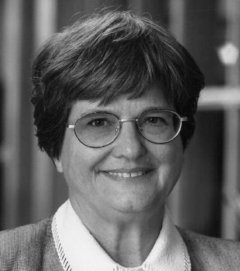
Sonnier was the first condemned inmate to receive the spiritual ministration of Sister Helen Prejean.

The then-obscure Louisiana nun would later write the bestseller Dead Man Walking about her experiences with Sonnier and a second death row prisoner, Robert Lee Willie. Prejean remains among the most well-known death penalty opponents in the world today.

While the book Dead Man Walking treats Sonnier and Willie in a nonfiction vein, the film adaptation (review) amalgamated those people into a single character, the fictional “Matthew Poncelet”. It’s apparent from the flashbacks in Dead Man Walking‘s execution scene, however, that Sonnier is the predominant influence on “Poncelet”.

Dead Man Walking is an interesting movie. Though its principals were all vocal death penalty opponents, the film itself is much better art than propaganda. Arguably, the doomed criminal attains a sort of personal redemption — finally admitting responsibility for a crime he had denied for much of the film; seeking the forgiveness of his victims’ surviving family — only because the death penalty awaits him.

The real-life Sister Helen. Her most recent book is The Death of Innocents:An Eyewitness Account of Wrongful Executions.

Susan Sarandon won an Oscar for Best Actress for her turn as Sister Helen. Note that while Sonnier was in fact put to death in the electric chair (as was Robert Lee Willie), director Tim Robbins opted to portray a lethal injection because, as Helen Prejean herself put it,

we don’t want to give people the moral out whereby people could say ‘oh well, we used to do electrocution but that’s too barbaric so now we are humane and inject them’

* The murder that led to this date’s execution took place in the same area where Willie Francis survived a trip to the electric chair: the very chair that killed Patrick Sonnier.

On this day..

1951: The Lonely Hearts killers, tortured by love

“Who would give a law to lovers? Love is unto itself a higher law. ”

Boethius

On this date in 1951, the made-for-tabloids killer couple Raymond Fernandez and Martha Beck were electrocuted at New York’s Sing Sing prison for murder.

He was a toupeed middle-aged lothario with a knack for conning personal ad denizens. She was a lovelorn obese single mother* with a serious dark side. Together — through a chance meeting through the personals — they became the Lonely Hearts Killers.

Martha Beck started off as just another of Raymond Fernandez’s targets: charm them, promise engagement or undergo a faux-wedding, and then rob them. He’d pulled this off a few times before; he might have even killed at least one of them.

But something clicked when he met Martha.

Or rather, Martha made it click.

Fernandez did the love ’em and leave ’em routine with Martha, whom he soon realized was penniless. But their passionate hotel rendezvous had been spied by the local bluenoses, who promptly got Martha fired for her indiscretions. She showed up unannounced at Fernandez’s door, and pushed her way right into his life.

Ere long, they were cohabiting — lurid media accounts would later savor their “abnormal sexual practices” and their, er, lifestyle relationship. She caused near-riots among the crush of spectators at their circus trial when she got into specifics of freaky stuff like voodoo fetish play.

“A request from Mr. Fernandez to me is a command,” Martha testified. Since this was so — though the power dynamic between them really seems to have run in the other direction — she willingly joined in Mr. Fernandez’s scam, posing as his “sister” when he went to meet and charm his next mark.

Once such assets as could be had were signed over, the pigeon was disposed of: often, they’d just make the “honeymoon” so unbearable that the target got the picture and left, so humiliated she wouldn’t dare come forward with the story.

And sometimes — nobody seems to know exactly how many times — Raymond and Martha killed together.

Martha (whose own sob story of ostracism and childhood neglect is really quite sad) supplied much of the vengeful energy that impelled the murders. One of their victims was a woman Beck attacked in a jealous rage when Fernandez actually slept with her. (The “sister” would often impose on the sleeping arrangements to obstruct consummation.)

The Lonely Hearts Killers’ crime spree is thoroughly covered elsewhere. It carried them to Michigan, a non-death penalty state where they were arrested. There, they confessed in a ploy to draw a local sentence and avoid execution.

Michigan instead extradited them to New York to stand trial in a sweltering courtroom and on every Gotham newspaper’s daily headlines for the murder of a Long Island widow. That confession given in Michigan helped seal their fate in New York.

Though separated from one another on death row (but they kept up the treacly correspondence), Martha and Raymond were joined in death.

On International Women’s Day of 1951, both were executed in New York’s electric chair, along with two unconnected, run-of-the-mill murderers.

My story is a love story. But only those tortured by love can know what I mean … in the history of the world, how many crimes have been attributed to love?

-Martha Beck

Given the newspaper ink spilled over these two, it’s no surprise that they’ve inspired plenty of subsequent writers and directors. The Honeymoon Killers (review) is a creepy 1970 classic, with a couple of latter-day imitators.

* She abandoned her two kids to the Salvation Army when she hitched her wagon to Fernandez.

On this day..

1951: Charlie Gifford, politician-killer

On this date in 1951, Charlie Gifford was electrocuted in Florida’s Raiford Prison for murder.

The murder victim was popular young Florida legislator/war hero Charles Schuh, whose promising political career ended abruptly on April 24, 1950, when the 71-year-old Gifford strode into his St. Petersburg offices and shot him dead over some head-scratching private grievance relating to Schuh’s legal practice. (Schuh represented Gifford’s ex-wife in a divorce proceeding.)

An insanity defense didn’t fly, though Gifford’s purchase on reality seems to have been … hit and miss. The septuagenarian perp didn’t seem to mind the death sentence.

The murdered legislator’s son, Charles E. Schuh, grew up into a political career of his own, eventually becoming mayor of St. Petersburg. Charles E. Schuh’s recent passing brought out this fascinating story by a former reporter who witnessed Gifford’s execution.

The electric chair was in the center, but the controls were behind a glass-enclosed area. I was repelled by the sight of “Old Sparky,” the electric chair. I was even more horrified to see that the executioner, a local electrician, wore a black hood reminiscent of the Inquisition. …

Today I am a decade older than Gifford was then, but to a 22-year-old reporter he seemed to be just a frail old man with a shaved head.

On this day..